Artwork
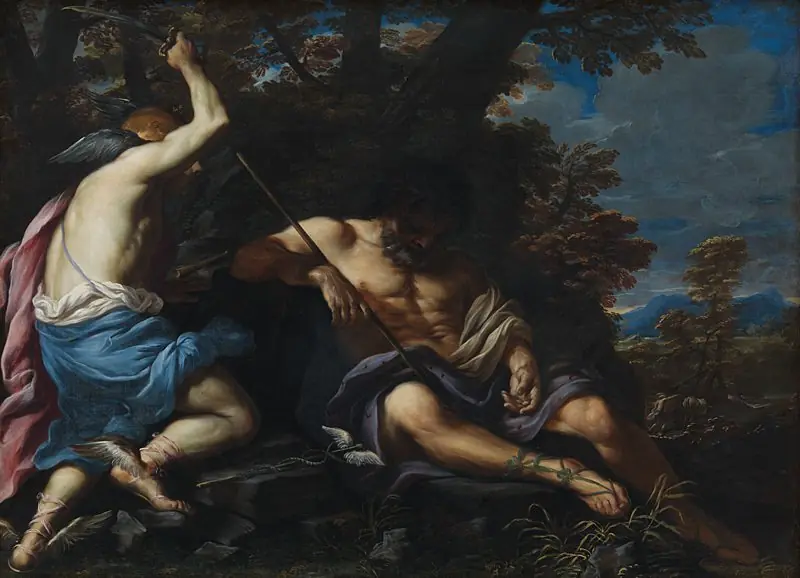
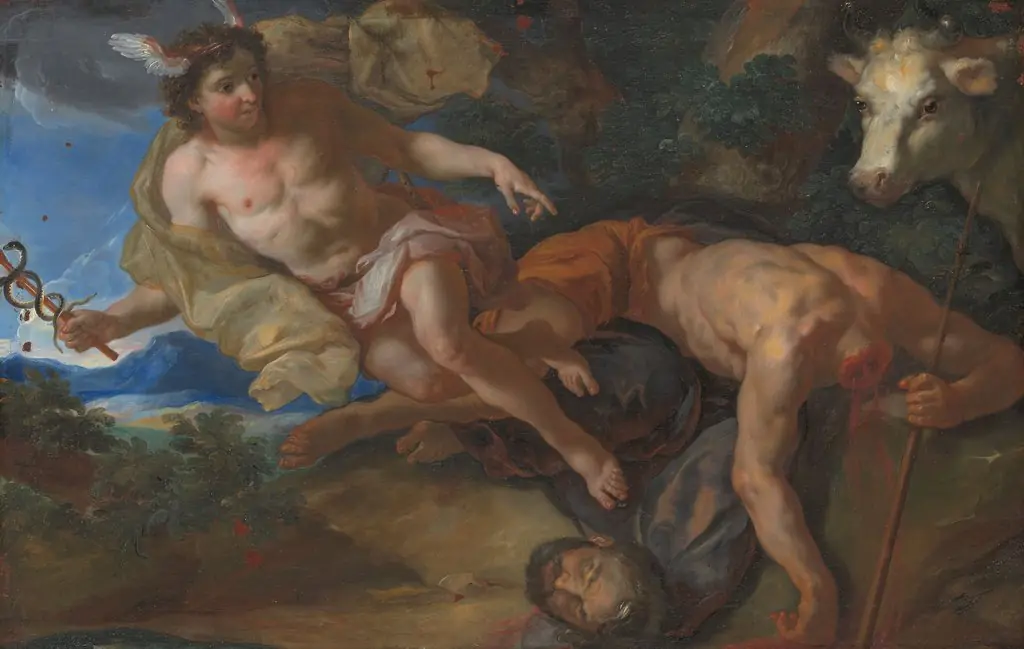
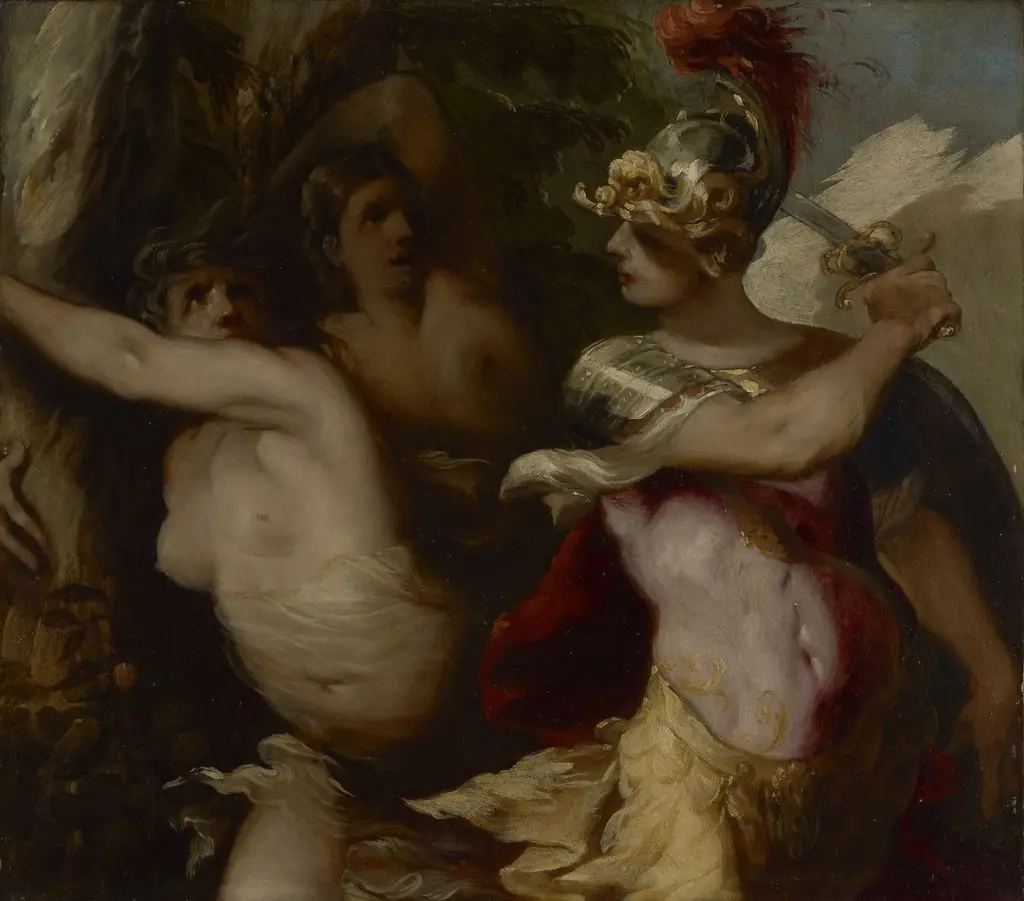
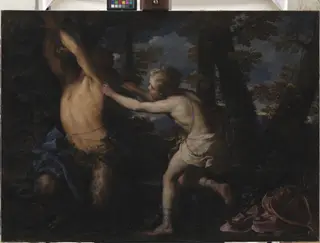
Apollo Flaying Marsyas
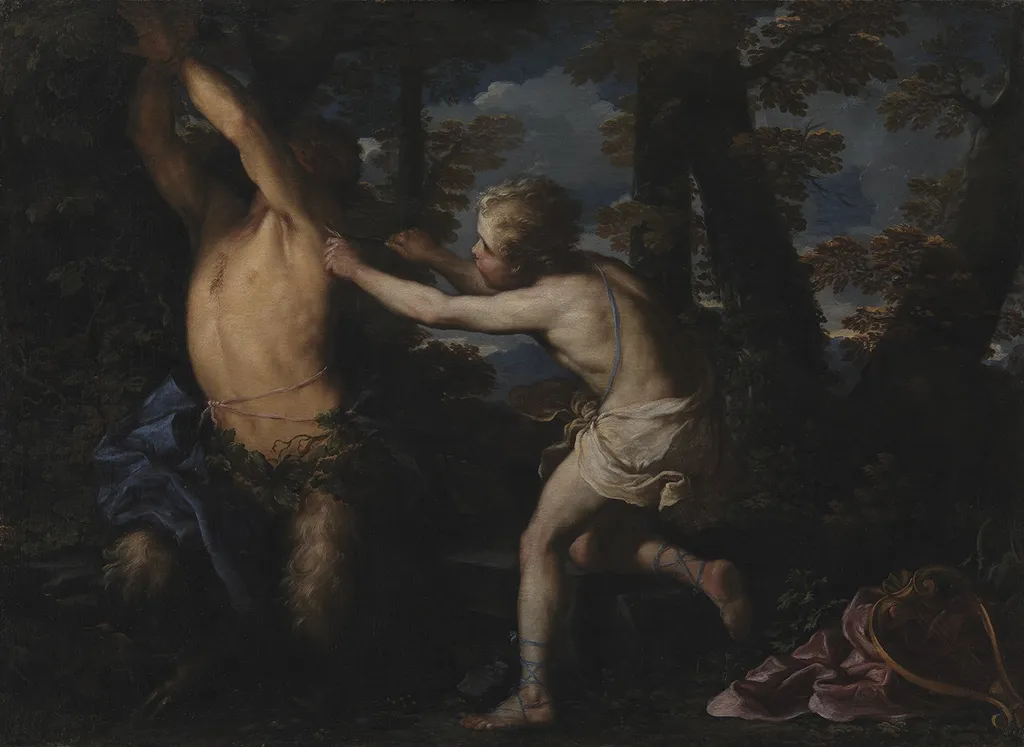
Apollo Flaying Marsyas is an oil painting by the Early Baroque Italian artist Girolamo Troppa. It dates from 1690 and is held in the collection of the Statens Museum for Kunst.
About this work
Subject & Meaning
The work illustrates the classical narrative of Apollo, the god of music and reason, punishing Marsyas, a satyr who challenged the deity to a musical contest.
Girolamo Troppa's 1678 oil painting depicts the mythological confrontation between Apollo and Marsyas. The work illustrates the classical narrative of Apollo, the god of music and reason, punishing Marsyas, a satyr who challenged the deity to a musical contest. As a mythological painting, the subject centers on the main figures of Apollo and Marsyas, visualizing the severe consequences of hubris and the triumph of divine order over mortal presumption.
The composition captures the moment of judgment and the subsequent physical punishment inherent in the legend, serving as a dramatic representation of ancient Greek mythology within a Baroque context.
Technique & Style
Executed in 1678, this mythological painting by Girolamo Troppa utilizes oil paint applied to a canvas support. The work measures 960 cm in height and 1320 cm in width, presenting a large-scale depiction of the classical subject. The composition focuses on the figures of Apollo and Marsyas, rendered within the traditions of Baroque mythological narrative. The piece is currently held in the collection of the Statens Museum for Kunst.
History & Provenance
Girolamo Troppa created the mythological painting Apollo Flaying Marsyas in 1678. Executed in oil on canvas, the work depicts the classical subject of Apollo and Marsyas. The painting currently resides in the collection of the Statens Museum for Kunst, where it is held as part of their holdings.
No further details regarding specific commissions, previous owners, or the circumstances of its acquisition by the museum are provided in the available records.
Apollo Flaying Marsyas, painted by Girolamo Troppa in 1678, is held by the Statens Museum for Kunst in Denmark, which is listed as both its collection and its location. The work is catalogued as an oil-on-canvas mythological painting measuring 960 mm in height and 1320 mm in width.
No specific inventory or accession number is recorded in the available sources, and no exhibition history beyond its current placement in the Statens Museum for Kunst's collection is documented.
Context
Apollo Flaying Marsyas (1678) by Girolamo Troppa is a mythological painting in the collection of the Statens Museum for Kunst. The work depicts the god Apollo in the act of punishing the satyr Marsyas, a subject drawn from classical mythology that allowed Troppa to explore themes of divine retribution and human vulnerability. Scholars have noted the painting’s dramatic chiaroscuro and its synthesis of High Baroque dynamism with emerging Rococo sensibilities, situating it within the broader trajectory of 17th-century Italian mythological art.
Its presence in a Danish national museum reflects the 19th-century European interest in acquiring narrative paintings that combined technical mastery with moralizing themes.
Overview
Girolamo Troppa’s oil painting Apollo Flaying Marsyas, executed in 1690, presents a violent episode from Greek mythology. The canvas shows a satyr bound to a tree while a youthful figure, identified as Apollo, removes the satyr’s skin. Set against a darkened woodland and a cloud‑filled sky, the work exemplifies the dramatic intensity characteristic of early Italian Baroque.
Artist & collection
Artist
Girolamo Troppa (2 October 1636 – October 1711) was an Italian painter of the Baroque period, depicting mainly sacred subjects. A follower of Carlo Maratta, he was active in Rome and Umbria.