Artwork
Rape of Dinah
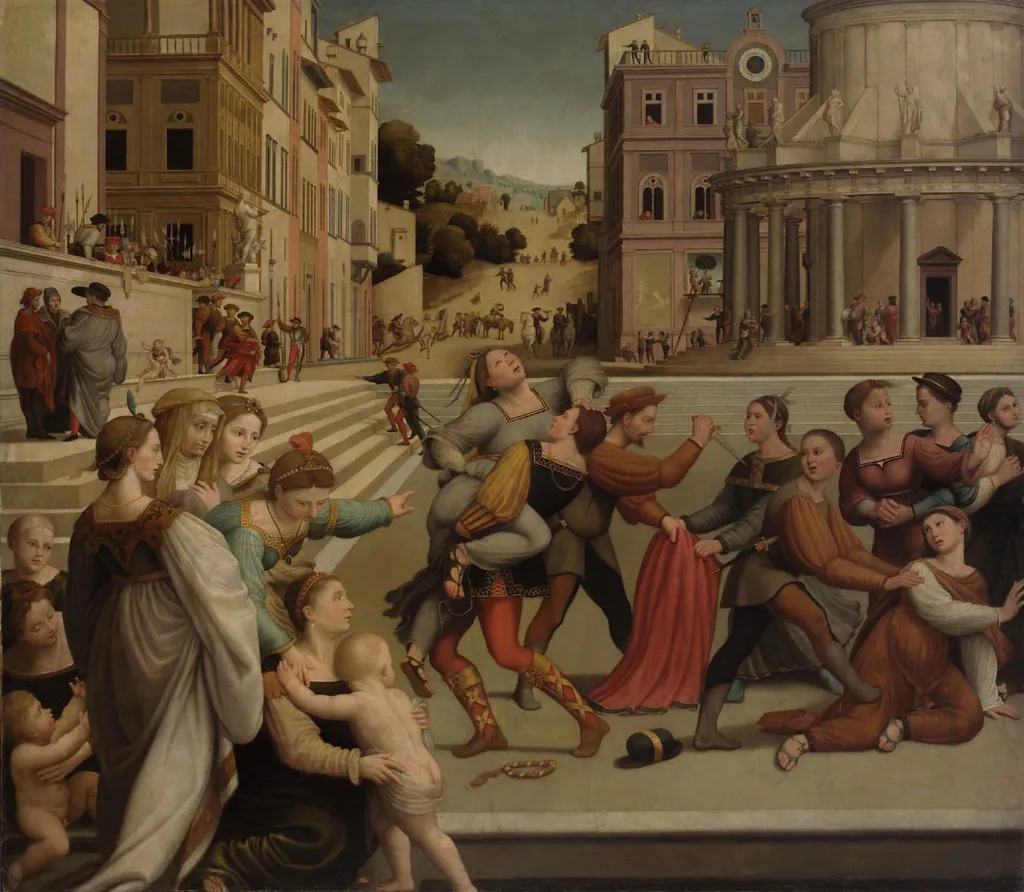
Rape of Dinah is an unspecified painting by the Mannerist artist Giuliano Bugiardini. It dates from 1535 and is held in the collection of the Kunsthistorisches Museum.
About this work
Subject & Meaning
Giuliano Bugiardini's 1535 painting depicts the biblical kidnapping of Dinah, a narrative drawn from religious tradition.
Giuliano Bugiardini's 1535 painting depicts the biblical kidnapping of Dinah, a narrative drawn from religious tradition. The work visually represents the moment of abduction, focusing on the violent seizure of the female figure. As a piece of religious art, the scene serves as an illustration of the scriptural account concerning Dinah's fate.
The composition centers on the physical act of kidnapping, capturing the struggle inherent in the subject matter without additional allegorical layers specified in the available records.
History & Provenance
The painting was created by Giuliano Bugiardini in 1535, as indicated by its inception date. It depicts the biblical episode of the kidnapping of Dinah and belongs to the religious genre. The work entered the holdings of the Kunsthistorisches Museum in Vienna, where it is presently housed.
No earlier provenance or commission details are recorded in the available sources; thus the known ownership chain begins with its acquisition by the museum and its continued display there.
The painting is held by the Kunsthistorisches Museum in Vienna, where it is inventoried as
Inventory number GG_349.
Its exhibition history includes display at the museum’s holdings of Italian Renaissance paintings, with a recent showing in the 2019 reinstallation of the Picture Gallery’s Italian rooms.
Overview
Giuliano Bugiardini, a Florentine painter of the early sixteenth century, completed the work titled Rape of Dinah in 1535. The canvas belongs to the collection of Vienna’s Kunsthistorisches Museum and represents a rare foray into biblical storytelling amid the artist’s usual focus on religious commissions, portraiture, and occasional mythological subjects.
Technique & Style
Executed within the Mannerist idiom, the painting employs pronounced chiaroscuro, contrasting bright illumination on the main figures with deep shadows in the surrounding crowd. The composition is densely populated, with onlookers, children, and bystanders rendered in period dress, creating a sense of controlled chaos characteristic of the style.
Context
Bugiardini’s career was primarily rooted in the production of devotional images for Florentine patrons. This painting stands out as an unusual biblical narrative rendered with a secular, street‑level setting, aligning with the Mannerist tendency to experiment with composition and emotional intensity beyond conventional altar pieces.
Artist & collection

Artist
Giuliano di Piero di Simone Bugiardini (29 January 1475 – 17 February 1555) was an Italian Renaissance painter.

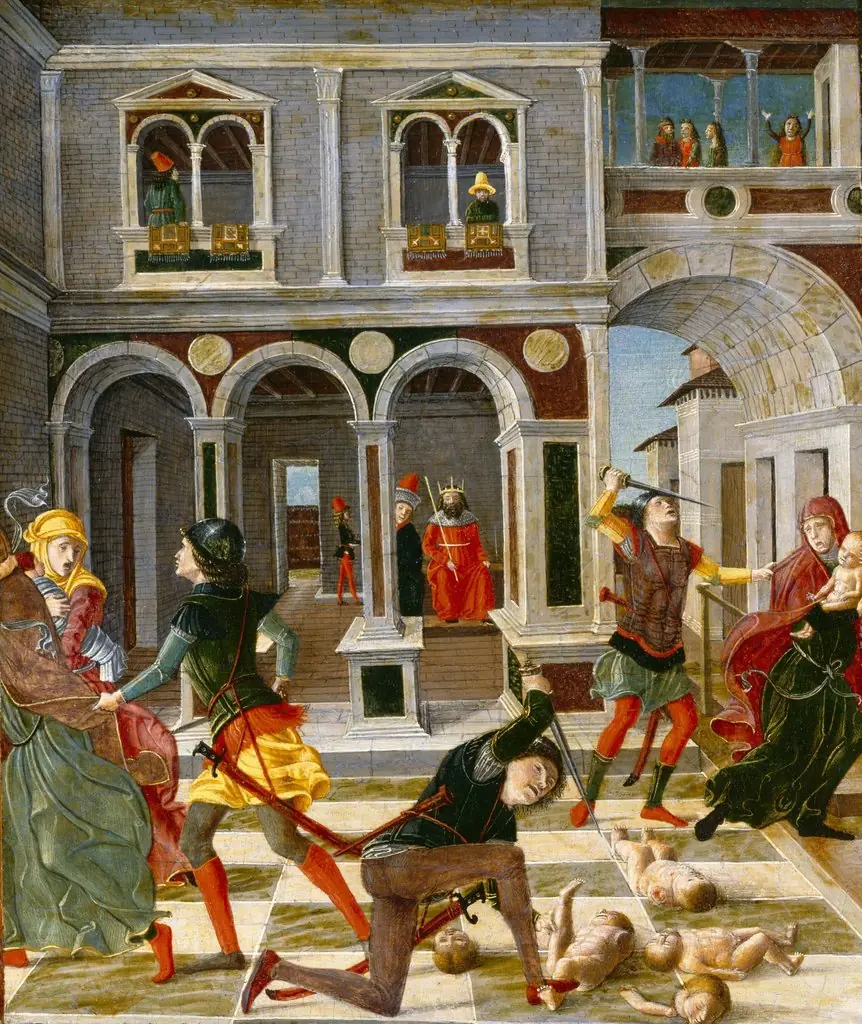 The Massacre of The Innocents
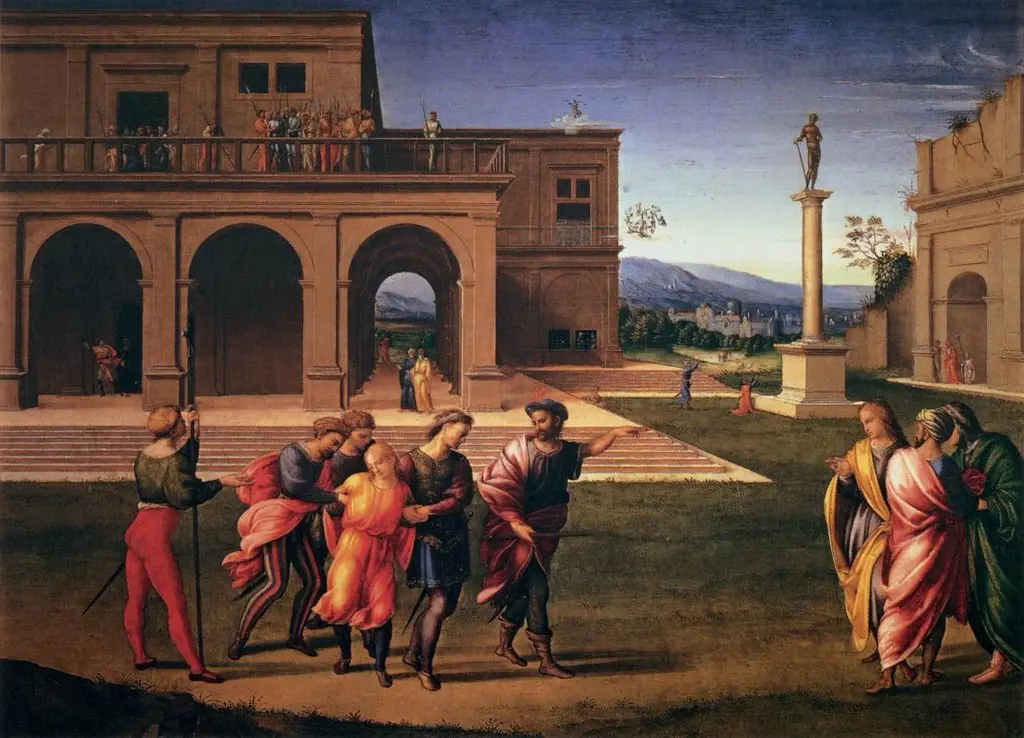 Joseph going to prison
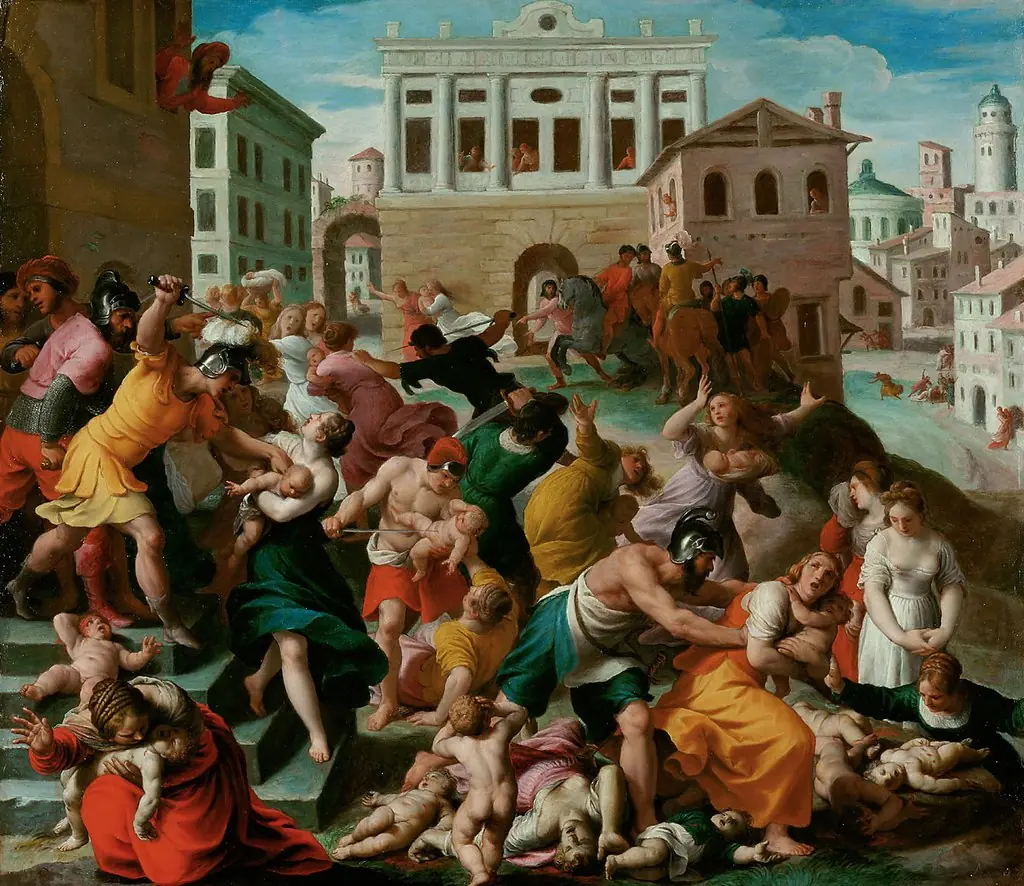 Bethlehemic Child Murder
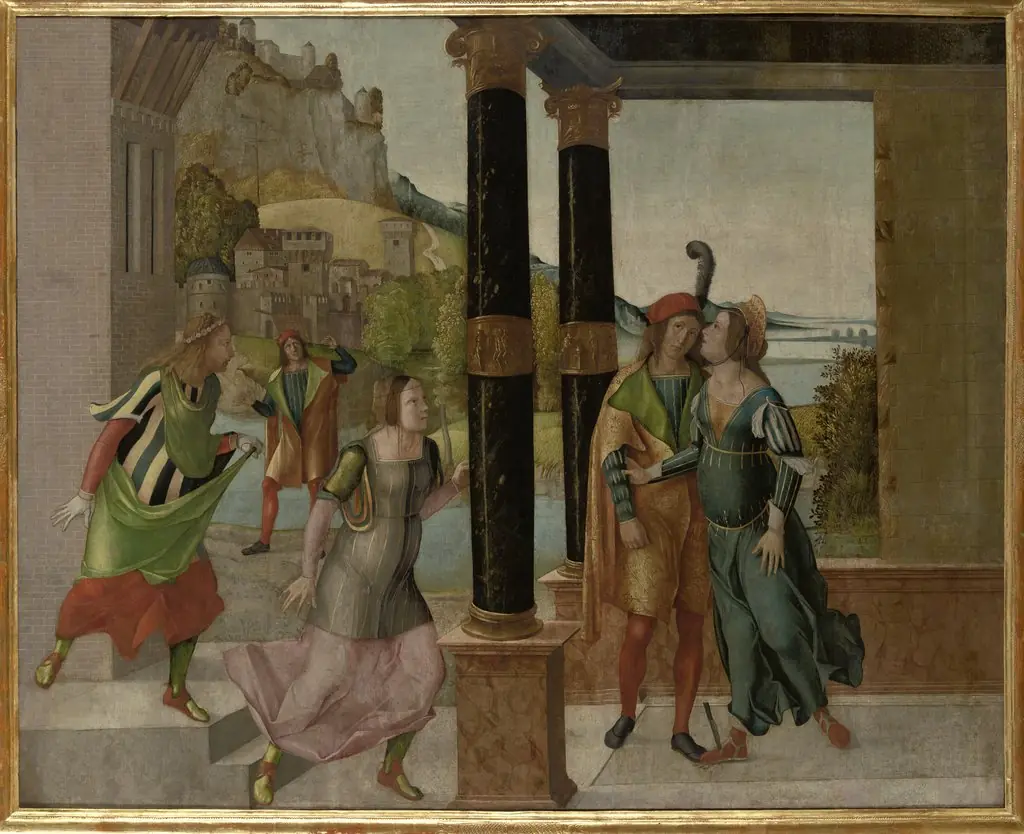 Brutus and Porcia
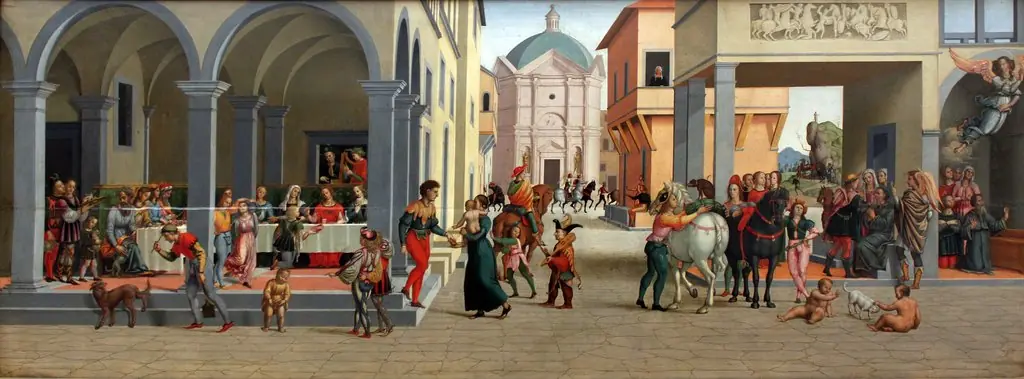 Representation from the Life of the Young Tobias II
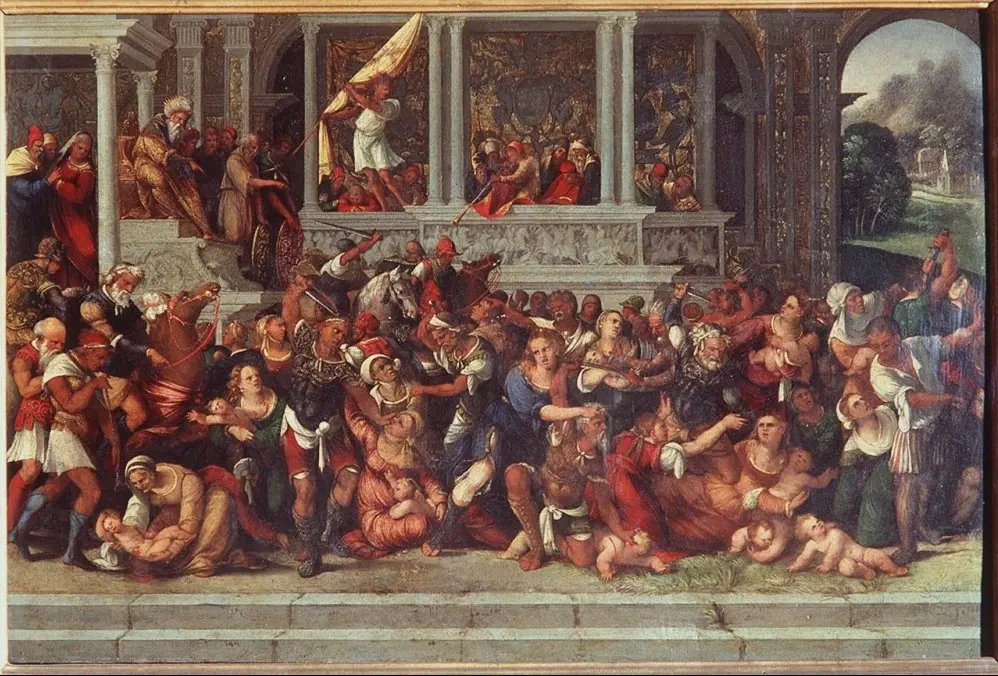 Massacre of the Innocents
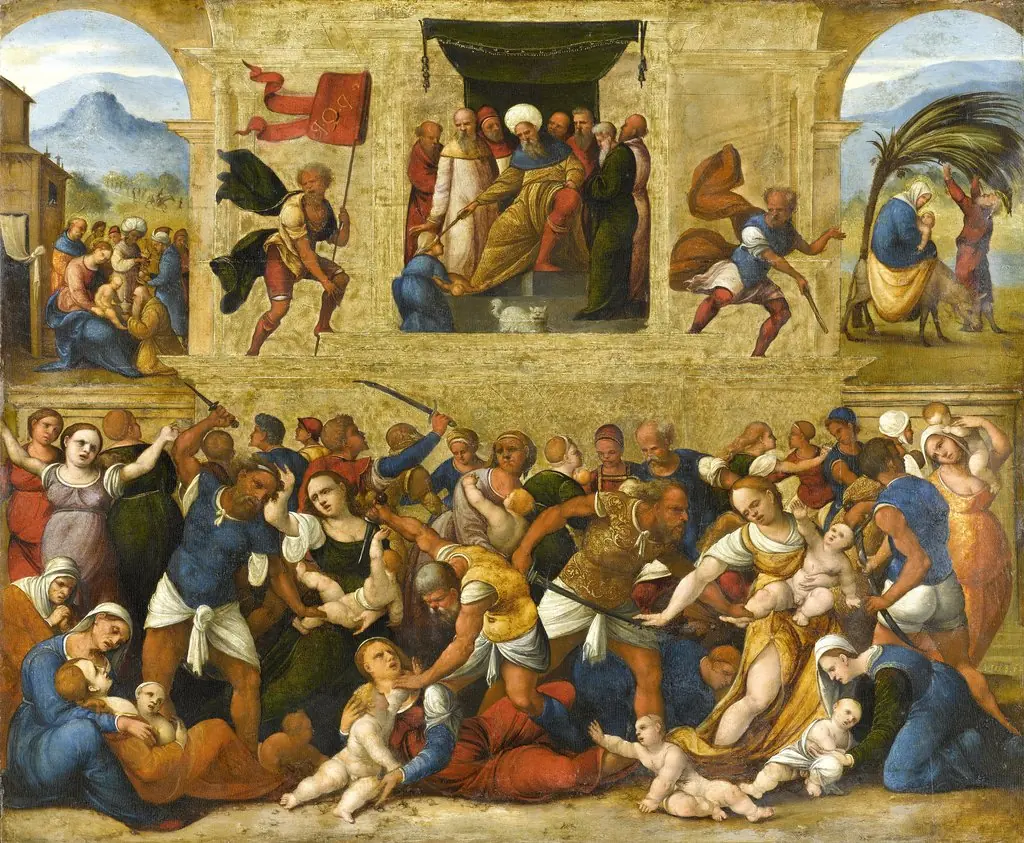 Massacre of the Innocents in Bethlehem
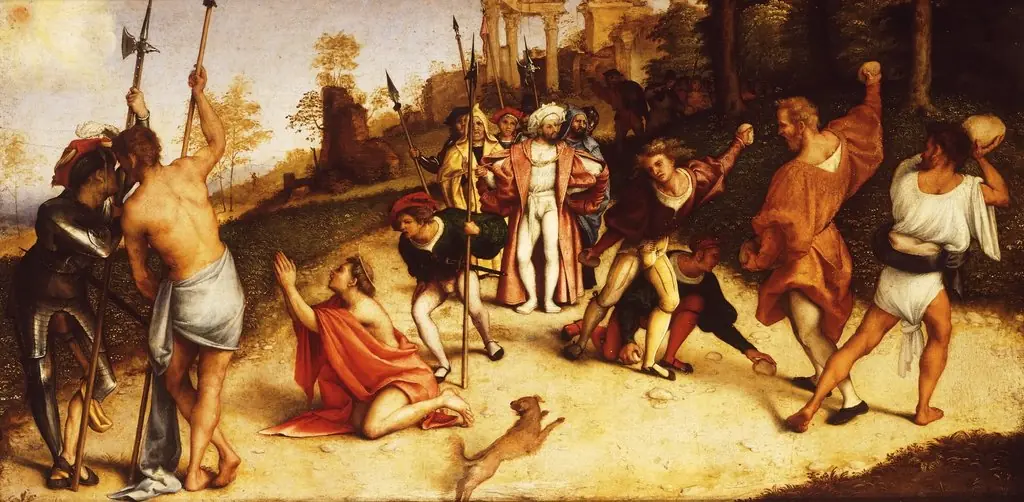 Martyrdom of St Stephen, division of Martinengo Altarpiece
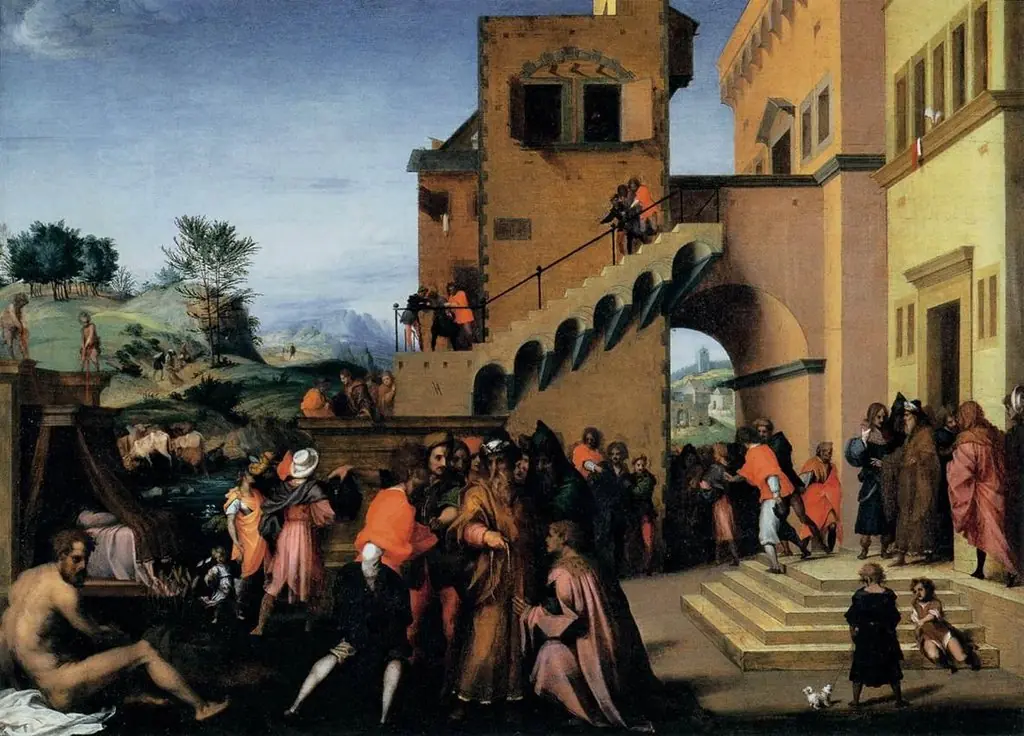 Joseph interpreting Pharaoh's dresm
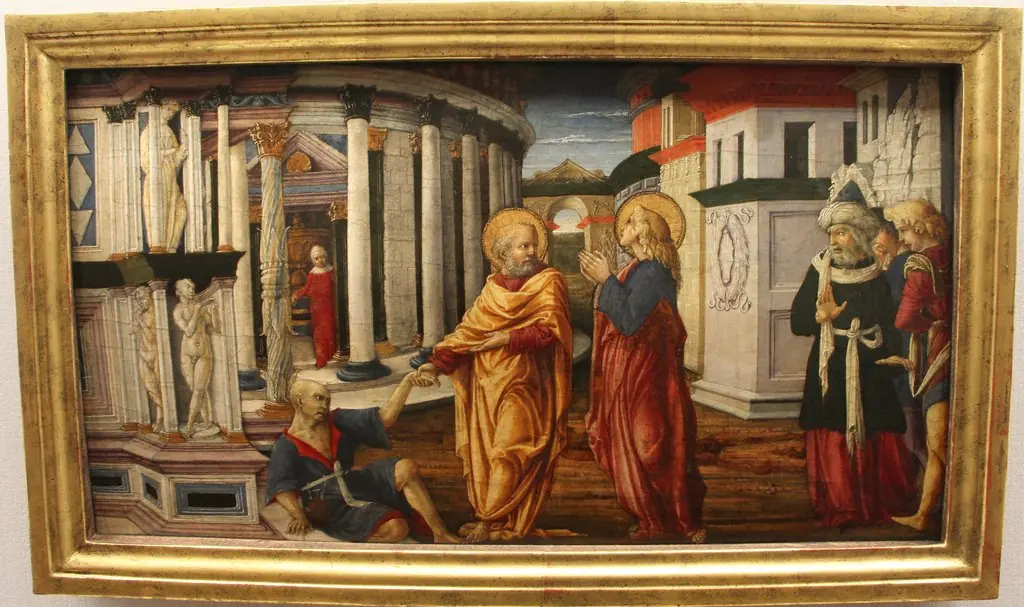 Petrus heilt einen Lahmen