Artwork
Massacre of the Innocents in Bethlehem
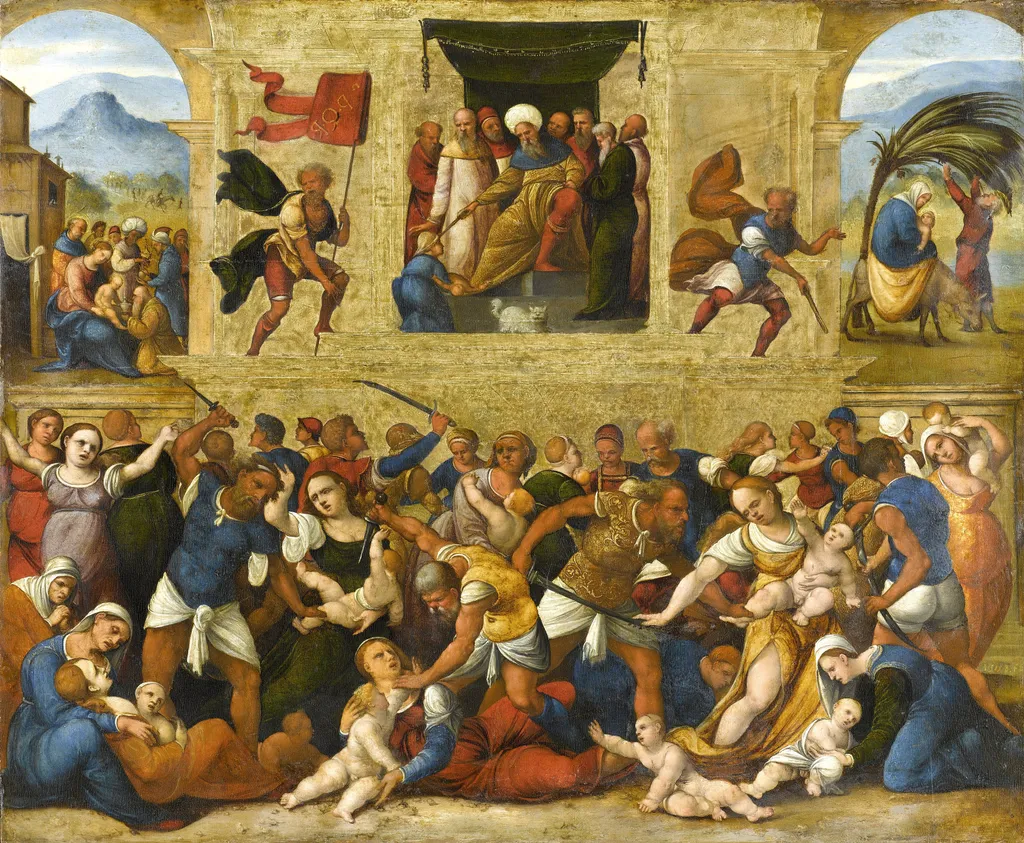
Massacre of the Innocents in Bethlehem is an oil painting by the Mannerist artist Ludovico Mazzolino. It dates from 1520 and is held in the collection of the Rijksmuseum. Created in 1520, this panel painting portrays the biblical episode known as the Massacre of the Innocents.
About this work
Subject & Meaning
The composition serves as a direct illustration of this specific scriptural episode, focusing on the historical and theological moment of the slaughter.
The painting depicts the biblical Massacre of the Innocents, an event wherein King Herod ordered the execution of young male children in Bethlehem. As a work of religious art created by Ludovico Mazzolino, the piece visualizes this violent narrative from the Gospel of Matthew. The composition serves as a direct illustration of this specific scriptural episode, focusing on the historical and theological moment of the slaughter.
The subject functions as the central theme of the panel, anchoring the artwork within the tradition of religious storytelling.
Technique & Style
Ludovico Mazzolino’s Massacre of the Innocents in Bethlehem is an oil painting on a wooden panel, dated to around 1520. The artist used oil paint as the medium, applied to a panel support. The panel measures 31 cm in height and 38 cm in width, as recorded in the museum’s catalog.
No further details about the artist’s handling, the painting’s condition, or its formal stylistic qualities are provided in the available sources.
History & Provenance
The painting 'Massacre of the Innocents in Bethlehem' was created by the Italian artist Ludovico Mazzolino. While one record assigns the work specifically to the year 1520, other data indicates a broader creation window spanning from 1520 to 1528. Executed in oil on a wooden panel, the artwork depicts the biblical slaughter of children ordered by King Herod.
Regarding its ownership history, the piece is held within the collections of major Dutch institutions. Sources identify the work as part of the holdings of both the Rijksmuseum and the Mauritshuis, though the specific chain of custody or original commission details are not provided in the available records.
The work is held in the collections of Rijksmuseum and Mauritshuis. Its inventory numbers are not specified in the sources. It has been exhibited as part of a religious art display at these institutions. The painting was created between 1520 and 1528.
Overview
Created in 1520, this panel painting portrays the biblical episode known as the Massacre of the Innocents. Executed by the Italian artist Ludovico Mazzolino, the work belongs to the early 16th‑century Mannerist phase of the Renaissance. It is currently part of the Rijksmuseum’s collection, where it is displayed as a religious narrative piece.
Context
Mazzolino worked during a transitional period when the High Renaissance gave way to Mannerism, a style marked by artificiality and complex compositions. This painting exemplifies that shift, combining narrative clarity with stylized figures. The subject, a frequently depicted biblical massacre, allowed the artist to explore themes of suffering, protection, and divine intervention within a contemporary visual language.
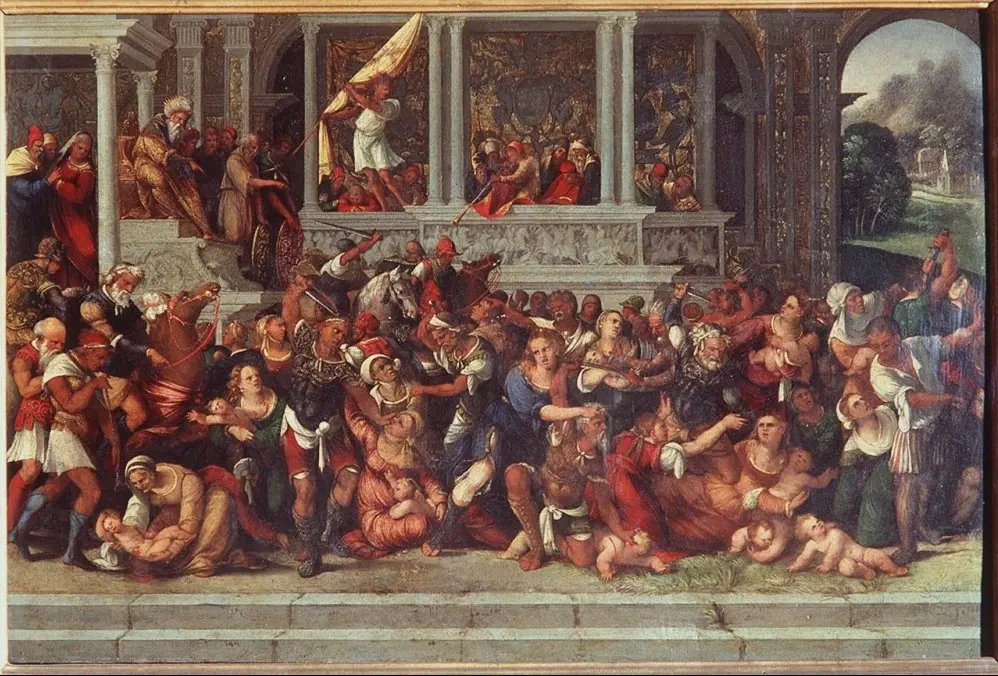
Own this work as a print
Artist & collection
Artist
Ludovico Mazzolino (1480 – c. 1528) - also known as Mazzolini da Ferrara, Lodovico Ferraresa, and Il Ferrarese - was an Italian Renaissance painter active in Ferrara and Bologna.

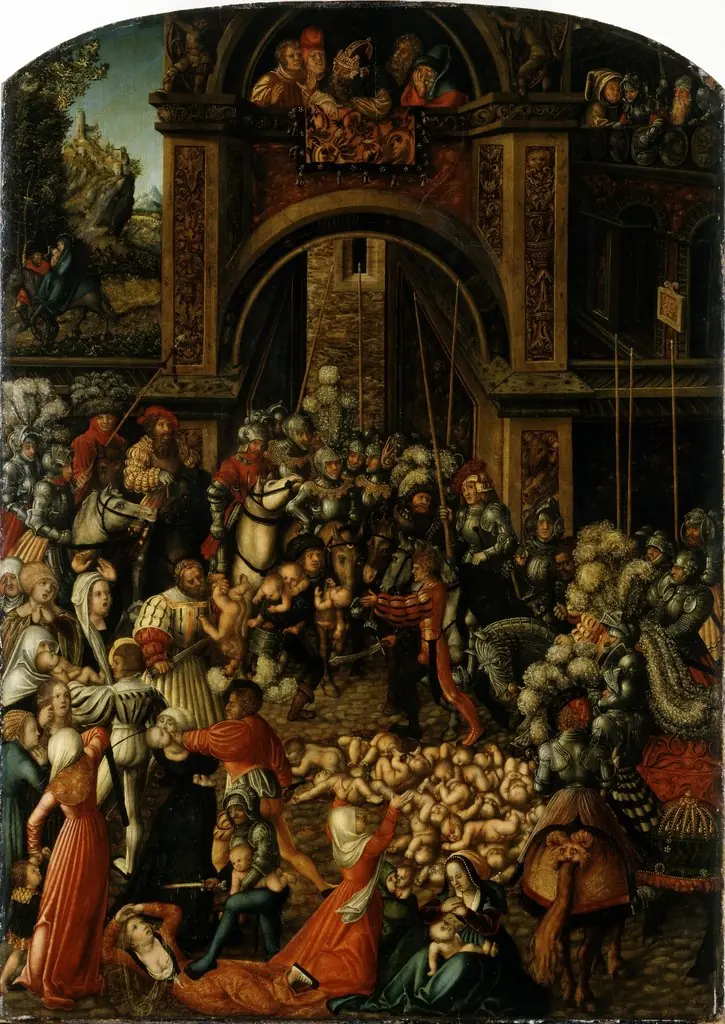 The Massacre of the Innocents
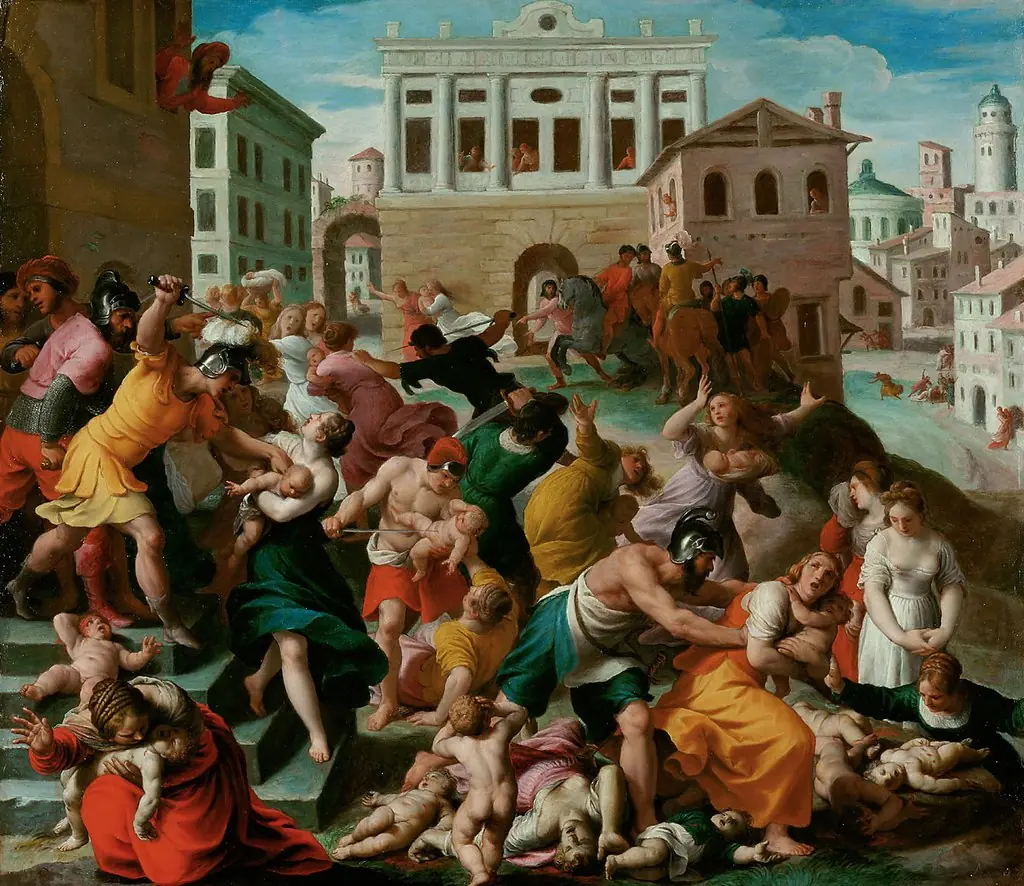 Bethlehemic Child Murder
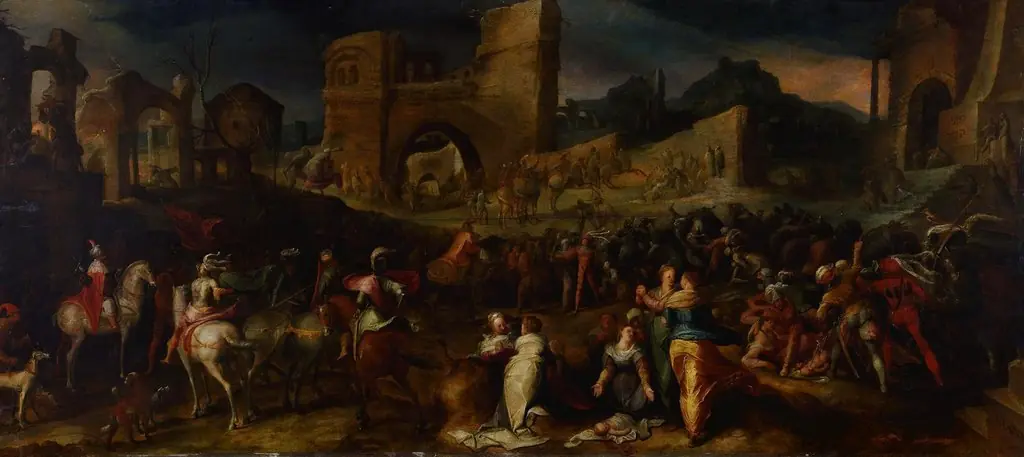 The Massacre of the Innocents
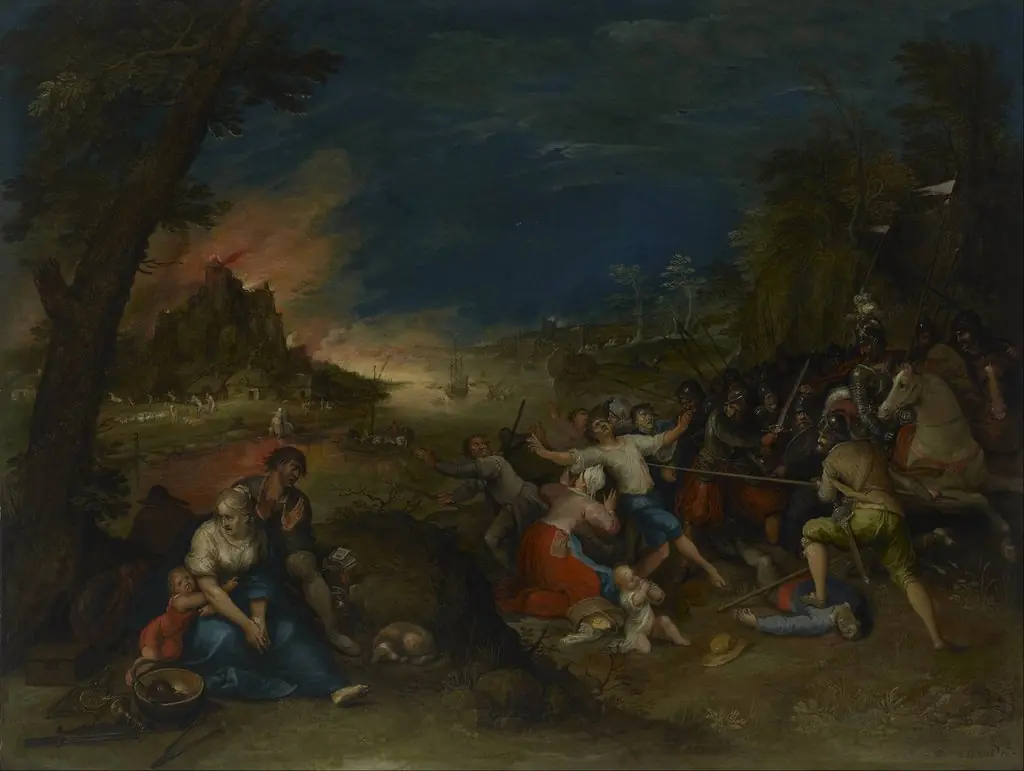 Allegory of War
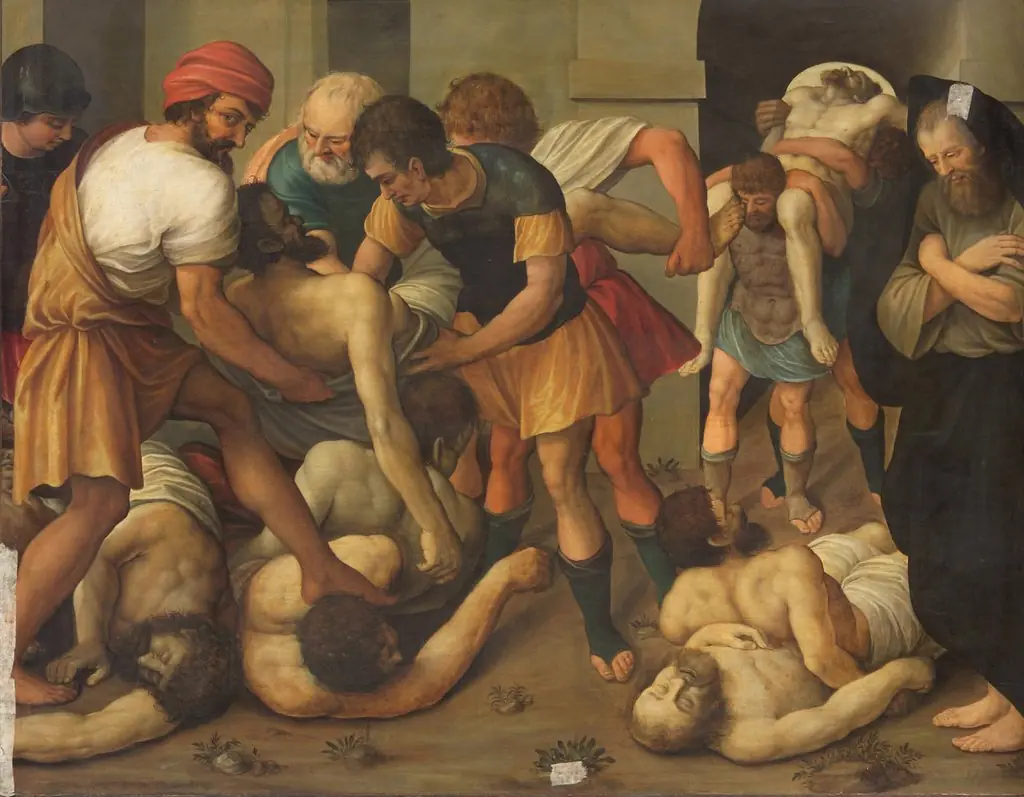 Tobias buries the Dead in Nineveh
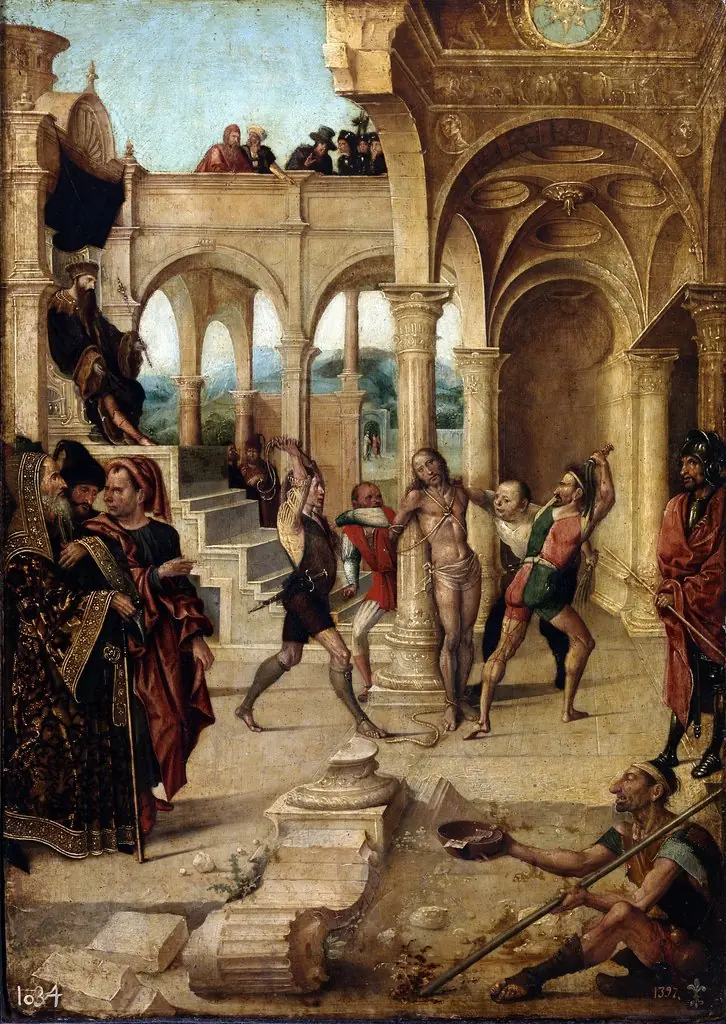 The Flagellation
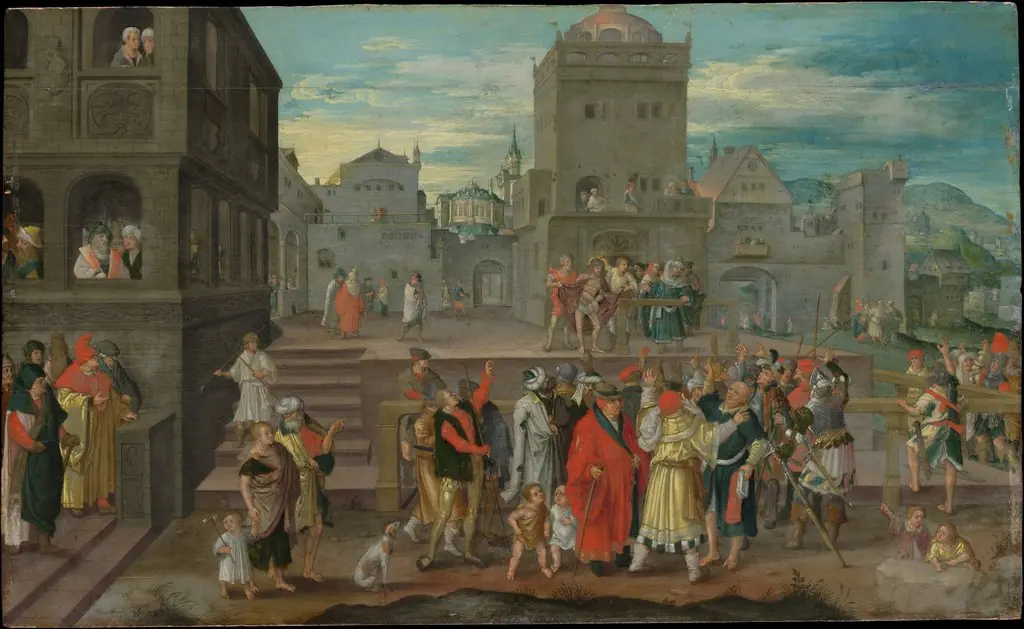 Christ Presented to the People
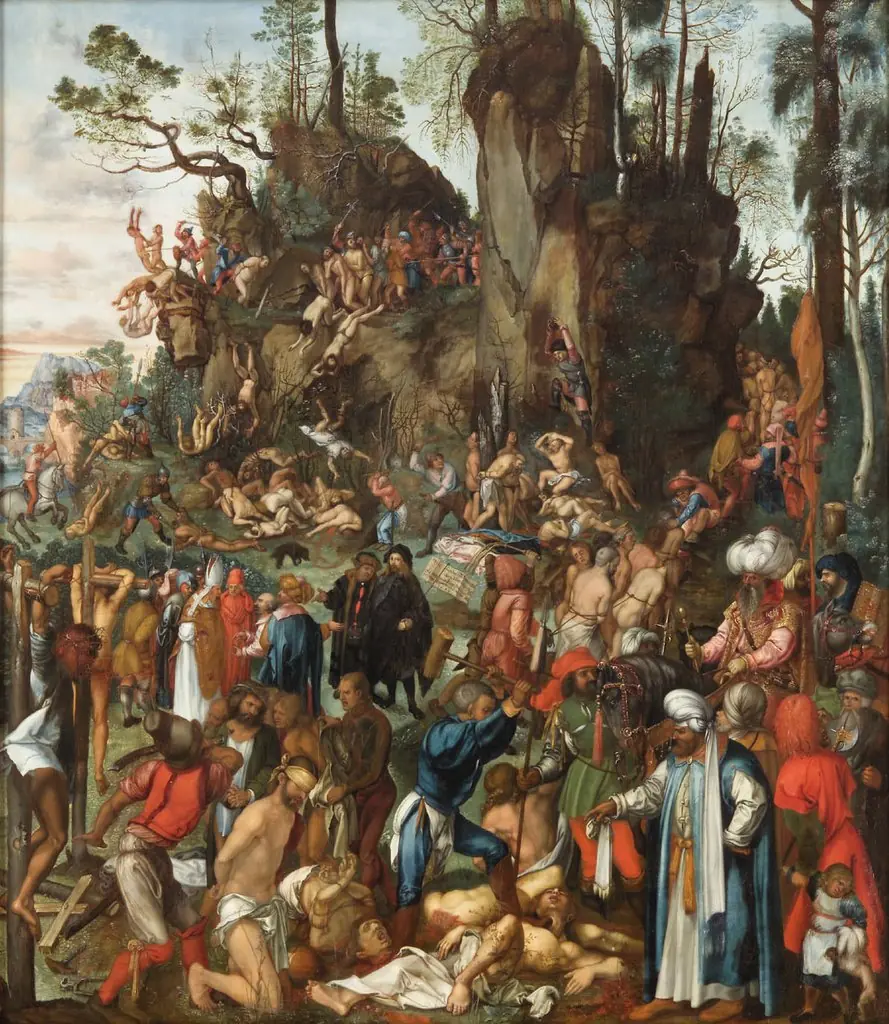 Marter der Zehntausend Christen
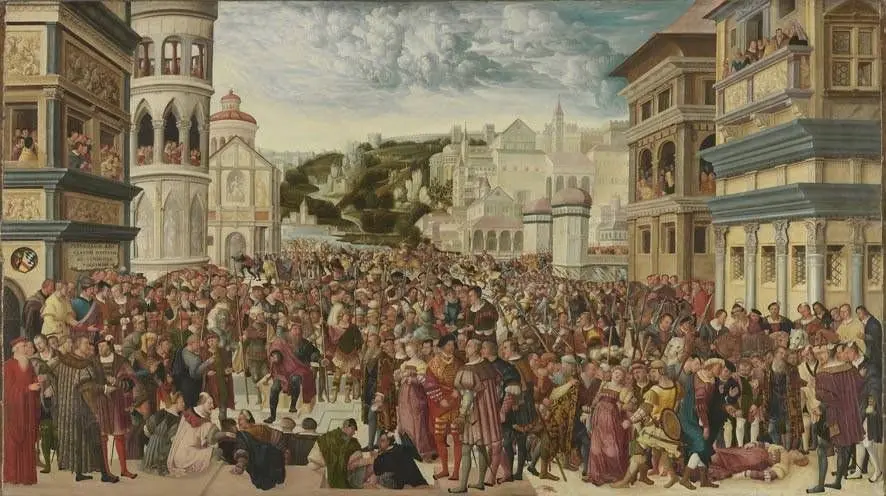 Historienzyklus: Geschichte der Verginia
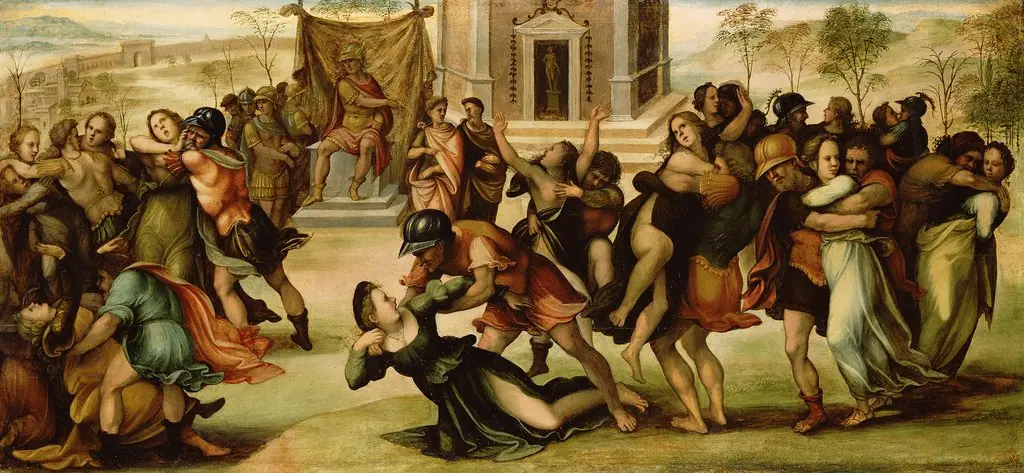 Rape of the Sabines
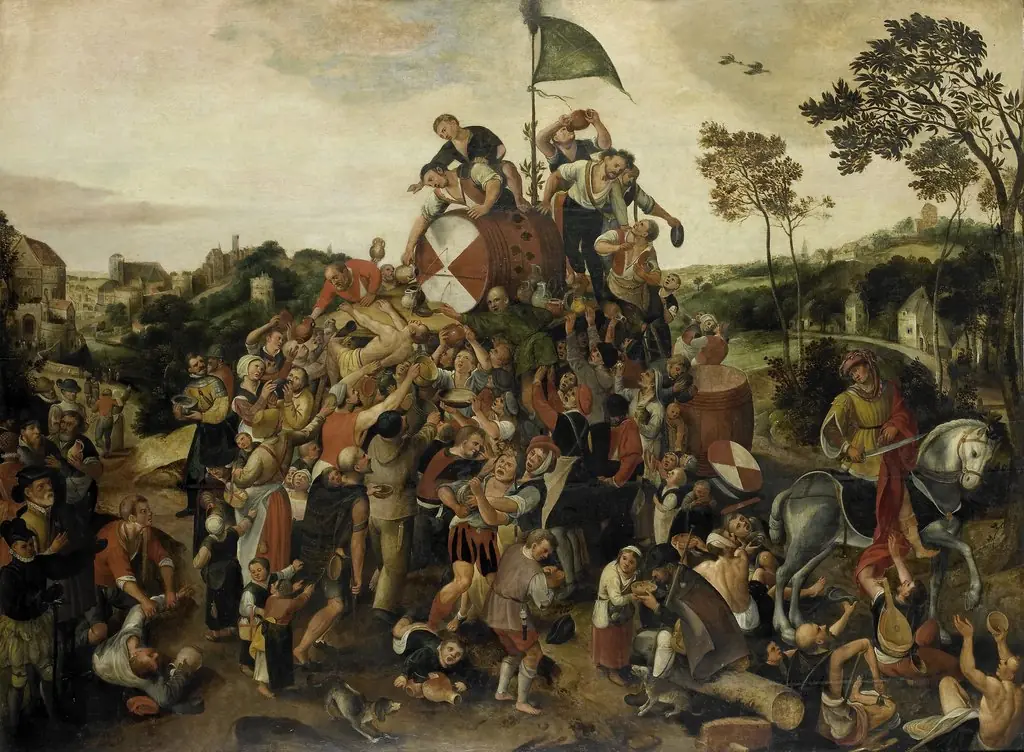 The St Martin's Day Kermis
- Massacre of the Innocents