Artwork
Rudolf II of Habsurg as Vertumnus
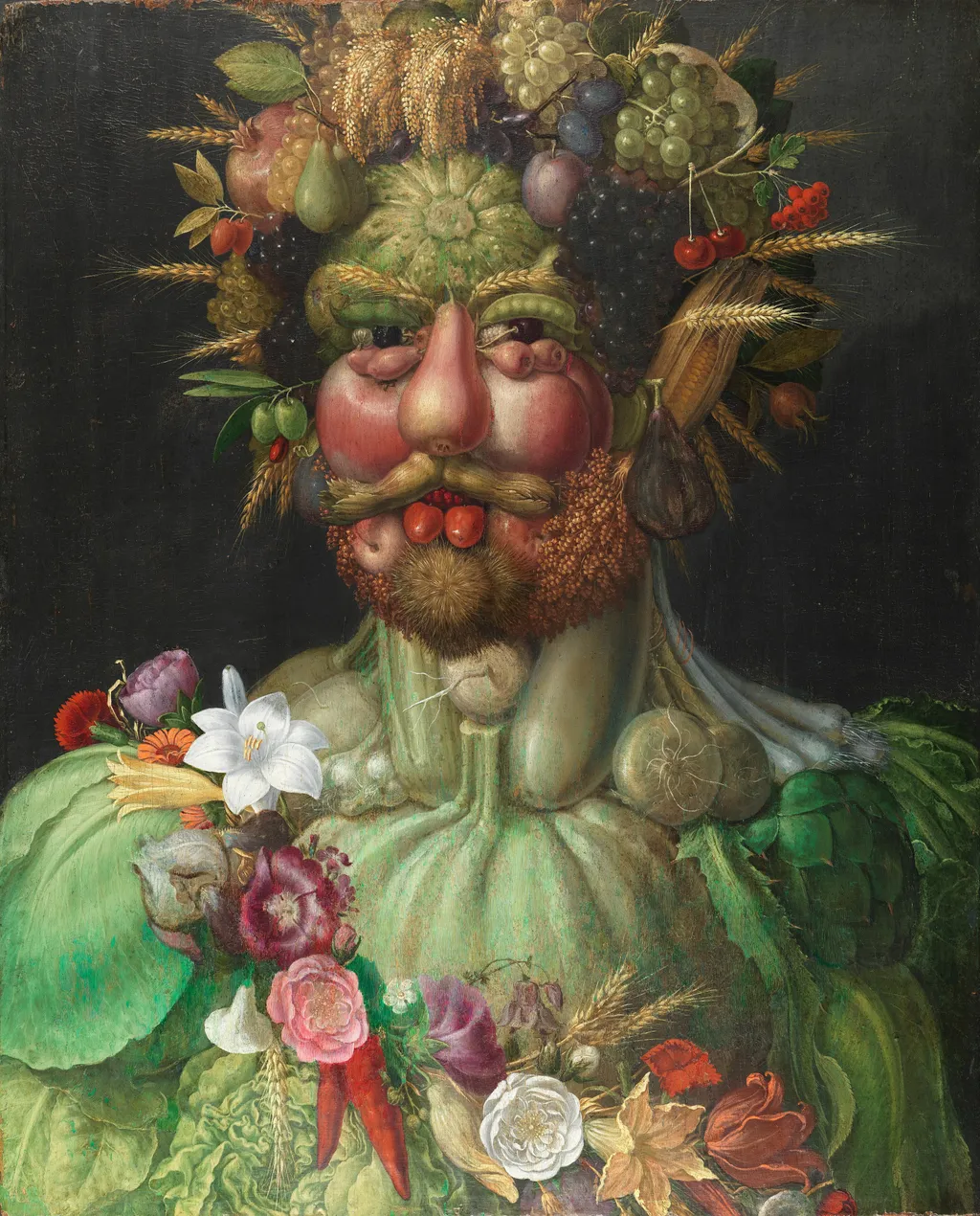
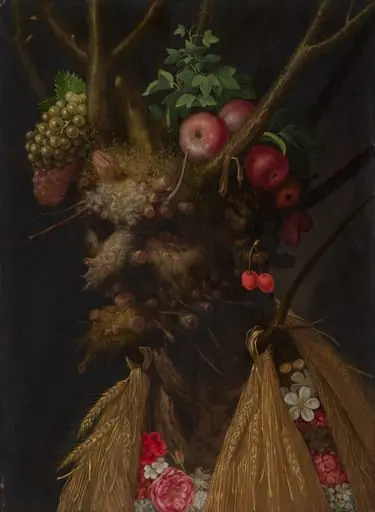
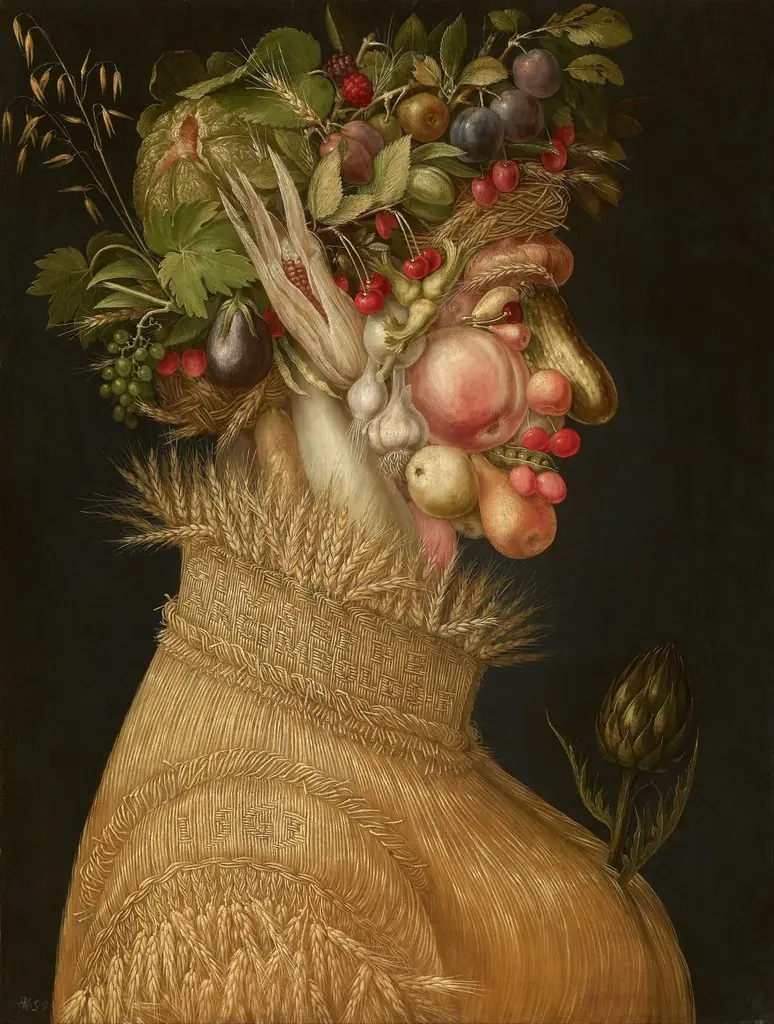
Rudolf II of Habsurg as Vertumnus is an oil painting by the Mannerist artist Giuseppe Arcimboldo. It is held in the collection of the Palace of Versailles.
About this work
He also linked the subject to the Roman god Vertumnus, who could change shape.
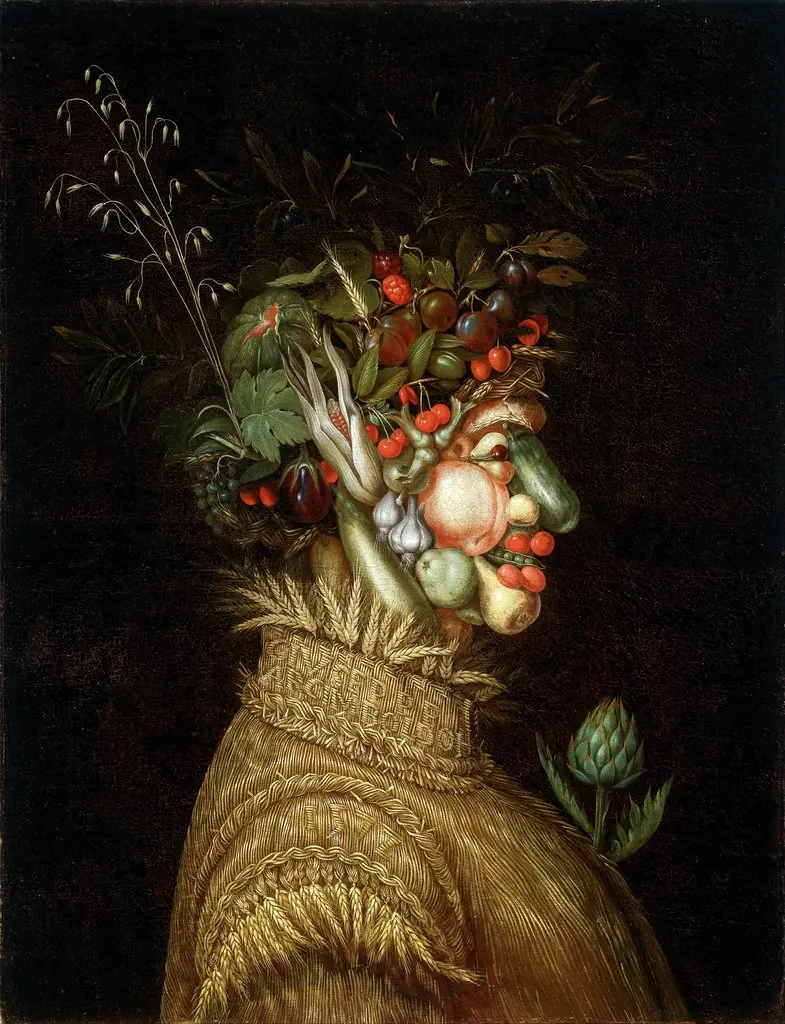
Giuseppe Arcimboldo painted Rudolf II of Habsurg as Vertumnus in 1591. It’s a portrait made entirely of fruits, vegetables and flowers. The work was meant to flatter the Holy Roman Emperor.
Arcimboldo’s colleagues called it a joke, or scherzo. But the artist packed in hidden meanings through his careful choice of items. He also linked the subject to the Roman god Vertumnus, who could change shape.
This kind of face made of things is called an Arcimboldo. Look up his other paintings.
Subject & Meaning
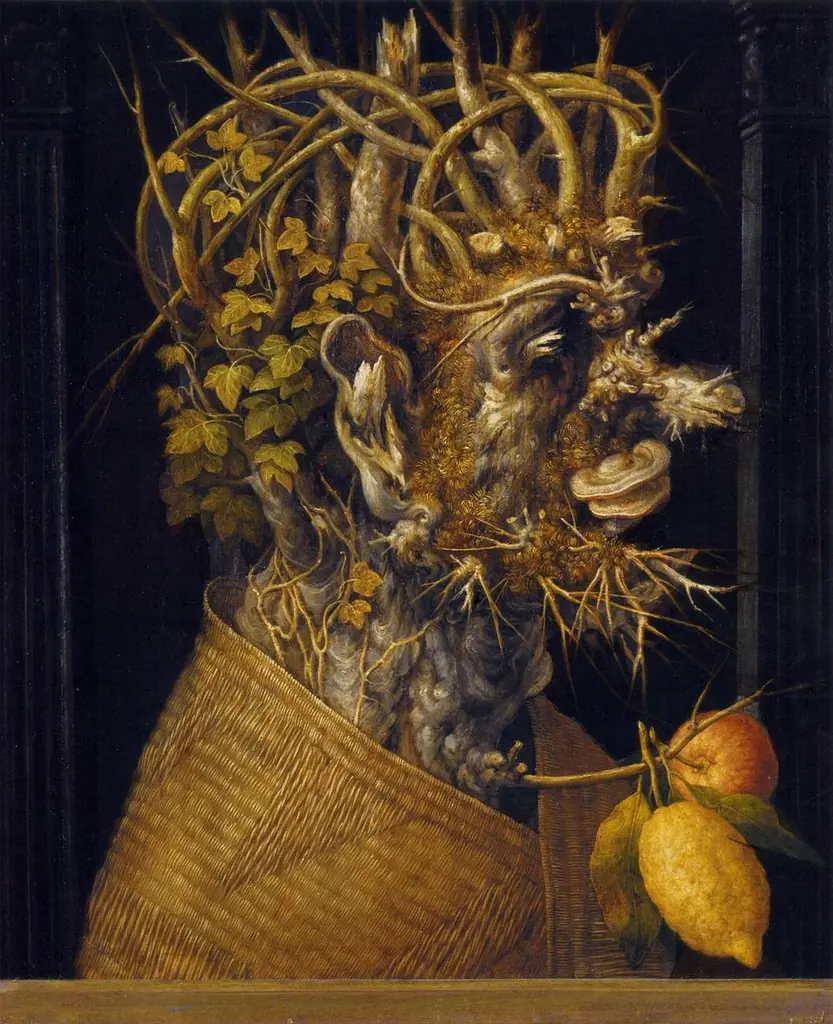
The painting depicts Holy Roman Emperor Rudolf II disguised as Vertumnus, the Roman god of seasons, gardens, and transformation. Arcimboldo constructs the emperor's visage entirely from flora representing all four seasons: a summer crown of wheat and grapes, an autumnal face of apples and pears, a winter torso of cabbages and onions, and a spring sash of flowers. This composite imagery functions as a political allegory rather than a mere humorous jest, symbolizing Rudolf's harmonious balance with nature, science, and the arts. The inclusion of exotic crops, such as New World corn forming the ear, serves as propaganda demonstrating the emperor's global reach and access to rare luxuries. By equating the ruler with a deity capable of metamorphosis, the work suggests Rudolf's power extends over nature itself and alludes to the permanence of the Habsburg dynasty.
History & Provenance
Giuseppe Arcimboldo created *Rudolf II of Habsburg as Vertumnus* in 1591, sending the work from Milan to Prague as a gift for the Holy Roman Emperor. The painting was presented to Rudolf II upon its completion, serving as a political allegory that linked the emperor to the Roman god of seasons. Following the Thirty Years' War, the Swedish army looted the piece during the 1648 siege of Prague, removing it from the imperial collection at Prague Castle. The artwork subsequently disappeared from historical record until 1845, when it resurfaced in Sweden. It has been housed in Skokloster Castle since its rediscovery, where it remains part of the collection today.
Giuseppe Arcimboldo's painting *Rudolf II of Habsburg as Vertumnus* is currently held at Skokloster Castle in Sweden. The work was looted by Swedish forces during the Thirty Years' War, specifically during the 1648 siege of Prague, after which it disappeared from historical records until its rediscovery in 1845 at the castle, where it has remained since. The painting is not assigned a specific inventory number in the provided sources. Its exhibition history is limited in the available records to a listing with Europeana 280.
Context
Giuseppe Arcimboldo's portrait of Rudolf II as Vertumnus is regarded as a defining work of Mannerism, characterized by its stylized exaggeration and decorative complexity. While contemporaries initially viewed the composition of fruits and vegetables as a humorous scherzo, modern scholarship identifies deep political allegories within the piece. The inclusion of specific crops, such as corn from the New World, served as propaganda demonstrating the Emperor's global reach and wealth.
The work reflects the intellectual climate of "Rudolfine Prague," where the court's fascination with riddles and the bizarre allowed Arcimboldo's unique style to thrive. By equating the ruler with the Roman god of seasons, the painting suggests Rudolf II's dominion over nature itself. This approach marked a shift from Arcimboldo's earlier religious subjects, cementing his legacy as a pioneer of composite portraiture admired by Renaissance elites for its ability to fascinate through visual puzzles.
Legacy
Initially perceived by contemporaries as a humorous *scherzo*, *Vertumnus* is now recognized as a sophisticated political allegory celebrating Emperor Rudolf II's dominion over nature and the seasons. The work stands as Arcimboldo's most ambitious creation, exemplifying the Mannerist fascination with riddles and the bizarre that defined the Rudolfine court. Its legacy includes its survival as a rare surviving example of the artist's courtly portraiture after the original collection was looted by Swedish forces in 1648. Following its disappearance after the Thirty Years' War, the painting resurfaced in 1845 at Skokloster Castle in Sweden, where it remains today. The piece continues to be celebrated for its unique synthesis of still life and portraiture, serving as a lasting testament to the artistic innovation fostered during Rudolf II's reign.
Own this work as a print
Artist & collection

Artist
Giuseppe Arcimboldo, also spelled Arcimboldi (Italian: ; 5 April 1527 – 11 July 1593), was an Italian Mannerist painter best known for creating imaginative portrait heads made entirely of objects such as fruits, vegetables, flowers, fish…