Artwork
Four Seasons in One Head
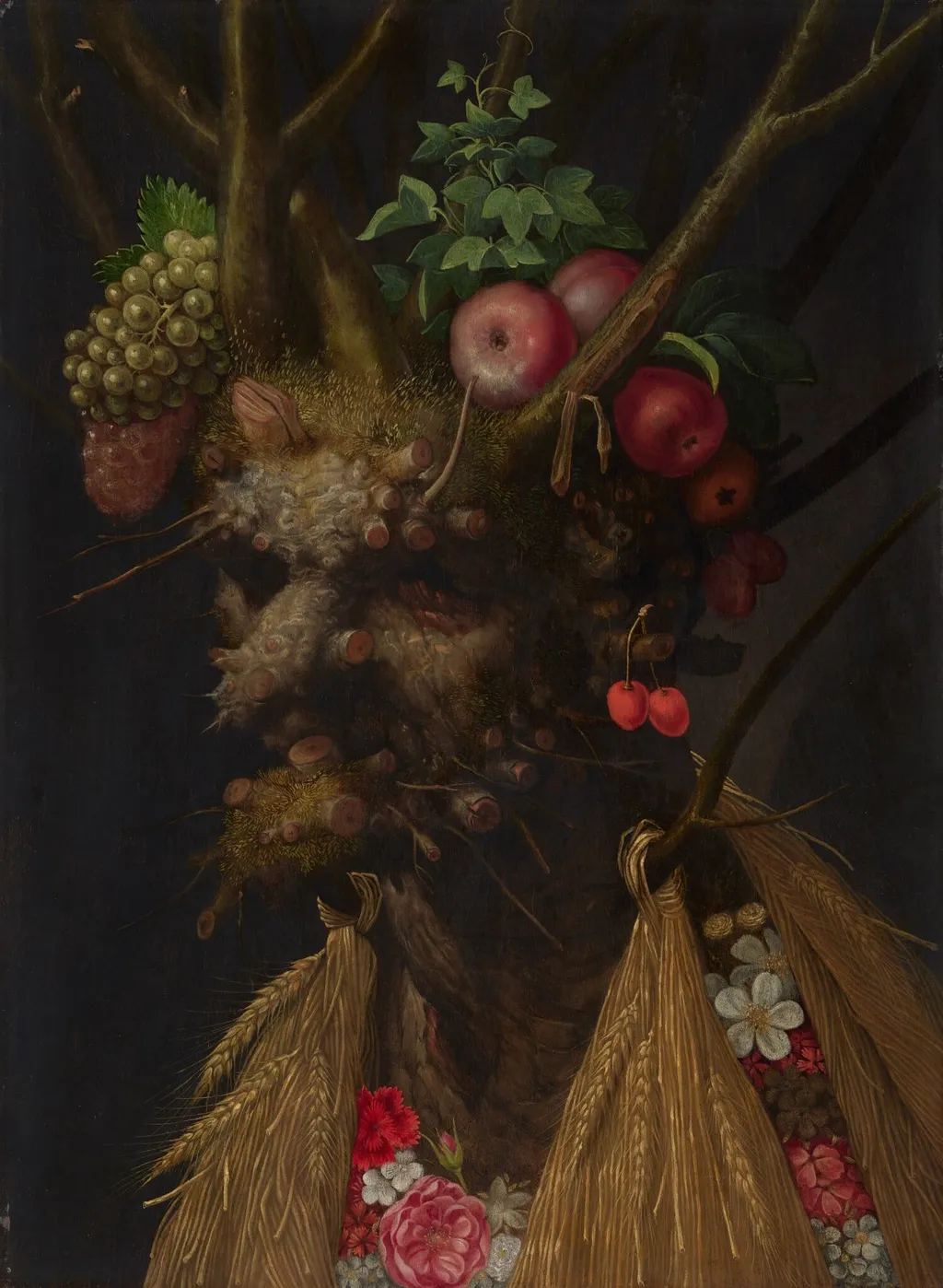
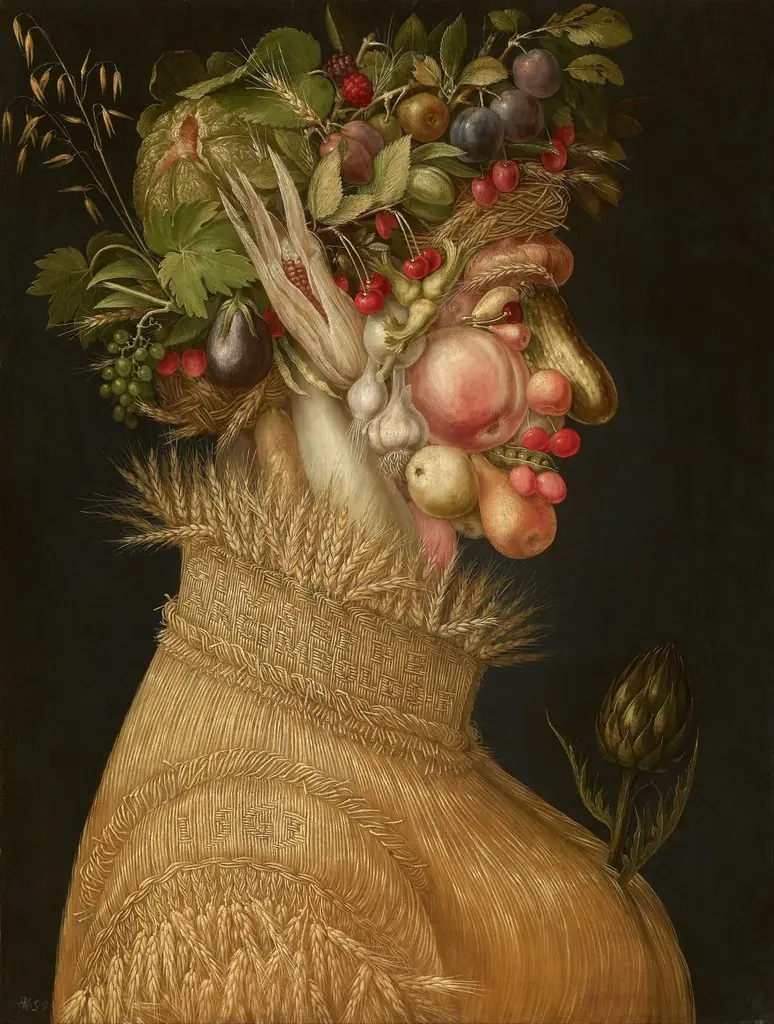
Four Seasons in One Head is an oil painting by the Mannerist artist Giuseppe Arcimboldo. It dates from 1590 and is held in the collection of the National Gallery of Art.
- Inscription
- Inscribed:upper right, on branch with peeling bark: ARCIMBOLDUS F
About this work
Subject & Meaning
Four Seasons in One Head is an allegorical painting in which Giuseppe Arcimboldo condenses the cycle of the four seasons into a single composite human head.
Four Seasons in One Head is an allegorical painting in which Giuseppe Arcimboldo condenses the cycle of the four seasons into a single composite human head. The work belongs to the genre of allegory, using the human figure as a vehicle to embody natural and temporal cycles rather than to portray an individual sitter.
The composition is understood in the context of Arcimboldo's late production, when he devised composite portraits in which flowers, fruits, leaves, and branches were arranged to suggest seasonal change. By merging the attributes of spring, summer, autumn, and winter into one head, the painting represents the unity of the yearly cycle and the harmonious continuity of nature, a theme consistent with Renaissance allegorical traditions.
The painting was made for the writer Gregorio Comanini, who discussed it in 1591 in Il Figino, overo del fine della Pittura, framing it within late Renaissance art theory concerned with the purpose and meaning of painting. Its allegorical subject thus carries both a naturalistic reading and a humanistic one, in which the head becomes a metaphor for the encompassing totality of the year.
Technique & Style
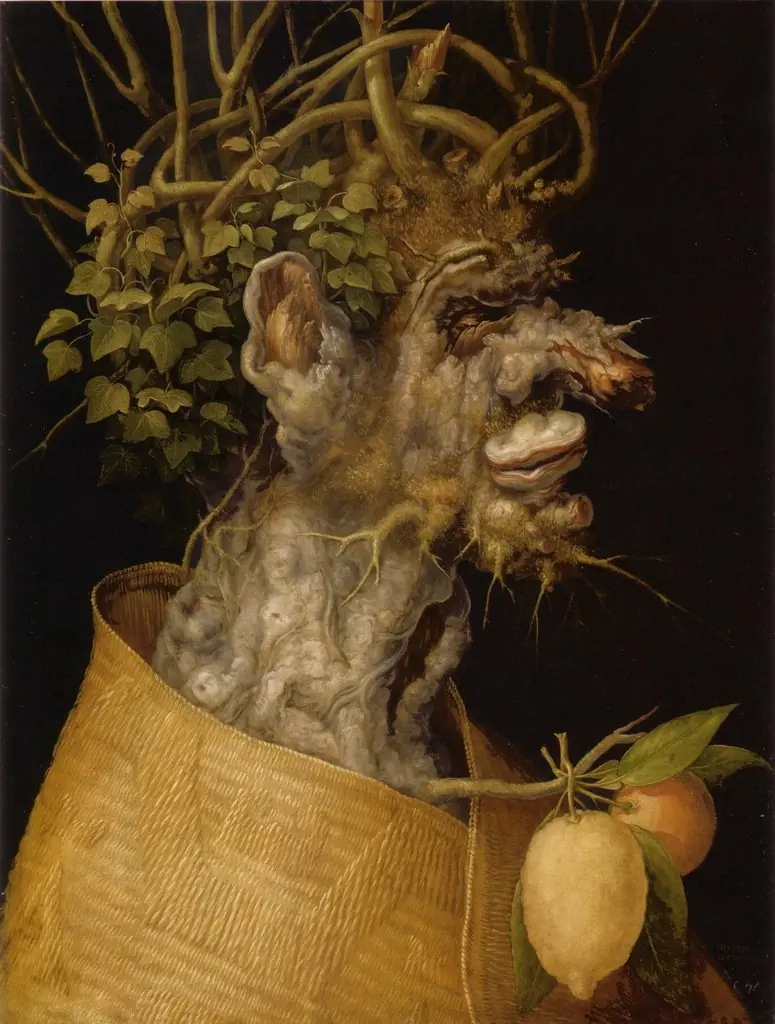
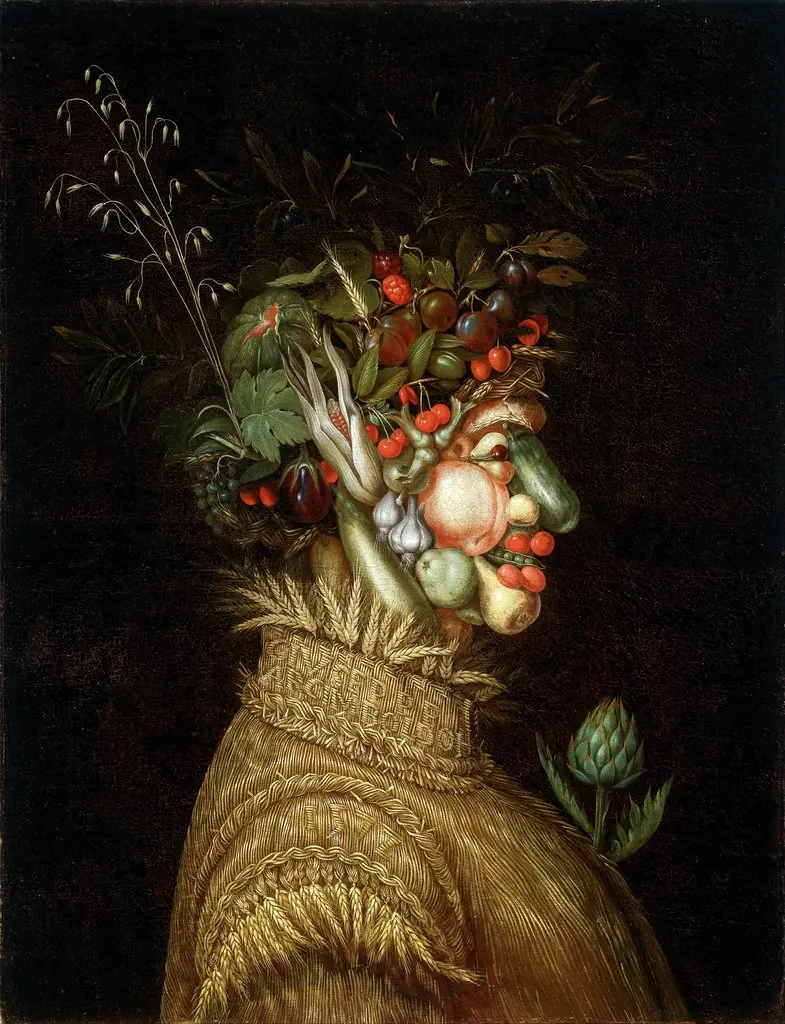
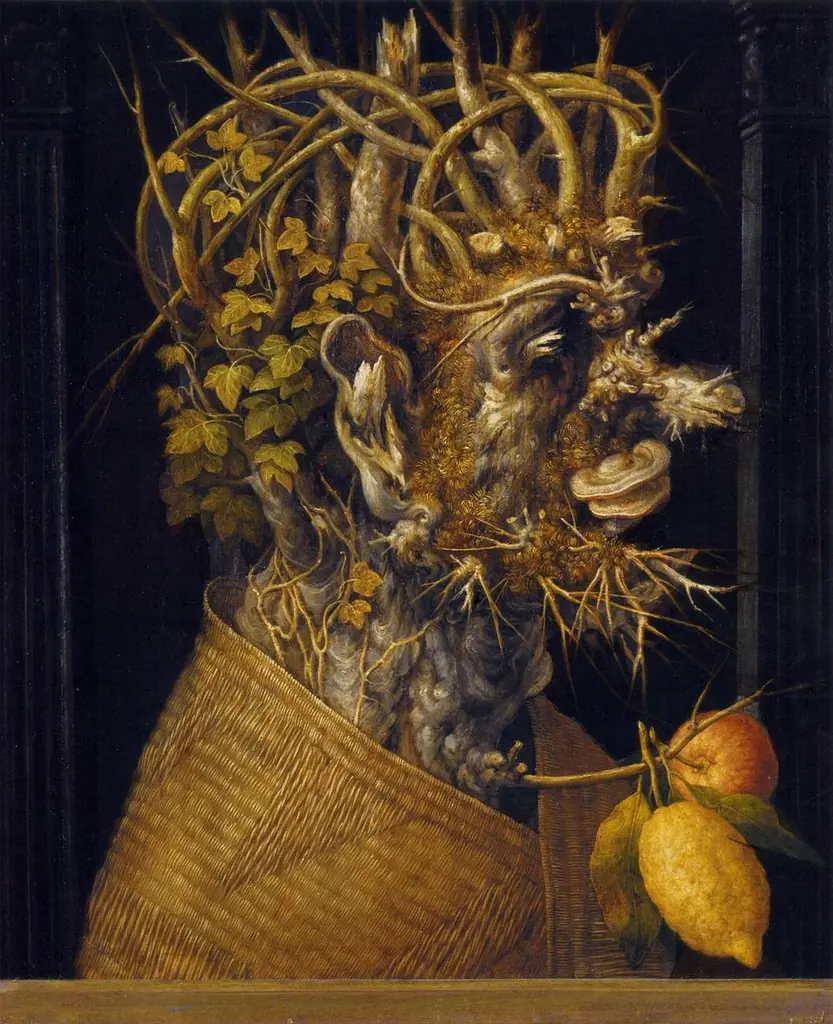
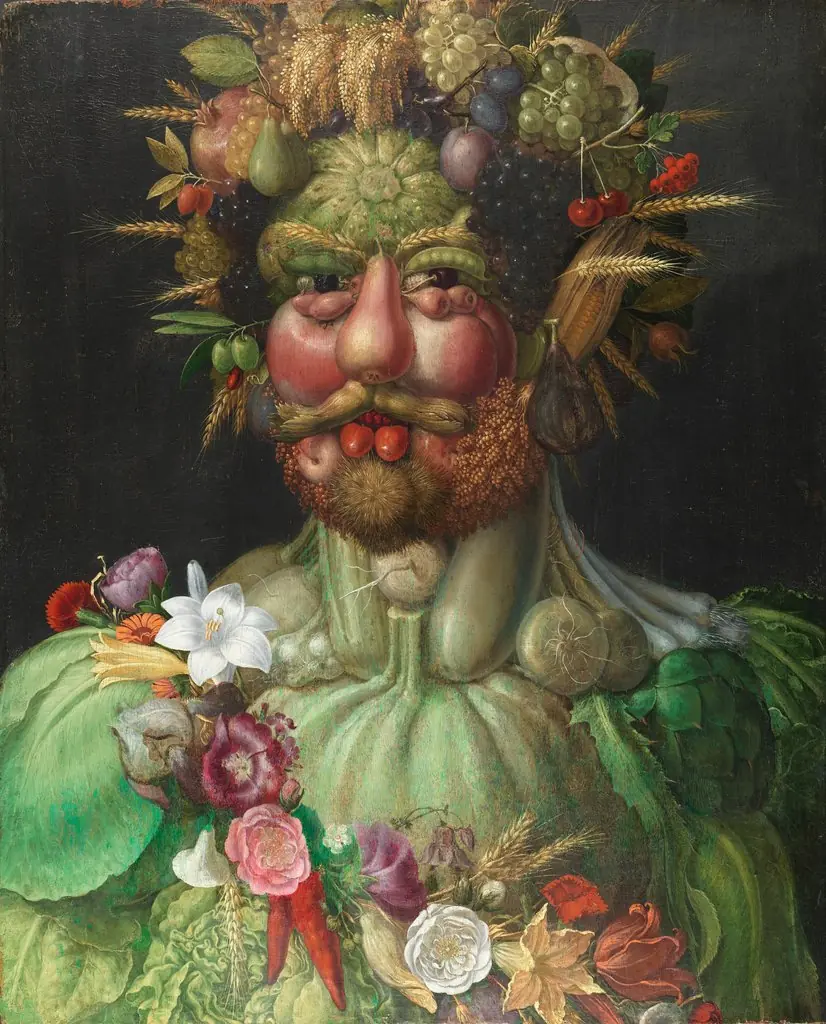
Executed in oil on a vertically oriented wood panel, the composition combines portraiture and allegory through a face assembled from seasonal flora and fauna. The artist renders each season in meticulous detail: spring blooms as a garland of flowers around the temples, summer appears as wheat and vine tendrils across the forehead, autumn forms fruit and foliage over the cheeks, and winter closes around the chin as gnarled roots and moss. The palette shifts from tender spring greens to warm summer golds, through rich autumn russets, to muted winter browns and grays.
The handling balances precision with painterly softness, particularly in the delicate transitions between seasonal zones and the subtle glazing that models form.
History & Provenance
The painting was created in 1590 by Giuseppe Arcimboldo for his friend the writer Gregorio Comanini, who mentions it in 1591. It remained in the collection of Giovanni Pietro Cortoni in Verona, where it was listed in the 1656 inventory after Cortoni's death. After disappearing from scholarly view, the work was rediscovered in 2006 in the collection of Ms. Stott in England, a family holding since the early twentieth century, and was sold that year to a private collection in the Netherlands.
It was later sold in 2010 through Pandora Old Masters, New York, and entered the National Gallery of Art, Washington, D.C. The panel measures 60.4 cm in height and 44.7 cm in width and is executed in oil on panel.
Overview
Giuseppe Arcimboldo's Four Seasons in One Head, an oil on panel painting from around 1590, presents a unique allegorical composition. The artwork features a human-like head meticulously assembled from various natural elements, including fruits, vegetables, and flowers. This inventive arrangement visually encapsulates the cyclical progression of the four seasons within a single, unified form, reflecting the artist's distinctive approach to portraiture and symbolism.
Context
As a court artist for three Holy Roman Emperors in Vienna and Prague, Giuseppe Arcimboldo was known for his versatile output. While he produced traditional portraits, he also specialized in these "grotesque symbolic compositions." His patrons likely appreciated the intellectual curiosity and sophisticated wit embedded in works like Four Seasons in One Head, which offered a departure from standard courtly depictions.
Own this work as a print
Artist & collection

Artist
Giuseppe Arcimboldo, also spelled Arcimboldi (Italian: ; 5 April 1527 – 11 July 1593), was an Italian Mannerist painter best known for creating imaginative portrait heads made entirely of objects such as fruits, vegetables, flowers, fish…