Artwork
Allegory of Winter
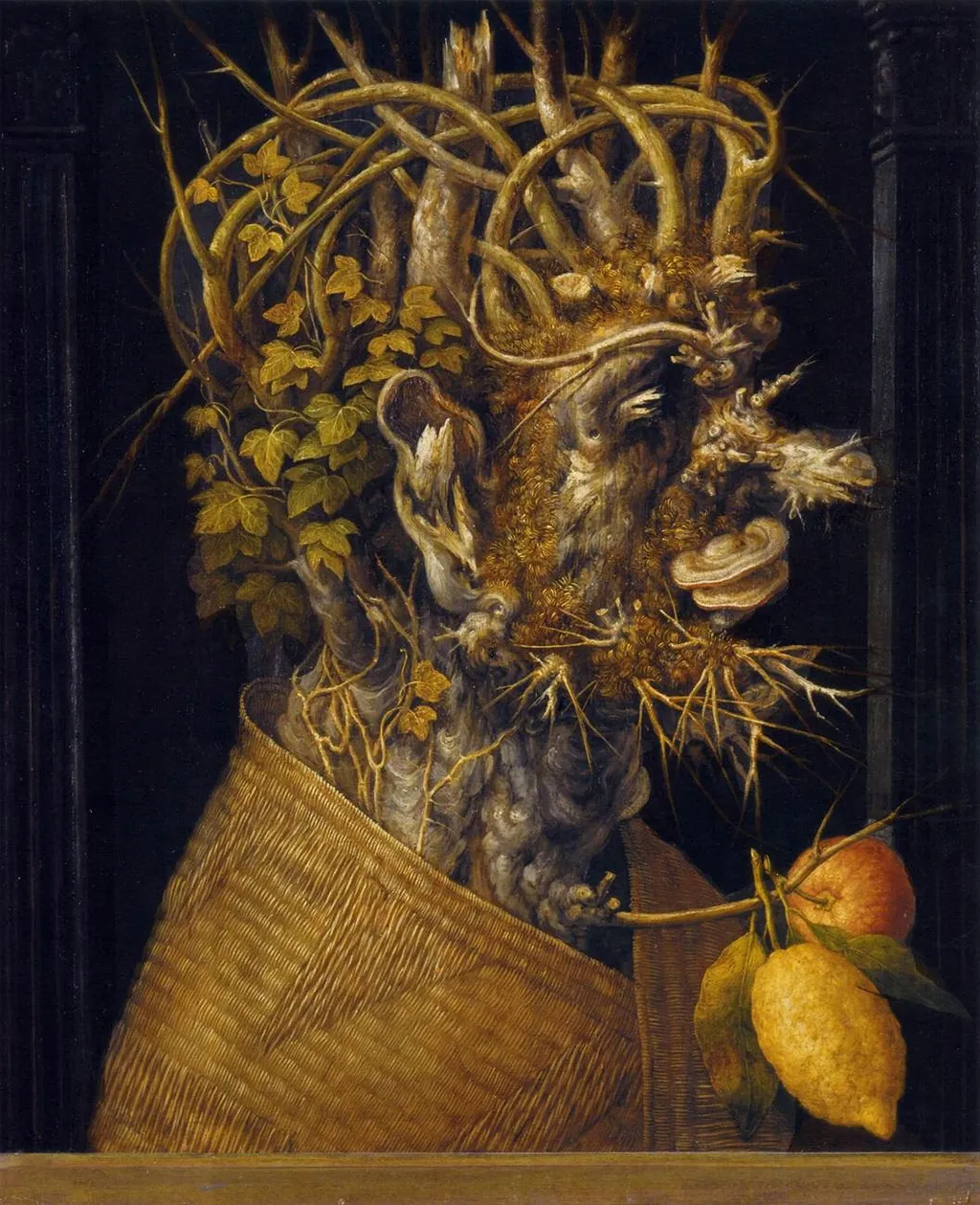
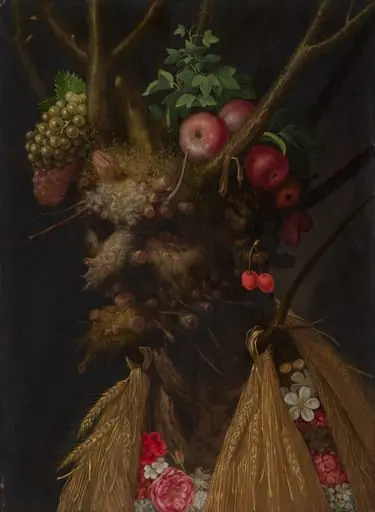
Allegory of Winter is an oil painting by the Mannerist artist Giuseppe Arcimboldo. It dates from 1560 and is held in the collection of the Bavarian State Painting Collections.
About this work
Subject & Meaning
Giuseppe Arcimboldo's Allegory of Winter is an allegorical painting that personifies the season through a composite portrait constructed from natural elements.
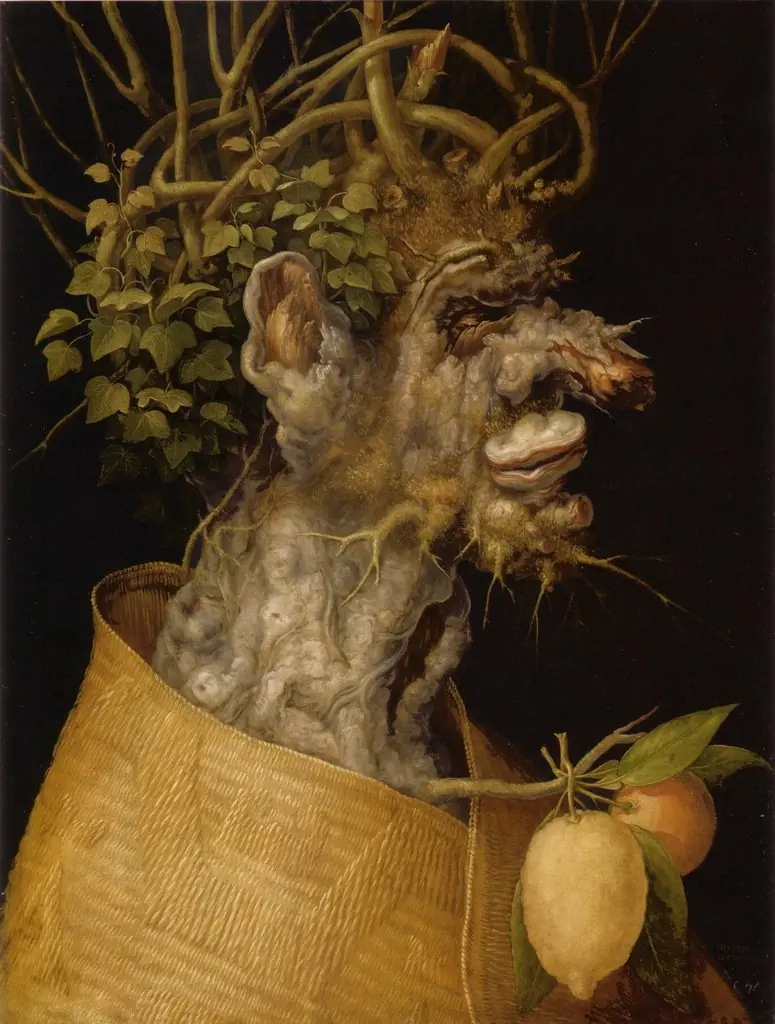
Giuseppe Arcimboldo's Allegory of Winter is an allegorical painting that personifies the season through a composite portrait constructed from natural elements. The work depicts a figure formed primarily of branches and leaves, creating a visual metaphor for the barrenness and structural starkness of the winter months. By assembling the human form from these specific organic components, the artist transforms the landscape into a singular subject, embodying the concept of Winter itself.
This composition serves as a symbolic representation of the season's character, utilizing the textures and forms of dormant vegetation to convey the passage of time and the cycle of nature. The piece functions as a visual riddle where the viewer must recognize the seasonal theme within the assembled botanical details.
Technique & Style
Executed in oil paint on a wooden panel, this work measures 67.5 cm in height and 57 cm in width. The composition depicts a male figure constructed entirely from natural elements associated with the season, specifically utilizing branches and leaves to form the anthropomorphic subject. This approach exemplifies the artist's distinctive style of creating allegorical portraits through the assemblage of organic objects.
History & Provenance
Giuseppe Arcimboldo created the oil painting Allegory of Winter in 1560. Executed on a panel support, the work depicts a male figure composed of branches and leaves to personify the season. While some records suggest a broader creation window between 1550 and 1560, the specific date of 1560 is established as the authoritative year of inception.
The painting currently resides in the Bavarian State Painting Collections, where it is housed within the Alte Pinakothek in Munich. No details regarding the original commissioner or the intermediate ownership chain prior to its arrival at the Bavarian State Painting Collections are provided in the available records.
The painting Allegory of Winter is held in the Bavarian State Painting Collections and is exhibited at the Alte Pinakothek in Munich. Created by Giuseppe Arcimboldo, the work dates to approximately 1560, though some records suggest a range beginning in 1550. Executed in oil on panel, the piece depicts a male figure composed of branches and leaves to personify the season.
While the work is part of a major public collection, specific inventory numbers and a detailed history of past exhibitions are not provided in the available records.
Context
Allegory of Winter, painted by Giuseppe Arcimboldo in 1560, exemplifies the artist's signature allegorical style that personifies the seasons through symbolic natural elements. The work, housed in the Bavarian State Painting Collections at the Alte Pinakothek in Munich, features a figure composed of winter motifs such as a branch and leaf, reflecting Renaissance humanist interests in nature's cycles and moral allegories. Scholarship emphasizes its integration of artistic innovation with courtly intellectual discourse, situating it within Arcimboldo's broader exploration of elemental personifications that influenced later symbolic art. Its enduring significance lies in redefining allegory as a vehicle for philosophical commentary during the late Renaissance.
The painting's reception history highlights its contemporary acclaim at the Habsburg court, where such works served diplomatic and cultural purposes, while modern scholarship analyzes its technical mastery and conceptual depth within Arcimboldo's oeuvre, cementing its role in narratives of early modern visual rhetoric.
Overview
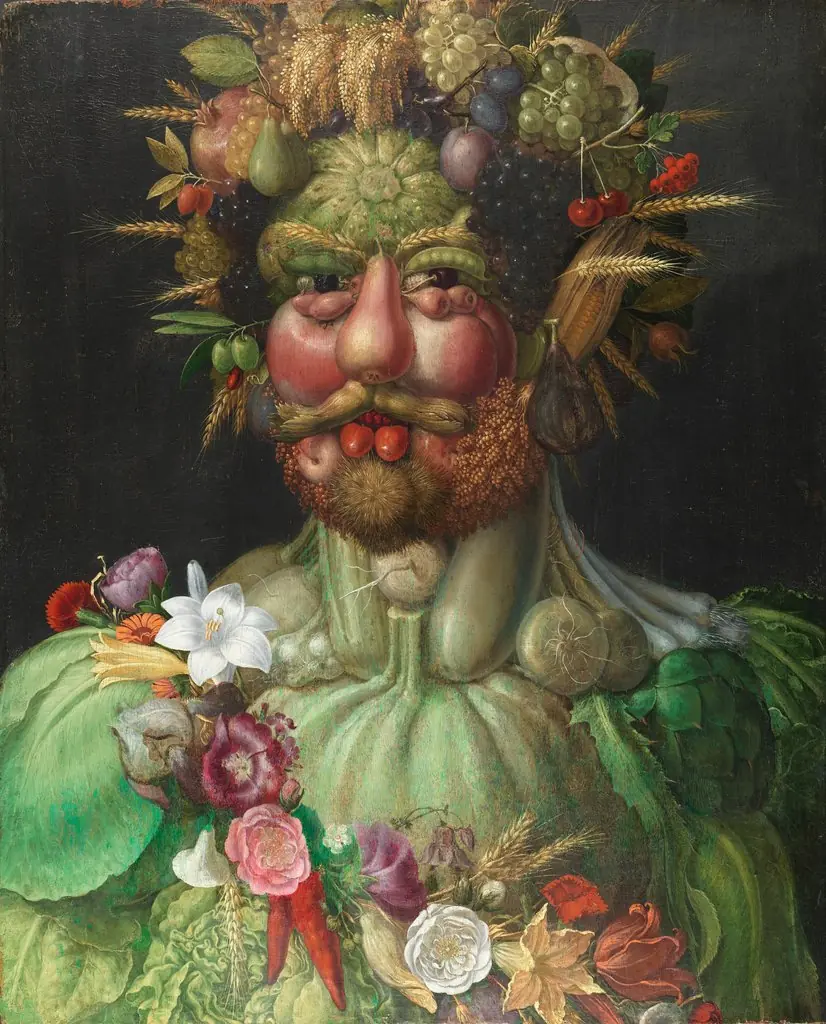
Created in 1560, Allegory of Winter is an oil painting by Giuseppe Arcimboldo executed in the Mannerist idiom. It belongs to the artist’s celebrated series of composite portraits, in which human features are assembled from natural objects. The work presents a winter-themed visage composed entirely of dead branches, twigs, leaves, and a straw hat, with a few fruit elements placed nearby.
Artist & collection

Artist
Giuseppe Arcimboldo, also spelled Arcimboldi (Italian: ; 5 April 1527 – 11 July 1593), was an Italian Mannerist painter best known for creating imaginative portrait heads made entirely of objects such as fruits, vegetables, flowers, fish…