Artwork
The Fall of Man: Adam
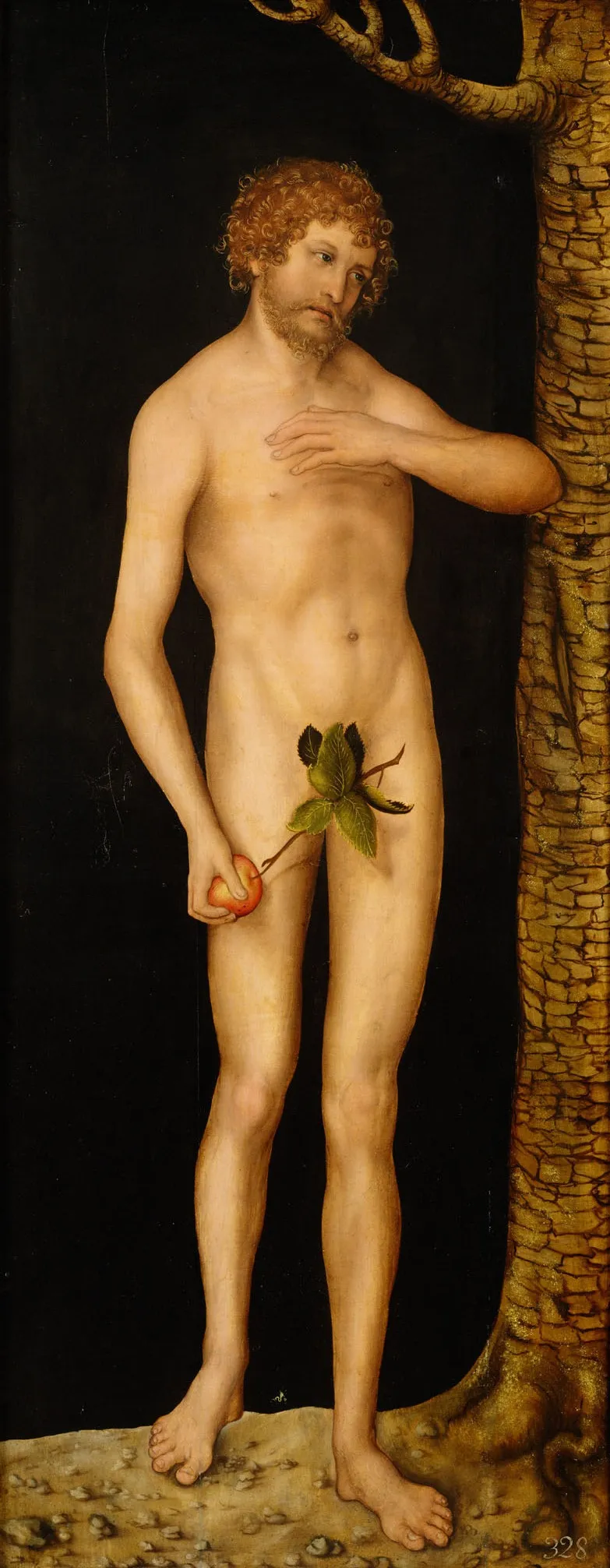
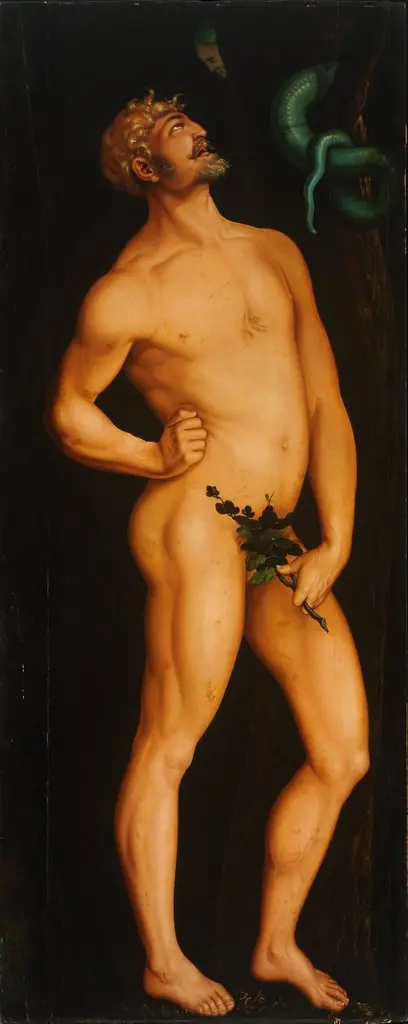
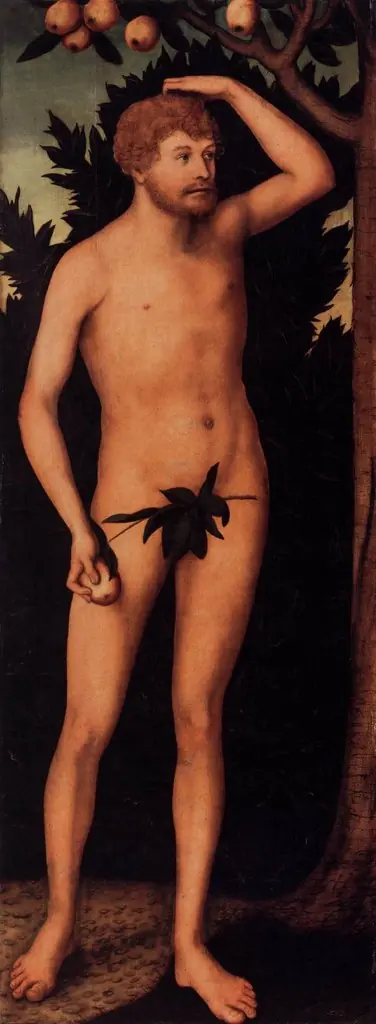
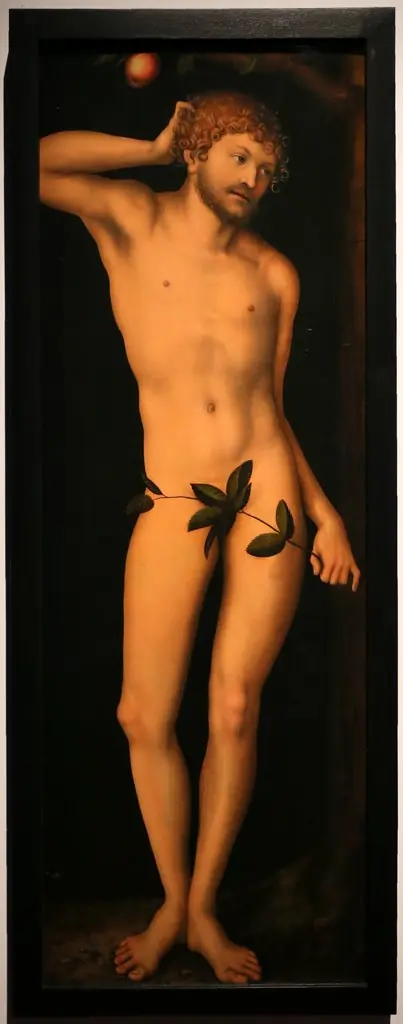
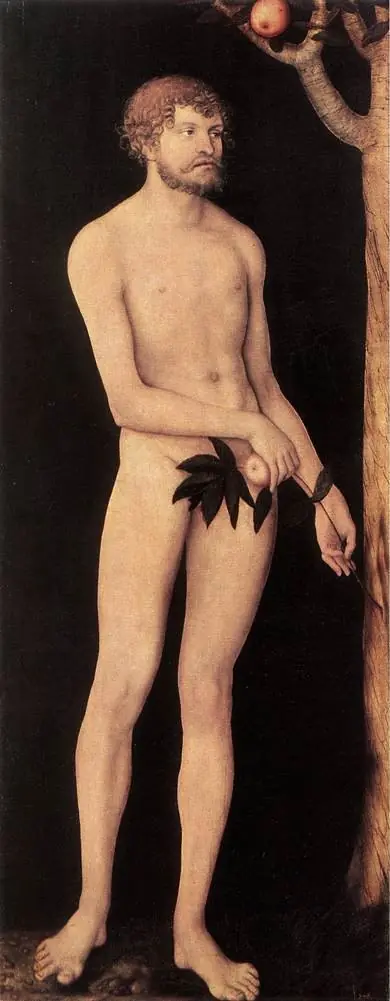
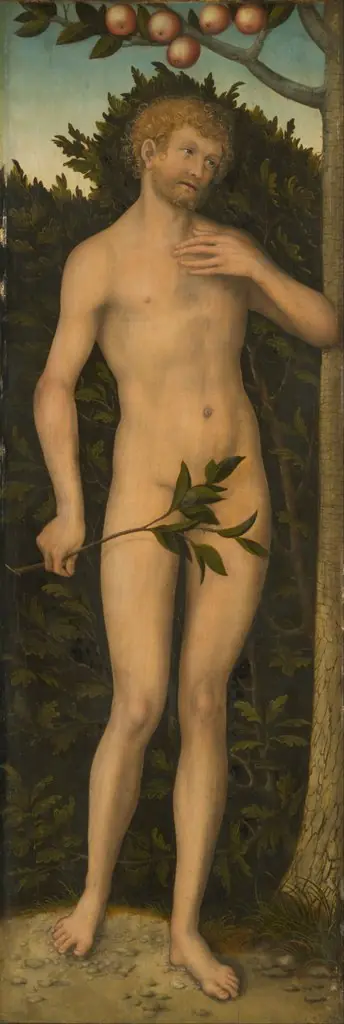
The Fall of Man: Adam is an unspecified painting by the Northern Renaissance artist Lucas Cranach the Elder. It dates from 1515 and is held in the collection of the Kunsthistorisches Museum.
About this work
Subject & Meaning
The painting depicts the biblical moment of humanity's first disobedience when Adam and Eve eat the forbidden fruit.
The painting depicts the biblical moment of humanity's first disobedience when Adam and Eve eat the forbidden fruit. The apple functions as a conventional symbol of temptation and original sin within Christian iconography, while the surrounding tree represents the Garden of Eden. This scene illustrates the theological concept of the Fall, marking humanity's separation from divine grace and the introduction of moral frailty into the human condition.
Technique & Style
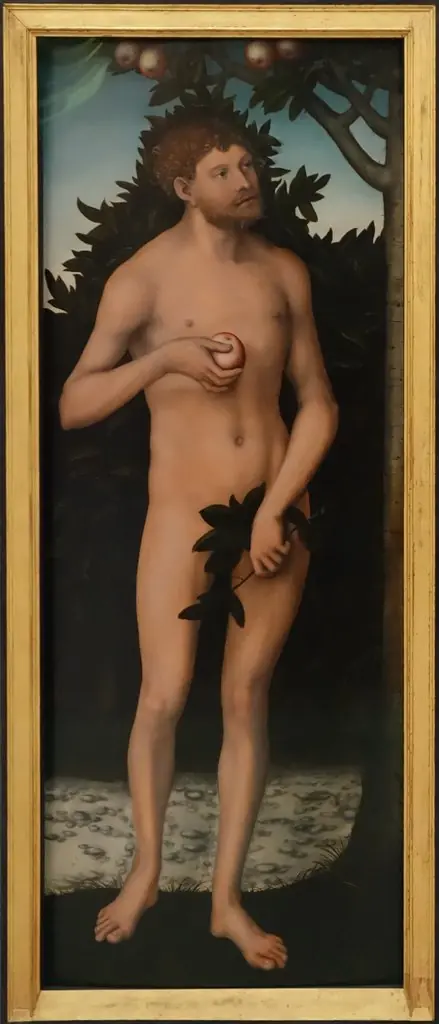
The work is executed on a lime panel, a wooden support typical of early 16th-century panel painting. The composition depicts Adam reaching toward the forbidden fruit beneath a tree, with the serpent implied in the surrounding foliage. The tonal modeling and crisp outlines reflect Cranach's characteristic blend of Northern Renaissance detail with courtly grace. The surface exhibits fine brushwork and subtle glazing that unify the figures within a flattened pictorial space.
History & Provenance
Created in 1515 by Lucas Cranach the Elder, the painting The Fall of Man: Adam was executed on a lime panel. The work serves as a pendant to a companion piece depicting Eve, forming a pair that illustrates the biblical narrative of the Fall of Man. Both paintings were produced during the height of Cranach's career in Germany and are characterized by their religious genre and specific iconography, including the apple and the tree.
The artwork is currently held in the Kunsthistorisches Museum in Vienna, Austria, where it is displayed in the German Painters - Salon IX. The panel measures 137 cm in height and 54 cm in width. While the specific commission details are not recorded in the provided sources, the precise dating of 1515 establishes its place within the artist's early sixteenth-century output.
The painting The Fall of Man: Adam is held in the collection of the Kunsthistorisches Museum in Vienna, Austria. Within the museum, the work is displayed in the German Painters gallery, specifically located in Salon IX. Created in 1515, this lime panel serves as a pendant piece.
No specific inventory or accession numbers are provided in the available records, nor is there documentation regarding its exhibition history outside of its permanent placement within the museum's German Painters section.
Legacy
The painting's influence is indicated by its continued presence in scholarly discussions of Northern Renaissance religious art and its documented impact on later depictions of biblical narratives, though specific later works directly citing it are not detailed in the sources. Its reputation is tied to its status as a significant pendant painting within the Kunsthistorisches Museum's collection, reflecting the enduring scholarly interest in Cranach's work. Legacy is evidenced by its classification as a key example of German religious painting from the early 16th century, housed in a major European institution.
Overview
Created in 1515 by Lucas Cranach the Elder, this lime‑panel painting portrays the biblical figure Adam at the moment of the original transgression. The work is part of the collection of the Kunsthistorisches Museum in Vienna and measures a modest size typical of Cranach’s early religious commissions.
Context
Cranach, a close associate of Martin Luther, frequently produced biblical subjects that balanced devotional intent with courtly elegance. This depiction of Adam aligns with his broader oeuvre, which often presented Old Testament figures in a humanized, approachable manner, catering to both private patrons and public devotional settings.
Artist & collection
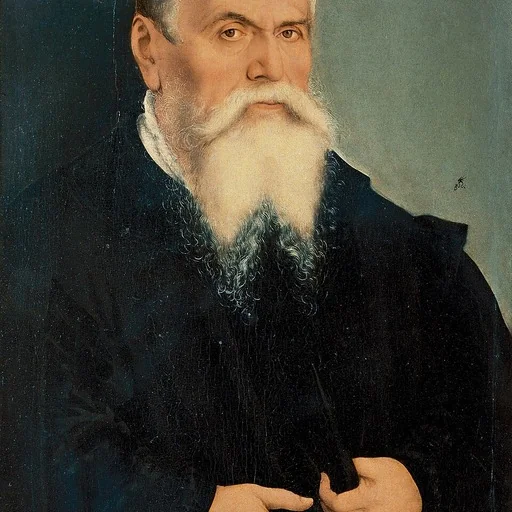
Artist
Lucas Cranach the Elder was a German Renaissance painter and printmaker in woodcut and engraving.