Artwork
清 郎世寧 百駿圖白描稿 卷|One Hundred Horses
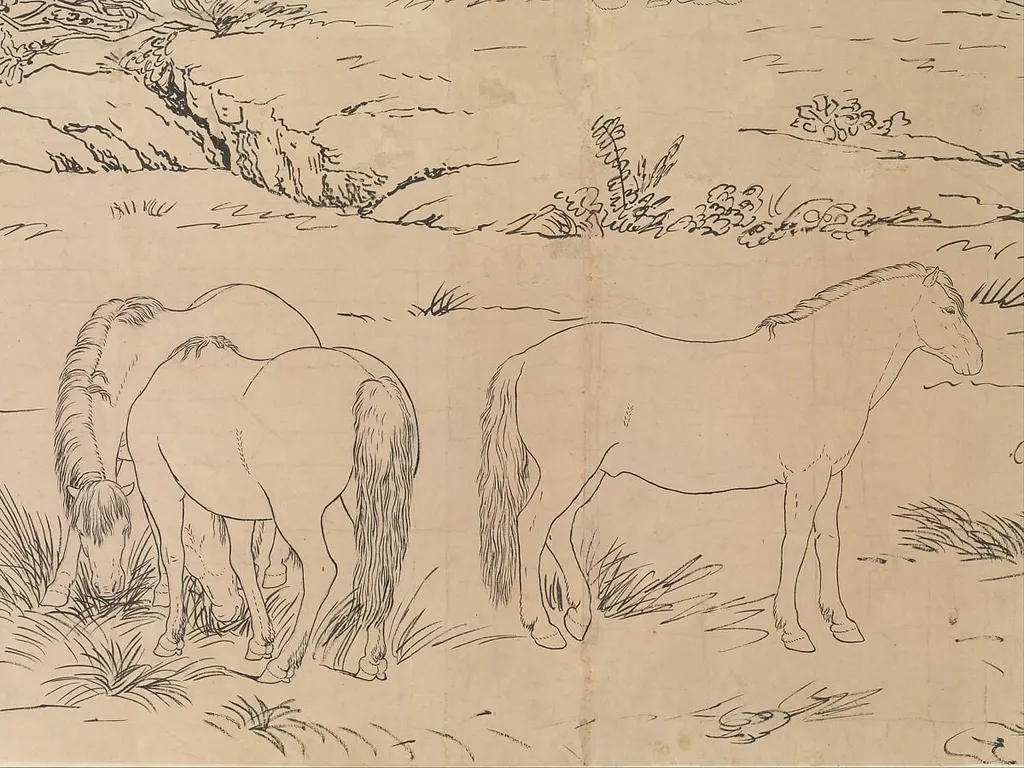
清 郎世寧 百駿圖白描稿 卷|One Hundred Horses is an ink painting by the Baroque artist Giuseppe Castiglione. It dates from 1724 and is held in the collection of the Metropolitan Museum of Art.
- Accession no.
- 1991.134
- Credit line
- Purchase, Friends of Asian Art Gifts, 1991
About this work
Subject & Meaning
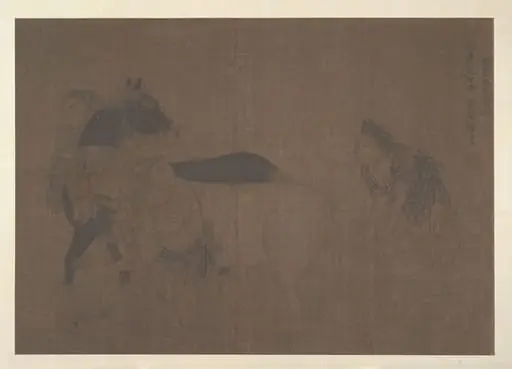
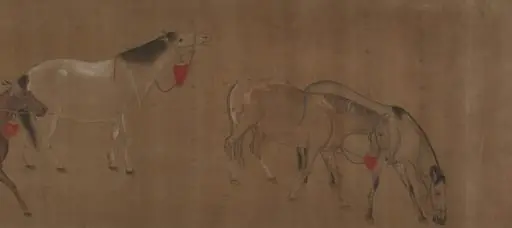
As a preparatory study, the work emphasizes the precise delineation of the animals' forms and postures through linear brushwork rather than color or shading.
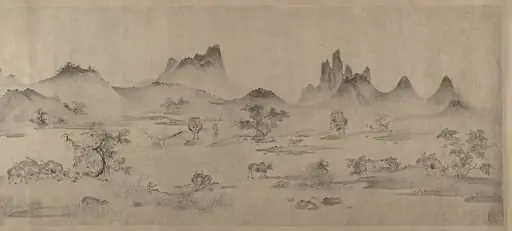
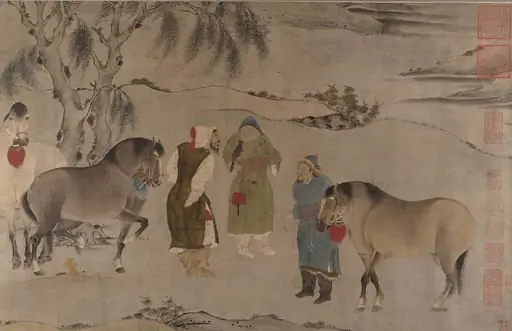
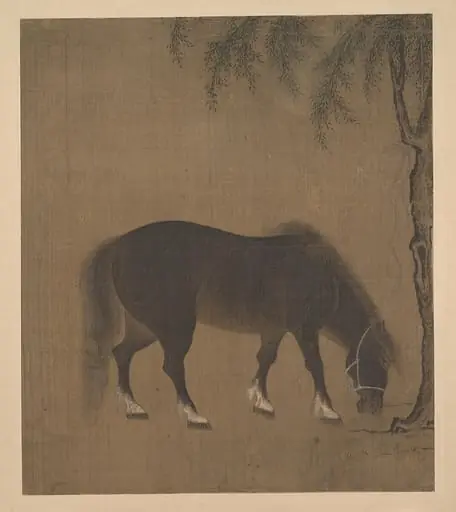
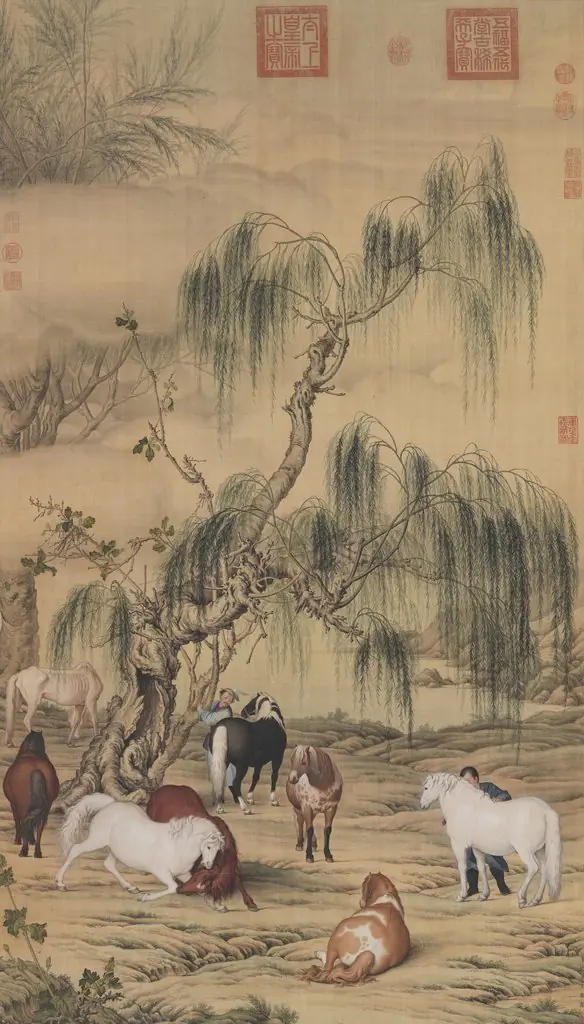
This 1723 handscroll serves as an ink-on-paper draft depicting one hundred horses. The composition focuses entirely on equine subjects, presenting them within a landscape setting. As a preparatory study, the work emphasizes the precise delineation of the animals' forms and postures through linear brushwork rather than color or shading.
The sheer number of horses suggests a theme of imperial abundance and the significance of horse breeding to the Qing court. The draft nature of the piece highlights the artist's process in organizing a complex multi-figure scene before executing the final painted version.
Technique & Style
The work is a handscroll painted in ink on paper, portraying a horse in a landscape genre. It was created in China in 1723 by Giuseppe Castiglione, who employed a draftsman’s approach to render the animal with delicate brushwork and subtle tonal gradations. The composition emphasizes fluid line and negative space, characteristic of the white‑washed style, while the paper support contributes to the scroll’s flexible handling and overall material presence.
History & Provenance
The work is a draft preparatory drawing by Giuseppe Castiglione, dated to 1723 and executed in ink on paper as a handscroll. It was produced in China and is associated with the Metropolitan Museum of Art, where it is held in the museum's collection. The sources do not specify a commissioner, an earlier ownership chain, or any subsequent transfers of the work prior to or following its acquisition by the Metropolitan Museum of Art.
The handscroll titled One Hundred Horses, painted in ink on paper by Giuseppe Castiglione in 1723, is part of the Metropolitan Museum of Art's collection in New York. It is cataloged under the accession number 1981.381 and has been exhibited in the museum's Asian Art galleries as part of ongoing displays of Chinese painting and European influences in Qing dynasty art.
The work measures 94 cm in height and 789.3 cm in width and was created in China before entering the museum's collection.
Legacy
The work is recognized for pioneering a hybrid brush technique that blends European chiaroscuro with Chinese ink wash, influencing subsequent Qing court painters and later modern artists who revived its dynamic equine compositions. Its compositional approach to depicting horses became a reference point in both traditional scroll painting and contemporary reinterpretations of animal subjects.
Overview
Created in 1724, the hand‑scroll titled One Hundred Horses is an ink drawing on thin paper attributed to Giuseppe Castiglione. The work measures several meters in length and presents a continuous procession of more than one hundred equine figures, arranged in varied poses that include grazing, trotting and standing still.
Context
During the early eighteenth century the Qing court encouraged the incorporation of foreign techniques into native art, a policy that allowed artists like Castiglione to experiment with hybrid visual languages. This scroll exemplifies that cultural exchange, illustrating how European draftsmanship could be adapted to Chinese thematic conventions.
Artist & collection