Artwork
宋/元 佚名 百牛圖 卷|One hundred water buffalo
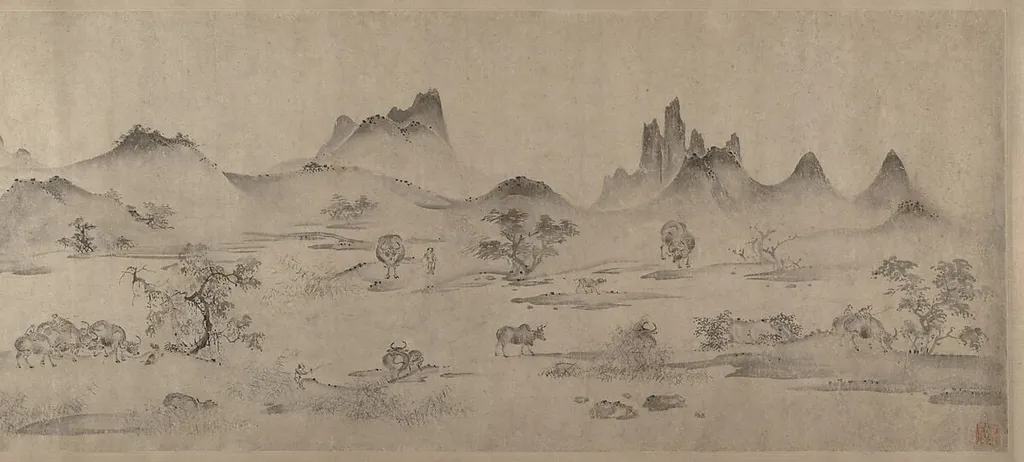
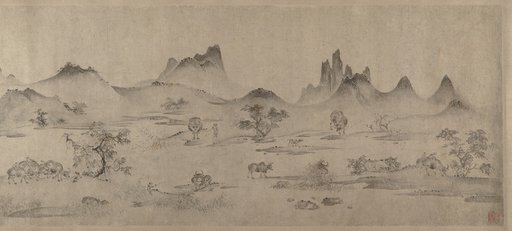
宋/元 佚名 百牛圖 卷|One hundred water buffalo is an ink painting by the Song dynasty painting artist After Jiangcan. It dates from 1249 and is held in the collection of the Metropolitan Museum of Art.
About this work
Technique & Style
Attributed to an anonymous artist working in the style of Jiangcan, the piece exemplifies the genre's focus on rural life and natural settings.
Created in 1249, this handscroll is executed in ink on paper, a traditional medium for Chinese landscape painting. The work measures 31.8 cm in height and 221.8 cm in width, presenting a continuous landscape populated by numerous water buffalo. Attributed to an anonymous artist working in the style of Jiangcan, the piece exemplifies the genre's focus on rural life and natural settings.
The formal qualities emphasize the depiction of the animals within their environment, utilizing the fluidity of ink on paper to render the forms and textures of the buffalo and the surrounding scenery. As a handscroll, the format necessitates a specific mode of viewing, where the narrative unfolds sequentially as the scroll is unrolled, allowing for an intimate engagement with the detailed rendering of the subjects.
History & Provenance
The handscroll is dated to 1249 and attributed to an anonymous painter active during the Song–Yuan transition. It entered the Metropolitan Museum of Art collection with no recorded prior ownership chain, and its creation history situates it within the thirteenth-century Chinese tradition of animal-and-landscape painting. The work's inscription provides the date, while its material, format, and subject align with scholarly descriptions of thirteenth-century Chinese handscrolls depicting water buffalo in pastoral landscapes.
Overview
This handscroll, titled One Hundred Water Buffalo, is an ink-on-paper painting attributed to an artist working after Jiangcan, created in 1249 during the Song or Yuan dynasty. The extensive composition unfolds across a long scroll, presenting numerous water buffalo engaged in various activities. It offers a detailed observation of these animals within a natural landscape setting, characteristic of the period's focus on nature.
Subject & Meaning
The artwork features a multitude of water buffalo, depicted along a riverbank. These animals are shown in a range of natural poses, either grazing peacefully, quenching their thirst, or resting serenely. The composition avoids formal arrangements, instead capturing the buffalo in unposed, everyday moments, which was an uncommon approach in Chinese painting of its era.
Artist & collection

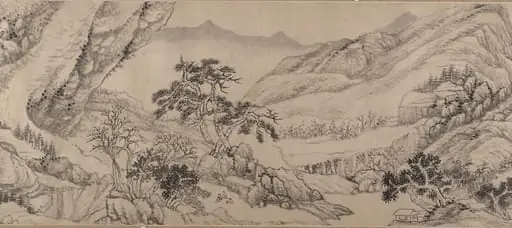
- 清 柳堉 山水圖 卷|Traveling Amid Streams and Mountains
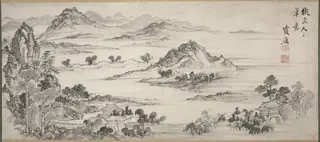 West Lake
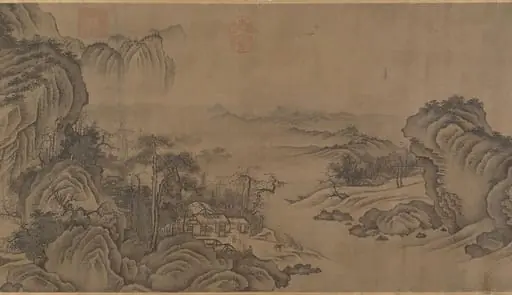 元/明 佚名 舊傳 燕文貴 秋山蕭寺圖 軸|Buddhist Temples amid Autumn Mountains
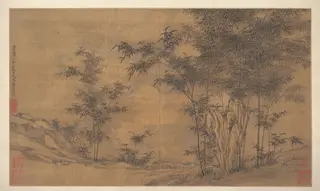 清 佚名 舊傳管道昇 竹石圖 冊頁|Bamboo
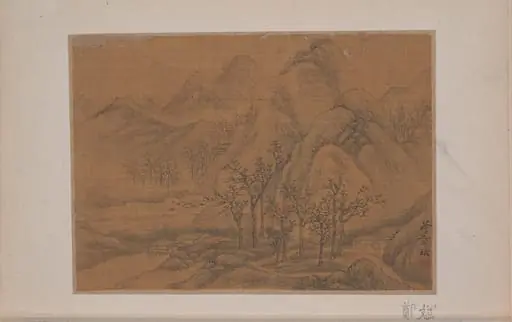 Untitled
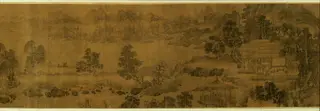 The Wangchuan Villa
 清 伊秉綬 山水 冊|Landscapes
 Untitled
 南宋 米友仁 雲山圖 卷|Cloudy Mountains
 A Solitary Crane in the Bamboo Grove
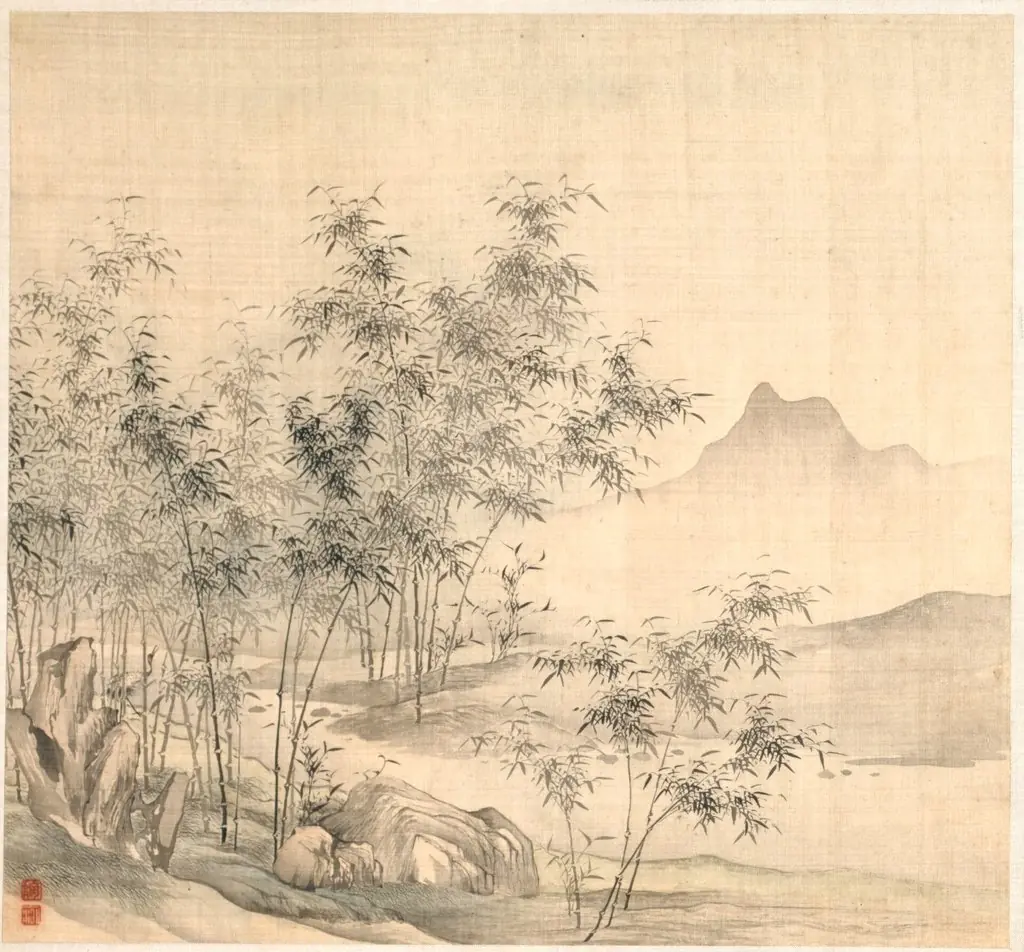 A Solitary Crane in the Bamboo Grove
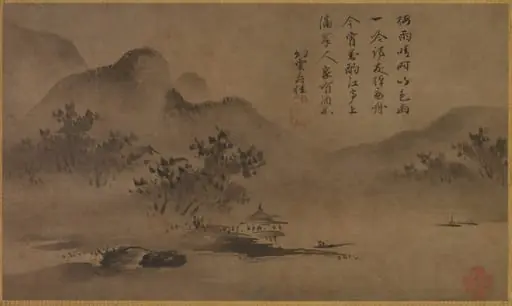 Landscape