Artwork
Luxembourg Gardens
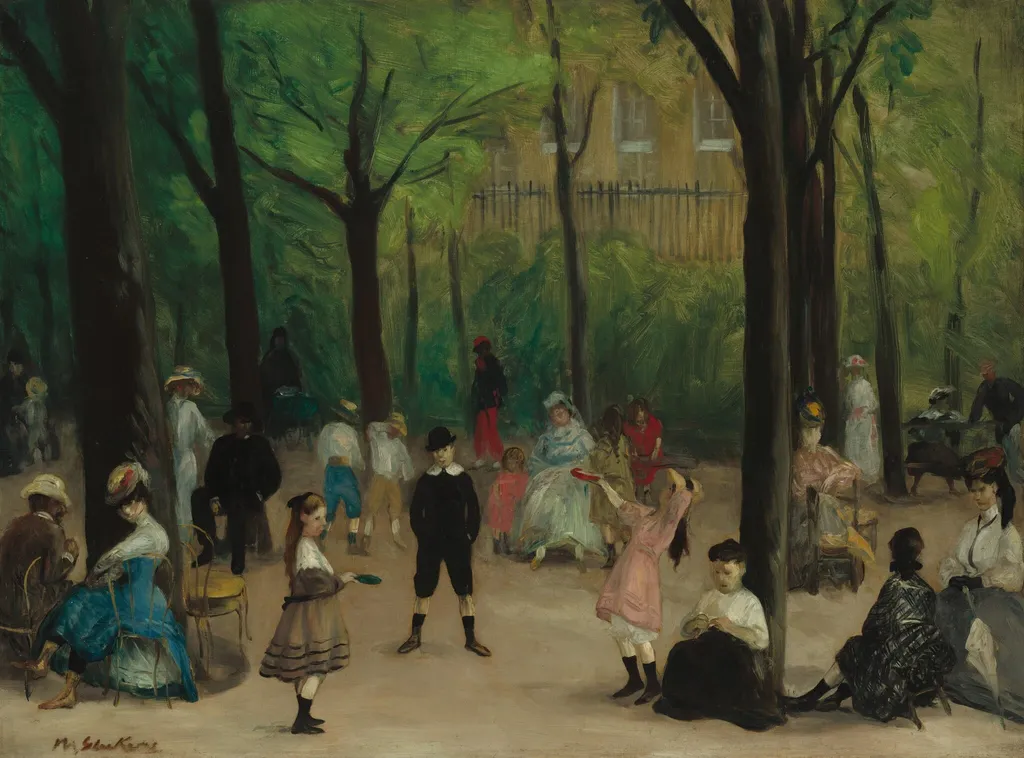
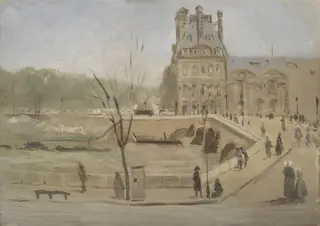
Luxembourg Gardens is an oil painting by the Impressionist artist William James Glackens. It dates from 1906 and is held in the collection of the National Gallery of Art.
- Inscription
- Inscribed:lower left: W[m?] Glackens
About this work
Subject & Meaning
By focusing on this natural form, Glackens emphasizes the interplay of light and foliage, inviting viewers to experience the quiet ambience of the public space.
The painting titled Luxembourg Gardens presents a solitary tree as its central visual element. According to the catalog entry, the work depicts a tree, situating the subject within the garden’s landscape. The tree functions as the primary motif through which the artist conveys the tranquil, verdant character of the park.
By focusing on this natural form, Glackens emphasizes the interplay of light and foliage, inviting viewers to experience the quiet ambience of the public space. The composition thus reflects the garden’s role as a cultivated retreat within the urban environment.
History & Provenance
William Glackens created the oil painting Luxembourg Gardens in 1906. The work depicts a tree scene and was executed on canvas. By 1937, the painting was on consignment from the artist to Kraushaar Galleries in New York.
It was subsequently purchased in April 1937 by the Corcoran Gallery of Art in Washington, D.C. The National Gallery of Art, also in Washington, D.C., acquired the piece in 2014, where it remains part of the collection.
William Glackens' 1906 painting Luxembourg Gardens is currently held in the collection of the National Gallery of Art in Washington, D.C. The work was acquired by the gallery in 2014, having previously been purchased in April 1937 by the Corcoran Gallery of Art. Prior to the Corcoran acquisition, the painting was on consignment from the artist to the Kraushaar Galleries in New York by 1937. The piece remains part of the National Gallery of Art's permanent holdings.
Overview
William Glackens completed Luxembourg Gardens in 1906, an oil on canvas painting. This work captures a vibrant outdoor scene within the famous Parisian park. The artist employed a bright palette and dynamic brushwork to depict figures enjoying leisure time under the dappled light filtering through the trees, characteristic of his approach to urban landscapes.
Technique & Style
Glackens utilized oil on canvas to create a lively and immediate impression of the scene. His technique is characterized by loose, visible brushwork and a vibrant application of color, particularly soft greens and warm light that imbue the canvas with a sense of vitality. This rapid execution aimed to capture the fleeting quality of the moment, a hallmark of his artistic method for outdoor subjects.
Context
This depiction of the Luxembourg Gardens aligns with William Glackens' frequent exploration of sunny outdoor environments. Throughout his career, he was drawn to scenes of public leisure and urban parks, often rendering them with an emphasis on light and movement. Such works reflect a broader artistic interest in capturing the everyday life and vibrant atmosphere of modern cities during the early 20th century.
Own this work as a print
Artist & collection
Artist
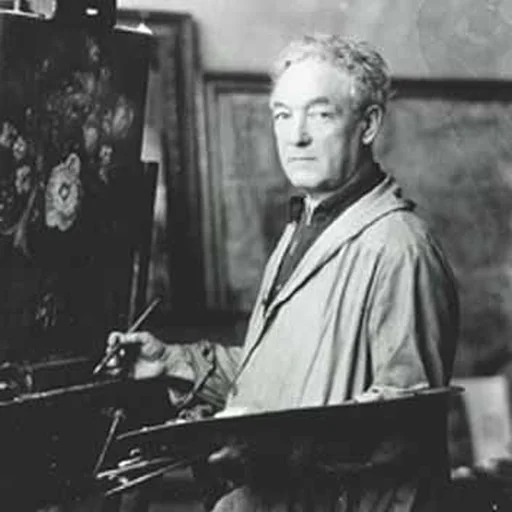
William James Glackens was an American realist painter and one of the founders of the Ashcan School, which rejected the formal boundaries of artistic beauty laid down by the conservative National Academy of Design.

 Boston Common
 The Municipal Garden, Pontoise
 Boston Common
 Parc Cordier in Trouville
 Café Scene
 Place de la Concorde
 Herroja ja naisia terassilla, kopio Antoine Watteaun mukaan, osa
 La Grande Jatte (Study VII)
 Portrait d'Ernest Hoschedé et sa fille Marthe
 Pont Royal in Paris. Sketch
- Luxembourg Gardens. Monument to Chopin