Artwork
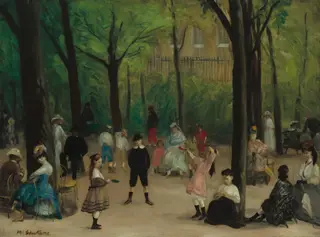
Luxembourg Gardens. Monument to Chopin
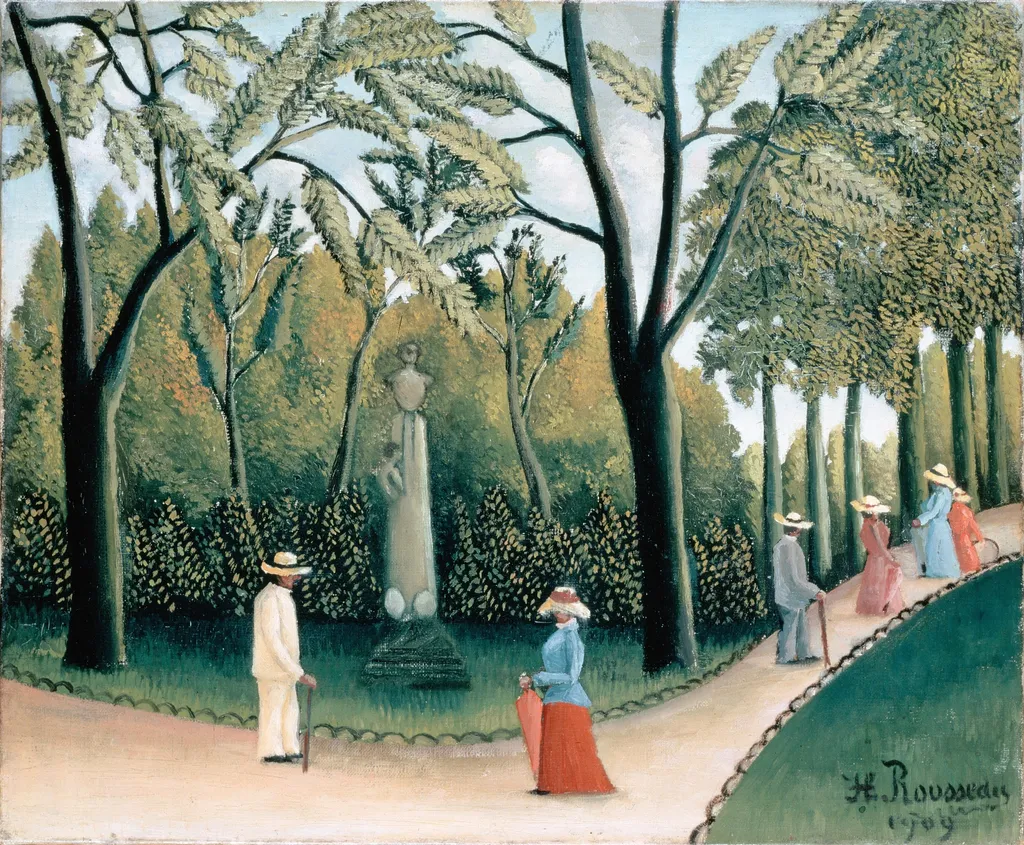
Luxembourg Gardens. Monument to Chopin is an oil painting by the Naïve art artist Henri Rousseau. It dates from 1909 and is held in the collection of the Hermitage Museum. Painted in 1909, Luxembourg Gardens.
About this work
Overview
Rousseau’s untrained approach to perspective and form aligns with what became known as Naïve art, a style that later gained recognition among modernist circles.
Painted in 1909, Luxembourg Gardens. Monument to Chopin is an oil work by Henri Rousseau, a French artist who began painting in middle age after a career as a customs officer. The piece captures a quiet moment in the Jardin du Luxembourg, featuring a statue dedicated to the composer Frédéric Chopin amid a landscaped park.
Rousseau’s untrained approach to perspective and form aligns with what became known as Naïve art, a style that later gained recognition among modernist circles.
Subject & Meaning
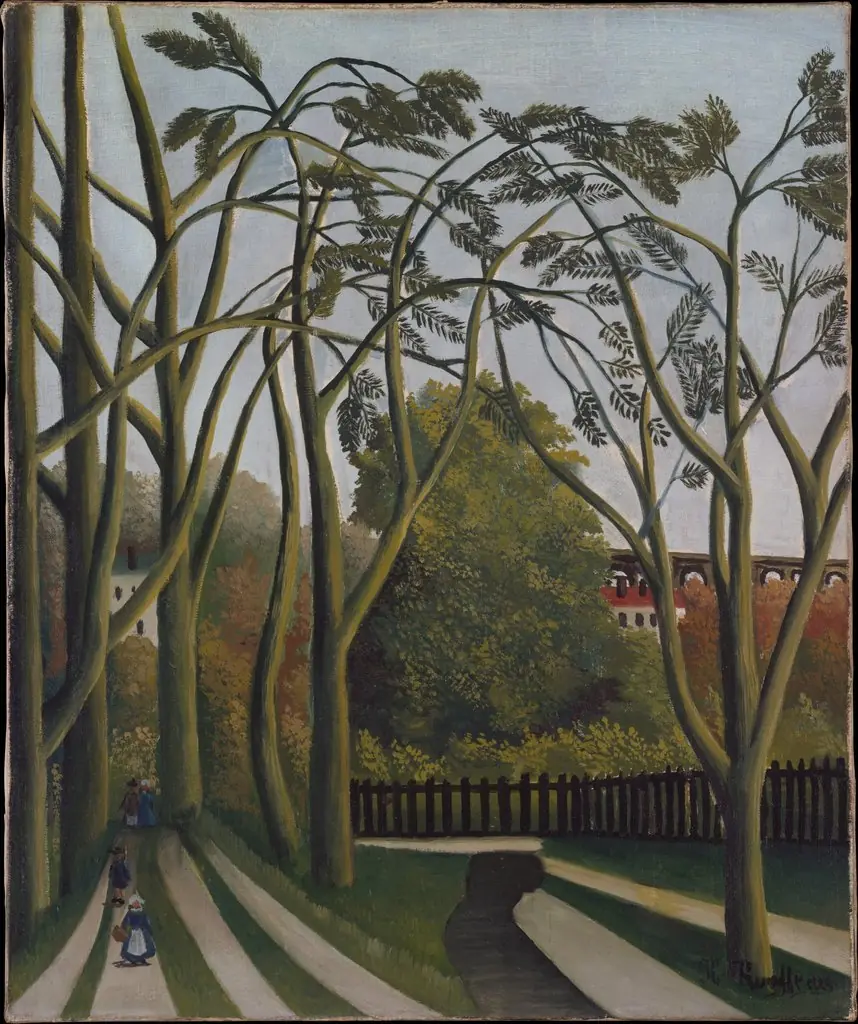
The painting centers on a statue of Chopin, positioned at the rear of the scene, surrounded by strollers in late 19th-century attire. Figures carry canes and umbrellas, suggesting a calm, overcast afternoon. The monument, though not rendered with anatomical precision, serves as a quiet tribute to cultural memory.
Rousseau’s focus on public space and commemorative sculpture reflects a contemplative engagement with Parisian civic life and the enduring presence of artistic legacy.
Technique & Style
Rousseau employed flat planes of color, simplified forms, and a deliberate lack of linear perspective to construct the scene. Trees and figures are rendered with a childlike directness, their outlines crisp and their textures muted. The palette is restrained, soft greens, grays, and browns, enhancing the tranquil mood.
Brushwork is even and deliberate, avoiding chiaroscuro or depth cues, creating a dreamlike stillness that distances the image from naturalistic representation.
History & Provenance
Completed in 1909, the painting entered the collection of the State Hermitage Museum in Saint Petersburg, where it remains today. Rousseau exhibited the work during his lifetime, though it received little critical attention until after his death in 1910. Its acquisition by the Hermitage reflects early 20th-century Russian interest in French outsider art, particularly among collectors aligned with avant-garde movements seeking alternatives to academic tradition.
Context
Rousseau painted this work during a period when Parisian artists were redefining artistic norms. While contemporaries like Picasso and Matisse explored fragmentation and abstraction, Rousseau pursued a personal vision rooted in observation and imagination. His depictions of public gardens, exotic landscapes, and monuments offered a counterpoint to modernity, calm, orderly, and untouched by industrial upheaval, resonating with those seeking solace in the familiar.
Legacy
Though ridiculed in his time, Rousseau’s work became a touchstone for early modernists drawn to his unmediated vision. Luxembourg Gardens. Monument to Chopin exemplifies how perceived technical limitations could yield emotional resonance.
Later artists, including the Surrealists, cited his ability to merge reality with poetic stillness as a model for accessing subconscious imagery. The painting endures as a quiet testament to the power of singular vision over technical mastery.
Own this work as a print
Artist & collection

Artist
Henri Julien Félix Rousseau (French: ; 21 May 1844 – 2 September 1910) was a French post-Impressionist painter in the Naïve or Primitive manner.