Artwork
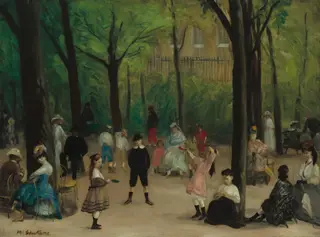
The Drive, Central Park
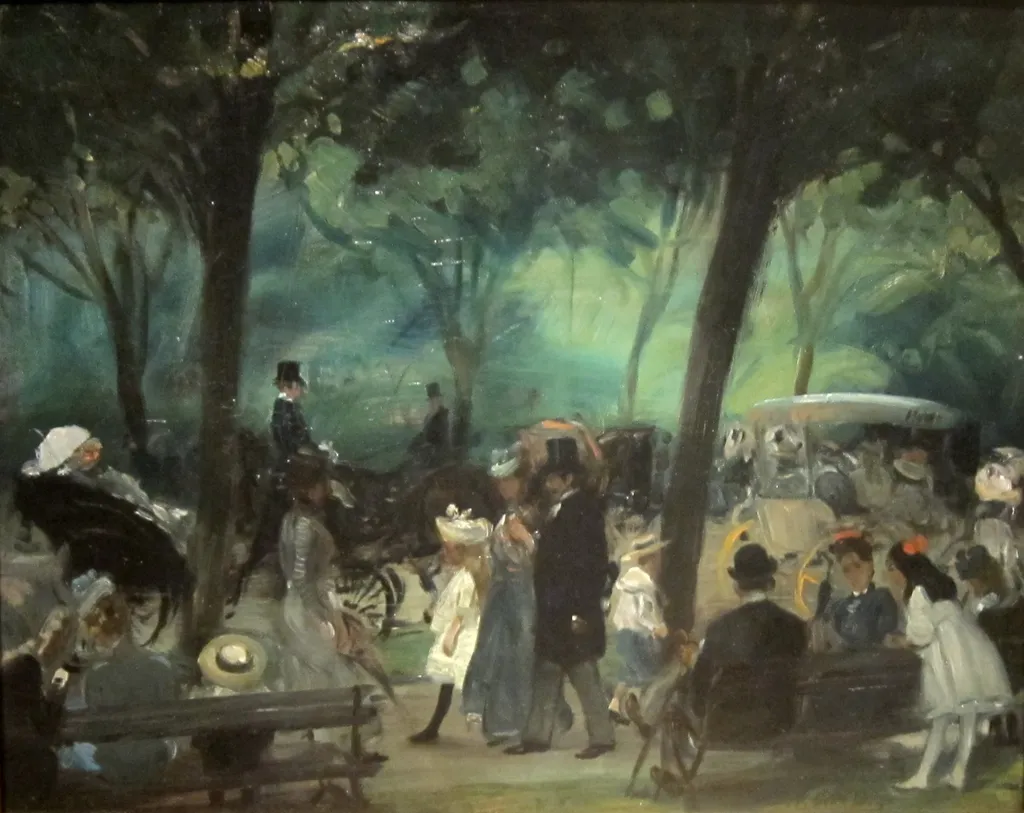
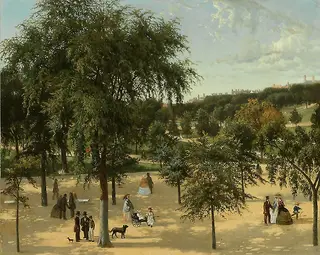
The Drive, Central Park is an oil painting by William James Glackens. It dates from 1905 and is held in the collection of the Cleveland Museum of Art.
About this work
Subject & Meaning
The painting foregrounds the social rituals of urban leisure, aligning with Ashcan School interests in everyday public life.
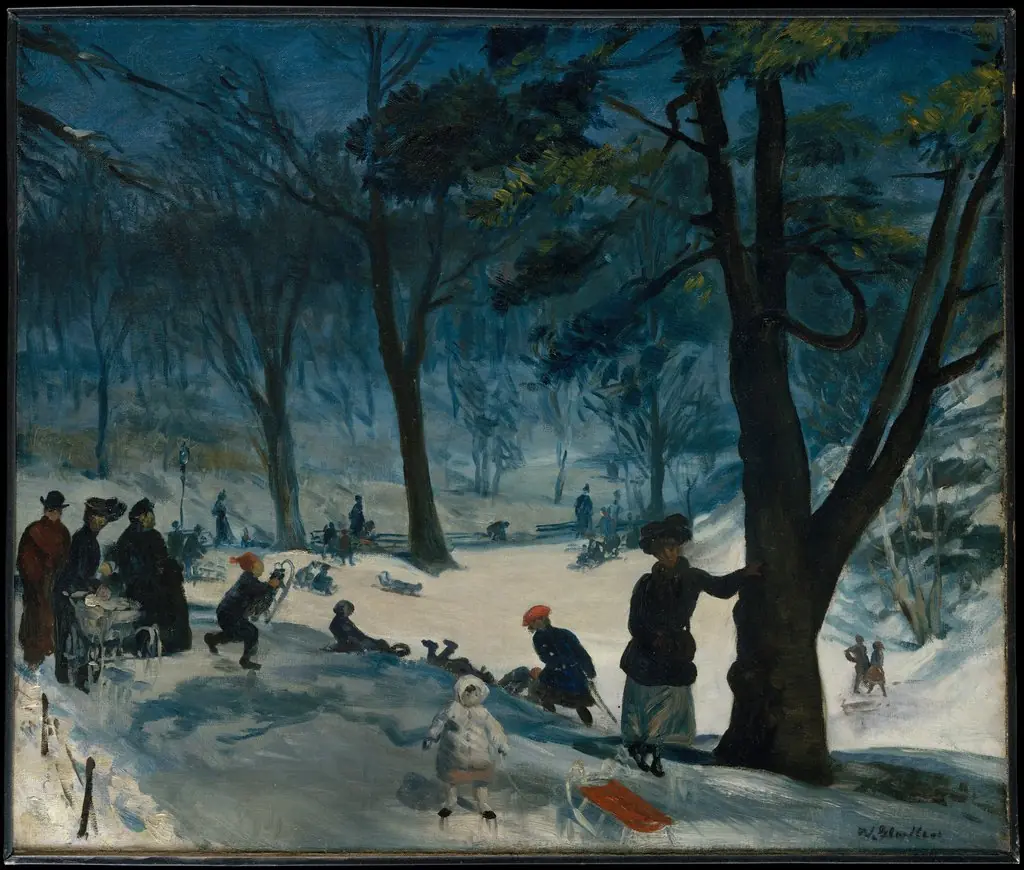
The Drive, Central Park depicts a leisurely carriage promenade along a tree-lined avenue in Central Park, New York. The scene captures fashionable figures in open carriages under dappled sunlight, emphasizing the park’s role as a fashionable public space in the early twentieth century.
The painting foregrounds the social rituals of urban leisure, aligning with Ashcan School interests in everyday public life. By rendering the park’s carriage-drive as a site of genteel sociability rather than rustic retreat, Glackens elevates a modern public amenity into a symbol of civic identity and refined urban culture.
Technique & Style
The Drive, Central Park is an oil painting executed on canvas, measuring 64.5 cm in height by 81.0 cm in width. Created by William James Glackens in 1905, the work is held in the collection of the Cleveland Museum of Art, where it is catalogued under accession number 1939.524. The composition depicts Central Park, with trees forming a key element of the scene.
History & Provenance
The painting was created in 1905 by William James Glackens. It entered the collection of the Cleveland Museum of Art in 1939, accessioned as 1939.524. The museum’s records list the medium as oil on canvas and document the work’s dimensions as 64.5 cm in height and 81.0 cm in width.
Overview
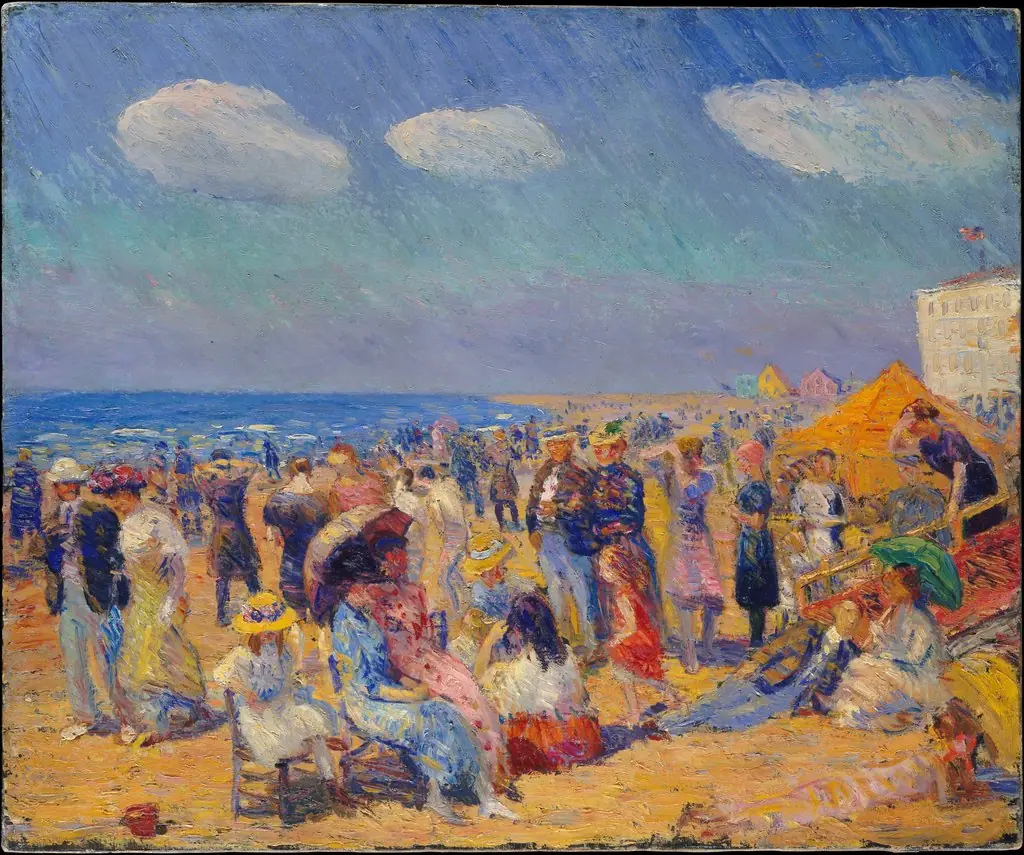
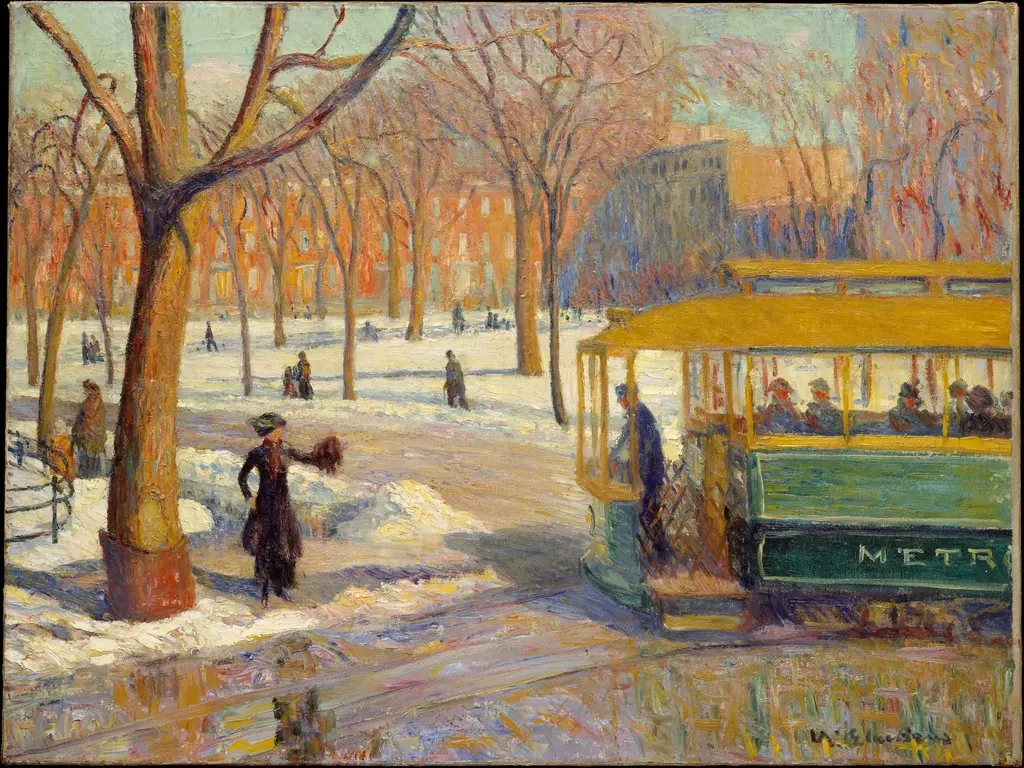
William James Glackens' The Drive, Central Park (1905) captures a leisurely evening scene along the park's main carriage road. The composition focuses on elegantly dressed New Yorkers strolling or seated on benches beneath a canopy of mature trees, reflecting the city's growing affluence and the social rituals of the era. Glackens employs a loose, energetic brushwork characteristic of the Ashcan School, yet here the palette is notably brighter and more impressionistic than in his gritty urban street scenes.
He utilizes dabs of green, blue, and ochre to render the dappled twilight atmosphere, creating a sense of movement and fleeting light. The figures are rendered with quick, gestural strokes that suggest form rather than delineating precise details, emphasizing the overall mood over individual portraiture. Painted during a period when Glackens was transitioning from his earlier journalistic illustrations to a more painterly style influenced by Pierre-Auguste Renoir, this work demonstrates his ability to find beauty in modern American life.
It stands as a significant example of American Impressionism, documenting the social fabric of early 20th-century New York with a warmth and vitality distinct from the darker tones often associated with his contemporaries.
Own this work as a print
Artist & collection
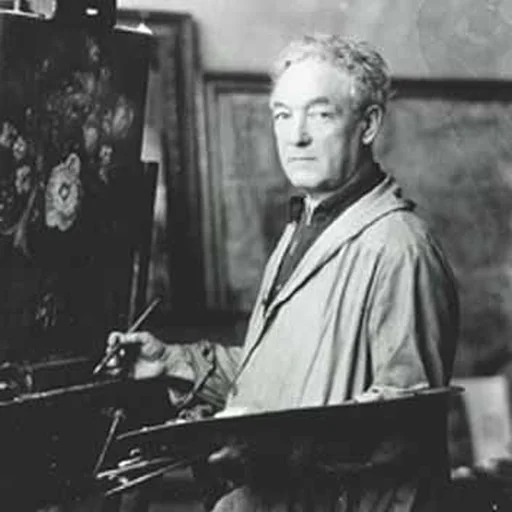
Artist
William James Glackens was an American realist painter and one of the founders of the Ashcan School, which rejected the formal boundaries of artistic beauty laid down by the conservative National Academy of Design.