Artwork
Roulin's Baby
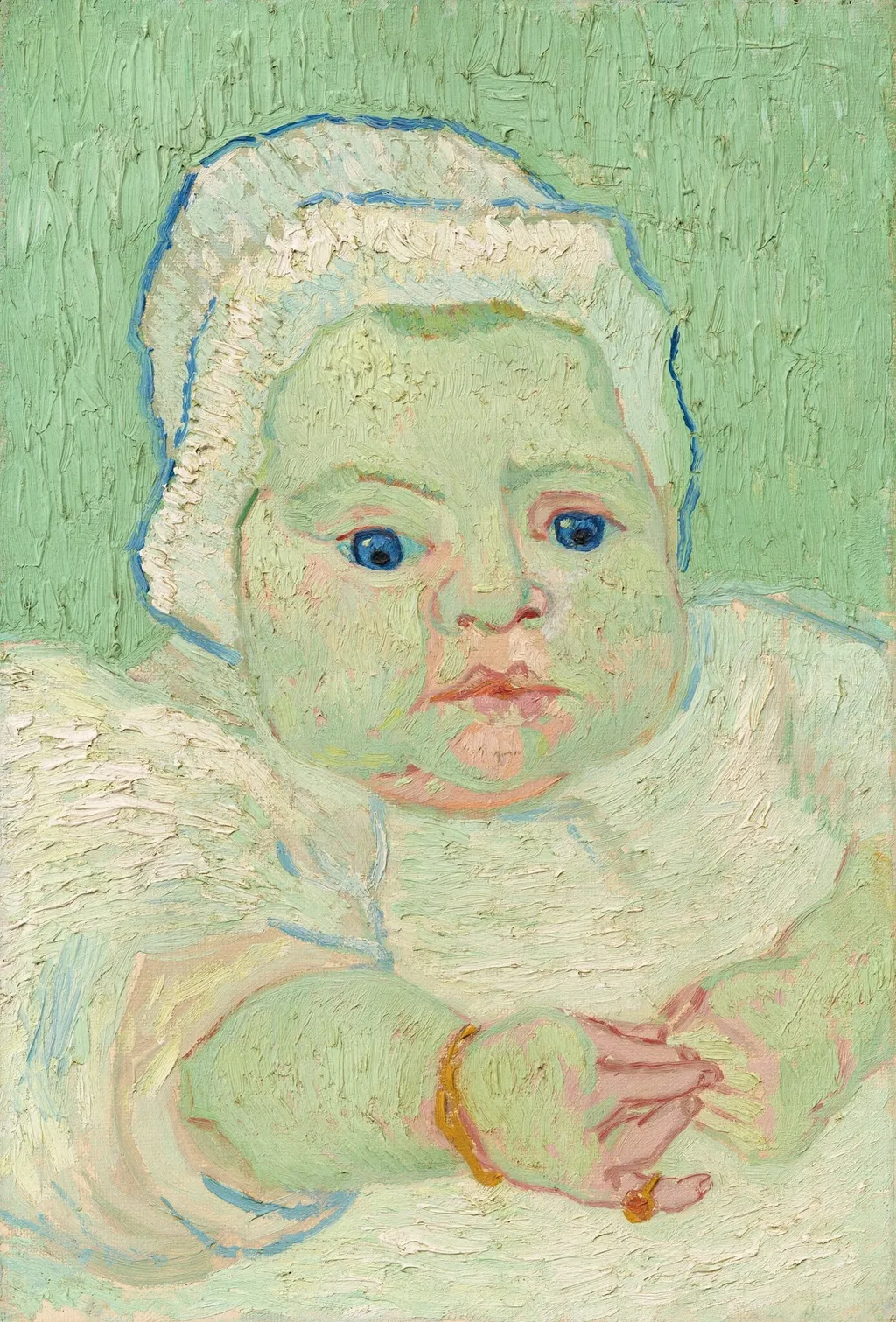
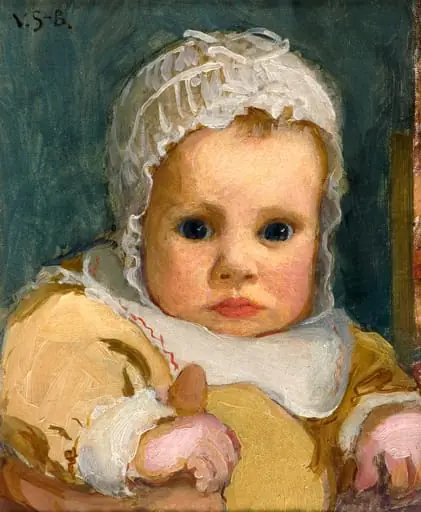
Roulin's Baby is an oil painting by the Impressionist artist Vincent van Gogh. It dates from 1888 and is held in the collection of the National Gallery of Art.
About this work
Subject & Meaning
The painting represents a specific moment in van Gogh's engagement with the Roulin family, whom he frequently portrayed during his time in southern France.
Painted in Arles in 1888, this oil on canvas portrait depicts Marcelle Roulin, the infant daughter of the artist's friend Joseph Roulin. As a genre portrait, the work focuses entirely on the child as its main subject, capturing her likeness shortly after her birth. The painting represents a specific moment in van Gogh's engagement with the Roulin family, whom he frequently portrayed during his time in southern France.
The piece likely passed through local merchant Jules Armand before entering broader circulation. The work stands as a document of van Gogh's personal connections in Arles, emphasizing the innocence and presence of the baby Marcelle without additional allegorical ornamentation.
History & Provenance
Vincent van Gogh created the oil-on-canvas portrait Roulin's Baby in Arles in 1888, depicting Marcelle Roulin. Although a persistent narrative suggests the work was gifted to the Arles hospital where the artist stayed and later sold by that institution, official correspondence from 1966 confirms the hospital never held ownership. Instead, the painting initially belonged to Mme Jules Armand (Joséphine Ronin), a local grocer from whom Van Gogh purchased supplies.
The work subsequently passed through the Amsterdam dealer A. Mak before entering the Parisian market via Galerie Étienne Bignou and Hodebert. On March 9, 1927, the piece was sold by these dealers to Chester Dale of New York through the Kraushaar Galleries. Dale bequeathed the painting to the National Gallery of Art in Washington, D.C., in 1963, where it remains part of the permanent collection.
Overview
Vincent van Gogh created Roulin's Baby in 1888, an oil on canvas portrait. This work captures Marcelle Roulin, the infant daughter of Joseph Roulin, a postmaster and friend of the artist. The painting is one piece within a larger series of family portraits that Van Gogh executed during his time in Arles, France. It exemplifies his distinctive Post-Impressionist style, characterized by vibrant color and dynamic brushwork.
Technique & Style
Executed in Van Gogh's characteristic Post-Impressionist manner, Roulin's Baby showcases his innovative approach to paint application. The artist employed expressive color and bold, visible brushstrokes to convey emotion and form. Notably, Van Gogh utilized impasto, applying paint thickly to the canvas, which creates a tangible texture and adds a dynamic, sculptural quality to the surface of the portrait.
Context
This portrait dates from Van Gogh's productive period in Arles, France, during 1888. His friendship with Joseph Roulin and his family led to a unique series of portraits, providing the artist with consistent subjects. This era was particularly prolific for Van Gogh, who produced a substantial number of his nearly 2,100 artworks in the final two years of his life, often focusing on the people and landscapes around him.
Own this work as a print
Artist & collection
Artist
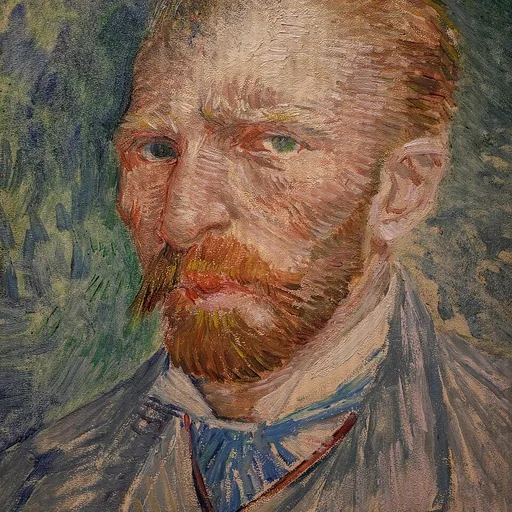
Vincent Willem van Gogh was a Dutch Post-Impressionist painter who is among the most famous and influential figures in the history of Western art.