Artwork
Salmacis and Hermaphroditus
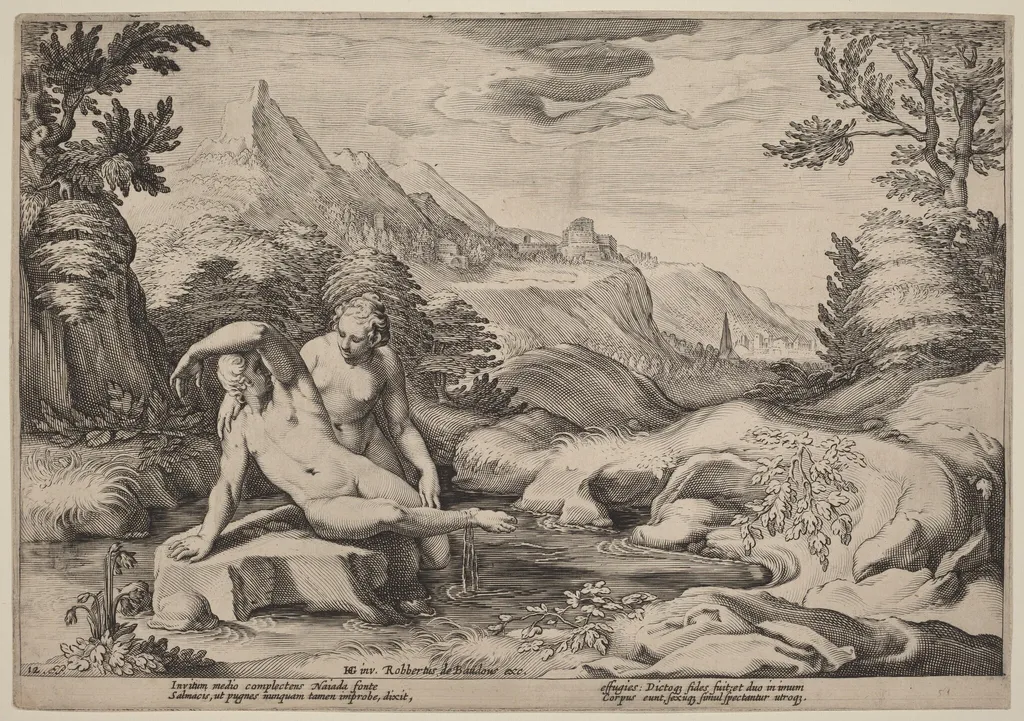
Salmacis and Hermaphroditus is an ink print by the Renaissance artist Hendrick Goltzius. It dates from 1589 and is held in the collection of the National Gallery of Art.
- Inscription
- Inscribed:lower center in image: HG inven.; Robbertus de Bauddous exc.; lower center in plate: Invitum medio complectens Naiada fonti... / ...... simul spectantur utroque. / G. Rÿckius
About this work
Overview
Salmacis and Hermaphroditus is a 1558 engraving on laid paper by Hendrick Goltzius, a prominent Dutch engraver of the early Baroque period. Characteristic of Northern Mannerism, the work showcases Goltzius's technical skill and compositional inventiveness.
Subject & Meaning
The engraving illustrates a classical mythological scene where the nymph Salmacis merges with Hermaphroditus, depicting the transformation as their bodies blend together in a aquatic setting.
Technique & Style
Goltzius employed intricate tiny lines and cross-hatching techniques to achieve detailed textures resembling skin and to convey muscularity and light effects, demonstrating his painterly approach to engraving.
History & Provenance
Created during Goltzius's peak as the last engraver of his time known for painterly authority, the work is now part of the collection at the National Gallery of Art in Washington.
Own this work as a print
Artist & collection
Artist
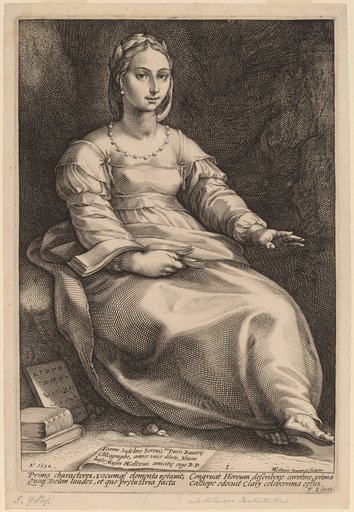
Hendrick Goltzius (German: , Dutch: ; né Goltz; January or February 1558 – 1 January 1617) was a German-born Dutch printmaker, draftsman, and painter.

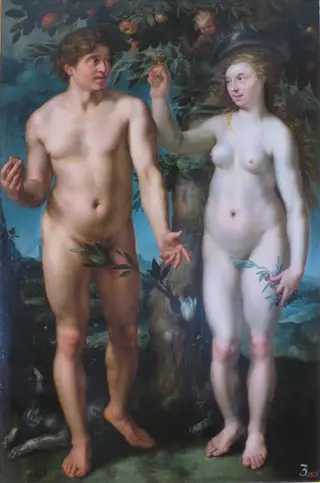
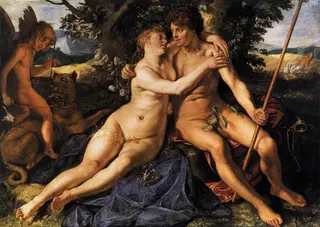
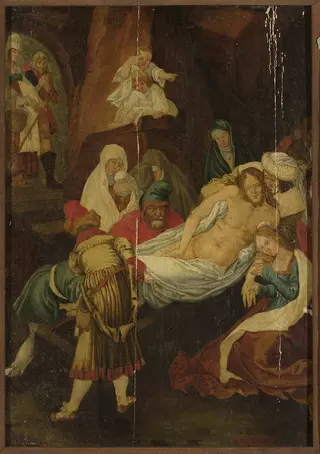
- Apollo and Coronis
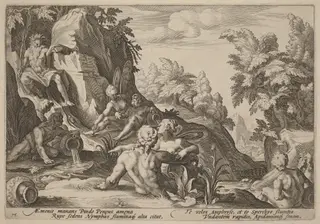 The River God Peneus Surrounded by Other Divinities
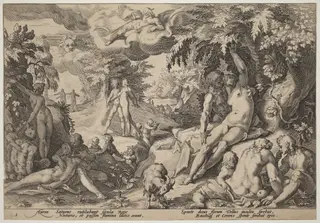 The Golden Age
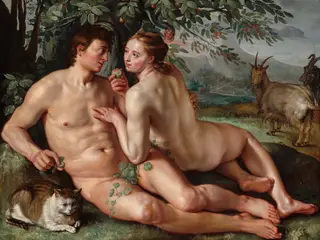
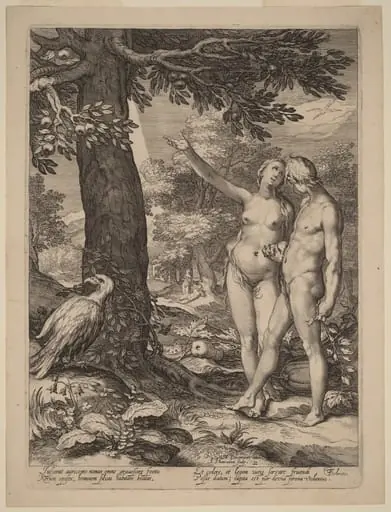 Adam and Eve before the Tree of Knowledge
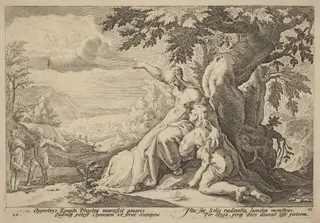 Clymene Urging Phaeton to Find Helios
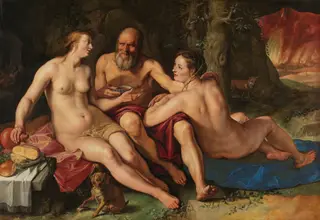
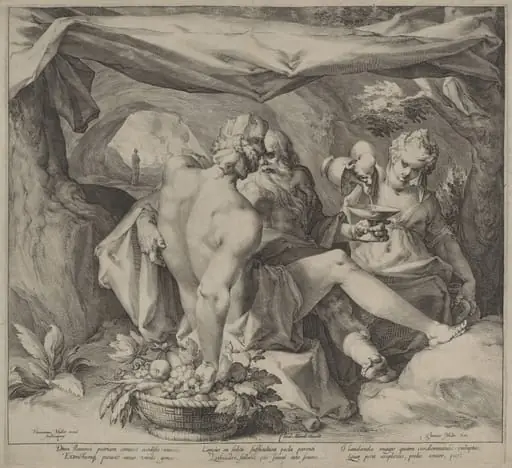 Lot and His Daughters
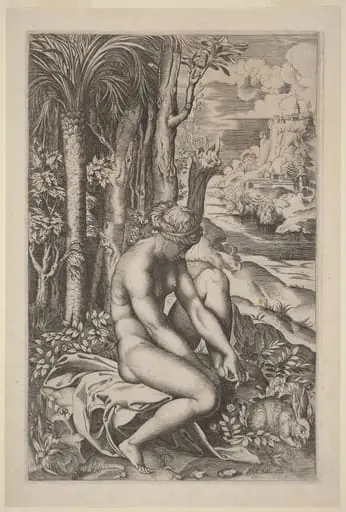 Venus Extracting a Thorn from Her Foot
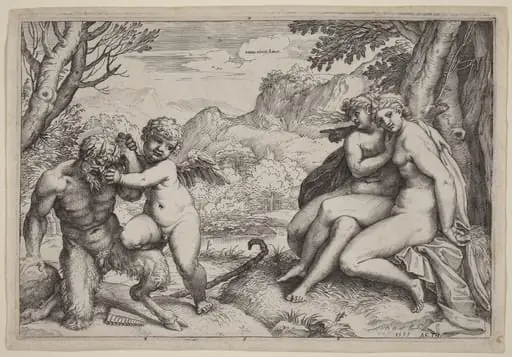 Pan Taming Eros
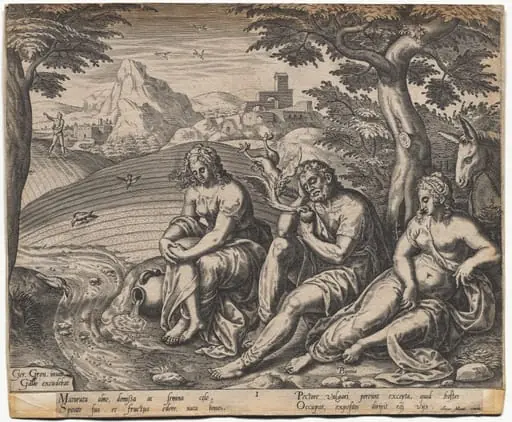 The Parable of the Sower and the Seed: The Seed Falling by the Way Side (after Gerard Van Groeningen, active Antwerp 1563-1573)
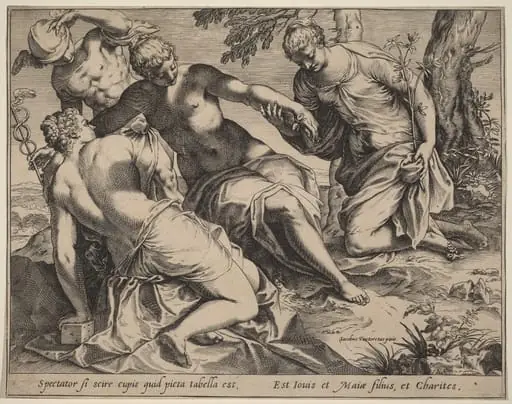 Mercury and the Three Graces
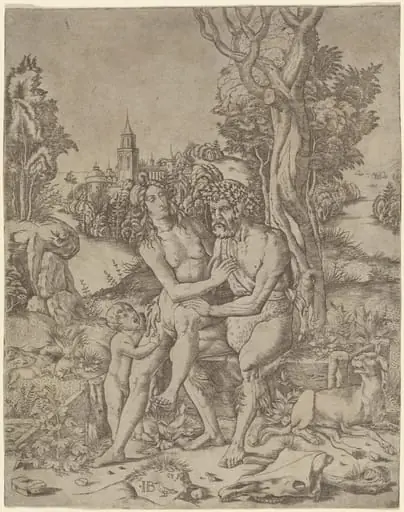 Faun Family
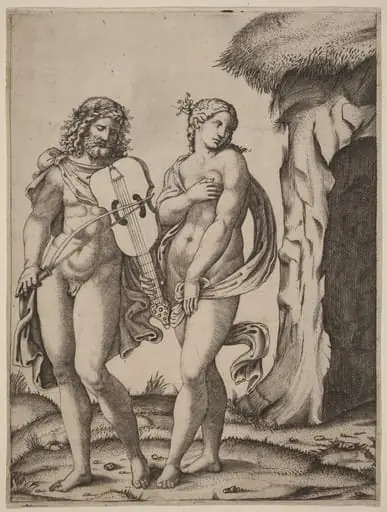 Orpheus and Eurydice