Artwork
Tantalus
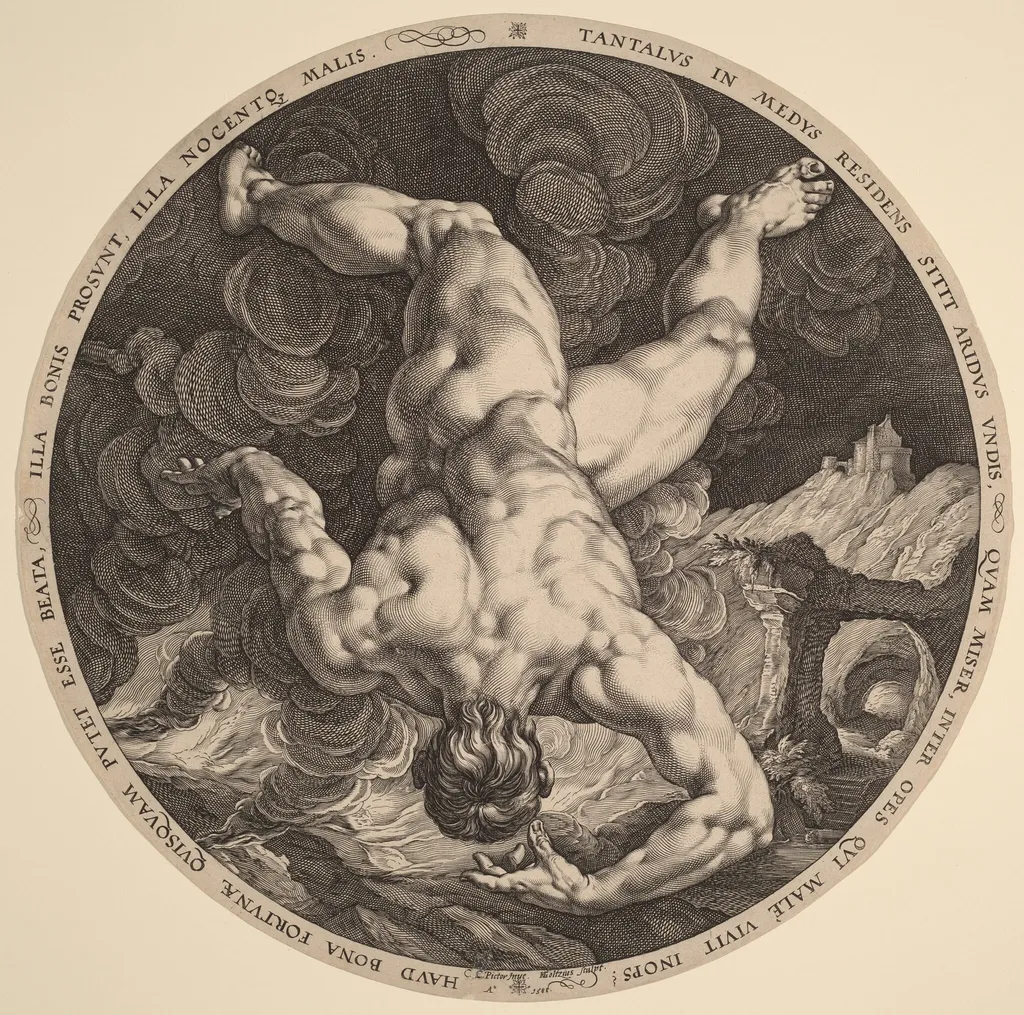
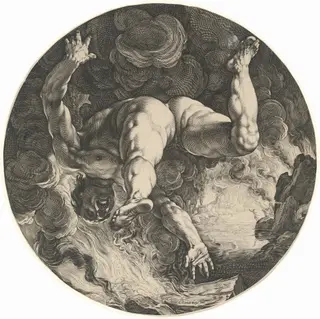
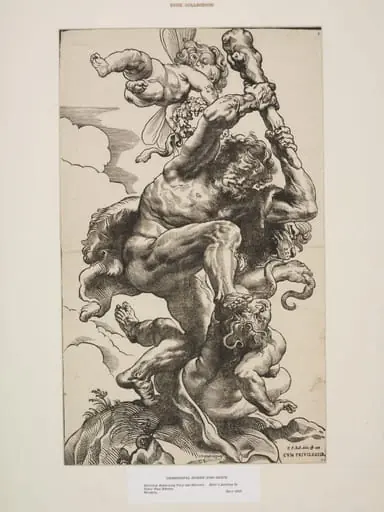
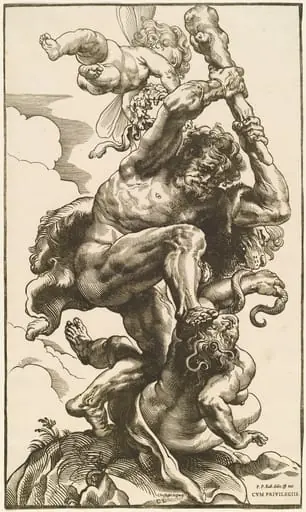
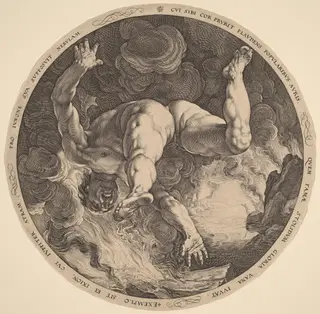
Tantalus is an ink print by the Renaissance artist Hendrick Goltzius. It dates from 1588 and is held in the collection of the National Gallery of Art.
- Inscription
- Inscribed:around image: TANTALVS IN MEDYS RESIDENS SITIT ARIDVS VNDIS, QVAM MISER, INTER OPES QVI MALE VIVIT INOPS; HAVD BONA FORTVNAE QVISQVAM PVTET ESSE BEATA, ILLA BONIS PROSVNT, ILLA NOCENTQ, MALIS (Seated amidst the waves, parched Tantalus suffers agonies of thirst. How miserable is he who lives in abject poverty in the midst of riches! No one should believe that the favours of Fortune bring happiness: they are good for good people and harm the wicked. [Latin translation from Huigen Leeflang and Ger Luijten, et. al, _Hendrick Goltzius (1558-1617): Drawings, Prints and Paintings_ Exhibition catalogue. Amsterdam: Rijksmuseum, 2003, p.98.]); below image, at bottom: C. C. Pictor Inue. H. Goltzius sculpt. / Ao 1588.
About this work
Overview
Hendrick Goltzius’s 1588 engraving titled Tantalus presents a dramatic, airborne figure rendered on laid paper. The composition captures a nude man suspended in a twisted, falling pose, his limbs spread and his expression one of acute alarm. Dark, swirling clouds dominate the background, intensifying the sense of motion and turmoil that defines the scene.
Subject & Meaning
The work visualizes the myth of Tantalus, the punished king condemned to eternal hunger and thirst. Goltzius translates the narrative’s themes of suffering and unreachable desire into a single, kinetic moment, emphasizing the figure’s helplessness and the surrounding chaos as a metaphor for the character’s perpetual torment.
Technique & Style
Executed with fine cross‑hatching, the engraving demonstrates Goltzius’s mastery of line to convey volume, texture, and atmospheric depth. The intricate shading creates a three‑dimensional effect on the flat surface, while the exaggerated musculature and elongated forms reflect the Northern Mannerist aesthetic that characterized early Baroque printmaking in the Netherlands.
History & Provenance
Created in 1588, Tantalus belongs to the prolific output of Goltzius, who was regarded as the pre‑eminent Dutch engraver of his generation. The print was produced for the burgeoning market of collector’s prints in the late sixteenth century and has since circulated among European collections, illustrating the artist’s influence on subsequent generations of printmakers.
Own this work as a print
Artist & collection
Artist
Hendrick Goltzius (German: , Dutch: ; né Goltz; January or February 1558 – 1 January 1617) was a German-born Dutch printmaker, draftsman, and painter.