Artwork
Four directors of the arquebusier's guild, Amsterdam, 1642
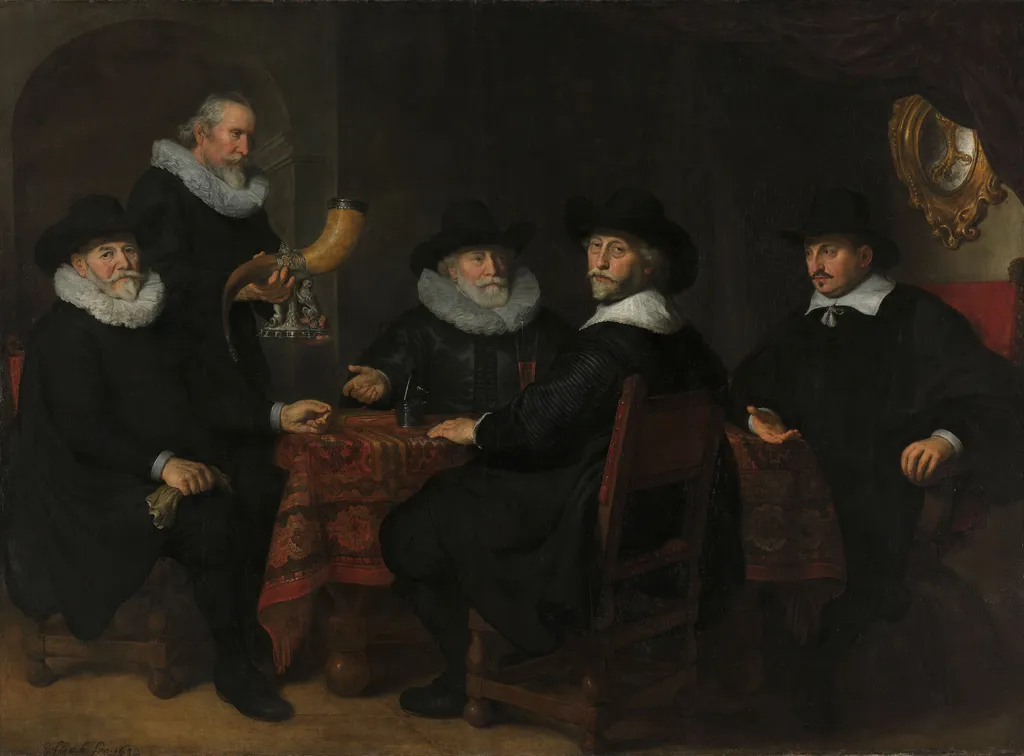
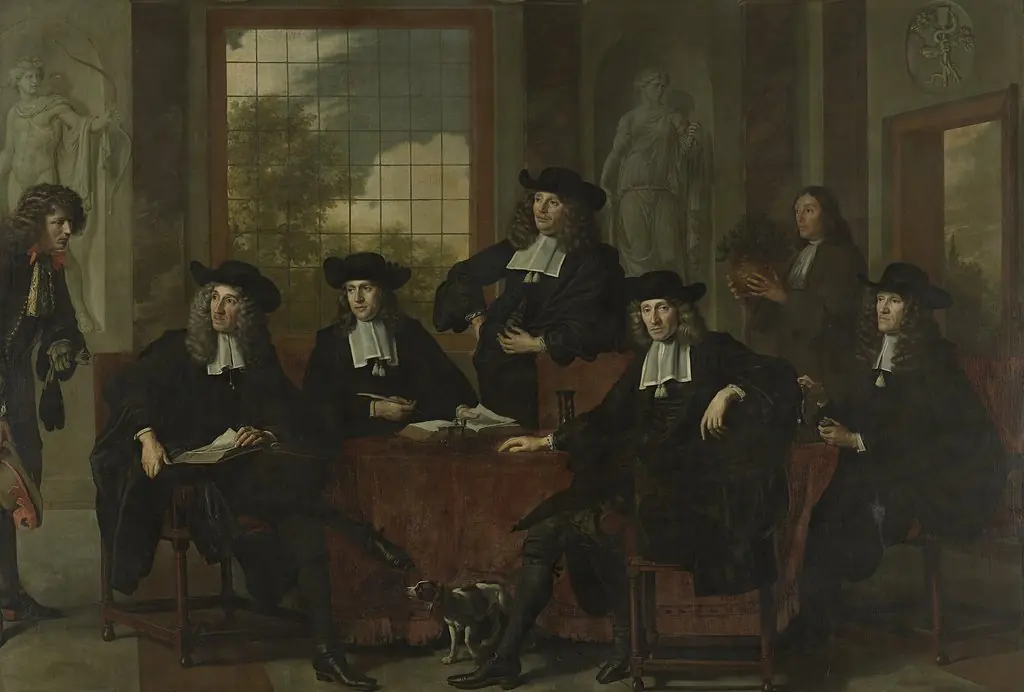
Four directors of the arquebusier's guild, Amsterdam, 1642 is an oil painting by Govert Flinck. It dates from 1642 and is held in the collection of the Rijksmuseum.
About this work
Subject & Meaning
The composition includes the men gathered around a table, accompanied by a domestic worker and various objects such as a covered beaker.
The painting depicts four directors of the arquebusier's guild in Amsterdam, presented as a formal group portrait. The composition includes the men gathered around a table, accompanied by a domestic worker and various objects such as a covered beaker. These elements collectively represent the civic status and organizational structure of the guild leadership during the mid-17th century.
The work functions as a visual record of these specific individuals and their roles within the city's militia organization.
Technique & Style
Govert Flinck created the 1642 group portrait Four directors of the arquebusier's guild, Amsterdam using oil paint applied to a canvas support. The work measures 203 cm in height and 278 cm in width, classifying it as a large-scale painting within the portrait genre. The composition depicts four men alongside a table, a domestic worker, and a covered beaker. The painting is held in the joint collection of the Rijksmuseum and the Amsterdam Museum.
History & Provenance
Govert Flinck executed the oil painting Four directors of the arquebusier's guild, Amsterdam in 1642. The work was commissioned by the arquebusier's guild of Amsterdam to depict four of its directors. Created on canvas, the painting measures 203 cm in height and 278 cm in width.
It is currently held in the joint collection of the Rijksmuseum and the Amsterdam Museum. No documented exhibition histories are noted in the available sources.
Overview
Govert Flinck's 1642 oil painting, Four directors of the arquebusier's guild, Amsterdam, captures a formal gathering of civic leaders. This group portrait, executed in oil paint, is a notable example of Dutch Golden Age art. It is housed in the collection of the Rijksmuseum, offering insight into the social structures and artistic practices of 17th-century Amsterdam.
Context
During the Dutch Golden Age, group portraits of civic organizations like guilds were highly popular, serving both as records and as declarations of status for their members. These commissions allowed artists to showcase their skill in depicting multiple individual likenesses within a cohesive narrative. Flinck, a student of Rembrandt, contributed to this tradition, reflecting the prosperity and self-awareness of Amsterdam's merchant class and its institutions.
Own this work as a print
Artist & collection

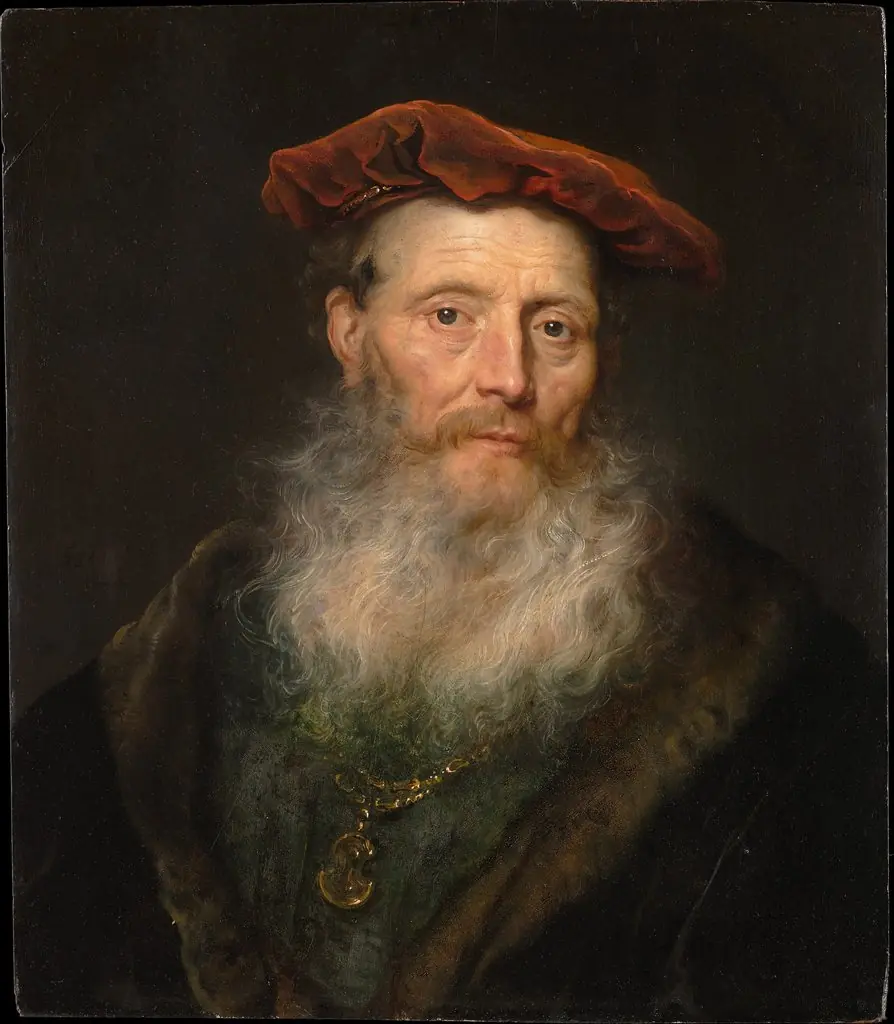 Bearded Man with a Velvet Cap
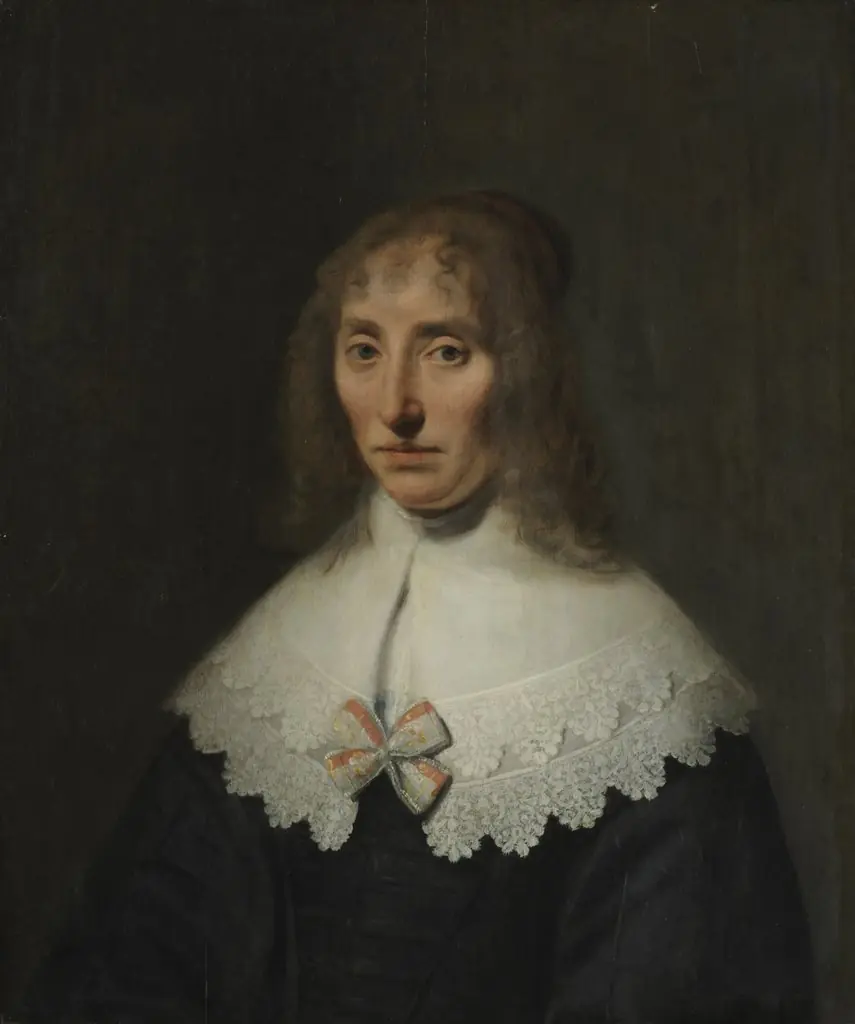 Portrait of a Woman
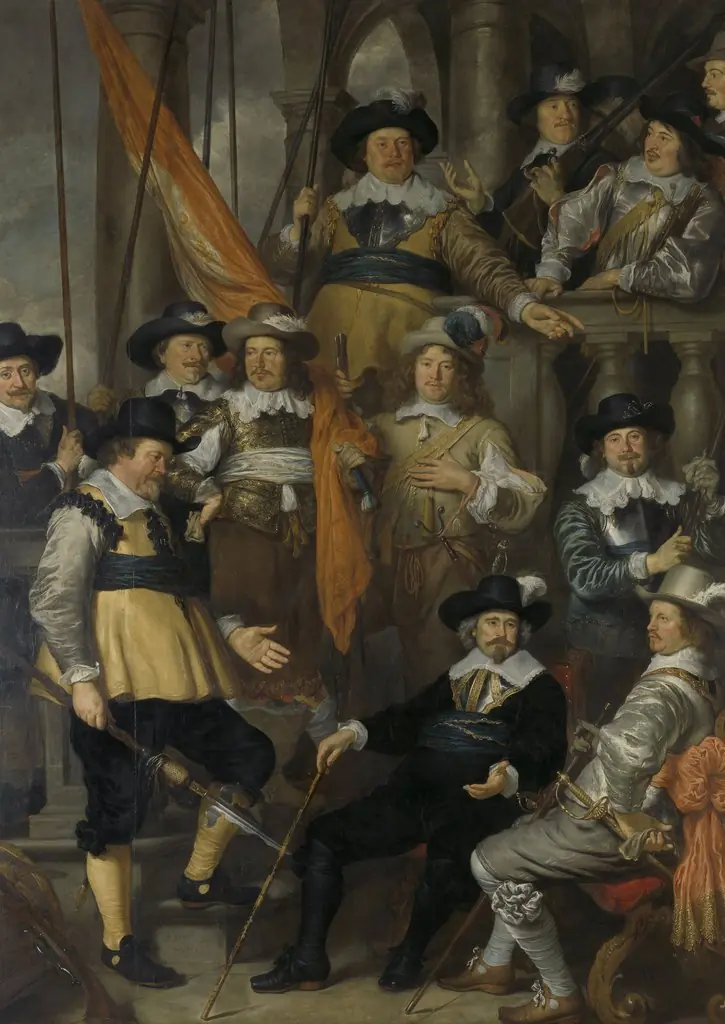 The Company of Captain Albert Bas and Lieutenant Lucas Conijn
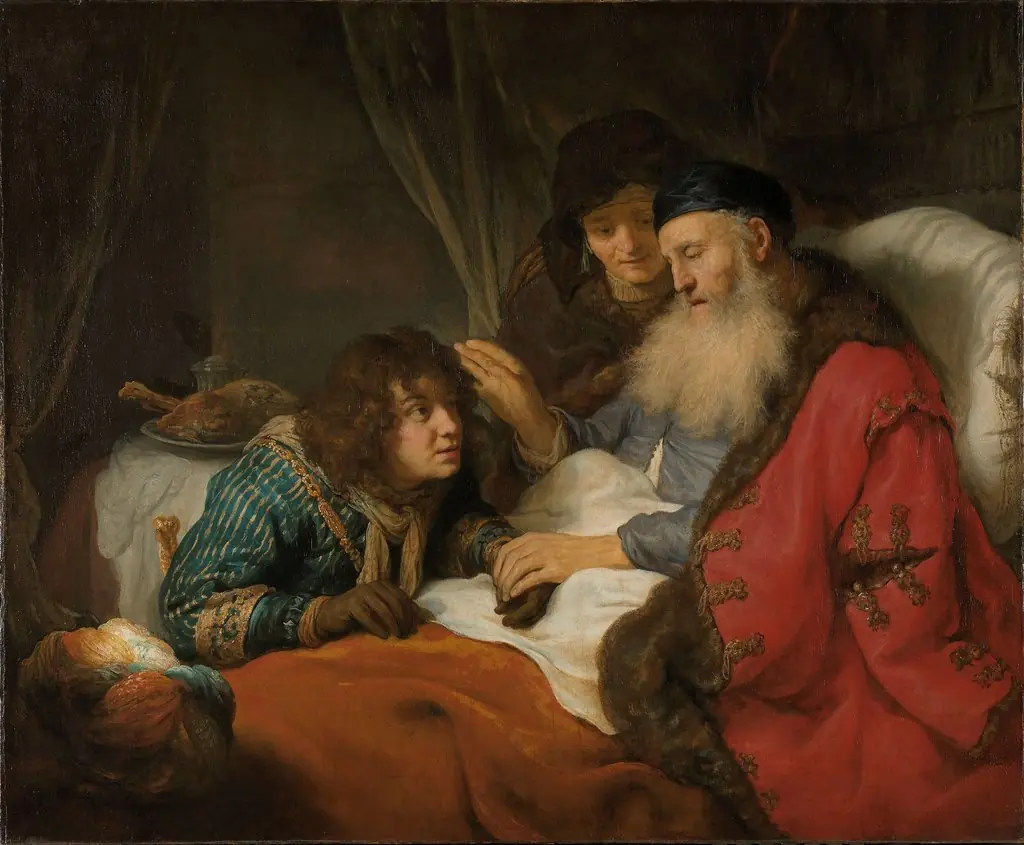 Isaac Blessing Jacob
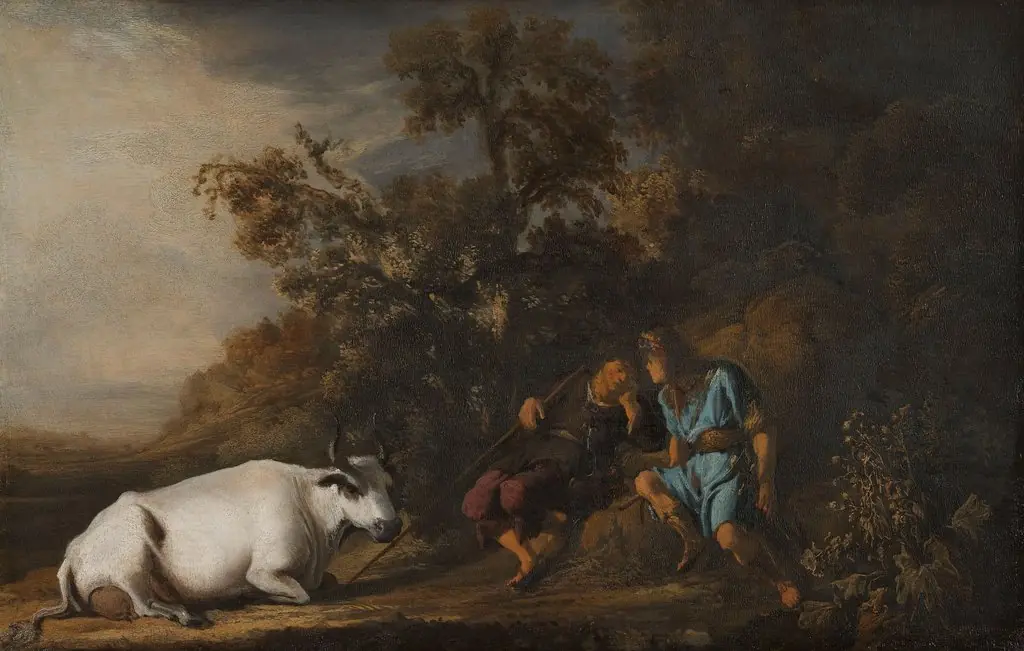 Mercury, Argus and Io
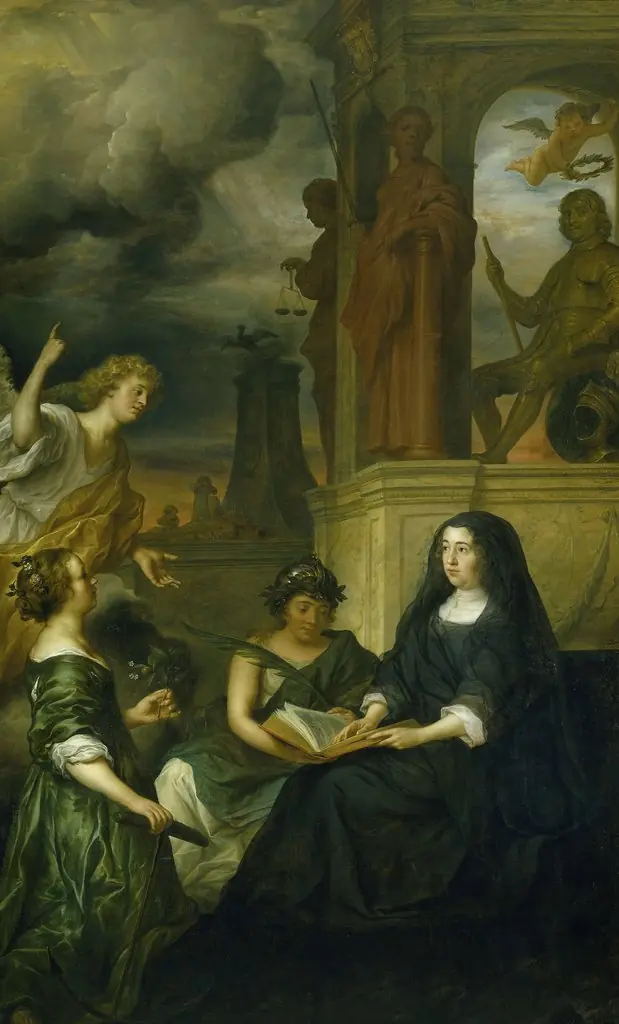 Allegory on the memory of Frederik Hendrik (1584-1647), prince of Orange, with the portrait of his widow Amalia van Solms
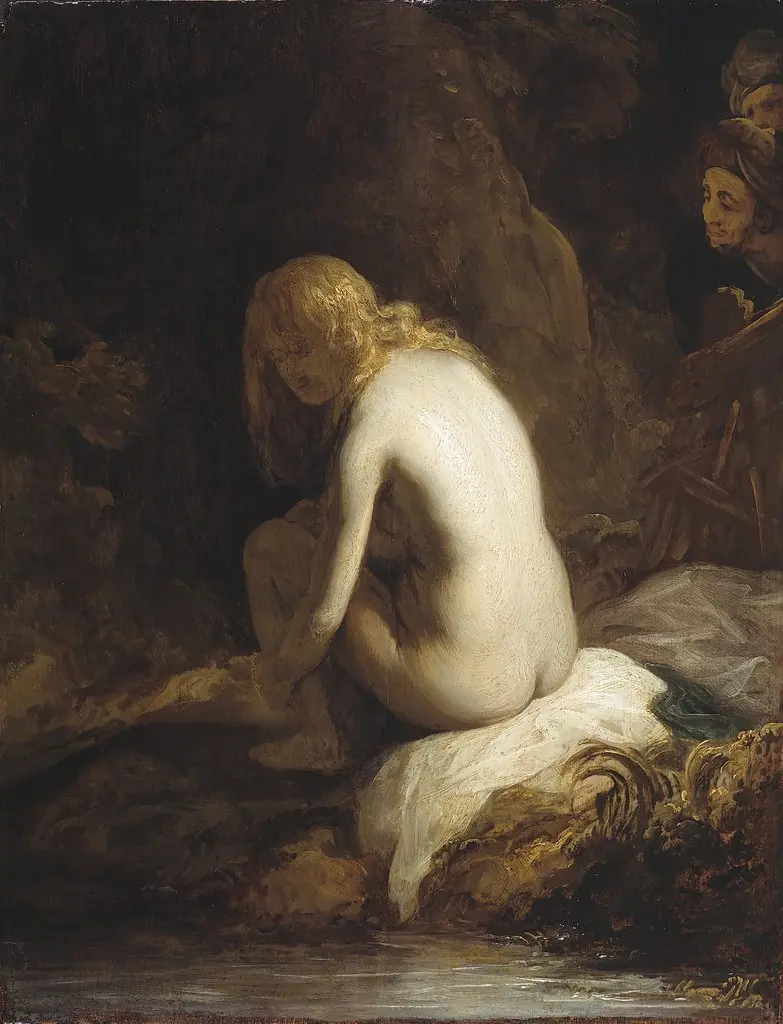 Susanna and the Elders
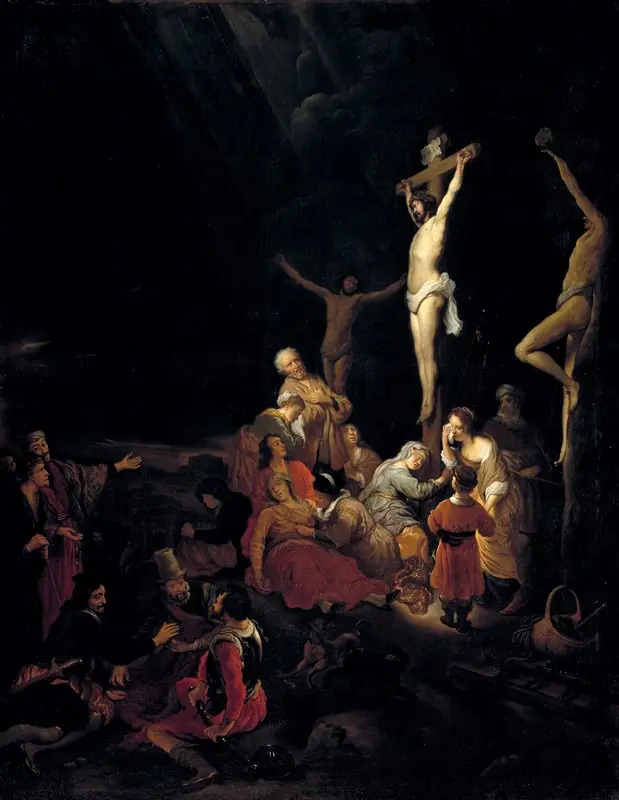 Korsfæstelsen
- Four Regents and the ‘House Father’ of the Amsterdam Lepers’ Asylum
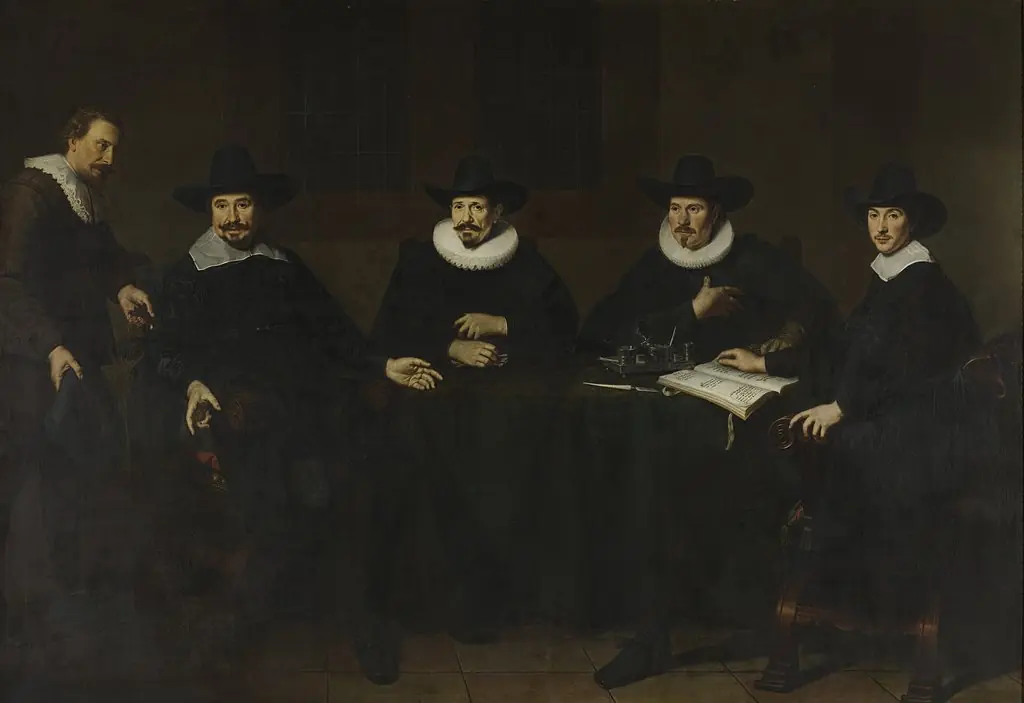 The directors of the serge cloth industry, Amsterdam, 1643
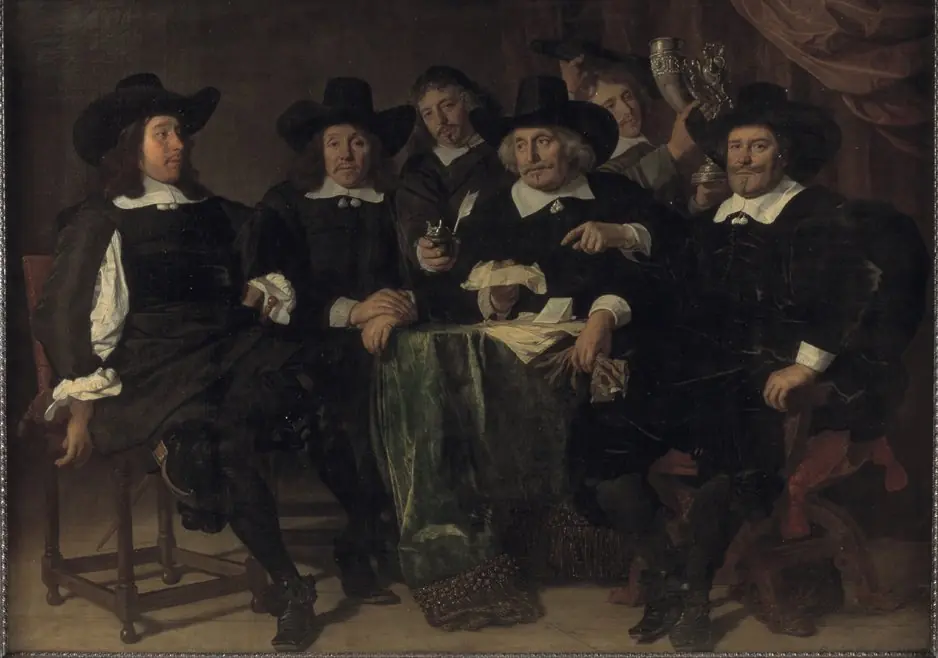 The directors of the Amsterdam civic guard of St. George in 1656
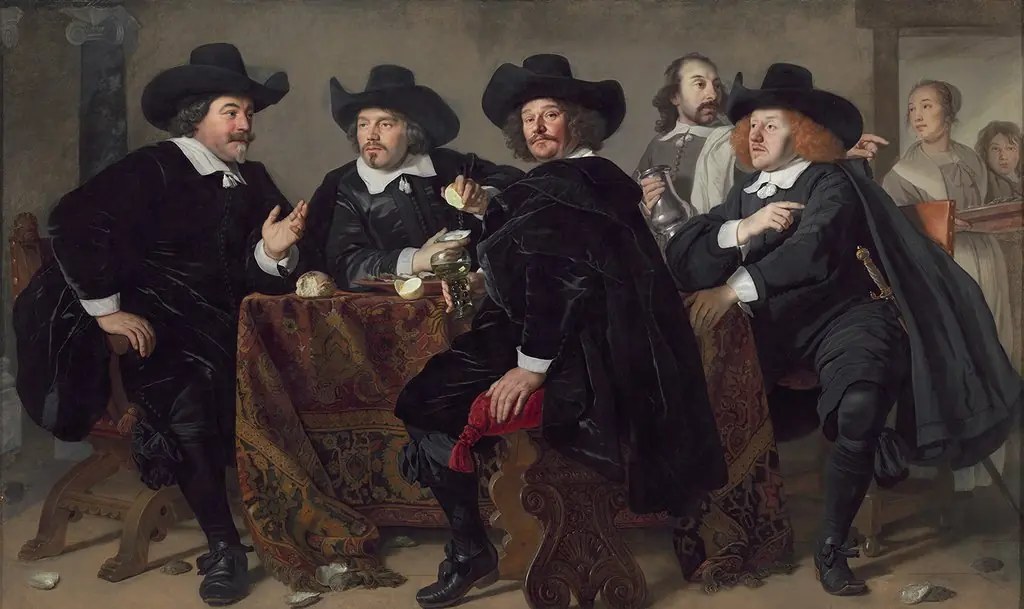 Four directors of the arquebusier's guild, Amsterdam, 1655
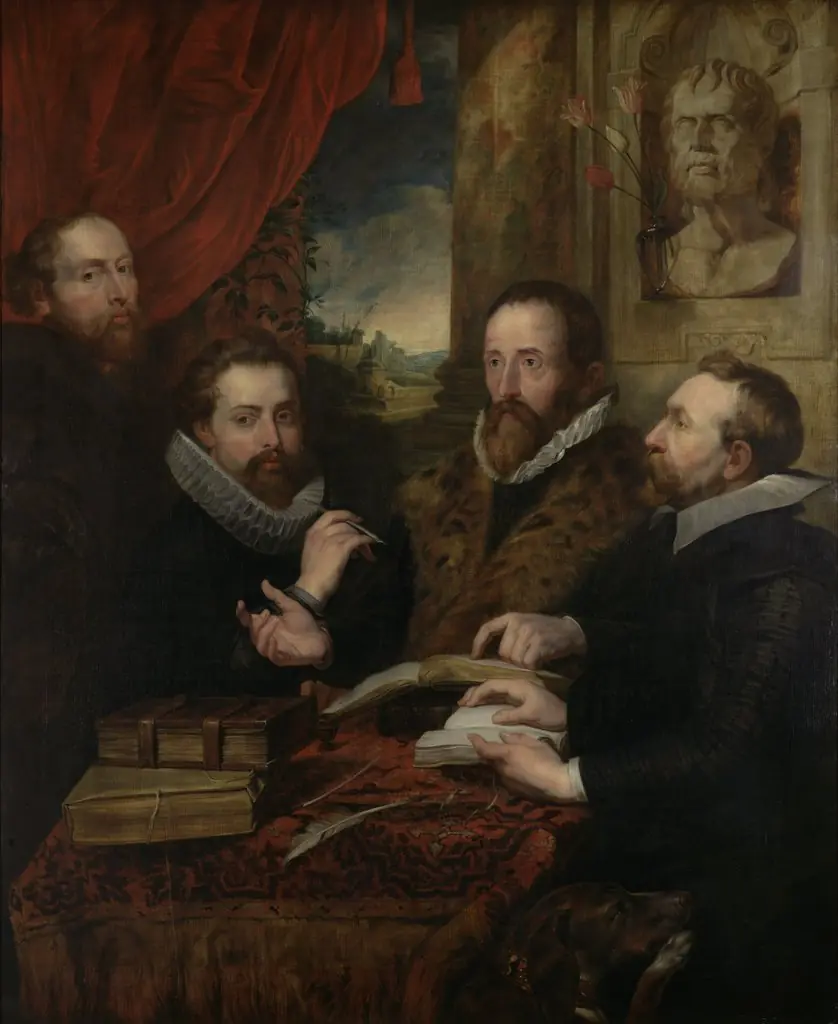 Four Philosophers
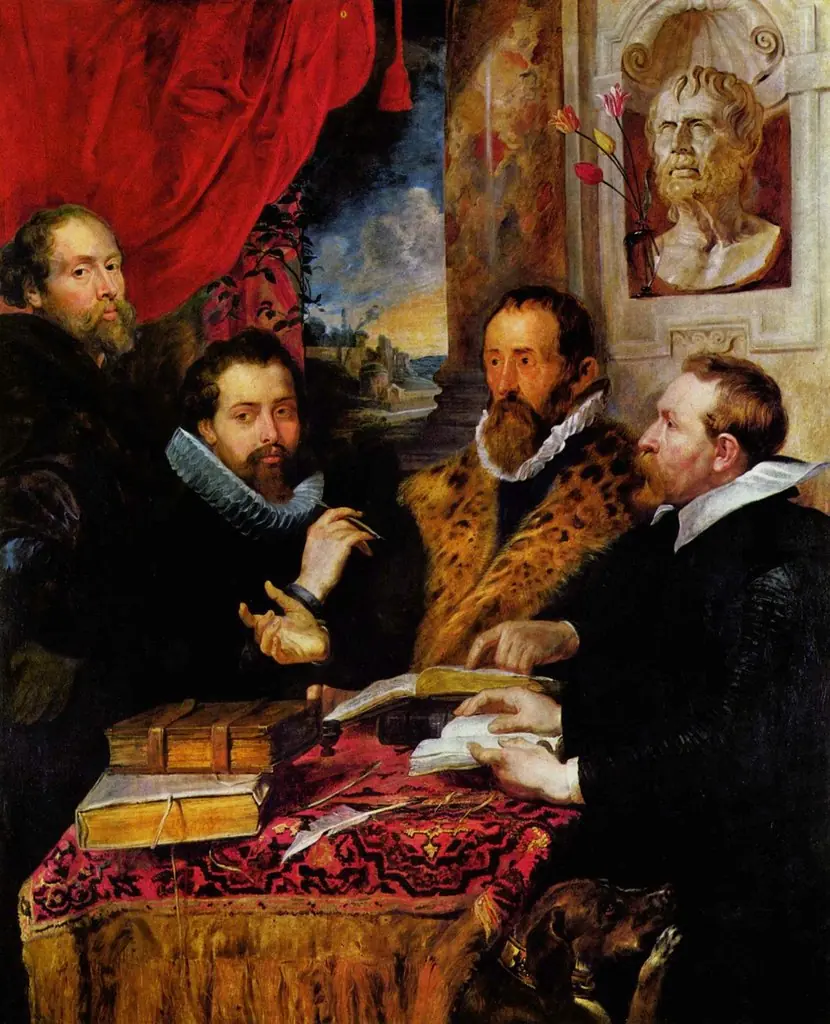 The Four Philosophers
 The superintendents of the Collegium Medicum in Amsterdam