Artwork
A Yellowstone Geyser
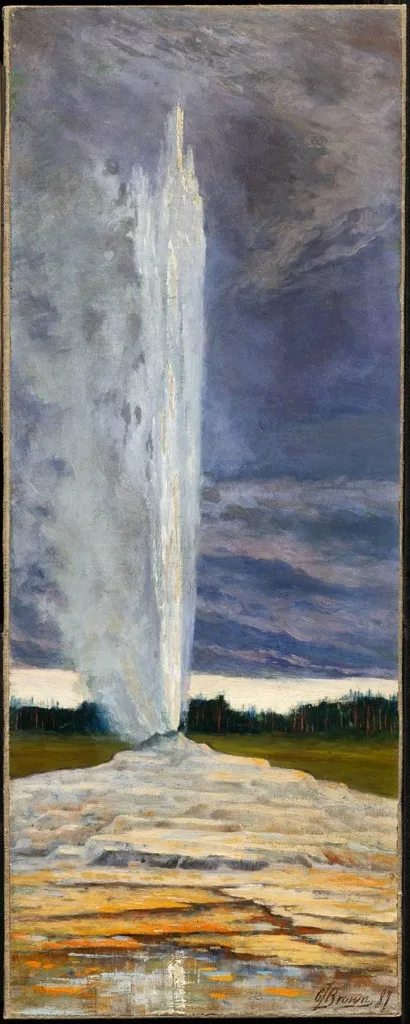
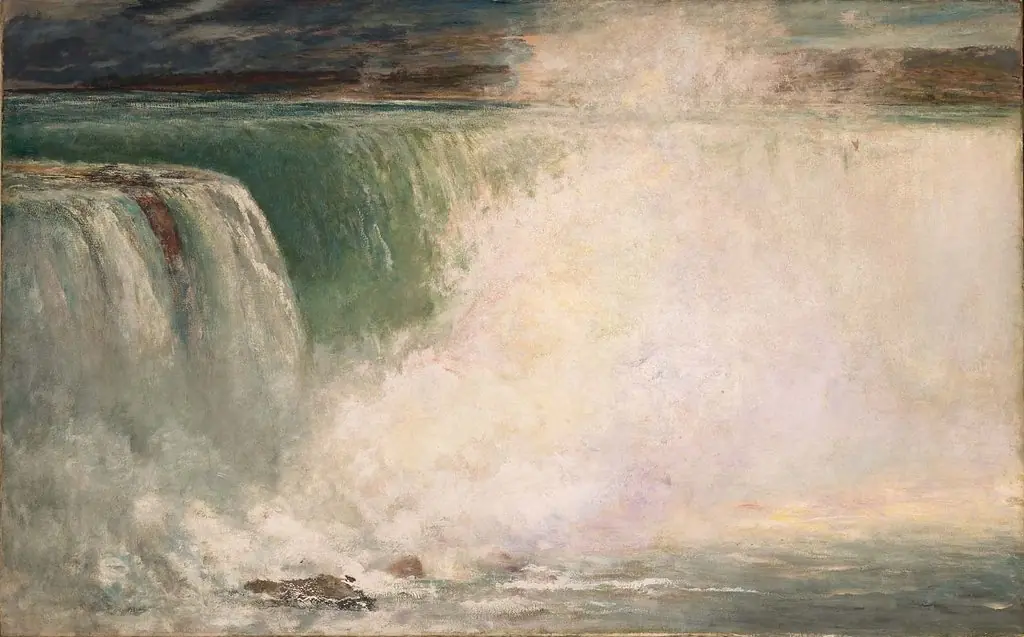
A Yellowstone Geyser is an oil painting by the American Impressionist artist Grafton Tyler Brown. It dates from 1889 and is held in the collection of the Museum of Fine Arts Boston.
About this work
Overview
The piece captures a moment of natural activity within Yellowstone National Park, reflecting Brown’s interest in documenting regional scenery.
Created around 1889, A Yellowstone Geyser is an oil painting by Grafton Tyler Brown, an African-American artist known for his landscape work in the American West. The piece captures a moment of natural activity within Yellowstone National Park, reflecting Brown’s interest in documenting regional scenery. It is part of the Museum of Fine Arts, Boston’s collection, representing one of the earliest artistic records of the park by a Black artist.
Subject & Meaning
The painting portrays a geyser mid-eruption, its plume rising against a muted sky. Surrounding rocks and sparse vegetation suggest the harsh, geologically active environment of Yellowstone. Rather than idealizing the scene, Brown presents it with quiet observation, emphasizing the raw power and stillness of the landscape.
The absence of human figures underscores nature’s autonomy, aligning with 19th-century scientific and aesthetic interests in unaltered wilderness.
Technique & Style
Brown employed visible, deliberate brushwork to render texture in rock, water, and foliage, avoiding smooth finishes typical of academic painting. His palette is restrained, dominated by grays, earthy browns, and muted greens, enhancing the atmospheric tone. While his approach shows affinities with American Impressionism, particularly in its attention to light and transient effects, the composition remains grounded in topographical accuracy rather than emotional abstraction.
History & Provenance
Painted during a period when Brown was actively documenting Western landscapes, this work emerged after his earlier career as a cartographer and lithographer. It entered the Museum of Fine Arts, Boston’s collection in the 20th century, where it has been preserved as part of a growing recognition of underrepresented voices in American art. Its survival reflects both Brown’s significance and the museum’s commitment to expanding its historical narrative.
Context
In the late 1880s, Yellowstone was becoming a symbol of American natural heritage, increasingly visited and depicted by artists and photographers. Brown’s work coincided with federal efforts to preserve the park, yet he stood apart as one of the few African-American artists engaging with Western themes. His presence in this artistic milieu challenges assumptions about who was documenting the nation’s landscapes during this era.
Legacy
Brown’s A Yellowstone Geyser contributes to a broader reassessment of 19th-century American art, highlighting the role of Black artists in shaping visual records of the West. Its inclusion in major collections has helped reposition him as a significant figure in regional landscape painting. The work remains a quiet but vital testament to the diversity of perspectives in American art history.
Artist & collection
Artist
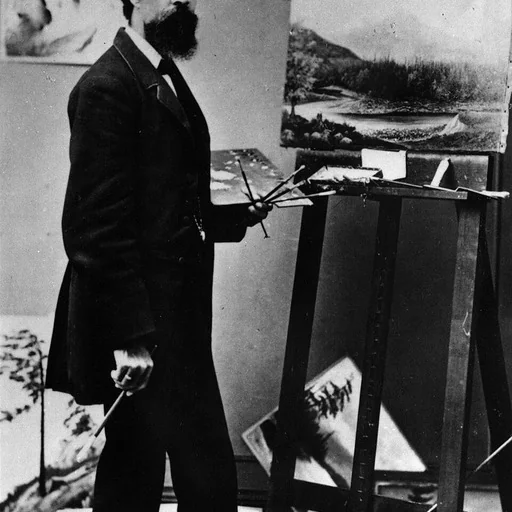
Grafton Tyler Brown (February 22, 1841 – March 2, 1918) was an American painter, lithographer and cartographer. Brown was the first African-American artist to create works depicting the Pacific Northwest and California.