Artwork
Sidi Heckel
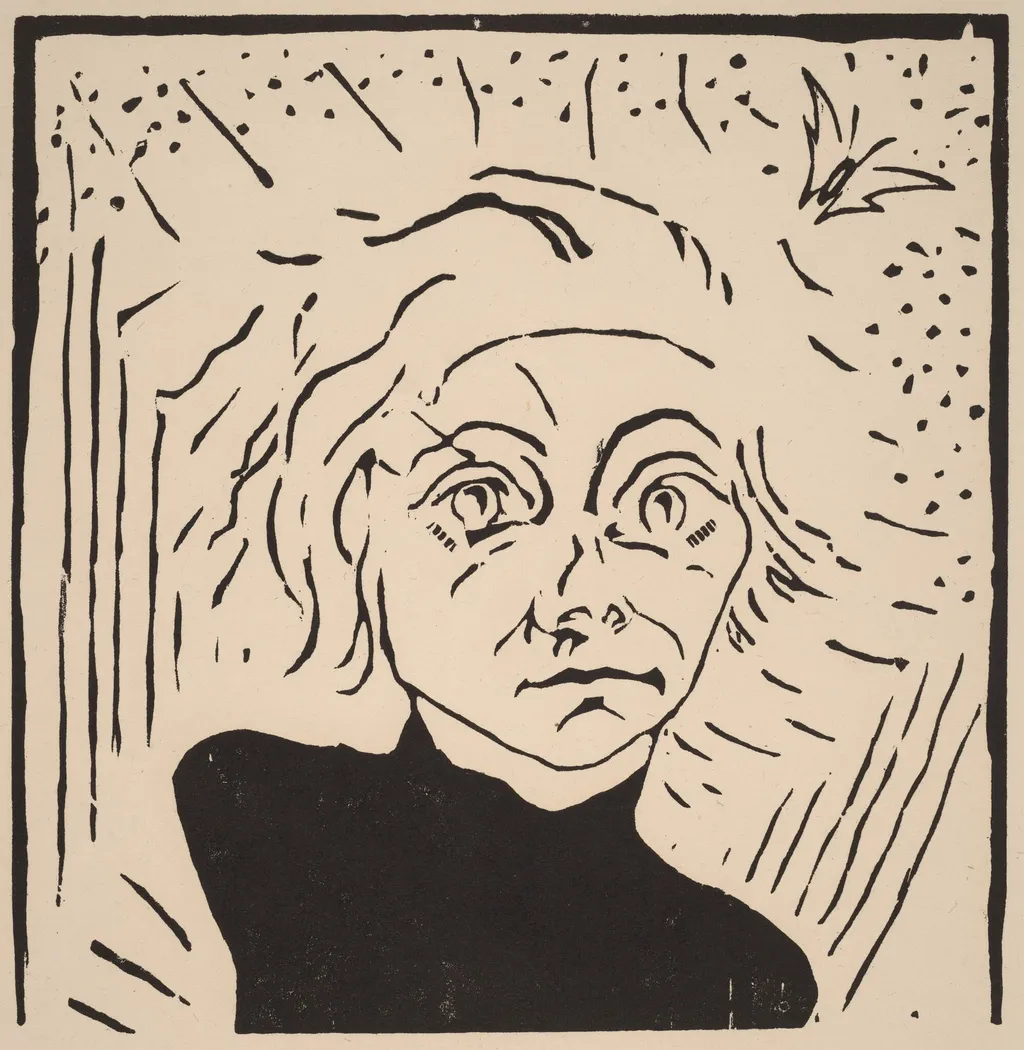
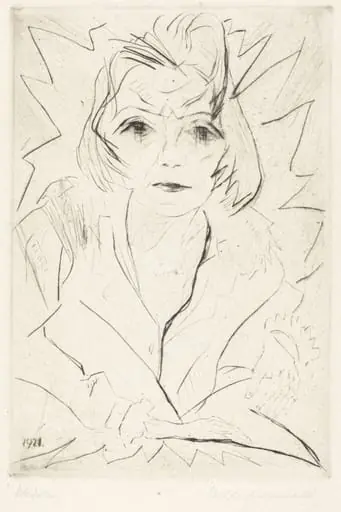
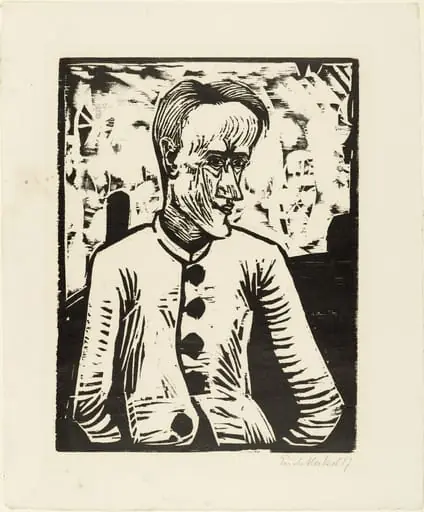
Sidi Heckel is an ink print by Walter Gramatté. It dates from 1919 and is held in the collection of the National Gallery of Art.
- Inscription
- Inscribed:below image, in graphite, by later hand: E22 - III L Sidi Heckel, woodcut by Walter Gramatté
About this work
Overview
Created in 1919, this woodcut by German artist Walter Gramatté presents a stark black‑and‑white portrait of a head and shoulders. The image is rendered in bold, flat lines without gradation, set against the natural tone of wove paper and framed by a thick black border. Minimal background elements, scattered leaves and dots, hint at an ambiguous setting.
Subject & Meaning
The figure’s expression is calm yet slightly serious, suggesting introspection. The loose, wavy strokes that form the hair and the sparse botanical motifs may allude to Gramatté’s recurring interest in nature as a symbolic backdrop for inner states, reflecting the artist’s personal contemplation during the difficult post‑war years.
Technique & Style
Executed as a traditional woodcut, the design was carved into a wood block, inked with black pigment, and pressed onto wove paper. The limited palette, black ink against the paper’s off‑white, emphasizes strong contours and a graphic quality typical of expressionist printmaking, while the clean edges and uniform line work reveal a disciplined hand.
History & Provenance
Gramatté produced this work amid his itinerant career across Berlin, Hamburg, Hiddensee, and Barcelona, a period marked by his recovery from wartime service and health challenges. The print belongs to his broader post‑World War I output, a time when his art frequently merged personal experience with symbolic natural imagery.
Own this work as a print
Artist & collection

Artist
Walter Gramatté (8 January 1897 in Berlin – 9 February 1929 in Hamburg) was a German expressionist painter who specialized in magic realism.

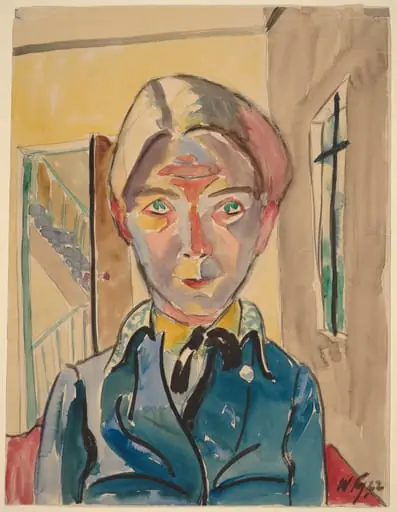 Self-Portrait in Front of Stairs (Selbst vor Treppe)
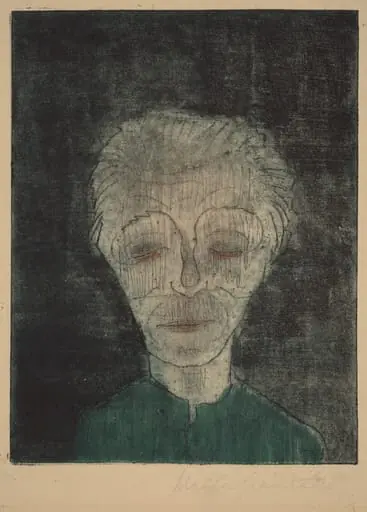 Tired Man (Self-Portrait)
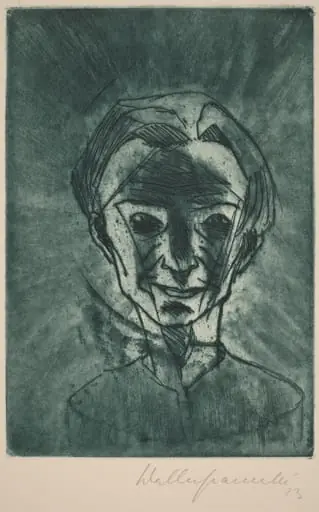 Smiling Head, Self-portrait (Lächelnder Kopf, Selbstporträt)
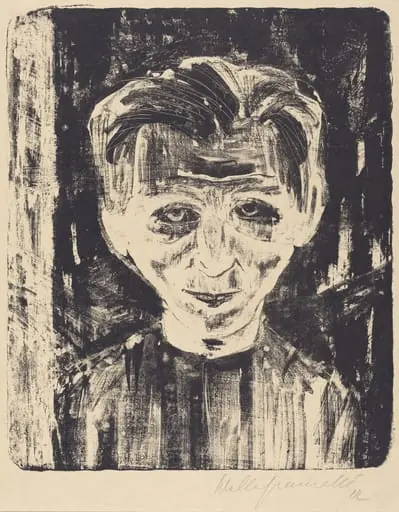 Self-Portrait
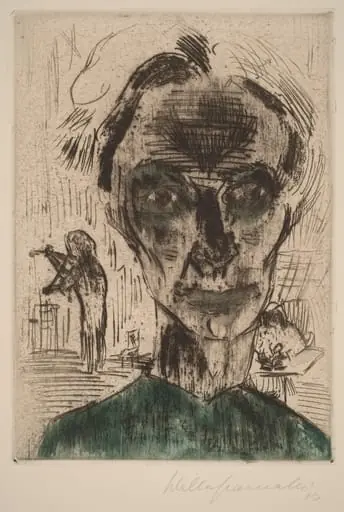 Man in a Room, Self-portrait
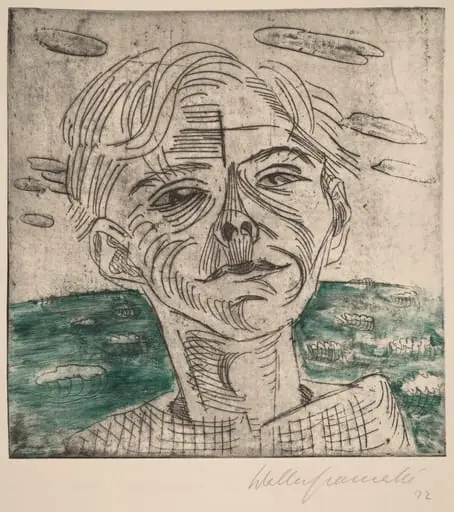 Man at the Sea, Self-portrait (Mann am Meer, Selbstporträt)
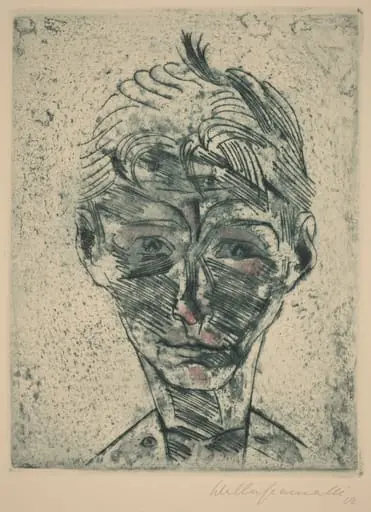 Bust of a Young Man, Self-portrait (Knabenkopf, Selbstporträt)
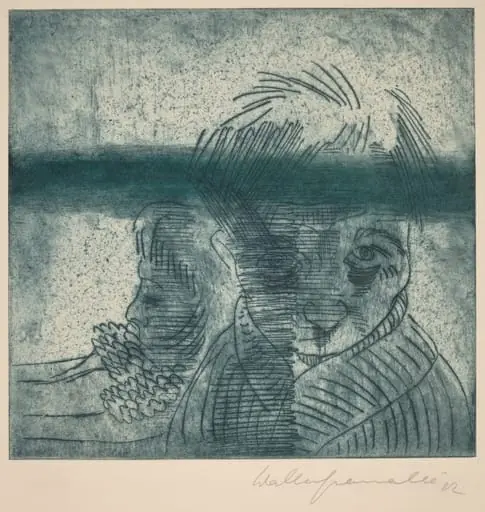 The Couple, Self-Portrait with Wife (Das Paar, Selbstporträt mit Frau)