Artwork
Title Page
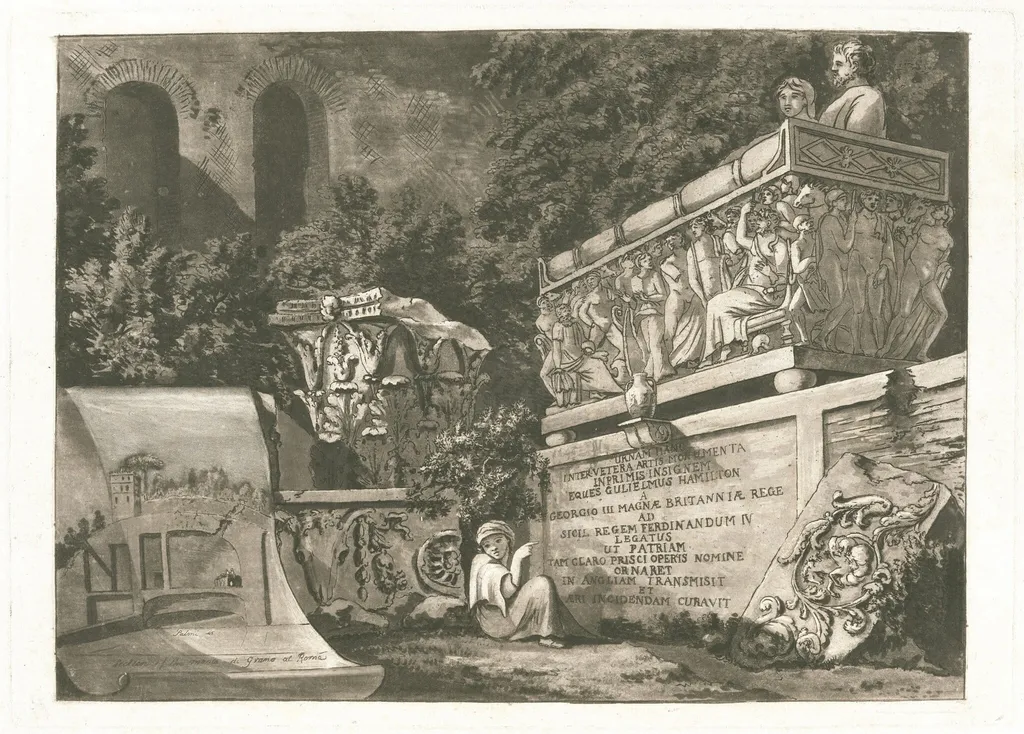
Title Page is an ink print by the Romanticist artist Charles Francis Greville. It dates from 1786 and is held in the collection of the National Gallery of Art.
- Inscription
- Inscribed:lower left in image: Palmi 45 / Section of the Marita di Grano at Roma; lower right, in image on tomb: URNAM HANC / INTER VETERA ARTIS MONUMENTA / IN PRIMIS INSIGNEM / EQUES GULIELMUS HAMILTON / A / GEORGIO III MAGNAE BRITANNIAE REGE / AD / SICIL REGEM FERDINANDUM IV / LEGATUS / UT PATRIAM / TAM CLARO PRISCI OPERIS NOMINE / ORNARET / IN ANGLIAM TRANSMISIT / ET / AVRI INCIDENDAM CURAVIT
About this work
Overview
It depicts an elaborate architectural fountain surrounded by foliage and classical arches, rendered with fine tonal gradations.
Created around 1786, this print by Charles Francis Greville is an etching and aquatint on laid paper, produced as a standalone decorative sheet rather than a book illustration. It depicts an elaborate architectural fountain surrounded by foliage and classical arches, rendered with fine tonal gradations. The work is held in the collection of the National Gallery of Art in Washington, D.C., and exemplifies late 18th-century British printmaking techniques.
Subject & Meaning
The central motif is a stone fountain adorned with sculpted figures of humans and mythical creatures, evoking a mythological or allegorical setting. A seated woman in period dress gestures toward the scene, possibly symbolizing contemplation or patronage. Latin inscriptions suggest a dedicatory function, though the exact text remains untranslated. The composition blends natural and fantastical elements, reflecting Enlightenment-era interests in antiquity and symbolic representation.
Technique & Style
Greville employed etching for fine linear detail and aquatint to achieve soft, atmospheric shading, creating depth and volume in the stone surfaces and foliage. Drypoint may have been used to enhance texture in the carvings and tree bark. The layered technique gives the scene a painterly quality, with careful modulation of light and shadow.
The composition is structured with receding arches and a distant horizon, guiding the viewer’s eye into a simulated three-dimensional space.
History & Provenance
The print was produced during Greville’s active years as a collector and amateur artist, likely as a private commission or personal project. It entered the National Gallery of Art’s collection through established acquisition channels in the 20th century. No record of earlier ownership or exhibition history is widely documented, suggesting it was never widely distributed but preserved as a refined example of domestic print culture.
Context
In the 1780s, British artists increasingly turned to etching and aquatint to reproduce landscape and architectural subjects, influenced by continental traditions and the popularity of antiquarian studies. Greville’s work aligns with this trend, mirroring the aesthetic of garden design and classical revival architecture favored by the educated elite. The inclusion of Latin text reflects the era’s scholarly pretensions and the cultural value placed on classical learning.
Legacy
Though not widely reproduced or studied, this print remains a representative artifact of amateur printmaking in late Georgian England. It illustrates how artistic techniques once reserved for professional publishers were adopted by collectors and gentlemen amateurs to explore visual narratives of antiquity. Its preservation in a major museum underscores its value as a document of cultural taste and technical skill in the period.
Own this work as a print
Artist & collection

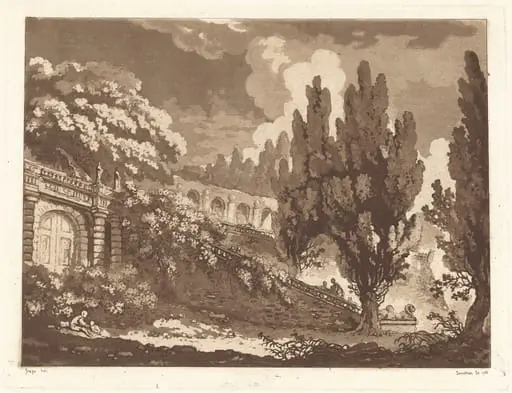
- Stairway in an Italian Garden
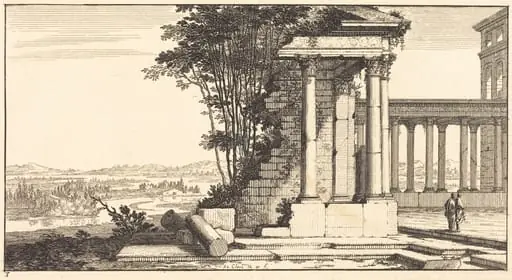 Landscape with Classical Ruins
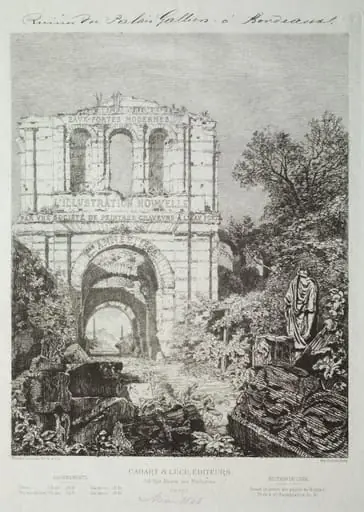 Ruins of the Gallien Palace in Bordeaux
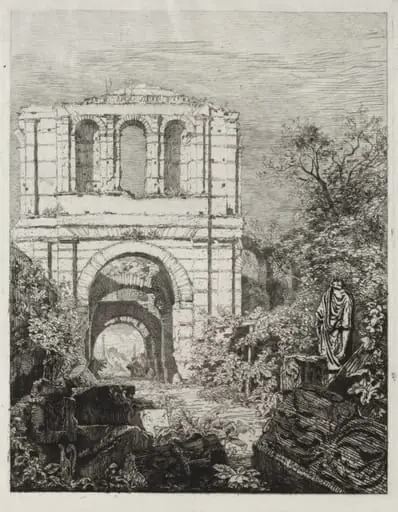 Ruins of the Palais Gallien in Bordeaux
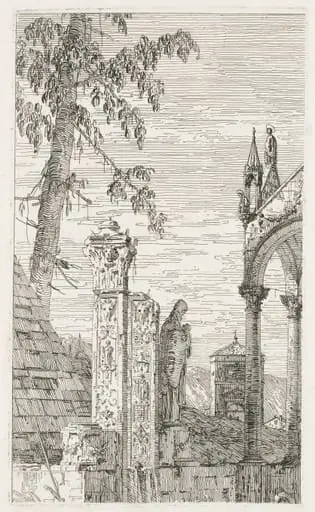 Views: Fragments of Sculpture
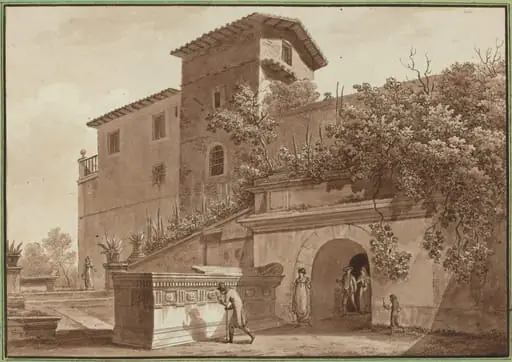 Tomb of Scipios
![Yediküle with a Muslim Cemetery, Constantinople, by Michel-François Préaulx [Préaux]](https://artifactworldgallery.com/img/michel-francois-preaulx-preaux--yedikule-with-a-muslim-cemetery-constantinople--c422bdec8e9c6ba8-w320.webp) Yediküle with a Muslim Cemetery, Constantinople
Yediküle with a Muslim Cemetery, Constantinople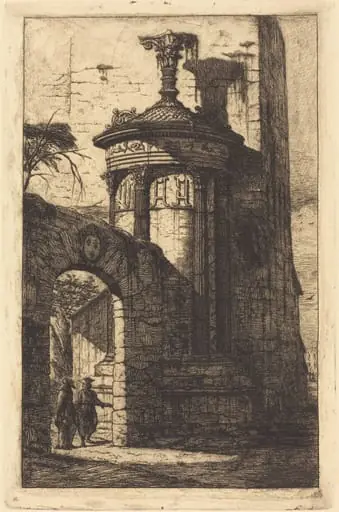 Entrée du Couvent des Capucins français à Athenes (Entrance to the French Capuchin Convent at Athens)
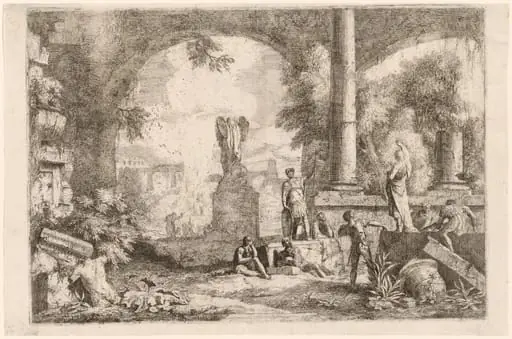 Capriccio of Antique Ruins with Men Gazing at a Classical Orator
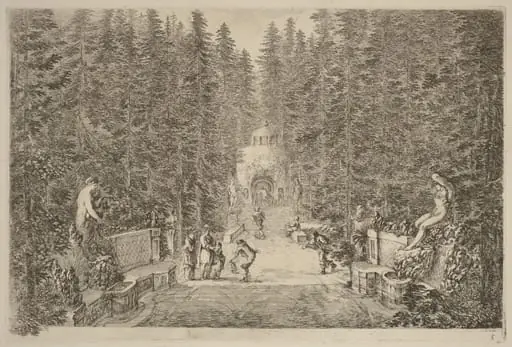 The Water Spray
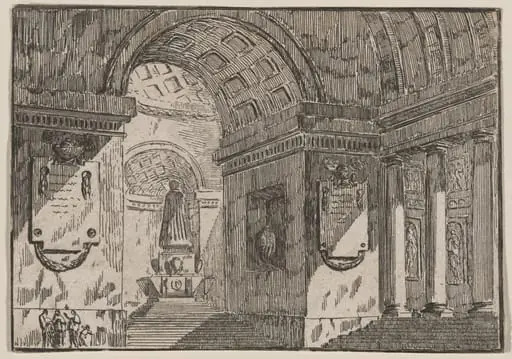 Porch before a Circular Temple
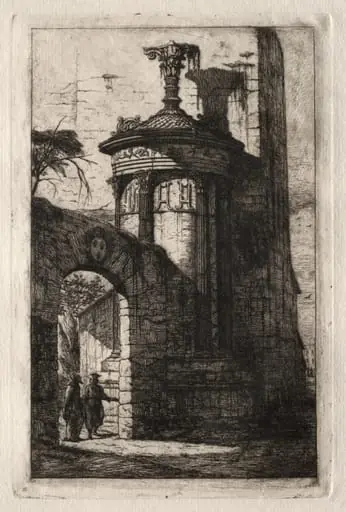 Entrance to the French Capuchin Convent at Athens