
Artist
Subject

Inscription is a subject in art. The gallery holds 200 works in this subject in art, including works by Nathaniel Hancock, Willem Key and Michiel Coxie.
An inscription is written text incorporated into a work of art or carried by a durable object—carved in stone, cast in bronze, brushed in ink, woven, gilded, or engraved on metal. Its scholarly study, epigraphy (from the Greek epigraphē, "inscription"), recognizes graphemes, deciphers their meanings, and classifies their use across dates and cultures, deliberately bracketing the document's historical importance and the literary value of the text in favor of the writing itself. As a theme in art, the inscription is ancient and near-universal: the monumental dedications of Mesopotamia and pharaonic Egypt, the public lettering of the Greek polis and the squared Roman capitalis monumentalis, and the funerary epitaph all made text a permanent, often sacred, presence in the visual field.
Visually, inscriptions range from terse names and dates to extended legal, devotional, or commemorative passages, and their character depends on medium and hand. Stone-cutters favored regular, legible majuscules; manuscript scribes developed disciplined book-hands, as in the sacred Buddhist folios of the Gandavyuha-sutra (Scripture of the Supreme Array) held in this collection, where the copied scripture is itself the artwork. Medieval funerary art fused text and image on engraved tomb plaques and brasses—witness the Tomb Plaque of Blanche of France (1328–92), daughter of Charles IV. In the Italian Renaissance the cartellino emerged: an illusionistic scrap of paper or parchment, sometimes torn or pinned, bearing the artist's name or date; Antonello da Messina deployed it prominently, as in his Saint Jerome in His Study (c. 1475).
In some traditions writing became the dominant aesthetic. Islamic civilization elevated calligraphy—angular Kufic, flowing thuluth—into a structural element of architecture, lining mosque walls, mihrabs, and portals with Qur'anic verse. In China, the literati integrated poetry, calligraphy, painting, and vermilion seals; inscriptions and later collectors' colophons accumulate across handscrolls as a record of reception and lineage.
The inscription also became a vehicle of wit and authorship: Jan van Eyck's mock-graffiti "Johannes de Eyck fuit hic 1434" above the mirror in the Arnolfini Portrait asserts both presence and artistry. This long lineage—text as signature, dedication, and sacred sign—anticipates the word-driven strategies of modern and conceptual art, where lettering returns as the picture's principal subject.

Artist
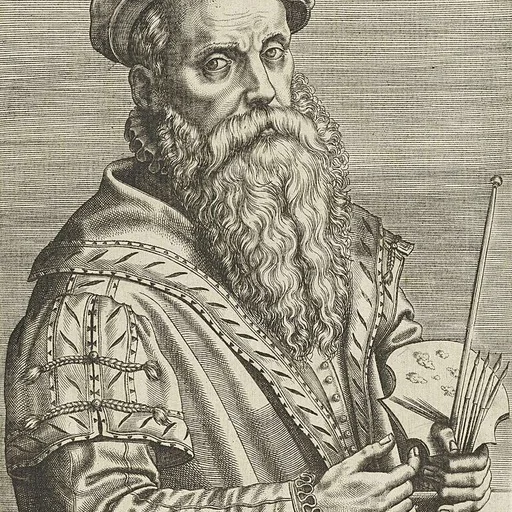
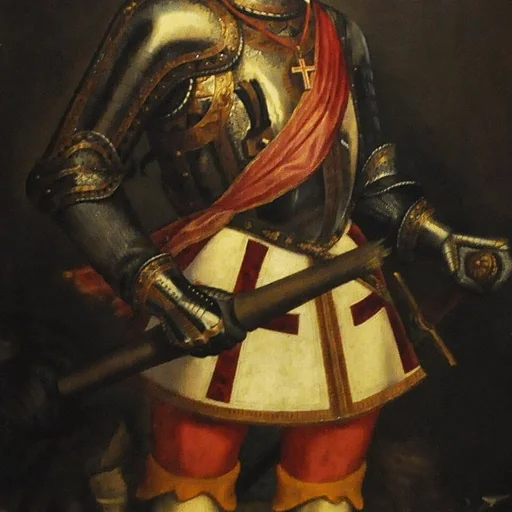
Artist
An inscription consists of words, texts, lettering, or symbols marked on a work, building, or object, including texts, legends, documentation notes, or commemorative statements. The term derives from Latin inscriptio, originally meaning an "inscription" or "superscription" on an object, though a precise and uncontroversial definition remains elusive. The study of inscriptions is called epigraphy, from Greek epigraphē meaning "inscription" or "writing upon." Epigraphy as a science identifies graphemes, clarifies their meanings, classifies their uses according to dates and cultural contexts, and draws conclusions about the writing and the writers. The field has developed steadily since the 16th century, with the Corpus Inscriptionum Latinarum, begun by Theodor Mommsen and other scholars in Berlin in 1863, standing as the largest and most extensive collection of Latin inscriptions. Inscriptions appear across diverse media, including stone, metal, wood, leather, fabric, enamel, glass, and mosaic, created through techniques such as engraving, casting, scratching, painting, and sgraffito.
Inscriptions carry layered functions that extend beyond mere textual communication. In architectural contexts, an epigraph may serve as a devise or phrase about a building's purpose, sometimes naming the architect, patron, or construction company, and when dates are included, functioning as chronograms. The materials and techniques employed, such as stone carving with red paint or gilding in antiquity, metal casting, or sgraffito, are integral to the aesthetic effect. Through deliberate graphic and plastic means, inscriptions aim to evoke responses such as appreciation, dignity, sublimity, respect, and reverence, not necessarily through size but through targeted design choices. The German equivalent Sinnbildforschung for ideographic inscriptions was once a scientific discipline during the Third Reich, though later dismissed as highly ideological. Inscriptions may be commemorative, dedicatory, honorific, funerary, legal, or devotional, functioning variously as public declarations, private records, or sacred texts. Their character as writing remains distinct from the nature of the text itself, which may be studied independently.
The treatment of inscription has varied significantly across movements, periods, and cultures. In Mycenaean Greece, deciphered Linear B texts served largely for economic and administrative record keeping rather than public display. Ancient Greek and Roman inscriptions developed distinct epigraphic traditions, with the Corpus Inscriptionum Graecarum (1825-1877) and Inscriptiones Graecae documenting Greek practice, while the Corpus Inscriptionum Latinarum systematized Latin material geographically. Roman architectural inscriptions, such as the Pantheon's fronton inscription identifying Marcus Agrippa as builder in 27 BCE, established conventions of patronage documentation. Medieval inscriptions encompassed rune stones, manuscript folios, and ecclesiastical consecrations, with definitions excluding standard chancery or school writing methods. The decipherment of Egyptian hieroglyphs through the Rosetta Stone by Jean-François Champollion and Thomas Young, and the ongoing recovery of Maya hieroglyphic interpretation after the Spanish Conquest, demonstrate how inscription studies bridge archaeological and linguistic disciplines. Modern architectural epigraphy continues, as seen in Paul Valéry's golden inscriptions on the Palais de Chaillot in Paris and André Malraux's commemorative text at the Musée de Jeanne d'Arc in Rouen.
Canonical inscriptions across world cultures include the Behistun inscription, an official trilingual document of the Achaemenid Empire engraved on native rock in Iran, fundamental to deciphering cuneiform scripts. The Rosetta Stone, with its parallel Greek, Demotic, and hieroglyphic texts, proved decisive for Egyptian decipherment. Other significant examples encompass the Copper Plate Inscription of Laguna, the Shugborough House inscription, the Abercius inscription, pre-Islamic Arabian inscriptions, the Orkhon inscriptions, the Forum inscription, the Duenos inscription, the Bryggen inscription, the Bitola inscription, the Canggal inscription, the Śivagŗha inscription, the Calcutta Stone, the Ekron inscription, the Sefire inscriptions, and the Siloam inscription. In the collection specifically, the Gandavyuha-sutra folios represent significant Buddhist textual art, while the Tomb Plaque of Blanche of France exemplifies late medieval French royal commemorative practice. The consecration inscription from Sant Climent de Taüll preserves Romanesque liturgical dedication formulas. Key figures in inscription studies include Georg Fabricius, Stefano Antonio Morcelli, Luigi Gaetano Marini, August Wilhelm Zumpt, Theodor Mommsen, Emil Hübner, Franz Cumont, and Louis Robert.
The legacy of inscription as a subject and practice persists in multiple domains. Epigraphy remains a primary tool of archaeology when dealing with literate cultures, classified by the US Library of Congress among the auxiliary sciences of history. The ongoing publication of new fascicles in the Corpus Inscriptionum Latinarum, with volume 6, part 8, fascicle 3 published in 2000, attests to continued discovery and scholarly attention. Specialized corpora now encompass Etruscan, Crusader, Celtic, Iranian, Sumerian, Akkadian, and numerous other inscriptional traditions. Epigraphic methods also serve practical functions such as forgery detection, as in the case of the James Ossuary. The field overlaps with numismatics, palaeography, sphragistics, and petroglyph studies, while maintaining distinct boundaries from iconography through its focus on meaningful symbols containing messages rather than images per se. Contemporary definitions continue to negotiate the boundaries of what constitutes an inscription, with debates about durability, publicity, and monumentality as defining criteria yielding to practical research needs. The persistence of architectural inscriptions, from ancient Roman dedications to modern commemorative texts, demonstrates the enduring human impulse to fix language in durable material form for public or sacred witness.
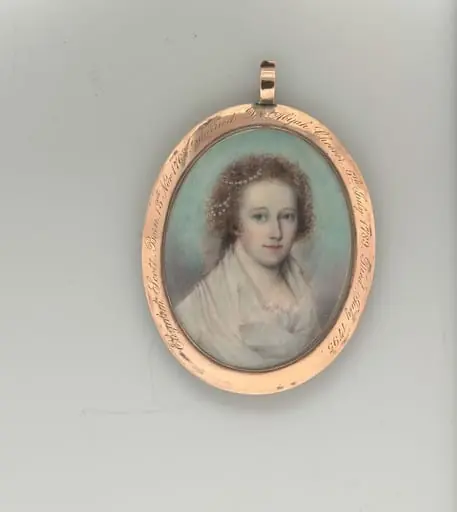 Mrs. Abijah Cheever (Elizabeth Scott)
 Text, folio 22 (verso) from a Gandavyuha-sutra (Scripture of the Supreme Array)
 Text, folio 115 (verso) from a Gandavyuha-sutra (Manuscript of the Supreme Array)
 Text, folio 20 (verso) from a Gandavyuha-sutra (Scripture of the Supreme Array)
 Text, folio 37 (verso) from a Gandavyuha-sutra (Scripture of the Supreme Array)
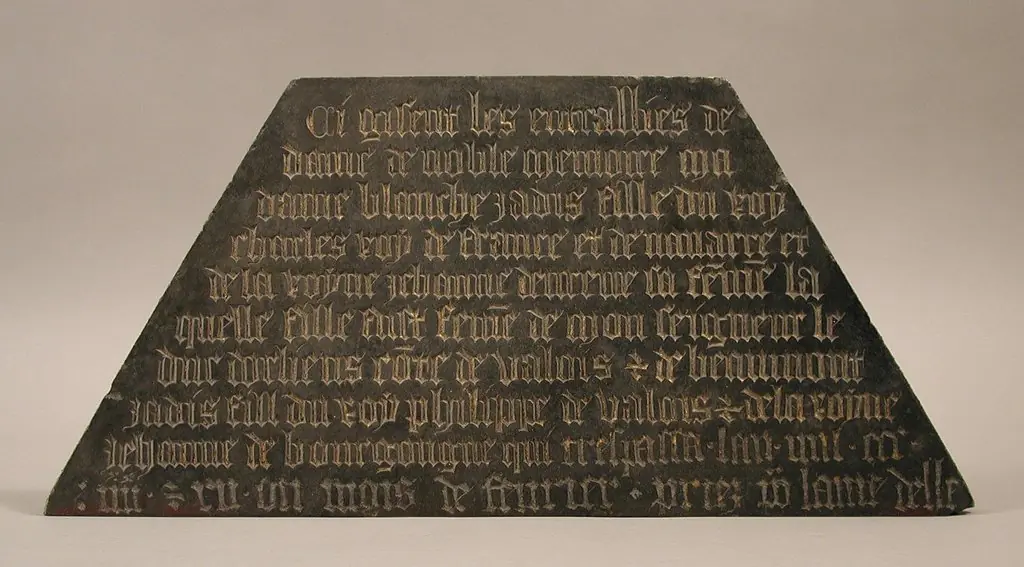 Tomb Plaque of Blanche of France (1328–92), daughter of Charles IV of France and Jeanne d'Evreux
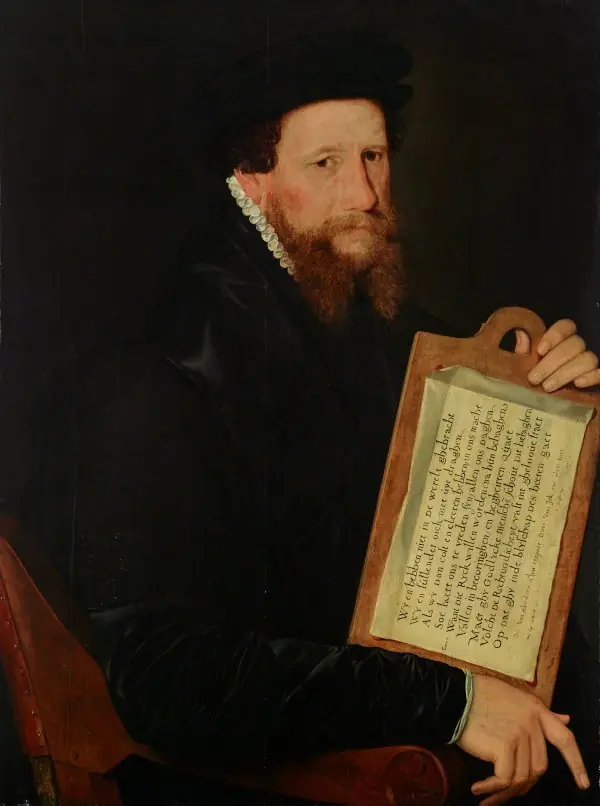 Portrait of a Protestant minister of religion
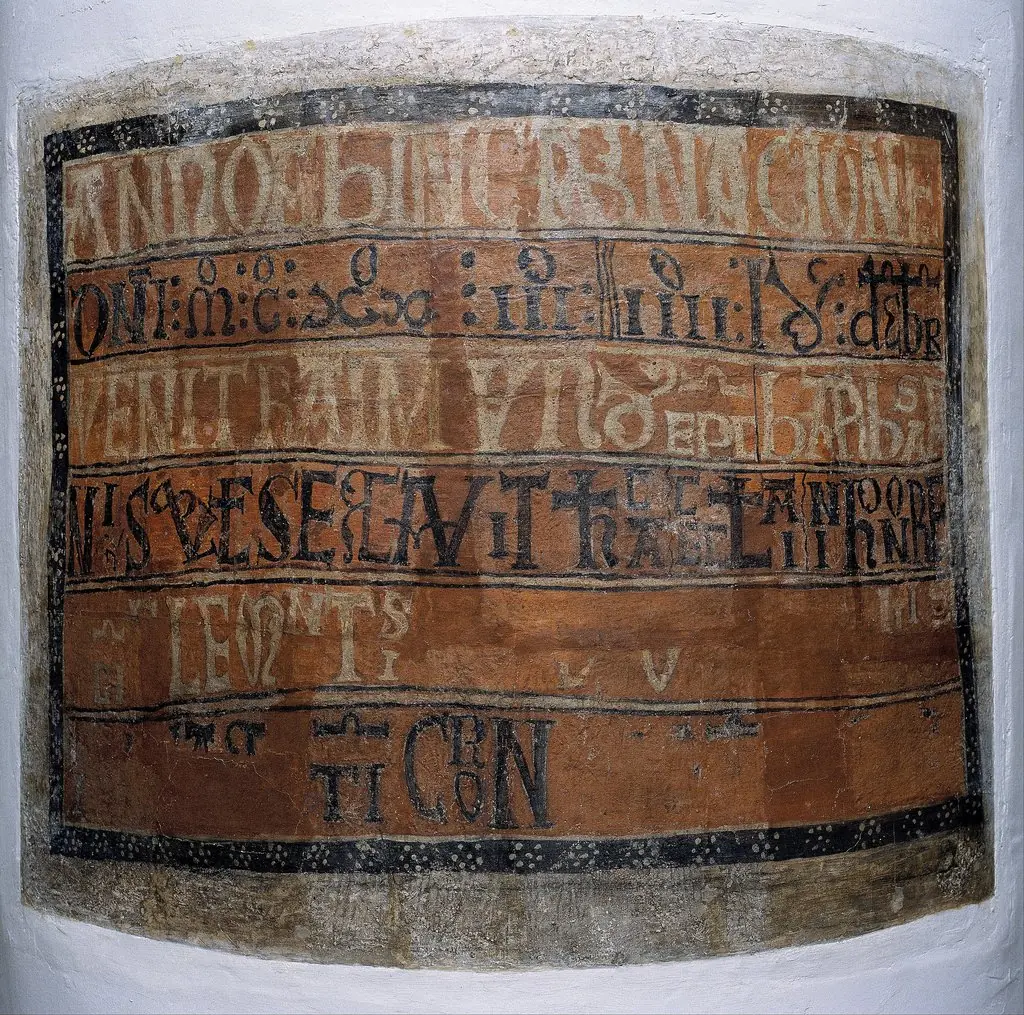 Consecration inscription from Sant Climent de Taüll
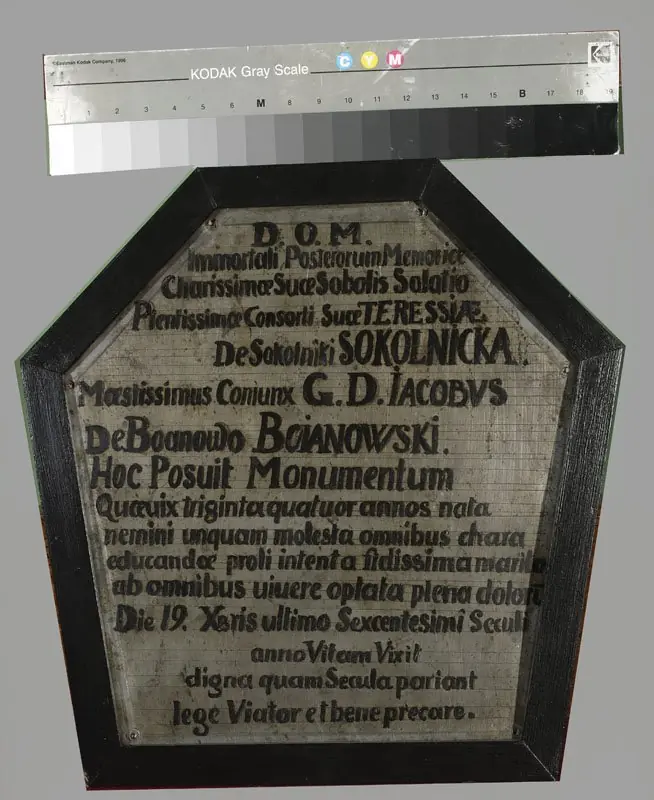 Steel plate with inscription for the coffin portrait of Teresa Bojanowska née Sokolnica (1666–1700)
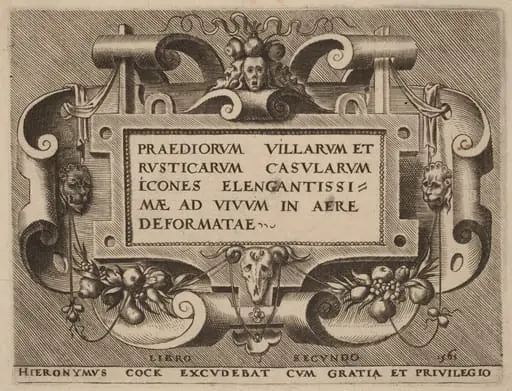 Title Page for "Praediorum Villarum"
 Icoana reprezintă Nașterea Mântuitorului Iisus Hristos. Icoana este împărțită patru secvențe: Nașterea Mântuitorului este în centrul icoanei. Pruncul Iisus Hristos, înfășat în scutece este ținut în legănuț de Maica Domnului și de Dreptul Iosif, logodnicul Fecioarei Maria. În registrul superior este ilustrată venirea magilor după steaua cea călăuzitoare. În colțul drept, este un înger îmbrăcat în cămașă roz, aplecându-se din Ceruri, pentru a privi și a mângâia bucuria Nașterii Pruncului. În registrul inferior este ilustrată îmbăierea Pruncului de către câteva tinere fecioare. Alături este Dreptul Iosif care se arată nedumerit de Taina minunată a Nașterii Domnului și de păstrarea Fecioriei Maicii Domnului și după Naștere. În centrul icoanei este steaua cea călăuzitoare cu un mănunchi de raze luminoase, aducătoare de vestea cea bună. Urcând spre dreapta, întâlnim un ciobănel păstor cu oile. Elementele de arhitectură sunt foarte minuțios realizate, creându-se atmosfera Nazareth-ului. Este o alternanță cromatică luminoasă și vie de roșu zmeuriu, roz, albstru turcoaz-smarald, galben chihlimbar, gri și brun. Cerurile sunt deschise. Icoana este foarte bogată în narațiune. Registrele se întrepătrund armonios. Inscripția din româno-chirilică se traduce Nașterea ICXC Iisus Hristos.
 Sfinții Arhangheli Mihail și Gavriil sunt reprezentați împreună, fiind mai-marii voievozi ai oștilor cerești. În această icoană, primul este Sfântul Arhanghel Gavriil, îngerul aducător de dar și bunăvestire, iar al doilea este Sfântul Arhanghel Mihail, numit slujitorul Legii. Sfinții Arhangheli sunt înveșmântați în tunică-sacos galbenă chihlimbar, cu mânecile largi gri-antracit, cu mantiile roșii vermillon, aripile roșii-gri antracit. Sfântul Mihail are pantalonii de oștean albaștrii bleu-ciel și ține în mâna dreaptă balanța faptelor bune și a fărădelegilor și în mâna stângă are spada dreptății și a credinței. Fondul icoanei este cerul albastru bleu-ciel ceruleum în registrul superior și un câmp de nouri albi-albaștri, asemenea unor mandorle, în registrul de mijloc. Cromatica armonioasă este alcătuită din: roșu vermillon, albastru bleu-ciel și ceruleum, galben chihlimbar, gri antracit, brun, bronziu, alb, negru. Inscripția din româno-chirilică se traduce Mihail și Gavriil. Icoana este din Nordul Transilvaniei, Nicula.
 Icoana este mai rară, prin tematica iconografică abordată. Este un prăznicar cu 6 sfinți ierarhi, mucenici, arhidiaconi. Sunt împărțiți în două registre, a câte trei grupuri, înscrise între coloane, pe sub arcade de Biserică. În registrul superior sunt cei trei Ierarhi Vasile cel Mare, Grigorie de Dumnezeu-Cuvântătorul și Ioan Gură-de-Aur. Cei Trei Sfinți Ierarhi Vasile cel Mare, Grigorie de Dumnezeu Cuvântătorul și Ioan Gură-de-Aur slujesc și săvârșesc Sfânta Liturghie împreună. Sunt înveșmântați în veșminte liturgice: sacos albastru ceruleum și roz putred-stacojiu, cu linii albe, felon roșu vermillon-orange, epitrahil ocru-galben și verde-lime cu câte trei-patru cruci negre. Sfinții ierarhi Binecuvântează cu mâna dreaptă și țin în mâna stângă Sfânta Evanghelie închisă. În registrul al doilea, cel inferior, sunt Sfântul Mare Mucenic Dimitrie Izvorâtor de Mir, Sfântul Mare Ierarh Nicolae făcător de minuni și Sfântul Mare Arhidiacon Ștefan. Se remarcă sacosul de zale gri-argintii ale Sfântului Dimitrie, care ține în mâna dreaptă o cădelniță, iar Sfântul Ștefan Binecuvântează cu crucea, pe care o ține în mâna dreaptă. Fondul întregii icoane este cerul albastru cobalt-ceruleum, împodobit cu stele albe și roșii, elemente astrale. Cromatica este luminoasă și armonioasă: verde văratic, verde lime, alb, orange, roșu vermillon, roz-stacojiu, galben-ocru, galben chihlimbar, bej, crem, albastru cobalt și ceruleum, negru. Este o icoană specifică picturii de Țara Oltului, cu un desen fin cu conturul negru și cromatica pastelată. Inscripția din româno-chirilică se traduce Sf Vasile Sf Grigorie Sf Ioan Sf Dimitrie Sf Nicolae Sf Ștefan.
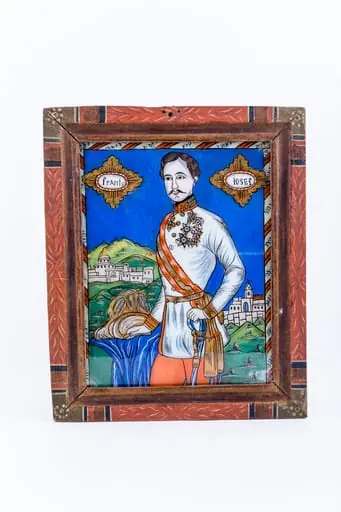 Este portretul împăratului Franz Josepf al Austriei, din Casa de Habsburg, rege al Ungariei și Boemiei, rege al Croației, mare duce al Bucovinei, mare principe al Transilvaniei, marchiz de Moravia, mare voievod al voievodatului Serbiei. Ceea ce este comun icoanelor pe sticlă sunt aceste teritorii, pe care le-a condus, în care a apărut meșteșugul picturii pe sticlă și a icoanelor pe sticlă: Austria, Ungaria, Boemia, Croația, Bucovina, Transilvania, Moravia. Împăratul este îmbrăcat în uniformă militară, cu toate decorațiile și medaliile pe piept, cu tunică albă cu butoni aurii, cu mantie albastră-cobalt, cu căciulă cu pană. Cu mâna stângă ține mânerul sabiei în teacă, la brâu. În registrul îndepărtat, stânga și dreapta, sunt elemente de arhitectură, diferite, neasemănătoare, arătându-se astfel țările din imperiu. Numele împăratului este scris în două medalioane baroce de culoare bronzie, pe cerul albastru. Tematica portretului este încadrată de un chenar decorativ geometrizant, din linii paralele cromatizate alternativ. Rama este decorată foarte frumos, asemenea unui al doilea chenar decorativ. Cromatica: albastru cobalt, verde avocado, orange, alb, brun-acajou. Inscripția este numele împăratului frants josef.
 Folio 2 (verso), from a Kalpa-sutra and Story of Kalakacharya of Devachandra
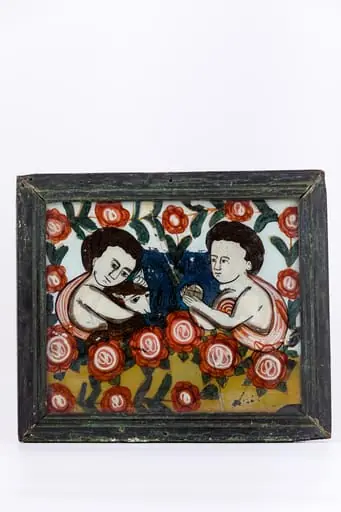 Icoana îi reprezintă dimpreună pe Mântuitorul Iisus Hristos și Sfântul Ioan Botezătorul, copii fiind, verișori, redați semi-profil, înfășurați cu câte o mantie roșie vermillon, dar cu umerii goi de copilași. Copilul Iisus ține în mâini, globul pământesc cu crucea deasupra, asemnea unui chivot de biserică, iar copilul Ioan ține un mieluț. Mieluțul este Însuși Mântuitorul Iisus Hristos, care Se va Jertfi pentru toată lumea, reprezentată de chivotul bisericii pe globul pământesc. Iată Mielul! - sunt cuvintele Sfântului Mare Prooroc Ioan Botezătorul și Înaintemergătorul Domnului nostru Iisus Hristos. Fondul icoanei este albastru bleumarin adânc și profund, în centrul icoanei, și bleu-ciel senin, pe margini, în registrul inferior este un câmp luminos de galben-ocru. În marginile icoanei, fondul este alb-albastru bleu-ciel foarte deschis și senin, înconjurat de elemente decorative fitomorfe - 16 trandafiri și bujori, ruje, roșii, cu frunze verzi. Cromatica este armonioasă și senină: roșu vermillon, albastru bleumarin, albastru bleu-ciel, galben-ocru; alb, negru. Icoana este de Gherla.
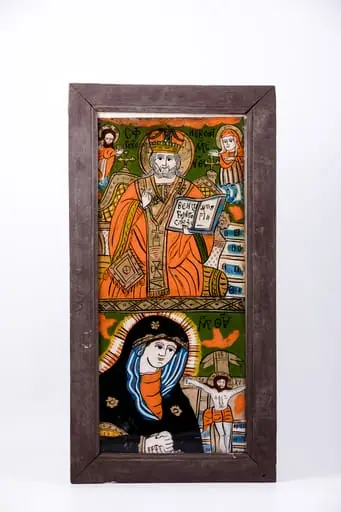 Icoaauri
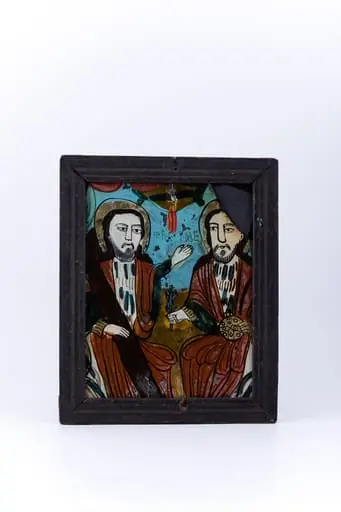 Icoana reprezintă Sfânta Treime. Dumnezeu-Tatăl are globul pământesc bronziu pe genunchi și arătă cu mâna dreaptă, în care are sceptrul împărătesc cu crucea, Bincuvântând întreaga lume. Dumnezeu-Fiul are Crucea pe umărul drept. Dumnezeu-Tatăl și Dumnezeu-Fiul sunt înveșmântați în roșu vermillon-acajou, cu sacosuri albe, dungate cu liniuțe subțiri albastre. Amândoi-dimpreună se sprijină cu picioarele pe o mandorlă de nouri albi-gri, rotunzi și bogați, fiind așezați ca pe un tron împărătesc. Deasupra, în registrul superior este un spațiu luminos de auriu de chihlimbar, din care pe un mănunchi de raze luminoase, se pogoară Sfântul Duh, sub forma porumbelului alb. Astfel este prezentă întreaga Sfântă Treime. Între Dumnzeu-Tatăl, Fiul și Sfântul Duh este un spațiu galben-auriu. Fondul icoanei este cerul albastru cerulem-regal, încadrat de un chenar decorativ geometrizant format din semicercuri roșii, asemenea unor petale de ruje. Inscripția din româno-chirilică se traduce Treime. Cromatica este luminoasă și armonioasă: roșu vermillon-acajou, verde văratic-mușchi de pădure, albastru ceruleum-regal, auriu-bronziu, galben-chihlimbar, gri, brun, alb, negru. Icoana este din Nordul Transilvaniei, Nicula.
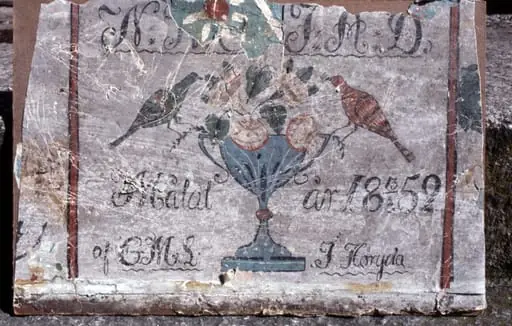 Painting
 Text, Folio 82 (recto), from a Manuscript of the Perfection of Wisdom in Eight Thousand Lines (Ashtasahasrika Prajnaparamita-sutra)
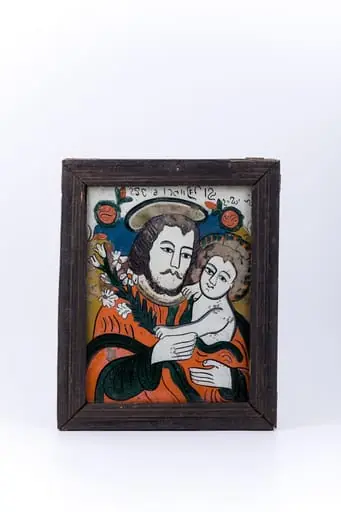 Icoana îi reprezintă pe Sfântul și Dreptul Iosif, Logodnicul PreaCuratei Fecioarei Maria, cu Pruncul Iisus Hristos în brațe. Icoana este mai rară, din punctul de vedere al tematicii compoziționale abordate. Sfântul Iosif este înveșmântat cu un hiton - tunică roșie vermillon, cu mânecile și bordura verde mușchi-de-pădure sau nuanță de China. Pruncul Iisus este dezbrăcat, dar acoperit de veșmântului protector al Sfântului Iosif. În mâna dreaptă Dreptul Iosif Logodnicul ține o ramură de crin, simbolul Fecioriei și a BuneiVestiri. Crinul este ținut împreună cu mânuța Pruncului Sfânt. Aureola Sfântului Iosif este mai aparte, asemenea sfinților catolici. Fondul icoanei este cerul albastru regal, în registrul superior, un câmp luminos de galben-bronziu, în registrele inferior și mediu, pe laterale și un chenar decorativ geometrizant alb-ivoriu. În registrul superior, asemenea unei arcade de boltă, este o ghirlandă de ruje roz - 2 elemente florale. Inscripția din româno-chirilică se traduce Sf Iosif și Iisus. Cromatica este armonioasă și luminos-pastelată: roșu vermillon, verde mușchi-de-pădure, albastru regal, alb-ivoriu, crem, bej, nisipiu, galben-ocru, bronziu, alb, negru. Icoana este din Nordul Transilvaniei, Nicula.
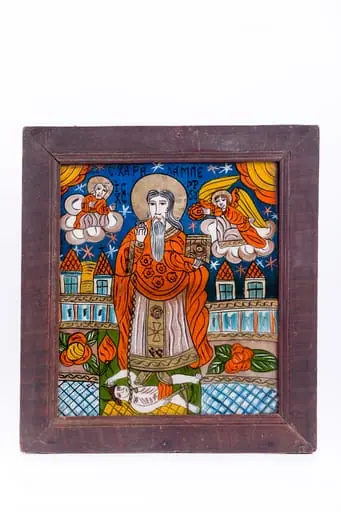 Sfântul Haralambie este cunoscut ca și făcător-de-minuni, vindecător de boli și ocrotitor al caselor familiilor creștine. Central este pictat Sfântul, îmbrăcat cu veșminte liturgice, arhierești, cu sacos roșu vermillon și bej-rozaliu, cu elemente decorative florale brune și epitrahil brun-stacojiu-roz, cu trei cruci și aureolă. Cu mâna dreaptă binecuvântează și cu mâna stângă ține Sfânta Evanghelie închisă. Tot cu mâna dreaptă, binecuvântând, ține și în lanț ciuma, reprezentată antropomorfic și zoomorfic - o vietate goală și diavol, cu trăsături umane. Ciuma, simbolizând boala incurabilă și moartea, are coarne de diavol, fiind, totodată și păcatul, patima, aducătoare de moartea duhovnicească. Fondul este cerul albastru cobalt strălucitor de senin, cu elemente decorative astrale - stele albe și roșii. Compoziția iconografică este îmbelșugat-echilibrată cu elemente de arhitectură. În registrul superior sunt Dumnezeu-Tatăl Binecuvântând și Îngerul păzitor, cu aripile galbene de lumină, ocrotind, fiind pe mandorle de nouri albi-crem-bej. Cromatica este armonioasă și luminoasă: roșu vermillon, brun-rozaliu, albastru cobalt și blau-ciel, verde spanac-avocado, kaki, cafeniu, galben-ocru, alb, negru. Icoana este de Țara Oltului. Inscripția din româno-chirilică se traduce Sfântul Haralambie IC XC MP Iisus Hristos Maica Domnului. Chiar dacă în inscripție scrie MP Maica Domnului este pictat Sfântul Înger ocrotind.
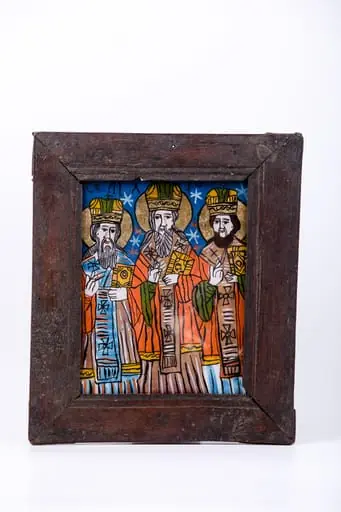 Cei Trei Sfinți Ierarhi Vasile cel Mare, Grigorie de Dumnezeu Cuvântătorul și Ioan Gură-de-Aur slujesc și săvârșesc Sfânta Liturghie împreună. Sunt înveșmântați în veșminte liturgice: sacos crem-albastru-alb-crem, felon roșu vermillon, epitrahil albastru-verde cu câte patru cruci negre. Sfântul Vasile cel Mare are Sfânta Evanghelie în mâna dreaptă. Sfântul Ierarh Grigorie de Dumnezeu Cuvântătorul Binecuvântează. Fondul registrului superior este cerul albastru-regal, bogat ornamentat cu elemente astrale - stele roșii și albe. Cromatica este luminoasă și armonioasă: verde văratic, alb, roșu vermillon, galben-ocru, bej, crem, albastru regal și bleu-ciel, negru. Este o icoană specifică picturii de Țara Oltului, cu un desen fin cu conturul negru și cromatica pastelată. Inscripția din româno-chirilică se traduce Vasile Grigorie Ioan.
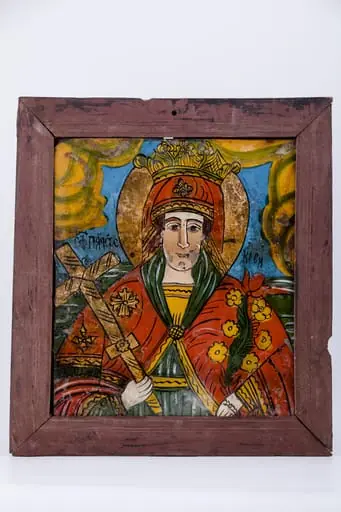 Sfânta Mare Cuvioasă Parascheva de la Iași are crucea în mâna dreaptă și ramură înflorită, cu 6 flori galbene și una roșie în vârf în mâna stângă. Este îmbrăcată în veșmânt roșu vermillon, cu interiorul căptușit cu verde și galben. Peste maforionul roșu, sfânta cuvioasă are aureolă. Fondul icoanei este cerul albastru regal, cu o arcadă de lumină galbenă, în registrul superior și bronziu, în jurul chipului și aureolei Sfintei Paraschiva și o alternanță de câmpuri verzi, dispuse paralel, în registrul mediu și inferior. Este o icoană cu aer cald, tomnatic, de octombrie 14, Praznicul Sfintei Cuvioase Parascheva. Inscripția din româno-chirilică se traduce Sf Paraschiva. Cromatica este armonioasă: roșu vermillon, albastru regal, verde văratic și forest, brun-cafeniu, negru, galben chihlimbar, ocru, bronziu, gri, negru, alb. Icoana este din Țara Oltului.
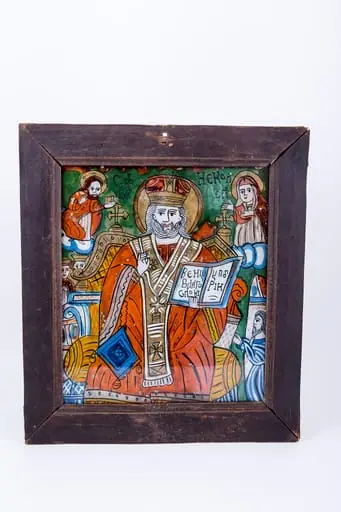 Sfântul Mare Ierarh Nicolae Făcătorul de minuni este redat central, fiind așezat pe un tron arhieresc, ținând în mâna stângă Sfânta Evanghelie deschisă și binecuvântează cu mâna dreaptă. Veșmintele arhierești liturgice ale sfântului ierarh sunt într-o alternanță cromatică de orange-albastru regal-brun-bronziu și alb și negru. Epitrahilul, patrafirul este brun-bronziu, cu patru cruci pe el, sacosul orange-roșu vermillon. Poartă mithră și are aureolă. În registrul superior îndepărtat sunt Dumnezeu-Tatăl și Maica Domnului, care binecuvântează și ocrotesc întreaga narațiune iconografică. Pe fondul verde, Mântuitorul și Maica Domnului au veșminte brune-crem și roșu-vermillon-orange. În registrul inferior sunt cele trei fete salvate de la sărăcie și păcat și tatăl fetelor mulțumind, în genunchi, pentru ajutorul primit. Inscripția din româno-chirilică se traduce Sf Nicolae ICXC MP Iisus Hristos Maica Domnului. Icoana are o cromatică puternic-vie, specifică Țării Oltului: roșu vermillon-orange, verde spanac-avocado, albastru regal, brun, gri,bronziu, alb, negru.
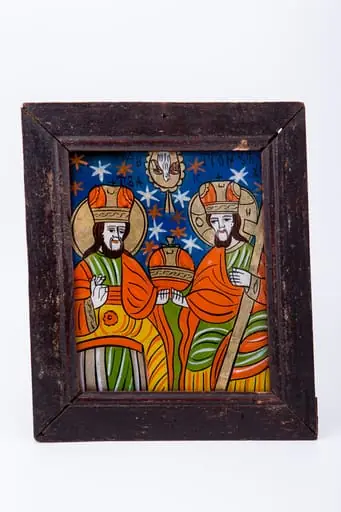 Sfânta Treime prezentă în această icoană este inedită pentru că Dumnezeu-Tatăl și Dumnezeu-Fiul sunt foarte asemănători. Fiul după Chiul și Asemănarea! Sunt înveșmântați în roșu vermillon, galben și verde. Dumnezeu-Fiul are mantia roșie peste umăr - omofor și ține Crucea Răstignirii în mână. Dumnezeu-Tatăl și Dumnezeu-Fiul susțin împreună sfera globului pământesc cu mâinile. În registrul superior, deasupra, este Sfântul Duh care se Pogoară sub forma unui porumbel alb, prin Cerurile deschise, pe un mănunchi de stele bronzii. Fondul este cerul albastru ceruleum cu elemente astrale: stele roșii și albe. Cromatica este armonioasă, luminoasă și puternic-vie, speifică Țării Oltului: roșu vermillon, verde, ocru, galben chihlimbar, albastru ceruleum, roșu stacojiu, alb, negru. Inscripția din româno-chirilică se traduce Sfânta Treime Dumnezeu Tatăl.
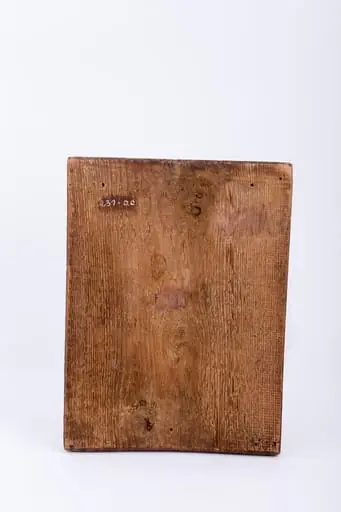 Sfânta Mare Cuvioasă Parascheva de la Iași are crucea și ramura de finic în mâna dreaptă. Este îmbrăcată în veșmânt roșu vermillon, cu interiorul căptușit cu negru și griuri. Peste maforionul roșu, sfânta cuvioasă are aureolă. Fondul icoanei este cerul întunecat. Este o icoană cu aer cald, tomnatic, de octombrie 14, Praznicul Sfintei Cuvioase Parascheva. Inscripția din româno-chirilică, de pe fondul întunecat al icoanei, se traduce Sfânta Parascheva. Are mâna stângă deschisă înspre privirea noastră, transmițând energia harică, mâna fiind în legătură cu ramura de finic, în formă de flacără. Icoana este foarte frumos realizată artistic și estetic, finețea nuanțelor cromatice și expresivitatea sfintei cuvioase remarcându-se într-un mod deosebit. Cromatica: roșu vermillon, brun-cafeniu, negru, ocru, gri, alb. Întreaga compoziție iconografică este încadrată de o ramă roșie-vermillon, portocalie, reliefată din aceeași bucată de lemn.
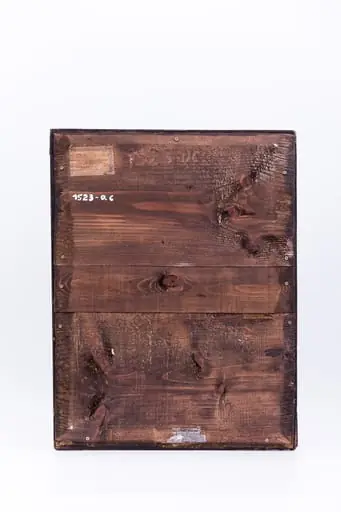 Icoana este deosebită, prin tematica iconografică abordată: Încoronarea Maicii Domnului. În centrul icoanei este Maica Domnului Împărăteasă, pe tron arhieresc, cu Pruncul iisus Hristos în brațe. Maica Domnului este îmbrăcată în veșmânt albastru bleumarin, iar Pruncul Iisus Hristos este înveșmântat cu alb-albastru. Pruncul Iisus ține în mână globul pământesc. În dreapta Maicii Domnului este Sfântul Mare Ierarh Nicolae făcător de minuni, îmbrăcat în veșminte arhirești, cu mantie roșie vermillon, mithră, cârjă mitropolitană. În stânga Maicii Domnului este Sfântul Mare Prooroc Ioan Botezătorul și Înaintemergătorul Domnului Iisus Hristos. Sfântul Ioan Botezătorul are și culoarea verde în combinația cromatică a veșmântului. Verdele este culoarea Sfântului Ioan. În registrul superior, sunt Sfinții Arhangheli Mihail și Gavriil, așezând coroana de Împărăteasă a Cerurilor pe capul Maicii Domnului. Aripile Sfinților Îngeri sunt galbene. Se remarcă mandorle de nouri albi-gri, în registrul superior. În registrul inferior, este un postament cărămiziu. Cromatica este armonioasă: roșu vermillon, orange, cărămiziu, galben chihlimbar, albastru ceruleum, cobalt, bleu-ciel, alb, negru, verde de China. Inscripția din româno-chirilică se traduce: IC XC MP Iisus Hristos Maica Domnului Sfântul Nicolae Sf Ioan Botezătorul Pocăiți-vă. Icoana este de Valea Sebeșului.
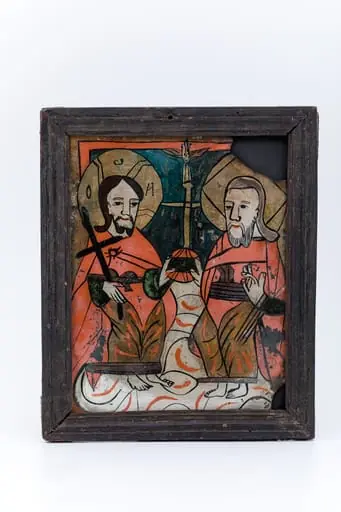 Icoana reprezintă Sfânta Treime. Dumnezeu-Tatăl și Dumnezeu-Fiul susțin împreună globul pământesc cu o cruce mare deasupra, apărând ca un sfânt chivot, ca pe o Biserică țin Pământul. Dumnezeu-Fiul, fiind alături, ține Crucea pe umărul drept. Dumnezeu-Tatăl are aureola în formă de triunghi echilateral, simbolizând Sfânta Treime. Dumnezeu-Tatăl și Dumnezeu-Fiul sunt îmbrăcați în veșminte în combinație de roz-corai, brun-bronziu, negru. Sfântul Duh se pogoară prin deschiderea Cerurilor. Fondul icoanei este cerul albastru ultramarin, cu influențe ușoare de indigo. În registrul inferior sunt nori albi, cu striații corai. Cromatica este armonioasă: roz-corai, albastru ultramarin bleu-marin, alb, gri-antracit, brun-bronziu, kaki, ocru-muștar, alb, negru. Alăturarea cromatică: roz corai, albastru ultramarin și brun-bronziu este excepțională. Inscripția din româno-chirilică se traduce Sfânta Treime. Icoana este din Nordul Transilvaniei, Nicula.
 Sfântul Arhanghel Mihail, alături de Sfântul Arhanghel Gavriil, este unul dintre mai-marii voievozi ai oștilor cerești. În această icoană, Sfântul Arhanghel Mihail, slujitorul Legii este reprezentat singur. Sfântul Mihail este îmbrăcat în haine de oștean militar, cavaler, vestă de zale, cu solzi aurii, cu tunică albastră cu ocru-bronziu și mantie roșie. Are în mâna dreaptă sabia dreptății, iar în mâna stângă ține Potirul și o balanță, cu care cântărește faptele bune și fărădelegile, mereu fiind un drept judecător, dorindu-se după modelul Marelui Judecător, Mihail egal, asemenea Lui Dumnezeu. Are aripile foarte mari de culoare brun-bronzie, aureolă, fiind foarte tânăr. Fondul icoanei este ocru luminos în registrul superior. Cromatica armonioasă și foarte luminoasă este alcătuită din: roșu vermillon-stacojiu, orange, galben, ocru, albastru cobalt, gri, auriu- bronziu. Inscripția din româno-chirilică se traduce Arhanghelul Mihail. Icoana este din Mărginimea Sibiului.
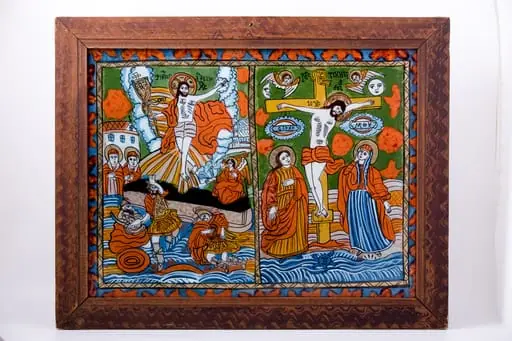 IcoaXC I
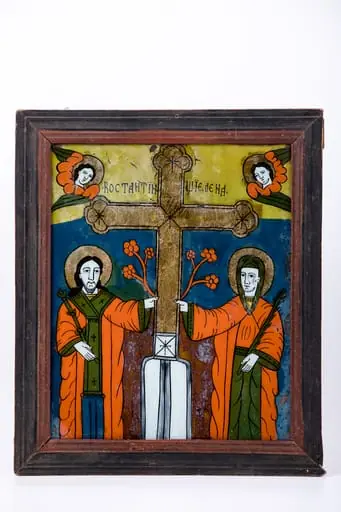 În centrul icoanei este Crucea albă la bază și bronzie în rest, cu capetele brațelor împodobite trilobat, iar în dreapta crucii este Sfântul Împărat Constantin, și în stânga este Împărăteasa Elena, mama sa. În spatele Crucii, sunt flori roșii agățătoare și unduitoare dintr-o grhirlandă de trandafiri. Crucea găsită este susținută cu bucurie de cei doi sfinți. Veșmintele Sfinților Constantin și Elena sunt într-o combinație de roșu vermillon și verde-iarbă de vară. Spațiul albastru-galben de lumină, din fondul icoanei, duce gândul la Crucea de lumină apărută pe cer In hoc signo vinces - prin acest semn vei învinge. Fondul icoanei este cerul albastru cobalt, lumina galbenă și o panglică albă, în josul crucii. În registrul superior, în colțurile stânga-dreapta sunt 2 îngeri serafimi. Cromatica este armonioasă, bogată și senină: roșu vermillon, galben-ocru, albastru cobalt, verde-iarbă de vară nuanță spanac-avocado, alb, negru. Icoana este de Nicula. Inscripția din româno-chirilică se traduce Constantin Elena.
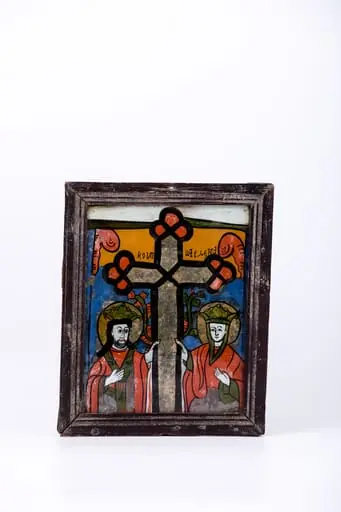 În centrul icoanei este Crucea gri-petrol, cu capetele brațelor împodobite roșu-trilobat, iar în dreapta crucii este Sfântul Împărat Constantin și în stânga este Împărăteasa Elena, mama sa. În spatele Crucii, este un vrej agățător și unduitor dintr-o grhirlandă de trandafiri, cu flori, spini și frunze și spațiul albastru regal unit cu cel galben-chihlimbar creează un izvor tainic de lumină. Crucea găsită este susținută cu bucurie de cei doi sfinți. Veșmintele Sfinților Constantin și Elena sunt într-o combinație de roșu vermillon și verde-iarbă de vară. Spațiul albastru-galben de lumină duce cu gândul la Crucea de lumină apărută pe cer In hoc signo vinces - prin acest semn vei învinge. Fondul icoanei este cerul albastru, lumina galbenă și o panglică alb-ivorie, în laterală superioară. Întreaga compoziție este încadrată armonios de un chenar decorativ geometrizant format din volute roșii. Cromatica este armonioasă, bogată și senină: roșu vermillon, galben-chihlimbar, albastru regal, verde-iarbă de vară, ivoriu, alb, negru. Icoana este de Nicula. Inscripția din româno-chirilică se traduce Constantin Elena.
 Mântuitorul Iisus Hristos, fiind răstignit pe Cruce, are în stânga pe Sfântul Împărat Constantin cel Mare, în locul uceniculuil cel iubit, care a stat lipit de pieptul Învățătorului, la Cina cea de Taină, mai precis, în locul Sfântului Apostol și Evanghelist Ioan Teologul, Evanghelistul Iubirii și în dreapta pe Sfânta Împărăteasă Elena, mama Sfântului Constantin, în locul Maicii Domnului Îndurerate, Jalnică și Plângătoare. Veșmintele Sfinților Împărați sunt sacosuri albastre cobalt și mantii roșii vermillon. Mântuitorul Iisus Hristos Răstignit pe Cruce are o țesătură verde-gri-antracit în jurul mijlocului și a coapselor. Fondul icoanei este cerul albastru bleu-ciel senin și în registrul inferior, în spatele Crucii este un spațiu galben-chihlimbar, prefigurând Lumina Învierii Domnului Iisus Hristos. Întreaga tematică iconografică este încadrată de un chenar decorativ fitomorf, format dintr-o ghirlandă de bujori și trandafiri, 4 ruje. Cromatica este armonioasă: roșu vermillon, albastru ceruleum, cobalt și bleu-ciel, gri antracit, verde forest, galben chihlimbar alb, negru. Inscripția din româno-chirilică se traduce Constantin cu Elena. Icoana este mai rară, datorită abordării tematicii iconografice. Icoana este din Nordul Transilvaniei, Nicula.
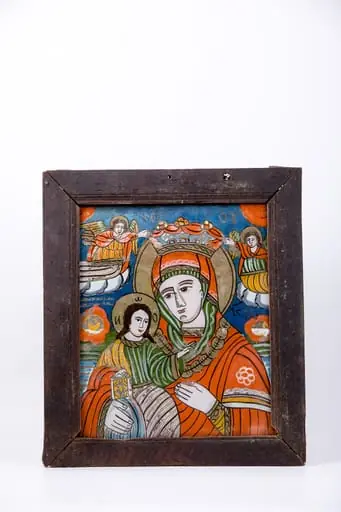 Maica Domnului Împărăteasă ține în brațe lipit pe umărul drept, pe Pruncul Iisus Hristos, care are în mâna dreaptă Sfânta Evanghelie închisă și cu mâna stângă arată înspre Maica Domnului. Maica Domnului arată calea cu mâna dreaptă, deci este Hodighitria. Maica Domnului este înveșmântată în mantie cu maforion roșu vermillon, cu interiorul verde și sacos cu mânecile galbene, poartă coroniță de împărăteasă și aureolă. Pruncul Iisus Hristos este înveșmântat în verde kaki și auriu ocru-brun-bronziu, cu coroană și aureolă. Maica Domnului poartă la gât o salbă din bănuți de aur. În registrul superior, de-a dreapta și de-a stânga Maicii Domnului, sunt Sfinții Arhangheli Mihail și Gavriil, pe câte o mandorlă de nouri rotunzi albi-crem, susținând dimpreună cu mâinile coroana de Împărăteasă a Maicii Domnului. Fondul icoanei este cerul de culoarea albastru regal. Cromatica este luminoasă, vie și armonioasă: roșu vermillon, alb, albastru regal și bleu-ciel, verde-văratic și spanac-avocado, kaki, auriu, ocru-brun-bronziu, galben-chihlimbar, negru. Inscripția din româno-chirilică se traduce MP IC XC Maica Domnului Iisus Hristos. Icoana este de Șcheii Brașovului, Țara Oltului.
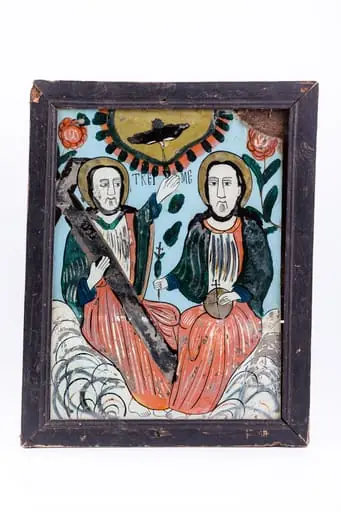 Icoana reprezintă Sfânta Treime. Dumnezeu-Tatăl are globul pământesc, pe genunchi și în mâna dreaptă are o cruce de mână. Dumnezeu-Fiul este alături, ține Crucea pe umărul drept și cu mâna stângă arată înspre Sfântul Duh, Pogorându-se ca un porumbel, astfel reunindu-Se Sfânta Treime. Dumnezeu-Tatăl și Dumnezeu-Fiul sunt îmbrăcați în veșminte în combinație de albastru cobalt, gri cenușiu-antracit și roșu vermillon. Se remarcă desenul fin al broderiei mânecii Tatălui Ceresc. Sfântul Duh se pogoară din miezul galben-solar, deschiderea Cerurilor, cu raze de lumină. Inscripția din româno-chirilică se traduce Treime. În registrul superior, fondul icoanei este cerul albastru bleu-ciel senin, cu câte o rujă - trandafir roșu - în colțurile din stânga și dreapta. În miezul rujelor este semnul zăluței albe, șerpuitoare. În registrul inferior sunt câmpuri de nouri albi-gri, mandorle peste mandorle. Cromatica este luminoasă și armonioasă: roșu vermillon, albastru bleu-ciel, albastru cobalt, alb, gri-antracit, ocru-muștar, alb, negru. Icoana este de Nicula.
 Icoana cu tematica iconografică Botezul Domnului Iisus Hristos este realizată pe trei registre: în registrul central, Domnul Iisus Hristos primește Botezul, în râul Iordanului, din partea Sfântului Mare Prooroc și Înaintemergător Ioan Botezătorul, care se află în stânga Mântuitorului. Mântuitorul este înfășurat cu o pânză de culoare roșie vermillon împrejurul șoldurilor și a coapselor, și are mâinile împreunate pe piept, în semn de supunere, ascultare, smerenie, de bună-voie venind la Botez. În dreapta Lui, este un înger evlavios, cu aripile galbene-aurii de lumină, care Îl așteaptă pe mandorlă de nouri albi-albaștri bleu-ciel, cu un ștergar transparent gata să înveșmânteze Trupul Domnului. Sfântul Ioan Botezătorul este îmbrăcat cu o mantie roșie și un himation alb-albastru sau o haină din păr. Cerurile de culoare albastru sunt deschise și din mijlocul unei mandorle de nouri alb-albaștri se pogoară porumbelul, simbolul Sfântului Duh, pe creștetul Mântuitorului. Cromatica este specifică Țării Oltului: roșu vermillon, albastru cobalt-ceruleum, galben chihlimbar și solar, verde-văratic, brun, crem, rozaliu, alb, negru. Cerul albastru-cobalt și văzduhul verde-văratic sunt bogat ornamentate cu elemente florale - ruje roșii, cu frunze albastre. Întreaga icoană este încadrată pe laterale de chenar decorativ geometrizant bronziu, cu ruje roșii și frunze albastre. Inscripția din româno-chirilică se traduce Botezul Lui IC XC Iisus Hristos. Icoana este de Țara Oltului.
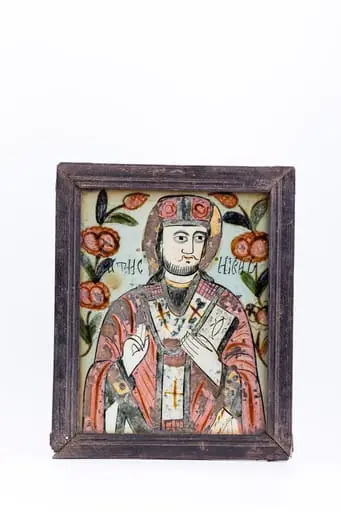 Sfântul Mare Ierarh Nicolae Făcătorul de minuni ține în mâna stângă Sfânta Evanghelie închisă și binecuvântează cu mâna dreaptă. Veșmintele arhierești liturgice ale sfântului ierarh sunt într-o alternanță cromatică de roșu vermillon, verde, ocru și gri-cenușiu antracit, cu broderie galbenă pe margini. Epitrahilul-patrafirul este gri-alburiu cu marginile verzi și trei cruci galben-aurii. Fondul icoanei este albastru bleu-ciel foarte senin. Întreaga compoziție este încadrată în spațiul cerului senin de o ghirlandă de ruje - elemente decorative fitomorfe, 6 trandafiri roșii, cu bobocei și frunze verzi. Icoana este de Nicula, Nordul Transilvaniei. Cromatica este armonioasă, specifică centrului de la Nicula: roșu vermillon, albastru bleu-ciel, galben-ocru-muștar, verde de China, alb, brun, negru, gri. Inscripția din româno-chirilică se traduce Sfântul Nicolae.
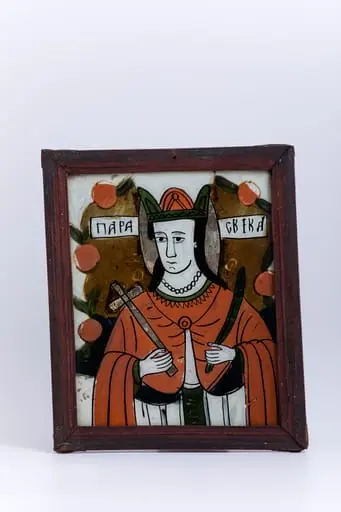 Sfânta Mare Cuvioasă Parascheva de la Iași are crucea bronzie în mâna dreaptă, binecuvântând, și o ramură de finic verde, în mâna stângă. Este îmbrăcată în veșmânt roșu vermillon-corai cu interiorul căptușit cu verde-mușchi de pădure-kaki. Sacosul este cu danteluță, guleraș și dungi, cu fibulă. Sfânta Cuvioasă are părul negru lung, lăsat pe umeri, coroană roșie cu verde-brad și aureolă bronzie-argintie și poartă lănțișor la gât. Fondul icoanei este cerul albastru ultramarin în registrul mijloc și inferior și un câmp auriu în registrul superior și un chenar neregulat, alb-zinc, ancadrator întregii compoziții. Întreaga compoziție iconografică este încadrată de un chenar decorativ fitomorf, format dintr-o ghirlandă de 5 ruje rotunde corai, asemenea unor boboci de merișori, cu frunze verzi. Inscripția din româno-chirilică se traduce Parascheva. Cromatica este armonioasă: roșu vermillon-cărămiziu, corai, albastru ultramarin-bleumarin, verde alge, mușchi de pădure, bej-crem, bronziu-argintiu, negru, alb zinc. Icoana este din Nordul Transilvaniei, Nicula.
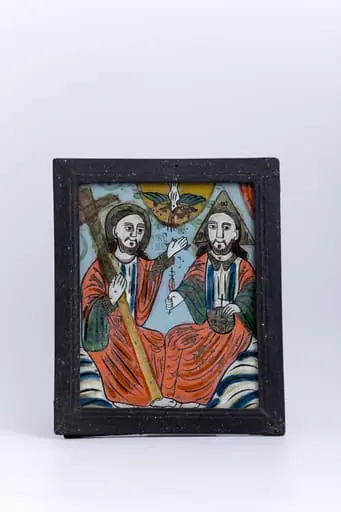 Icoana reprezintă Sfânta Treime. Dumnezeu-Tatăl are globul pământesc albastru pe genunchi și arătă către Fiul Iisus Hristos Binecuvântând lumea. Dumnezeu-Fiul are Crucea galbenă-aurie pe umărul drept și arătă către Dumnezeu-Tatăl. Dumnezeu-Tatăl și Dumnezeu-Fiul sunt înveșmântați în roșu vermillon și verde smarald cu albastru cobalt. Deasupra, în registrul superior este un soare galben, din care pe un mănunchi de raze luminoase, se pogoară Sfântul Duh, sub forma porumbelului alb. Astfel este prezentă întreaga Sfântă Treime. Între Dumnezeu-Tatăl și Fiul este un spațiu luminos de galben. Fondul icoanei este cerul albastru cobalt-regal, înconjurat de lumina galbenă-solară. Cromatica este luminoasă și armonioasă: roșu vermillon, albastru regal și cobalt, galben chihlimbar, verde smarald, gri, alb, negru.Inscripția din româno-chirilică se traduce Treime. Icoana este din Nordul Transilvaniei, Nicula.
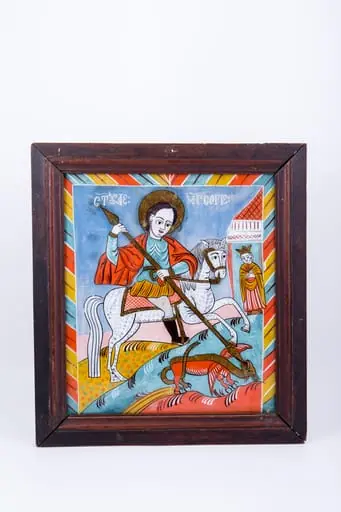 Sfântul Mare Mucenic Gheorghe este așezat călare pe un cal alb cu pete albastre gri, omorând balaurul roșu-bronziu cu creastă, solzi și coadă lungă, cu lancea, pe care o ține cu amândouă mâinile, înfingându-i-o animalului în gâtlej. În partea stângă a Sfântului Gheorghe, în registrul îndepărtat, este pictată domnița salvată și ocrotită de marele mucenic, cu mâinile mulțumindu-i cu sfială și recunoștință sfântului purtător de biruință. Fondul este albastru. În registrul inferior, fondul este verde, cu linii ondulatorii albe, cele două registre în centrul icoanei ușor întrepătrundu-se. Mantia Sfântului Mucenic Purtător de Biruință este roșie, având cămașa de cavaler cu zale. Culoarea roșie este caracteristică mucenicilor și martirilor. Chenarul decorativ geometrizant cu tușe-benzi paralele, oblice, alternative roșii, albastre și ocru încadrează armonios întreaga tematică iconografică. Cromatica este armonioasă; roșu vermillon, roz, albastru-gri, ocru, verde, bronziu, alb și negru. Inscripția din româno-chirilică se traduce Sfântul Gheorghe. Icoana este rafinată prin acuratețea desenului, compoziția echilibrată și armonia cromatică.
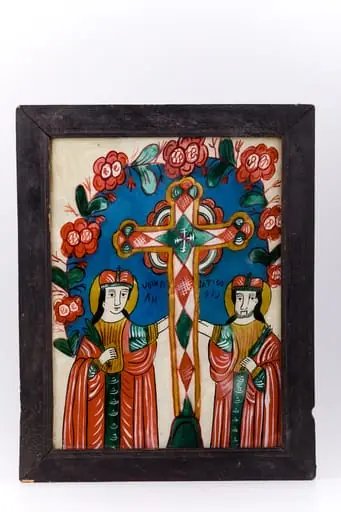 În centrul icoanei este Crucea, iar în dreapta crucii este Sfânta Împărăteasă Elena, și în stânga este Împăratul Constantin. Veșmintele sfinților împărați sunt pictate cu roșu vermillon și ocru-muștar și mânecile și epitrahile-patrafire vernil-gri. Poartă coroane împărătești și aureole de sfinți, mantiiile de împărați le au prinse la gât cu fibulă. Crucea este alb-crem cu elemente decorative geometrizante romboidale roșii-verzi și are capetele brațelor cu elemente decorative trilobate roșii vermillon-vernil. Fondul este cerul albastru ceruleum-regal foarte senin. Împrejurul Crucii este un spațiu luminos de alb-ivoriu Întreaga compoziție iconografică este încadrată de un chenar decorativ geometrizant alb-luminos și un chenar fitomorf, format dintr-o ghirlandă de 7 ruje - trandafiri și bujori roșii vermillon și 2 boboci de măceș - cu frunze gri-verzui. Cromatica este armonioasă: roșu vermillon-stacojiu-rose, albastru cobalt-regal, ocru-muștar, bronziu, brun, galben-chihlimbar, verde brad, vernil-gri, alb, negru. Inscripția în româno-chirilică se traduce Constantin și Elena. Icoana este din Nordul Transilvaniei, Nicula.
 Sfânta Mare Cuvioasă Parascheva de la Iași are crucea aurie-bronzie în mâna dreaptă și ramură de finic verde brad în mâna dreaptă. Este îmbrăcată în veșmânt roșu vermillon, cu interiorul căptușit cu gri antracit, alb ivoriu și galben-solar. Sacosul este alb ivoriu crem-bej, cu danteluță și guleraș galben. Sfânta Cuvioasă are părul negru lung, lăsat pe umeri, coroană roșie și aureolă. Fondul icoanei este cerul albastru bleu-ciel-alburiu senin, în registrul superior și un câmp înalt luminos de grâu galben-copt, în registrul mediu și inferior. Întreaga compoziție iconografică este încadrată de un chenar decorativ fitomorf, format dintr-o ghirlandă de 2 ruje - trandafiri roșii și bujori roșii. Inscripția din româno-chirilică se traduce Paraschiva. Cromatica este armonioasă: roșu vermillon, albastru bleu-ciel, verde forest, bej-crem, galben chihlimbar, ocru, muștar, negru, alb. Icoana este din Nordul Transilvaniei, Nicula.
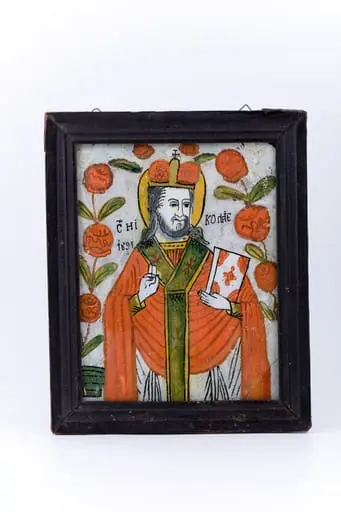 Sfântul Mare Ierarh Nicolae, făcător de minuni, îmbrăcat în veșminte liturgice, de ierarh, sacos alb cu dungi subțiri negre și epitrahil-patrafir verde văratic, cu marginea galbenă și cu trei cruci roșii-acajou. Ține în mâna stângă Sfânta Evanghelie închisă și cu mâna dreaptă Binecuvintează. Este unul dintre cei mai populari și iubiți sfinți, ocrotitor al caselor, familiilor și copiilor. Are barbă sură, părul lung și mithră arhierească bej-brună și aureolă. Fondul icoanei este cerul bleu-ciel senin alburiu, încadrat de un chenar decorativ fitomorf, format dintr-o ghirlandă de 8 ruje roșii-orange. Întreaga tematică iconografică este încadrată de un chenar decorativ geometrizant alb. Inscripția din româno-chirilică se traduce Sf Nicolae. Icoana este datată 1891. Cromatica este armonioasă: roșu-vermillon-orange, albastru bleu-ciel-alburiu, galben-chihlimbar, crem, bej, crem, bronziu, alb zinc, negru. Icoana este din Nordul Transilvaniei, Nicula.
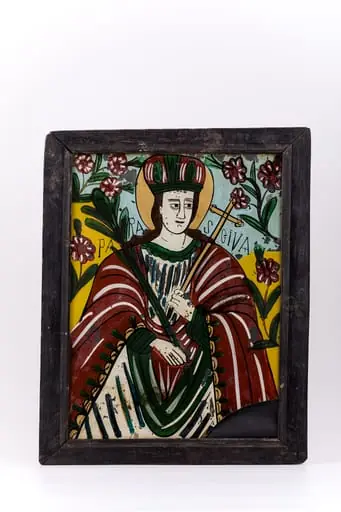 Sfânta Mare Cuvioasă Parascheva de la Iași are crucea brun-bronzie în mâna stângă și o ramură de finic verde în mâna dreaptă. Este îmbrăcată în veșmânt roșu vișiniu-stacojiu, cu interiorul căptușit cu verde-forest și franjuri brun-bronzii. Sacosul este alb-zinc cu danteluță, guleraș verde și dungi albastre. Sfânta Cuvioasă are părul negru lung, lăsat pe umeri, coroană roșie cu verde-brad și aureolă brun-bronzie. Fondul icoanei este cerul albastru bleu-ciel deschis, în registrul superior și un câmp galben-solar de grâu copt, în registrul inferior. Întreaga compoziție iconografică este încadrată de un chenar decorativ fitomorf, format dintr-o ghirlandă de 8 ruje vișinii, cu petale albe și frunze verzi. Inscripția din româno-chirilică se traduce Paraschiva. Cromatica este armonioasă: roșu vișiniu-stacojiu, albastru cobalt-ceruleum și bleu-ciel, verde forest, bej-crem, bronziu, galben-solar, negru, alb zinc. Icoana este din Nordul Transilvaniei, Nicula.
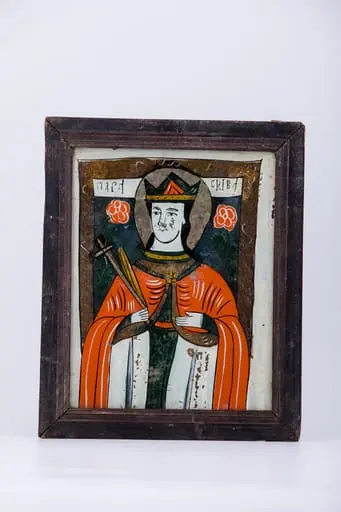 Sfânta Mare Cuvioasă Parascheva de la Iași are crucea brun-bronzie și o ramură de finic galbenă în mâna dreaptă. Este îmbrăcată în veșmânt roșu vermillon, cu interiorul căptușit cu albastru-gri-antracit și brun-bronziu. Sacosul este alb-zinc cu danteluță și guleraș verde-galben. Sfânta Cuvioasă are părul negru lung, lăsat pe umeri, coroană roșie cu verde-brad și aureolă. Fondul icoanei este cerul albastru ultramarin bleu-marin întunecat. Întreaga compoziție iconografică este încadrată de un chenar decorativ geomatrizant brun-bronziu, cu linia șerpuitoare, specifică centrului de la Nicula. Fondul de ansamblu al icoanei este alb-zinc. Inscripția din româno-chirilică se traduce Paraschiva. Cromatica este armonioasă: roșu vermillon, albastru ultramarin bleumarin, verde forest, bej-crem, bronziu, negru, alb zinc. Icoana este din Nordul Transilvaniei, Nicula.
 Mântuitorul Iisus Hristos, fiind răstignit pe Cruce, are în stânga în locul ucenicului cel iubit, care a stat lipit de pieptul Învățătorului, la Cina cea de Taină, mai precis, în locul Sfântului Apostol și Evanghelist Ioan Teologul, Evanghelistul Iubirii și în dreapta în locul Maicii Domnului Îndurerate, Jalnice și Plângătoare câte o ramură înaltă de trandafiri, cu boboci și frunze. Mântuitorul Iisus Hristos Răstignit pe Cruce are o țesătură verde în jurul mijlocului și a coapselor. Crucea este brună. Fondul icoanei brun-negru întunecat, iar în spatele Crucii, este un spațiu galben-chihlimbar, prefigurând Lumina Învierii Domnului Iisus Hristos. Întreaga tematică iconografică este încadrată de un chenar decorativ geometrizant, alb-roșu vermillon-acajou. Cromatica este armonioasă: roșu vermillon-acajou, brun-maro, verde brad, galben chihlimbar, bronziu, alb, negru. Inscripția din româno-chirilică se traduce Restignirea Lui IC XC Iisus Hristos. Icoana este din Nordul Transilvaniei, Nicula.
 Sfânta Mare Cuvioasă Parascheva de la Iași are crucea cărămizie în mâna stângă, binecuvântând, și o ramură de finic verde, nuanța algelor în mâna dreaptă. Este îmbrăcată în veșmânt roșu vermillon-orange cu interiorul căptușit cu verde-smarald și franjuri brun-bronzii. Sacosul este alb-crem cu danteluță, guleraș și dungi albastre. Sfânta Cuvioasă are părul negru lung, lăsat pe umeri, coroană roșie cu verde-brad și aureolă brun-bronzie. Fondul icoanei este cerul albastru regal în registrul superior-mijloc și un câmp galben-chihlimbar, în registrul inferior. Întreaga compoziție iconografică este încadrată de un chenar decorativ fitomorf, format dintr-o ghirlandă de 4 ruje mari orange-cărămizii cu frunze verzi. Inscripția din româno-chirilică se traduce Paraschiva. Cromatica este armonioasă: roșu vermillon-orange, albastru cobalt-ceruleum, verde alge, mușchi de pădure, bej-crem, bronziu, galben-solar, negru, alb zinc. Icoana este din Nordul Transilvaniei, Nicula.
 Sfântul Mare Mucenic Gheorghe este așezat călare pe un cal alb-zinc, omorând balaurul negru-gri-antracit, cu coadă lungă de reptilă și solzi aurii, cu lancea, pe care o ține în amândouă mâinile. Fondul icoanei este cerul albastru bleu-ciel senin, în registrul superior și câmpuri ocru-aurii, cu dungi negre, în cel inferior, în centrul icoanei ușor întrepătrundu-se toate culorile. Mantia Sfântului Mucenic Purtător de Biruință este albastru-cobalt, având pantaloni albaștri, cizme negre și cămașă-tunică de cavaler roșie vermillon. Coiful de ostaș este roșu vermillon și aureola aurie. Icoana este încadrată de un chenar decorativ fitomorf, format dintr-o ghirlandă înflorită de flori de măr și măceș, 8 ruje roșii, cu frunze galbene și verzi. Ziua de praznic a Sfântului Gheorghe este în 23 aprilie, primăvara, justificându-se pentru încă o dată prezența ghirlandei înflorie. Cromatica este armonioasă; roșu vermillon, albastru bleu-ciel și cobalt, verde smarald și brad forest, galben-ocru, brun, crem, auriu, alb și negru. Inscripția din româno-chirilică se traduce Sfântul Gheorghe. Icoana este din Nordul Transilvaniei, Nicula.
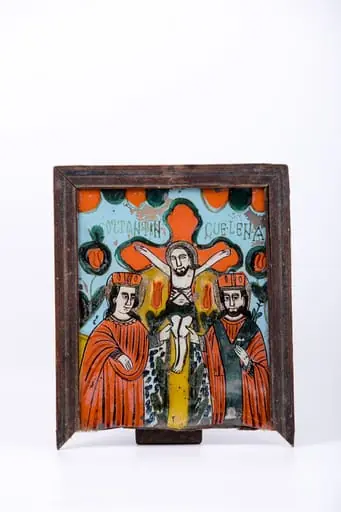 În centrul icoanei este Crucea roșie-galbenă, pe care este Răstignit Mântuitorul Iisus Hristos, iar în stânga crucii este Sfântul Împărat Constantin, și în dreapta este Împărăteasa Elena, mama sa. Deasupra fiecăruia este inscripționat numele, inversat. În spatele Crucii este un spațiu galben izvorâtor de lumină și două elemente florale, asemenea unor martori - îngeri păzitori. Crucea găsită este susținută cu bucurie de cei doi sfinți. Veșmintele Sfinților Constantin și Elena sunt într-o combinație de roșu vermillon și gri antracit. Spațiul galben de lumină duce gândul la Crucea de lumină apărută pe cer In hoc signo vinces - prin acest semn vei învinge. Icoana este bogat ornamentată de culoare, lumină și detalii semnificative, elemente decorative geometrizante. Fondul icoanei este cerul senin, albastru bleu-ciel deschis. Întreaga compoziție este încadrată armonios de un chenar decorativ geometrizant roșu stacojiu și fitomorf, format din rujele de Nicula. Cromatica este armonioasă și senină: roșu vermillon, galben-chihlimbar, albastru bleu-ciel, gri antracit, alb, negru. Icoana este de Nicula. Inscripția din româno-chirilică se traduce Constantin Elena. De menționat este că în icoană apare Mântuitorul Iisus Hristos Răstignit pe Crucea, susținută de Sfinții Constantin și Elena. Icoana este deteriorată, lipsindu-i partea inferioară a ramei.
 Sfântul Mare Mucenic Dimitrie, martir creștin din cetatea Tesalonic, sfânt militar din secolul al III-lea, este reprezentat în veșminte de cavaler, cu tunică-hiton, sacos galben-ocru și mantie roșie vermillon. Sfântul Dimitrie are mantie roșie vermillon-cărămizie și ține în mâna stângă crucea și în mâna dreaptă spada dreptății. Fondul icoanei este alb-zinc, pe margini, și galben-solar, în interiorul icoanei, cu un chenar decorativ fitomorf, format dintr-o ghirlandă din 5 ruje roșii vermillon. Cromatica este armonioasă: roșu vermillon-cărămiziu, verde-brad, galben-solar, ocru, brun, alb zinc, negru. Inscripția din româno-chirilică se traduce Dimitrie. Icoana este din Nordul Transilvaniei, Nicula.
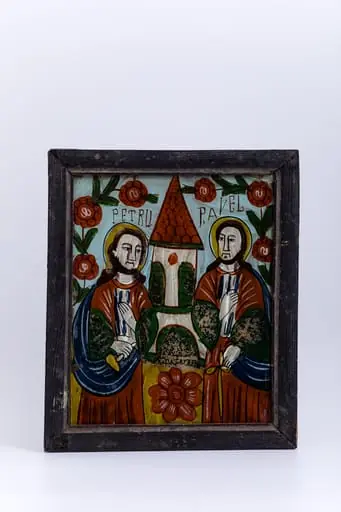 Icoana îi reprezintă pe cei doi Apostoli Sfinții Petru și Pavel, Petru cu cheile Împărăției Cerești în mână și pe Pavel cu sabia Cuvântului în mână, susținând împreună chivotul unei biserici, simbolul Bisericii sobornicești și apostolești. Biserica este situată în registrul îndepărtat, dar este redată în așa fel încât să fie înțeleasă ca și cum ar fi dusă pe umeri de Sfinții Apostoli. Au mantiile roșii vermillon, și veșmintele cu sacos-uri verzi și albastre cobalt. Fondul icoanei este cerul albastru bleu-ciel, în partea superioară, pe margini, și un câmp galben-chihlimbar, în spațiul de miez. În registrul inferior, fondul este un rând de galben chihlimbar-muștar, pe latura superioară. Cheile și crucea sunt simboluri puternice. Se creează astfel un triunghi de semnificații teologice: crucea-chivotul de biserică-cheile Raiului. Chipurile sunt foarte expresive, cu trăsături fine. Inscripția din româno-chirilică se traduce Petru Pavel. Compoziția este rezistentă și cromatica armonioasă: roșu vermillon-stacojiu, albastru cobalt, ultramarin și bleu-marin, verde văratic, galben chihlimbar, brun, gri, alb zinc, negru, auriu. Inscripția din româno-chirilică se traduce Petru Pavel. Icoana este din Nordul Transilvaniei, Nicula.
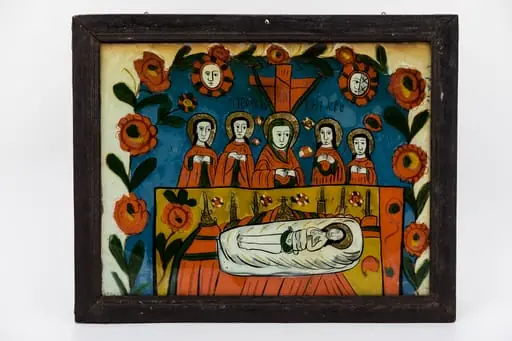 Icoana reprezintă Punerea în mormânt a Mântuitorului Iisus Hristos. Prohodul Domnului. Trupul Mântuitorului Iisus Hristos, fiind coborât de pe cruce, este învelit în țesătura giulgiului alb-gri, cu fire diafane galbene de lumină, amintind de Lumina Învierii. Maica Domnului împreună cu Sfinții Iosif din Arimateea, Nicodim și două femei mironosițe aducătoare de mir țin în brațe trupul Mântuitorului. Compozițional se creează astfel o imagine concentrică de corabie, cu Crucea Răstignirii ca și catarg, corabia prefigurând Biserica. Giulgiul și îmbrățișarea celor apropiați, uniți întru dragoste și suferință, reprezintă axa orizontală perpendiculară pe Cruce. Compoziția este echilibrată, simetrică și circulară. Maica Domnului este îmbrăcată în veșmânt cu maforiom roșu vermillon, cu sacos roșu vermillon și interiorul căptușit cu verde văratic. Fondul icoanei este cerul albastru ceruleum-cobalt, în registrul superior și de mijloc și un spațiu de galben-chihlmbar, în registrul inferior, în jurul mormântului Mântuitorului Iisus Hristos. Întreaga compoziție iconografică este încadrată de un chenar decorativ geometrizant alb, dublat de un chenar fitomorf, format dintr-o ghirlandă de 10-12 ruje roșii vermillon, cu interiorul galben-verde. În ghirlanda de ruje, sunt intercalate cele două elemente astrale martore: Soarele și Luna. Simetric și armonios, sunt 6 sfeșnice cu lumânări arzânde, lângă Trupul Mântuitorului Iisus Hristos, învăluit în giulgiu. Cromatica este armonioasă și luminos-pastelată: roșu vermillon, albastru cobalt, ceruleum, verde văratic-forest, galben chihlimbar, alb și negru. Inscripția din româno-chirilică se traduce Îngroparea Lui IC XC Iisus Hristos. Icoana este din Țara Oltului, Șcheii Brașovului.
 În centrul icoanei este Crucea aurie-bronzie, iar în dreapta crucii este Sfântul Împărat Constantin, și în stânga este Împărăteasa Elena, mama sa. Deasupra fiecăruia este inscripționat numele. În spatele Crucii, lipit de cruce, este un soare stilizat - Soarele alb al dreptății. Crucea găsită este susținută cu bucurie de cei doi sfinți. Veșmintele Sfinților Constantin și Elena sunt într-o combinație de roșu vermillon și verde kaki. Soarele din spatele Crucii și spațiul galben de lumină duce cu gândul la Crucea de lumină apărută pe cer In hoc signo vinces - prin acest semn vei învinge. Icoana este bogat ornamentată de culoare, lumină și detalii semnificative, elemente decorative geometrizante șerpuitoare și ondulatorii. Fondul icoanei este cerul de noapte, albastru ultramarin bleumarin întunecat. Întreaga compoziție este încadrată armonios de un chenar decorativ geometrizant roșu stacojiu-vișiniu cu linia albă șerpuitoare, specifică centrului de la Nicula. Cromatica este armonioasă și bogată: roșu vermillon, roșu stacojiu-vișiniu, galben-chihlimbar, albastru ultramarin bleumarin, verde kaki, ocru, alb, negru. Icoana este de Nicula. Inscripția din româno-chirilică se traduce Constantin Elena. Icoana este crăpată și lipită.
 Sfânta Mare Cuvioasă Parascheva de la Iași are crucea în mâna stângă și ramură de finic verde brad în mâna dreaptă. Este îmbrăcată în veșmânt roșu vermillon, cu interiorul căptușit cu verde forest-gri antracit, alb ivoriu și galben-solar. Sacosul este albastru cobalt cu dungi albe subțiri, cu danteluță și guleraș galben. Sfânta Cuvioasă are părul negru lung, lăsat pe umeri, coroană roșie-albastră și aureolă. Fondul icoanei este cerul albastru bleu-ciel înspre alburiu, în registrul superior și un câmp înalt luminos de grâu galben-copt, de nuanță chihlimbar închis, în registrul mediu și inferior. Întreaga compoziție iconografică este încadrată de un chenar decorativ fitomorf, format dintr-o ghirlandă de 4 ruje - trandafiri roșii și bujori roșii. Inscripția din româno-chirilică se traduce Paraschiva. Cromatica este armonioasă: roșu vermillon, albastru bleu-ciel, alburiu, cobalt, verde forest, bej-crem, negru, galben chihlimbar, ocru, muștar, negru, alb. Icoana este din Nordul Transilvaniei, Nicula.
 Sfânta Mare Cuvioasă Parascheva de la Iași are crucea brun-bronzie în mâna dreaptă, binecuvântând, și o ramură de finic în mâna stângă. Este îmbrăcată în veșmânt roșu vermillon, cu interiorul căptușit cu gri și brun-bronziu. Sacosul este alb-zinc cu danteluță și guleraș gri-verzui. Sfânta Cuvioasă are părul negru lung, lăsat pe umeri, coroană roșie cu gri-verzui și aureolă. Fondul icoanei este cerul albastru cobalt, acajou-stacojiu și alb. Întreaga compoziție iconografică este încadrată de un chenar decorativ fitomorf, format dintr-o ghirlandă formată din două frunze mari de finic, dispuse acoperitor asemenea unei arcade-bolți. Fondul de ansamblu al icoanei este alb-zinc, cu linii ondulatorii paralele gri-verzui. Inscripția din româno-chirilică se traduce Paraschiva. Cromatica este armonioasă: roșu vermillon, orange, albastru cobalt, acajou stacojiu, verde forest, gri-verzui, bej-crem, bronziu, negru, alb zinc. Icoana este din Nordul Transilvaniei, Nicula.
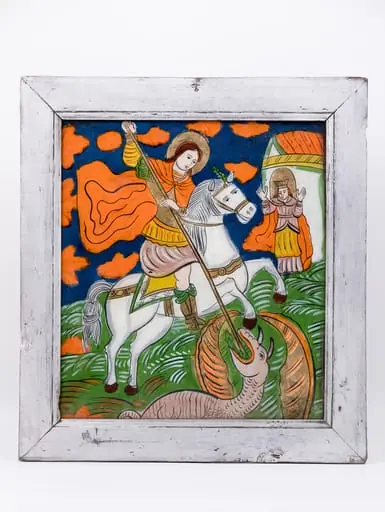 Sfântul Mare Mucenic Gheorghe este așezat călare pe un cal alb, cu elemente de harnașament galbene și verzi și șa galbenă lime, omorând balaurul gri cu creastă, solzi și coadă lungă și aripile orange, cu lancea, pe care o ține cu amândouă mâinile, înfingându-i-o animalului în gâtlej. În partea stângă a Sfântului Gheorghe, în registrul îndepărtat, este pictată domnița salvată și ocrotită de marele mucenic, cu mâinile ridicate, atât de teamă și spaimă, cât și de mulțumire către sfântul purtător de biruință. Fondul icoanei este alb cu ruje roșii și cerul albastru bleu-ciel în registrul superior. În registrul inferior, fondul este verde, cu linii fine albe, cele două registre în centrul icoanei ușor întrepătrundu-se. Mantia Sfântulu Mucenic Purtător de Biruință este roșie vermillon-orange-fluturândă având cămașa de cavaler cu zale. Culoarea roșie este caracteristică mucenicilor și martirilor. În stânga sunt elemente de arhitectură, astfel spațializându-se narațiunea iconografică. Cromatica este armonioasă: roșu vermillon, orange, albastru ultramarin bleumarin, galben-ocru, verde văratic, verde brad, alb și ngru. Pe fondul cerului albastru ultramarin bleumarin întunecat, bogat ornamentat cu elemente stilizate astrale și florale - ruje roșii este inscripția în româno-chirilică Sf Gheorghe. Icoana este din Țara Oltului. Rama este gri-argintie.
 În centrul icoanei este Crucea aurie, cu vrejul de ramificații fitomorfe orange, iar în stânga crucii este Sfântul Împărat Constantin și în dreapta este Împărăteasa Elena, mama sa. Crucea găsită este susținută cu bucurie de cei doi sfinți. Veșmintele Sfinților Constantin și Elena sunt într-o combinație de roșu vermillon, galben și orange. Spațiul albastru senin, din cerul din fondul icoanei, duce cu gândul la Crucea de lumină apărută pe cer In hoc signo vinces - prin acest semn vei învinge. În registrul inferior, este un câmp decorativ geometrizant alternativ de roșu-orange-roz-gri. În registrul superior, în colțurile stânga-dreapta sunt 2 îngeri serafimi. Cromatica este armonioasă: roșu vermillon, roz, galben-ocru, albastru cobalt, ceruleum, alb, negru. Icoana este de Țara Oltului. Inscripția din româno-chirilică se traduce Sf Constantin Elena.
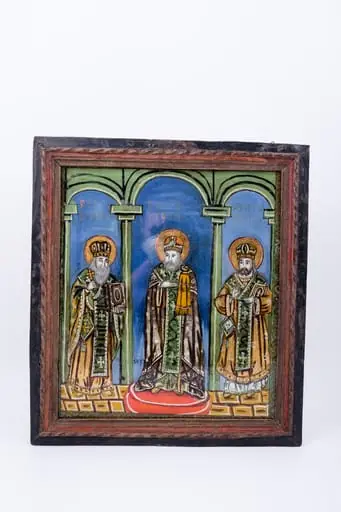 Cei Trei Sfinți Ierarhi Vasile cel Mare, Grigorie de Dumnezeu Cuvântătorul și Ioan Gură-de-Aur slujesc și săvârșesc Sfânta Liturghie împreună. Sunt înveșmântați în veșminte liturgice: sacos, felon și epitrahil verde, brun-ocru, kaki, brun-bronziu cu câte patru cruci pe mijlocul patrafirului. Sfântul Vasile cel Mare binecuvântează cu crucea în mâna dreaptă și ține în mâna stângă Sfânta Evanghelie. Sfântul Ioan Gură-de-Aur este în mijloc, așezat cu picioarele pe o pernă rotundă roșie, are mâna dreaptă lipită la piept, în semn de evlavie și cu mâna stângă ține cârja arhierească, Sfântul Grigorie binecuvântează cu mâna dreaptă și ține în mâna stângă Sfânta Evanghelie. Fondul este albastru ceruleum în registrul superior, în registrul inferior este un caroiaj brun-ocru-galben chihlimbar. Cromatica este armonioasă și săracă în nuanțe: verde smarald, absint, kaki, alb, roșu vermillon, albastru, alb, negru. Este o icoană specifică picturii de Valea Sebeșului, cu un desen fin cu conturul negru și cromatica pastelată. Inscripția din româno-chirilică se traduce Sfântul Vasile Sfântul Ioan Sfântul Grigorie.
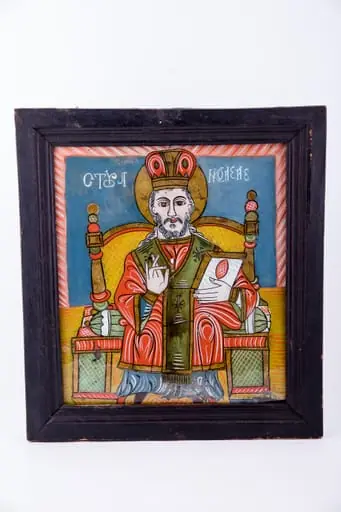 Sfântul Mare Ierarh Nicolae Făcătorul de minuni este redat central, șezând pe tron arhieresc, ținând în mâna stângă Sfânta Evanghelie și binecuvintează cu mâna dreaptă. Veșmintele arhierești liturgice ale sfântului ierarh sunt într-o alternanță cromatică de roșu vermillon-verde-albastru-alb. Epitrahilul, patrafirul este verde, cu patru cruci pe el, sacosul albastru. Poartă mithră și are aureolă. Sfântul ierarh este așezat pe un tron foarte frumos și bogat ornamentat decorativ geometric, în nuanțe de verde olive, gri și galben muștar și ocru. Pe tron este și o pernă rulou. Icoana are cu o combinație cromatică mai deosebită, cizelată: albastru, portocaliu-orange, galben citrone, brun roșcat, verde olive, alb, negru. Fondul este albastru și întreaga tematică iconografică este încadrată de un semi-chenar decorativ-geometrizant, din liniuțe delicate de alb și roșu, alternativ expuse, asemenea unui fir de mărțișor. Inscripția în româno-chirilică de pe albastrul cerului se traduce Sfântul Nicolae. În desenul trăsăturilor chipului și minuțiozitatea detaliilor se observă stilul pictorului zugrav Ioan Pop de Făgăraș, presupus autorul icoanei.
 Icoana îi reprezintă pe Sfinții Apostoli din Soborul celor doi Apostoli Sfinții Petru și Pavel, Petru cu cheile Împărăției Cerești și pe Pavel cu sabia Cuvântului, susținând împreună chivotul unei biserici, simbolul Bisericii sobornicești și apostolești. Toți Apostolii, 12 la număr, au în mână Sfânta Scriptură. Au mantiile roșii și veșmintele în combinație de roșu vermillon, gri-nisipiu ivoriu și galben chihlimbar-solar. Fondul icoanei este cerul verde cu ruje roșii. Rujele simbolizează și stelele și trandafirii Împărăției Cerești. Deasupra Sfinților Apostoli este Dumnezeu-Tatăl care îi veghează, din Cerurile deschise, trimițându-i în toată lumea să propovăduiască Sfânta Evanghelie, numindu-i pescari de oameni. Dumnezeu-Tatăl este simbolizat de Ochiul-Divn înscris în triunghiul echilateral al Sfintei Treimi. Chipurile sunt foarte expresive, cu trăsături fine. Compoziția este rezistentă și cromatica foarte armonioasă: roșu vermillon, verde spanac-avocado, galben chihlimbar-solar-ocru, brun, gri, alb, negru, auriu. Întreaga tematică iconografică este încadrată de un chenar decorativ-geometrizant bleu-marin ceruleum cu elemente fitomorfe, florale stilizate, pete cromatice - ruje. Icoana este de Șcheii Brașovului, Țara Oltului. Inscripția din româno-chirilică se traduce Petru Pavel.
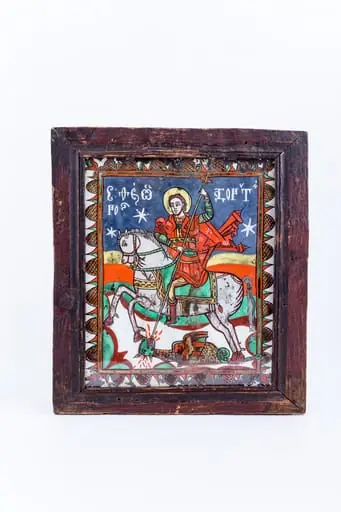 Sfântul Mare Mucenic Teodor Tiron este așezat călare pe un cal alb, omorând balaurul brun cu lancea, pe care o ține în amândouă mâinile. Balaurul este pictat cu brun-acajou, roșu vermillon și verde absint, cu solzi, cu foc și sânge ieșind din răcnetul lui. Fondul este albastru, în registrul superior și galben-ocru și roșu vermillon în cel inferior, în centrul icoanei ușor întrepătrându-se toate culorile. Câmpurile de culori sunt paralele, arătându-se inclusiv și tricolorul românesc ca și fundal de spațiu geografic al narațiunii. Mantia Sfântului Mucenic militar este roșie, având pantalonii galbeni, strecurați în cizmele roșii de cavaler. Ceea ce este specific icoanelor de Valea Sebeșului sunt și floricelele albe foarte mici, de pe veșmântul roșu al mucenicului militar. Cerul albastru ceruleum este împodobit cu stele albe mari, element caracteristic mai mult Țării Făgărașului și Țării Oltului. Fiind o icoană de Valea Sebeșului, cu influențe din Făgăraș, imaginea picturală este armonioasă, cu un desen simplu, curat, tușele de culoare sunt mai mari, raportate la dimensiunile lucrării. Cromatica este armonioasă; roșu vermillon, albastru ceruleum, galben-ocru, verde-absint, brun-roșcat acajou, alb și negru. Pe fondul cerului albastru ceruleum este inscripția în chirilică Sf Teodor Tiron. Icoana este rafinată prin acuratețea desenului, compoziția echilibrată și armonia cromatică, impactul vizual fiind puternic prin alăturarea verde-absint, alb, acajou. Întreaga tematică iconografică este încadrată de un chenar decorativ fitomorf, incluzând și motivul ghindei și a conului de brad.
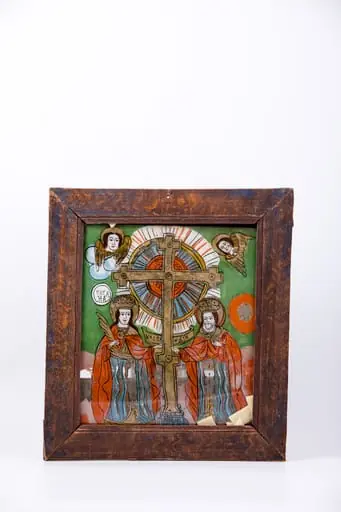 În centrul icoanei este Crucea bronzie, cu capetele brațelor împodobite trilobat, iar în stânga crucii este Sfântul Împărat Constantin și în dreapta este Împărăteasa Elena, mama sa. În spatele Crucii, este un soare mare roșu, circular, cu raze de lumină galbene și albastre, dispuse radiar. Crucea găsită este susținută cu bucurie de cei doi sfinți. Veșmintele Sfinților Constantin și Elena sunt într-o combinație de roșu vermillon, galben și albastru. Spațiul alb-galben de lumină, din fondul icoanei, duce cu gândul la Crucea de lumină apărută pe cer In hoc signo vinces - prin acest semn vei învinge. Fondul icoanei este cerul verde-văratic, în registrul superior, iar în registrul inferior, este un câmp roz-gri-acajou. În registrul superior, în colțurile stânga-dreapta sunt 2 îngeri serafimi. Cromatica este armonioasă: roșu vermillon, roz, galben-ocru, albastru cobalt, verde-iarbă de vară nuanță spanac-avocado, alb, negru. Icoana este de Țara Oltului. Inscripția din româno-chirilică se traduce Constantin Elena.
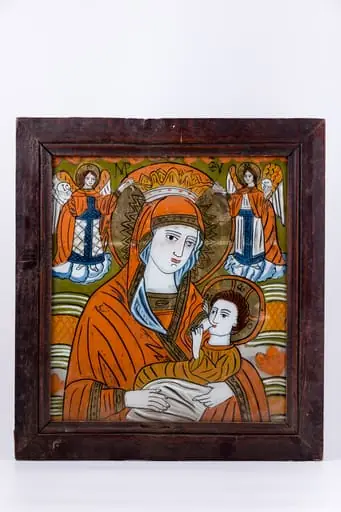 Maica Domnului ține în brațe Pruncul Iisus Hristos, pe care Îl alăptează, din sânul stâng, din dreptul inimii. Pruncul Iisus Hristos ține duios sânul cu ambele mânuțe. Maica Domnului este înveșmântată în mantie cu maforion roșu vermillon și sacos albastru dungat, asemenea unei ii cu gulerașul dantelat, poartă maforion, coroniță de împărăteasă și aureolă. Pruncul Iisus Hristos este înveșmântat în ocru-orange și gri-ivoriu, cu aureolă. În registrul superior, sunt Sfinții Arhangheli Mihail și Gavriil, ținând aureola Maicii Domnului cu mâinile. Sfinții Îngeri Arhangheli au picioarele pe mandorle de nouri alb-albaștri. Fondul icoanei este văzduhul de culoare verde văratic, împodobit cu elemente stilizat-florale, pete de roșu, ruje, în registrul superior. În registrul inferior, este un câmp luminos de verde-orange și galben-ocru. Cromatica este vie, senină și luminoasă: roșu vermillon, alb, albastru cobalt și bleu ciel, verde văratic, mușchi de pădure, verde brad, galben-ocru, alb, negru. Inscripția din româno-chirilică se traduce MP IC XC Maica Domnului Iisus Hristos. Este o icoană de Țara Oltului.
 În centrul icoanei este Crucea brun-bronzie, nisipie, cu aripi din elemente vegetale - frunze de finic verzi-corai și bej. În dreapta crucii este Sfânta Împărăteasă Elena, și în stânga este Împăratul Constantin, invers inscripției. Veșmintele sfinților împărați sunt pictate cu roșu vermillon-cărămiziu-corai, verde-smarald. Poartă coroane împărătești și aureole de sfinți, mantiiile de împărați le au prinse la gât cu fibulă. Crucea este bronzie și are capetele brațelor cu elemente decorative trilobate albe-verzi cu cruce neagră. Fondul este cerul albastru cobalt, cu un câmp galben-solar, în registrul din sptaele Crucii, amintind de Soarele Dreptății - Mântuitorul Iisus Hristos. Prin Acest Semn vei învinge! In Hoc signo vinces! Compoziția iconografică este încadrată de un chenar decorativ geometrizant - ramă de fereastră, de culoare nisipie-bej, sable, cu linia albă șerpuitoare. Inscripția din româno-chirilică se traduce Constantin Elena. Cromatica este armonioasă: roșe vermillon, cărămiziu, corai, albastru cobalt, verde smarald, forest, bej, crem, bronziu, galben solar, alb, negru. Icoana este din Nordul Transilvaniei, Nicula.
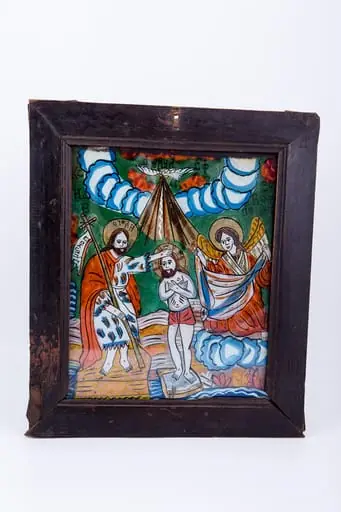 Domnul Iisus Hristos primește Botezul, în râul Iordanului, din partea Sfântului Mare Prooroc și Înaintemergător Ioan Botezătorul, care se află în dreapta Mântuitorului. Mântuitorul este înfășurat cu o pânză de culoare roșie împrejurul șoldurilor și a coapselor. În stânga Lui, este un înger evlavios, care Îl așteaptă cu un ștergar alb-roșu-albastru gata să înveșmânteze Trupul Domnului. Sfântul Ioan Botezătorul este îmbrăcat cu o mantie roșie și un himation alb-brun sau o haină din păr de cămilă. Cerurile de culoare verde, asemenea Duhului Sfânt, sunt deschise și izvorăște o rază de lumină, pe care se pogoară porumbelul, simbolul Sfântului Duh, pe creștetul Mântuitorului. Mandorla de nouri rotunzi, care permite deschiderea Cerurilor au o alternanță cromatică de alb și albastru bleu-ciel. Cromatica este specifică Țării Oltului: auriu, roșu vermillon, verde spanac-avocado, albastru bleu-ciel, bej, gri, ocru, brun-nisipiu, alb, negru. Inscripția din româno-chirilică se traduce Botezul Lui IC XC Iisus Hristos Sfântul Duh Ioan.
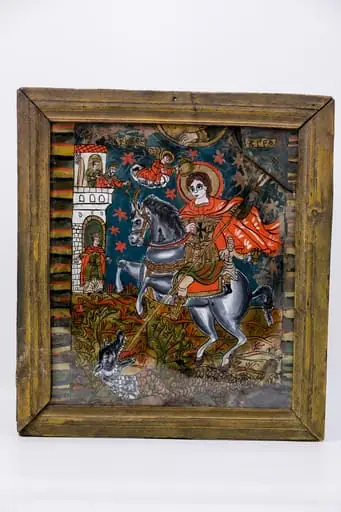 Sfântul Mare Mucenic Gheorghe este așezat călare pe un cal alb-gri, cu elemente de harnașament bronzii și șa roșie, omorând balaurul gri-gaben-verde cu creastă, solzi și coadă lungă, cu lancea, pe care o ține cu amândouă mâinile, înfingându-i-o animalului în gâtlej. În partea dreaptă a Sfântului Gheorghe, în registrul îndepărtat, este pictată domnița salvată și ocrotită de marele mucenic, cu mâinile ridicate, atât de teamă și spaimă, cât și de mulțumire către sfântul purtător de biruință. În registrul superior este Dumnezeu-Tatăl Binecuvântând cu mâna dintr-o deschidere a Cerurilor și un înger serafim care aduce Sfântului Gheorghe cununa de mucenic. În balconul castelului sunt două personaje cu cheile turnului în mână și pe șaua calului, în spatele Sfântului Mare Mucenic Gheorghe este un personaj foarte mic, îmbrăcat în haine arăbești, având în mână o candelă-amforă-cădelniță. Fondul icoanei este cerul albastru-gri-întunecat cu elemente astrale, stele roșii și câmpuri brune-kaki cu elemente vegetale roșii vermillon, în registrul inferior. Mantia Sfântulu Mucenic Purtător de Biruință este roșie-fluturândă având cămașa de cavaler cu zale și o cruce neagră de cavaler pe piept. Culoarea roșie este caracteristică mucenicilor și martirilor. Atât în dreapta, cât și în stânga sunt elemente de arhitectură, astfel spațializându-se narațiunea iconografică. Cromatica este armonioasă; roșu vermillon, albastru-gri întunecat, galben-ocru, verde văratic, verde brad, kaki, bronziu, alb și negru. Inscripția din româno-chirilică se traduce Sfântul Gheorghe. Icoana este din Țara Oltului. Icoana este mai rară, datorită diversității personajelor.
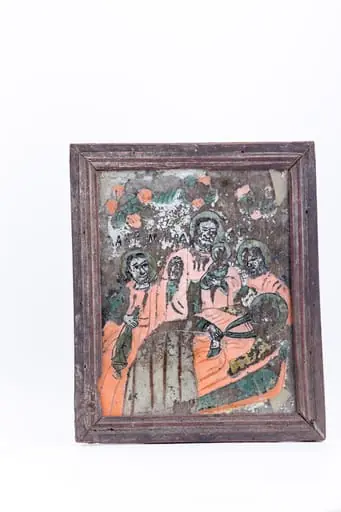 Icoana reprezintă Nașterea Maicii Domnului, 8 septembrie. Sfânta Maică Ana este redată întinsă pe un pat și lângă ea este Sfântul Părinte Ioachim, cu Pruncuța Maria în brațe. În stânga și în drepta lor, este câte o fecioară, martore și asistente ajutoare la naștere. În registrul superior, asemenea unei arcade-bolți de biserică este o ghirlandă de 3 ruje - trandafiri mari roșii cu frunze verzi. Cromatica este armonioasă: roșu vermillon, brun, verde, negru, alb. Icoana este de Nicula. Inscripția din româno-chirilică se traduce MP Maica Domnului.
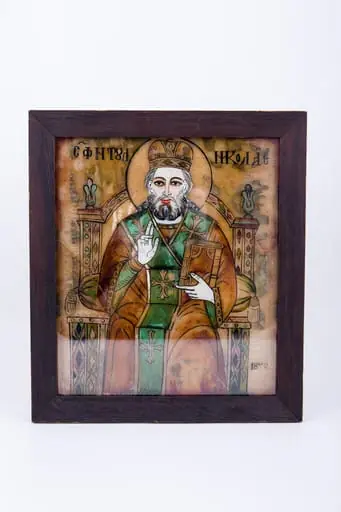 Sfântul Mare Ierarh Nicolae Făcătorul de minuni este redat central, așezat fiind pe un tron arhieresc, ținând în mâna stângă Sfânta Evanghelie închisă și binecuvântează cu mâna dreaptă. Veșmintele arhierești liturgice ale sfântului ierarh sunt într-o alternanță cromatică de brun cafeniu și verde spanac-avocado, kaki și negru. Epitrahilul, patrafirul este verde, cu patru cruci gri pe el, sacosul brun-maron. Poartă mithră și are aureolă. Fondul este brun-gri-bronziu. Inscripția din româno-chirilică se traduce Sfântul Nicolae. Icoana are o cromatică armonioasă și sobră: gri, brun, verde spanac-avocado, verde kaki, alb, negru, roșu. Icoana este de Laz, Valea Sebeșului și datată 1872.
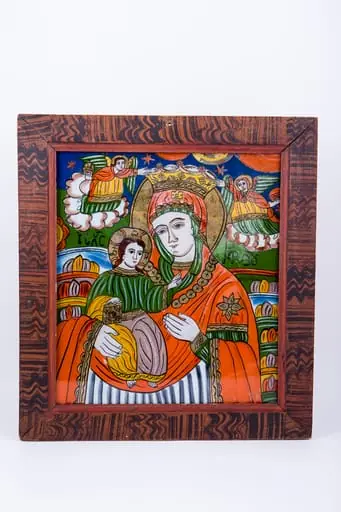 Maica Domnului Împărăteasă a Cerurilor, ține Pruncul Iisus Hristos, în brațe. Maica Domnului este îmbrăcată cu mantie cu maforion roșu vermillon, cu interiorul căptușit cu verde închis și albastru dungat cu alb. Poartă aureolă, coroniță de împărăteasă și salbă aurie din bănuți. Pruncul Iisus Hristos este îmbrăcat cu brun și verde și are aureolă și Sfânta Evanghelie închisă în mâna dreaptă și binecuvântează cu mâna stângă. În registrul superior sunt ocrotitori și păzitori Sfinții Arhangheli Mihail și Gavriil, cu mâinile atingând coronița Maicii Domnului Împărătese. Cromatica este armonioasă, caldă și luminoasă: roșu vermillon, verde spanac-avocado, galben-chihlimbar-ocru, albastru ceruleum bleu-ciel, brun, gri, alb, negru. Inscripția din româno-chirilică se traduce Maica Domnului MP Iisus Hristos IC XC. Icoana este de Șcheii Brașovului, Țara Oltului.
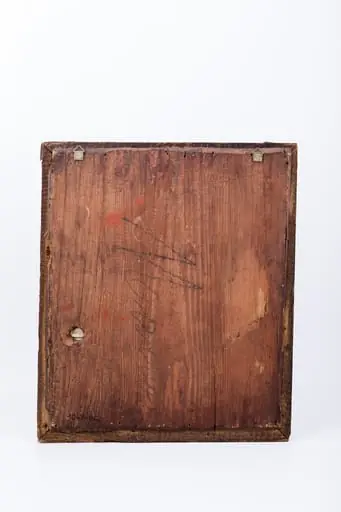 În centrul icoanei este Crucea, iar în stânga crucii este Sfântul Împărat Constantin, și în dreapta este Împărăteasa Elena, mama sa. Deasupra fiecăruia este inscripționat numele inversat. Veșmintele sfinților împărați sunt pictate cu roșu vermillon, roz, brun, bej, verde kaki. Poartă coroane împărătești și aureole de sfinți, mantiiile de împărați le au prinse la gât cu fibulă. În spatele fiecăruia este câte un înger păzitor. În registrul superior, deasupra crucii, sunt ramuri de finic. Fondul este verde, culoarea Sfântului Duh, la Pogorâre, cu stele albe și roșii, reprezentând cerul și văzduhul de Duh Sfânt. În registrul inferior este o alternanță de câmpuri paralele, cromatizate cu albastru și alb, cu pete și tușe de roșu. Cromatica este armonioasă și puternic vie și pastelată: roșu vermillon, verde spanac-avocado, kaki, roz, brun, bej, albastru, alb, negru. Inscripția dn româno-chirilică se traduce IC XC Iisus Hristos Sf Constantin Sf Elena. Icoana reprezintă pictura Țării Oltului.
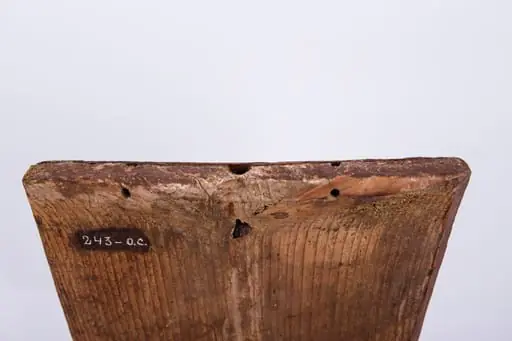 Mântuitorul Iisus Hristos, fiind răstignit pe Cruce, are în dreapta pe ucenicul cel iubit, care a stat lipit de pieptul Învățătorului, la Cina cea de Taină, mai precis, pe Sfântul Apostol și Evanghelist Ioan Teologul, Evanghelistul Iubirii și în stânga pe Maica Domnului Îndurerată, Jalnică și Plângătoare. Veșmintele Maicii Domnului sunt albastre și gri (albastrul este culoarea Maicii Domnului). Sfântul Ioan este îmbrăcat în verde și gri. Mântuitorul Iisus Hristos are o țesătură gri-nisipiu în jurul mijlocului și a coapselor. În registrul îndepărtat sunt elemente de arhitectură, reprezentându-se astfel spațialitatea narativă, cetatea Ierusalimului. Cromatica este armonioasă: roșu-cărămiziu, albastru ceruleum, verde, gri, nisipiu, bej, ivoriu-fildeș, alb, negru. Inscripția din româno-chirilică se traduce Iisus Hristos regele iudeilor, Maria, Sfântul Ioan. Rama este colorată jumătate cu cărămiziu, jumătate cu crem și colțurile ornamentate cu pătrate decorative de verde-kaki. Icoana este datată 1867.
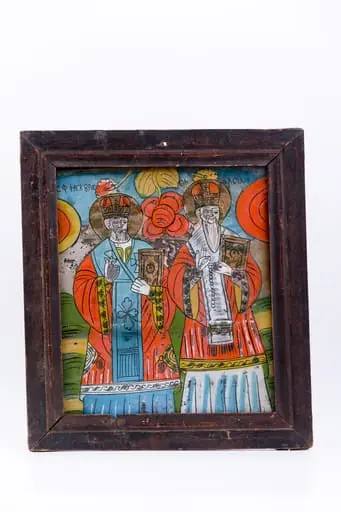 Icoana îi reprezintă pe Sfântul Ierarh Nicolae și Sfântul Vasile cel Mare, amândoi ierarhi, în veșminte liturgice arhierești, binecuvântând. Sfântul Mare Ierarh Nicolae, făcător de minuni, este îmbrăcat în veșminte liturgice, de ierarh, sacos roșu-vermillon, cu epitrahil-patrafir albastru bleu-ciel. Sfântul Nicolae are în mâna stângă Sfânta Evanghelie închisă și cu mâna dreaptă Binecuvântează. Este unul dintre cei mai populari și iubiți sfinți, ocrotitor al caselor, familiilor și copiilor. Are barbă sură, mithră arhierească și aureolă. Alături este Sfântul Ierarh Vasile cel Mare, în veșminte roșii vermillon, cu interiorul galben, sacos gri-albăstrui și epitrahil gri. Fondul este albastru bleu-ciel cu elemente decorative fitomorfe ruje galbene și roșii. Cromatica este armonioasă și pastelată: roșu vermillon, albastru bleu-ciel, verde, galben-ocru, negru, alb. Icoana este de Țara Oltului. Inscripția din româno-chirilică se traduce Sf Nicolae Sf Vasile.
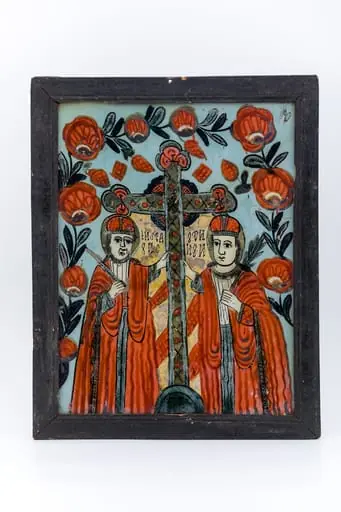 În centrul icoanei este Crucea bronzie, iar în stânga crucii este Sfânta Împărăteasă Elena, și în dreapta este Împăratul Constantin. Veșmintele sfinților împărați sunt pictate cu roșu vermillon și gri-albăstrui. Poartă coroane împărătești și aureole de sfinți, mantiiile de împărați le au prinse la gât cu fibulă. Crucea este bronzie și are capetele brațelor cu elemente decorative trilobate roșii vermillon somon. În spatele Crucii sunt elemente fitomorfe și o cunună de Rusalii. Fondul este cerul albastru bleu-ciel regal senin. Întreaga compoziție iconografică este încadrată de un chenar decorativ fitomorf, format dintr-o bogată ghirlandă de trandafiri-bujori, formată din 9 ruje roșii cu bobocei. În interiorul icoanei este un spațiu galben luminos cu umbre roșii paralele. Cromatica este armonioasă: roșu vermillon-somon, albastru bleu-ciel regal, gri, bej, crem, bronziu, brun, ocru, alb, negru. Inscripția în româno-chirilică se traduce Constantin și Elena. Icoana este din Nordul Transilvaniei, Nicula.
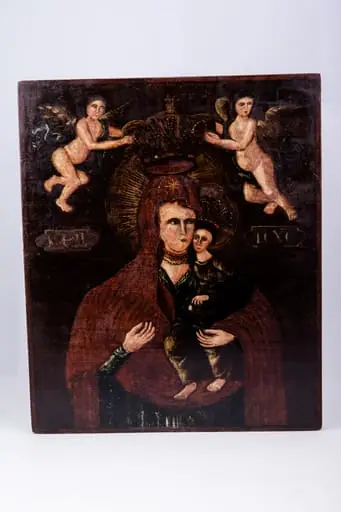 Maica Domnului ține în brațe Pruncul Iisus Hristos, care arată cu mâna dreaptă înspre Maica Domnului, prezentându-ne-o. Maica Domnului este înveșmântată în mantie cu maforion roșu-stacojiu, cu interiorul negru. Maica Domnului are aureola în raze luminoase de soare. Pruncul Iisus Hristos este înveșmântat cu sacos și omofor brun spre negru, cu coroană și aureolă pe cap. Fondul icoanei este negru întunecat, în contrast fiind cu lumina chipurilor și cromatica veșmintelor. În registrul superior sunt doi îngeri îndreptați spre coroana stilizată a Maicii Domnului, făcând gestul Încoronării. Îngerii sunt pictați asemenea unor putti, din pictura barocă. Cromatică este armonioasă: roșu stacojiu, brun, acajou, brun-ocru, brun, bej, alb, verde-olive, negru. Inscripția din româno-chirilică se traduce MP IC XC Maica Domnului Iisus Hristos. Icoana este pictată în manieră barocă și are atmosfera catolică.
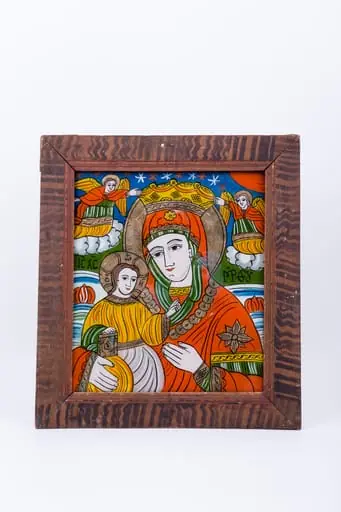 Maica Domnului Împărăteasă a Cerurilor, pe tron așezată, îl ține în brațe pe Pruncul Iisus Hristos. Maica Domnului este îmbrăcată cu mantie cu maforion roșie vermillon, cu interiorul căptușit cu verde și cu marginile manșetelor galben-aurii. Poartă aureolă și coroniță de împărăteasă, salbă aurie la gât. Pruncul Iisus Hristos este îmbrăcat cu ocru, verde și gri, are aureolă și ține pe genunchi Sfânta Evanghelie închisă și arată către Maica Domnului. În registrul superior îndepărtat sunt ocrotitori și păzitori Sfinții Arhangheli Mihail și Gavriil, așezați cu picioarele pe nori rotunzi, albi. Tematica este deosebită și frecvent întâlnită în Țara Oltului. Cromatica este armonioasă, caldă și luminoasă: roșu vermillon, verde spanac-avocado, galben-ocru, albastru bleu-ciel, alb, negru. Inscripția din româno-chirilică se traduce Maica Domnului MP Iisus Hristos IC XC
 Sfântul Mare Mucenic Gheorghe este așezat călare pe un cal alb cu harnașament bogat, omorând balaurul gri-cenușiu cu creastă, solzi și coadă lungă, cu lancea, pe care o ține cu amândouă mâinile, înfingându-i-o animalului în gâtlej. În partea dreaptă a Sfântului Gheorghe, în registrul îndepărtat, este pictată domnița salvată și ocrotită de marele mucenic, cu mâinile ridicate, atât de teamă și spaimă, cât și de mulțumire către sfântul purtător de biruință. Fondul este albastru, în registrul superior, cerul cu flori mari roșii, pete de culoare - ruje - asemenea unor simboluri floral-astrale, des-folosite în pictura icoanelor din Țara Oltului. În registrul inferior, fondul este verde și galben, cu linii ondulatorii albe, cele două registre în centrul icoanei ușor întrepătrundu-se. Mantia Sfântului Mucenic Purtător de Biruință este roșie, având cămașa de cavaler cu zale. Culoarea roșie este caracteristică mucenicilor și martirilor. În registrul îndepărtat sunt elemente de arhitectură, astfel spațializându-se narațiunea iconografică. Deasupra Sfântului Gheorghe este cerul deschis, asemenea unei ferestre, și un soare uriaș, din care iese mâna Lui Dumnezeu-Tatăl care îl binecuvântează și îl ajută în lupta purtată și un înger care ocrotește de pe o mandorlă mică de nouri rotunzi albi. Fiind o icoană de Șcheii Brașovului, imaginea picturală este armonioasă, cu un desen simplu, curat, tușele de culoare sunt mai mari, raportate la dimensiunile lucrării. Cromatica este armonioasă; roșu vermillon, albastru ceruleum, galben-ocru, verde spanac-avocado, alb și ngru. Pe fondul cerului albastru ceruleum este inscripția în româno-chirilică Sf Gheorghe. Icoana este rafinată prin acuratețea desenului, compoziția echilibrată și armonia cromatică.
 În centrul icoanei este Crucea, iar în dreapta crucii este Sfânta Împărpteasă Elena și în stânga este Împăratul Constantin, fiul său. Veșmintele sfinților împărați sunt pictate cu roșu vermillon, ocru, brun, alb și verde absint. Deasupra fiecăruia este inscripționat numele, inversat. În spatele Crucii, lipit de cruce, sunt ramuri de finic, asemenea unor raze de soare, amintind de semnul luminos apărut pe cer In hoc signo vinces - prin acest semn vei învinge. Crucea ste împodobită pe brațele vertical și orizontal, cu un vrej lung de flori și frunze, ca o ghirlandă de Rusalii. Icoana este o bogăție de culoare, lumină și detalii semnificative. Crucea este împodobită cu elemente fitomorfe: vrej-tulpină agățătoare, frunze și flori. În spatele crucii sunt doi îngeri serafimi. Icoana este de Țara Oltului. Inscripția în româno-chirilică se traduce Sf Împ Constantin Sf Împ Elena. Cromatica este armonioasă și bogată: roșu vermillon, galben-ocru, albastru ceruleum, verde kaki-olive, absint, brun, alb, negru.
 Sfânta Mare Cuvioasă Parascheva de la Iași are crucea în mâna stângă, binecuvântând, și o ramură mare de finic verde, în mâna dreaptă. Este îmbrăcată în veșmânt roșu vermillon-cărămiziu, cu interiorul căptușit cu verde-mușchi de pădure, verde de China, înspre gri-antracit. Sacosul este alb-crem cu danteluță și guleraș și dungi gri-verzui. Sfânta Cuvioasă are părul negru lung, lăsat pe umeri, coroană roșie cu gri-antracit, cu radiații verzi, ca de catifea și aureolă. Fondul icoanei este cerul albastru regal-ceruleum, în registrul superior și un câmp galben-chihlimbar, în registrul inferior. Întreaga compoziție tematic-iconografică este încadrată de un chenar decorativ fitomorf, format din 3 ruje roșii mari, cu frunze verde-brad. Cromatica este armonioasă: roșu vermillon-cărămiziu, alb-zinc, albastru regal-ceruleum, crem-bej, galben-chihlimbar, verde mușchi-de-pădure, verde de China, gri-verzui, gri-antracit, bej-crem, bronziu, negru, alb zinc. Inscripția din româno-chirilică se traduce Paraschiva. Icoana este din Nordul Transilvaniei, Nicula.
 În centrul icoanei este Crucea, iar în dreapta crucii este Împăratul Constantin și în stânga este Împărăteasă Elena, mama sa. Veșmintele sfinților împărați sunt pictate cu roșu vermillon, roz, ocru, brun, alb și bronziu. Deasupra fiecăruia este inscripționat numele. Pe brațele Crucii sunt elemente forale și vegetale, realizate prin petale punctiforme roșii. Deasupra Sfinților Împărați sunt volutele și drapajele unor draperii roșii și galbene, care au menirea să încadreze în spațiu și timp tematica iconografică. Icoana este de Țara Oltului. Inscripția în româno-chirilică se traduce Sfântul Constantin Sfânta Elena. Fondul este albastru-violaceu, iar în registrul inferior există un caroiaj alb-gri-negru. Cromatica este armonioasă și bogată: roșu vermillon, roz, orange, galben-ocru, albastru violaceu, verde kaki, brun, alb, negru.
 Sfântul Mare Mucenic Teodor Tiron este așezat călare pe un cal alb, ținând Crucea în mâna dreaptă. Mantia Sfântulu Mucenic Teodor este roșie-vermillon, pantalonii verzi, cămașa de cavaler verde, cu năsturei și găetane. Fondul este albastru ceruleum și în registrul inferior este roșu vermillon, cărămiziu. Întreaga compoziție iconografică este presărată de elemente fitomorfe-geometrizante, formate din petale albe. Cromatica este armonioasă; roșu vermillon, cărămiziu, ocru, verde spanac-avocado, albastru ceruleum, alb și ngru. Icoana este de Nicula. Inscripția din româno-chirilică se traduce Sf Teodor.
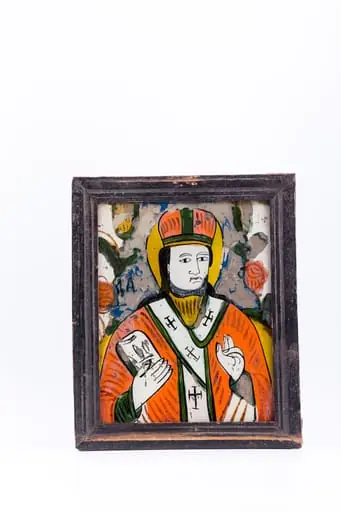 Sfântul Mare Ierarh Nicolae Făcătorul de minuni ține în mâna dreaptă Sfânta Evanghelie închisă și binecuvântează cu mâna stângă. Veșmintele arhierești liturgice ale sfântului ierarh sunt într-o alternanță cromatică de roșu vermillon, galben și verde. Epitrahilul-patrafirul este alb cu marginile verzi și patru cruci brune. Fondul icoanei este alb-albăstrui-gri în registrul superior și un câmp galben-solar în registrul inferior. Întreaga compoziție este încadrată în spațiul cerului senin de o ghirlandă de ruje - elemente decorative fitomorfe, patru trandafiri roșii-galbeni, cu frunze verzi. Inscripția din româno-chirilică se traduce Sf Nicolae. Icoana este de Nicula, Nordul Transilvaniei.
 Icoana este împărțită pe două tematici iconografice: Sfântul Mare Ierarh Vasile și Sfânta Treime. Sfântul Vasile cel Mare este îmbrăcat în veșminte arhierești în combinația de roșu-zmeuriu, albastru cobalt, verde și alb. Are barba și părul lungi. Poartă mitrhră arhierească și aureolă. Binecuvântează cu mâna dreaptă și ține în mâna stângă Sfânta Evanghelie închisă. Dumnezeu-Fiul ține Crucea pe umărul stâng, Dumnezeu-Tatăl are globul pământesc și dimpreună susțin coroana Împărăției Cerești. Dumnezeu-Tatăl și Dumnezeu-Fiul sunt înveșmântați în roșu vermillon-zmeuriu, albastru cobalt și verde, cu bogăție de detalii decorativ-ornamentale fine și minuscule pe veșmintele împărătești, dungi albe. În registrul îndepărtat superior este cerul auriu cu o mandorlă de nouri rotunzi albaștri.
 Sfântul Mare Mucenic Gheorghe este așezat călare pe un cal alb cu pete gri, acoperit cu elemente de harnașament verzi și gri omorând balaurul cu lancea neagră, pe care o ține în amândouă mâinile. Balaurul este pictat cu verde forest și kaki și gri cenușiu-antracit verzui și având corp de reptilă, cu coadă de diavol. Fondul icoanei este cerul albastru bleu-ciel-ceruleum și galben-solar în exterior și în cel inferior, în centrul icoanei ușor întrepătrundu-se toate culorile. Tunica Sfântului Mucenic Purtător de Biruință este roșie-vermillon, având pantalonii albaștri-ceruleum și cămașa de cavaler cu mânecile verzi. În registrul superior, icoana este încadrată de un chenar decorativ, format dintr-o ghirlandă de 5 ruje roșii. Cromatica este armonioasă: roșu vermillon, albastru-bleu-ciel, cobalt și ceruleum, ocru, galben solar și chihlimbar, verde kaki și forest, gri antracit, alb și negru. Inscripția din româno-chirilică se traduce Gheorghe. Icoana este din Nordul Transilvaniei, Nicula.
 Icoana reprezintă Nașterea Mântuitorului Iisus Hristos. Icoana este împărțită în cinci secvențe: Nașterea Mântuitorului este în centrul icoanei. Pruncul Iisus, înfășat în scutece este ținut în brațe de Maica Domnului și de Dreptul Iosif, logodnicul Fecioarei Maria, stând alături de legănuțul din iesle și animale domestice din grajd, cai și boi. În registrul superior este ilustrată venirea magilor după steaua cea călăuzitoare și fuga în Egipt. În registrul inferior este ilustrată pruncuciderea de către Irod Antipa. În centrul icoanei este steaua cea călăuzitoare cu un mănunchi de raze luminoase, aducătoare de vestea cea bună. Este o alternanță cromatică de roșu vermillon, alb, galben citrone și albastru cobalt. Cerurile sunt deschise. Icoana este foarte bogată în narațiune. Registrele se întrepătrund armonios. Cromatica este luminoasă, vie și directă: roșu-galben-alb-albastru, legate de auriul aureolelor, stelei, chenarului decorativ. Inscripția în chirilică se traduce Nașterea ICXC Iisus Hristos. Icoana este pictată în Țara Oltului. Icoana este datată 1884.
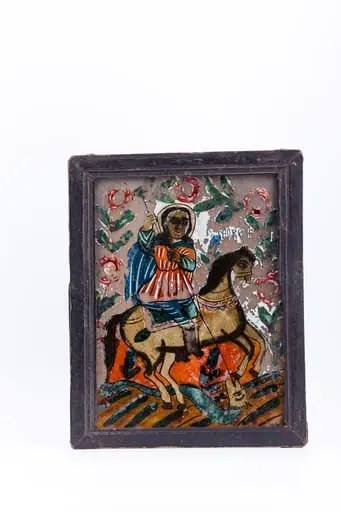 Sfântul Mare Mucenic Gheorghe este așezat călare pe un cal brun-maro-cafeniu, omorând balaurul cu solzi de bronz gri-pământiu cu lancea, pe care o ține cu amândouă mâinile. Balaurul este pictat cu brun-pământiu, având solzi bronzii. Fondul este albastru ceruleum și cobalt, în registrul superior cu elemente decorative fitomorfe, formate din ruje roșii, în cel inferior fiind câmpuri paralele de maro, brun, cafeniu-negru, în centrul icoanei ușor întrepătrundu-se toate culorile. Mantia Sfântului Mucenic Purtător de Biruință este albastră regal, fluturândă, având pantalonii albaștri și cămașa de cavaler, tunica roșie. În registrul superior, icoana este încadrată de o ghirlandă decorativă, formată din 4 ruje - trandafiri roșii, cu frunze verzi. Cromatica este armonioasă, formată fiind din roșu vermillon, albastru cobalt, verde brad, maro, brun, gri, alb și negru. Inscripția din româno-chirilică se traduce Sf Gheorghe. Icoana este deteriorată, fiind absențe cromatice.
 Sfântul Mare Mucenic Gheorghe este așezat călare pe un cal alb cu pete gri, cu elemente de harnașament galbene și verzi și șa roșie, omorând balaurul verde închis cu creastă, solzi și coadă lungă, cu lancea, pe care o ține cu amândouă mâinile, înfingându-i-o animalului în gâtlej. În partea dreaptă a Sfântului Gheorghe, în registrul îndepărtat, este pictată domnița salvată și ocrotită de marele mucenic, cu mâinile ridicate, atât de teamă și spaimă, cât și de mulțumire către sfântul purtător de biruință. Fondul icoanei este alb cu ruje roșii și cerul albastru bleu-ciel în registrul superior. În registrul inferior, fondul este verde, cu linii ondulatorii galbene și roșii, cele două registre în centrul icoanei ușor întrepătrundu-se. Mantia Sfântului Mucenic Purtător de Biruință este roșie-fluturândă având cămașa de cavaler cu zale. Culoarea roșie este caracteristică mucenicilor și martirilor. Atât în dreapta, cât și în stânga sunt elemente de arhitectură, astfel spațializându-se narațiunea iconografică. Cromatica este armonioasă; roșu vermillon, albastru bleu-ciel, galben-ocru, verde văratic, verde brad, alb și ngru. Pe fondul cerului albastru regal și ceruleum este inscripția în româno-chirilică Sf Gheorghe. Icoana este de Nicula.
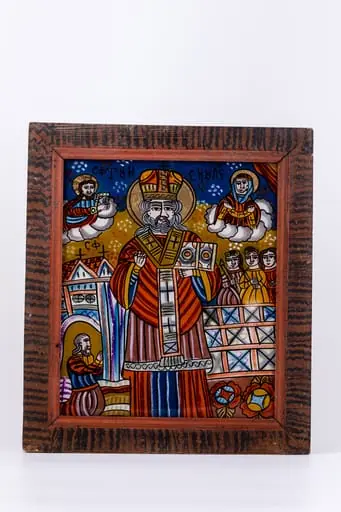 Sfântul Mare Ierarh Nicolae, făcător de minuni, îmbrăcat în veșminte liturgice, de ierarh, sacos roz-stacojiu, felon roșu vermillon-stacojiu, cu interiorul albastru și epitrahil-patrafir gri-bronziu, cu patru cruci negre brodate. Ține în mâna stângă Sfânta Evanghelie și cu mâna dreaptă Binecuvântează. Este unul dintre cei mai populari și iubiți sfinți, ocrotitor al caselor, familiilor și copiilor. Are barbă sură și mithră arhierească și aureolă. În registrul superior, sunt Dumnezeu-Tatăl Binecuvântând și Maica Domnului Ocrotind. Fondul este cerul albastru cobalt-ceruleum, împodobit cu elemente astrale - punctiflorale roșii și albe și un câmp luminos galben-auriu, în registrul mediu. În registrul mediu și inferior, sunt cele trei fete salvate și ajutate de Sfântul Nicolae și tatăl lor îngenuncheat, mulțumind pentru minunea săvârșită. Desenul este fin conturat. Cromatica este armonioasă: roșu vermillon, stacojiu-roz putred, albastru ceruleum și cobalt, galben muștar ocru, bronz, brun, bej, crem, auriu, alb, negru. Inscripția în chirilică se traduce Sfântul Nicolae. Icoana este de Țara Oltului.
 Icoana îi reprezintă pe cei doi Apostoli Sfinții Petru și Pavel, dimpreună cu Soborul de Sfinți Apostoli. Petru cu cheile Împărăției Cerești în mână și pe Pavel cu sabia Cuvântului în mână, susținând împreună chivotul unei biserici, simbolul Bisericii sobornicești și apostolești. Au mantiile roșii și veșmintele în combinație de roșu vermillon, albastru cobalt dungat cu alb și galben solar. Fondul icoanei este cerul albastru ceruleum cu elemente astrale - stele albe și roșii. În grup strâns, în spatele Sfinților Petru și Pavel sunt încă 7 sfinți apostoli și ucenici și un înger cu aripile galbene de lumină. Toți susțin împreună chivotul unei biserici mari. Deasupra Sfinților Apostoli este Dumnezeu-Tatăl care îi veghează, din Cerurile deschise, trimițându-i în toată lumea să propovăduiască Sfânta Evanghelie, numindu-i pescari de oameni. Dumnezeu-Tatăl este prezent prin Ochiul Dumnezeiesc înscris în semnul triunghiului echilateral al Sfintei Treimi, care privește din Cerurile deschise, prin mandorla de nouri albi-albaștri. Chipurile sunt foarte expresive, cu trăsături fine. Compoziția este rezistentă și cromatica foarte armonioasă: roșu vermillon, verde spanac-avocado, galben solar ocru, albastru ceruleum, cobalt, bleu-ciel, brun, gri, alb, negru, auriu. Icoana este de Țara Oltului. Inscripția din româno-chirilică se traduce Petru Pavel.
 Icoana reprezintă Învierea Domnului Iisus Hristos. Mântuitorul Iisus Hristos, ieșind din mormânt, Înviind, Binecuvântând zdrobește ușile iadului. Mântuitorul este înfășurat cu o țesătură verde kaki-gri în mijlocul coapselor și a mijlocului și cu mantia roșie vermillon pe umeri. În dreapta mormântului gri, deschis, sunt doi ostași romani, uimiți. Icoana de Nicula are o cromatică armonioasă: galben-solar, roșu vermillon, alb, albastru cobalt, verde brad-pădure, negru, gri cenușiu. Fondul icoanei este cerul albastru cobalt-ceruleum, în registrul superior și un câmp galben-ocru, cu brun-maro cu pete crem, în registrul inferior, realizându-se, astfel sugestiv, intrarea și ieșirea din pământul morții și a păcatului. Întreaga compoziție iconografică este încadrată de un chenar decorativ geometrizant roșu vermillon și de unul fitomorf, format dintr-o ghirlandă cu două flori-narcise cu frunze unduitoare. Cromatica este armonioasă: roșu vermillon, galben chihlimbar, albastru cobalt-ceruleum, brun, maro, bej, verde smarald, kaki, negru, gri, alb. Inscripția în româno-chirilică se traduce IC XC Iisus Hristos. Icoana este din Nordul Transilvaniei, Nicula.
 Sfânta Mare Cuvioasă Parascheva de la Iași are crucea albă-orange în mâna stângă, binecuvântând, și o ramură de finic verde, nuanța verde smarald în mâna dreaptă. Este îmbrăcată în veșmânt roșu vermillon-orange cu interiorul căptușit cu verde-smarald, cu marginea-bordură galbenă și franjuri verzi. Sacosul este alb-crem cu danteluță, guleraș și dungi albastre-orange. Sfânta Cuvioasă are părul negru lung, lăsat pe umeri, coroană roșie cu verde-brad și aureolă brun-bronzie. Fondul icoanei este cerul albastru bleu-ciel în registrul superior-mijloc și un câmp galben-chihlimbar, ancadrator întregii compoziții. Întreaga compoziție iconografică este încadrată de un chenar decorativ fitomorf, format dintr-o ghirlandă de 9 ruje mari orange-cărămizii cu frunze verzi. Inscripția din româno-chirilică se traduce Paraschiva. Cromatica este armonioasă: roșu vermillon-orange, albastru cobalt-ceruleum, verde smarald, mușchi de pădure, bej-crem, bronziu, galben-chihlimbar, negru, ocru, alb zinc. Icoana este din Nordul Transilvaniei, Nicula.
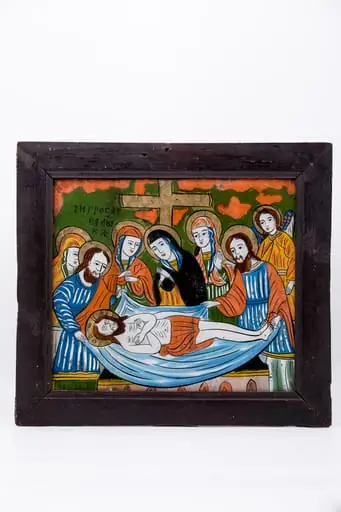 Icoana reprezintă Prohodul Domnului. Punerea în mormânt a Mântuitorului Iisus Hristos. Trupul Mântuitorului Iisus Hristos, fiind coborât de pe cruce, este învelit în țesătura giulgiului alb-albastru. Maica Domnului împreună cu Sfinții Iosif din Arimateea, Nicodim și trei femei mironosițe aducătoare de mir țin în brațe trupul Mântuitorului. Martor și aproape este Îngerul care va striga bucuria Învierii Domnului. Compozițional se creează astfel o imagine concentrică de corabie, cu Crucea Răstignirii ca și catarg, corabia prefigurând Biserica. Giulgiul și îmbrățișarea celor apropiați, uniți întru dragoste și suferință, reprezintă axa orizontală, perpendiculară pe Cruce. Compoziția este echilibrată, simetrică și circulară. Maica Domnului este îmbrăcată în veșmânt cu maforiom negru, cu sacos galben și interiorul căptușit cu albastru ceruleum. Veșmintele Sfinților și Mironosițelor sunt în combinație de roșu vermillon, albastru cu linii albe, galben solar și verde-văratic. Fondul icoanei este văzduhul verde-văratic, plin de Duhul Sfânt și un chenar decorativ sugerat ca și ancadrament, format din elemente florale stilizate - ruje roșii. Cromatica este armonioasă: roșu vermillon, albastru cobalt, ceruleum, verde văratic-forest, galben solar-chihlimbar, alb și negru. Inscripția din româno-chirilică se traduce Îngroparea Lui IC XC Iisus Hristos. Icoana este din Țara Oltului.
 Sfânta Mare Cuvioasă Parascheva de la Iași are crucea în mâna dreaptă, stă așezată pe un tron împărătesc, și cu mâna stângă deschisă înspre noi dăruiește pace și liniște, asemenea unei binecuvântări. Este îmbrăcată în veșmânt roșu vermillon, cu interiorul căptușit cu albastru, galben-chihlimbar și dungi albe, cu manșete pictate cu albastru și galben. Faldurile veșmântului și drapajele, cât și bogăția dungulițelor albe ornamentale împodobesc frumos întreaga tematică iconografică. Peste maforionul roșu închis la gât cu o fibulă rotundă, sfânta cuvioasă are coroniță și aureolă. Fondul icoanei este împărțit în registrul superior cer albastru bleu-ciel foarte deschis și senin și câmp galben, luminos, de grâu vara. În registrul superior, icoana este încadrată de un chenar floral, format dintr-o ghirlandă de trandafiri sălbatici, ruje roșii și lalele închise. În registrul superior, colțul din dreapta și stânga Sfintei PreaCuvioase, este câte un Înger Arhanghel, Mihail și Gavriil, îndreptându-și privirea și ocrotirea înspre Sfânta Parascheva. Trupurile Arhanghelilor se confundă, la un moment dat, cu ornamentele geometrizante ale tronului împărătesc, așadar trupurile Arhanghelilor reprezintă tronul sfintei. Cerul albastru este înstelat cu elemente florale roșii și albe, stelele având forma florilor, iar floarea din partea dreaptă a Sfintei PreaCuvioase se subînțelege ca fiind un heruvim. Ghirlanda de deasupra este paralelă și simetrică cu ruloul de pernă de pe tron. Icoana este foarte frumos realizată artistic și estetic, finețea nuanțelor cromatice și expresivitatea sfintei cuvioase remarcându-se într-un mod deosebit. Cromatica este senină și vie: roșu vermillon, bleu ciel, galben chihlimbar, verde kaki, gri, alb, brun, negru. Icoana este de Țara Oltului. Inscripția din româno-chirilică se traduce Sfânta Paraschiva.
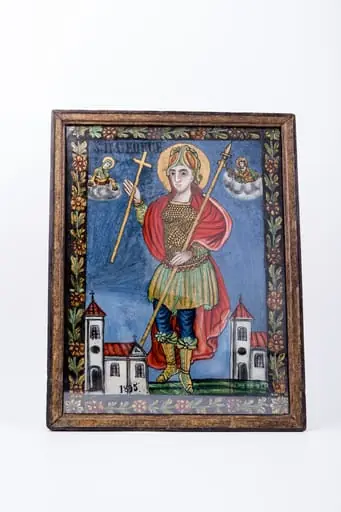 Sfântul Mare Mucenic Gheorghe este redat central, supradimensional, în picioare, îmbrăcat în uniformă de cavaler oștean luptător, cu cămașă de zale verde olive-smarald-kaki sfântul purtător de biruință. Are pantalonii albaștrii, cizme brun-olive, mantie roșie, coif și aureolă. În mâna dreaptă are crucea ridicată înspre Cer și în mâna stângă ține spada de luptă. Fondul este albastru, în registrul superior, este Maica Domnului cu Acoperământul ei ocrotitor și Mântuitorul Iisus Hristos Binecuvântând, amândoi fiind pe mandorle de nouri albi rotunzi. În registrul inferior, fondul este verde și acoperit de elemente de arhitectură de biserică. Mantia Sfântului Mucenic Purtător de Biruință este roșie, culoarea roșie este caracteristică mucenicilor și martirilor. În registrul îndepărtat sunt elemente de arhitectură, astfel spațializându-se narațiunea iconografică. Fiind o icoană de Valea Sebeșului, imaginea picturală este armonioasă, cu un desen simplu, curat, tușele de culoare sunt mai mari, raportate la dimensiunile lucrării. Cromatica este armonioasă; roșu sângeriu, stacojiu, albastru ceruleum, galben-ocru, verde spanac-avocado, olive, kaki, alb și ngru. Pe fondul cerului albastru ceruleum este inscripția în româno-chirilică Sf M Gheorghe MP Maica Domnului IC XC Iisus Hristos. Icoana este rafinată prin acuratețea desenului, compoziția echilibrată și armonia cromatică. Întreaga compoziție este încadrată de un chenar decorativ fitomorf, format dintr-o ghirlandă de flori. Icoana este datată 1895. Este semnată de Partenie Poienaru Zugrav din Laz.
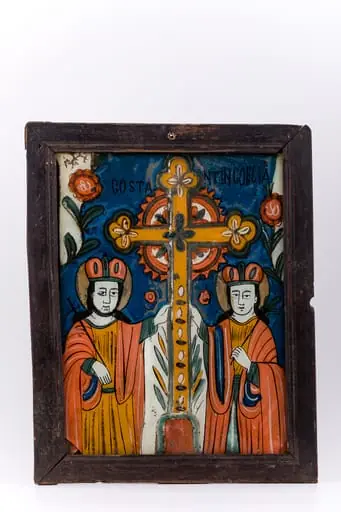 În centrul icoanei este Crucea, iar în stânga crucii este Sfânta Împărăteasă Elena, și în dreapta este Împăratul Constantin. Veșmintele sfinților împărați sunt pictate cu roșu vermillon și gri-antracit și epitrahile-patrafire gri-antracit. Poartă coroane împărătești și aureole de sfinți, mantiiile de împărați le au prinse la gât cu fibulă. Crucea este roșie-vermillon cu gri și are capetele brațelor cu elemente decorative trilobate roșii vermillon-cărămiziu. Fondul este cerul albastru bleu-ciel foarte senin, înspre alburiu. Împrejurul Crucii este un spațiu luminos de galben-chihlimbar. Întreaga compoziție iconografică este încadrată de un chenar decorativ fitomorf, format dintr-o ghirlandă de 7 ruje - trandafiri și bujori roșii vermillon și 2 boboci de măceș - cu frunze gri-verzui. Cromatica este armonioasă: roșu vermillon-cărămiziu, albastru bleu-ciel înspre alburiu, gri-antracit, bronziu, brun, galben-chihlimbar, ocru, alb, negru. Inscripția în româno-chirilică se traduce Constantin și Elena. Icoana este din Nordul Transilvaniei, Nicula.
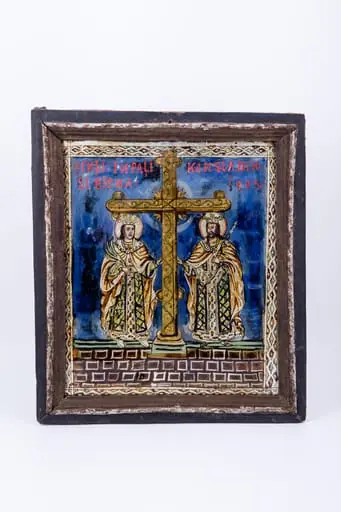 În centrul icoanei este Crucea, iar în stânga crucii este Sfântul Împărat Constantin, și în dreapta este Împărăteasa Elena, mama sa. Deasupra fiecăruia este inscripționat numele. În spatele Crucii, lipit de cruce, este un soare stilizat - Soarele dreptății. Soarele din spatele Crucii duce gândul la Crucea de lumină apărută pe cer In hoc signo vinces - prin acest semn vei învinge. Icoana este specifică Văii Sebeșului, tușele de culoare fiind mărturii clare. Inscripțiile în româno-chirilică sunt traduse Sfinții Împărați Constantin Elena. Veșmintele sfinților împărați sunt pictate cu brun, verde, kaki, absint, bronziu, alb și negru. Simbolurile, din mâinile împăraților sunt pene de scris, instrumente de scris, condei și aripă de înger, armele cu care s-au luptat pentru Creștinism, mucenici ai mărturisirii. Cromatica este armonioasă: verde, galben-ocru, kaki, brun, absint, olive, bej, bronziu, alb, negru. Compoziția este puternică în impactul vizual: cerul albastru cobalt și pardoseala în caroiaj, cafeniu-bej-brun, din registrul inferior. Caroiajul reprezintă o lespede de fundație puternică - reprezentând credința creștin-ortodoxă, un zid de nedărâmat. Icoana este de Laz, fiind datată 1905.
 Sfântul Mare Mucenic Gheorghe este așezat călare pe un cal alb-gri, omorând balaurul verde-gri-antracit cu lancea, pe care o ține în amândouă mâinile. Fondul icoanei este cerul cobalt-senin, în registrul superior și alb-bej-bronziu în cel inferior, în centrul icoanei ușor întrepătrundu-se toate culorile. Tunica Sfântului Mucenic Purtător de Biruință este roșie vermillon, cu mânecile verzi, având pantalonii gri, cizme negre și tunică roșie-vermillon. Întreaga compoziție iconografică este încadrată de un chenar decorativ fitomorf, format dintr-o ghirlandă de 7 ruje - trandafiri sălbatici și bujori roșii și roz cu petale și pistil alternativ colorate cu albastru cobalt, roz și roșu vermillon. Ghirlanda excelează prin delicatețea desenului și bogăția cromatică armonioasă. Ziua de praznic a Sfântului Gheorghe este în 23 aprilie, primăvara, justificându-se pentru încă o dată prezența ghirlandei înflorite. Inscripția din româno-chirilică se traduce S. Georgie. Cromatica este armonioasă; roșu vermillon, roz, albastru cobalt, ceruleum, cobalt, gri antracit, ocru, bronziu, brun, crem, alb și negru. Icoana este din Nordul Transilvaniei, Nicula.
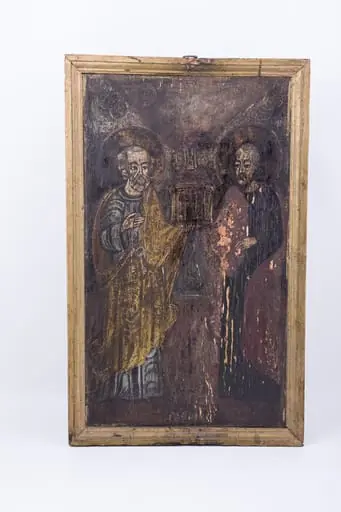 Icoana îi prezintă pe Sfinții Apostoli Petru și Pavel. Sfântul Petru, înveșmântat în verde și roșu, are în mâna dreaptă cheile Împărăției Cerești și în mâna stângă Sfânta Evanghelie. Apostolul Pavel, este înveșmântat în roșu și galben, are sabia și spada Cuvântului. Prezentarea celor doi apostoli este una simetrică și echilibrat-compozițională. Sfinții Apostoli susțin cu mâinile o Biserică, simbolul bisericii apostolice și sobornicești, un chivot sfințit. Chipurile sunt foarte expresive, cu trăsături fine. Cromatica este armonioasă: roșu vermillon, albastru bleu-ciel, brun, galben-ocru, alb, negru. Inscripția este indescifrabilă.
 Icoana îi reprezintă alături, față în față, ca într-o oglindă, pe Pruncul Iisus Hristos și Pruncul Ioan, cel care avea să fie Sfântul Ioan Botezătorul și Înaintemergătorul Domnului nostru Iisus Hristos. Cei doi copilași erau veri, cu o diferență de șase luni între ei. Pruncul Iisus Hristos are în mânuțe globul pământesc cu o cruce deasupra, asemenea unui chivot sfințit, iar Pruncul Ioan are în brațe un mieluț, arătând către Mântuitorul Iisus Hristos: „Iată mielul!”. Sunt înfășurați amândoi cu câte o țesătură roșie-cărămizie-roz, culoarea pătimirii și a jertfei. În interiorul icoanei este un composit de albastru ultramarin bleu-marin și galben luminos. Întreaga tematică iconografică este încadrată de un chenar decorativ fitomorf, format dintr-o ghirlandă de trandafiri, 5 duble și 4 ruje roșii, bobocei de trandafirași, În centru icoanei, între cei doi copilași este un fruct de măceș. Icoana este de Nicula, având o cromatică luminoasă: roșu vermillon-cărămiziu-roz, albastru ultramarin și bleumarin, bleu ciel și ceruleum, galben chihlimbar, verde brad, alb, negru. Inscripția din româno-chirilică se traduce: Ioan IC XC Iisus Hristos. Icoana este din Nordul Transilvaniei, Nicula.
 Sfântul Mare Ierarh Nicolae Făcătorul de minuni este redat central, pe tron arhieresc, ținând în mâna stângă Sfânta Evanghelie deschisă și binecuvântează cu mâna dreaptă. Veșmintele arhierești liturgice ale sfântului ierarh sunt într-o alternanță cromatică de orange-verde-albastru-ocru-brun-bronziu și alb și negru. Epitrahilul, patrafirul este brun-bronziu, cu patru cruci pe el, sacosul orange-roșu vermillon. Poartă mithră și are aureolă. În registrul superior îndepărtat sunt Dumnezeu-Tatăl și Maica Domnului, care ating aureola Sfântului Nicolae. Pe fondul verde, Mântuitorul și Maica Domnului au veșminte brune și roșii și sunt așezați pe mandorle de nouri albi-albaștri. Inscripția din româno-chirilică se traduce Sf Nicolae ICXC MP Iisus Hristos Maica Domnului. În registrul inferior, la picioarele Sfântului Ierarh sunt tatăl mulțumitor și îngenuncheat și cele trei fete salvate, prin minune, de sărăcie și păcat. Icoana are o cromatică puternic-vie, spcifică Țării Oltului: roșu vermillon, orange, verde spanac-avocado, albastru ceruleum și bleu-ciel, bru, gri, alb, negru.
 Sfântul Mare Ierarh Nicolae, făcător de minuni, îmbrăcat în veșminte liturgice, de ierarh, sacos gri și felon roșu vermillon, epitrahil-patrafir brun-bronziu cu patru cruci. Ține în mâna stângă Sfânta Evanghelie închisă și cu dreapta Binecuvântează. Este unul dintre cei mai populari și iubiți sfinți, ocrotitor al caselor, familiilor și copiilor. Are barbă sură-albă și mithră arhierească și aureolă. Fondul este albastru-regal gri senin. În registrul superior sunt Dumnezeu-Tatăl Binecuvântând și Maica Domnului Ocrotind cu luminosul Acoperământ. Desenul este stângaci și cromatica vie-puternică și luminoasă: roșu vermillon, orange, gri, ocru, albastru regal-gri deschis. Inscripția din româno-chirilică se traduce Sf Nicolae. Icoana este de Mărginimea Sibiului.
 Scen
Scen Sfântul Mare Mucenic Gheorghe este așezat călare pe un cal alb cu șaua roșie, omorând balaurul, cu coadă de reptilă, cu lancea, pe care o ține în mâna dreaptă. Balaurul este pictat cu verde întunecat spre negru și alb-gri, având solzi și coadă de reptilă. Fondul icoanei este cerul albastru-bleu ciel înspre alburiu, în registrul superior și galben-lemon în cel inferior, în centrul icoanei ușor întrepătrundu-se toate culorile. Mantia Sfântului Mucenic Purtător de Biruință este roșie-vermillon, înspre roz, având pantaloni albaștri și cizme negre. Flori mari asemenea unor pete roșii vermillon, rujele echilibrează întreaga compoziției. În registrul superior, icoana este încadrată de un chenar decorativ, format dintr-o ghirlandă de 5 ruje roșii, mari, cu frunze verzi-albăstrii. Inscripția din româno-chirilică se traduce Gheorghe. Cromatica este armonioasă: roșu vermillon, roz, albastru bleu-ciel, cobalt, verde forest, smalald, gri, galben-lemon, alb și negru. Icoana este din Nordul Trandilvaniei, Nicula.
 Sfântul Mare Mucenic Gheorghe este așezat călare pe un cal alb, cu pete gri, omorând balaurul verde cu lancea, pe care o ține cu amândouă mâinile. Balaurul este pictat cu verde-brad, având corpul de reptilă. Fondul este albastru bleu-ciel, în registrul superior și roșu-galben-verde, în cel inferior, în centrul icoanei ușor întrepătrundu-se toate culorile. Tunica Sfântului Mucenic Purtător de Biruință este roșie cu verde, având pantalonii albaștri și cămașa de cavaler roșie. Mantia fluturândă a Sfântului Mucenic este albastră. În registrul superior, pe cer, sunt 6 elemente florale roșii cu frunze lungi verzi, echilibrând întreaga compoziție. Rujele din ghirlanda decorativ-ancadratoare au motivul zăluței albe în interior. Fiind o icoană de Nicula, imaginea picturală este armonioasă, cu un desen simplu, curat. Cromatica este armonioasă; roșu vermillon, albastru bleu-ciel și cobalt, verde brad, ocru, brun, gri, alb și negru. Inscripția din româno-chirilică se traduce Gheorghe. Icoana este rafinată prin acuratețea desenului, compoziția echilibrată și armonia cromatică. Icoana este de Nicula-Gherla.
 Icoana Îl reprezintă pe Iisus Hristos pe tron arhieresc, Învățător și Împărat, Binecuvântând, având alături pe Maica Domnului și pe Sfântul Mare Mucenic Gheorghe. Reprezentarea aceasta este asemănătoare cu tematica iconografică numită Deisis. Deisis este o tematică fundamentală din iconografia bizantină, reprezentându-L pe Domnul Iisus Hristos în ipostasul de Mare Judecător, fiind Împărat pe Tron, având în dreapta pe Maica Domnului și în stânga pe Sfântul Ioan Botezătorul și Înaintemergătorul Domnului. Această tematică este nucleul Judecății De Apoi. Mântuitorul Iisus Hristos Mare Judecător are în mâna stângă Sfânta Evanghelie deschisă și cu mâna dreaptă binecuvântează. De data aceasta, în locul Sfântului Ioan Botezătorul este Sfântul Gheorghe. Mântuitorul Iisus Hristos are veșminte roșii, cu interiorul galben-verde, cu epitrahil albastru, cu două cruci negre brodate. Tronul arhieresc este bogat ornamentat cu elemente decorative geometrizante aurii, sugerând arhitectura unui palat, Împărăția Cerurilor într-o metaforă picturală. În registrul superior, înspre interiorul icoanei, pe fondul de verde-văratic al văzduhului plin de Sfântul Duh sunt prezente elementele astrale: stele albe și roșii. Alături sunt Maica Domnului, în partea dreaptă a Mântuitorului și Sfântul Mare Mucenic Gheorghe Purtător de Biruință, în partea stângă. Cromatica este armonioasă: roșu vermillon, albastru regal, galben-chihlimbar, verde-văratic spanac-vocado, brun, acajou, crem, alb, negru. Icoana este de o frumusețe deosebită. După stilul picturii, desen și cromatică, compoziție și minuțiozitatea detaliului este o icoană din Țara Oltului. Inscripția din româno-chirilică se traduce IC XC Iisus Hristos.
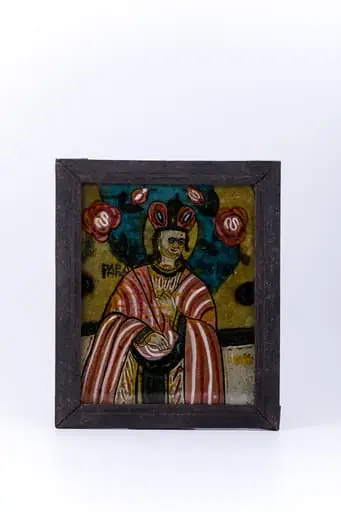 Sfânta Mare Cuvioasă Parascheva de la Iași are crucea brun-neagră în mâna stângă, binecuvântând, și o ramură de finic verde, nuanța de brad în mâna dreaptă. Este îmbrăcată în veșmânt roșu vermillon-trandafiriu cu dungi albe, cu interiorul căptușit cu verde-mușchi de pădure și modele galbene. Sacosul este alb-crem cu danteluță, guleraș și dungi galbene. Sfânta Cuvioasă are părul negru lung, lăsat pe umeri, coroană roșie cu verde-brad și aureolă brun-bronzie. Fondul icoanei este cerul albastru cobalt în registrul superior-mijloc și un câmp crem-galben, ancadrator întregii compoziții. Întreaga compoziție iconografică este încadrată de un chenar decorativ fitomorf, format dintr-o ghirlandă de 2 ruje mari roșii vermillon, 2 boboci de măceș, cu frunze verzi. În registrul inferior este un spațiu crem-nisipiu, sable. Inscripția din româno-chirilică se traduce Paraschiva. Cromatica este armonioasă: roșu vermillon-trandafiriu, albastru cobalt-ceruleum, verde brad, mușchi de pădure, bej-crem, bronziu, galben-solar, negru, alb zinc. Icoana este din Nordul Transilvaniei, Nicula.
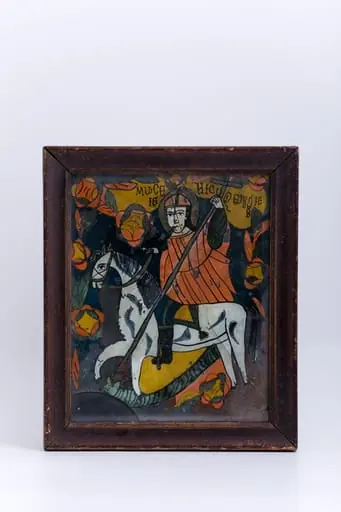 Sfântul Mare Mucenic Gheorghe este așezat călare pe un cal alb acoperit cu elemente de harnașament galbene și verzi și omorând balaurul cu lancea bronzie, pe care o ține în mâna stângă. Balaurul este pictat cu verde smarald-gri și kaki și gri cenușiu-antracit verzui și având corp de reptilă, cu coadă de diavol. Fondul icoanei este cerul albastru ultramarin-bleumarin și galben-chihlimbar în exterior și în cel inferior, în centrul icoanei ușor întrepătrundu-se toate culorile. Tunica Sfântului Mucenic Purtător de Biruință este roșie-vermillon-orange, având pantalonii albaștri-ultramarin. În registrul superior, icoana este încadrată de un chenar decorativ, format dintr-o ghirlandă de 8 ruje orang-galben. Cromatica este armonioasă: roșu vermillon, orange, albastru-regal, cobalt și ceruleum, ocru, galben chihlimbar, verde kaki și smarald, gri antracit, alb și negru. Inscripția din româno-chirilică se traduce Mucenicu Gheorghe. Icoana este din Nordul Transilvaniei, Nicula.
 Icoana reprezintă Prohodul Domnului. Punerea în mormânt a Mântitorului Iisus Hristos. Trupul Mântuitorului Iisus Hristos, fiind coborât de pe cruce, este învelit în țesătura giulgiului alb-verde-gri. Maica Domnului împreună cu Sfinții Iosif din Arimateea, Nicodim și două femei mironosițe aducătoare de mir țin în brațe trupul Mântuitorului. Compozițional se creează astfel o imagine concentrică de corabie, cu Crucea Răstignirii ca și catarg, corabia prefigurând Biserica. Giulgiul și îmbrățișarea celor apropiați, uniți întru dragoste și suferință, reprezintă axa orizontală, perpendiculară pe Cruce. Compoziția este echilibrată, simetrică și circulară. Maica Domnului este îmbrăcată în veșmânt roșu vermillon-corai, cu sacos alb-crem, cu dungulițe albastre. Veșmintele Sfinților și Mironosițelor sunt în combinație de roșu vermillon și verde-forest. Mironosițele sunt înveșmântate în galben-chihlimbar - culoarea luminii și a Mirului. Ele sunt vestitoarele Învierii Domnului Iisus Hristos. Fondul icoanei este cerul albastru regal și un spațiu de galben-chihlimbar-verde-maro, în registrul inferior. Întreaga tematică iconografică este încadrată de un chenar decorativ fitomorf, format dintr-o ghirlandă din 2 ruje mari roșii vermillon. Cromatica este armonioasă: roșu vermillon, albastru cobalt, regal, bleu-ciel alburiu, verde văratic-forest, galben chihlimbar, maro, alb și negru. Inscripția din româno-chirilică se traduce Îngroparea. Icoana este din Nordul Transilvaniei, Nicula.
 În centrul icoanei este Crucea, iar în dreapta crucii este Sfântul Împărat Constantin și în stânga este Împărăteasa Elena, mama sa. Deasupra fiecăruia este inscripționat numele. Veșmintele sfinților împărați sunt pictate cu roșu vermillon, kaki și verde mușchi de pădure. Poartă coroane împărătești și aureole de sfinți, mantiiile de împărați le au prinse la gât cu fibulă. Fondul este albastru regal, culoarea cerului. În registrul inferior este un câmp luminos de galben-ocru și o pardoseală într-un caroiaj alb-negru. Crucea este mare cât întreaga suprafață a icoanei, având în spate două aripi verzi din ramuri de măslin, finic, laur. Cromatica este armonioasă: roșu vermillon, albastru ceruleum, bleu-ciel, regal, brun, galben-ocru, albastru, verde mușchi de pădure, alb, negru. Inscripția din româno-chirilică se traduce Constantin Elena. Icoana reprezintă pictura de Nicula.
 Sfântul Mare Mucenic Gheorghe este așezat călare pe un cal alb-zinc cu pete gri, omorând balaurul gri-verde smarald, cu coadă lungă de reptilă, cu lancea, pe care o ține în amândouă mâinile. Fondul icoanei este cerul albastru ceruleum-cobalt, în registrul superior și câmpuri brune-cafenii, cu pete punctiforme bej-crem, în cel inferior, în centrul icoanei ușor întrepătrundu-se toate culorile. Mantia Sfântului Mucenic Purtător de Biruință este verde-smarald, având pantalonii albi-gri, cizme negre și cămașa-tunică de cavaler roșie orange-corai. Icoana este încadrată de un chenar decorativ fitomorf. În registrul superior-îndepărtat este chipul domniței salvate și păzite de Sfântul Gheorghe. Cromatica este armonioasă: orange-corai, albastru ceruleum și cobalt, verde brad forest, galben-chihlimbar, ocru, brun, crem, auriu, alb și negru. Inscripția din româno-chirilică se traduce Gheorghe. Icoana este din Nordul Transilvaniei, Nicula.
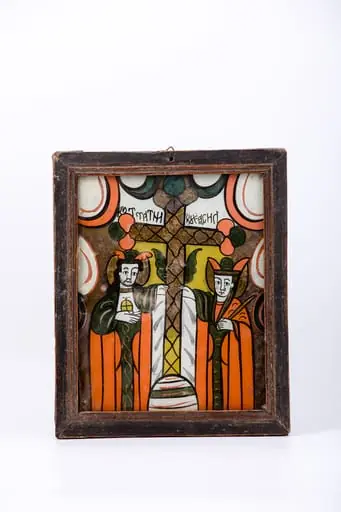 În centrul icoanei este Crucea galben-bronzie, împodobită decorativ cu linii șerpuitoare negre. În dreapta crucii este Sfântul Împărat Constantin și în stânga este Împărăteasa Elena, mama sa, cu numele lor deasupra inscripționate. În spatele Crucii este un spațiu galben izvorâtor de lumină. Crucea găsită este susținută cu bucurie de cei doi sfinți. Veșmintele Sfinților Constantin și Elena sunt într-o combinație de roșu vermillon și verde kaki-brun. Spațiul galben de lumină duce gândul la Crucea de lumină apărută pe cer In hoc signo vinces - prin acest semn vei învinge. Icoana este bogat ornamentată de culoare, lumină și detalii semnificative, elemente decorative geometrizante - romburi ondulatorii negre și brațele crucii au terminații trilobale roșii, verzi și gri. Fondul icoanei este alb și brun-bronziu. Întreaga compoziție este încadrată armonios de un chenar decorativ geometrizant, format din semisfere alb-roz. Cromatica este armonioasă și senină: roșu vermillon, roz, galben-chihlimbar, verde kaki, brun-bronziu, gri antracit, alb, negru. Icoana este de Nicula. Inscripția din româno-chirilică se traduce Sf Constantin Sf Elena.
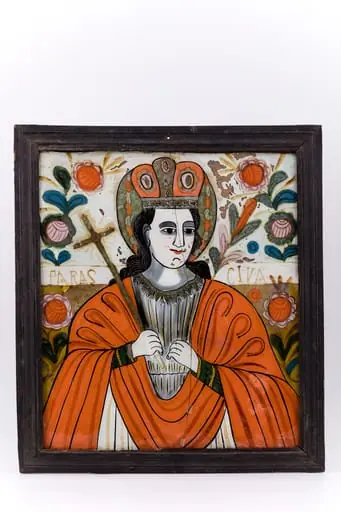 Sfânta Mare Cuvioasă Parascheva de la Iași are crucea în mâna dreaptă și ramură de finic verde brad, cu frunze roz și roșii în mâna stângă. Este îmbrăcată în veșmânt roșu vermillon, cu interiorul căptușit cu verde și galben, cu sacosul alb ivoriu, cu dungi crem-bej. Sacosul este alb ivoriu crem-bej, cu danteluță și guleraș galben. Sfânta Cuvioasă are părul negru lung, ondulat, lăsat pe umeri, coroană roșie și aureolă. Fondul icoanei este cerul albastru bleu-ciel-alburiu senin, în registrul superior și un câmp înalt luminos de grâu galben-copt, în registrul mediu și inferior, de culoare ocru-muștar. Întreaga compoziție iconografică este încadrată de un chenar decorativ fitomorf, format dintr-o ghirlandă de 6 ruje - trandafiri sălbatici și bujori roșii, cu petale și pistil alternativ colorate cu albastru cobalt, roz și roșu vermillon. Ghirlanda excelează prin delicatețea desenului și bogăția cromatică armonioasă. Inscripția din româno-chirilică se traduce Paraschiva. Cromatica este armonioasă: roșu vermillon, roz, albastru bleu-ciel, cobalt, verde forest, bej-crem, negru, galben chihlimbar, ocru, muștar, negru, alb. Icoana este din Nordul Transilvaniei, Nicula.
 Împlinindu-se trei ani de la Nașterea PreaCuratei Fecioare Maria, drepții ei părinți Ioachim și Ana, păstrându-și făgăduința, o aduc în dar Lui Dumnezeu pe cea născută. Împreună cu rudeniile din Nazaret și cu cetele de fecioare tinere, cu făclii aprinse, părinții au dat-o în Biserică în Ierusalim, pe Prunca Maria arhiereului Zaharia, care a dus-o în Sfânta Sfintelor. PreaCurata Fecioara Maria Prunca este înveșmântată în roșu și este micuță de trei anișori, cu trăsături mature de înțelepciune duhovnicească. Veșmintele Sfinților Părinți sunt albastre și roșii, ocru și stacojii. Maica Domnului Prunca Maria este ținută de mânuță de Sfinții Părinți Ioachim și Ana. Fondul este albastru regal în interior, galben-luminos pe margini și alb, exterior, cele trei straturi fiind dispuse concentric. Inscripția din româno-chirilică se traduce Sf Maria. Întreaga compoziție este armonizată și prin încadrarea în chenarul decorativ fitomorf, format din ghirlanda de 7 ruje - trandafiri roșii. În spatele Mariei este o floare, care amintește de Sfântul Arhanghel Gavriil, aducător de BuneleVestiri. Cromatica este armonioasă: roșu vermillon, albastru regal și bleu-ciel, cobalt, galben-chihlimbar, ocru, alb, negru.
 Sfântul Mare Ierarh Nicolae Făcătorul de minuni este redat central, așezat pe tron arhieresc, ținând în mâna stângă Sfânta Evanghelie deschisă și binecuvântează cu mâna dreaptă. Veșmintele arhierești liturgice ale sfântului ierarh sunt într-o alternanță cromatică de roșu vermillon-verde-ocru și alb și negru. Epitrahilul, patrafirul este verde, cu patru cruci pe el, sacosul roșu vermillon. Poartă mithră și are aureolă. În registrul inferior în colțul din stânga Sfântului Nicolae este tatăl celor trei fete, salvate de sărăcie și desfrânare, îngenuncheat, mulțumind prin ajutor. În colțul din dreapta Sfântului sunt cele trei fete cu coronițe pe cap, coronițele simbolizând atât bogăția materialnică, cât și cumințenia și curățenia sufletească. În registrul superior, dreapta sfântului, este Mântuitorul Dumnezeu-Fiul binecuvântând și în partea stângă este Maica Domnului ocrotind. Inscripția din româno-chirilică se traduce Sf Nicolae ICXC MP Iisus Hristos Maica Domnului. Cromatica este specifică Țării Oltului: roșu vermillon, verde de China, galben chihlimbar, ocru, albastru ceruleum, alb, negru.
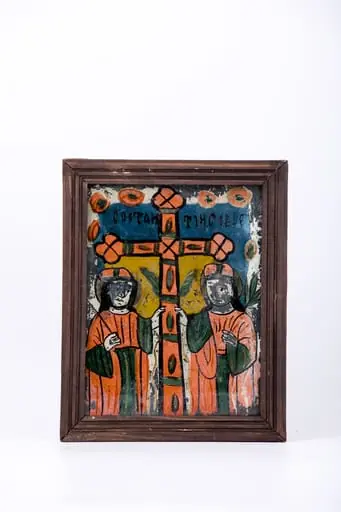 În centrul icoanei este Crucea pictată cu roșu vermillon și ornamentată cu 7 elemente ovoidale gri antracit și brațele au terminații trilobate. În dreapta crucii este Sfântul Împărat Constantin, și în stânga este Împărăteasa Elena, mama sa. Deasupra fiecăruia este inscripționat numele. În spatele Crucii, lipit de cruce, sunt două aripi ca de înger, stilizate sub formă de elemente vegetale. Veșmintele Sfinților Constantin și Elena sunt într-o combinație de roșu vermillon și gri antracit. Spațiul galben de lumină din spatele crucii duce gândul la Crucea de lumină apărută pe cer In hoc signo vinces - prin acest semn vei învinge. Icoana este bogat ornamentată de culoare, lumină și detalii semnificative, elemente decorative geometrizante și fitomorfe. Fondul icoanei este cerul de noapte, albastru ultramarin bleumarin întunecat. Întreaga compoziție este încadrată armonios de un chenar decorativ fitomorf-geometrizant, format din ruje roșii. Cromatica este armonioasă și bogată: roșu vermillon, galben-chihlimbar, albastru ultramarin bleumarin, gri antracit, alb, negru. Icoana este de Nicula. Inscripția din româno-chirilică se traduce Constantin Elena. Icoana este deteriorată, având absențe cromatice.
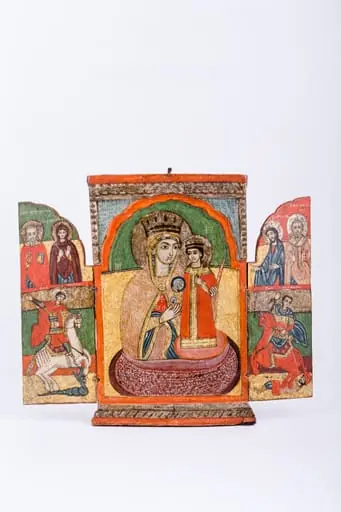 Icoana este un triptic - ansamblu de trei panouri pictate, unite prin conținut tematic iconografic comun și prin balamalele, prin care fețele laterale se închid de cea centrală. Tripticul este asemenea unei cărți sau ferestre, deschise-închise. Având stabilitate icoana centrală, tripticul poate avea valoarea de altar zburător. Tema centrală, care dă și titlul întregului ansamblu este Maica Domnului ține în brațe Pruncul Iisus Hristos, care Binecuvântează cu mâna dreaptă și ține globul pământesc cu crucea. Mântuitorul stă în picioare pe genunchii Maicii Domnului. Maica Domnului este înveșmântată în mantie cu maforion gălbui-crem-bej cu interiorul verde-roșu și ciupag auriu, are coroană și aureolă. Pruncul Iisus Hristos este înveșmântat în roșu sângeriu, cu bordură dantelată aurie, cu aureolă. Fondul icoanei este galben, în registrul inferior și verde în registrul superior. Icoana este încadrată de un chenar orange, portocaliu și un chenar crestat, basorelief, motivul funiei, de culoarea naturală a lemnului. În tematica fețelor laterale sunt reprezentați Sfântul Mare Mucenic Gheorghe purtător de biruință, Sfântul Mare Mucenic Dimitrie izvorâtor de mir, Sfânta Mare Cuvioasă Parascheva, Sfântul Ioan Botezătorul și doi sfinți ierarhi. Ușițe tripticului închizânduse, se realizează o imagine boltită, asemenea unor uși de biserică, pe care este inscripția în româno-chirilică: IC XC NIKA Iisus Hristos Biruiește! Cromatică: roșu vermillon, roșu-portocaliu, galben, verde, acajou, stacojiu, brun, bej,olive, auriu, negru. Inscripția pe icoana centrală, din româno-chirilică se traduce MP IC XC Maica Domnului Iisus Hristos.
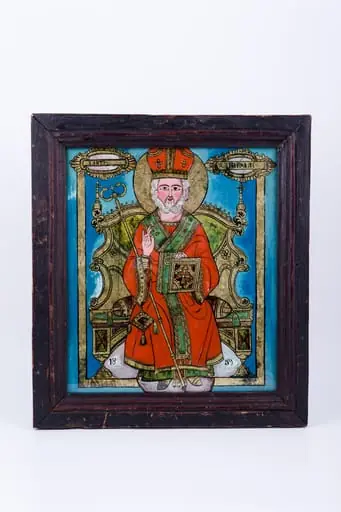 Sfântul Mare Ierarh Nicolae Făcătorul de minuni este redat central, așezat fiind pe un tron arhieresc, ținând în mâna stângă Sfânta Evanghelie închisă și binecuvântează cu mâna dreaptă. Veșmintele arhierești liturgice ale sfântului ierarh sunt într-o alternanță cromatică de roșu vermillon și verde spanac-avocado, kaki și galben-auriu. Epitrahilul, patrafirul este verde, cu patru cruci pe el, sacosul roșu, cu bordură galben-aurie. Poartă mithră și are aureolă. Ține în mâna stângă Sfânta Evanghelie închisă și binecuvântează. Întreaga tematică iconografică este încadrată de un chenar liniar auriu, cu un fond al icoanei albastru-gri. Inscripția din româno-chirilică se traduce Sf Nicolae. Icoana are o cromatică armonioasă și vie-luminoasă: roșu vermillon, roz, verde spanac-avocado, verde kaki, galben-auriu, alb, negru. Icoana este de Țara Făgărașului, este datată 1859 și este atribuită lui Savu Moga.
 În centrul icoanei este Crucea galbenă, cu terminațiile brațelor trilobate pictate cu roșu-alb-gri, iar în dreapta crucii este Sfântul Împărat Constantin, și în stânga este Împărăteasa Elena, mama sa. În spatele Crucii, este cerul albastru regal, încadrat de o ghirlandă de 4 ruje. Crucea găsită este susținută cu bucurie de cei doi sfinți. Veșmintele Sfinților Constantin și Elena sunt într-o combinație de roșu vermillon, gri antracit. Fondul icoanei este cerul albastru-cobalt, în registrul superior, iar în registrul inferior, este un câmp de galben luminos. În registrul superior, este o boltă-cupolă-arcadă albă luminoasă. Cromatica este armonioasă: roșu vermillon, galben-ocru, albastru regal, gri antracit, alb, negru. Icoana este de Nicula. Inscripția din româno-chirilică se traduce Constantin cu Elena. Postamentul Crucii este realizat printr-un caroiaj alb-negru.
 Sfântul Mare Ierarh Grigorie Cuvântătorul de Dumnezeu, sau Sfântul Grigorie Teologul sau de Nazianz. Este unul din cei Trei Sfinți Ierarhi, alături de Sfântul Vasile cel Mare și Sfântul Ioan Gură-de-Aur. Sfântul Grigorie are Sfânta Liturghie a Darurilor înainte Sfințite, care se săvârșește în timpul Postului Mare. Este îmbrăcat în veșminte liturgice arhierești, sacos roșu vermillon, epitrahil verde, nuanță de spanac-avocado, cu patru cruci. Poartă mithră și aureolă. Ține în mâna stângă Sfânta Evanghelie deschisă și binecuvintează cu mâna dreaptă. Fondul este albastru ceruleum cu stele albe. Icoana este de Țara Oltului. Cromatica este armonioasă: roșu vermillon, verde spanac-avocado, albastru ceruleum, nergu, alb. Inscripția din româno-chirilică se traduce Sf Grigorie.
 Maica Domnului ține în brațe Pruncul Iisus Hristos. Maica Domnului este înveșmântată în mantie cu maforion roșu vermillon și interiorul căputușit cu galben, bronz, și decorat cu multe striații albe. Mantia este foarte acoperitoare, mâinile Maicii Domnului fiind ascunse sub veșmânt. Pruncul Iisus Hristos este ținut în veșmântul maternității. Icoana este pictată după modelul Maicii Domnului Sporirea minții - icoană rusească, făcătoare de minuni. În locul îngerilor, lateral stânga-dreapta sunt flori, simetrice, pe câmpuri paralele, alternativ-cromatizate cu brun, gri și galben. Fondul icoanei este albastru ultramarin bleumarin întunecat, cu un chenar decorativ geometrizant, care conține și linia albă șerpuitoare. Cromatica este armonioasă și semnificativă: roșu vermillon, galben-chihlimbar, gri, ocru, brun, bej, abastru ultramarin bleumarin, alb, negru. Inscripția din româno-chirilică se traduce Sf Maică Maria. Icoana este de Nicula.
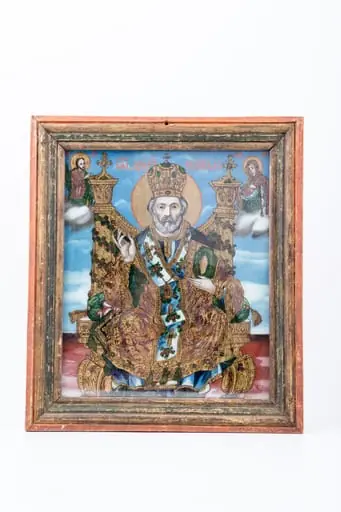 Sfântul Mare Ierarh Nicolae Făcătorul de minuni este redat central, pe un tron arhiresc, ținând în mâna stângă Sfânta Evanghelie închisă și binecuvântează cu mâna dreaptă. Veșmintele arhierești liturgice ale sfântului ierarh sunt într-o alternanță cromatică de brun, bronziu, verde-albastru-ocru, absint, smarald și alb și negru. Epitrahilul, patrafirul este albastru-verde, turcoaz-smarald cu opt cruci pe el, sacosul brun-bronziu. Poartă mithră și are aureolă. Tronul este bogat ornamentat cu detalii de elemente arhitectonice, reprezentând simbolic Împărăția Cerurilor. Este pictat tronul asemenea unui munte, supradimensionat. În registrul superior, sunt Mântuitorul Iisus Hristos în colțul din dreapta sfântului ierarh și Maica Domnului în colțul din stânga Sfântului Nicolae, din ambele părți primind binecuvântare și ocrotire. Fondul este deosebit, Cerul ca o mare nemărginită, un albastru turcoaz-smarald ca de ape vălurite. Inscripția din româno-chirilică se traduce IC XC Iisus Hristos Sfântul Nicolae MP Maica Domnului. Rama este bicromă și reliefată: brun cafeniu și roșu acajou.
 Icoana este împărțită în două ferestre: Mântuitorul Iisus Hristos Pantocrator Binecuvântând cu mâna dreaptă și având în mâna stângă globul pământesc cu cruce, asemenea unui chivot și în cea de-a doua parte este Sfântul Mare Ierarh Nicolae făcător de minuni, Binecuvântând cu mâna dreaptă și ținând în mâna stângă Sfânta Scriptură închisă. Mântuitorul și Sfântul Ierarh sunt îmbrăcați în veșminte asemănătoare: sacos verde și felon-mantie-omofor gri-petrol. Sfântul Nicolae este după Chipul și Asemănarea Mântuitorului Iisus Hristos. Chipurile sunt expresive și trăsăturile fețelor au finețea privirilor pătrunzătoare. Cromatica, specifică Văi Sebeșului, este discretă și armonios-austeră: verde, kaki, gri, brun, petrol, acajou, brun, negru, alb. Icoana este de Laz, Valea Sebeșului. Inscripția din româno-chirilică se traduce IC XC Iisus Hristos Sf Nicolae.
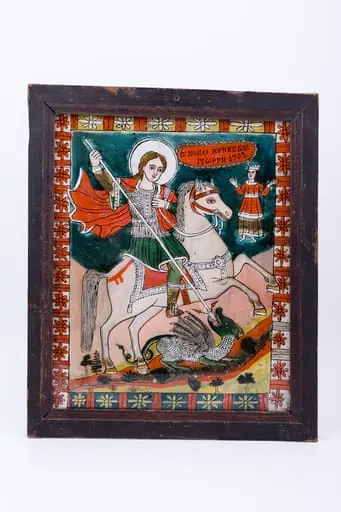 Sfântul Mare Mucenic Gheorghe este așezat călare pe un cal alb, omorând balaurul brun cu lancea, pe care o ține în amândouă mâinile. Balaurul este pictat cu brun-nisipiu, având solzi și coarne. În partea stângă a Sfântului Gheorghe este pictată domnița salvată și ocrotită de marele mucenic. Fondul este turcoaz, în registrul superior și roz- verde-ocru în cel inferior, în centrul icoanei ușor întrepătrundu-se toate culorile. Mantia Sfântului Mucenic Purtător de Biruință este roșie, având pantalonii albi și cămașa de zale de cavaler gri. Cromatica este armonioasă; roșu vermillon, roz, turcoaz, ocru, galben, alb și negru. Inscripția din româno-chirilică se traduce Sf Mare Mucenic Gheorghe. Icoana este rafinată prin acuratețea desenului, compoziția echilibrată și armonia cromatică, Icoana este datată 1902. Icoana este pictată de Matei Țimforea, din Cârțișoara, Țara Făgărașului.
 În centrul icoanei este Mântuitorul Iisus Hristos binecuvântând mâncarea, la masă, alături de 4 ucenici și apostoli, din cei 12. Cu mâna dreaptă Mântuitorul Iisus Hristos ține Pâinea și Binecuvântează cina și pe ucenici. Este Timpul Euharistiei! Pe masă sunt așezate Potirul, pâinea, tacâmuri și farfurioare gri, pe o față de masă albastră ceruleum-regal cu marginile verzi-smarald, într-o expunere de arc de cerc, asemenea unui curcubeu de lumină. Cina este Cerul - prefigurarea Împărăției Cerurilor. Personajele au chipurile expresive, veșmintele personajelor și faldurile feței de masă au volume și drapaje. Veșmintele sunt pictate într-o alternanță cromatică de roșu vermillon, verde-brad închis înspre gri-antracit. Mântuitorul Iisus Hristos este înveșmântat în galben-chihlimbar, hainele din lumina harică a Învierii Domnului. Fondul icoanei este cerul albastru bleu-ciel-ceruleum, în registrul superior și galben-chihlimbar, în registrul inferior. În registrul superior, pe cerul albastru, icoana este încadrată de un chenar decorativ fitomorf, format dintr-o ghirlandă din 3 ruje mari roșii, cu frunze verzi smarald. Ghirlanda este armonios dispusă în paralel cu arcul de cerc al mesei cu fața de masă albastră. Cromatica este armonioasă, vie, luminoasă: roșu vermillon, verde smarald-brad, albastru bleu-ciel, ceruleum, galben chihlimbar, gri antracit, auriu, alb, negru. Inscripția din româno-chirilică se traduce Cinina de T. Icoana este din Nordul Transilvaniei, Nicula.
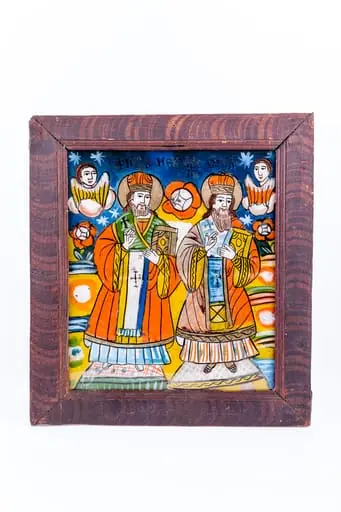 Sfinții Ierarhi Nicolae făcătorul de minuni și Vasile cel Mare sunt reprezentați împreună, binecuvântând cu mâna dreaptă și ținând în mâna stângă Sfânta Evanghelie. Sunt îmbrăcați în veșmânt-sacos și cu felon roșu vermillon și epitrahil albastru, verde, galben-ocru. Împreună slujesc și săvârșesc Sfânta Liturghie. În registrul îndepărtat superior, este pictat cerul albastru cu stele albe și ruje mari roșii. În registrul superior, în colțurile din stânga și din dreapta, este câte un înger pe o mandorlă. Cromatica este armonioasă: roșu vermillon, verde, albastru, galben-ocru, alb. Sfinții arhierei poartă și mithră arhierească. Amândoi Sfinții Ierarhi au aureole aurii. Rama este pictată cu tușe negre pe maro-roșcat, alternanță de brunuri. Este o icoană specifică picturii de Țara Oltului, din centrul Șcheii Brașovului. Din inscripția româno-chirilică se traduce Sf Nicolae Sf Vasile. În registrul inferior, fondul este format din câmpuri alternative de galben, albastru și verde.
 Icoare a
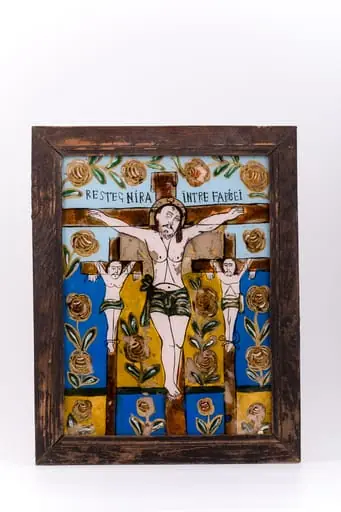 Mântuitorul Iisus Hristos, fiind răstignit pe Cruce, în prim plan, are în dreapta și în stânga pe cei doi tâlhari, numiți în icoană farisei. Mântuitorul Iisus Hristos are o țesătură verde-brad cu dungulițe crem-bej în jurul mijlocului și a coapselor. Are aureolă aurie. Cei doi tâlhari, răstigniți pe crucile lor, sunt redați în registrul inferior, plan îndepărtat. Fondul icoanei este format 9 casete geometric și simetric segmentate de brațele celor trei cruci. Fondul icoanei este format așadar din o casetă superioară din albastru bleu-ciel senin-alburiu, patru casete albastre regal și patru casete galbene-chihlimbar. Întreaga compoziție iconografică este încadrată de un chenar decorativ fitomorf, format din 17 ruje roșii, dispuse pretutindeni în imaginea icoanei. Cromatica este armonioasă: roșu vermillon, albastru ceruleum, regal, bleu-ciel, verde-brad, galben-chihlimbar, brun, crem, bej, alb, negru. Inscripția din româno-chirilică se traduce Restignirea între farisei. Icoana este din Nordul Transilvaniei, Nicula, având o tematică iconografică mai rar structurată compozițional astfel.
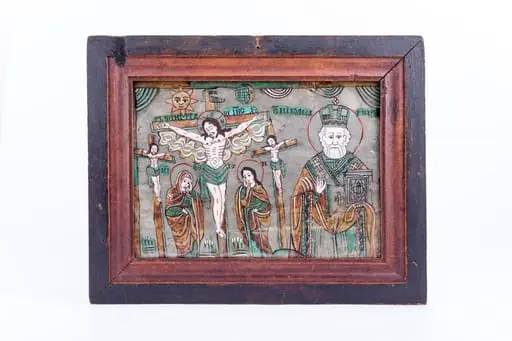 Mântuitorul Iisus Hristos, fiind răstignit pe Cruce, are în stânga pe ucenicul cel iubit, care a stat lipit de pieptul Învățătorului, la Cina cea de Taină, mai precis, pe Sfântul Apostol și Evanghelist Ioan Teologul, Evanghelistul Iubirii și în dreapta pe Maica Domnului Îndurerată, Jalnică și Plângătoare. Veșmintele Maicii Domnului sunt pământii-bronzii cu verde kaki. Sfântul Ioan este îmbrăcat în brun și kaki. Mântuitorul Iisus Hristos are o țesătură verde în jurul mijlocului și a coapselor și trupul îi este plin de răni sângerânde. În planul superior sunt simboluri astrale: soarele, deasupra Maicii Domnului, luna, deasupra Sfântului Ioan. În planul îndepărtat sun cei doi tâlhari răstigniți pe crucile lor. În cea de-a doua parte a icoanei este Sfântul Mare Ierarh Nicolae făcătorul de miuni și ocrotitor al copiilor. Ține în mâna stângă Sfânta Evanghelie închisă și cu dreapta Binecuvântează. Este unul dintre cei mai populari și iubiți sfinți, ocrotitor al caselor, familiilor și copiilor. Are barbă lungă, albă și mithră arhierească și aureolă. Este îmbrăcat în veșminte liturgice, de ierarh, sacos verde-brad, felon bronziu-kaki, epitrahil-patrafir gri-petrol cu patru cruci. Cromatica este armonioasă, dar foarte îngândurată și tristă: gri-petrol, verde-brad, kaki, brun închis, bronziu, roșu sângeriu, alb, negru. Inscripția din româno-chirilică se traduce Răstignirea Lui Iisus Hristos IC XC MP Maica Domnului Sf Nicolae. Icoana este de Laz, Valea Sebeșului, având două tematici iconografice.
 Icoana îi reprezintă împreună pe Sfântul Mare Ierarh Nicolae, Sfântul Ioan Botezătorul și Sfântul Mare Mucenic Teodor Tiron. Veșmintele Sfântului Nicolae sunt sacos gri și roșu vermillon, cu patrafir-epitrahil auriu cu verde, două bedernițe verzi, de o parte și de alta a veșmântului. În mijloc, este Sfântul Ioan Botezătorul și Înaintemergătorul Domnului Iisus Hristos îmbrăcat cu un himation alb-gri-negru, din păr de cămilă, și o mantie roșie, purtând crucea biruinței. Alături este Sfântul Mare Mucenic Teodor Tiron, îmbrăcat cu haine de oștean-militar, tunică și vestă de zale aurie, cu mantie roșie cu interiorul galben, de lumină. În mâna dreaptă are spada credinței. Fondul icoanei este albastru cobalt, în registrul superior și roz, în registrul inferior. Pe latura inferioară, icoana este încadrată de elemente florale - trei ruje mari, trandafiri roșii, cu frunze verzi. Inscripția din româno-chirilică se traduce Sf Nicolae Sf Ioan Botezătorul Sf Teodor Tiron. Icoana este de Țara Oltului.
 Trupul Mântuitorului Iisus Hristos, fiind coborât de pe cruce, este învelit în țesătura giulgiului alb. Maica Domnului împreună cu Sfinții Iosif din Arimateea, Nicodim și patru femei mironosițe aducătoare de mir țin în brațe trupul Mântuitorului. Compozițional se creează astfel o imagine concentrică de corabie, cu Crucea Răstignirii ca și catarg, corabia prefigurând Biserica. Giulgiul și îmbrățișarea celor apropiați, uniți întru dragoste și suferință, reprezintă axa orizontală perpendiculară pe Cruce. Icoana este o oglindă a Nașterii Mântuitorului-giulgiul fiind vechea înfășare in scutecele alb al Pruncului Iisus. În registrul inferior sunt doi îngeri îngenucheați, care susțin Trupul Mântuitorului, învelit în giulgiu. Lateral, stâng-dreapta, crucii sunt prezente soarele și luna, elemente astrale. Compoziția este echilibrată, simetrică și circulară. Cromatica, specifică autoarei Ana Deji, din Făgăraș, este alcătuită din roșu, albastru bleumari ceruleum, alb și negru. Stilul iconăriței Ana Deji se remarcă prin fondul icoanei cu un cer albastru cu stele albe și roșii, pensulațiiile albe și încadrarea tematicii narativ-iconografice într-un chenar din volutele unei draperii-drapaje.Trăsăturile personajelor sunt fin desenate, tristețea și durerea dezvăluindu-se. În inscripție se dezvăluie Mormântul Lui ICXC Iisus Hristos.
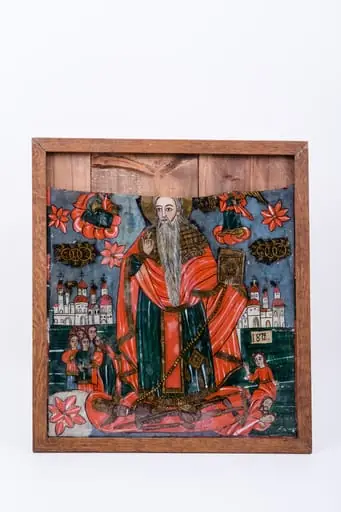 Sfântul Mare Mucenic Haralambie, făcător-de-minuni și vindecător de boli, este cel mai bătrân mucenic din cei prăznuiți de creștini. Este cunoscut ca și făcător-de-minuni, vindecător de boli și ocrotitor al caselor familiilor creștine. Central este pictat Sfântul, îmbrăcat cu veșminte liturgice, arhierești, cu sacos verde-turcoaz, mantie și epitrahil roșu vermillon, omofor cu broderie bronzie, cu mithră și aureolă. Cu mâna dreaptă binecuvântează și cu mâna stângă ține în lanț ciuma, reprezentată antropomorfic și zoomorfic - un animal cu solzi, labe cu gheare și cap de diavol, cu trăsături umane. Ciuma, simbolizând boala incurabilă și moartea, are coarne de diavol, fiind, totodată și păcatul, patima, aducătoare de moartea duhovnicească. Sfântul Haralambie este încadrat de elemente arhitectonice, ziduri de cetate, biserici, case, coloane cu boltă. Icoana se înscrie, ca și realizare artistică în Țara Făgărașului, fiind pictată de Matei Țimforea, datată 1872. În registrul inferior, sunt mai multe personaje: 8 în partea dreaptă a sfântului și 3 în stânga, ieșind vindecați, prin minunile sfântului, de sub puterea diabolică a bolii.Cromatica este armonioasă; roșu vermillon, bronziu, verde turcoaz, gri albăstrui. În registrul superior, este Dumnezeu-Tatăl binecuvântând și un înger punând cununa de mucenicie pe capul sfântului vindecător. Fondul este în registrul superior gri-violaceu-albăstrui, iar în cel inferior verde-turcoaz. Icoana este spartă în registrul superior.
 Icoana reprezintă Nașterea Mântuitorului Iisus Hristos. Pruncul Iisus, înfășat în scutece, are în dreapta pe Maica Domnului și pe Dreptul Iosif, logodnicul Fecioarei Maria, iar în stânga cei trei magi, venind cu daruri. În registrul superior este steaua cea călăuzitoare, aducătoare de vestea cea bună. Sunt prezente, deasupra Pruncului Iisus înfășat în iesle și două animale domestice din grajd. În registrul superior îndepărtat sunt elemente de arhitectură, spațializând astfel întreaga narațiune iconografică. Este o alternanță cromatică de roșu, alb, smarald-turcoaz și albastru bleu-ciel. Cerurile sunt deschise. Icoana este foarte bogată în narațiune. Registrele se întrepătrund armonios. Cromatica este luminoasă și delicat-rafinată: roșu-alb-albastru, legate de auriul aureolelor, stelei, chenarului decorativ. Se remarcă personalitatea iconarului Matei Țimforea, din Cârțișoara, Țara Făgărașului. Inscripția în chirilică se traduce Nașterea ICXC. Chenarul decorativ este geometrizant, cu romburi cromatic-alternative.
 Icoana este împărțită în 6 ferestre, de prăznicar, pe trei registre, două câte două: Sfinții Mari Ierarhi Spiridon Tămăduitor de boli, Vasile cel Mare, Grigorie de Dumnezeu Cuvântătorul, Ioan Gură-de-Aur, Nicolae făcător de minuni. Sfinții sunt încadrați de coloane și arcade de bolți de biserică. Au veșminte arhierești cu sacos, felon, mithră, aureolă și epitrahil-patrafir. Țin în mâna dreaptă Sfânta Scriptură închisă și Binecuvântează cu mâna stângă. Cromatica este armonioasă și vie, puternică, specifică Țării Oltului; roșu vermillon, albastru regal, bleu-ciel, verde spanac-avocado, galben-ocru, brun, bej, cafeniu, negru, alb, auriu. Inscripția din româno-chirilică se traduce Sf Spiridon Sf Vasile Sf Grigorie Sf Ioan Sf Nicolae. Icoana este de Șcheii Brașovului, Țara Oltului.
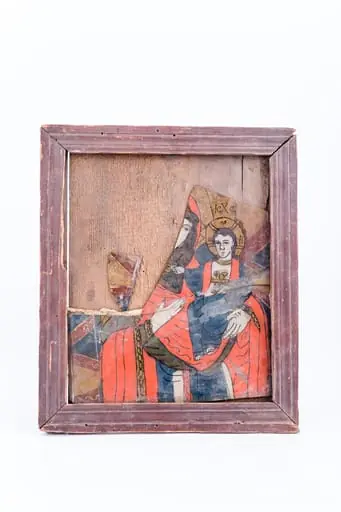 Maica Domnului ține în brațe Pruncul Iisus Hristos arătându-L ca fiind Calea, Adevărul și Viața. Este Maica Domnului Hodighitria. Maica Domnului este înveșmântată în mantie cu maforion roșu vermillon și interiorul căputușit cu albastru și sacos verde - nuanță de spanac-avocado. Pruncul Iisus Hristos este înveșmântat în albastru ceruleum, cu aureolă. Fondul icoanei este albastru cu un chenar decorativ geometrizant, format din romburi și triunghiuri albastru și ocru. Cromatică: roșu vermillon, verde, abastru, alb, ocru-brun-bronziu. Inscripția din româno-chirilică se traduce MP IC XC Maica Domnului Iisus Hristos. Icoana este de Țara Oltului. Este spartă.
 Sfânta Mare Cuvioasă Parascheva de la Iași are crucea în mâna dreaptă și un mănunchi de finic în mâna stângă. Este îmbrăcată în veșmânt roșu, cu interiorul căptușit cu verde absint și elemente decorative albe, cu manșete pictate cu verde și galben. Veșmântul roșu este acoperit de floricele micuțe albe și este prins la gât cu o fibulă rotundă. Peste maforionul roșu, sfânta cuvioasă are coroniță și aureolă. Fondul icoanei este împărțit în registrul superior cer albastru ultramarin foarte închis, cu stele albe, luminoase. În registrul mediu și inferior, icoana este segmentată pe fâșii paralele, de niveluri de spiritualitate, pornindu-se de jos, din nuanțe de roșu, verde și galben: jertfă, înduhovnicire, luminare. Chipul Sfintei Parascheva este lipsit de culoare și trăsături, fiind deteriorată. Cromatica este senină și vie: roșu vermillon, stacojiu, albastru ultramarin, verde absint, galben chihlimbar, gri, alb, brun, negru. Inscripția din româno-chirilică se traduce Parascheva.
 Maica Domnului este înveșmântată în maforiom roșu vermillon, cu interiorul verde-brad-smarald, cu aureolă aurie împodobită cu coroniță de trandafiri, din 4 ruje. Pruncul Iisus Hristos este înveșmântat în alb-nisipiu - verde brad și ocru și are, de asemenea, aureolă aurie, împodobită cu cunună de trandafiri, din 3 ruje. Pruncul Iisus Binecuvântează, arătând înspre Maica Domnului. Fondul icoanei este cerul albastru bleu-ciel senin, împodobit cu 2 elemente florale - ruje roșii cu frunze smarald. Cromatica este armonioasă: roșu vermillon, galben-ocru, crem, bej, albastru ceruleum și bleu-ciel, verde smarald, alb, negru. Icoana este de Nicula. Inscripția din româno-chirilică se traduce IC XC MP Iisus Hristos Maica Domnului.
 Icoana este o reprezentare narativă, scena centrală arătând fiind căderea în păcat a lui Adam și a Evei și izgonirea lor din Rai. Narațiunea este înscrisă într-un cerc, care este decorat cu o bordură verde. În centrul Grădinii Raiului este pomul cunoașterii, pe care se încolăcește viclenia și minciuna șarpelui. În jurul pomului cunoașterii sunt Adam și Eva îmbrăcați cu elemente de vegetație în jurul mijlocului și a coapselor. Inscripție din româno-chirilică se traduce Adam Eva. Raiul este pictat cu lumină galbenă, verdele Duhului Sfânt și rozul fercirii înflorite. Grădina Raiului este în centrul lumii întregi, în toată diversitatea ei. Fondul icoanei este alb, cu elemente decorative geometrizante floral-stilizate, reprezentând 6 ruje - bujori și trandafiri. Icoana este de Nicula. Cromatica este armonioasă: roșu vermillon, roz, verde brad, galben solar, brun, negru, alb.
 Icoana Schimbarea la Față reprezintă pentru teologia ortodoxă punctul-cheie în privința privirii și vederii Chipului Lui Dumnezeu. Compoziția iconografică Îl înfățișează pe Hristos stând nemișcat, învăluit în Slava și Pacea, izvorâte din El Însuși. Iisus Hristos este străjuit de Sfântul Mare Proroc Ilie Tesviteanul în stânga și de Profetul Moise, în dreapta. Mântuitorul Iisus Hristos între cei doi Moise și Ilie formează un cerc perfect, ce se află sub vălul de lumină necreată, Lumina Sfântului Duh. Veșmintele sunt realizate în combinație de roșu vermillon, verde kaki și fine dungi albe. În icoana aceasta, cele trei personaje din registrul inferior lipsesc, dar nu întâmplător sunt trei elemente vgetale, martore la Schimbarea la Față a Mântuitorului, care amintesc de Petru, Ioan și Iacob. Mandorlele de nouri albi rotunzi despart și unesc registrele. Mântuitorul Iisus Hristos, în nimbul auriu-bronziu, învăluit în Lumina necreeată, este deasupra vârfului Muntelui Tabor al Galileii. Cromatica este picturală și armonioasă: roșu vermillon, verde spanac-avocado, kaki, brun, bej, albastru ultramarin-gri, indigo, alb, negru. Inscripția din româno-chirilică se traduce Schimbarea la Față. Tematica iconografică abordată este foarte rară în pictura pe sticlă.
 Este o icoană de iconostas din Biserica din Cărpiniș, Roșia Montană, județul Alba. Sfântul Mare Ierarh Nicolae Făcătorul de minuni este redat central, în picioare, frontal, ținând în mâna stângă Sfânta Evanghelie închisă și binecuvântează cu mâna dreaptă. Veșmintele arhierești liturgice ale sfântului ierarh sunt într-o alternanță cromatică de acajou-stacojiu-crem-bej-alb. Epitrahilul, patrafirul este crem-auriu, cu patru cruci negre pe el, sacosul este crem ornamentat cu elemente decorative punctiflorale orange. Felonul de arhiereu este acajou-stacojiu, cu drapaje luminoase. Are părul ondulat și barba albă, aureola este largă și aurie-bronzie. Gestul Sfântului Nicolae de-a ține epitrahilul îndoit pe brațul stâng, sub Sfânta Evanghelie este de o frumusețe picturală deosebită. Fondul icoanei este orange-luminos, decorat cu câteva elemente astrale - steluțe albe. Icoana are un chenar decorativ dublu-paralel verde olive în interior și brun-acajou înspre exterior. Inscripția din româno-chirilică se traduce Sf Nicolae. Cromatica este armonioasă, senină, vie: roșu vermillon-stacojiu, verde gri-olive, orange luminos, brun, bej, bronziu, stacojiu, brun-acajou, alb, negru. Icoana este deosebită, fiind valoroasă atât prin desenul rafinat, cât și prin cromatica exemplară. Icoana este pictată de Popa Ivan Zugravul din Rășinari, Mărginimea Sibiului. Icoana este datată 1718, prima jumătate a secolului al XVIII-lea.
 Deisis este o tematică fundamentală din iconografia bizantină, reprezentându-L pe Domnul Iisus Hristos în ipostasul de Mare Judecător, fiind Împărat pe Tron, având în dreapta pe Maica Domnului și în stânga pe Sfântul Ioan Botezătorul și Înaintemergătorul Domnului. Această tematică este nucleul Judecății De Apoi. Iisus Hristos este înveșmântat în veșminte arhirești liturgice roșii și albastre, cu elemente decorative florale punctiforme albe. Are engolpion cu cruce la gât, bederniță, ține în mâna stângă Sfânta Evanghelie închisă și binecuvântează cu mâna dreaptă. Maica Domnului are veșmântul asemănător cu cel al Lui Dumnezeu Învățător, Împărat și Judecător. Sfântul Ioan Botezătorul are veșmântul verde. Tronul arhieresc este bogat ornamentat geometrizant, având detalii verzi și gabene, brune, ocru și bronzii. Fondul este auriu cu elemente astrale - stele roșii. Icoana este de Țara Făgărașului. Cromatica este armonioasă: roșu vermillon, albastru cobalt, galben-auriu-bronziu, verde spanac-avocado, alb, negru. Inscripția din româno-chirilică se traduce IC XC Iisus Hristos MP Maica Domnului Sf Ioan. Icoana este de o noblețe aparte, detaliile decorative și faldurile veșmintelor, expresivitatea trăsăturilor sunt impresionante.
 Icoana este segmentată în patru ferestre, icoană cruce, reprezentându-i pe Sfântul Mare Mucenic Gheorghe purtător de biruință, de două ori, pe diagonală, pe Sfântul Mare Ierarh Nicolae făcător de minuni și vindecător de boli, pe Sfânta Mare Cuvioasă Parascheva, de la Iași. Au veșminte roșii vermillon, epitrahilul Sfântului Nicolae este verde smarald, fondul Sfintei Parascheva este orange, fondul Sfântului Gheorghe din dreapta registrul inferior este verde. Întreaga tematică iconografică este încadrată de un chenar decorativ geometrizant, dantelat, din foiță aurie. Registrul superior are fondul albastru ultramarin, iar registrul inferior fondul este rozaliu pal. Interiorul crucii este un rotund verde-absint. Icoana excelează prin combinațiile cromatice luminoase și foarte vii. Inedită este și prezența dublă, în ipostasuri diferite, pe diagonală, a Sfântului Mare Mucenic Gheorghe. Icoana este de Țara Oltului. Are rama colorată în cafeniu și roșu, în interior. Inscripția din româno-chirilică se traduce SF Gheorghe Sf Nicolae Sf Parascheva Sf Gheorghe.
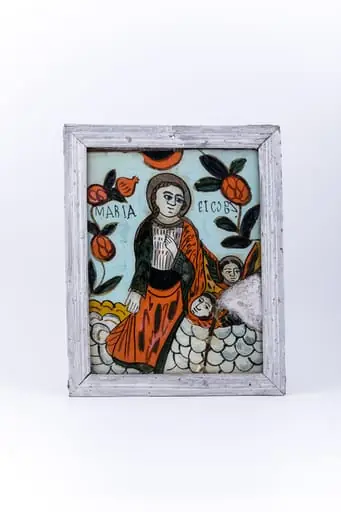 Icoana o reprezintă pe Sfânta Maria, înveșmântată cu mantie roșie vermillon, cu cămașă albă cu guleraș, cu sacos roșu-negru. În partea stângă a Sfintei sunt doi îngerași. Fondul icoanei este cerul albastru bleu-ciel senin, înspre alburiu. În registrul inferior, este un câmp vălurit alb-gri, cu spații luminoase galben-ocru. Întreaga compoziție iconografică, rară prin tematica abordată, este încadrată de un chenar decorativ fitomorf, format din 3 ruje roșii și două meceșe. Inscripția din româno-chirilică se traduce Sfânta Maria. Cromatica este armonioasă și luminos-pastelată: roșu vermillon, albastru bleu-ciel, galben-ocru, brun, gri, negru, alb. Icoana este din Nordul Transilvaniei, Gherla.
 Icoana reprezintă Nașterea Mântuitorului Iisus Hristos. Pruncul Iisus, nu este înfășat în scutece, este un copilaș mai măricel, care are în dreapta pe Maica Domnului și pe Dreptul Iosif, logodnicul Fecioarei Maria, iar în stânga cei trei magi, venind cu daruri. În registrul superior este steaua cea călăuzitoare, aducătoare de vestea cea bună. În registrul superior îndepărtat sunt un păstor cu o oiță, căreia îi cântă din fluier și doi îngeri care deschid Cerurile pentru a pătrunde steaua călăuzitoare și aducătoare de veste bună. Este o alternanță cromatică de gri, brun-bronziu, alb, petrol și albastru bleu-ciel. Cerurile sunt deschise. Registrele se întrepătrund armonios. Cromatica este armonioasă: gri, brun-bronziu, alb, petrol și albastru bleu-ciel. Inscripția din româno-chirilică se traduce Nașterea Lui Iisus Hristos ICXC. Icoana este pictată în Laz, Valea Sebeșului. Ceea ce este indedit și deosebit la această icoană este chenarul decorativ geometrizant format dintr-o linie șerpuită albă, împrumutată parcă din icoanele de Nicula, aici având semnificația idee de povestire, scriere, ninsoare.
 Icoana reprezintă Nașterea Mântuitorului Iisus Hristos. Pruncul Iisus, înfășat în scutece, are în dreapta pe Maica Domnului și pe Dreptul Iosif, logodnicul Fecioarei Maria. În registrul superior este steaua cea călăuzitoare, aducătoare de vestea cea bună. Sunt prezente, deasupra Pruncului Iisus înfășat în iesle și două animale domestice din grajd. În registrul superior îndepărtat sunt elemente de arhitectură, spațializând astfel întreaga narațiune iconografică, zidurile unui grajd sau case cu ferestruică și acoperiș. Este o alternanță cromatică de roșu vermillon, alb, auriu, verde smarald-turcoaz, albastru regal, brun maro. Cromatica este greu de descifrat, fiind mari pierderi de culoare: roșu vermillon-alb-brunuri, tonuri de verde, smarald-turcoaz, albastru, legate de auriul aureolelor, stelei. În pictura de Nicula cromatica este preponderent autumnală și foarte naturală. Inscripția în chirilică se traduce Nașterea ICXC Iisus Hristos.
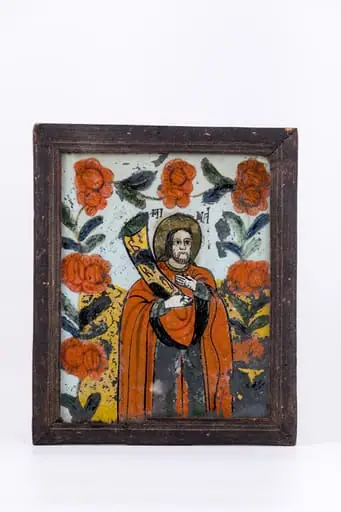 Icoana este foarte rară pentru că îl reprezintă pe Sfântul Mare Mucenic Mina, ocrotitorul celor păgubiți. Este îmbrăcat în veșminte preoțești, cu felon roșu vermillon și sacos gri cenușiu-antracit. Are în mâna dreaptă desfășurat un hrisov de cuvânt de înțelepciune și învățătură. Cu mâna stângă arată totodată înspre inima sa, cu închinăciune către toți și înspre cuvintele hrisovului. Fondul icoanei este împărțit în două registre complementare: cerul albastru bleu-ciel senin și câmpul galben luminos de grâu. Întreaga tematică iconografică este încadrată de un chenar decorativ fitomorf, format dintr-o ghirlandă de 7 ruje - trandafiri și bujori în floare. Icoana este din Nicula-Gherla, la interferența celor două centre de pictură. Inscripția din româno-chirilică se traduce Mina.
 Sfântul Arhanghel Mihail, unul dintre mai-marii voievozi ai oștilor-cerești, este reprezentat stând cu picioarele pe o mandorlă de nouri rotunzi albaștri bleu-ciel. Îngerul, Sfântul Arhanghel Mihail, este numit și slujitorul Legii. Este îmbrăcat în haine de oștean militar, cavaler, cu pantaloni albaștri-cobalt și tunică-vestă galbenă-albă, cu elemente decorative punctiforme și mantie roșie fluturândă. Are aripile de înger, pictate cu albastru și verde, poartă în mâna dreaptă spada-biruinței și cu mâna stângă ridică o torță arzând-luminândă. Mantia roșie este împodobită armonios cu elemente florale minuțios realizate punctiform. Fondul icoanei este ocru-luminos, auriu-bronziu. Întreaga tematică iconografică este încadrată de un chenar deorativ geormetrizant, format din linii unduitoare, șerpuitoare, albe, împreunate în motivul lanțului. Cromatica armonioasă este alcătuită din: albastru cobalt, albastru bleu-ciel, roșu vermillon, ocru-auriu-bronziu, roz, gri, bej, brun, verde-brad, alb, roșu. Icoana este pictată de Popa Sandu din Iernuțeni. Icoana este datată 1806, fiind rară și deosebită din punct de vedere artistic, estetic, pictural și teologic. Inscripția din româno-chirilică se traduce Arhanghel Mihail.
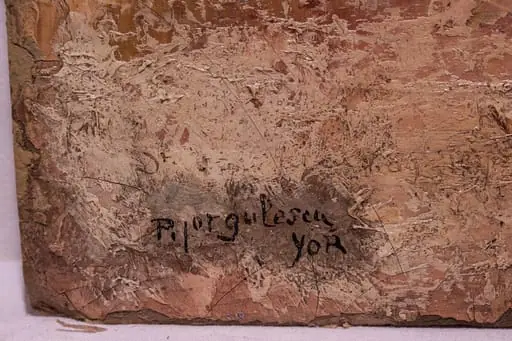 Peisaj cu barcă
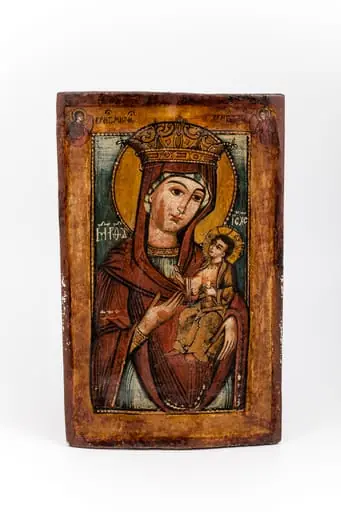 Maica Domnului ține în brațe Pruncul Iisus Hristos, care arată cu mâna dreaptă înspre Maica Domnului, prezentându-ne-o. Maica Domnului este înveșmântată în mantie cu maforion roșu-stacojiu, cu interiorul verde-olive și ciupag brodat auriu-bronziu. Veșmântul este de o eleganță deosebită. Pruncul Iisus Hristos este înveșmântat cu sacos și omofor alb-rozaliu, de asemenea, cu omofor brun-ocru, cu coroană și aureolă pe cap. Maica Domnului cu mâna dreaptă ni-L arată pe Mântuitorul Iisus Hristos ca fiind Calea. Adevărul și Viața, este tip Hodighitria. Fondul icoanei este verde-olive foarte deschis, până la transparent, verdele fiind culoarea Duhului Sfânt. Cromatică: roșu stacojiu, brun, acajou, brun-ocru, brun, bej, alb, verde-olive, negru. Icoana este încadrată și de un chenar decorativ-geometrizant-ramă brun-ocru. Inscripția din româno-chirilică se traduce MP IC XC Maica Domnului Iisus Hristos. Icoana este de iconostas. Desenul, cromatica, compoziția, fondul, încadrarea, trăsăturile chipurilor sunt deosebit de frumoase. Pe ramă pictată pe aceeași bucată de lemn, în colțurile superioare, stânga-dreapta, sunt Sfinții Arhangheli Mihail și Gavriil. Icoana se remarcă mult și prin supradimensionarea capului-chipului, maforiomului și aureolei Maicii Domnului, care parcă vor să iasă din încadrarea icoanei propriu-zise, accentuându-se ocrotirea și aplecare înspre noi, întreaga icoană fiind ca un acoperământ pogorât. Icoana aparține autorului Ivan Zugravul din Rășinari.
 Maica Domnului este înveșmântată în maforiom roșu vermillon-corai, cu interiorul negru-gri antracit, cu dungulițe subțiri roșii, cu sacosul-hitonul crem cu dungi paralele albastre bleu-ciel. Maica Domnului are aureola aurie senină, împodobită cu o ghirlandă din 5 trandafirași corai. Maica Domnului arată calea care este Mântuitorul Iisus Hristos - Calea, Adevărul și Viața. Pruncul Iisus Hristos este înveșmântat în alb-crem și galben-chihlimbar și are, de asemenea, aureolă aurie. Pruncul Iisus ține în mâna stângă un hrisov înfășurat și cu mâna dreaptă arată înspre Maica Domnului. Fondul icoanei este cerul albastru ceruleum. Întreaga tematică iconografică este încadrată de un chenar decorativ fitomorf, format dintr-o ghirlandă din 4 ruje duble, roșii vermillon-cărămizii. Inscripția din româno-chirilică se traduce MP IC XC Maica Domnului Iisus Hristos. Cromatica este armonioasă: roșu vermillon-corai, albastru bleu-ciel, galben-chihlimbar, verde vprativ-kaki, auriu-bronziu, alb, negru. Icoana este din Nordul Transilvaniei, Gherla.
 Maica Domnului este înveșmântată în cămașă femeiască tradițională, presupusă iie cu câmpuri verticale alternativ pictate cu roșu vermillon și verde, cu danteluță aurie la baza gâtului, cu maforion roșu vermillon, poartă coroniță de împărăteasă și aureolă. Maica Domnului are gâtul neacoperit cu veșmânt și pe sub maramă se observă părul șaten castaniu. Este mai puțin frecventă această atitudine vestimentară a Maicii Domnului, asemănătoare femeilor din vremea aceea. Icoana este de la Poiana Sibiului, pictată în manieră specifică Mărginimii Sibiului. Pruncul Iisus Hristos este înveșmântat în roșu vermillon și verde și auriu la gulerașul cămășii populare, cu coroană și aureolă. Pruncul Iisus o ține pe Maica Domnului cu mânuța pe după gât, într-o tandrețe mângâietoare, lipindu-și capetele, unul de celălalt. Este a atitudine a Maicii Domnului Eleusa. Fondul icoanei este cerul de culoarea albastru ultramarin. Întreaga icoană este încadrată de un chenar decorativ geometrizant și floral compact, un ușor baroc, de culoare brun-roșcat-verde. Cromatică: roșu vermillon, albastru, verde de China, auriu, ocru-brun-bronziu, alb, negru, roșu stacojiu, brun-roșcat. Icoana este aparte și prin compoziție și prin veșminte. Chipurile au o delicatețe și o tandrețe emoționante. Inscripția din româno-chirilică se traduce MP Maica Domnului IC XC Iisus Hristos.
 Icoana relatează Nașterea Maicii Domnului - Nașterea Precestei. Arhanghelul Gavriil, aducătorul BunelorVestiri, a binevestit lui Ioachim și Anei zămislirea Preasfintei Născătoare de Dumnezeu, zicând către maica cea neroditoare: "Ano, Ano, vei naște pe fiica cea prea binecuvântatăși se va chema numele ei Maria". În dreapta icoanei, Sfânta Ana o ține în brațe pe Prunca Maria, în partea opusă ei, la masă, este Sfântul Ioachim, cu părul lung și barba lungă încărunțită de nerodire îndelungată și multă așteptare. Între cei doi părinți este o fecioară, ajutor în casa Sfinților Părinți Ioachim și Ana, dar care poate fi interpretată și ca prezența Sfântului Arhanghel Gavriil, aducătorul Veștilor îmbucurătoare. Îngerul Gavriil are deobicei o atitudine serafică, mai efeminată, delicată. Veșmintele sunt din combinații cromatice de brun-cafeniu cu verde-absint-turcoaz și gri-petrol. Întreaga tematică iconografică este foarte intimă, în mijlocul unei mese de interior, arătându-se astfel curățenia sufletească și căldura căminului, în care s-a născut și crescut PreaCurata Fecioară Maria, cunoscută în popor Precista. Icoana este de Valea Sebeșului, din Laz. Are un chenar decorativ geometrizant, format din volutele și drapajele unei draperii, atât ascunzătoare, cât și dezvăluitoare. Cromatica este armonioasă și distinsă, asemenea tuturor icoanelor din Alba: verde absint, turcoaz, brun-cafeniu, gri petrol, alb, negru. Inscripția din româno-chirilică se traduce Nașterea Sfintei Preciste.
 Mântuitorul Iisus Hristos, fiind răstignit pe Cruce, are în dreapta pe ucenicul cel iubit, care a stat lipit de pieptul Învățătorului, la Cina cea de Taină, mai precis, pe Sfântul Apostol și Evanghelist Ioan Teologul, Evanghelistul Iubirii și în stânga pe Maica Domnului Îndurerată, Jalnică și Plângătoare. Veșmintele Maicii Domnului sunt gri-sable și mantie roșie. Sfântul Ioan este îmbrăcat în roșu și galben-ocru. Mântuitorul Iisus Hristos are o țesătură roșie în jurul mijlocului și a coapselor. În planul superior sunt simboluri astrale: soarele, deasupra Maicii Domnului, luna, deasupra Sfântului Ioan și câte un înger în fiecare colț din registrul superior. În registrul inferior, paralel cu Crucea sunt și lujere foarte înalte cu flori mari, elemente fitomorfe, care înlocuiesc prezența ucenicilor și martorilor la suferință. Cromatica este armonioasă: roșu vermillon, albastru ceruleum, verde-spanac-avocado, galben-ocru, alb, negru. Inscripția din româno-chirilică se traduce Răstignirea Lui Iisus Hristos IC XC Sf Ioan MP Maica Domnului.
 Cei Trei Sfinți Ierarhi Vasile cel Mare, Ioan Gură-de-Aur și Sfântul Grigorie Cuvântătorul de Dumnezeu slujesc și săvârșesc Sfânta Liturghie împreună. Sunt înveșmântați în veșminte liturgice: sacos, felon și epitrahil. Sfântul Vasile cel Mare binecuvântează cu crucea în mâna stângă și ține în mâna dreaptă Sfânta Evanghelie. Sfântul Ioan Gură-de-Aur și Sfântul Grigorie binecuvântează cu mâna stângă și ține în mâna dreaptă Sfânta Evanghelie. Fondul este văzduhul verde văratic, bogat ornamentat cu elemente astrale albe și roșii, în registrul superior, în registrul inferior este un câmp galben-chihlimbar. Inscripția din româno-chirilică se traduce Sf Vasile Sf Ioan Sf Grigorie. Cromatica este armonioasă și luminos-pastelată: roșu vermillon, roz, corai, gri, albastru ceruleum, cobalt, verde văratic, galben chihlimbar, alb, negru. Icoana este din Țara Oltului, Șcheii Brașovului.
 Maica Domnului ține în brațe Pruncul Iisus Hristos care are în mâna stângă un hrisov înfășurat și Binecuvântează cu mâna dreaptă. Maica Domnului arată calea cu mâna dreaptă, deci este Hodighitria. Maica Domnului este înveșmântată în mantie cu maforion roșu vermillon cu interiorul verde și sacos galben, are aureolă. Pruncul Iisus Hristos este înveșmântat în galben-bronziu și alb crem-ivoriu, are aureolă. Întreaga icoană este încadrată de un chenar decorativ geometrizant vișiniu-acajou-sracojiu cu linia albă șerpuită, specifică centrului de la Nicula. Fondul icoanei este cerul albastru ultramarin bleumarin. Cromatica este armonioasă, luminoasă, bizantină și foarte picturală: roșu vermillon, verde spanac-avocado, kaki, galben chihlimbar, albastru ultramarin bleumarin, vișiniu, stacojiu-acajou, bronziu, alb, negru. Icoana este de Nicula. Inscripția din româno-chirilică se traduce MP IC XC Maica Domnului Iisus Hristos.
 Prăz6.
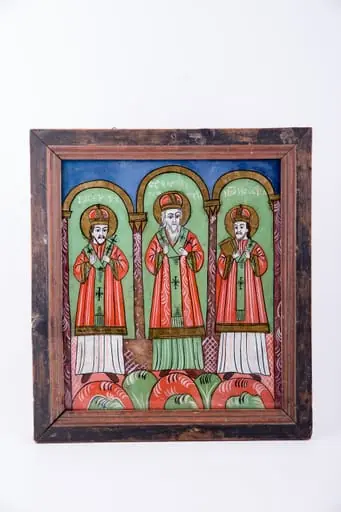 Cei Trei Sfinți Ierarhi Vasile cel Mare, Grigorie de Dumnezeu Cuvântătorul și Ioan Gură-de-Aur slujesc și săvârșesc Sfânta Liturghie împreună. Sunt înveșmântați în veșminte liturgice: sacos verde-alb-verde, felon roșu vermillon, epitrahil verde cu câte patru cruci. Sfântul Vasile cel Mare are Sfânta Evanghelie în mâna dreaptă. Sfântul Ierarh Grigorie de Dumnezeu Cuvântătorul Binecuvintează. Cei trei Sfinți Ierarhi stau cu picioarele pe perinițe rotunde de culori alternative: roșu, verde, alb. Fiecare sfânt ierarh este încadrat de două coloane și o boltă de biserică. Sunt prezente elemente arhitectură bisericească. Fondul registrului superior este albastru. Cromatica este luminoasă și armonioasă: verde, alb, roșu vermillon, roșu, albastru, negru. Este o icoană specifică picturii de Țara Făgărașului, cu un desen fin cu conturul negru și cromatica pastelată. După stilul picturii întregii compoziții, icoane poate să aparțină lui Matei Țimforea.
 Sfântul Mare Mucenic Haralambie, făcător-de-minuni și vindecător de boli, este cel mai bătrân mucenic din cei prăznuiți de creștini. Este cunoscut ca și făcător-de-minuni, vindecător de boli și ocrotitor al caselor familiilor creștine. Central este pictat Sfântul, îmbrăcat cu veșminte liturgice, arhierești, cu sacos roșu și epitrahil verde olive, cu patru cruci și aureolă. Cu mâna dreaptă binecuvântează și cu mâna stângă ține în lanț ciuma, reprezentată antropomorfic și zoomorfic - un animal și diavol, cu trăsături umane, având o seceră în labele cu gheare. Ciuma, simbolizând boala incurabilă și moartea, are coarne de diavol, fiind, totodată și păcatul, patima, aducătoare de moartea duhovnicească. În registrul inferior, în dreapta și în stânga sfântului ierarh, sunt elemente de arhitectură și fitomorfe, biserici, ziduri, case și copaci. În registrul superior, în colțurile din stânga și dreapta Sfântului, sunt Maica Domnului și Dumnezeu binecuvântând, fiind așezați pe mandorle de nouri albe. Cromatica este deosebită: roșu vermillon, albastru regal, verde olive, brun-bronziu, cafeniu, alb, negru. Icoana este de Țara Făgărașului, este datată 1893. Întreaga compoziție este foarte bine-organizată, cu o spațializare armonioasă, scenografie impresionantă. Icoana este pictată de Matei Țimforea.
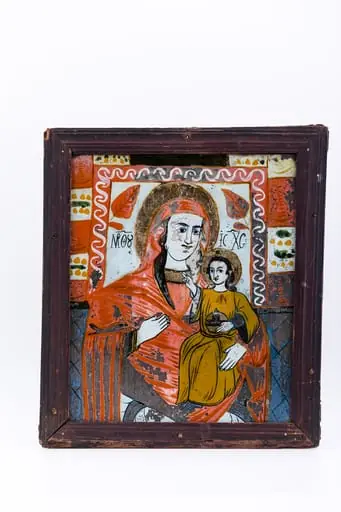 Maica Domnului este reprezentată ținând în brațe Pruncul Iisus Hristos care are în mâna stângă o sferă-globul pământesc și Binecuvântează cu mâna dreaptă. Maica Domnului arată calea cu mâna dreaptă, deci este Hodighitria. Maica Domnului este înveșmântată în mantie cu maforion roșu vermillon și sacos gri-negru, are aureolă. Pruncul Iisus Hristos este înveșmântat în verde kaki și auriu ocru-brun-bronziu, cu aureolă. Fondul icoanei este cerul de culoarea albastru bleu-ciel alburiu, senin, ca într-o fereastră adâncă. Cromatica este armonioasă și caldă: roșu vermillon, alb, albastru bleu-ciel, verde kaki, auriu, ocru-brun-bronziu. Inscripția din româno-chirilică se traduce MP IC XC Maica Domnului Iisus Hristos. Icoana este încadrată de un chenar decorativ geometrizant, format din segmente cromatice, alternativ expuse, cu elemente decorative punctiforme și linia albă șerpuită, specifică picturii de Nicula. Icoana este de Nicula, Crișana - Nordul Transilvaniei.
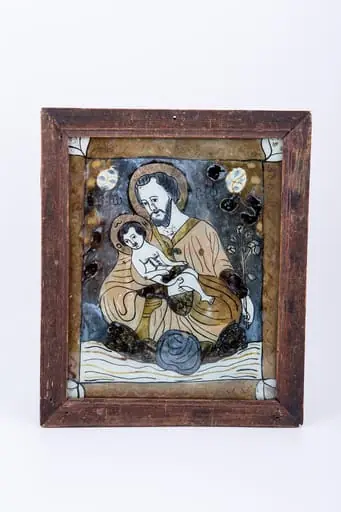 Icoana îl reprezintă pe Sfântul și Dreptul Iosif, logodnicul Sfintei Fecioare Maria, ținându-L pe Pruncul Iisus Hristos în brațe. Această tematică iconografică este mai rară, întâlnită mai mult în pictura apuseană, catolică. Sfântul Iosif este îmbrăcat în veșminte brune, bej, nisipii - culorile monahismului. Are aureolă de sfânt și în mâna stângă ține un lujer de crin înflorit, aducând aminte de BunaVestire, la care Maica Domnului a primit Crinul de la Îngerul Arhanghel Gavriil. O altă interpretare a elementului fitomorf-vegetal este vis-a-vis de ceea ce se spunea despre Sfântul Iosif, în vârstă logodnic, că era singurul dintre văduvi din Israel, al cărui baston înflorea, arătându-l vrednic de fericita Logodnă cu Sfânta Fecioară Maria. Pruncul Iisus Hristos este dezbrăcat ca un prunc și ține în mânuțe un hrisov înfășurat. Tematica este încadrată de un chenar decorativ geometrizant, format din elemente fitomorfe. Cromatica este armonioasă, dar săracă în nuanțe, predominând culoriile pământii: brun, maro, gri, negru, indigo, bej, kaki, alb. Albul Trupului pruncului Iisus Hristos se leagă armonios semantic, artistic și teologic cu Crinul Fecioriei, sau bastonul văduviei drepte mereu înflorit duhovnicește. Icoana este de Laz, Valea Sebeșului. Inscripția din româno-chirilică se traduce Iosif IC XC Iisus Hristos.
 Icoana reprezintă Sfânta Treime - Sfânta Troiță. Dumnezeu-Tatăl, Dumnezeu-Fiul sunt înveșmântați în veșminte roșii vermillon și verzi închise. Dumnezeu-Tatăl și Dumnezeu-Fiul sunt dimpreună cu Sfântul Duh, reprezentat prin porumbelul pogorât prin mănunchiul de raze solare. În registrul îndepărtat superior este cerul albastru, Dumnezeu-Fiul ține pe brațul drept Crucea, iar Dumnezeu-Tatăl are globul pământesc pe genunchi. Fondul icoanei este cerul bleu-ciel în registrul superior. În registrul inferior sunt mandorle de nouri cenușii. Cromatica este armonioasă, vie și luminoasă: roșu vermillon, ocru, bej, albastru cobalt și bleu-ciel, gri, brun-maro, alb, negru. Icoana este de Gherla. Inscripția din româno-chirilică se traduce Treime.
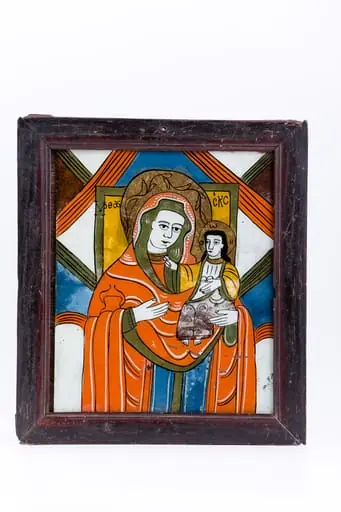 Maica Domnului îl ține în brațe pe Pruncul Iisus Hristos care Binecuvântează cu mâna dreaptă și arată înspre Maica Domnului. Maica Domnului arată calea cu mâna dreaptă, deci este Hodighitria. Maica Domnului este înveșmântată în mantie cu maforion roșu vermillon și sacos albastru, cu interiorul verde, are peste maforiom aureolă. Maforiomul este împodobit cu puncte mici albe. Pruncul Iisus Hristos este înveșmântat în gri și auriu ocru-brun-bronziu, cu interiorul căptușit cu verde și are aureolă. Fondul icoanei este format dintr-un caroiaj alb-albastru, cu marginile verzi și acajou-cărămizii. Compoziția geometrică, formată din romburi suprapuse, ne trimite gândul la nimbul de Slavă de Lumină de la Schimbarea la Față a Mântuitorului Iisus Hristos pe Muntele Tabor. Cromatica este armonioasă, tomnatică, specifică Niculei: roșu vermillon, alb, albastru cobalt, verde, kaki, auriu, ocru-brun-bronziu, brun, alb, negru. Inscripția din româno-chirilică se traduce MP IC XC Maica Domnului Iisus Hristos.
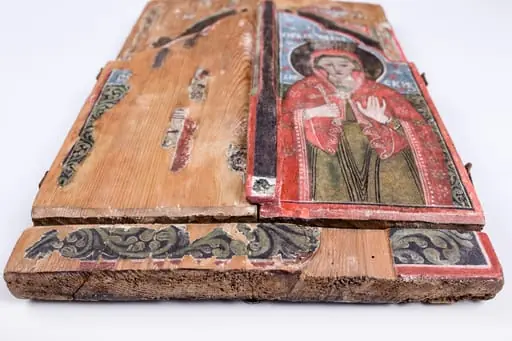 Tripticul de față are pe laterala din stângă o icoană, care o reprezintă pe Sfânta Mare Cuvioasă Parascheva din Epivat, Tracia, cu Sfintele Moaște la Iași. Are crucea în mâna dreaptă și o ramură de finic în mâna stângă. Este îmbrăcată în cămașă lungă albă - sacos, acoperit cu veșmânt roșu vermillon, cu interiorul căptușit cu verde și griuri. Maforiomul este închis la gât cu o broșă - fibulă. Peste maforionul roșu, sfânta cuvioasă are coroniță și aureolă. Fondul icoanei este cerul albastru de un ton cobalt, cu stele roșii. Icoana este foarte frumos realizată artistic și estetic, finețea nuanțelor cromatice și expresivitatea sfintei cuvioase remarcându-se într-un mod deosebit. Inscripția din româno-chrilică se traduce Sf Parascheva. Cromatica este armonioasă: roșu, albastru, verde, gri, negru, alb.
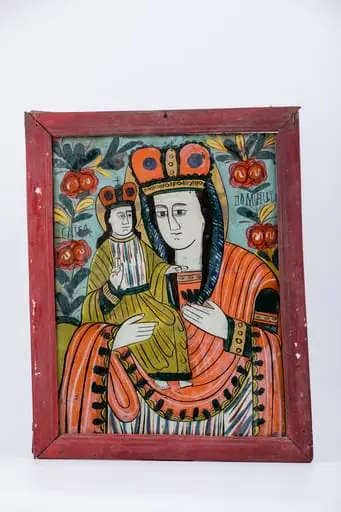 Maica Domnului este înveșmântată în maforiom roșu vermillon, cu interiorul albastru ceruleum cu dungulițe subțiri albe, cu franjuri verzi-galbene, cu aureolă aurie împodobită cu coroană orange de Împărăteasa Cerurilor. Sacos-ul Maicii Domnului este alb cu dungi roșii-albaste. Pruncul Iisus Hristos este înveșmântat în ocru-kaki-verde olive și are, de asemenea, coroană și aureolă aurie. Pruncul Iisus Binecuvântează cu mâna dreaptă, și arată înspre Maica Domnului cu mâna stângă. Fondul icoanei este albastru bleu-ciel senin, în registrul superior și galben-ocru, în registrul inferior. Întreaga tematică iconografică este încadrată de un chenar decorativ fitomorf, format dintr-o ghirlandă de bujori-trandafiri, 4 ruje roșii, mari, cu frunze verzi smarald și galbene. Cromatica este armonioasă: roșu vermillon, roz-trandafiriu, galben-ocru, crem, bej, verde brad, smarald, alb, negru. Inscripția din româno-chirilică se traduce Maica Domnului. Icoana este din Nicula.
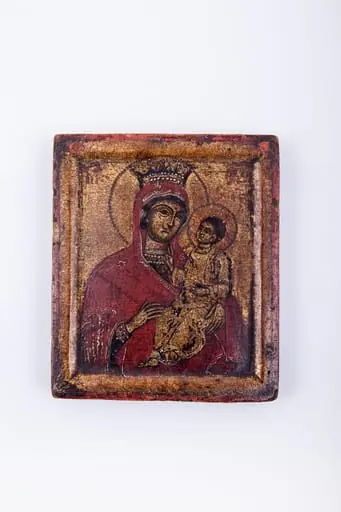 Maica Domnului ține în brațe Pruncul Iisus Hristos, înveșmântat în sacos bej-auriu. Pruncul arată cu mâna dreaptă înspre Maică arătându-ne-O și Maica arată către Prunc arătându-ni-L ca fiind calea, adevărul și viața, Este o icoană de tip Hodighitria. Maica Domnului este înveșmântată în mantie cu maforion roșu vermillon cu interiorul și ciupag negru, cu mărgețule albe, ca la coronița de Împărăteasă. Fondul icoanei este deschis-auriu-bronziu, luminos, dar foița aurie este deteriorată. Chipurile și trăsăturile fețelor sunt luminoase prin privire, atitudine și aureole. Cromatica este caldă și luminoasă: roșu-vermillon, galben-ocru, brun, bej, negru. Rama icoanei este realizată din aceeași bucată de lemn cu icoana însăși, este reliefat-sculpturată, basorelierf crestat, realizându-se o trecere ușoară de la icoană la ramă. Inscripția din româno-chirilică se traduce IC XC MP Iisus Hristos Maica Domnului.
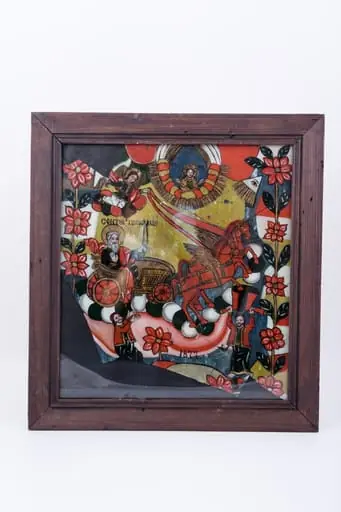 Icoana îl reprezintă pe Sfântul Mare Prooroc Ilie Tesviteanul, traversând Cerurile, în carul de foc, tras de doi cai roșii. Sfântul este îmbrăcat în straie brun-negre și mantie roșie și mână caii roșii cu aripi bronzii. Chipul Sfântului Ilie este unul ascetic, asemenea Sfântului Ioan Botezătorul. În registrul inferior sunt Sfântul Prooroc Elisei, ucenicul Sfântului Ilie, care prinde cojocul aruncat și un țăran plugar, care se ține de carul de foc al sfântului prooroc. Cele două registre paralele, cerul și pământul, sunt despărțite de un lanț din nouri albi-negrii, o mandorlă, care lasă Cerurile să se deschidă. Asemenea țăranului plugar, care ară pământul, așa și Sfântul Ilie Tesviteanul ară Cerurile cu carul de foc și biciul în mână. Cerurile albastru-întunecate, de apus de soare, au firicele roșiatice, iar câmpurile albastre au denivelări și movile roșiatice, astfel în registrul inferior, pământul este reprezentat pe straturi și benzi cromatice alternative de brun, kaki, roșu, albastru și alb. Întreaga narațiune este segmentată de lanțuri de nouri, mandorle mari sau mici, albe sau aurii. Inscripția din româno-chirilică se traduce Sfântul Prooroc Ilie. Compoziția este amplă, dezvoltată pe registre și relații între personaje. Compoziția este încadrată de un chenar fitomorf, format dintr-o ghirlandă de flori roșii, frunze negre. Cromatica este armonioasă: roșu vermillon, roz, albastru violaceu, gri, brun, cafeniu, verde kaki, negru, alb. Icoana aparține lui Matei Țimforea, Cârțișoara, Țara Făgărașului. Icoana este datată 1877.
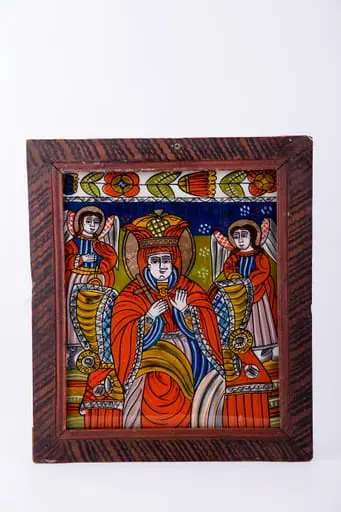 Sfânta Mare Cuvioasă Parascheva de la Iași este așezată pe tron împărătesc, având crucea în mâna dreaptă. Este îmbrăcată în veșmânt roșu vermillon, cu interiorul căptușit cu galben și albastru. Peste maforionul roșu, sfânta cuvioasă are coroniță și aureolă. În spatele tronului, stânga și dreapta, este câte un înger păzitor. În registrul superior este un segment de ghirlandă decorativă, cu flori și frunze. Fondul icoanei este împărțit în o treime de cer albastru și doua treimi vegetație de deal verde, lipite prin stele albe. Stelele sunt desenate asemenea unor floricele stilizate. Compoziția este elaborată și detaliile se întrepătrund armonios cu alternanța cromatică: roșu vermillon, galben, albastru, verde, alb. Este o icoană cu aer luminos, specific Țării Făgărașului. Inscripția în chirilică este pe albastrul cerului, în traducere Sfânta Paraschiva. Cromatica: albastru, roșu vermillon, galben, ocru, verde olive, alb, negru.
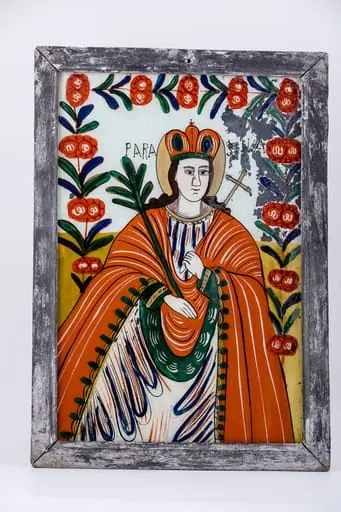 Sfânta Mare Cuvioasă Parascheva de la Iași are crucea brun-bronzie în mâna stângă, binecuvântând, și o ramură de finic, bogată în frunze, în mâna dreaptă. Este îmbrăcată în veșmânt roșu vermillon, cu interiorul căptușit cu gri și brun-bronziu, cu bordura de dantelă verde-galbenă. Sacosul este alb-zinc cu dungi roșii-albastre, dispuse în formă de aripi paralele, cu danteluță și guleraș gri-verzui. Sfânta Cuvioasă are părul negru lung, lăsat pe umeri, coroană roșie cu gri-verzui și aureolă luminoasă. Fondul icoanei este cerul albastru bleuciel, în registrul superior și un câmp luminos de galben-chilimbar, în registrul inferior. Întreaga compoziție iconografică este încadrată de un chenar decorativ fitomorf, format dintr-o ghirlandă formată din 12 ruje roșii, dispuse acoperitor asemenea unei arcade-bolți. Inscripția din româno-chirilică se traduce Paraschiva. Cromatica este armonioasă: roșu vermillon, orange, albastru cobalt și bleu-ciel, verde forest și smarald, bronziu, negru, alb zinc. Icoana este din Nordul Transilvaniei, Gherla.
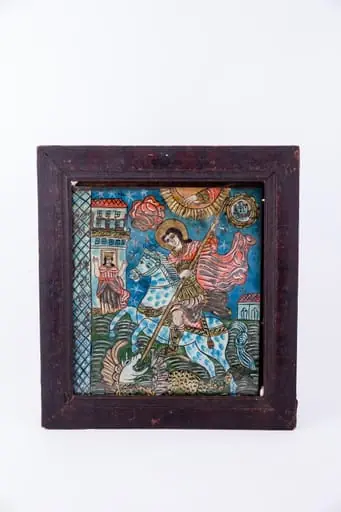 Sfân
Sfân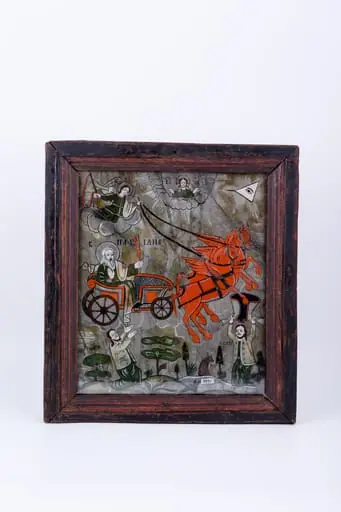 Icoana îl reprezintă pe Sfântul Mare Prooroc Ilie Tesviteanul, traversând Cerurile, în carul de foc, tras de doi cai roșii. Sfântul este îmbrăcat în straie brun-kaki și mantie brună-ocru și Îngerul din spate mână caii cu aripile roșii. Chipul Sfântului Ilie este unul ascetic, asemenea Sfântului Ioan Botezătorul. În registrul inferior sunt Sfântul Prooroc Elisei, ucenicul Sfântului Ilie, care prinde cojocul aruncat și un țăran plugar, care se ține de carul de foc al sfântului prooroc. Asemenea țăranului plugar, care ară pământul, așa și Sfântul Ilie Tesviteanul ară Cerurile cu carul de foc. În registrul superior este Dumnezeu-Tatăl, care binecuvântează și Îngerul care ține hățurile cailor. În colțul din dreapta este Ochiul Divin înscris în triunghiul Sfintei Treimi. Între registre există comunicare și interferență, atât semantică, cât și cromatică. Compoziția este amplă, dezvoltată pe registre și relații între personaje. Cromatica este armonioasă: roșu vermillon și sângeriu, verde kaki, verde mușchi-de-pădure, gri, nisipiu, ocru, bronziu, alb și negru. Inscripția din româno-chirilică se traduce IC XC Iisus Hristos Sf Proroc Ilie Elisei. Icoana aparține lui Savu Moga, din Arpașu de Sus, Țara Făgărașului. Icoana este datată 1859.
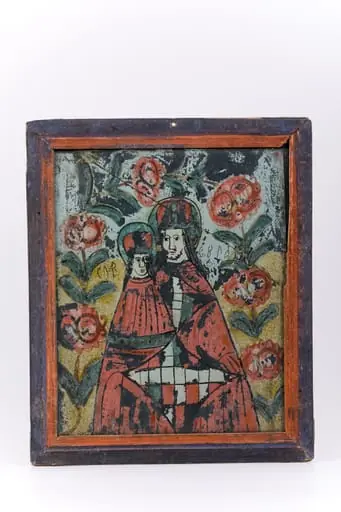 Maica Domnului este înveșmântată în maforiom roșu vermillon, cu mantia lungă, acoperitoare, strânsă în josul poalei, asemenea ca la arhierei și este împodobită cu un ornament dintr-un caroiaj alb-negru. Are mâinile ascunse, sub mantie și Pruncul Iisus Hristos este, de asemenea, învelit, ocrotit de mantia maforiomului. Pruncul Iisus Hristos este înveșmântat în roșu vermillon și gri antracit și are, de asemenea, aureolă aurie. Fondul icoanei este cerul albastru bleu-ciel alburiu, în registrul auperior. În registrul inferior, este un câmp luminos de grâu copt de culoarea galben-chihlimbar. Întreaga tematică iconografică este încadrată de un chenar decorativ fitomorf, format dintr-o ghirlandă de 6 ruje roșii, cu interiorul format dintr-o zăluță neagră. Inscripția din româno-chirilică se traduce MP IC XC Maica Domnului Iisus Hristos. Tematica este mai rară, fiind inspirată dintr-o icoană rusească Maica Domnului „Sporirea minții”. Cromatica este armonioasă: roșu vermillon, albastru bleu-ciel, galben chihlimbar, gri antracit, bronziu, alb, negru. Icoana este din Nordul Transilvaniei, Nicula.
 Icoana îl reprezintă pe Sfântul Mare Prooroc Ilie Tesviteanul, traversând Cerurile, în carul, tras de doi cai roșii, de foc. Sfântul este îmbrăcat în straie verzi și mantie roșie și mână caii. Chipul Sfântului Ilie este unul ascetic, asemenea Sfântului Ioan Botezătorul. În registrul inferior sunt Sfântul Prooroc Elisei, ucenicul Sfântului Ilie, care prinde cojocul aruncat și un țăran plugar, care ară pământul cu un plug tras de doi boi albi. Țăranul plugar este Adam. Cele două registre paralele, cerul și pământul, sunt despărțite de un lanț din nouri albi-verzi, o mandorlă, care lasă Cerurile să se deschidă. Asemenea țăranului plugar, care ară pământul, Sfântul Ilie Tesviteanul ară Cerurile cu carul de foc și biciul în mână. Între cele două registre există comunicare și interferență, atât semantică, cât și cromatică. Fondul este albastrul ultramarin al cerului înnourat de ploaie, dar totodată și bogat în ruje roșii. Compoziția este amplă, dezvoltată pe registre și relații între personaje. Cromatica este armonioasă: roșu vermillon, albastru ultramarin, gri, petrol, bronziu, bru, verde mușchi de pădure, verde olive, kaki și alb, negru. Inscripția din româno-chirilică se traduce Sf Ilie. Icoana este de Țara Oltului.
 Sfântul Mare Mucenic Haralambie, făcător-de-minuni și vindecător de boli, este cel mai bătrân mucenic din cei prăznuiți de creștini. Este cunoscut ca și făcător-de-minuni, vindecător de boli și ocrotitor al caselor familiilor creștine. Central este pictat Sfântul, îmbrăcat cu veșminte liturgice, arhierești, cu sacos verde kaki, felon brun, epitrahil orange, aureolă. Are barbă foarte lungă, fața palidă, ascetică și ochii blând-pătrunzători. În mâna stângă ține Sfânta Evanghelie închisă și cu aceeași mână ține în lanț ciuma, reprezentată antropomorfic - un schelet gri-cenușiu, antracit, cu coarne de diavol. Ciuma, simbolizând boala incurabilă și moartea, are coarne de diavol, fiind, totodată și păcatul, patima, aducătoare de moartea duhovnicească. Cu mâna dreaptă sfântul ierarh binecuvântează. Ciuma este călcată în picioare se Sfântul Haralambie, iar de sub scheletul antropomorfic-zoomorfic și diabolic, ies și fug trei oameni, salvați și vindecați de făcătorul de minuni și tămăduitorul de boli. În dreapta Sfântului sunt alte trei personaje care îi mulțumesc sfântului pentru ajutor. În registrul îndepărtat sunt elemente arhitectonice, cu o bogăție de detalii decorative. În registrul superior pe o mandorlă din nouri este Dumnezeu Binecuvântând și pe o altă mandorlă este Îngerul Arhanghel Gavriil așezând cununa de mucenicie pe capul Sfântului Haralambie. Fondul este cerul brun-gri. Întreaga compoziție iconografică este încadrată de un chenar decorativ geometrizant, pe laterale, ca două panglici late, cu ghirlande de flori mari, de culoare verde-gri-turcoaz. Inscripția din româno-chirilică se traduce IC XC Iisus Hristos Sfântul Mucenic Haralalmbie. Cromatica este frumoasă, deosebită și armonioasă: orange - roșu vermillon, verde spanac-avocado, verde kaki, gri, brun, bronziu, alb, negru. Icoana este datată 1875. Icoana este a lui Savu Moga, din Arpașu de Sus, Țara Făgărașului.
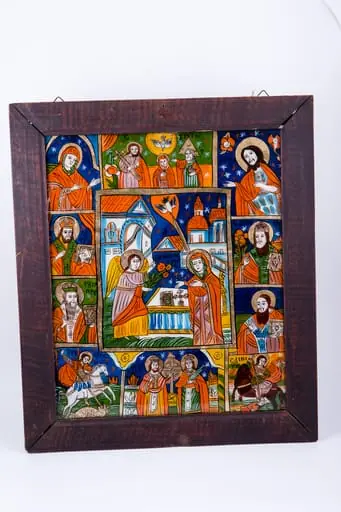 Icoaării
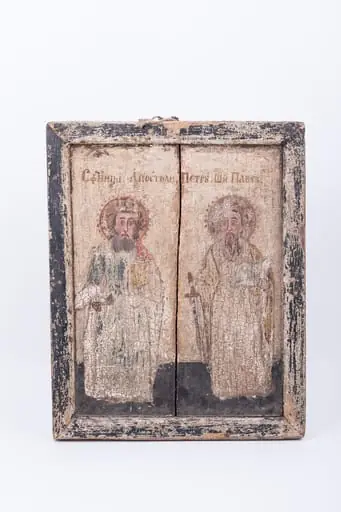 Icoana prăznicar, pictată pe lemn, are două fețe: Sfinții Apostoli Petru și Pavel și Sfinții Împărați Constantin și Elena. Sfântul Petru, înveșmântat în verde și roșu, are în mâna dreaptă cheile Împărăției Cerești și în mâna stângă Sfânta Evanghelie. Apostolul Pavel, este înveșmântat în roșu și galben, are sabia și spada Cuvântului. Prezentarea celor doi apostoli este una simetrică și echilibrat-compozițională. Chipurile sunt foarte expresive, cu trăsături fine. Pe cea de-a doua față a icoanei prăznicar, în centrul icoanei este Crucea, iar în stânga crucii este Sfântul Împărat Constantin și în dreapta este Împărăteasa Elena, mama sa. Cromatica este armonioasă: roșu vermillon, orange, verde, brun, galben-ocru, alb, negru. Inscripția din româno-chirilică se traduce Sfinții Apostoli Petru Pavel. Icoana este deteriorată, fisurată pe mijloc.
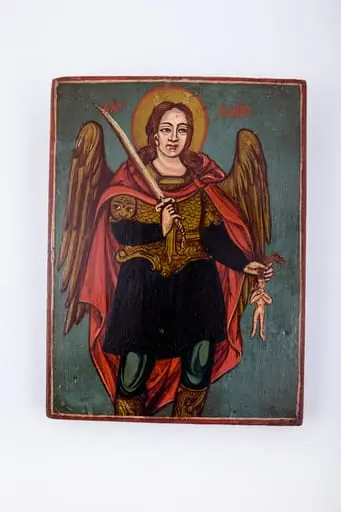 Sfântul Arhanghel Mihail, slujitorul legii, unul dintre mai-marilor voievozi ai cetelor cerești. Este îmbrăcat în cămașă-tunică neagră, cu vestă de zale aurie-bronzie, elemente decorative zoomorfice pe brațe, cu mantie roșie, pantaloni gri-verzui, cizme brune-ocru și are aripile brune-ocru deschise. În mâna dreaptă ține sabia-spadă și în mâna stângă ține de păr un omuleț gol, cu mâinile împreunate pe piept - adică un om care a trecut cu bine peste judecata faptelor și este salvat, pus în partea dreaptă a celor credincioși. Fondul este gri-verzui, olive, cu chenar decorativ geometrizant format dintr-o linie subțire roșie-vermillon. Cromatica este vie, puternică și armonioasă: roșu vermillon, olive, negru, brun, ocru, acajou. Inscripția din româno-chirilică se traduce: Sf Mihail.
 Maica Domnului este înveșmântată în cămașă femeiască tradițională, sacos roșu vermillon, cu interiorul și mânecile de culoare verde-văratic, de nuanță spanac-avocado, cu danteluță bronzie la baza gâtului, cu maforion roșu vermillon, cu aureolă. Maica Domnului are gâtul neacoperit cu veșmânt și pe sub maramă se observă părul șaten castaniu. Pruncul Iisus Hristos este înveșmântat în alb și verde kaki-lime-olive, cu aureolă. Pruncul Iisus arată cu mâna dreaptă înspre Maica Domnului, prezentându-ne-O, iar în mâna stângă ține un hrisov înfășurat. Maica Domnului arată înspre Pruncul Iisus Hristos cu mâna dreaptă, prezentându-ni-L ca fiind Mântuitorul Calea, Adevărul și Viața. Fondul icoanei este cerul de culoarea albastru ultramarin, în exterior, iar în interior este o fereastră de lumină galbenă. Întreaga icoană este încadrată de un chenar decorativ geometrizant roșu-acajou cu linia albă șerpuitoare, între cele două chenare paralele: albastru și galben. Cromatica este armonioasă: roșu vermillon, acajou, albastru cobalt, verde văratic, galben solar, brun, auriu, ocru-brun-bronziu, alb, negru. Inscripția din româno-chirilică se traduce MP IC XC Maica Domnului Iisus Hristos. Icoana este din Nicula.
 Dumnezeu-Fiul ține Crucea pe umărul drept, Dumnezeu-Tatăl are aureola triunghiulară, semn al Sfintei Treimi. Veșmintele sunt roșii vermillon cu albastru ultramarin. Deasupra este Sfântul Duh, sub forma porumbelului alb pogorât din Cerurile deschise, dintr-un soare roșu cu raze albastre, asemenea unei flori uriașe. Mandorla de nouri albi rotunzi este înlocuită, în această icoană, de soarele-floare, de unde se pogoară Sfântul Duh. În registrul superior, icoana este încadrată de un chenar decorativ format din elemente fitomorfe, ruje roșii cu frunze albastre bleumarin. În registrul inferior sunt mandorle de nouri rotunzi albi și albaștri bleuciel. Cromatica este armonioasă: roșu vermillon, albastru cobalt și bleumarin, bleu-ciel, ocru, gri, brun, bronziu, alb, negru. Este o icoană de Gherla, nuanțele de albastru sunt edificatoare. Ceea ce este atrăgător la această icoană este crochiul naiv de căsuță, desenată aproape ca de un copil, în centrul icoanei, asemenea unei chemări, deschideri și așteptări în Împărăția Cerurilor. Este o căsuță-fereastră, un petec de suflet luminos. Inscripția din româno-chirilică se traduce Sfânta Treime.
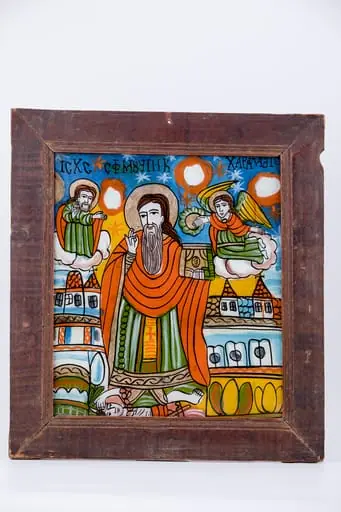 Sfântul Mare Mucenic Haralambie, făcător-de-minuni, este cel mai bătrân mucenic din cei prăznuiți de creștini. Este cunoscut ca și făcător-de-minuni, vindecător de boli și ocrotitor al caselor familiilor creștine. Central este pictat Sfântul, îmbrăcat cu veșminte liturgice, arhierești, cu sacos verde-văratic, felon roșu vermillon și epitrahil galben, cu o cruce mică orange, cu aureolă. Fiind foarte bătrân, are barbă albă, lungă sură și părul șaten-castaniu lăsat pe umeri. În mâna stângă are Sfânta Evanghelie închisă și cu mâna dreaptă Binecuvântează, și ține în lanț ciuma, reprezentată antropomorfic. Ciuma, simbolizând boala incurabilă și moartea, are secera în mână și coarne de diavol, fiind, totodată și păcatul, patima, aducătoare de moartea duhovnicească. În registrul superior, în dreapta este Dumnezeu-Tatăl Binecuvântând, de pe o mandorlă de nouri albi-crem și în stânga sfântului ierarh, este un înger îngenuncheat pe un nor, cu aripile galbene, care așează cununa de mucenicie pe capul Sfântului Haralambie. În registrul inferior, este o alternanță de câmpuri galbene-verzi cu elemente florale de câmp, iar în registrul mediu sunt elemente de arhitectură. Fondul icoanei este cerul albastru regal cu steluțe albe-roșii, astfel creându-se o simetrie compozițională. Cromatica este armonioasă: albastru regal, cobalt, roșu vermillon, galben chihlimbar, verde văratic, brun, bej, crem, alb, negru se întrepătrunde estetic cu detaliile minuțioase ale desenului. Inscripția din româno-chirilică se traduce IC XC Iisus Hristos Sf Mucenic Haralambie. Icoana este din Țara Oltului, Șcheii Brașovului.
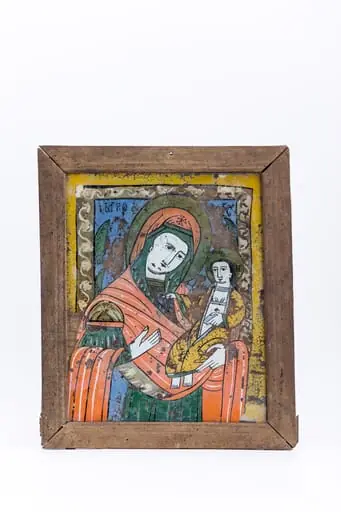 Maica Domnului îl ține în brațe pe Pruncul Iisus Hristos care are în mâna stângă un hrisov înfășurat și Binecuvăntează cu mâna dreaptă. Maica Domnului arată calea cu mâna dreaptă, deci este Hodighitria. Maica Domnului este înveșmântată în mantie cu maforion roșu vermillon și sacos albastru-vernil, are peste maforiom aureolă. Pruncul Iisus Hristos este înveșmântat în alb și auriu ocru-brun-bronziu, și are aureolă. Fondul icoanei este cerul de culoarea albastru cobalt deschis. Întreaga compoziție iconografică este încadrată de un chenar decorativ geometrizant galben-ocru, cu linia albă șerpuitoare, semnificând ideea de veșnicie, de mărturisire. Cromatica este armonioasă, tomnatică, specifică Niculei: roșu vermillon, alb, albastru cobalt, verde, kaki, auriu, ocru-brun-bronziu. Inscripția din româno-chirilică se traduce MP IC XC Maica Domnului Iisus Hristos.
 Sfânn Ar
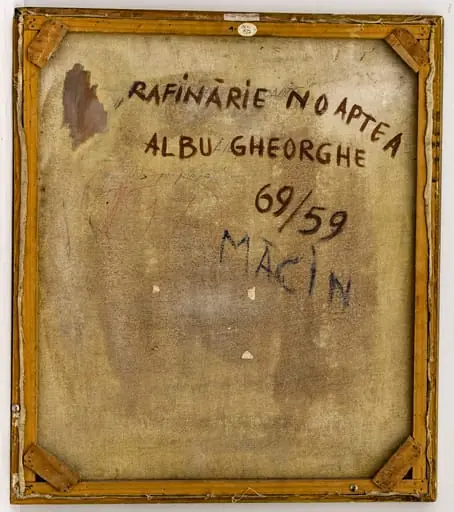 Rafinărie noaptea
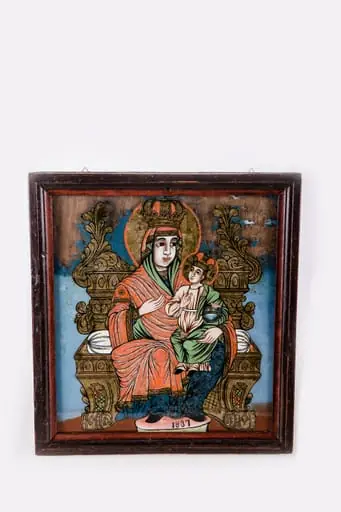 Maica Domnului este Împărăteasă pe tron, ținând în brațe Pruncul Iisus Hristos care are în mâna stângă un hrisov înfășurat și Binecuvintează cu mâna dreaptă. Maica Domnului arată calea cu mâna dreaptă, deci este Hodighitria. Maica Domnului este înveșmântată în mantie cu maforion roșu vermillon cu interiorul căptușit cu verde și sacos albastru, poartă coroniță de împărăteasă și aureolă. Pruncul Iisus Hristos este înveșmântat în verde kaki și auriu ocru-brun-bronziu, cu coroană și aureolă. Tronul este bogat geometrizant decorat. Maica Domnului stă cu picioarele pe o periniță rotundă. Fondul icoanei este cerul de culoarea albastru ultramarin cu steluțe aurii. Întreaga icoană este încadrată de un chenar decorativ geometrizant și floral. Atmosfera luminoasă și bizantină a icoanei este dată și de floricelele albe de pe veșmânt și steluțele aurii de pe albastrul cerului. Icoana este de iconostas, de aceea are dimensiunile mai mari. Și este de tip Maica Domnului Împărăteasa Cerului și a pământului. Cromatică: roșu vermillon, alb, albastru, verde kaki, auriu, ocru-brun-bronziu. Inscripția din româno-chirilică se traduce MP Maica Domnului IC XC Iisus Hristos. Icoana este datată 1831, pe fondul roz, de la picioarele Maicii Domnului. Icoana este din Țara Făgărașului, pictată fiind de Ioan Pop de Făgăraș.
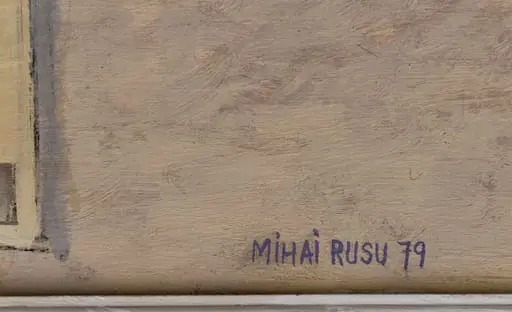 Fabrica de frigidere
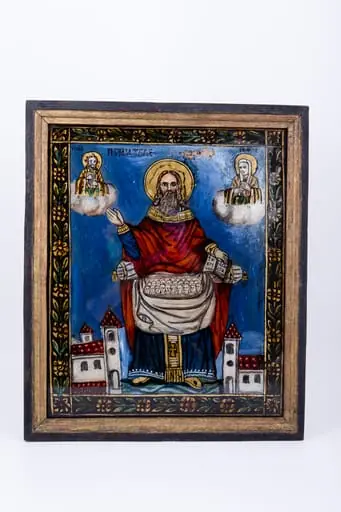 Icoana îl reprezintă central, supradimensional, pe Sfântul Cuvios Părinte Avraam, îmbrăcat în veșminte roșii și albastre, cu un ștergar alb legat de brâu, în care are nenumărați creștini. Acest ștergar reprezintă, de fapt, sânul lui Avraam, adică o parte a Împărăției Cerurilor, acolo unde este fericirea mult-dorită. În mâna stângă ține Sfânta Scriptură - Biblia - deschisă, iar cu mâna dreaptă binecuvântează neamurile și noroadele. În registrul superior este Dumnezeu Binecuvântând și Maica Domnului ocrotind. În registrul inferior sunt elemente arhitecturale, reprezentând spațiul concret al istoriei neamurilor. Fondul este albastrul regal al cerului. Întreaga icoană este încadrată de un chenar fitomorf, format dintr-o ghirlandă de flori galbene și frunze, pe un lujer agățător. Inscripția din româno-chirilică se traduce IC XC Iisus Hristos MP Maica Domnului Părintele Avraam. Icoana este de pe Valea Sebeșului. Cromatica este armonioasă și elegantă, discretă: roșu vermillon, stacojiu, albastru regal, verde, galben, gri, alb, negru.
 Icoaport
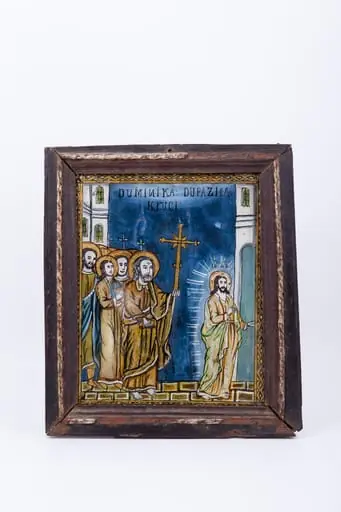 Icoana reprezintă Duminica după Înălțarea Sfintei Cruci - 14 septembrie. Mântuitorul Iisus Hristos este urmat de Apostoli și Sfinți Părinți ridicând Sfânta Cruce. Veșmintele sunt într-o combinație de verde, kaki, brun, olive, gri, ocru. Crucea înălțată este central pictată, iar Mântuitorul Iisus Hristos este înveșmântat și în razele de lumină ale Slavei Harului. Compoziția este foarte echilibrată, relația dintre personaje fiind încadrată de elemente de arhitectură, de o parte și de alta. În registrul inferior, este un caroiaj de kaki-ocru. Fondul este albastrul ceruleum al cerului. Pe lângă crucea aurie, cea mare și centrală, mai sunt încă trei cruci, aduse de cei care Îl urmează pe Mântuitorul Iisus Hristos. Tematica iconografică, mai rară, este încadrată de un chenar decorativ geormetrizant romboidal. Icoana este de Laz, Valea Sebeșului, cu o cromatică armonioasă: albastru ceruleum, verde, brun, kaki, ocru, olive, negru, alb. Icoana este datată 1903. Inscripția din româno-chirilică se traduce Duminica după Ziua Crucii IC XC Iius Hristos.
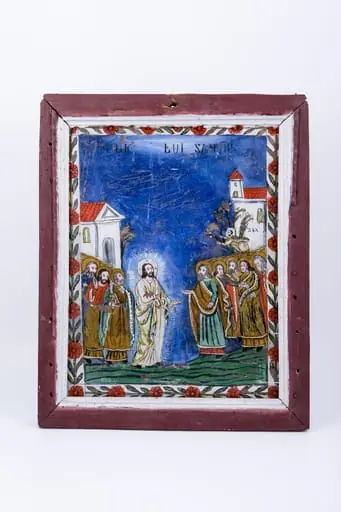 Icoana ilustrează Duminica lui Zaheu vameșul. Central este Mântuitorul Iisus Hristos, urmat de ucenici și locuitorii cetății, având împrejurul Lui mulțime - opt personaje. Într-un smochin este Zaheu, care doritor să-L vadă și să-L cunoască pe Iisus Mesia, se urcă asemenea unui copil, fără de nici o rușine sau constrângere. Mântuitorul îl vede și-i spune să se dea jos, să-L primească în casa lui. Bucurie! În registrul îndepărtat, sunt elemente de arhitectură, cetatea. Fondul este albastru regal înspre cobalt, în degrade. Veșmintele sunt pământii: brun, nisipii, bej, maro, kaki, roșii vermilon. Un personaj, ducându-și mâna la față, râde de copilăria lui Zaheu. Slava Lui Dumnezeu se vede prin Lumina albă de raze luminoase, care Îl înveșmântează. Întreaga tematică iconografică este încadrată de un chenar decorativ fitomorf. Icoana este deosebită, atât prin tematica abordată, cât și prin realizarea picturală, artistică, estetică. Întrega imagine este o altă interpretare a Învierii Domnului Iisus Hristos, prin Bucuria dăruită prin nădejdea mântuirii! Cromatica este dulce-luminoasă și armonioasă: brun, bej, kaki, olive, roșu vermillon, albastru regal, albastru cobalz, alb, negru. Icoana este de Laz, Valea Sebeșului și este datată 1901. Inscripția din româno-chirilică se traduce Duminica lui Zaheu Zah.
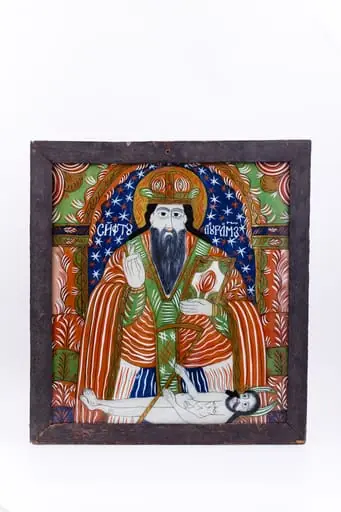 Sfântul Mare Mucenic Haralambie, făcător-de-minuni și vindecător de boli, este cel mai bătrân mucenic din cei prăznuiți de creștini. Este cunoscut ca și făcător-de-minuni, vindecător de boli și ocrotitor al caselor familiilor creștine. Central este pictat Sfântul, îmbrăcat cu veșminte liturgice, arhierești, cu sacos roșu vermillon-cărămiziu și albastru cobalt bleumarin, cu dungi subțiri și dese albe și epitrahil verde, cu trei cruci albe și aureolă. Cu mâna dreaptă binecuvântează și cu mâna stângă ține Sfânta Evanghelie închisă și în lanț ciuma, reprezentată antropomorfic și zoomorfic - o vietate goală și diavol, cu trăsături umane, având o seceră în labele cu gheare. Ciuma, simbolizând boala incurabilă și moartea, are coarne de diavol, fiind, totodată și păcatul, patima, aducătoare de moartea duhovnicească. Întreaga compoziție iconografică este încadrată de elemente de arhitectură ecclesială: arcadă și boltă. Fondul central este cerul albastru ceruleum, cu elemente decorative astrale, stele albe și roșii. Cromatica este deosebită: roșu vermillon, albastru ceruleum, cobalt și regal, verde spanac-avocado, cafeniu, alb, negru. Icoana este de Țara Făgărașului. Inscripția din româno-chirilică se traduce Sfântul Haralambie. Icoana aparține Anei Deji, din Făgăraș.
 Icoana reprezintă Pogorârea Duhului Sfânt, Cincizecimea sau Rusaliile, una dintre cele mai vechi sărbători, considerată în tradiția creștină ziua întemeierii Bisericii. Este prăznuită la 50 de zile după Învierea Domnului Iisus Hristos. A avut loc convertirea a 3000 de oameni. Este numită Duminica cea Mare. Duhul Sfânt S-a Pogorât asupra Apostolilor, sub forma limbilor de foc. Maica Domnului este prezentă la Pogorârea Duhului Sfânt, în mijlocul Apostolilor. În cadrul icoanei, Maica Domnului este înveșmântată în sacos alb, cu dungi albastre verticale și felon, maforion roșu-vermillon. În stânga și în dreapta Maicii Domnului sunt doi dintre cei 12 Apostoli ai Mântuitorului Iisus Hristos, înveșmântați în sacos alb cu dungi albastre și mantii roșii. În registrul îndepărtat în dreapta și în stânga sunt doi îngeri înveșmântați cu lumină galbenă. În registrul superior este un soare roșu vermillon-orange, cu raze verzi, reprezentând Cerurile deschizându-se. Sfântul Duh este reprezentat ca un porumbel alb pogorându-Se, întâlnit de asemenea și la Botezul Domnului Iisus Hristos. Fondul icoanei este cerul albastru-vernil-gri, încadrat de un chenar decorativ fitomorf, format din ghirlande trandafirii roșii, cu frunze verzi și galbene. Trandafiri - ruje pentru că este Praznicul Rusaliilor, verzi pentru că este Sfântul Duh, galbene pentru că este reamintirea Învierii Domnului Iisus Hristos. Cromatica este armonioasă: albastru-vernil-gri, verde brad, galben-chihlimbar, ocru, roșu vermillon, alb, negru. Inscripția din româno-chirilică se traduce Rusaliile. Icoana reprezintă o tematică iconografică mai rară, dar esențială. Icoana este din Nicula.
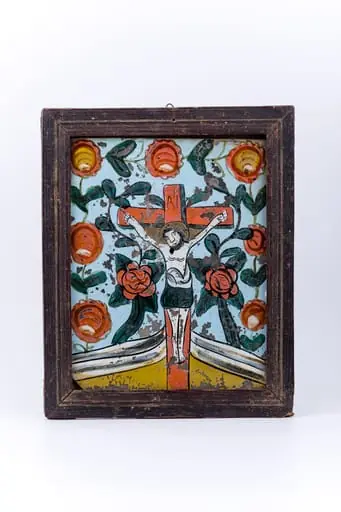 Mântuitorul Iisus Hristos, fiind răstignit pe Cruce, are în dreapta și în stânga câte o floare mare roșie vermillon, cu frunze gri-antracit, înlocuind stilizat și semantic pe ucenicul cel iubit, care a stat lipit de pieptul Învățătorului, la Cina cea de Taină, mai precis, pe Sfântul Apostol și Evanghelist Ioan Teologul, Evanghelistul Iubirii și pe Maica Domnului Îndurerată, Jalnică și Plângătoare. Mântuitorul Iisus Hristos are o țesătură gri, înspre negru-gri-antracit în jurul mijlocului și a coapselor. În registrul inferior, paralel cu Crucea sunt și lujere foarte înalte cu flori mari, elemente geometrizante și fitomorfe, care înlocuiesc prezența ucenicilor și martorilor la suferință. Fondul icoanei este cerul albastru bleu-ciel ceruleum senin, împodobit cu elemente stilizate florale. În registrul inferior este un câmp luminos de galben-chihlimbar. Întreaga compoziție iconografică este încadrată de un chenar fitomorf, format dintr-o ghirlandă bogată de ruje roșii vermillon, cu miezul galben - 7 ruje, cu frunze gri-albăstrii. Astfel imaginea iconografică este o preînchipuire a Grădinii Raiului. Cromatica este armonioasă: roșu vermillon, albastru bleu-ciel ceruleum, verde-brad forest și smarald, galben chihlimbar, ocru-muștar, alb, negru. Inscripția din româno-chirilică de pe Cruce se traduce INRI Iisus Nazarineanul Regele iudeilor. Icoana este din Nordul Transilvaniei, Nicula.
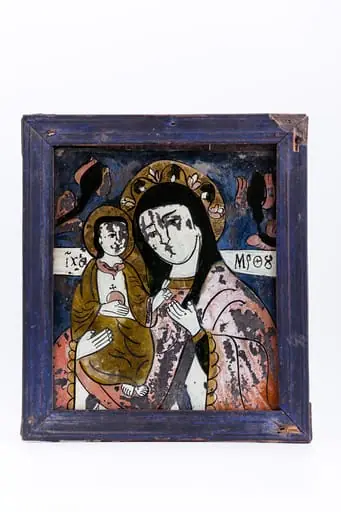 Maica Domnului Îl ține în brațe pe Pruncul Iisus Hristos care are în mâna dreaptă globul pământesc cu crucea deasupra, asemenea unui chivot de biserică, și cu mâna stângă arată înspre Maica Domnului. Maica Domnului arată calea cu mâna stângă deci este Hodighitria. Maica Domnului este înveșmântată în mantie cu maforion roșu vermillon și sacos negru-crem-ocru, cu dungi albe, cu interiorul cenușiu, are peste maforiom coroniță și aureolă. Veșmântul are broderie aurie. Pruncul Iisus Hristos este înveșmântat în ocru-alb, cu gulerașul roșu-roz și are aureolă. Fondul icoanei este cerul albastru ultramarin bleumarin închis. Icoana este încadrată în registrul superior de o ghirlandă de boboci de ruje - 2 trandafiri mari roșii. Cromatica este armonioasă, tomnatică-sobră, specifică Niculei: roșu vermillon, roz, alb, albastru ultramarin bleumarin, kaki, auriu, ocru-brun-bronziu, brun, alb, negru. Inscripția din româno-chirilică se traduce IC XC MP Iisus Hristos Maica Domnului. Icoana este de Nicula, fiind deosebită prin desenul minuțios, detalile delicate ale veșmintelor și expresivitatea chipurilor, remarcându-se tristețea și profunzimea privirilor.
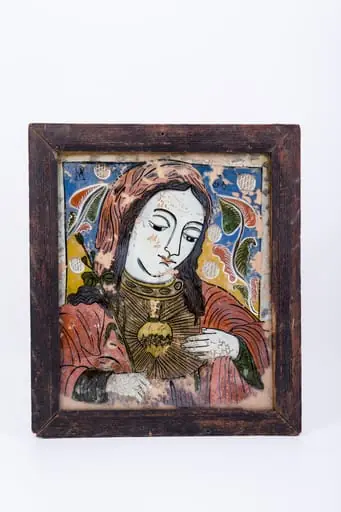 Maica Domnului este înveșmântată în mantie cu maforion roșu vermillon-roz și sacos verde kaki, poartă maforion și aureolă. Privește în jos, cu chipul aplecat, smerit, resemnat. În mână poartă un fir de crin, semnul fecioriei și arată spre inima sa, ce se dăruiește tuturor într-un evantai de raze de lumină. Fondul icoanei este cerul de culoarea albastru bleu ciel-regal senin, în armonie cu galbenul solar al soarelui. Cromatica este vie, senină și luminoasă: roșu vermillon-roz, alb, albastru regal și bleu ciel, verde kaki, olive, alb, negru. Inscripția din româno-chirilică se traduce MP Maica Domnului. Întreaga compoziție iconografică este armonizată de elemente fitomorfe, flori, petale, frunze verzi, acajou și albe. Are influență catolică, datorită semnului de inimă cu raze de lumină.
 Mântuitorul Iisus Hristos, fiind răstignit pe Cruce, are în dreapta și în stânga două lujere înalte, elemente fitomorfice, înlocuind pe ucenicul cel iubit, care a stat lipit de pieptul Învățătorului, la Cina cea de Taină, mai precis, pe Sfântul Apostol și Evanghelist Ioan Teologul, Evanghelistul Iubirii și pe Maica Domnului Îndurerată, Jalnică și Plângătoare. În registrul superior, îndepărtat sunt simbolurile astrale: soarele, deasupra lujerului și florii Maicii Domnului, lujerului și florii Sfântului Ioan. Fondul icoanei este negru. Cromatica este armonioasă, dar foarte săracă: roșu vermillon, ocru, crem, bej, alb, negru. Inscripția din româno-chirilică se traduce IC XC Iisus Hristos.
 Maica Domnului este înveșmântată în maforiom roșu vermillon-corai, cu interiorul verde și altiță verde cu o cruciuliță neagră, cu sacos albastru regal-cobalt, cu aureolă bronzie. Maica Domnului arată calea care este Mântuitorul Iisus Hristos - Calea, Adevărul și Viața. Pruncul Iisus Hristos este înveșmântat în sacos alb, cu marginile gri și mantie sierra cărămizie și are, de asemenea, aureolă aurie. Pruncul Iisus arată cu mânuța dreaptă înspre Maica Domnului. Fondul icoanei este cerul albastru regal-cobalt, în interiorul icoanei. Întreaga tematică iconografică este încadrată de un chenar decorativ geometrizant, alb cu dungi gri oblice, înspre interior, și un altul exterior mai lat, circumscris, ocru-pământiu. Inscripția din româno-chirilică se traduce MP Maica Domnului. Cromatica este armonioasă: roșu vermillon-corai, albastru regal-cobalt, sierra, ocru-pământiu, gri, bronziu, alb, negru. Icoana este din Nordul Transilvaniei, Nicula.
 Maica Domnului este Împărăteasa Cerurilor, ținând în brațe Pruncul Iisus Hristos care cu mâna dreaptă ține pe genunchi Sfânta Evanghelie închisă, un hrisov înfășurat și ne-o arată pe Maica Domnului cu mâna stângă. Maica Domnului ni-L arată pe Mântuitorul Iisus Hristos cu mâna dreaptă, ca fiind Calea, Adevărul și Viața, deci este Hodighitria. Maica Domnului este înveșmântată în mantie cu maforion roșu vermillon cu broderie dantelată bronzie, pe margini, cu sacos albastru și verde, dungat cu linii albe paralele. Maica Domnului poartă coroniță de împărăteasă, salbă de aur și aureolă. Pruncul Iisus Hristos este înveșmântat în crem-bej, dungat cu alb, și auriu ocru-brun-bronziu, cu coroană și aureolă. În registrul superior îndepărtat, stânga și dreapta, sunt cei doi îngeri arhangheli Mihail și Gavriil, cu aripile verzi, așezând cu mâinile coronița de Împărăteasă pe capul Maicii Domnului. Lateral Maicii Domnului și Pruncului Iisus Hristos sunt două flori, una cu interiorul albastru, reprezentând-o pe Împărăteasa Cerurilor și cealaltă cu interiorul galben, de Lumină, reprezentându-L pe Mântuitorul. Fondul icoanei este cerul de culoarea albastru ultramarin, în registrul superior, galben-verde, în câmpuri paralele, alternativ-cromatizate, în registrul inferior. Cromatica, specifică Țării Oltului, este vie, luminoasă și armonioasă: roșu vermillon, albastru ultramarin, cobalt, bleu-ciel, alb, verde spanac-avocado, galben-ocru, bej, brun, brun-bronziu, auriu, negru. Icoana este de Șcheii Brașovului, Țara Bârsei - Țara Oltului. Inscripția din româno-chirilică se traduce MP IC XC Maica Domnului Iisus Hristos.
 Scena Cinei celei de Taină se desfășoară într-un interior sugerat de ghirlande de flori. Masa Cinei este concavă și lunguiață, acoperită cu fața de masă albă. În centrul icoanei este Mântuitorul Iisus Hristos binecuvântând mâncarea, la masă, alături de ucenici și apostoli. Cu mâna stângă binecuvântează masa și pe ucenici. Este Timpul Euharistiei! Pe masă sunt așezate tacâmuri și farfurioare, pâinici și prescuri. La Cină sunt 8 ucenici și apostoli, nu 12. Ucenicii au în mâini câte o pâinică sau prescură. Personajele au chipurile expresive, veșmintele personajelor și faldurile feței de masă au volume și drapaje. Veșmintele sunt în combinație de roșu vermillon și verde-cenușiu. Întreaga compoziție iconografică este încadrată de un chenar decorativ fitomorf, format din 9 ruje roșii cu galben. Fondul interior este albatru ceruleum, pe marginile chenarului vegetal fiind alb, contrastul roșu-alb-albastru echilibrând cromatic întreaga icoană. Cromatica este armonioasă: albastru ceruleum, roșu vermillon, galben-ocru, verde de China, bej, alb, negru. Inscripția din româno-chirilică se traduce Cina Taină. Icoana este de Nicula, realizarea fiind inedită - 8 ucenici.
 Maica Domnului ține în brațe Pruncul Iisus Hristos, care Binecuvântează cu mâna dreaptă. Mântuitorul stă în picioare pe genunchii Maicii Domnului. Maica Domnului este înveșmântată în mantie cu maforion roșu cu interiorul negru, are coroană și aureolă. Pruncul Iisus Hristos este înveșmântat în roșu cu aureolă. Fondul icoanei este negru. În registrul superior, dreapta și stânga, sunt Sfinții Arhangheli Mihail și Gavriil, pe câte o mandorlă de nouri rotunzi, albi. Icoana este încadrată de un chenar fitomorf, alcătuit din ramură de brad și câte un con de brad la mijlocul laturilor, ca și element de legătură. Chenarul este desenat cu negru pe un fond bej-crem. Inscripția din româno-chirilică se traduce: IC XC MP Iisus Hristos Maica Domnului. Cromatică: roșu vermillon, galben, acajou, stacojiu, brun, bej, negru.
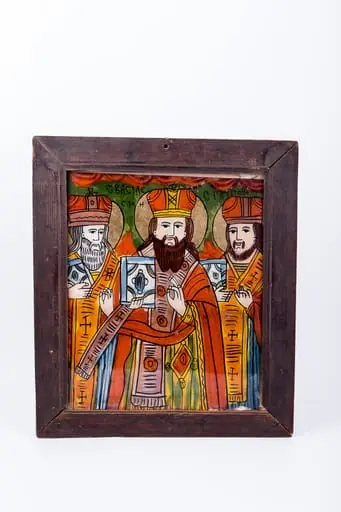 Cei Sfinți Trei Ierarhi Vasile cel Mare, Grigorie de Dumnezeu Cuvântătorul și Ioan Gură-de-Aur slujesc și săvârșesc Sfânta Liturghie împreună. Sunt înveșmântați în veșminte liturgice: sacos, felon și epitrahil mithră și aureolă. Cromatica veșmintelor este vie și luminoasă: roșu vermillon, verde spanac-avocado, galben-ocru și albastru bleu-ciel. Ceea ce este inedit este că în această icoană, cei trei sfinți ierarhi binecuvântează cu mâna stângă. Este o licență poetică picturală - pictura pe sticlă se realizează în oglindă. Fondul întregii tematici iconografice este format din alternanța de verde și roșu vermillon. Cromatica este luminoasă și armonioasă, vie și luminoasă: roșu vermillon, orange, verde spanac-avocado, galben-ocru, albastru bleu-ciel, alb și negru. Este o icoană specifică picturii de Țara Oltului, din centrul Șcheii Brașovului. Inscripiția din româno-chirilică se traduce: Vasile Ioan Grigorie
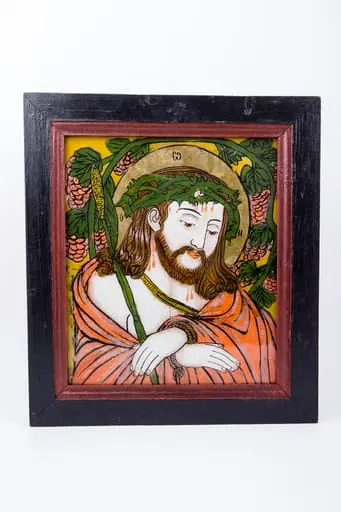 Mântuitorul Iisus Hristos are trupul rănit de lovituri de bice cu țepi de fier - flagellum - și acoperit, în batjocura everilor, cu hlamidă roșie, semnul distinctiv al consulilor romani, fiind numit regele iudeilor. Pe cap, poartă cununa de spini, și pe față curg stropi de sânge. Cu Chipul smerit, aplecat, Domnul Iisus Hristos are mâinile încrucișate pe piept, legate cu funii. Tot în mâini are mănunchi de palmier sau finic, cu frunze și fructe de smochin. În Duminica Florrilor, la Intrarea în Ierusalim a Mântuitorului, Domnul Iisus Hristos a fost primit de copii cu frunze de finic, reprezentând simbolul de credință. În această icoană sunt enumerate mai multe din Patimile Mântuitorului: prinderea, legarea la stâlpul infamiei, biciuirea cu 36-56 lovituri de flagellum, punerea cununii de spini, îmbrăcarea cu hlamida roșie, legarea mâinilor cu funie, lacrimile de sânge pe tâmple. Cuvintele lui Pilat din Pont: Iată Omul! Ecce Homo! Reprezintă tematica iconografică a icoanei. Fondul icoanei ste galben, culoarea care semnifică lumina Învierii. Icoana este de Mărginimea Sibiului. Cromatica este armonioasă: roșu vermillon, verde brad, verde spanac-avocado, galben, maro, brun, auriu.
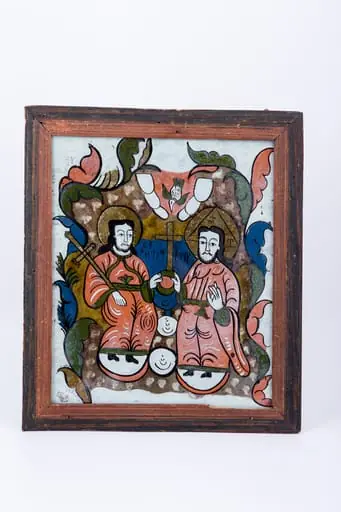 Dumnezeu-Fiul ține Crucea pe umărul drept, Dumnezeu-Tatăl are globul pământesc cu cruce, pe care îl susține, împreună cu Dumnezeu-Fiul. Veșmintele sunt roz cu verde. Deasupra este Sfântul Duh, sub forma porumbelului alb pogorât din Cerurile deschise, dintr-o mandorlă de nouri albi rotunzi, pe un mănunchi de raze luminoase. Inscripția din româno-chirilică se traduce Sfânta Treime. Cromatica este armonioasă: roz zmeuriu din roșu vermillon pal, albastru cobalt și regal, brun, bronziu, alb, negru. Trăsăturile chipurilor sunt rafinat desenate. Chenarul decorativ este format dintr-o alternanță de aripi roșii, albastre, verzi - elemente fitomorfe stilizate. Este o icoană de Nicula.
Inscription is a subject in art. Epigraphy (from Ancient Greek ἐπιγραφή (epigraphḗ) 'inscription') is the study of inscriptions, or epigraphs, as writing; it is the science of identifying graphemes, clarifying their meanings, classifying their uses according to dates and cultural contexts, and drawing conclusio…
Artifact World Gallery holds 200 public-domain Inscription works, all free to view and download.
Key Inscription artists in the collection include Nathaniel Hancock, Willem Key and Michiel Coxie.
Inscription works in the collection are held by ASTRA National Museum Complex, Cleveland Museum of Art and Gavrila Simion Eco-Museum Research Institute Tulcea.
Your cart is empty
Browse artworks →