Artwork
Pine-shaded Monastery on a Cloudy Mountain
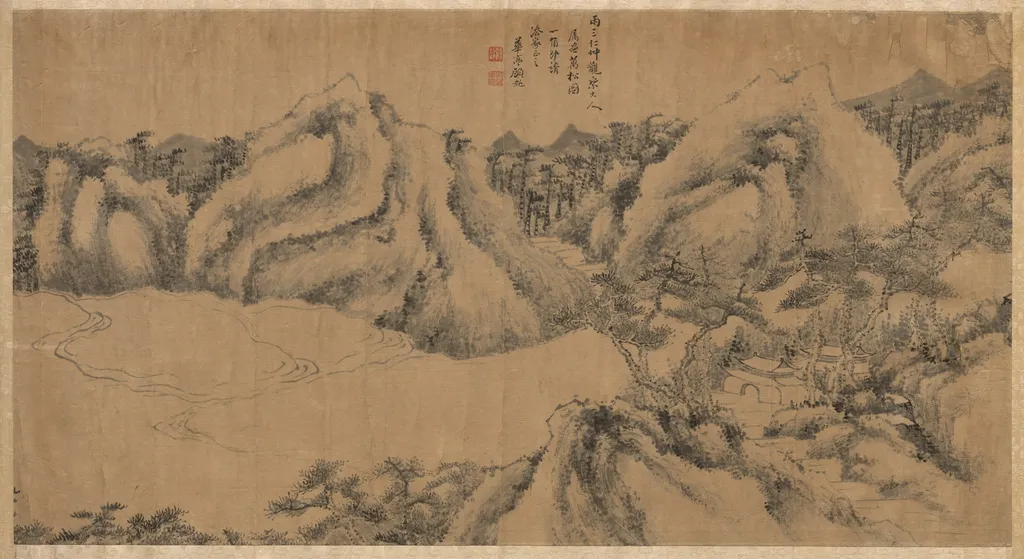
Pine-shaded Monastery on a Cloudy Mountain is an unspecified painting by the Rococo painting artist Gu Chao. It dates from 1794 and is held in the collection of the Cleveland Museum of Art.
About this work
History & Provenance
Pine-shaded Monastery on a Cloudy Mountain is held by the Cleveland Museum of Art, where it is part of the museum's collection. The work is catalogued under the accession number 1966.375, which is reflected in its Wikidata record.
The painting was created in China in 1787 by Gu Chao, and its current location at the Cleveland Museum of Art is documented in institutional and linked-data sources.
Legacy
Gu Chao's 1787 painting Pine-shaded Monastery on a Cloudy Mountain entered the Cleveland Museum of Art collection, where it remains on view as part of their holdings of Qing dynasty works. The work's composition of a solitary monastery amid swirling clouds influenced later Chinese landscape painters seeking to evoke spiritual retreat, though specific later attributions are not documented in the provided sources.
The painting's presence in a major Western museum contributed to broader scholarly attention on 18th-century Chinese art, supporting exhibitions that contextualized Gu Chao's role in the transition from traditional Southern School styles to emerging individualistic approaches in late Qing art.
Overview
Created in 1794 by the Chinese painter Gu Chao, Pine‑shaded Monastery on a Cloudy Mountain is an ink and brush work now in the collection of the Cleveland Museum of Art. The composition presents a secluded valley where winding paths and scattered pines lead the eye toward a modest monastic building, partially veiled by misty hills.
Subject & Meaning
The painting depicts a remote mountain retreat, its modest monastery nestled among pine‑shaded slopes. The subdued palette and softened forms convey a sense of quiet contemplation, inviting viewers to imagine the spiritual isolation of the monks while the surrounding mist suggests the transitory nature of earthly life.
Technique & Style
Gu Chao employs rapid, sketch‑like brushstrokes that capture the texture of foliage and rock with minimal detail. The use of soft browns and grays, punctuated by darker ink for trees and architecture, creates atmospheric depth and a feeling of movement within an otherwise still landscape.
Context
During the Qianlong era, Chinese artists often idealized remote mountain scenes as venues for scholarly retreat and moral reflection. Gu Chao’s rendering aligns with this tradition, emphasizing natural harmony and the modest architecture that blends into its surroundings, reflecting contemporary aesthetic values of simplicity and inner peace.
Artist & collection

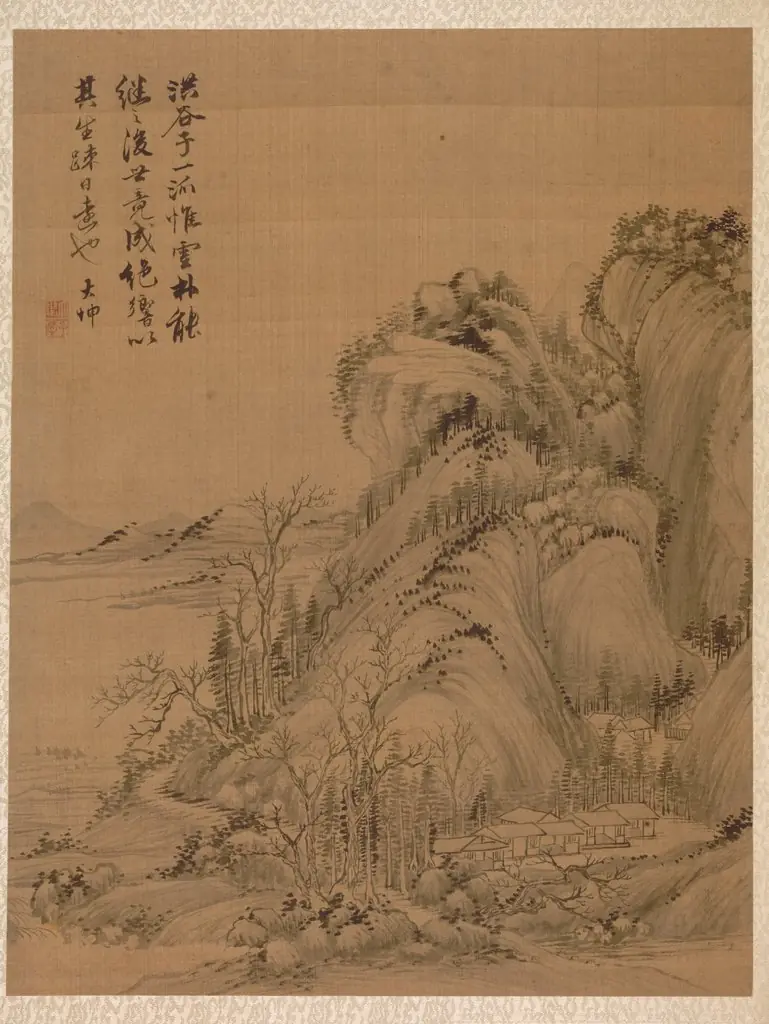 Landscape in the Style of Ching Hao
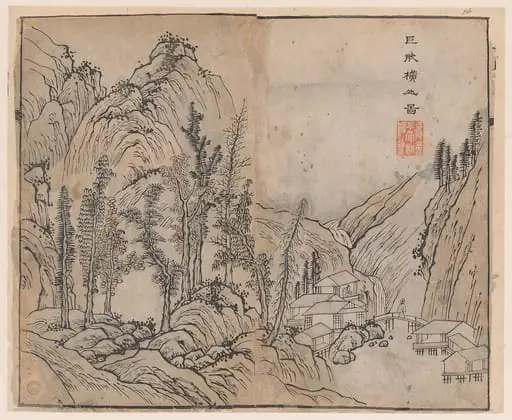 清 王槩 設計,李漁出版 芥子園畫傳 版本|Mt. Heng, after Juran (active ca. 960–965), from the Mustard Seed Garden Manual of Painting
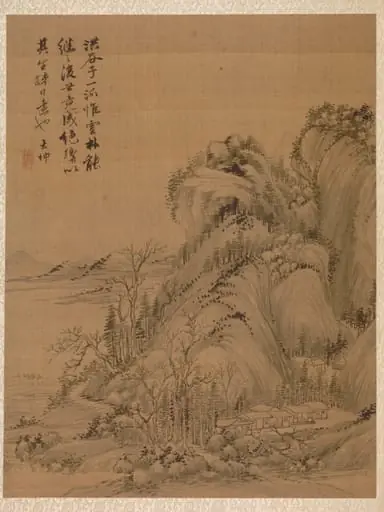 Landscape in the Style of Ching Hao
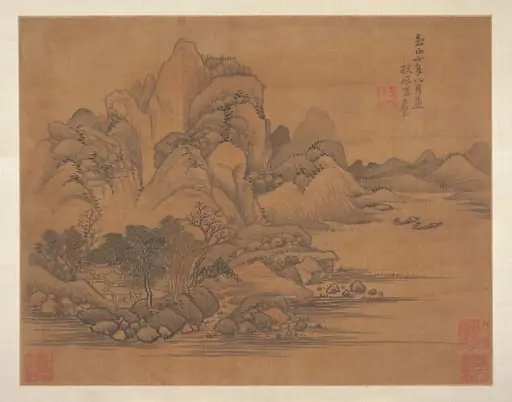 Untitled
 Spring Landscape
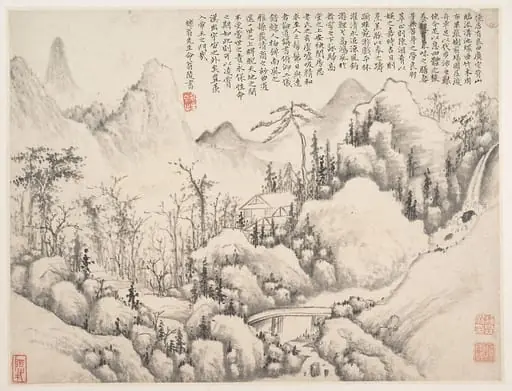 清 施霖 山莊圖 冊頁|Mountain Retreat, leaf from Album for Zhou Lianggong
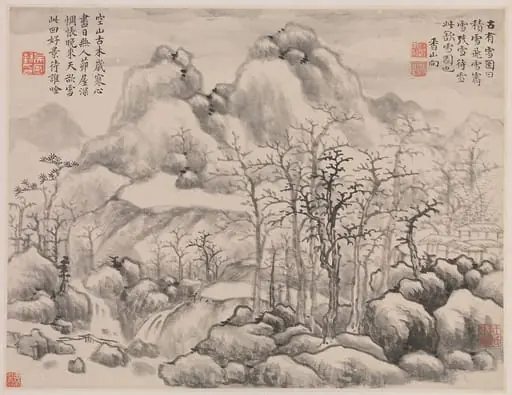 明/清 惲向 欲雪圖 冊頁|Snowscape, from Album for Zhou Lianggong
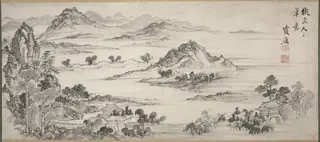 West Lake
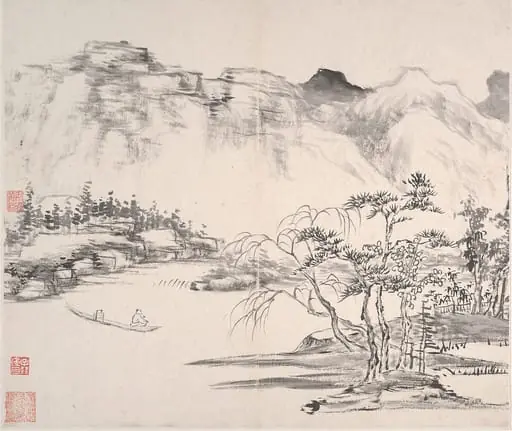 清 伊秉綬 山水 冊|Landscapes
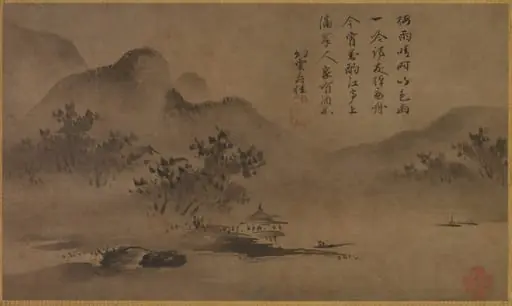 Landscape