Artwork
Spring Landscape
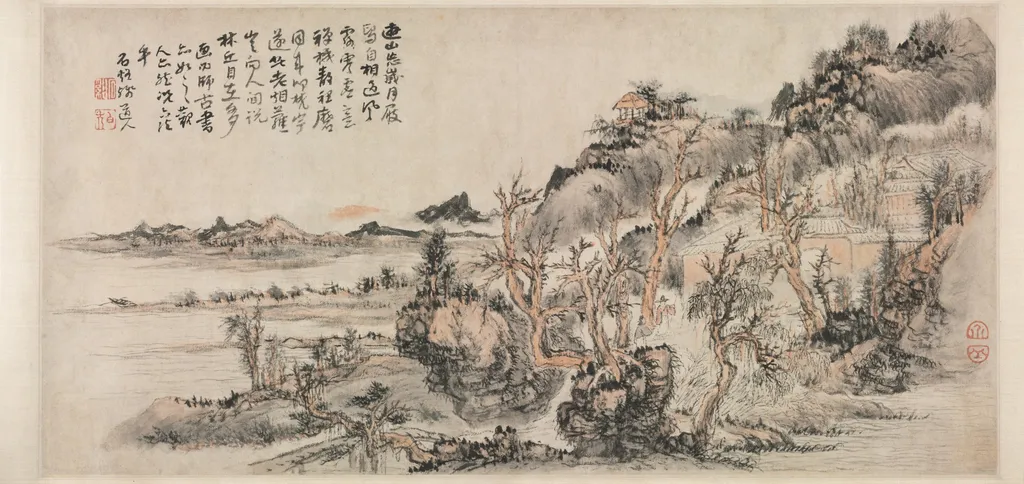
Spring Landscape is an unspecified painting by the Chinese Orthodox School artist Kun Can. It dates from 1666 and is held in the collection of the Cleveland Museum of Art.
About this work
Overview
As one of the influential Four Monk Masters of the early Qing Dynasty, Kun Can contributed significantly to the period's artistic discourse.
"Spring Landscape," painted by the Buddhist monk Kun Can in 1666, exemplifies the artist's distinctive approach to natural scenery. As one of the influential Four Monk Masters of the early Qing Dynasty, Kun Can contributed significantly to the period's artistic discourse. This work presents a serene, atmospheric vista, characteristic of his engagement with traditional landscape themes while infusing them with a personal spiritual resonance.
Subject & Meaning
The painting portrays a tranquil, mist-shrouded river meandering through a mountainous terrain. Jagged peaks dominate the background, their slopes sparsely covered with trees, some still bare, others showing nascent green. A solitary boat glides near the bank, while subtle architectural forms emerge from behind the hills.
This composition evokes a sense of quiet contemplation, inviting viewers into a secluded natural world typical of the Chinese Orthodox school's idealized landscapes.
Technique & Style
Kun Can's technique in Spring Landscape is marked by a dynamic and expressive brushwork, characterized by loose, rapid strokes that suggest forms rather than delineate them precisely. The artist utilizes significant areas of untouched paper, creating an impression of lightness and atmospheric depth. The palette primarily consists of muted grays and browns, subtly accented by delicate pinks and blues in the distant haze.
This approach reflects his grounding in the Chinese Orthodox tradition, particularly drawing inspiration from masters like Wang Meng.
Context
Born Liu Shixi in Hunan, Kun Can adopted a monastic life, becoming an abbot at a monastery on Niushou Shan in Nanjing, where he practiced Chan Buddhism. His spiritual devotion profoundly influenced his artistic output. As one of the 'Four Monk Masters,' a group of influential painters who retreated from official life after the Ming-Qing transition, Kun Can developed a unique style that combined deep personal expression with adherence to established landscape traditions, offering a distinct voice within the early Qing art world.
Artist & collection
Artist
Kun Can (髡殘, Buddhist name; common name: 劉石谿 (Liu Shixi or Liu Jieqiu)) (1612 to after 1674) was a Chinese Buddhist monk and painter during Ming and Qing dynasties.

- Spring Landscape
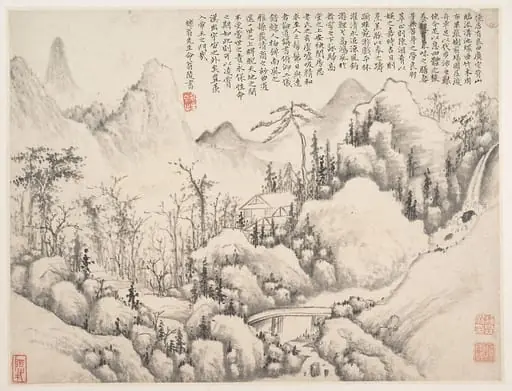 清 施霖 山莊圖 冊頁|Mountain Retreat, leaf from Album for Zhou Lianggong
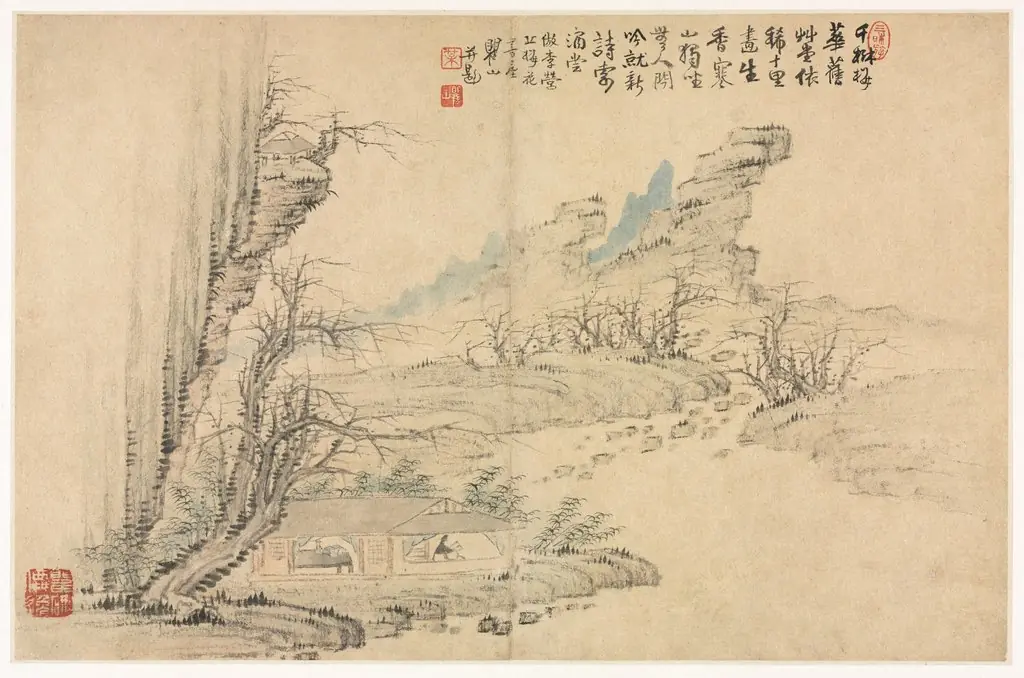 Landscapes in Various Styles after Old Masters
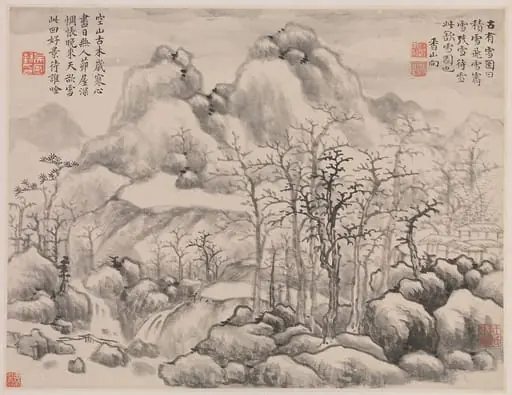 明/清 惲向 欲雪圖 冊頁|Snowscape, from Album for Zhou Lianggong
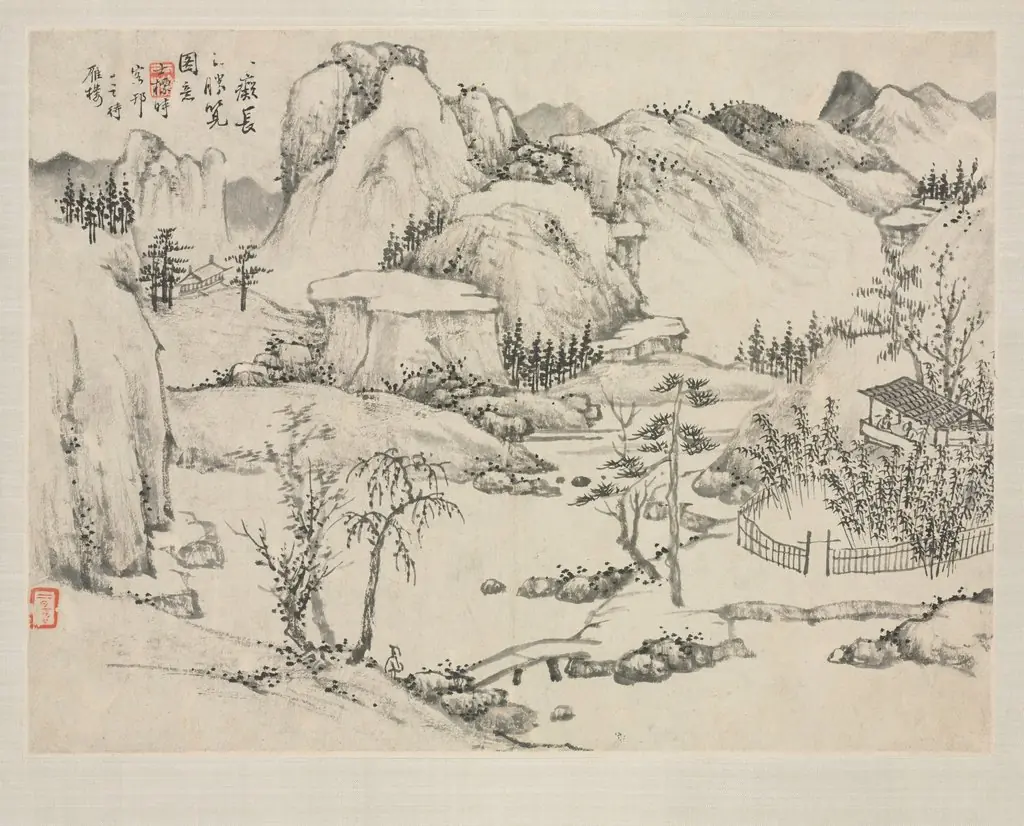 Landscape Album in Various Styles: Scenery of Mt. Changbai after Huang Gongwang
 Landscape Album in Various Styles: Scenery of Mt. Changbai after Huang Gongwang
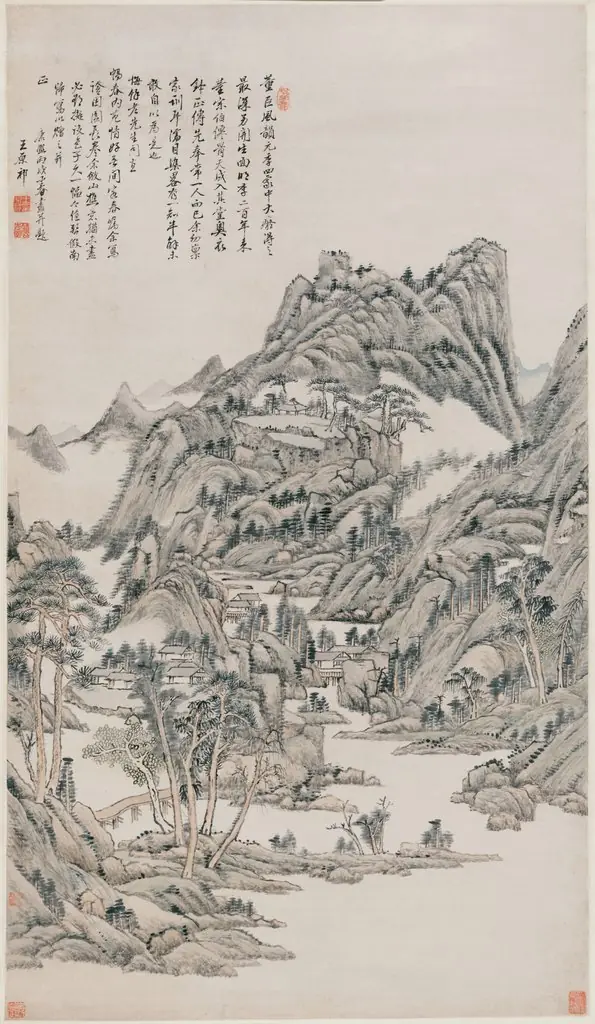 Landscape
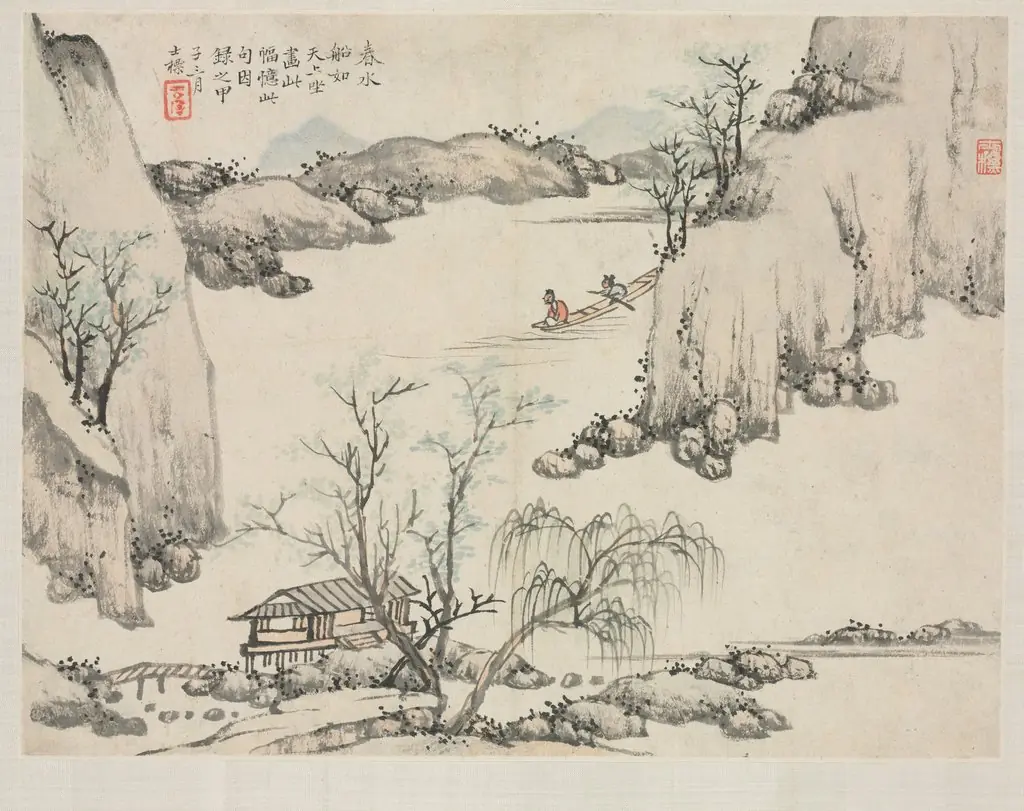 Landscape Album in Various Styles: Boating in Spring Water
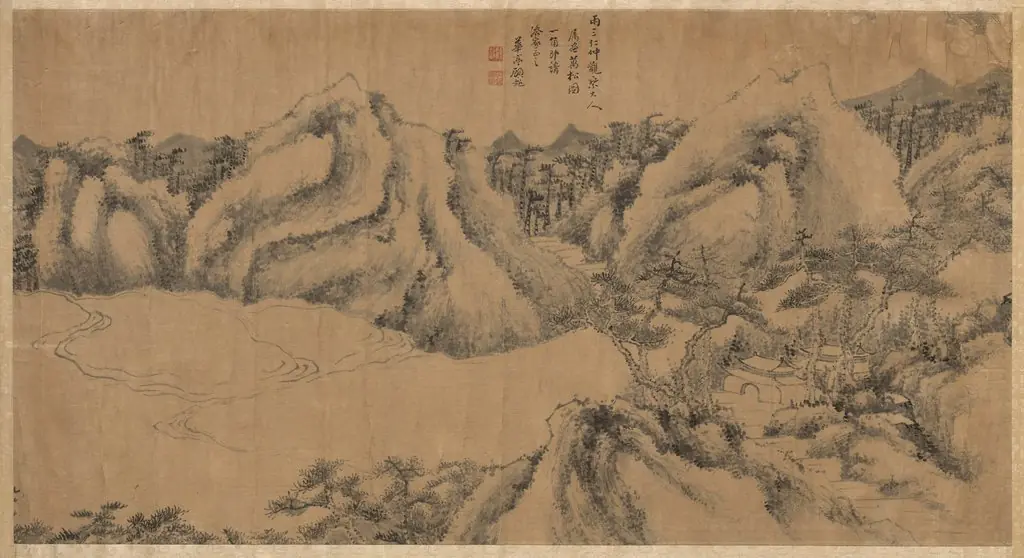 Pine-shaded Monastery on a Cloudy Mountain
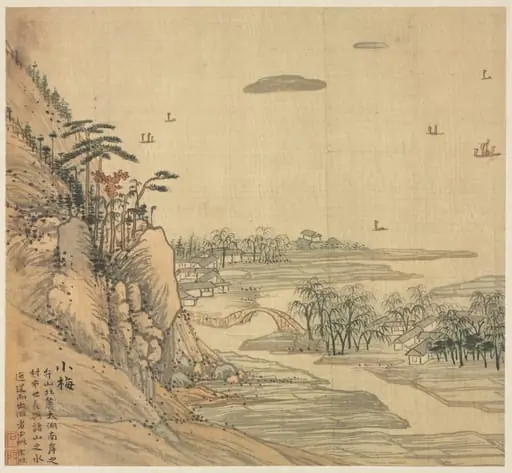 Xiaomei
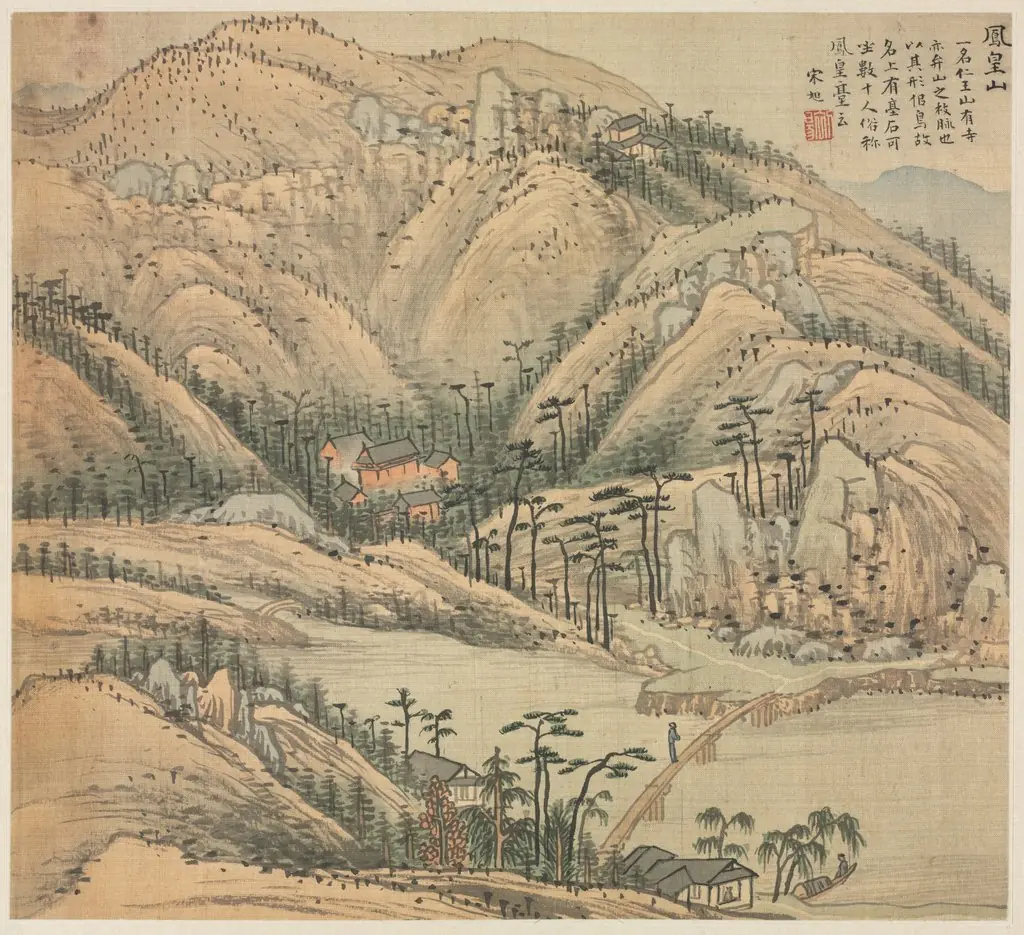 Mt. Fenghuang (Mt. Phoenix)
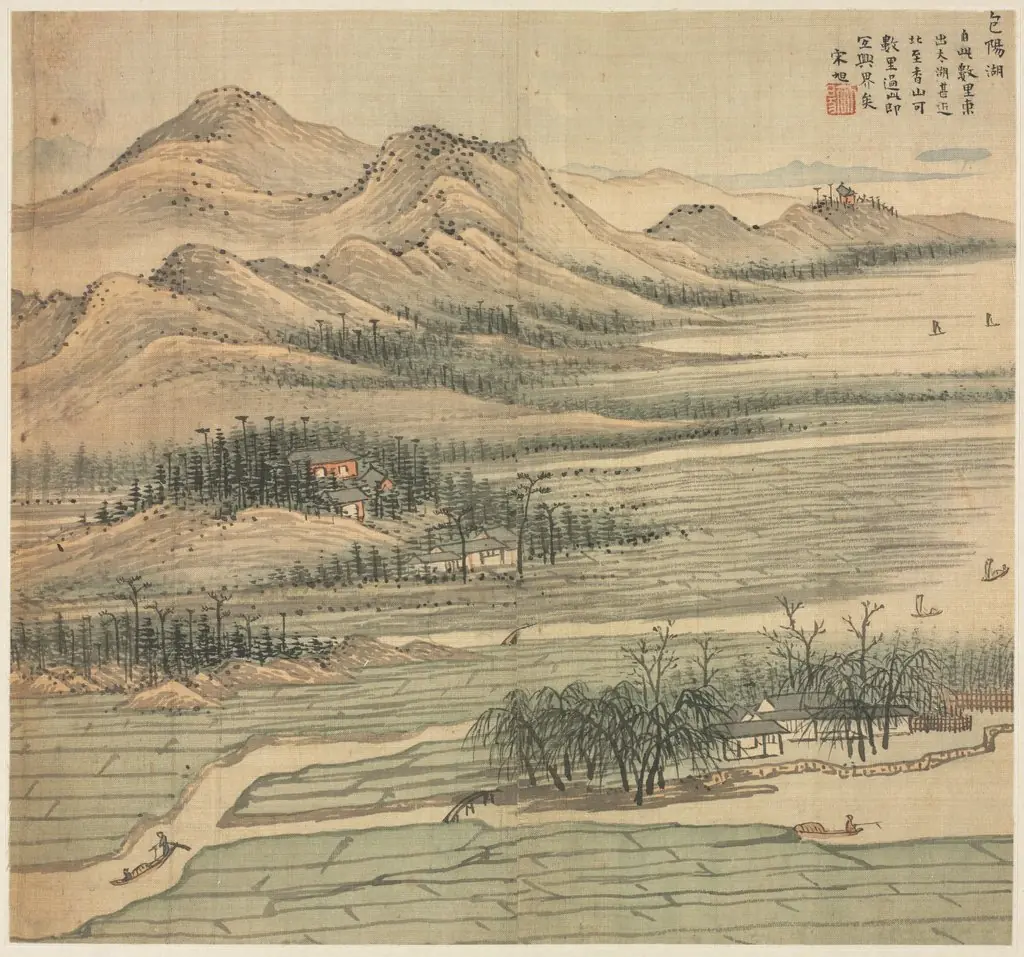 Baoyang Lake