Artwork
Ruins of the Castle of Kenilworth
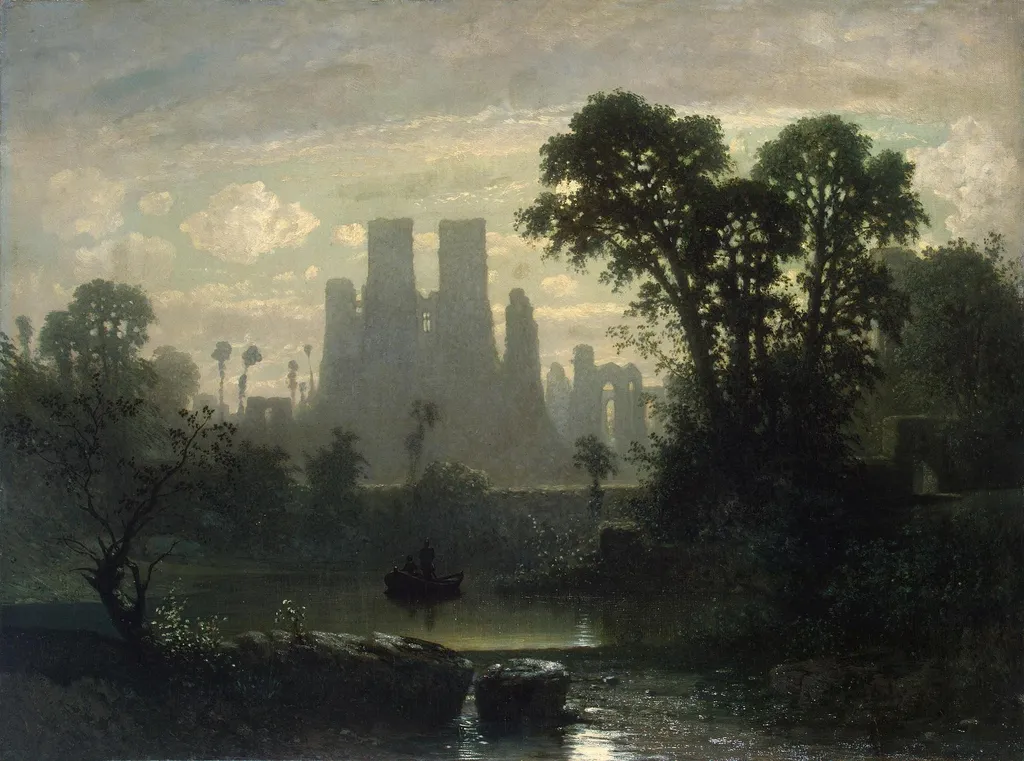
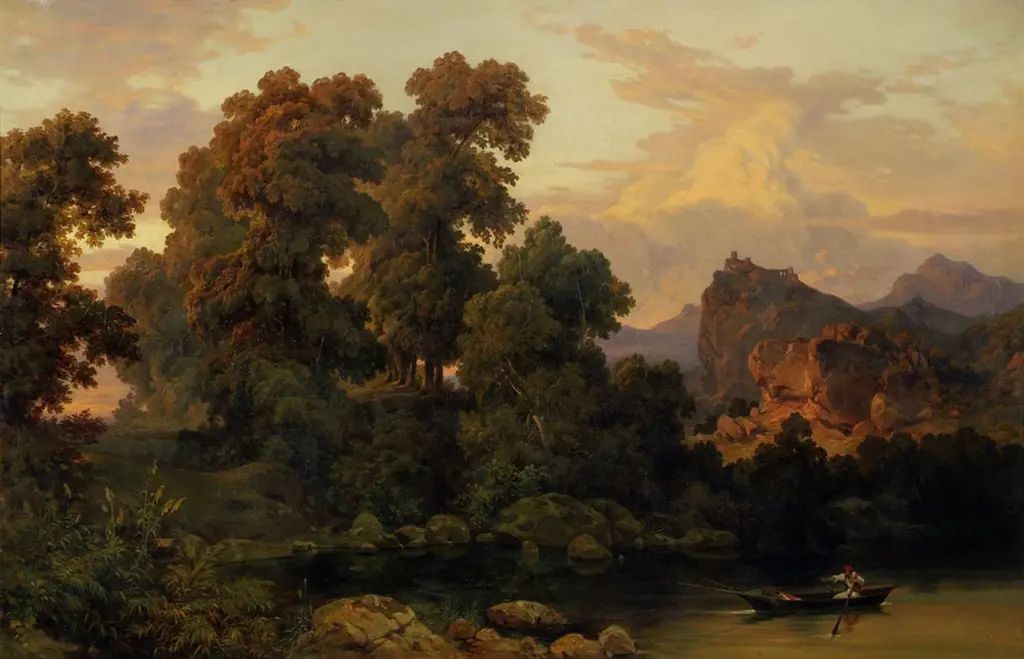
Ruins of the Castle of Kenilworth is an oil painting by the Barbizon school artist Guillaume Van der Hecht. It dates from 1850 and is held in the collection of the Hermitage Museum.
About this work
Subject & Meaning
The painting portrays the Romantic-era fascination with transience, using the ruins of Kenilworth Castle to symbolize the impermanence of human achievement.
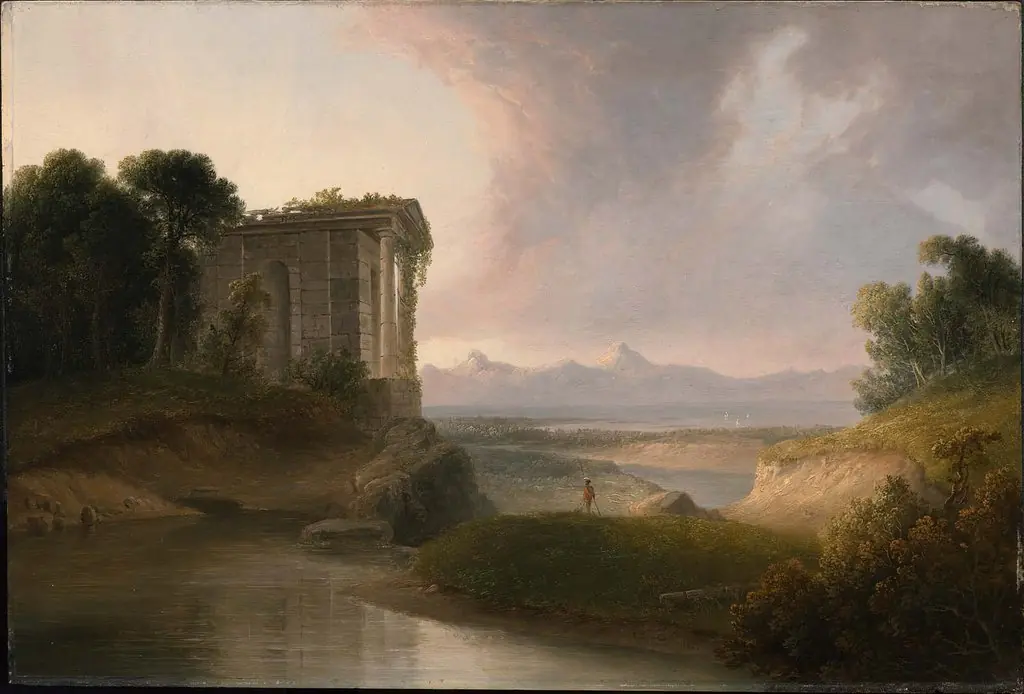
The painting portrays the Romantic-era fascination with transience, using the ruins of Kenilworth Castle to symbolize the impermanence of human achievement. The composition features a twilight landscape of Abbey Fields with a misty lake, a small boat, and surviving Leicester Tower remnants, rendered in dark foreground tones that transition to a lighter, cloudy sky, creating a mystical atmosphere. This subject aligns with Romantic symbolism of nature's eternity contrasting with fleeting human glory, as noted in contemporary commentary describing ruins as reminders of 'the fleeting nature of worldly possessions.'
Technique & Style
Guillaume Van der Hecht's *Ruins of the Castle of Kenilworth* (1850) is a landscape painting executed in oil on canvas, measuring 72 by 96.5 cm. Stylistically, the work is a quintessential example of Romanticism, emphasizing the movement's characteristic juxtaposition of enduring nature and crumbling architecture as a symbol of human transience.
The composition ascends from a dark, marshy foreground into a lighter, clouded sky, bathing the scene in a mystical light. Backlighting and twilight obscure specific details, creating a shadowy, almost ghostly atmosphere. Silhouetted trees line the banks of a small lake where a boat with two vague figures floats, while the reasonably intact Leicester towers rise in the background. This focus on atmospheric light and ruins was unusual for Belgian Romanticism of the period, which typically favored history painting, reflecting instead the influence of the German and English landscape traditions.
History & Provenance
Painted by Guillaume Van der Hecht around 1850, the work depicts the ruins of Kenilworth Castle, likely inspired by the artist's time in England during the 1840s. The painting was first exhibited on January 5, 1850, at the Théâtre royal du Parc in Brussels during an international charity event, where the artist also produced an engraving of the scene. Shortly after the exhibition, the artwork was acquired by the art dealer Arthur Stevens, who subsequently sold it to the Russian Count Nikolai Kushelev-Bezborodko. Following the Count's death, the piece was transferred to the Russian Academy of Arts Museum in St. Petersburg, where it was cataloged under the title Ruins of a Castle in Moonlight. In 1922, after the Academy museum was liquidated, the painting was moved to the State Hermitage Museum, where it has remained since.
The painting is held in the collection of the Hermitage Museum in Saint Petersburg, where it has been displayed in Room 346 of the General Staff Building since late 2014. Its exhibition history began in Brussels on January 5, 1850, at an international charity event held in the foyer of the Théâtre royal du Parc. Following this debut, the work was acquired by the art dealer Arthur Stevens and soon sold to Count Nikolai Kushelev-Bezborodko. Upon the Count's death, the piece entered the Kushelev Gallery at the Museum of the Russian Academy of Arts under the title Ruins of a Castle by Moonlight. In 1922, following the liquidation of the Academy's museum, the work was transferred to the Hermitage.
Context
Van der Hecht’s painting entered Belgian art discourse in 1850 when it was shown at the charitable Fête Artistique in Brussels, where it was quickly noted for its Romantic evocation of transience. The work’s place in art history rests on its Romantic landscape formula, ruins and twilight light, deployed within the Belgian tradition’s usual focus on history painting. Critics at the time framed it as a visual counterpart to Walter Scott’s novel Kenilworth, aligning it with the Northern Romantic predilection for melancholic ruins as emblems of human impermanence. Its subsequent journey, from Brussels to the Kushelev-Bezborodko collection in St Petersburg and finally the Hermitage, anchored it within a Russian imperial museum context, where it has remained since 1922. In this trajectory, the painting exemplifies how Belgian Romantic landscape, though marginal in domestic production, could circulate internationally and achieve canonical status through aristocratic collecting networks.
Legacy
Guillaume Van der Hecht's *Ruins of the Castle of Kenilworth* exemplifies the Romantic fascination with ruins as symbols of human transience, aligning closely with themes in Walter Scott's 1821 novel of the same name. The painting, completed around 1850, reflects the broader European trend of depicting decayed structures to evoke the fleeting nature of worldly glory, a sentiment explicitly echoed in Scott's own description of the site. While the work itself did not spawn a distinct artistic movement, it served as a visual counterpart to the literary and cultural vogue for Kenilworth in the mid-nineteenth century. Its inclusion in the Kouchelev gallery and subsequent transfer to the Hermitage Museum in 1922 cemented its status as a notable example of Belgian Romantic landscape painting within a major international collection.
Own this work as a print
Artist & collection
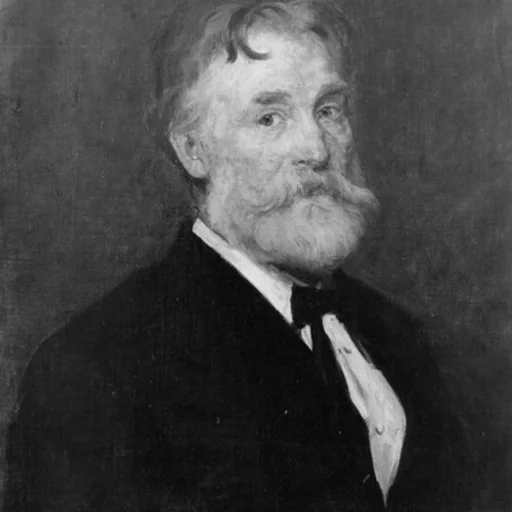
Artist
Guillaume Victor Van der Hecht, (30 June 1817, Brussels - 10 September 1891, Brussels) was a Belgian landscape painter, lithographer and designer; in the Romantic style.