Artwork
Autumn Meadows
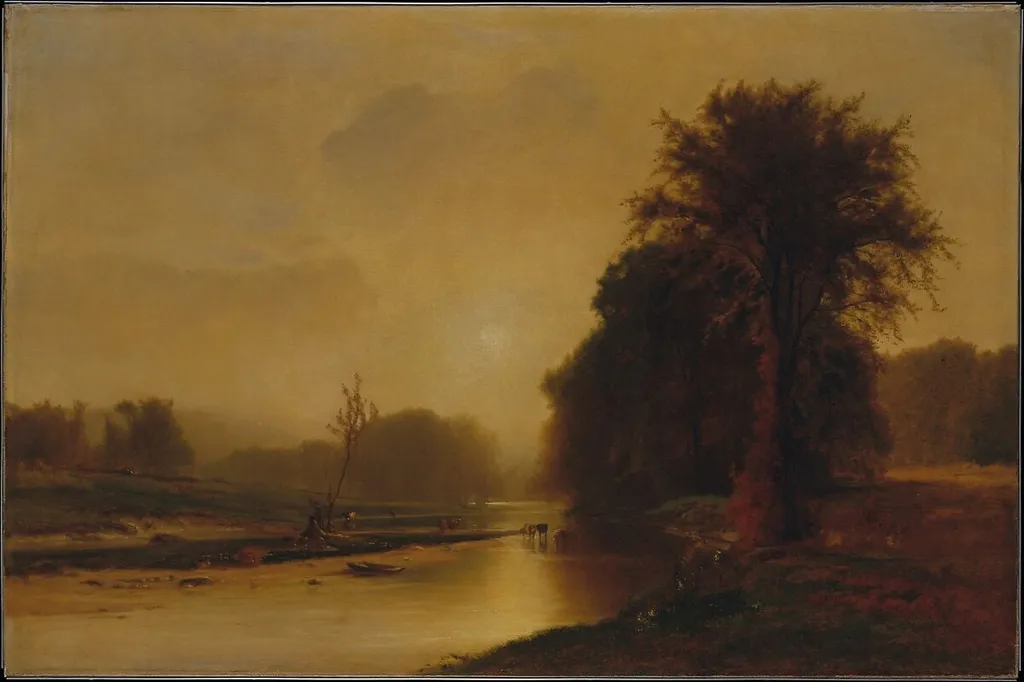
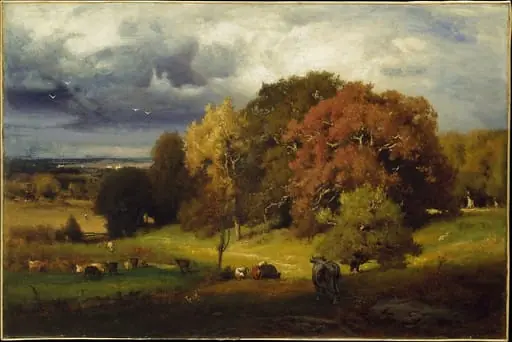
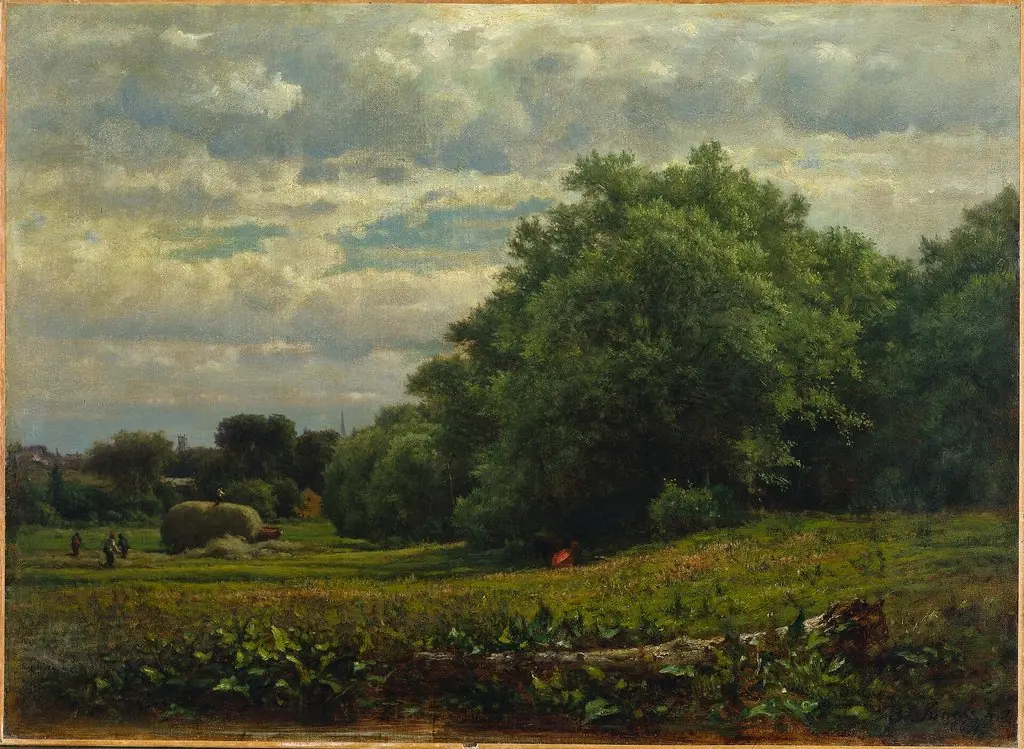
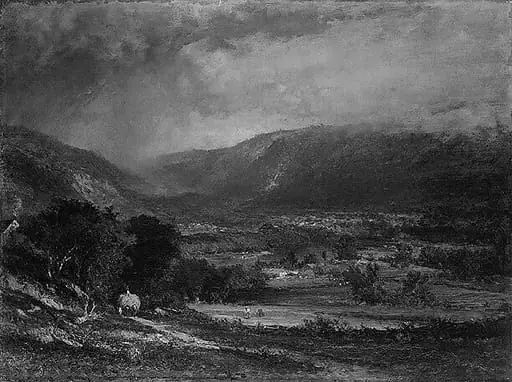
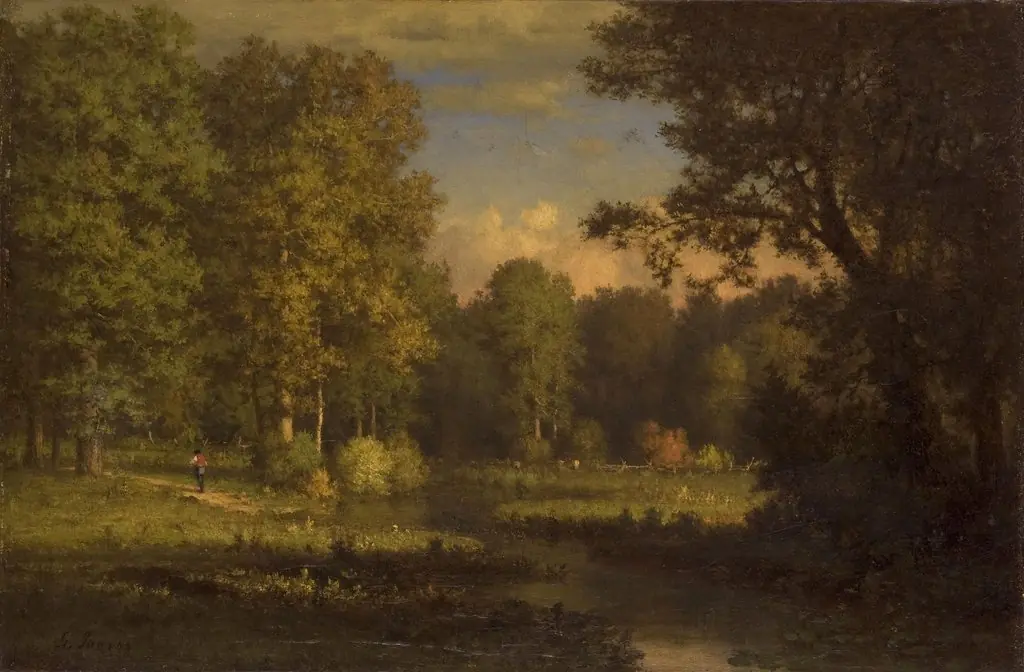
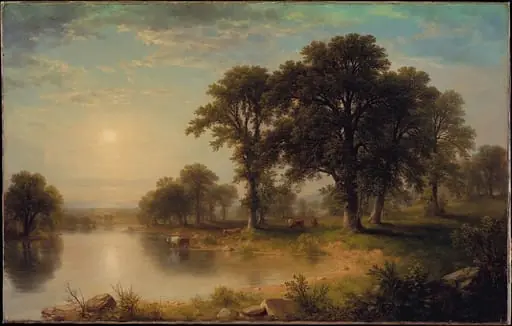
Autumn Meadows is an oil painting by the Barbizon school artist George Inness. It dates from 1869 and is held in the collection of the Metropolitan Museum of Art.
About this work
Technique & Style
Autumn Meadows is executed in oil paint on canvas, a standard support for mid-19th-century American landscape production.
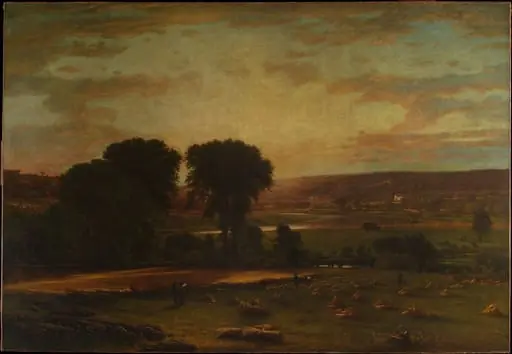
Autumn Meadows is executed in oil paint on canvas, a standard support for mid-19th-century American landscape production. The canvas measures 76.2 by 115.6 centimeters, a horizontal format well suited to its panoramic landscape composition depicting a river and trees. Stylistically, the work is associated with the American Barbizon school, a movement that favored naturalistic, atmospheric landscape handling over the more finished academic manner of earlier American painting.
Inness's brushwork in this period characteristically softened contours and blended tonal transitions to evoke mood rather than precise topography, aligning the painting with the loose, painterly approach of the Barbizon-influenced generation.
History & Provenance
Autumn Meadows is an oil-on-canvas landscape painting created by George Inness in 1869. The work, measuring 76.2 cm in height and 115.6 cm in width, depicts a river and trees within the American Barbizon school movement. It is currently held by the Metropolitan Museum of Art in its American Wing collection.
The specific commission details and the full chain of ownership prior to its museum acquisition are not detailed in the provided records, and no accession number is specified. The creation date is consistently recorded as 1869 across available sources.
Legacy
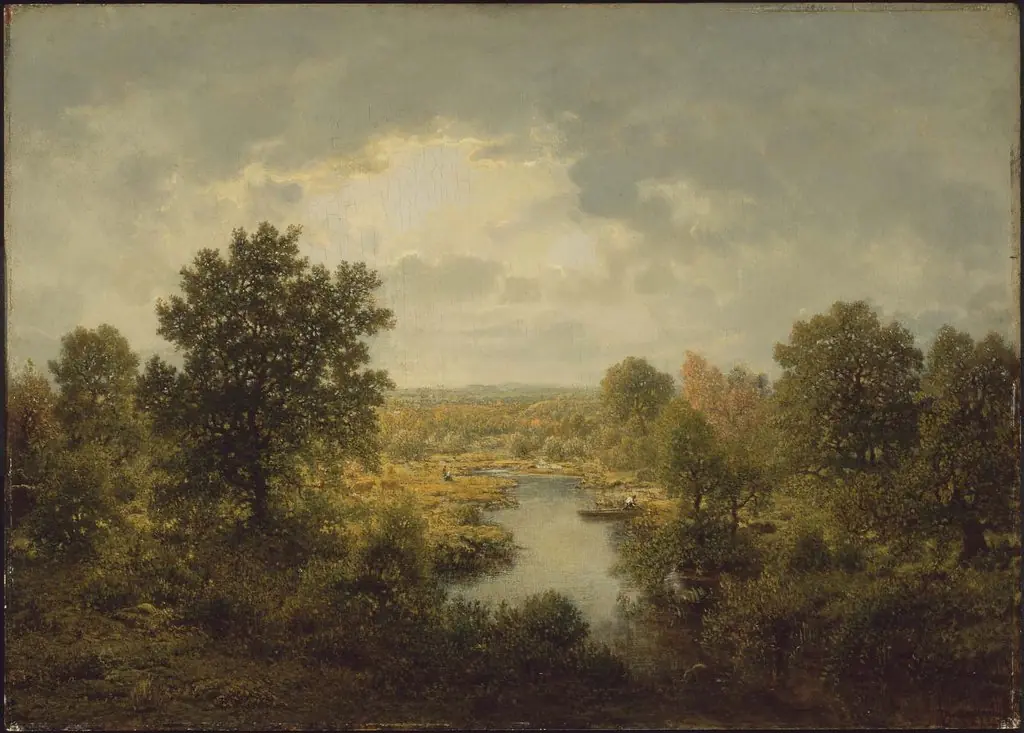
Autumn Meadows (1869) by George Inness is an oil on canvas associated with the American Barbizon school and is part of the Metropolitan Museum of Art’s collection, displayed in The American Wing. The work depicts a river and trees within a meadow, a composition typical of Inness’s naturalistic landscapes of this period. Its place in a major museum collection has supported continued scholarly discussion of Inness’s role in nineteenth‑century American landscape painting.
Overview
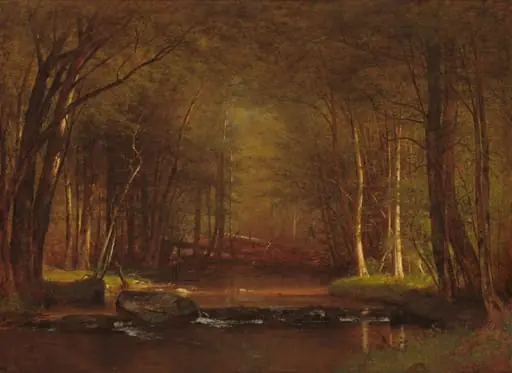
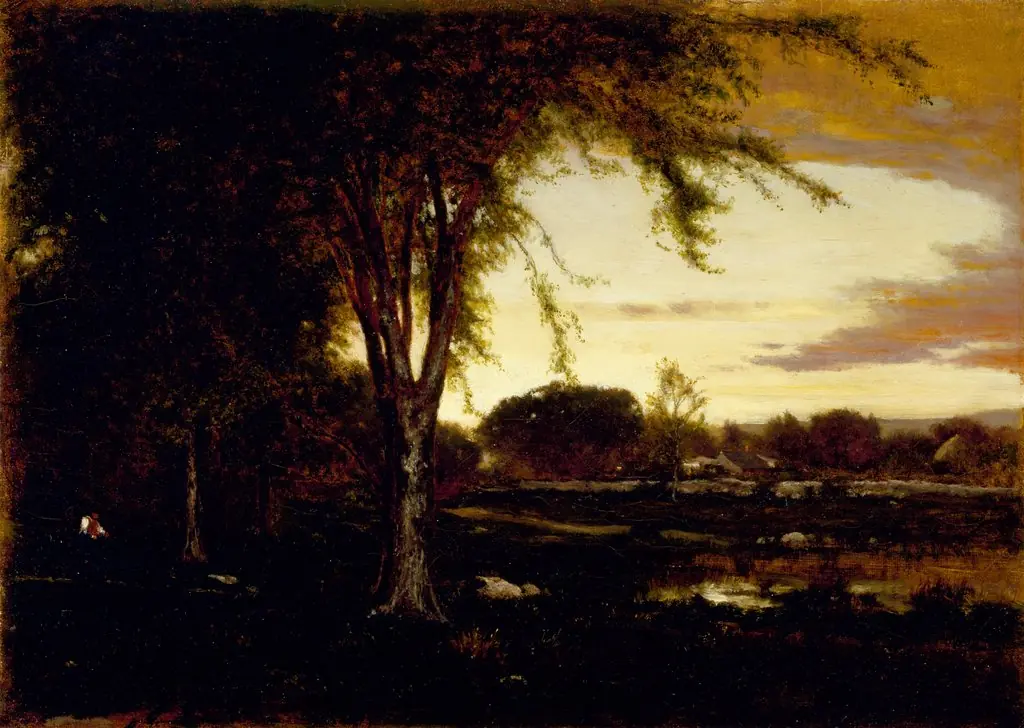
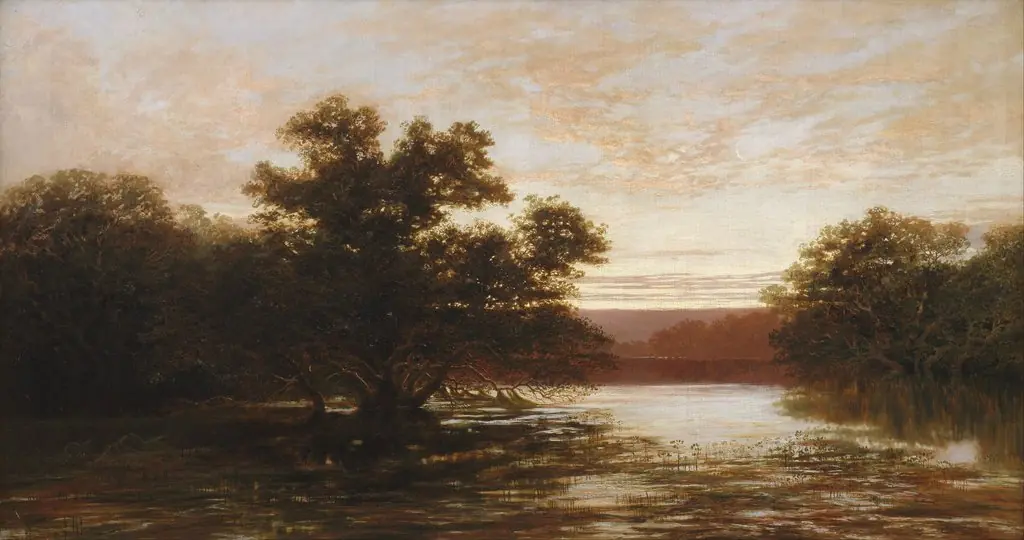
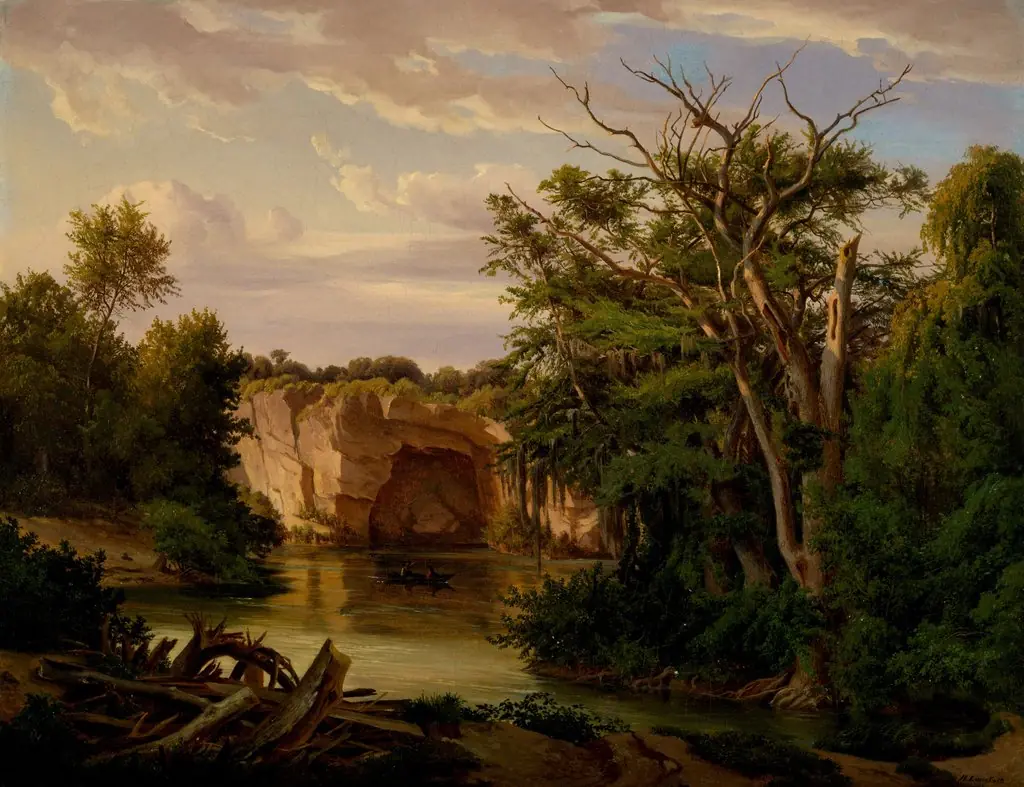
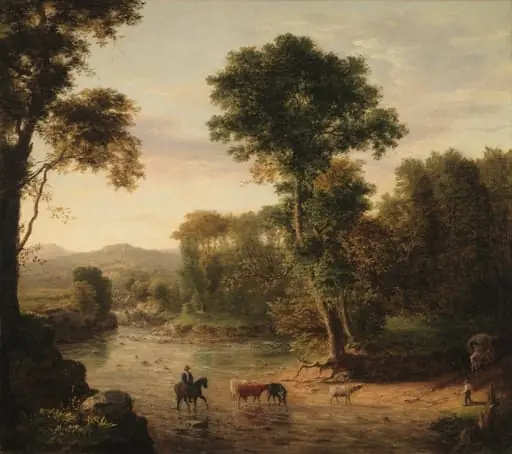
Autumn Meadows, an oil on canvas painting, depicts a serene autumnal landscape. The composition features rolling hills bathed in a soft, diffused light, with a tranquil river winding through slopes rendered in warm hues of orange and green. Tall trees with branches heavy with fading foliage punctuate the scene, contributing to the work's quiet yet vibrant atmosphere. This piece is part of the American Wing collection.
Subject & Meaning
The painting captures the essence of a tranquil autumn day, where nature's transition is presented with a sense of calm vitality. Gentle slopes, a quiet river, and trees adorned with changing leaves evoke a reflective mood. The interplay of warm colors and soft light suggests a moment of peaceful coexistence between the fading season and enduring natural beauty, inviting contemplation of the landscape's inherent stillness and life.
Context
George Inness was known for his evocative landscape paintings, and Autumn Meadows exemplifies his characteristic gentle style. His broader body of work often explores the nuanced beauty of natural environments, emphasizing atmospheric conditions and emotional resonance over precise topographical detail. This painting reflects his consistent artistic vision, where landscapes are imbued with a sense of quietude and an almost spiritual connection to nature, inviting viewers into a contemplative experience.
Artist & collection

Artist
George Inness (May 1, 1825 – August 3, 1894) was an American landscape painter. Now recognized as one of the most influential American artists of the nineteenth century, Inness was influenced by the Hudson River School…