Artwork
The Liqueur Drinkers
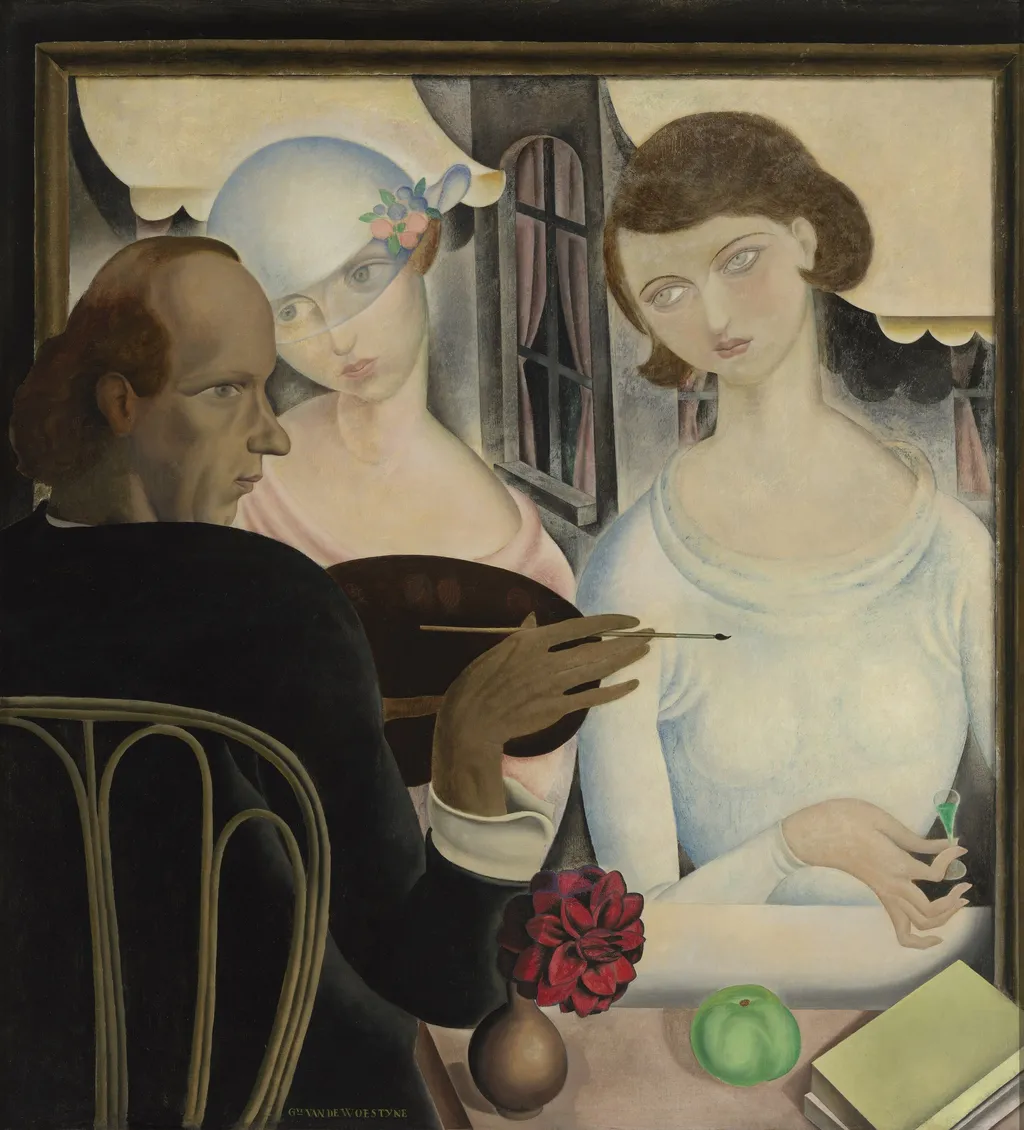
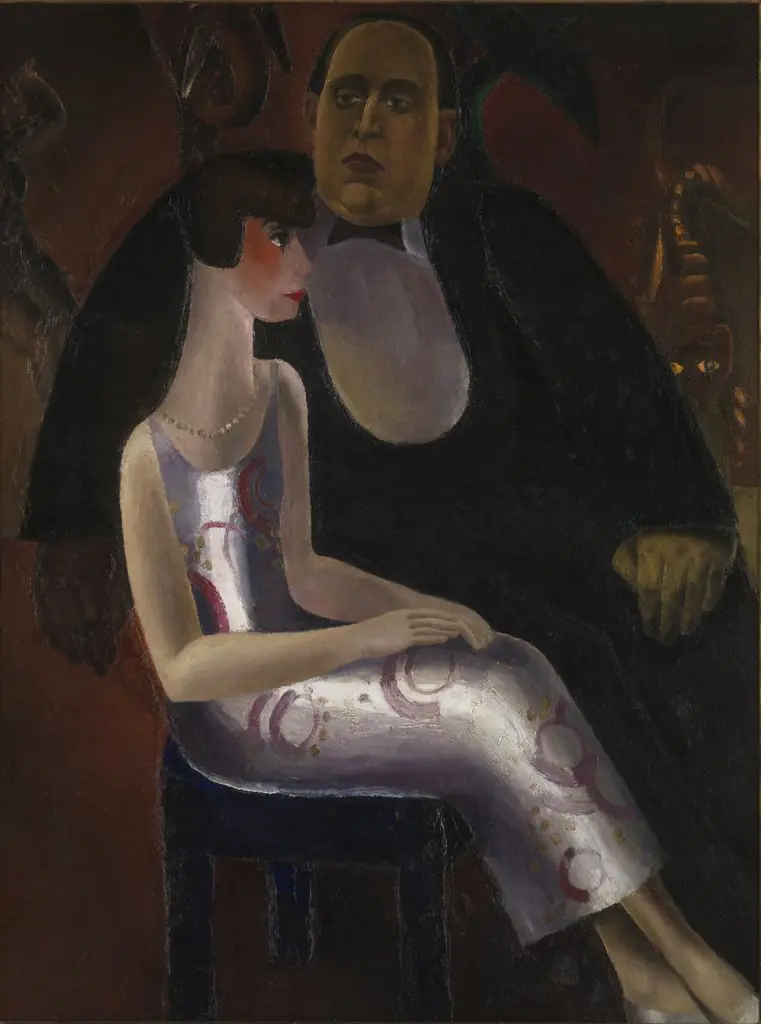
The Liqueur Drinkers is an oil painting by Gustave Van de Woestijne. It dates from 1922 and is held in the collection of the Royal Museum of Fine Arts Antwerp.
About this work
Subject & Meaning
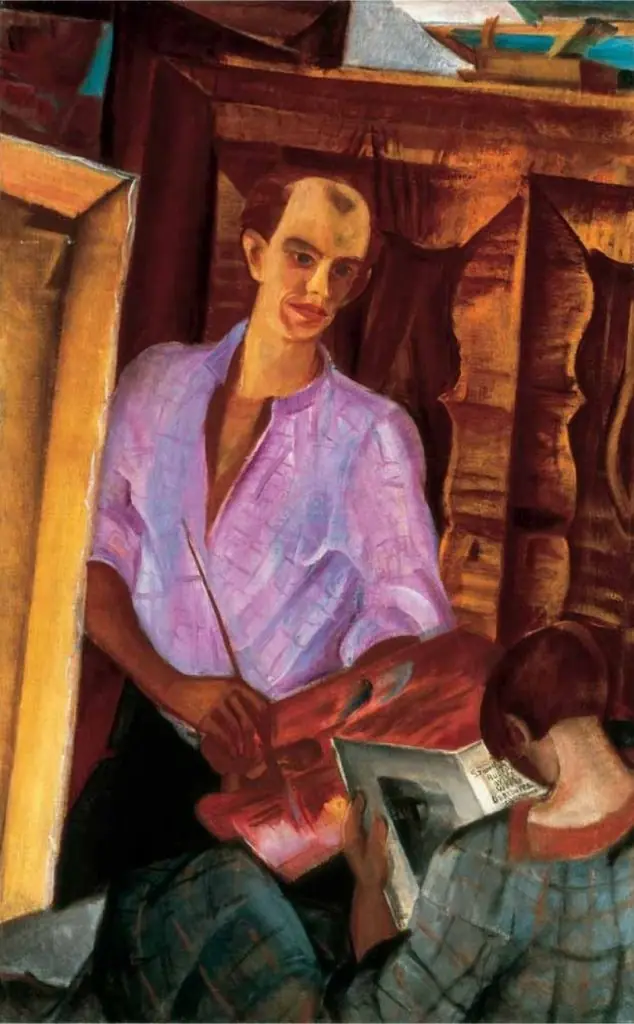
The artist presents himself in a pose reminiscent of ancient Egyptian figures, standing alongside the girls who wear pastel-colored dresses.
The work depicts Gustave Van de Woestijne in profile, dressed in a dark suit and holding a palette and brush, accompanied by two young women identified as liqueur drinkers. The artist presents himself in a pose reminiscent of ancient Egyptian figures, standing alongside the girls who wear pastel-colored dresses. A painted frame within the composition visually separates the artist from the two female figures, one of whom is identified as Maria, the daughter of Valerius de Saedeleer.
The painting explores complex spatial relationships by eliminating the physical distance between the creator and his canvas, creating an illusion where the artist and his subjects occupy the same immediate space. This arrangement reflects the artist's difficulty in detaching himself from the completed work, blending genre art with self-portraiture through an expressionist lens.
Technique & Style
Executed in 1922, The Liqueur Drinkers is an oil painting on canvas measuring 109.5 cm in height and 99 cm in width. The work exemplifies the expressionist style characteristic of Gustave Van de Woestijne around 1920, blending genre elements with self-portraiture. Stylistically, the artist manipulates perspective to eliminate spatial separation between the painter and his depicted subjects, creating an immediate visual plane.
The composition also incorporates formal experiments with shape reminiscent of Parisian Cubism. Visually, the piece features the artist in profile wearing a dark costume and holding a palette, juxtaposed against two figures in pastel-colored dresses. A painted frame within the work serves to visually separate the artist from the two women, adding a layer of meta-narrative to the handling of the medium.
History & Provenance
The painting was created by Gustave Van de Woestijne in 1922. It entered the collection of the Royal Museum of Fine Arts Antwerp, where it remains held. The work is documented as part of the artist’s Expressionist phase around 1920, depicting himself in profile alongside two seated women in pastel dresses. One of the figures is identified as Maria, daughter of Valerius de Saedeleer.
No record of a private commission or pre‑museum ownership has been traced in the available sources.
The Liqueur Drinkers is held by the Royal Museum of Fine Arts Antwerp, which lists the 1922 oil-on-canvas work among its collection. The painting, measuring 109.5 by 99 cm, is regarded as one of the highlights of Gustave Van de Woestijne's oeuvre within that museum's holdings.
No specific accession number, acquisition date, or documented exhibition history is provided in the available sources.
Context
Created in 1922, The Liqueur Drinkers is recognized as a premier work within Gustave Van de Woestijne's oeuvre and a defining example of his expressionist style from the period around 1920. The painting is held in the collection of the Royal Museum of Fine Arts Antwerp. Art-historical analysis highlights the artist's manipulation of perspective and form, noting a distinct engagement with Cubist techniques reminiscent of those developed by artists in Paris.
The composition features the artist depicting himself in profile alongside two figures, utilizing a visual structure that evokes ancient Egyptian imagery. This synthesis of expressionist color and geometric form situates the work as a significant contribution to early 20th-century Flemish art.
Legacy
Created in 1922, The Liqueur Drinkers is recognized as one of the top pieces within the oeuvre of Gustave Van de Woestyne. The work is held in the collection of the Royal Museum of Fine Arts Antwerp, where it serves as a significant example of the expressionist style that characterized the artist's output around 1920. The painting is noted for its complex engagement with perspective and form, drawing stylistic comparisons to the Cubists in Paris and incorporating elements reminiscent of ancient Egyptian imagery.
Its reputation rests on this sophisticated interplay between the artist, depicted in profile with tools of his trade, and the figures within the canvas, which are separated by a painted frame.
Overview
The Liqueur Drinkers, an oil painting from 1922, is a work by Belgian Expressionist Gustave Van de Woestijne. Contrary to its title, the piece is not a depiction of liqueur consumption but rather a portrait with the artist himself as a central, yet obscured, figure.
Own this work as a print
Artist & collection
Artist
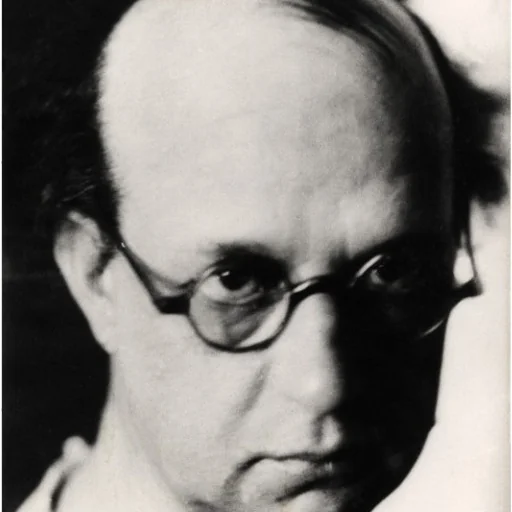
Gustave Van de Woestijne (Dutch:; 2 August 1881 – 21 April 1947) was a Belgian expressionist painter.