Artwork
Ruine d'une Gallerie Antique de Rome
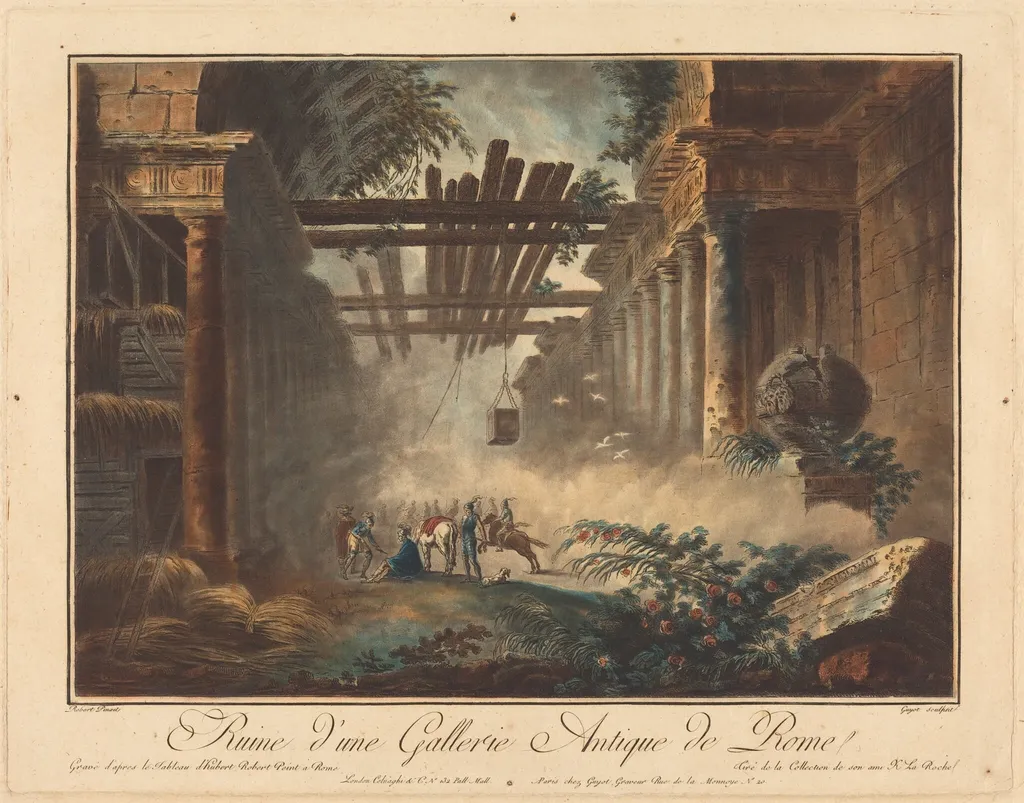
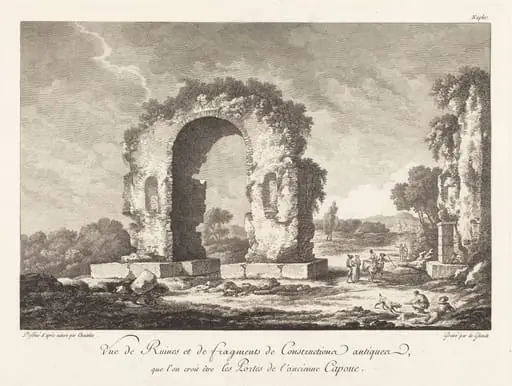
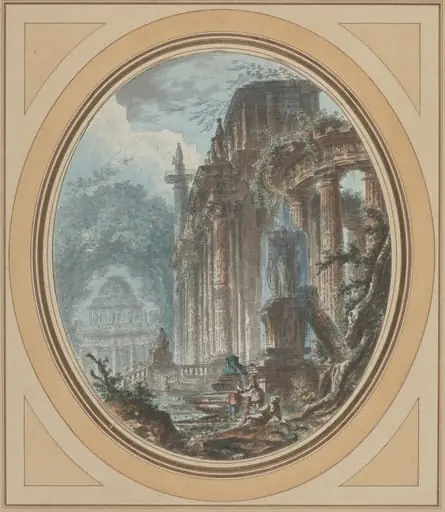
Ruine d'une Gallerie Antique de Rome is an ink print by the Romanticist artist Laurent Guyot. It dates from 1796 and is held in the collection of the National Gallery of Art.
- Inscription
- Inscribed:recto: in plate, below image, at left: Robert Pinxit; in plate, below image, at right: Guyot sculpsit; in plate, below image, at center: Ruine d'une Gallerie Antique de Rome / Gravé d'apres le Tableau d'Hubert Robert Peint a Rome Tiré de la Collection de son ami K. La Rochel / London Colnaghi & C No 32 Pall Mall AParis chez Guyot Graveur Rue de la Monnoye No 20; at bottom left, in graphite, in later hand: 2d4 [?]; verso: at upper left, in graphite, in later hand: 5/; at lower left, in graphite, in later hand: B25034; at lower right, in graphite, in later hand: 887 / Pair YEX
- Markings
- Marked:recto: circle with shield [?] stamped in black at lower left (not in Lugt); verso: National Gallery of Art
About this work
Overview
Laurent Guyot’s 1796 print, Ruine d’une Gallerie Antique de Rome, presents a dilapidated Roman gallery rendered in color etching and wash on laid paper. The composition centers on a mist‑shrouded architectural ruin, its stone walls and columns overtaken by vegetation, while a wooden framework hangs from the vaulted ceiling, creating a palpable sense of abandonment.
Subject & Meaning
The scene juxtaposes the decay of antiquity with contemporary figures: a horse‑mounted group traverses the foreground, and a kneeling woman in a blue dress attends to a fallen man, a dog at their feet. This arrangement evokes Romantic notions of the sublime, highlighting the transience of human endeavors against the enduring, yet crumbling, remnants of the past.
Technique & Style
Guyot employed a combination of line etching and watercolor wash, exploiting the texture of laid paper to convey atmospheric depth. The delicate tonal gradations in the mist and foliage contrast with the precise rendering of architectural elements, reflecting the late‑18th‑century shift toward more expressive, painterly qualities in printmaking.
History & Provenance
Created in 1796, the work belongs to the period when French artists were increasingly fascinated by classical ruins as subjects for romantic imagination. While specific ownership records are scarce, the print has appeared in several 19th‑century catalogues of French etchers, indicating its circulation among collectors of antiquarian imagery.
Context
The image aligns with the broader Romantic movement’s preoccupation with ruins, nature’s reclamation, and emotional resonance. In the wake of the French Revolution, such depictions served both as nostalgic reflections on a lost past and as allegories for societal upheaval, resonating with contemporary audiences attuned to themes of decay and renewal.
Own this work as a print
Artist & collection