Artwork
Nine-Dragon Falls
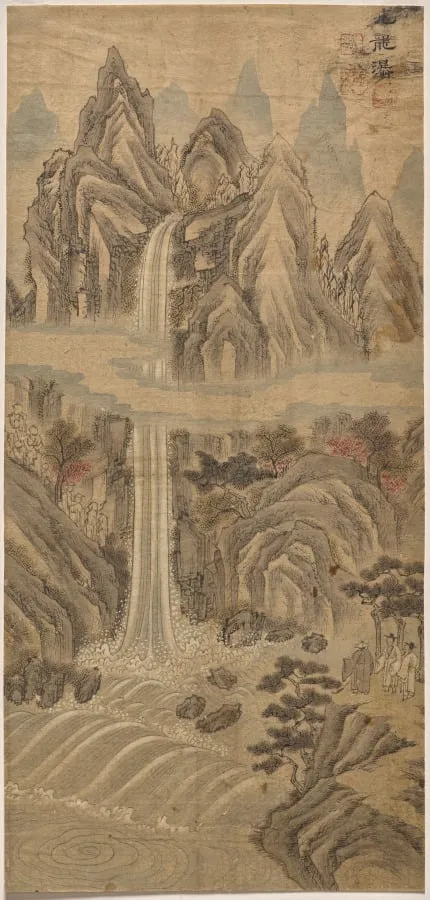
Nine-Dragon Falls is an unspecified painting by the Impressionist artist Han Unpyeong. It dates from 1804 and is held in the collection of the Cleveland Museum of Art.
- Accession no.
- 1915.215
About this work
This spot, Nine-Dragon Falls, was a real place in Korea’s Diamond Mountain, a favorite stop for travelers in the 1800s.
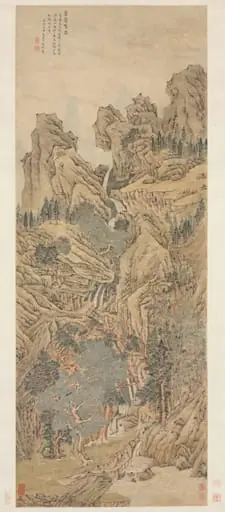
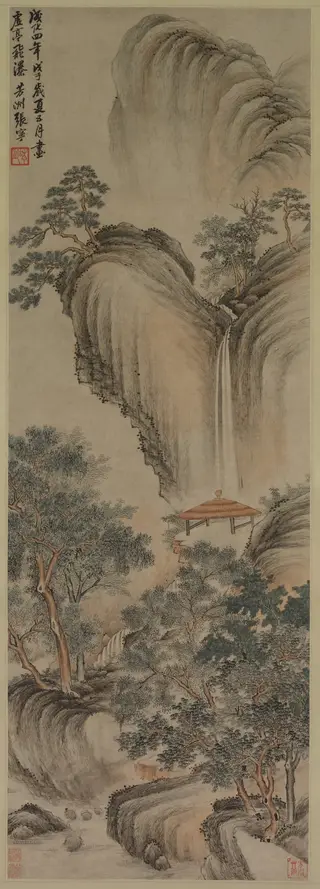
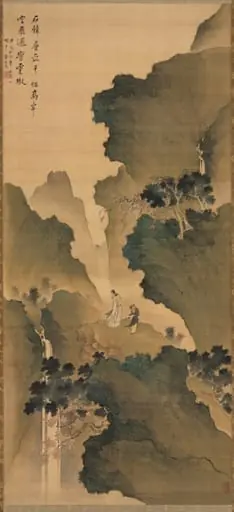
You see a wild waterfall splitting a rocky gorge, mist rising like smoke, while three tiny figures watch from a cliff.
This spot, Nine-Dragon Falls, was a real place in Korea’s Diamond Mountain, a favorite stop for travelers in the 1800s. The painter shows the roar of the water by making the cliffs look small and the spray look huge.
If you like how the scene feels alive, look up Korea, Joseon dynasty (1392–1910).
Overview
Nine-Dragon Falls is a painting depicting a scenic waterfall at the Diamond Mountain in North Korea.
Subject & Meaning
The painting shows the Nine-Dragon Falls, a V-shaped valley with a rushing waterfall, and three figures, a Buddhist monk and two scholar tourists, observing the spectacle from a cliff.
Technique & Style
The artist conveys the power of the waterfall by contrasting its massive spray with the tiny figures and surrounding cliffs, creating a sense of dynamic energy.
Context
The Diamond Mountain, where the falls are located, was a popular destination for travelers during the Joseon dynasty (1392–1910).
Artist & collection