Artwork
明 居節 石泉圖 軸|Recluse gazing at a waterfall
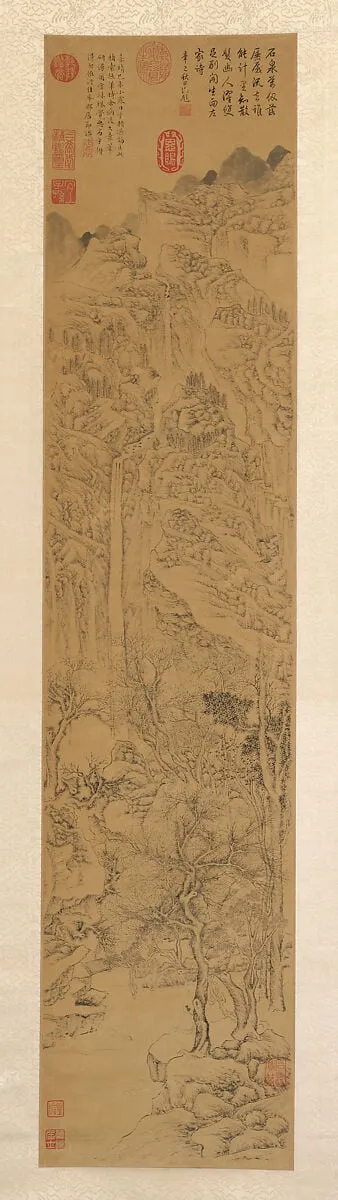
明 居節 石泉圖 軸|Recluse gazing at a waterfall is an ink painting by the Ming dynasty painting artist Ju Jie. It dates from 1559 and is held in the collection of the Metropolitan Museum of Art.
About this work
Subject & Meaning
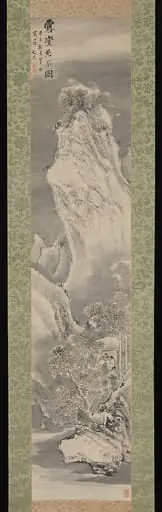
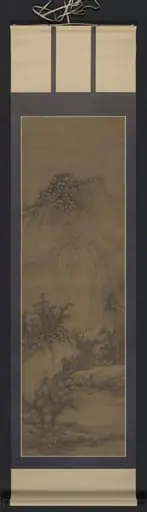
Created in 1559 by the Ming dynasty artist Ju Jie, this hanging scroll depicts a solitary figure, interpreted as a recluse, gazing at a waterfall.
Created in 1559 by the Ming dynasty artist Ju Jie, this hanging scroll depicts a solitary figure, interpreted as a recluse, gazing at a waterfall. The work is classified as a landscape painting executed in ink on paper. The central iconography focuses on the interaction between the human observer and the powerful natural element of the falling water.
While the specific symbolic intent is not explicitly detailed in the available records, the composition aligns with the genre of landscapes that often explore themes of reclusion and the contemplation of nature.
Technique & Style
The work is a hanging scroll executed in monochrome ink on paper, a traditional format and medium for Chinese literati landscape painting of the Ming period. Its narrow vertical proportions, measuring 110.5 cm in height by 24.8 cm in width, are characteristic of the hanging-scroll format suited to a single standing motif, in this case a waterfall descending through a rocky landscape.
Stylistically, the painting belongs to the monochrome ink landscape tradition associated with literati painters of the era, using brush and ink on absorbent paper to render the cascading water and surrounding terrain. The narrow format concentrates attention on the vertical fall of water, a compositional device typical of Ming-dynasty landscape scrolls.
History & Provenance
Created in 1559 in China, the hanging scroll titled 明 居節 石泉圖 軸 (Recluse gazing at a waterfall) was painted by Ju Jie using ink on paper. The work measures 110.5 cm in height and 24.8 cm in width. The scroll belongs to the landscape genre and portrays a waterfall, reflecting the artistic conventions of mid-16th-century Chinese literati painting.
It is held by the Metropolitan Museum of Art, New York. The specific chain of ownership prior to its museum acquisition and any exhibition history are not detailed in the available records.
Overview
Created in 1559 by the Ming‑period painter Ju Jie, this hanging scroll presents a monochrome ink landscape. A solitary figure stands on a craggy ledge, his gaze fixed on a cascade that plunges down a sheer cliff. The composition is rendered entirely in ink on paper, emphasizing line and wash rather than colour.
Context
During the Ming dynasty, many literati turned to landscape painting as a refuge from political turbulence. This work reflects that cultural tendency, portraying a hermit‑like figure immersed in a natural setting as an expression of personal and philosophical retreat.
Legacy
Waterfall scenes remain a recurring motif in Chinese ink painting, each iteration offering a distinct narrative. Ju Jie’s rendition contributes to this tradition by coupling a solitary observer with a dynamic natural element, reinforcing the enduring dialogue between humanity and the environment.
Artist & collection


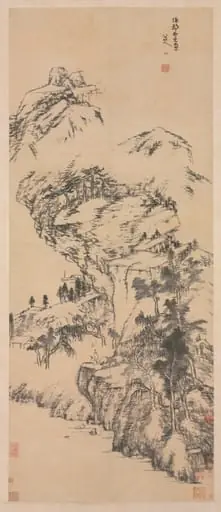
- Landscape after Guo Zhongshu
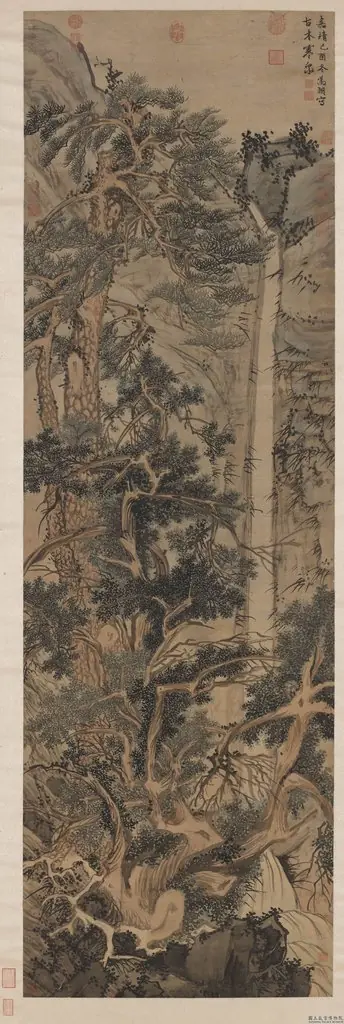 Old Trees by a Cold Waterfall
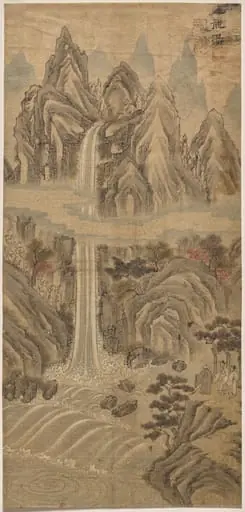 Nine-Dragon Falls
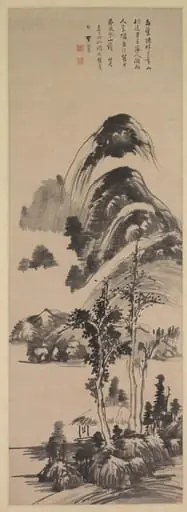 Thin Forest and Distant Mountains
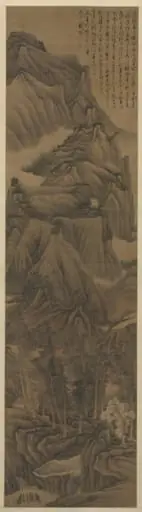 Landscape in the Style of Dong Yuan and Juran
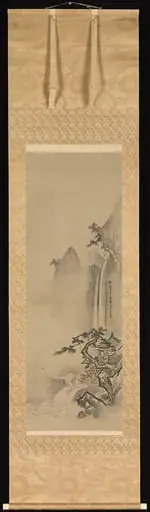 狩野探幽筆 神農・夏冬山水図|Summer Landscape
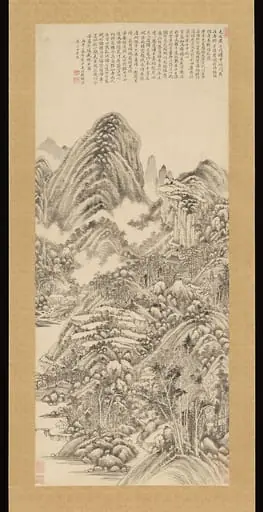 清 王時敏 仿黃公望山水圖 軸 絹本|Landscape in the style of Huang Gongwang
 Untitled
 明文徵明古木寒泉 軸
 明 侯懋功 高山圖 軸 |High Mountains
 清 王翬 倣李成雪霽圖 軸|Snow Clearing: Landscape after Li Cheng
 Buddhist Retreat by Stream and Mountains