Artwork
Flagellation of Christ
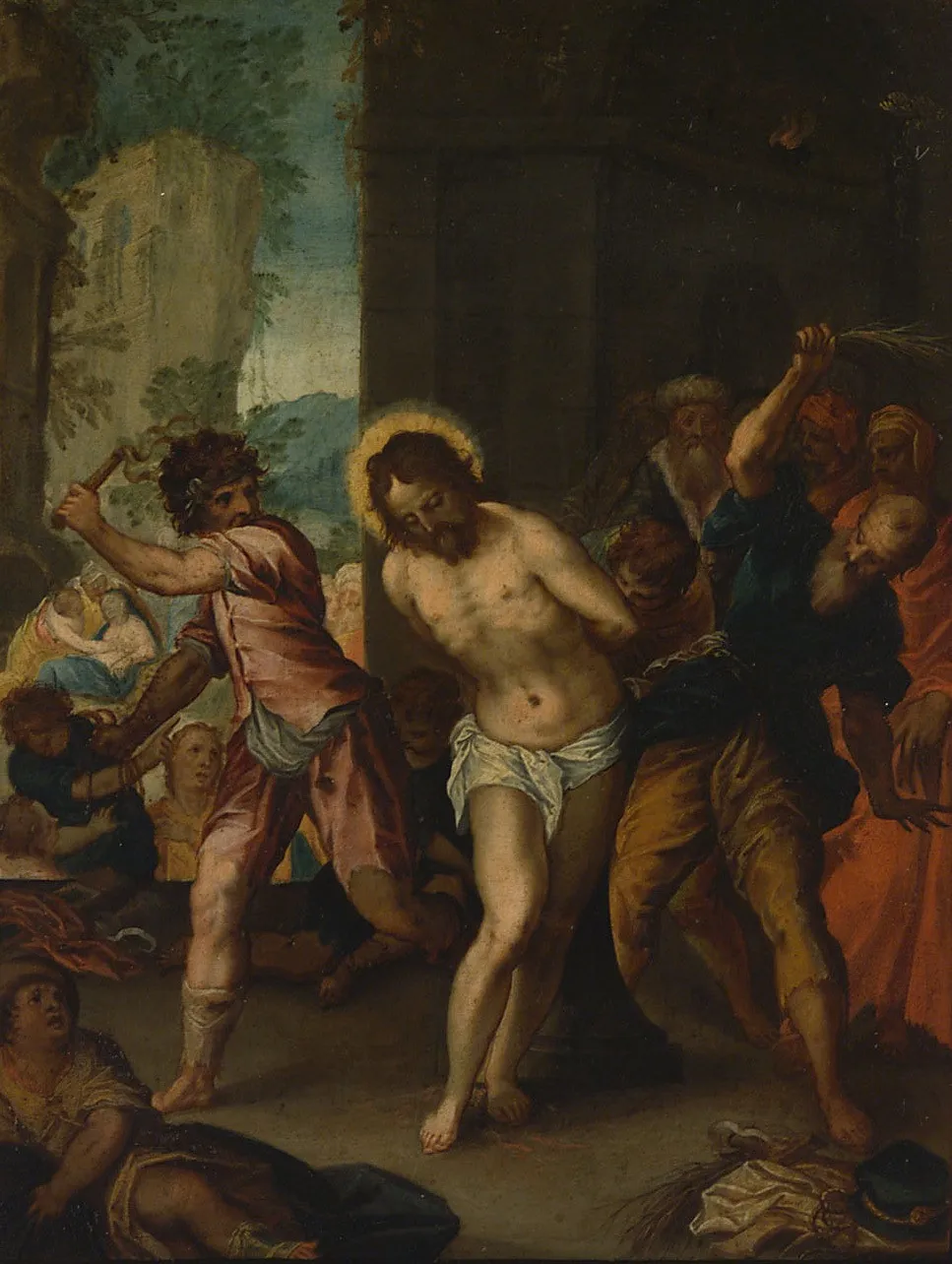
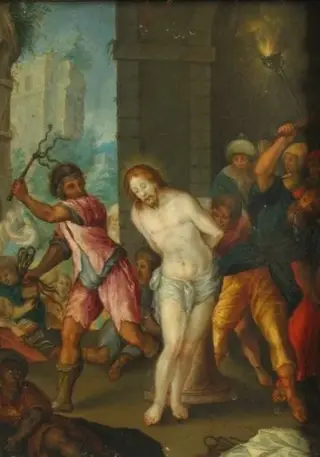
Flagellation of Christ is an oil painting by the Mannerist artist Hans Rottenhammer. It dates from 1599 and is held in the collection of the Kunsthistorisches Museum.
About this work
Subject & Meaning
Hans Rottenhammer’s 1597 painting Flagellation of Christ depicts the moment of Christ’s scourging, a scene drawn from the Passion narrative in the Gospels.
Hans Rottenhammer’s 1597 painting Flagellation of Christ depicts the moment of Christ’s scourging, a scene drawn from the Passion narrative in the Gospels. The work emphasizes the physical torment inflicted upon Jesus, underscoring themes of sacrifice and redemption within Christian iconography. Rendered in oil on copper, the composition focuses on the figure of Christ at the center, surrounded by soldiers administering the punishment, highlighting the suffering endured for spiritual salvation.
Technique & Style
Executed in 1597, this religious painting by Hans Rottenhammer utilizes oil paint applied to a copper support. The work measures 32 cm in height and 25 cm in width. The choice of copper as a substrate was characteristic of the artist's practice during this period, allowing for fine detail and a luminous surface quality typical of late sixteenth-century devotional imagery.
History & Provenance
Hans Rottenhammer created the oil-on-copper painting Flagellation of Christ in 1597. The work measures 32 cm in height and 25 cm in width. Since its inception, the painting has been held in the collection of the Kunsthistorisches Museum in Vienna. The piece depicts the religious subject of the flagellation of Jesus Christ.
The painting Flagellation of Christ by Hans Rottenhammer is held in the collection of the Kunsthistorisches Museum. Created in 1597, this work on copper depicts the religious subject of the flagellation of Jesus Christ. The provided sources do not contain specific inventory or accession numbers for the artwork, nor do they list any exhibition history or past display locations.
Overview
Hans Rottenhammer’s Flagellation of Christ (1599) is a modestly sized copper panel that presents the biblical episode of Christ’s scourging. Executed in the late‑Mannerist idiom, the composition centers on a half‑clothed Christ, crowned with thorns, being struck by a tormentor while a surrounding crowd reacts with a mixture of shock and avoidance. The work resides in the Kunsthistorisches Museum’s collection.
Context
Created during a period when copper panels were prized for their durability and capacity for fine detail, the work aligns with a broader trend among German and Italian painters to explore complex compositions and heightened emotional expression. Rottenhammer’s cross‑cultural training, bridging Northern precision with Italianate elegance, places the piece within the transnational artistic exchanges of the late Renaissance.
Artist & collection
Artist
Johann Rottenhammer, or Hans Rottenhammer (1564 – 14 August 1625), was a German painter. He specialized in highly finished paintings on a small scale.