Artwork
Priory Farm, Stoke
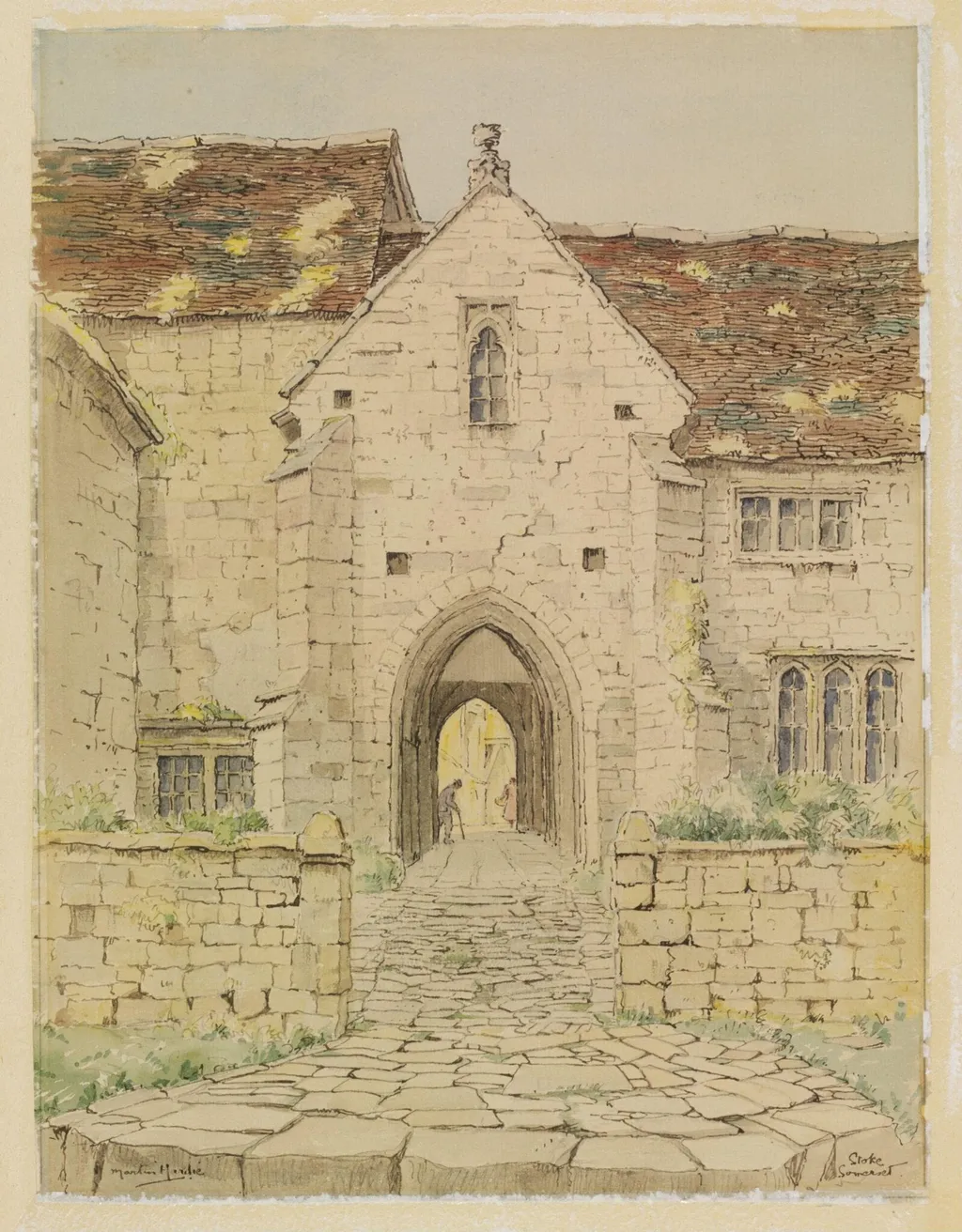
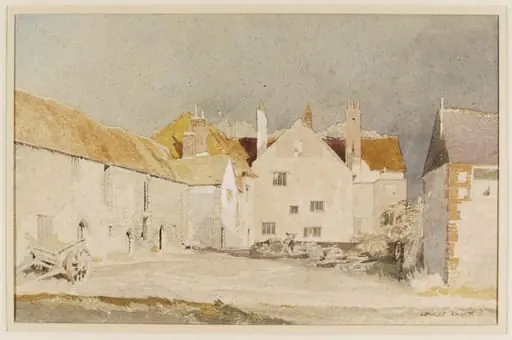
Priory Farm, Stoke is a watercolor work on paper by the Regionalist artist Hardie. It dates from 1940 and is held in the collection of the Victoria and Albert Museum.
About this work
Overview
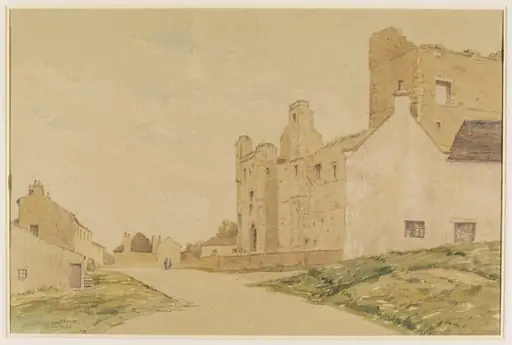
A cobbled approach leads to the entrance, where two figures stand, and sparse vegetation sprouts in the cracks, giving the scene a quiet, aged atmosphere.
The watercolour titled Pripri Farm, Stoke was executed by the artist Hardie in 1940. Rendered in a modest palette, the painting records a stone-built farm complex with a central arched doorway, flanked by weathered walls, small windows and a steep tiled roof. A cobbled approach leads to the entrance, where two figures stand, and sparse vegetation sprouts in the cracks, giving the scene a quiet, aged atmosphere.
Subject & Meaning
The composition concentrates on an architectural study of a rural building, emphasizing the solidity of the stonework and the modest scale of the farmstead. By placing the viewer’s eye on the prominent arch, the work highlights the continuity of historic structures within a changing landscape, suggesting a quiet resilience of the countryside.
Technique & Style
Hardie employed traditional watercolour methods, using transparent washes to convey the softness of light and the texture of weathered stone. The delicate handling of shadows creates gentle gradations rather than harsh contrasts, while the limited detail in the figures and foliage keeps the focus on the built environment.
History & Provenance
The painting was produced as part of the Recording Britain project, a wartime government scheme launched in 1940 to document threatened historic and rural sites. Under the direction of Sir Kenneth Clark, artists were commissioned to create visual records of Britain’s heritage amid fears of wartime damage and post‑war modernization. The work now belongs to the Recording Britain collection.
Context
Created during the Second World War, the piece reflects a national effort to capture and preserve images of England’s countryside before they could be altered or destroyed. The emphasis on rural architecture aligns with the project’s aim to define a visual sense of national identity through depictions of historic farms, churches and villages.
Artist & collection
Artist
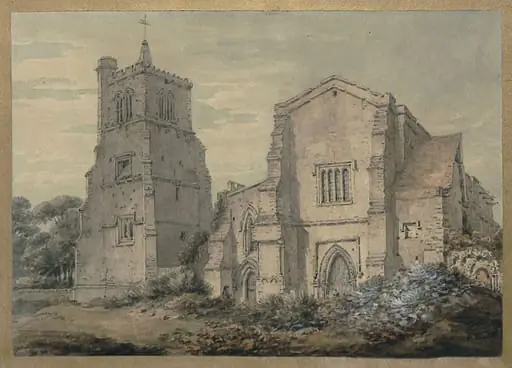
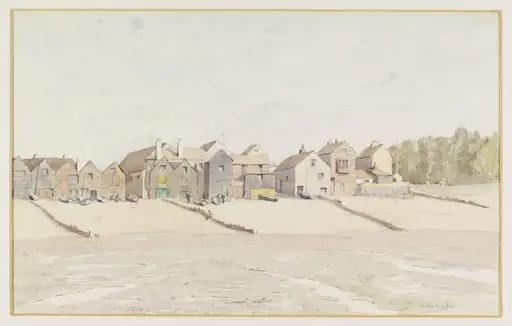
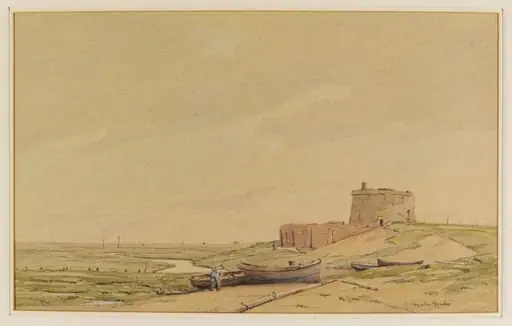
Hardie painted watercolours of quiet corners in 1930s and 1940s England, usually coastal or village scenes with buildings and daily life.

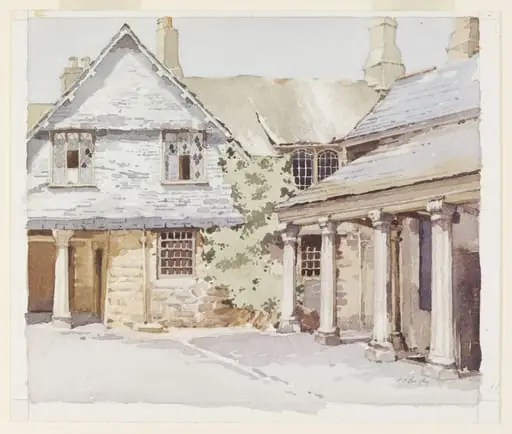 The Guildhall, Totnes
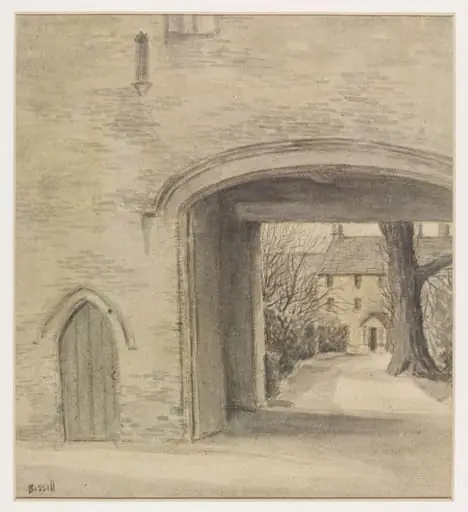 Old Monastery Doorway, now the entrance to Quenington Court, Quenington
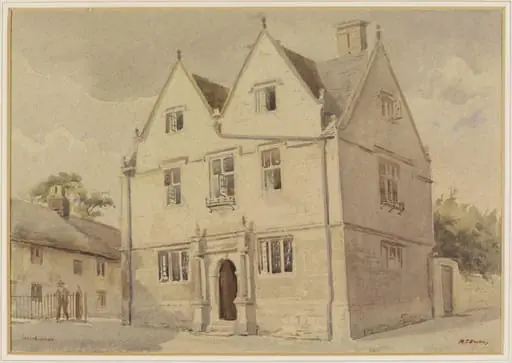 Jacobean House, Winchcombe
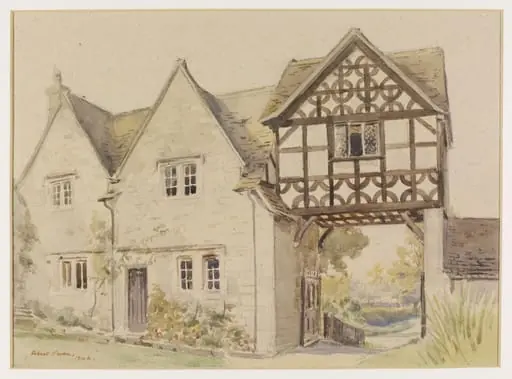 Gatehouse, Frocester Court
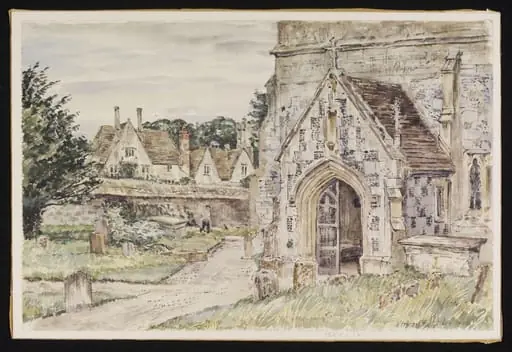 Church Porch and Manor, Avebury
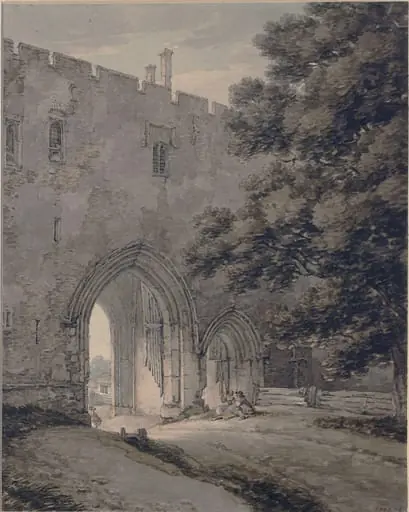 Monastery Gate, St. Albans
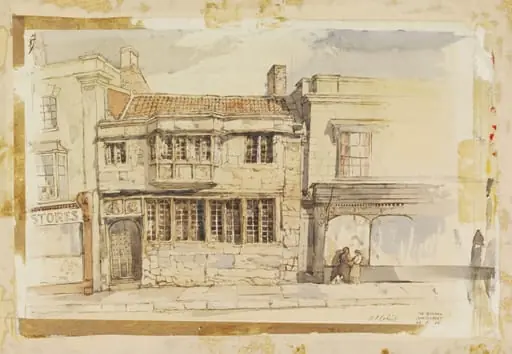 The Tribunal, Glastonbury
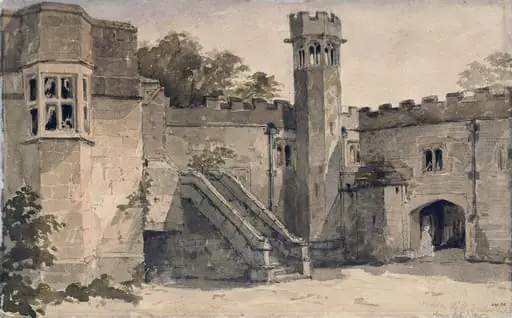 Courtyard of Haddon Hall, Derbyshire
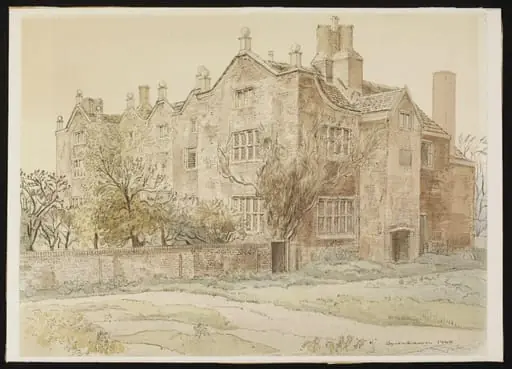 Hough End Hall, Manchester
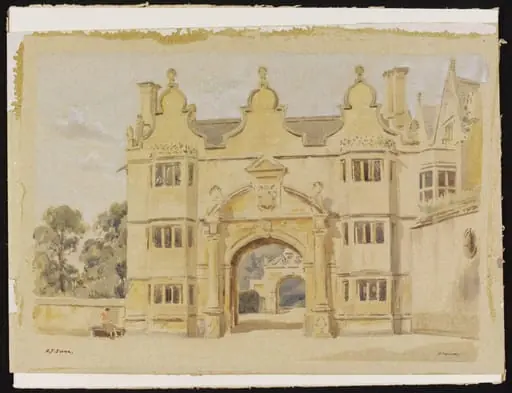 Entrance to Stanway House
 Hangleton Manor, near Brighton
- Priory church, Elstow, Bedfordshire