Artwork
A Village Street
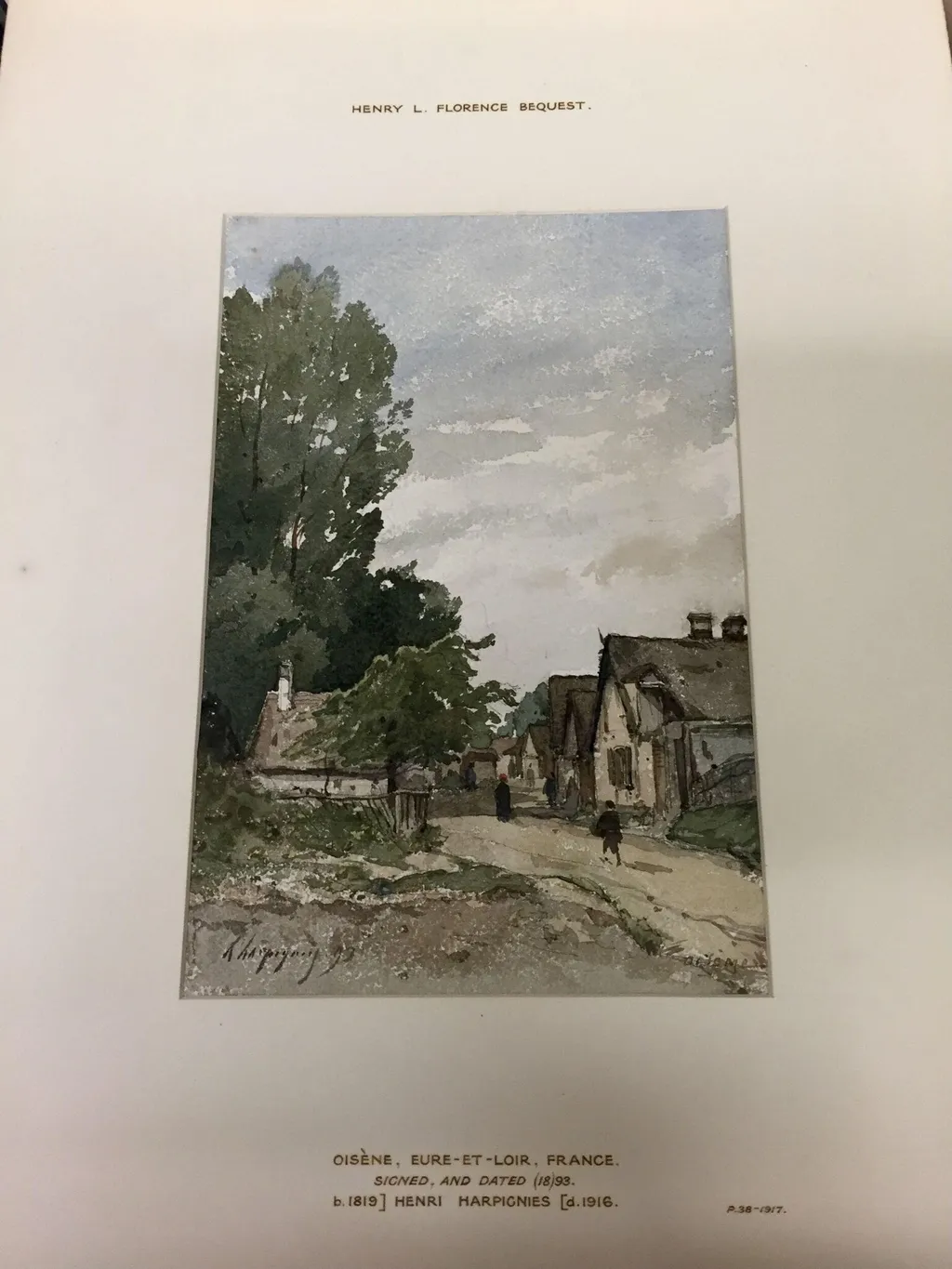
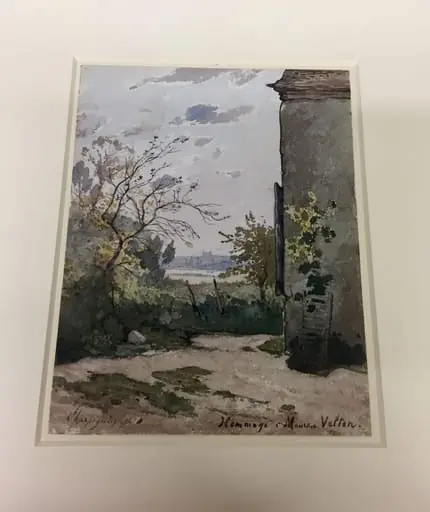
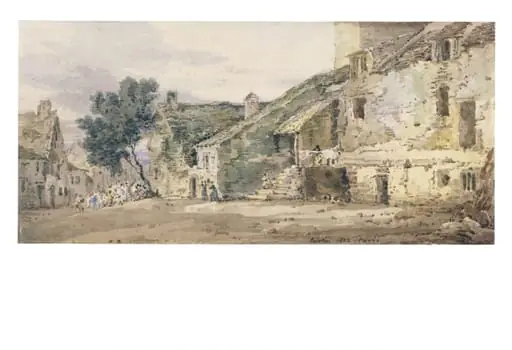
A Village Street is a watercolor work on paper by the Impressionist artist Henri Harpignies. It dates from 1893 and is held in the collection of the Victoria and Albert Museum.
About this work
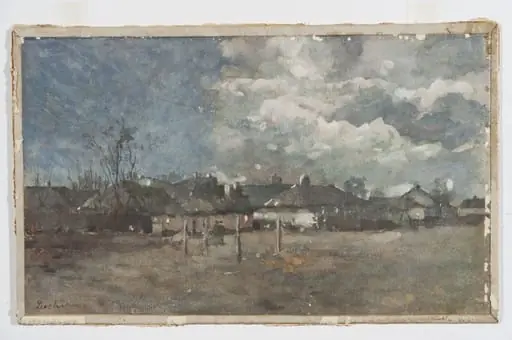
This painting shows a quiet village street with a few small houses and a dirt path.
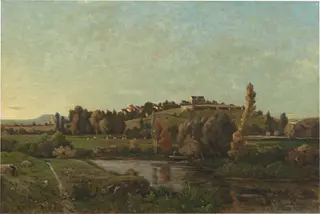
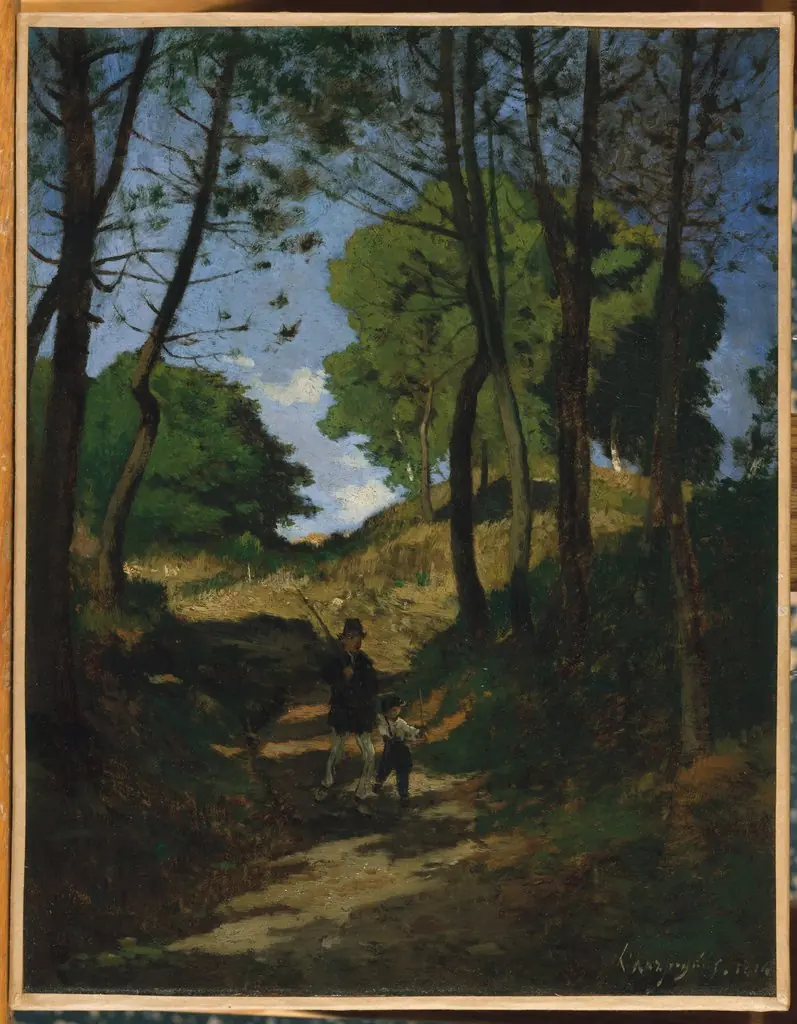
This painting shows a quiet village street with a few small houses and a dirt path. A lone tree stands tall on the left, its leaves bright green against a pale sky. Two people walk away from the viewer, one carrying a bundle. The buildings are simple, with shutters and a mix of earthy tones.
The artist signed and dated it 1893, marking it as a moment in time. The brushstrokes are loose, capturing light and shadow in a soft way.
Check out the Victoria and Albert Museum to see more works like this.
Overview
Henri‑Joseph Harpignies’ watercolour, dated 1893, portrays a modest lane in the French village of Oisème, situated in the Eure‑et‑Loir department. The composition captures a tranquil stretch of dirt road flanked by modest dwellings, under a pale sky that hints at early morning or late afternoon light.
Subject & Meaning
The scene focuses on everyday rural life: a solitary tree with vivid green foliage anchors the left side, while two figures, one bearing a bundle, walk away from the viewer, suggesting a moment of quiet departure. The modest architecture and unadorned street convey a sense of simplicity and continuity in provincial France.
Technique & Style
Executed in transparent watercolour, Harpignies employs loose, fluid brushstrokes that soften edges and blend light with shadow. The palette relies on earthy tones for the buildings, contrasted by the bright green of the tree and the muted sky, creating a harmonious balance between natural and built elements.
History & Provenance
Signed and dated by the artist in 1893, the work reflects Harpignies’ late‑career interest in rural French landscapes. It entered public collections in the early twentieth century and is now held by a major museum, where it is displayed alongside other examples of French watercolour from the period.
Context
Created during a period when French artists increasingly turned to the countryside for inspiration, the painting aligns with the broader 19th‑century movement toward naturalistic representation. Harpignies, known for his landscapes, applied his skill in rendering atmospheric effects to a modest village setting, emphasizing the quiet dignity of everyday scenes.
Own this work as a print
Artist & collection
Artist
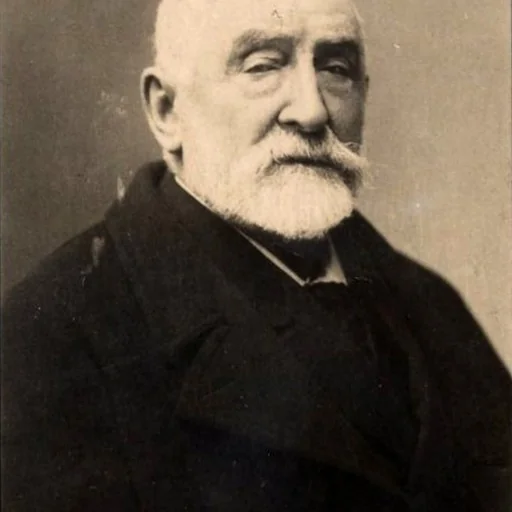
Henri-Joseph Harpignies (French pronunciation:; June 28, 1819 – August 28, 1916) was a French landscape painter of the Barbizon school.