Artwork
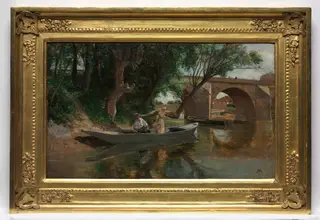
The Last Ray of Evening, Shannon Bridge, King's County, Ireland
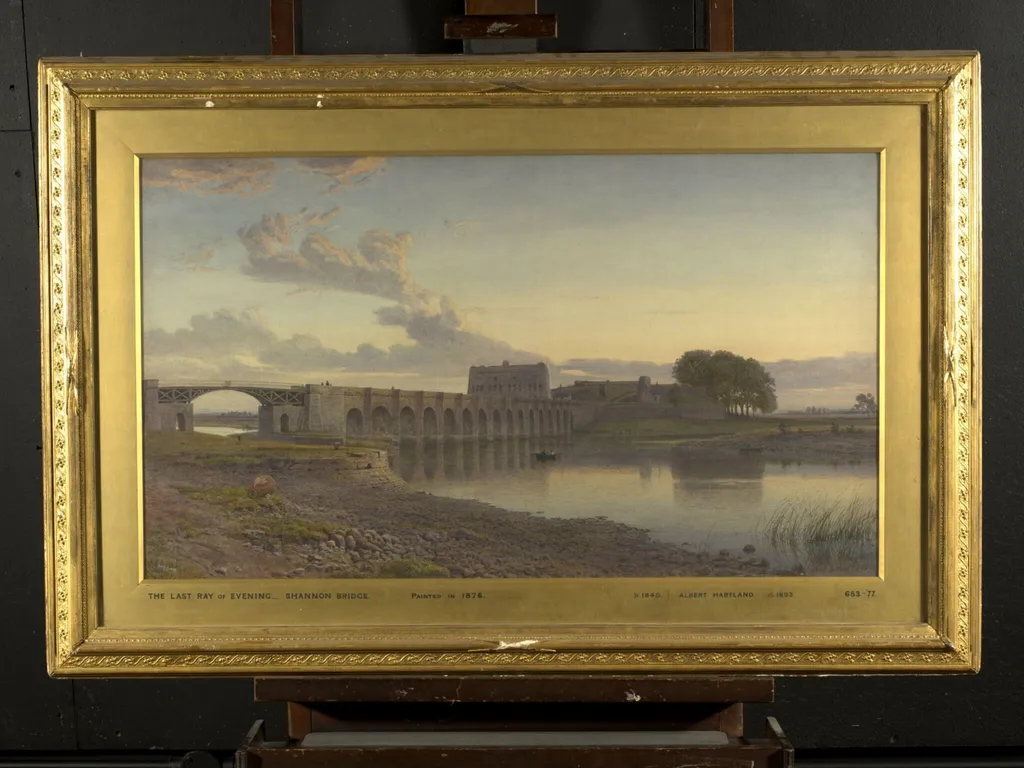
The Last Ray of Evening, Shannon Bridge, King's County, Ireland is a watercolor work on paper by the Impressionist artist Henry Albert Hartland. It dates from 1876 and is held in the collection of the Victoria and Albert Museum. This watercolour captures a quiet moment at Shannon Bridge in King’s County, Ireland, as daylight fades.
About this work
Overview
This watercolour captures a quiet moment at Shannon Bridge in King’s County, Ireland, as daylight fades. The artist rendered the scene with delicate washes, emphasizing the transient glow of evening light. Signed and dated, the work reflects a deliberate focus on atmospheric conditions rather than detailed architecture or human activity.
Subject & Meaning
The composition centers on a stone bridge spanning the River Shannon, with a solitary boat resting near the bank. The sky, warmed by pale pink and gold hues, contrasts with the subdued earth tones of the surrounding land. The scene conveys stillness and the quiet passage of day into night, evoking a contemplative mood common in 19th-century landscape studies.
Technique & Style
The artist employed transparent watercolour washes to suggest the soft diffusion of twilight. Light is applied sparingly to the clouds, creating a luminous effect without heavy detail. The muted greens and browns of the landscape ground the composition, allowing the sky’s glow to dominate visually. This method aligns with contemporary practices of capturing ephemeral natural light.
History & Provenance
The work is signed and dated by the artist, indicating personal authorship and a specific moment of creation. While its early ownership is unrecorded, its subject and technique place it within a broader tradition of Irish and British watercolourists who documented rural landscapes during the 1800s. No major institutional collection is known to hold it.
Context
In the 19th century, watercolour was widely used for topographical and leisurely landscape studies, particularly in Britain and Ireland. Artists often sought to convey the emotional resonance of natural scenes at transitional times of day. This piece fits within that trend, valuing mood over narrative or grandeur.
Legacy
Though not widely exhibited or published, the painting exemplifies a quiet, observational approach to landscape that was common among amateur and professional watercolourists of its time. Its preservation offers insight into how everyday Irish scenery was perceived and recorded during the Victorian era.
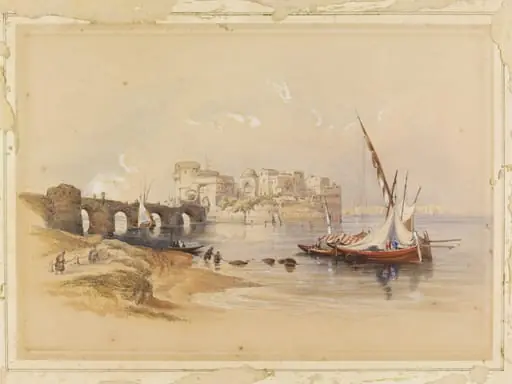
Own this work as a print
Artist & collection
Artist
This 19th-century Irish artist painted soft, watercolor landscapes of Irish bridges and rivers at twilight.

- The Citadel of Sidon
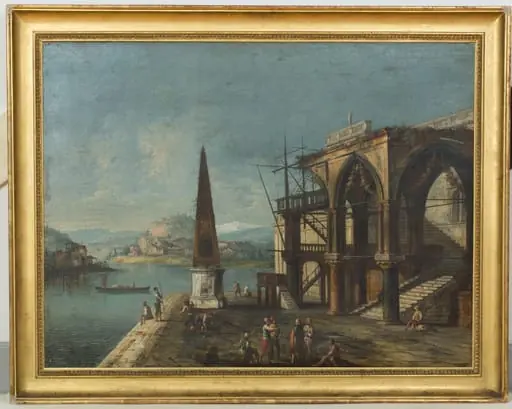 Phantasievedute mit gotischer Loggia und Obelisk Hafenansicht
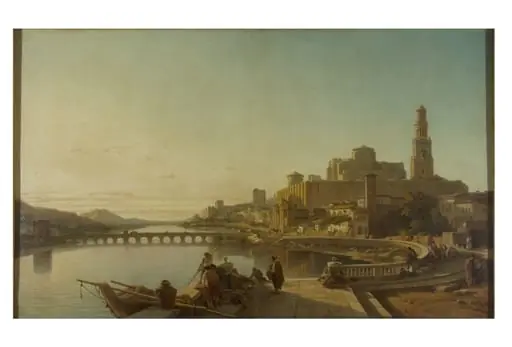 A view of Cordoba, Spain
 Απεικόνιση θαλάσσιου τοπίου
 Het Minnewater met zicht op Brugge
 View from the Outskirts of Rome
 French River Landscape with a Bridge
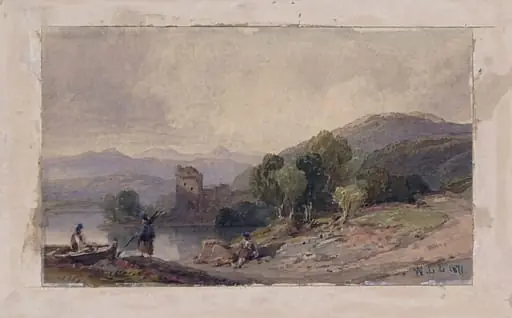 Kilchurn Castle
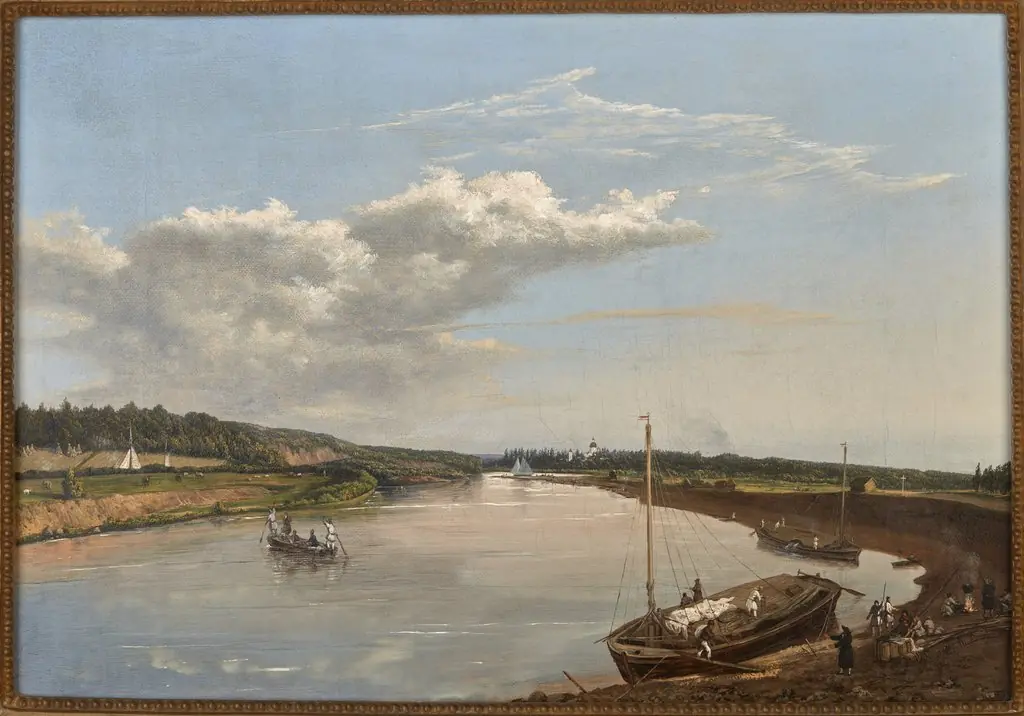 View of Pożajście on the Niemen River
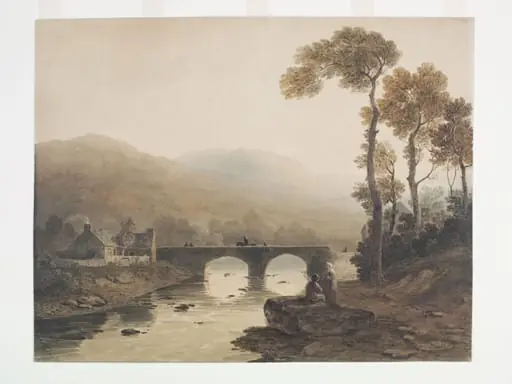 Beddgelert Bridge
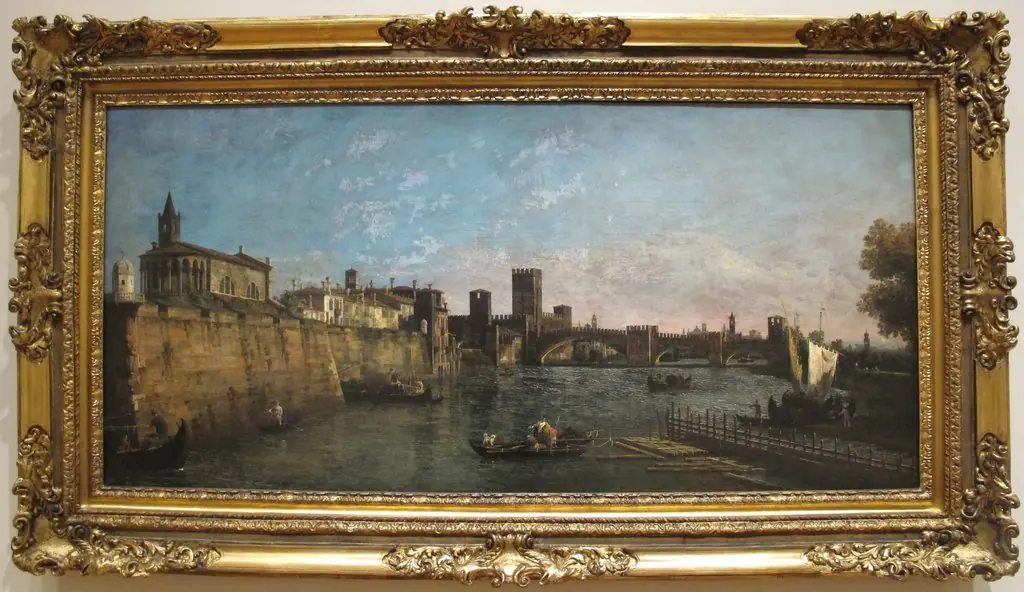 View of Verona with the Castelvecchio and Ponte Scaligero
 Bridge at Poissy (Pêcheurs à ligne)