Artwork
The Ark
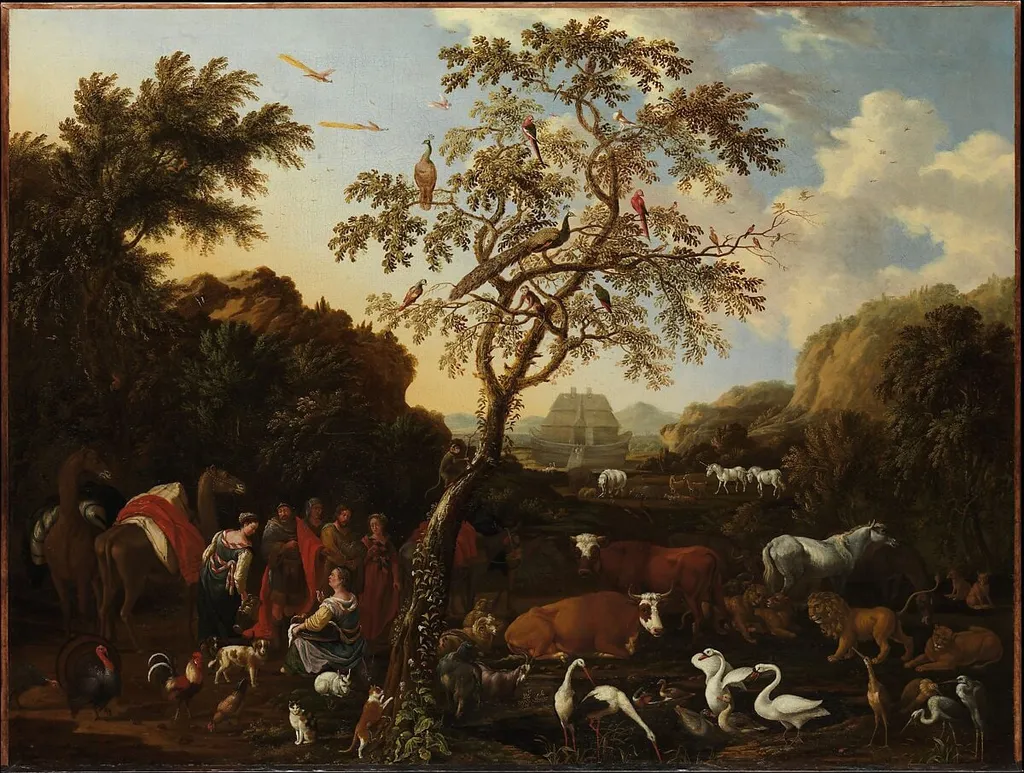
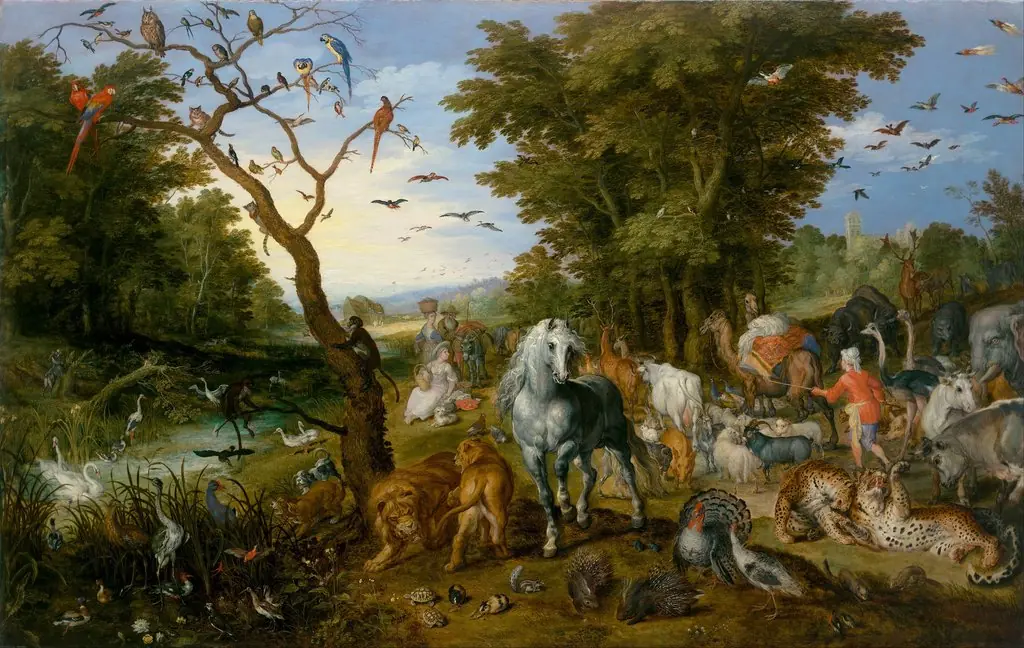
The Ark is an oil painting by the Baroque artist Lodewijk Tieling. It dates from 1700 and is held in the collection of the Metropolitan Museum of Art.
- Accession no.
- 39.184.20
- Credit line
- Gift of James DeLancey Verplanck and John Bayard Rodgers Verplanck, 1939
About this work
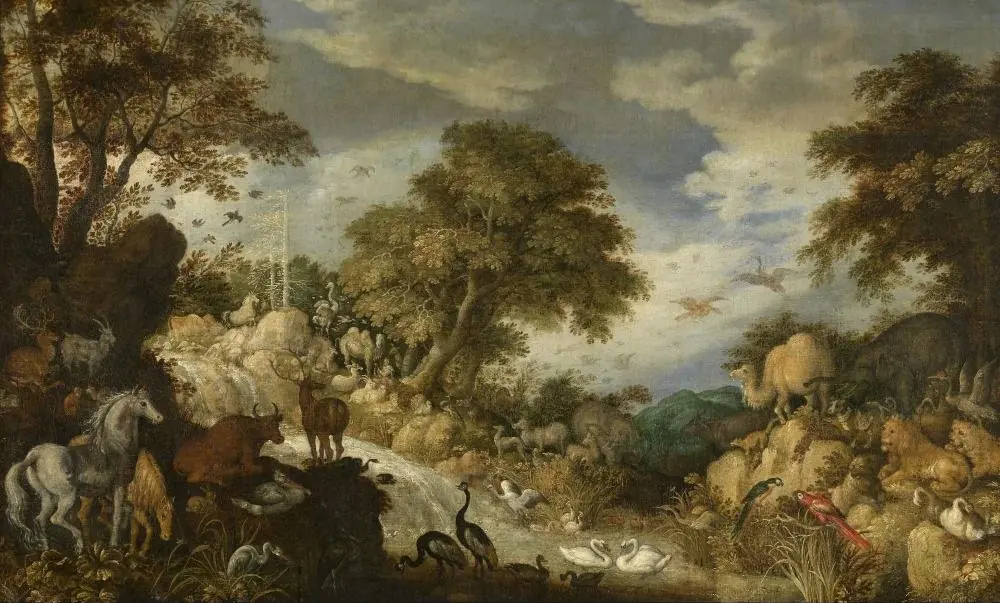
Noah stands at the left of Lodewijk Tieling's crowded canvas, gesturing toward two well-dressed women who carry earthenware vessels while his wife and family cluster behind him. Below this human drama, sheep, cattle, and wild creatures jostle across the lower register, the whole scene borrowed from the Paradise pictures of Jan Brueghel the Elder and Roelant Savery. Painted in Amsterdam around 1700, the oil on canvas measures nearly four by five feet and spent more than two centuries in the Verplanck family of New York before entering the Metropolitan Museum of Art in 1939.
Subject & Meaning
By presenting this scene, the work represents the covenant between God and humanity following the flood, emphasizing salvation and divine promise.
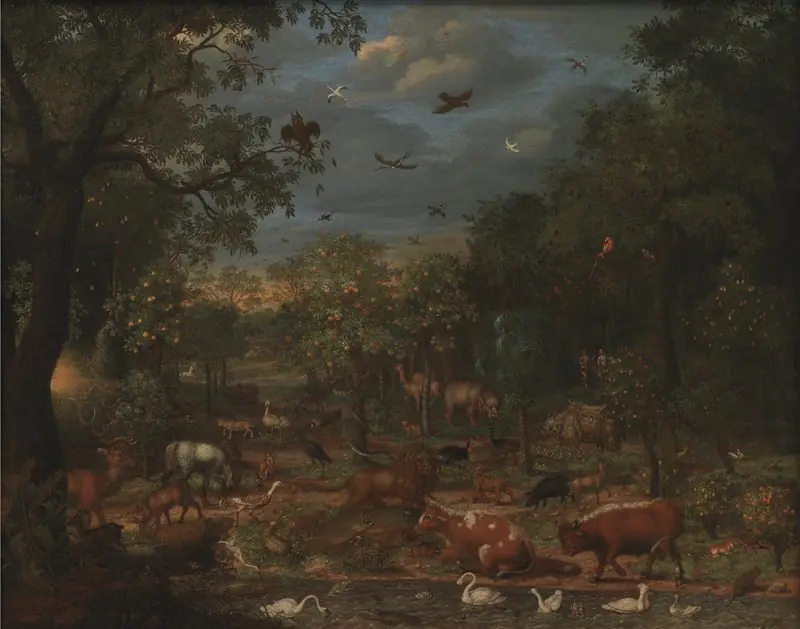
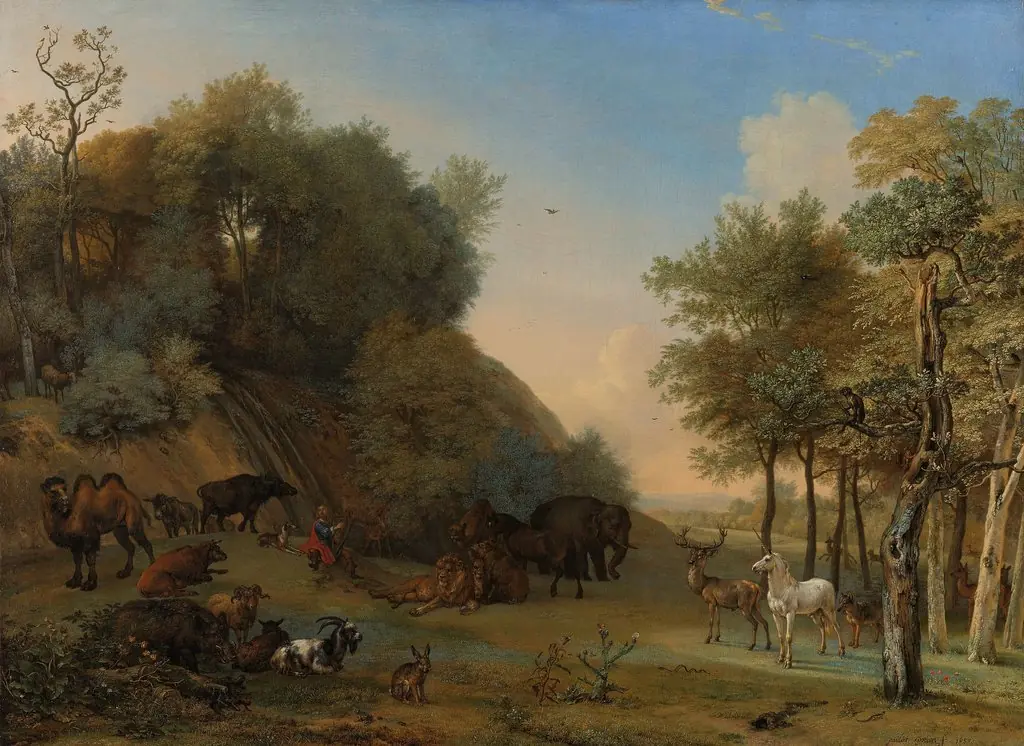
The painting's subject is the biblical story of Noah's Ark, drawn from the Genesis flood narrative. It depicts the ark amid a vast assembly of animals, including camels, cats, cattle, dogs, ducks, goats, horses, lions, monkeys, peafowl, swans, and a unicorn, illustrating the preservation of all species as commanded by God. The inclusion of the mythical unicorn adds a fantastical element that may allude to the miraculous nature of the event.
The landscape setting further evokes themes of creation and renewal. By presenting this scene, the work represents the covenant between God and humanity following the flood, emphasizing salvation and divine promise.
Technique & Style
The painting is executed in oil on canvas, a standard medium for Baroque landscapes, and measures 117.5 × 155.6 cm. Created in Amsterdam around 1700, it belongs to the genre of landscape painting. The work is densely populated with a wide variety of animals, including camel, cat, cattle, dog, duck, goat, horse, lion, monkey, peafowl, swan, and a unicorn, as well as human figures and trees, all arranged to illustrate the Noah's Ark narrative. This inclusion of numerous species within a single composition reflects the encyclopedic approach common in late 17th-century Dutch painting, where natural history and biblical storytelling converge.
History & Provenance
Painted in 1700 by the Amsterdam-based artist Lodewijk Tieling, who was active around 1695–1700, the work was created in Amsterdam. It later entered the collection of James DeLancey Verplanck and John Bayard Rodgers Verplanck before being accessioned by the Metropolitan Museum of Art, where it remains.
Overview
The Ark, painted around 1700 by the Dutch artist Lodewijk Tieling, depicts the biblical narrative of Noah preparing for the flood. Tieling, a landscape painter active in Amsterdam, is known for only about twenty works. This large oil on canvas was long misattributed before scholars connected it to a 1778 auction record, confirming its authorship.
It later traveled to America, remaining in a single family for over 170 years before its donation to the Metropolitan Museum of Art.
Context
Tieling's compositional approach for The Ark reflects the influence of Cornelis Snellinck, a Rotterdam painter active decades prior. It is possible that both artists referenced a now-lost work by Cornelis Saftleven or another shared artistic prototype for their depictions of the biblical event. This reliance on established visual traditions was common among artists, particularly for a painter like Tieling, whose known body of work is relatively small.
Artist & collection