Artwork
Venus and Adonis
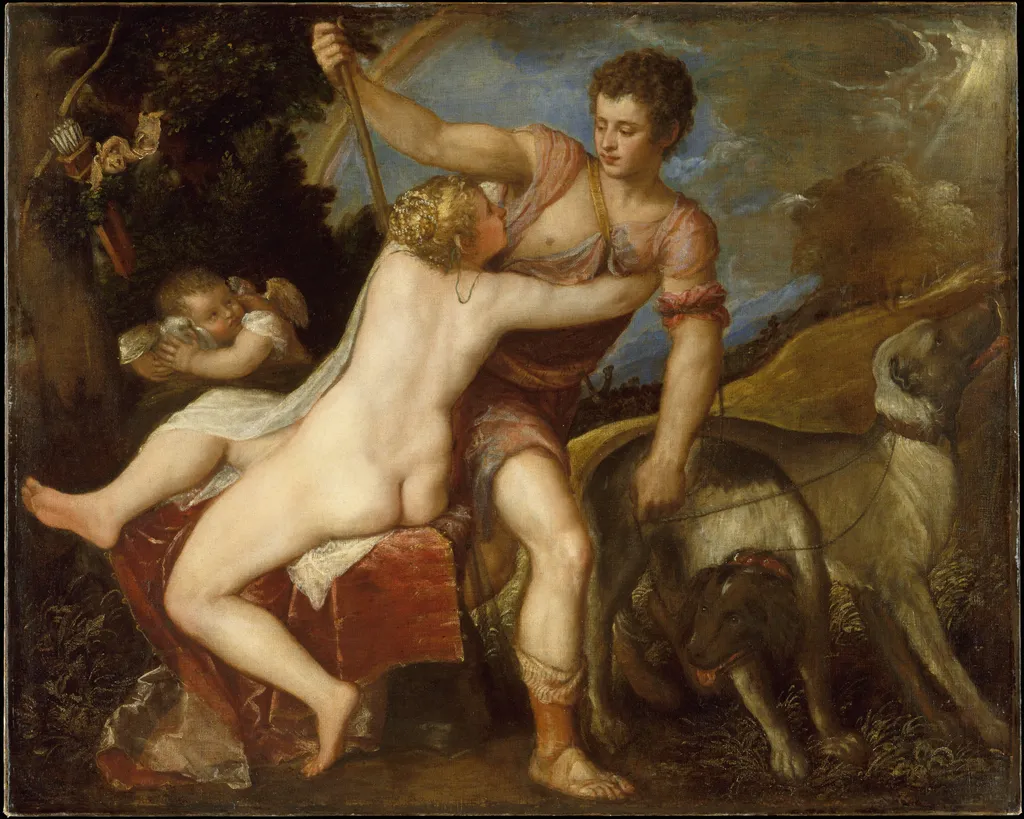
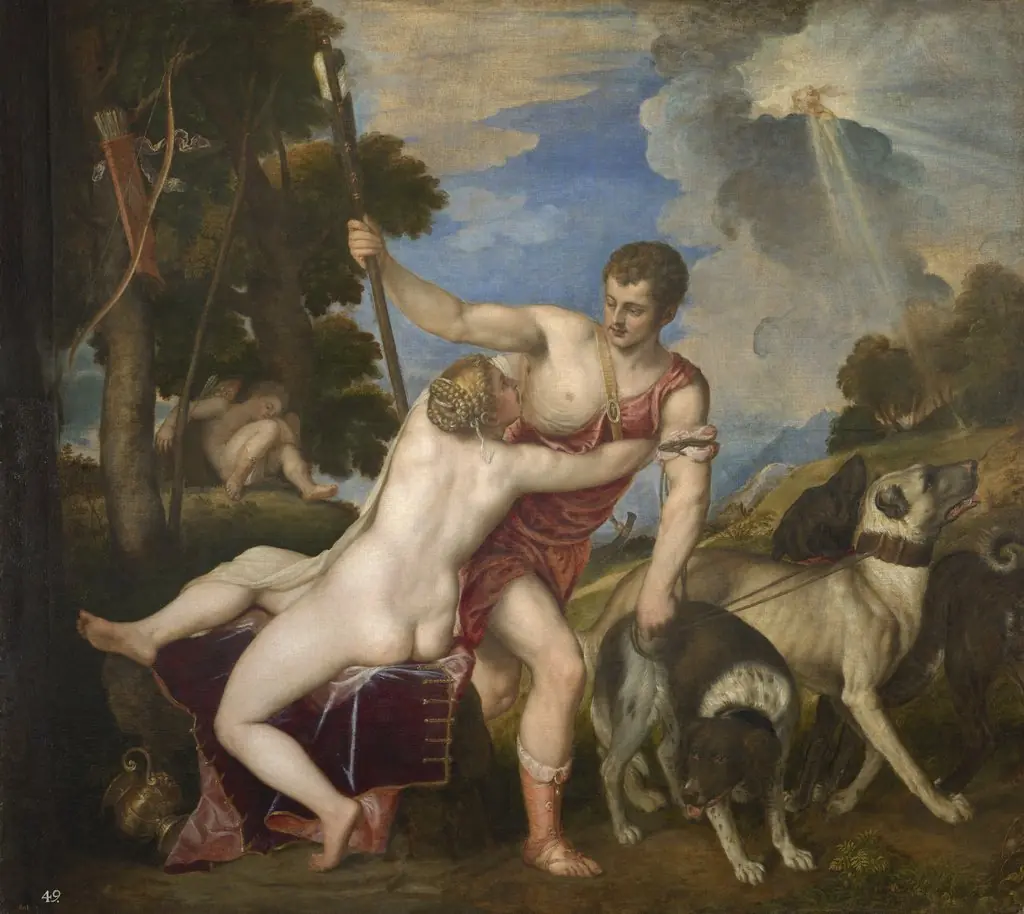
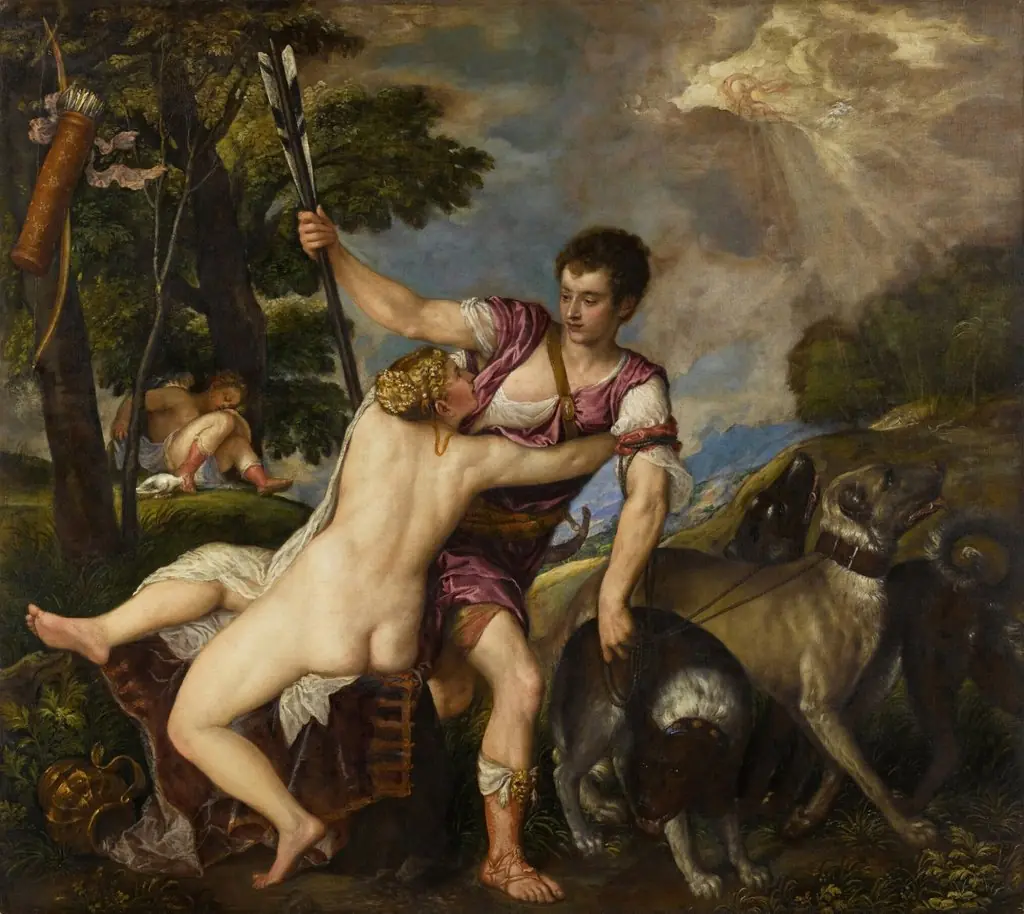
Venus and Adonis is an oil painting by the Mannerist artist Titian. It dates from 1550 and is held in the collection of the Metropolitan Museum of Art.
About this work
Overview
Acquired by The Metropolitan Museum of Art in 1949, it represents a significant example of his late career mythological output, measuring 106.
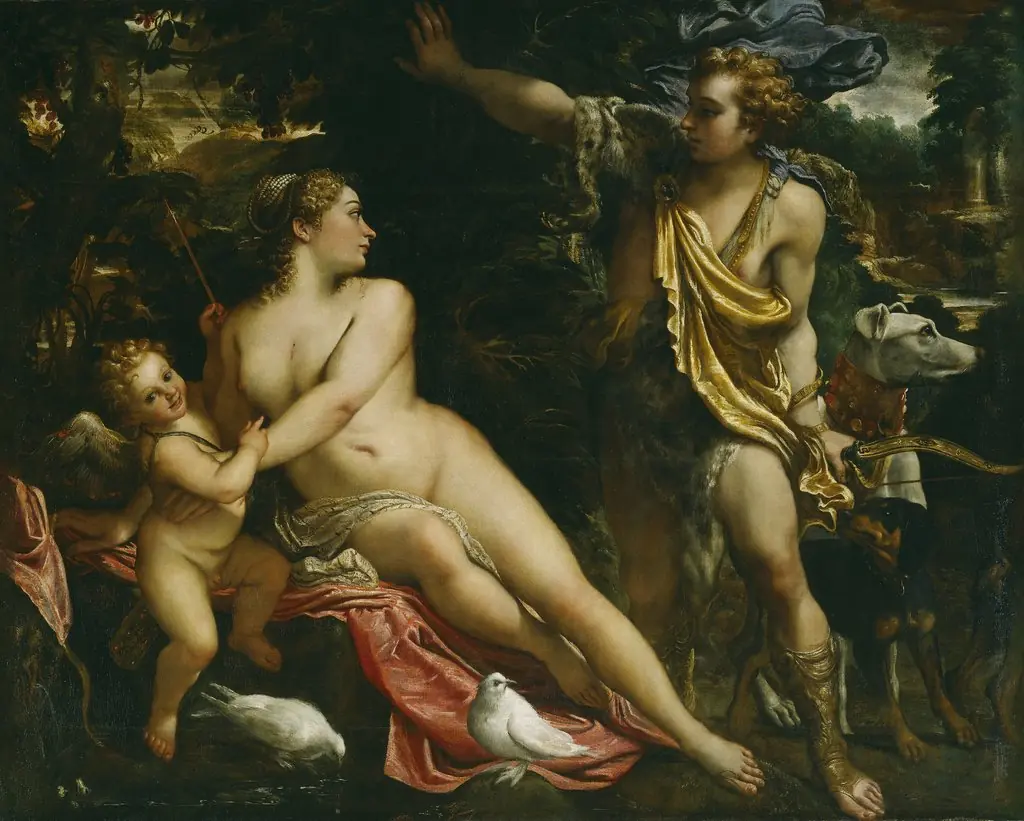
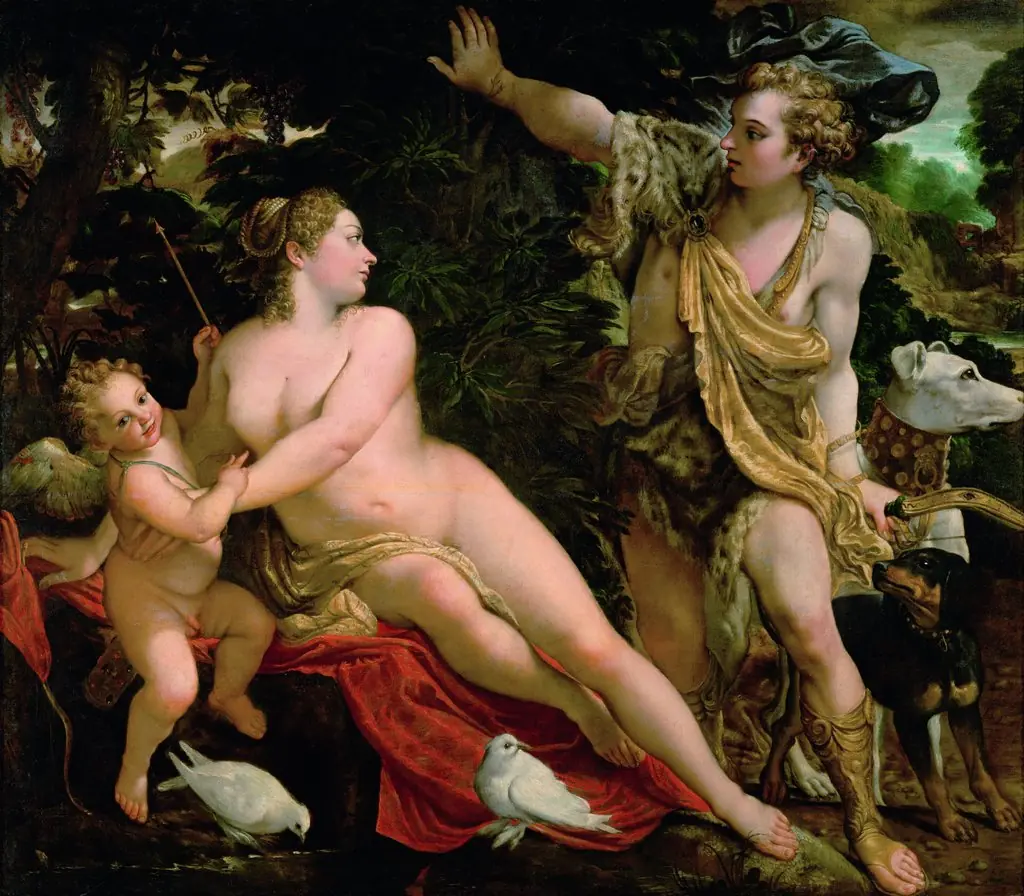
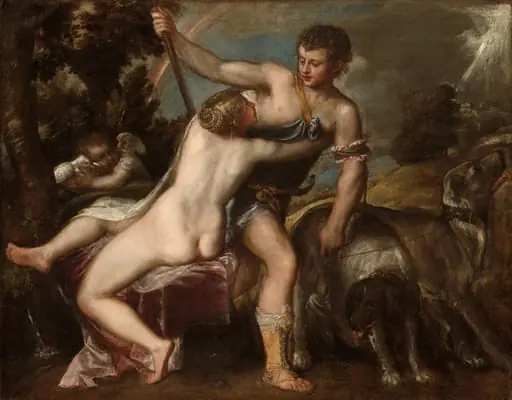
This painting, Venus and Adonis, is an oil on canvas by Titian from the 1550s. It depicts a poignant moment from Ovid's Metamorphoses, where Venus attempts to dissuade her mortal lover from a fateful hunt. The work belongs to a series of mythological scenes Titian termed "poesie," or painted poems.
Acquired by The Metropolitan Museum of Art in 1949, it represents a significant example of his late career mythological output, measuring 106.7 × 133.4 cm.
Subject & Meaning
The canvas illustrates a narrative from Ovid's Metamorphoses, capturing the goddess Venus's desperate plea to her mortal beloved, Adonis, before he departs for a hunt. Her embrace and his reluctant gaze convey a sense of impending doom, as Venus correctly foresees his death by a wild boar. Titian juxtaposes the scene's inherent sensuality, notably through Venus's pose seen from behind, with an undercurrent of tragic irony, amplified by the anxious Cupid nearby.
Technique & Style
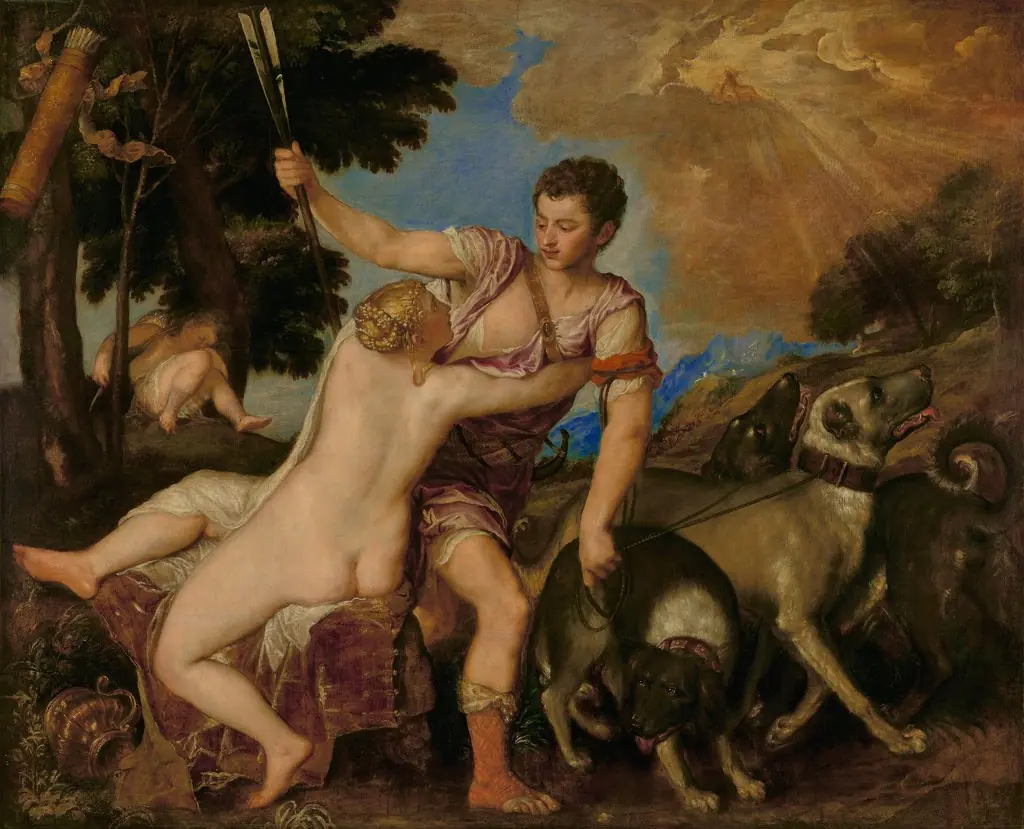
Titian conceived this work as a "poesie," or painted poetry, employing oil on canvas to evoke a complex emotional state. The composition, characteristic of the "Farnese" type, features a broader format compared to other versions. It includes two hunting dogs already straining towards the forest and an alert Cupid, whose presence intensifies the scene's foreboding atmosphere.
While some scholars have debated its precise authorship, the museum recognizes its exceptional quality and substantial autograph execution.
Context
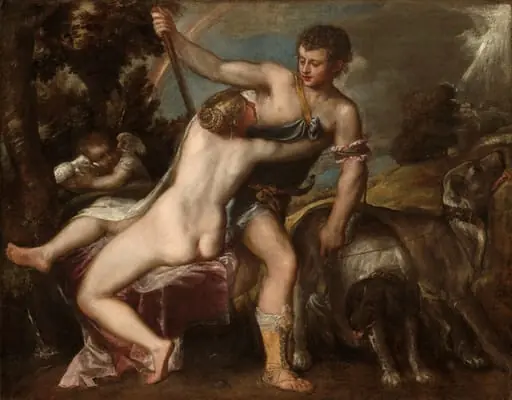
This painting belongs to a series of mythological works Titian created in the 1550s, which he termed "poesie." These compositions, often inspired by Ovid, were frequently replicated by the artist and his workshop. Scholars categorize these versions into distinct groups, such as the squarer "Prado" type, made for Philip II of Spain, and the broader "Farnese" type, to which this canvas belongs, distinguished by its specific figural details like an awake Cupid.
History & Provenance
The painting's history traces back to the Palazzo Mariscotti in Rome before its acquisition by dealer William Buchanan, who brought it to England in 1804. It subsequently entered the collection of the Earls of Darnley at Cobham Hall. After being sold at Christie's in 1925, New York banker Jules Bache acquired the canvas in 1927.
He later bequeathed it to The Metropolitan Museum of Art in 1949, where it received the object number 49.7.16.
Own this work as a print
Artist & collection

Artist
Tiziano Vecellio (Italian:; c. 1488/1490 – 27 August 1576), Latinized as Titianus, hence known in English as Titian ( TISH-ən), was an Italian Renaissance painter. The most important artist of Renaissance Venetian…

 Studied in the Mythology in Art course