Artwork
The man at the window
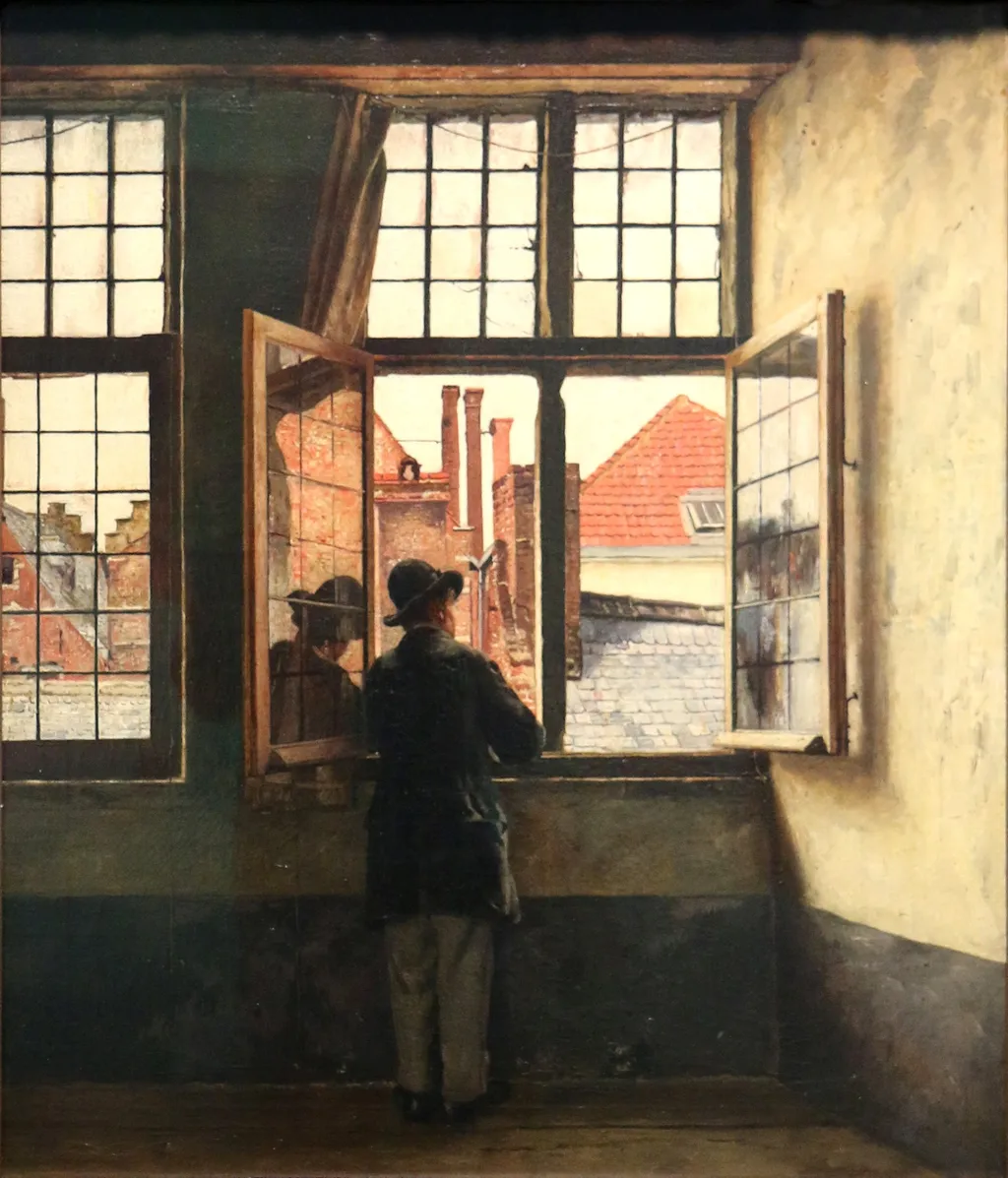
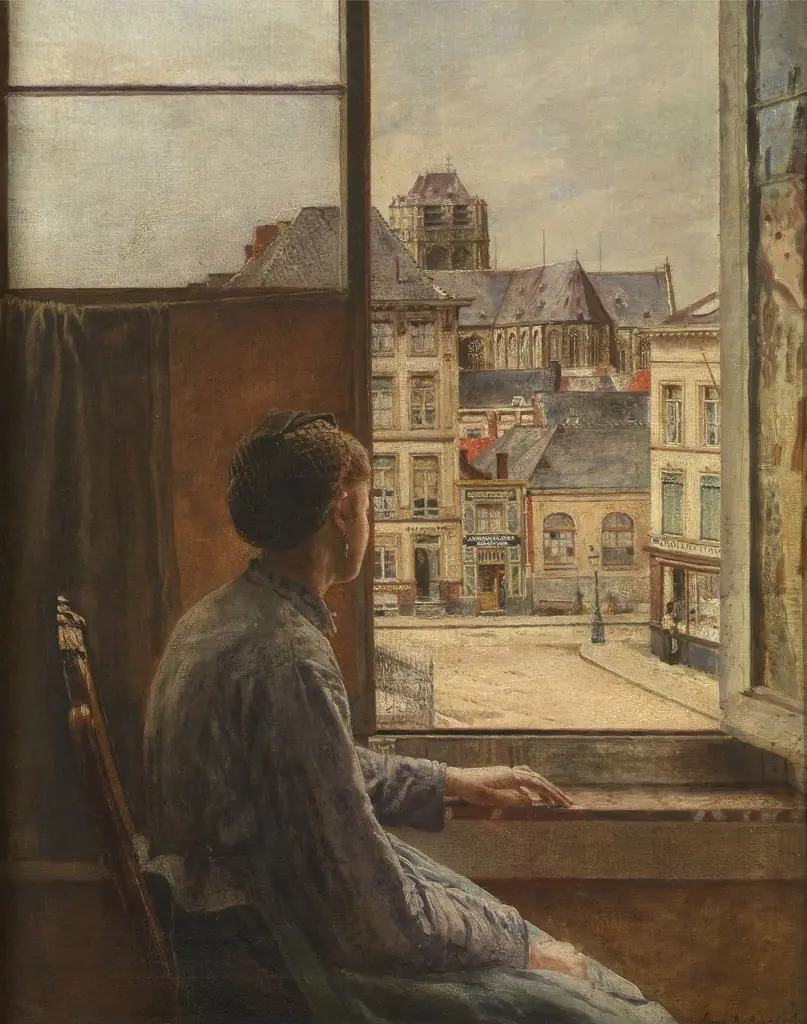
The man at the window is an oil painting by Henri de Braekeleer. It dates from 1873 and is held in the collection of the Royal Museums of Fine Arts of Belgium.
About this work
Overview
5 by 70 centimeters, the work depicts a solitary male figure seen from behind, standing before an open window in a sparsely furnished interior.
The Man at the Window is an oil-on-canvas painting by the Belgian artist Henri de Braekeleer, dated 1873. Measuring 80.5 by 70 centimeters, the work depicts a solitary male figure seen from behind, standing before an open window in a sparsely furnished interior. The painting is held by the Royal Museums of Fine Arts of Belgium in Brussels, where it is displayed in the Fin-de-Siècle Museum. Created during the most productive period of de Braekeleer's career, the painting exemplifies his characteristic fusion of meticulous architectural observation with quiet psychological tension, and it stands as a significant example of 19th-century Belgian genre painting influenced by Dutch Golden Age precedents.
Subject & Meaning
The painting's subject is a man viewed from behind, dressed in a dark coat, light trousers, and a hat, positioned before an open window that dominates the center of the composition. Through the window, the viewer sees red-tiled roofs, brick chimneys, and neighboring buildings, while to the left a second closed window mirrors the open one. The room itself is austere: plain plastered walls darker below waist height, a bare wooden floor, and no furniture or objects to distract from the figure's contemplative stance. A partially drawn curtain hangs to one side of the central window. The iconography of the turned back and the threshold space between interior and exterior carries symbolic weight, suggesting themes of solitude, observation, and the boundary between private and public realms. The faint reflection of the man visible in the glass of the open casement adds a further layer of self-reflexive meaning, implying introspection and the divided self. This alignment of a solitary figure absorbed in quiet activity within a window-lit interior directly reflects the influence of Johannes Vermeer, whose works de Braekeleer studied during his travels in the Netherlands in 1864.
Technique & Style
Executed in oil on canvas, The Man at the Window displays the smooth and controlled brushwork that characterizes de Braeleer's mature technique before his later stylistic shift. The palette is restrained, consisting of muted earth tones, reds, and browns that harmonize the interior and exterior spaces. Strong contrasts between the bright exterior light and the shadowed interior create dramatic tonal effects, with light streaming through the window to cast the man's silhouette against the architectural framework. The artist's handling shows careful attention to architectural detail, particularly in the small square window panes with their wooden frames and open casements, while maintaining an overall atmospheric coherence. The composition is rigorously structured around the central window axis, with the mirrored closed window providing formal balance. This precision in rendering space, light, and texture demonstrates de Braekeleer's synthesis of academic training with the intimate domestic subjects he developed under Vermeer's influence.
History & Provenance
The painting was created in 1873, a year in which de Braekeleer received a gold medal at the International Exhibition in Vienna for The Painter's Studio and Grandmother's Birthday Celebration. This period, from 1869 until 1876, marked the most productive and publicly recognized phase of his career, facilitated by his contract with the Belgian art dealer Gustave Coûteaux and following the death of his uncle Baron Leys in 1869. The work entered the collection of the Royal Museums of Fine Arts of Belgium and is now housed in the Fin-de-Siècle Museum, Brussels. Its accession details and prior ownership chain are not specified in the available sources. The painting is listed among de Braekeleer's works in the museum's collection database, confirming its institutional status and public accessibility.
Context
Henri Jean Augustin de Braekeleer (1840-1888) was born and died in Antwerp, trained by his father Ferdinand de Braekeleer, a well-known genre painter, and his uncle Jan August Hendrik Leys. He entered the Royal Academy of Fine Arts in Antwerp in 1854 and first exhibited publicly in 1858. His study of 16th- and 17th-century Dutch and German painters, particularly Vermeer, shaped his signature approach to interior scenes with solitary figures. The critical reception of de Braekeleer's work during his lifetime was generally favorable, as evidenced by his Salon medals, though his career was interrupted by depression between 1879 and 1881. Vincent van Gogh mentioned de Braekeleer in letters to his brother Theo, expressing admiration for his work while also noting his mental illness. Within art history, de Braekeleer occupies a significant position in Belgian painting of the second half of the 19th century, bridging academic tradition and the emerging modernist sensibilities that would later influence artists drawn to intimate, psychologically charged domestic subjects.
Legacy
The Man at the Window remains a key work for understanding de Braekeleer's artistic achievement and his place within 19th-century European painting. Its preservation in the Royal Museums of Fine Arts of Belgium ensures continued scholarly and public attention, while its display in the Fin-de-Siècle Museum contextualizes it within the broader narrative of Belgian art from that era. The painting's cultural afterlife is intertwined with de Braekeleer's own reputation, which has persisted through his recognition by Van Gogh and through scholarly attention to his Vermeer-inspired interiors. His later adoption of a shorter, more visible brushstroke under possible Impressionist influence, following his return to painting after 1881, makes works like The Man at the Window important benchmarks for tracing his stylistic evolution. The painting continues to attract interest for its quiet psychological intensity and its refined handling of light and space, qualities that distinguish de Braekeleer's best work within the genre of European interior painting.
Own this work as a print
Artist & collection
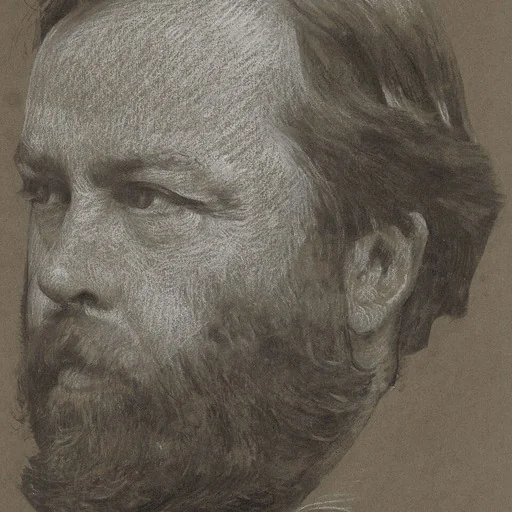
Artist
Henri Jean Augustin de Braekeleer (11 June 1840 – 20 July 1888) was a Belgian painter.

Museum
Royal Museums of Fine Arts of Belgium
Continue through works from the same source collection.