Artwork
The Little Street
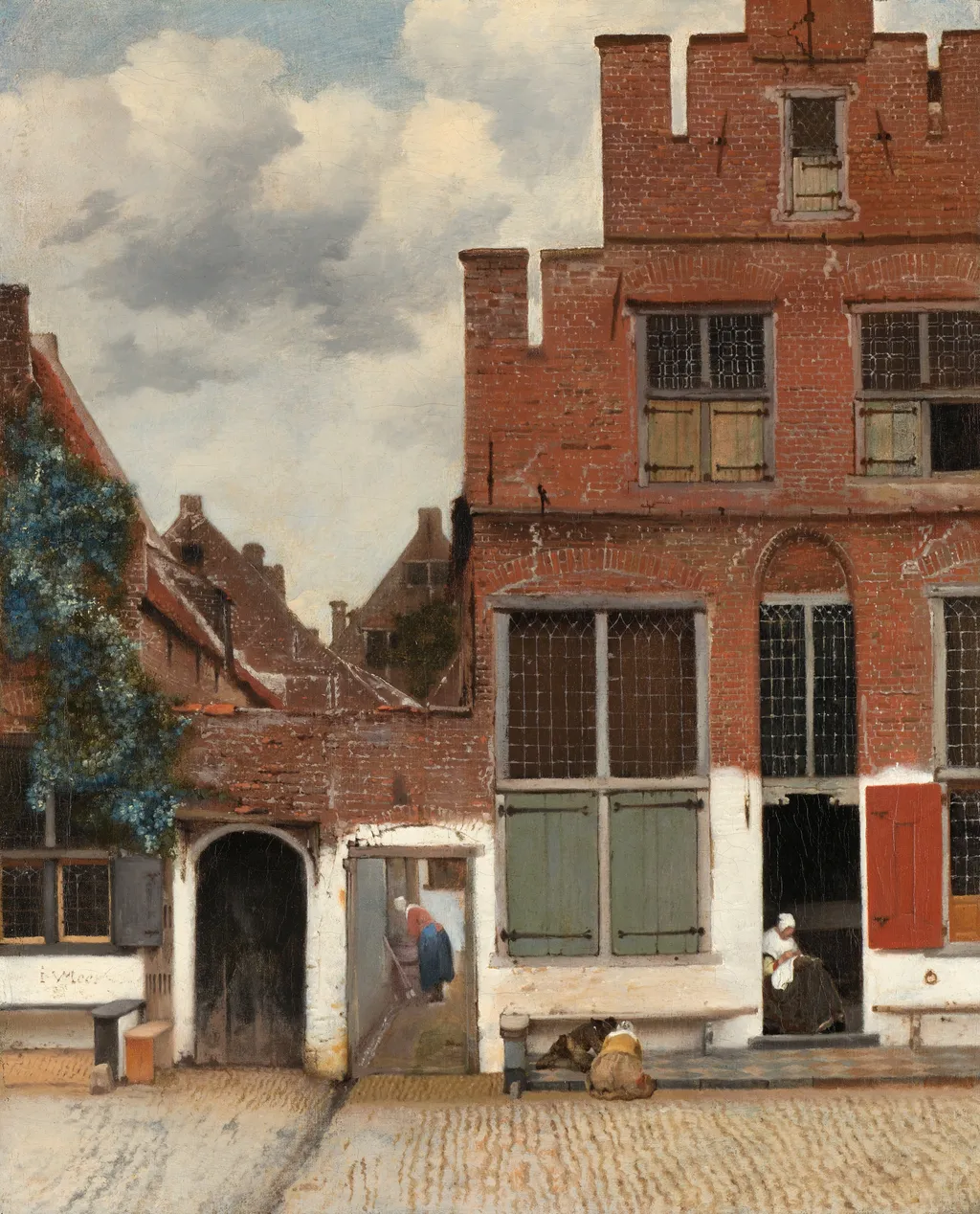
The Little Street is an oil painting by the Dutch Golden Age artist Johannes Vermeer. It dates from 1658 and is held in the collection of the Rijksmuseum.
About this work
Subject & Meaning
The painting depicts a quiet, narrow street in Delft, featuring a brick house with a stepped gable, a connecting wall, and a passageway leading to a courtyard.
The painting depicts a quiet, narrow street in Delft, featuring a brick house with a stepped gable, a connecting wall, and a passageway leading to a courtyard. Four figures inhabit the scene: a woman seated in a doorway engaged in needlework, two children kneeling on the pavement with obscured faces, and a maid bending over a washbasin in the background. A drainage gutter running from the courtyard to the street indicates the property's location alongside a canal.
Archival research identifies the specific site as Vlamingstraat, where the house on the right belonged to Vermeer's aunt, Ariaentgen Claes van der Minne, who sold tripe; the adjacent passage was historically known as the Tripe Gate. The architecture shows signs of age, including repaired brickwork and missing tiles, suggesting construction prior to the city fire of 1536. Rather than a strict topographical record or a portrait of specific individuals, the work is interpreted as a poetic celebration of the beauty found in ordinary domestic life and the humanization of the home.
Technique & Style
Vermeer painted The Little Street in oil on canvas, measuring 54.3 cm by 44 cm, with a relatively thick application of pigment that makes brickwork and stone surfaces almost palpable. He limited his palette to red ochre, madder lake, lead white, natural ultramarine and azurite mixed with lead‑tin‑yellow to render the reddish‑brown wall, sky blue and green shutters. The composition balances straight architectural lines with a triangular house form, creating a sense of vitality, while the perspective places the viewer’s eye about 2.4 m high and 17–20 m from the scene. Figures are rendered as vague silhouettes, emphasizing the quiet, everyday atmosphere.
History & Provenance
The Little Street has been held by the Rijksmuseum in Amsterdam since 1921, when Henri Deterding purchased the painting for 625,000 guilders and donated it to the Dutch state; it is displayed in the Gallery of Honour. The work was signed by Vermeer ("I V MEER") below the window in the lower left corner.
Documented ownership traces from Pieter van Ruijven, who likely acquired it from the artist, through the Dissius sale of 16 May 1696, and subsequently to Lucretia Johanna van Winter, Hendrik Six van Hillegom, Jan Pieter Six VI, and Jan Six, from whose heirs Deterding bought the canvas. The painting was briefly shown at the Louvre for one week in April 1921 in an unsuccessful attempt to attract buyers before Deterding's acquisition.
An exhibition history entry on the painting is recorded simply as "Vermeer."
Context
The Little Street is regarded as one of only two surviving cityscapes by Johannes Vermeer, alongside the View of Delft, and is considered an important work of the Dutch master. It belongs to the Dutch Golden Age painting movement and is one of three Vermeer depictions of views of Delft, the third being the now-lost House Standing in Delft.
Scholarly attention has long centered on identifying the precise Delft location depicted. Successive hypotheses have proposed the Voldersgracht, Nieuwe Langendijk, Trompetstraat, Spieringstraat, Achterom, and Vlamingstraat. In 2015, art historian Frans Grijzenhout, drawing on Delft's quay-dues register of 1667, argued for the Vlamingstraat at present-day numbers 40–42, a thesis the Rijksmuseum has championed though it remains debated. Some scholars instead read the composition as a poetic composite rather than a strictly topographical view.
The work is also linked to the outdoor genre scenes of Pieter de Hooch, who left Delft in 1660, while its restrained palette of red ochre, madder lake, natural ultramarine, azurite, and lead-tin-yellow reflects Vermeer's characteristic material economy. Further reading includes Walter A. Liedtke's Vermeer and the Delft School (2001).
Overview
Johannes Vermeer's painting, The Little Street (c. 1657–1658), depicts a tranquil urban scene. Executed in oil, this work captures an ordinary moment on a quiet street in Delft, the artist's hometown. It is currently housed in the Rijksmuseum in Amsterdam.
The composition is notable for its serene atmosphere and detailed rendering of everyday life, characteristic of Vermeer's approach to genre painting.
Own this work as a print
Artist & collection

Artist
Johannes Vermeer ( vər-MEER, vər-MAIR, Dutch:; see below; also known as Jan Vermeer; October 1632 – 15 December 1675) was a Dutch painter who specialized in domestic interior scenes of middle-class life.


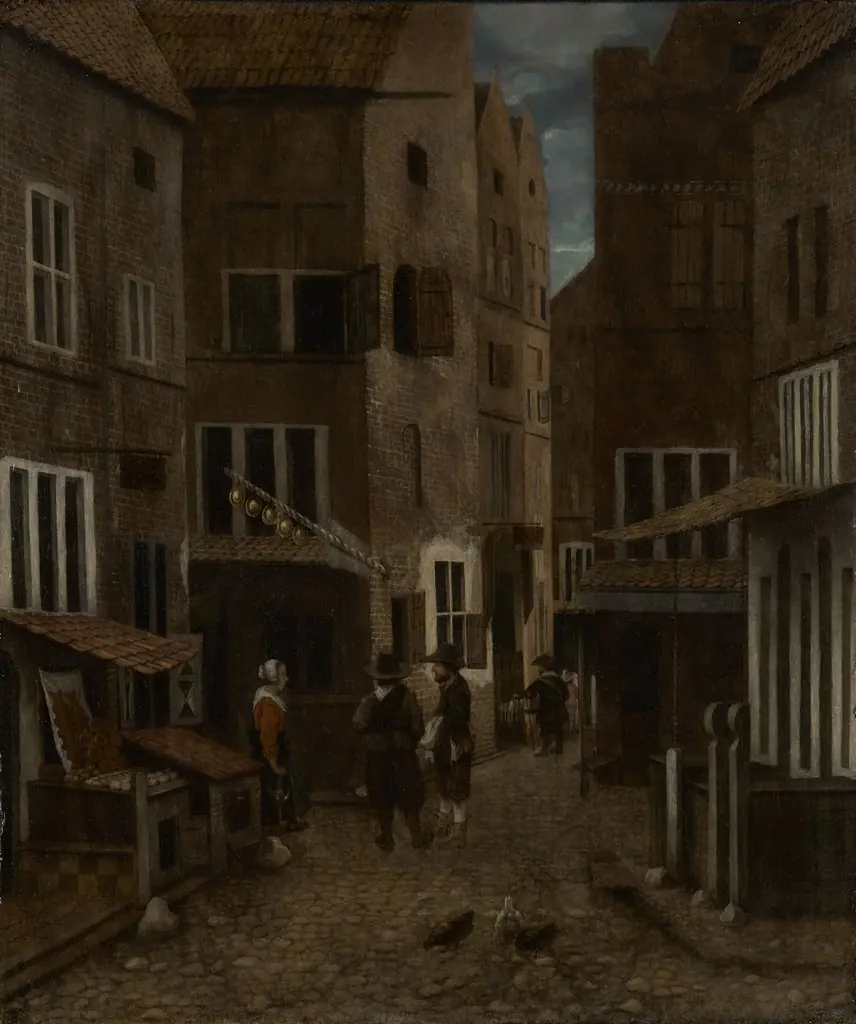
- Street Scene
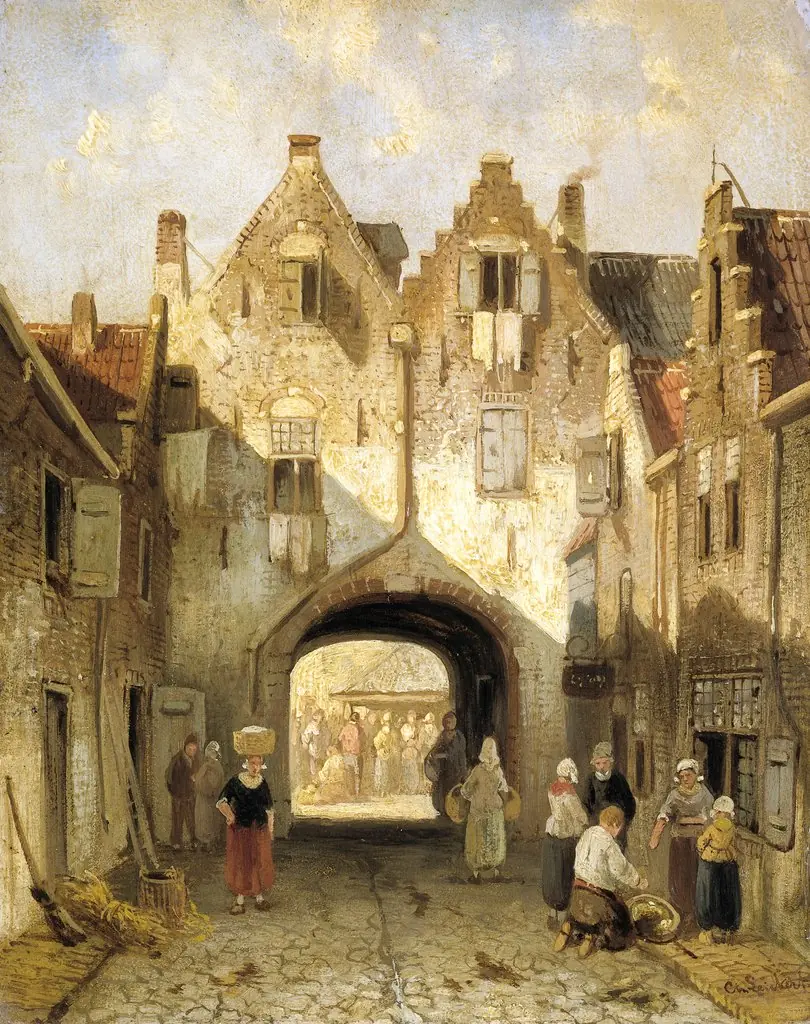 The Old Gate
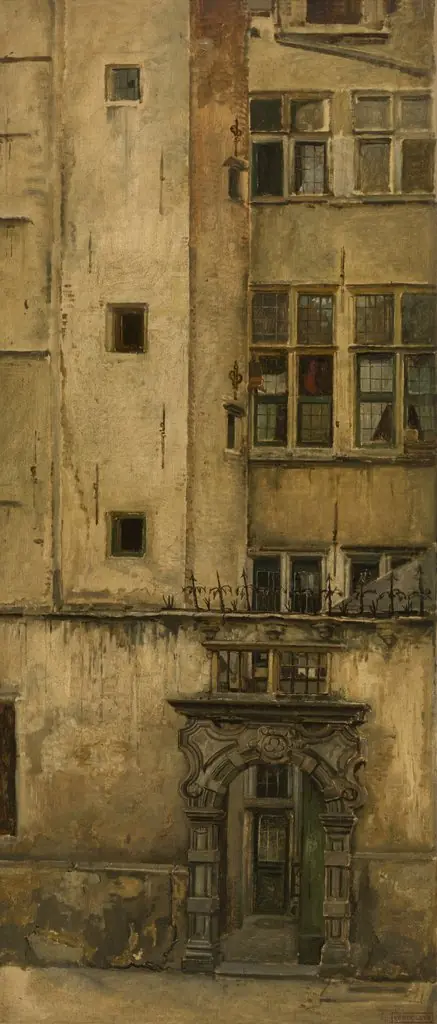 Old Antwerp Facade - Klaverbladpoortje
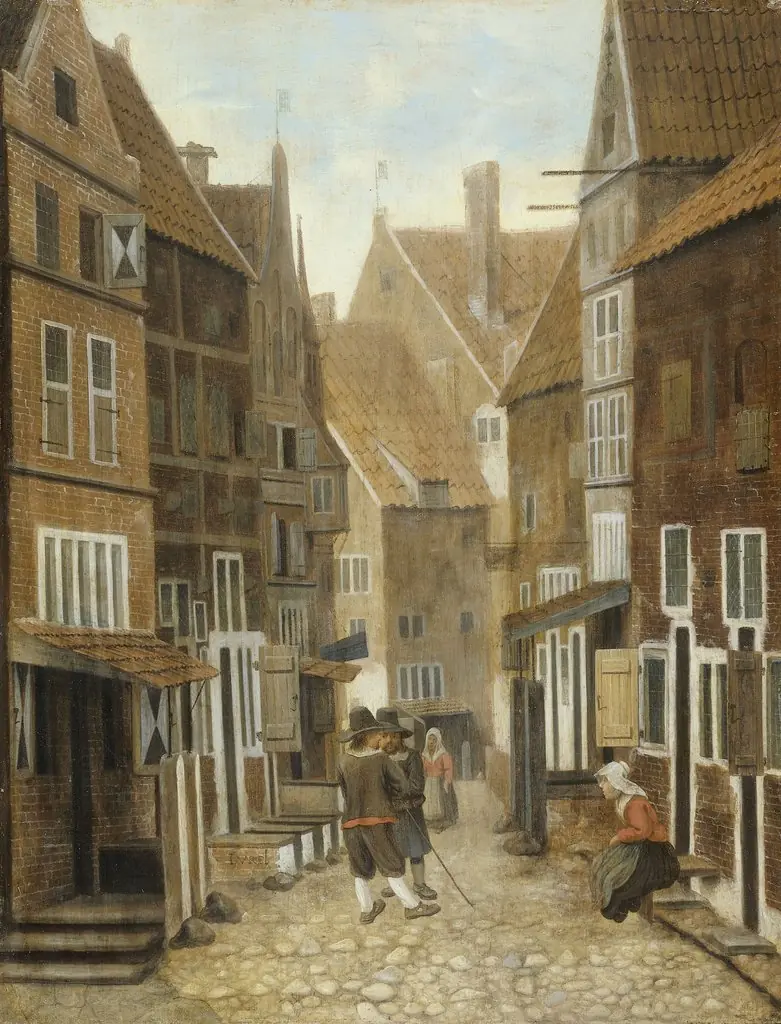 View of a town
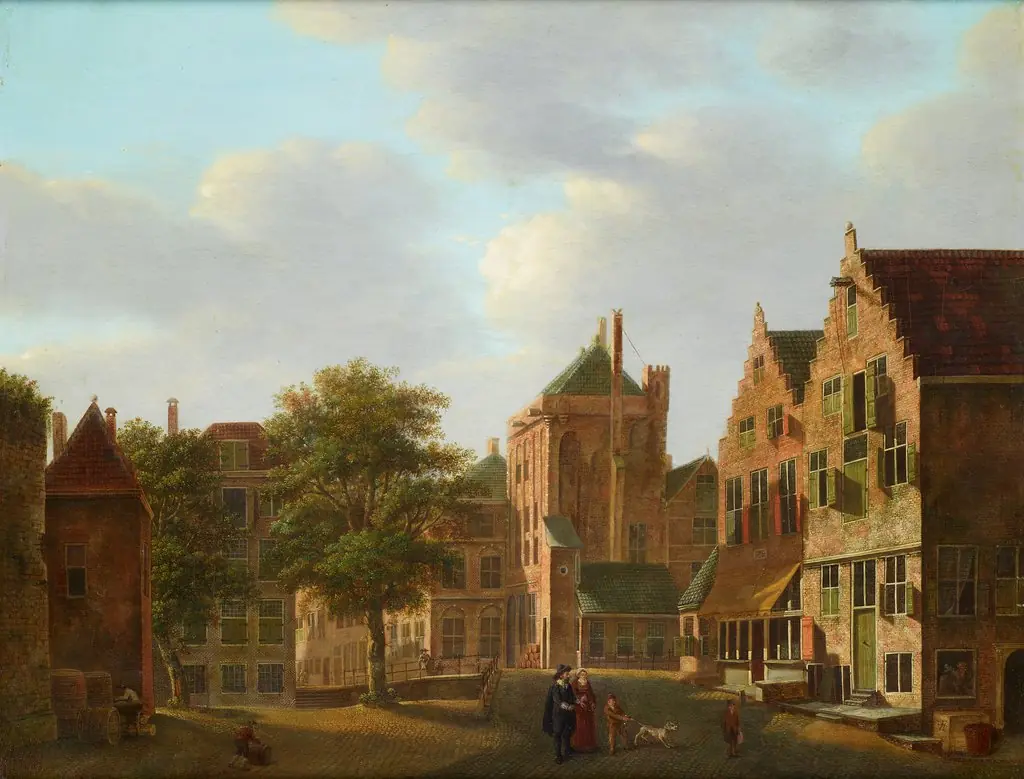 City View with elegant Couple
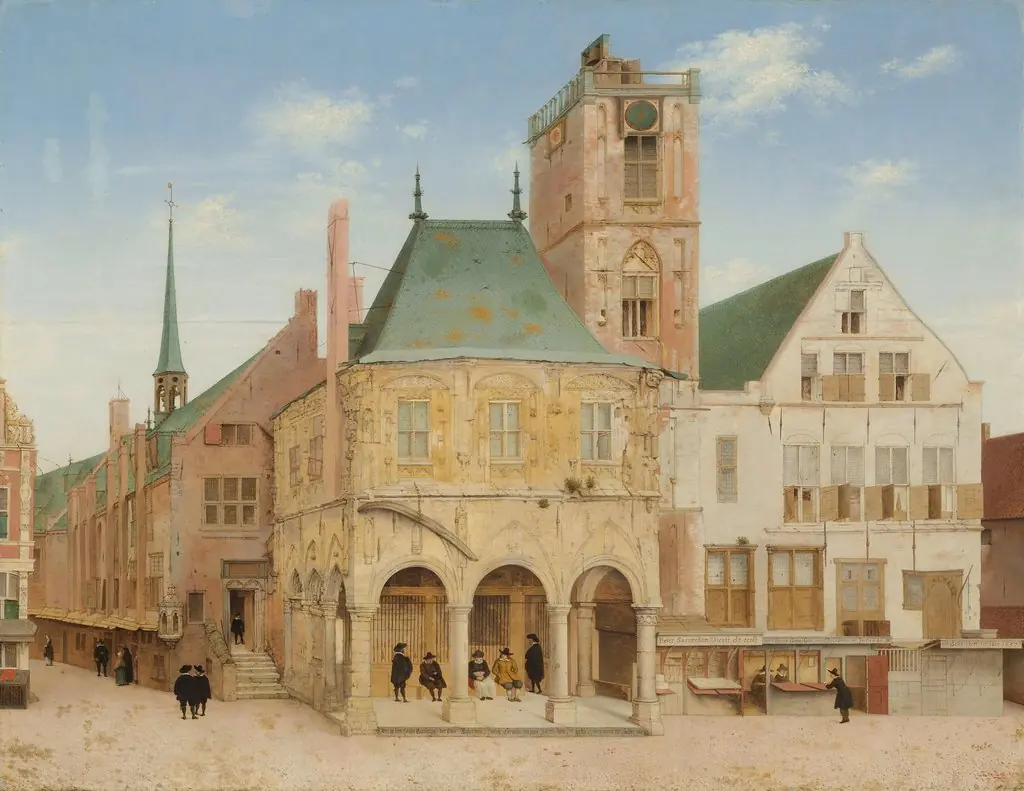 The Old Town Hall of Amsterdam
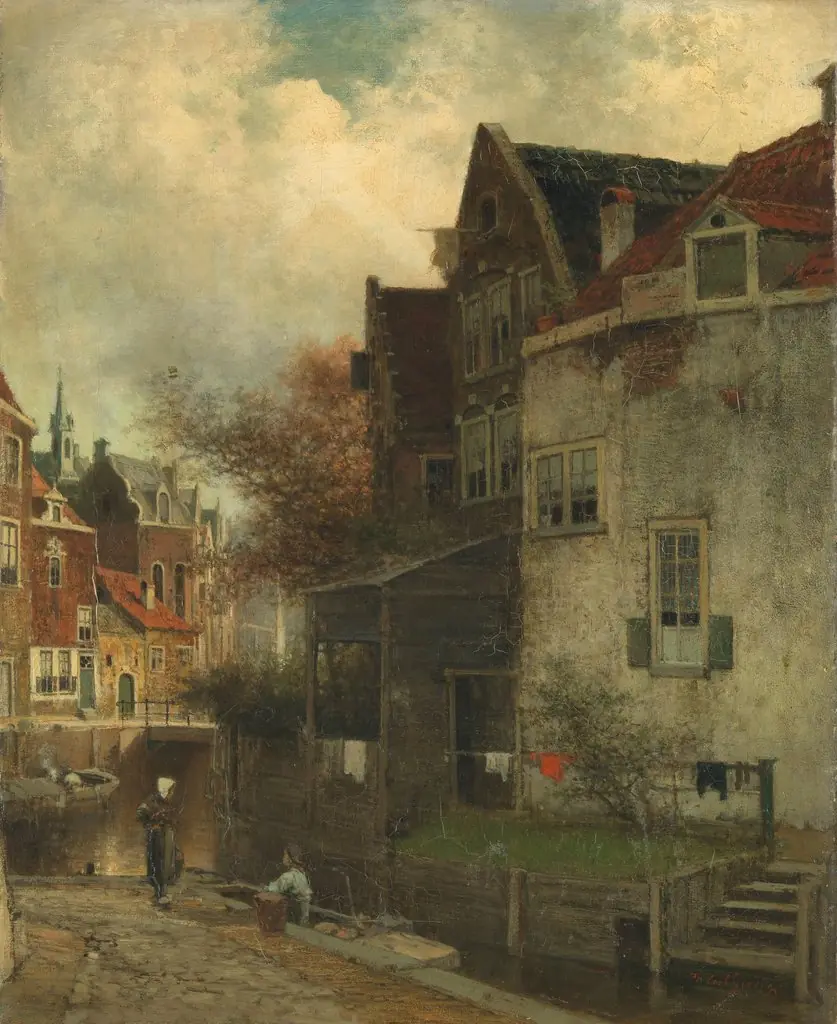 Stadsgezicht
 The Kalvermarkt, The Hague
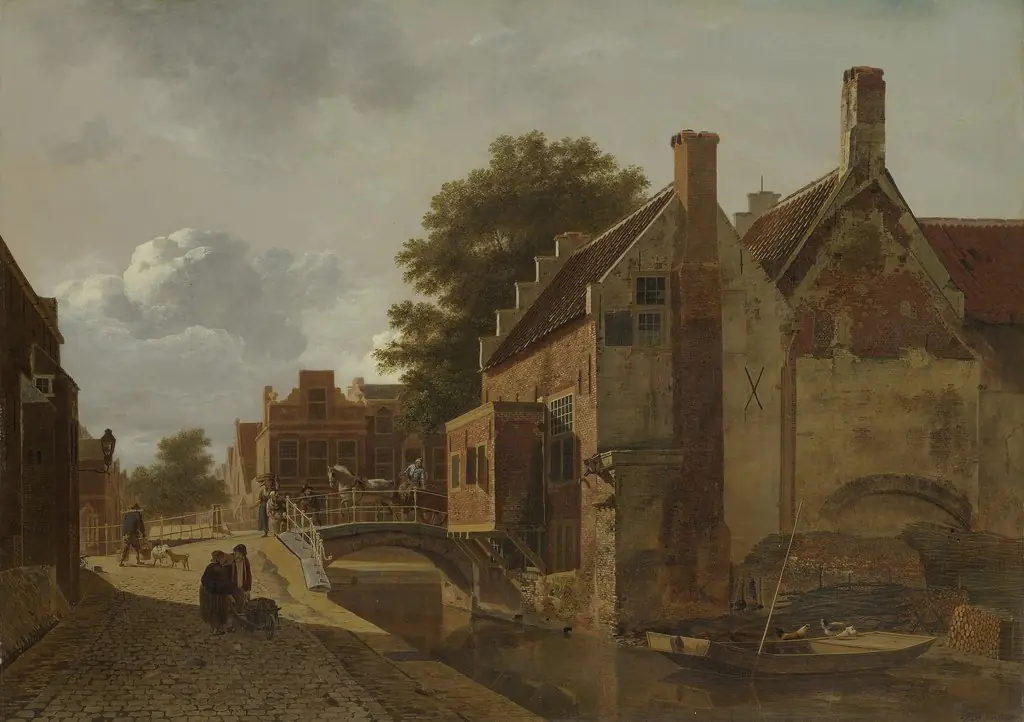 Kalvermarkt, The Hague
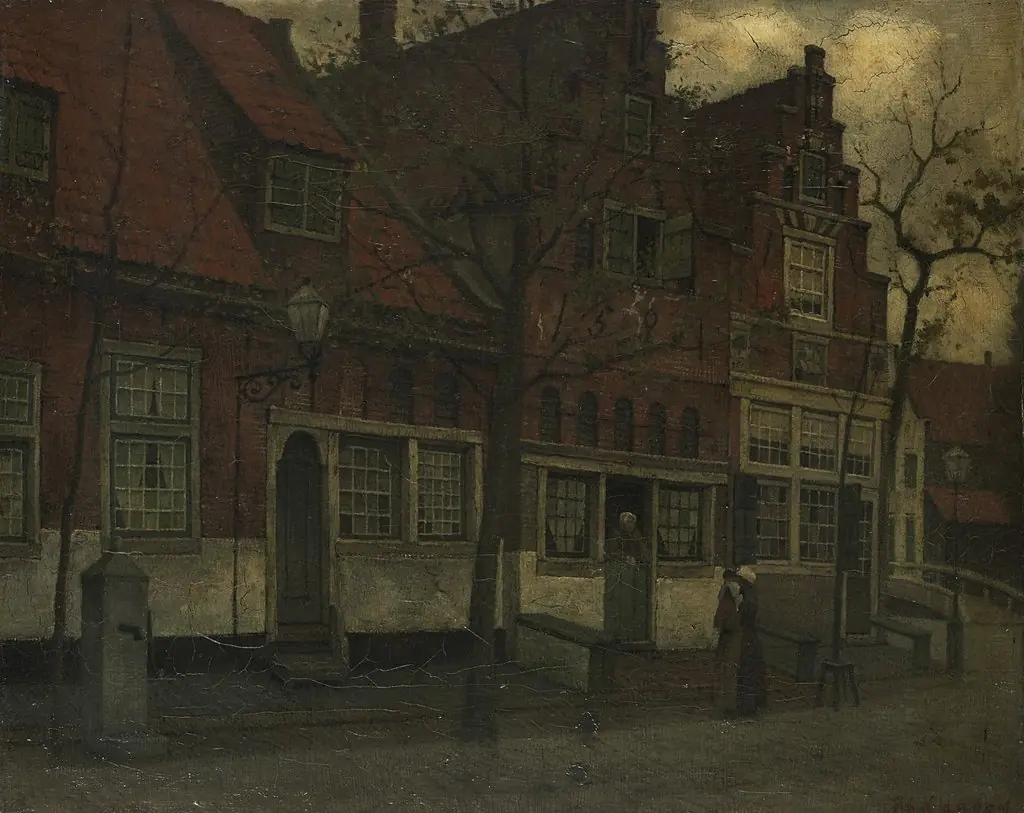 Houses on the Breedstraat, Enkhuizen
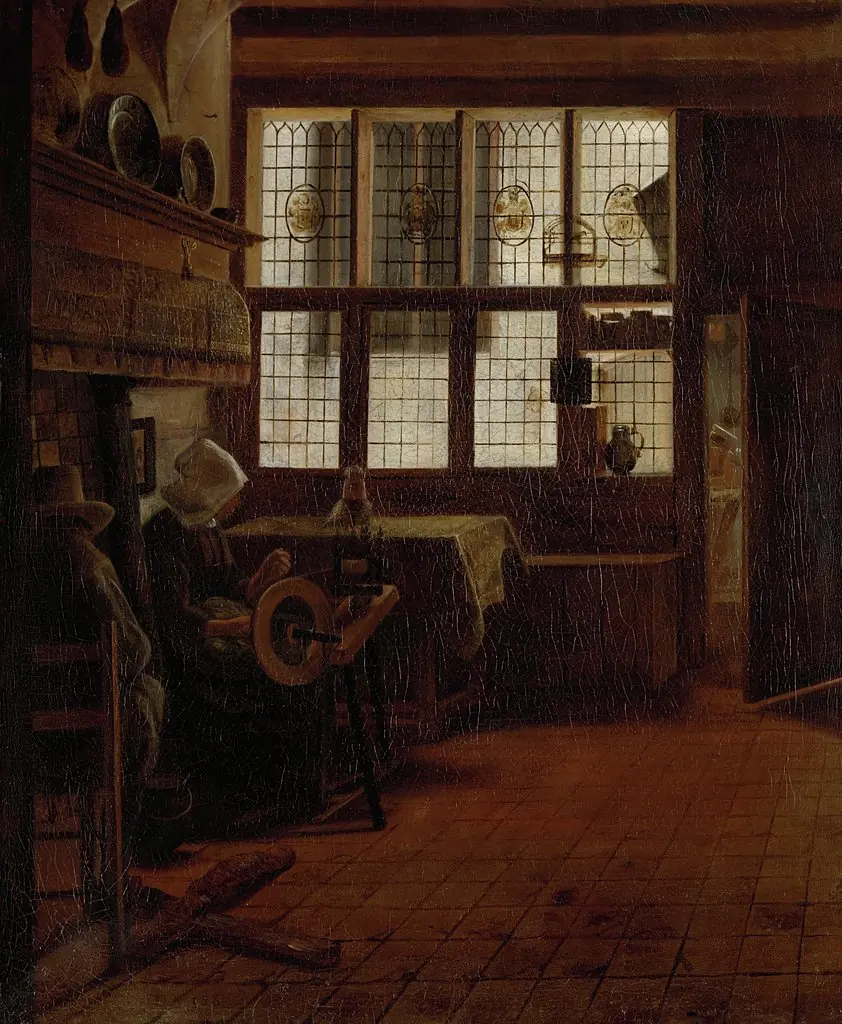 Interior with Woman at the Spinning Wheel
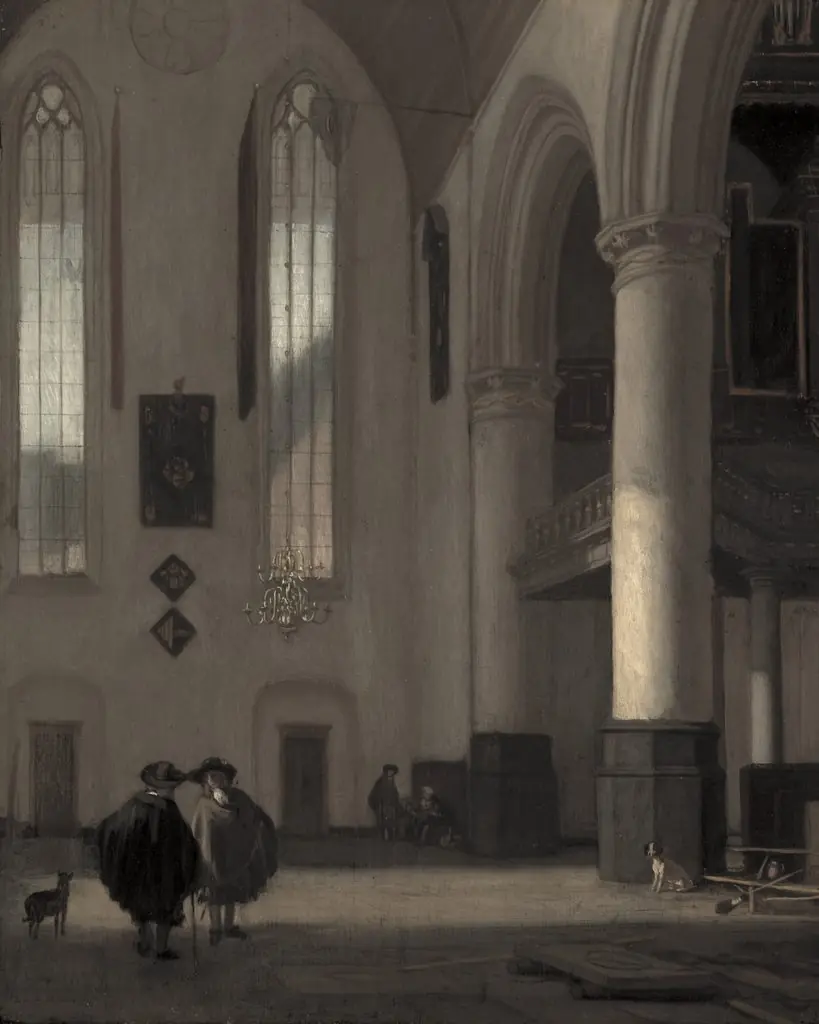 Interior of a Protestant Church