Artwork
Defense of Mazagran, February 2 to 6, 1840
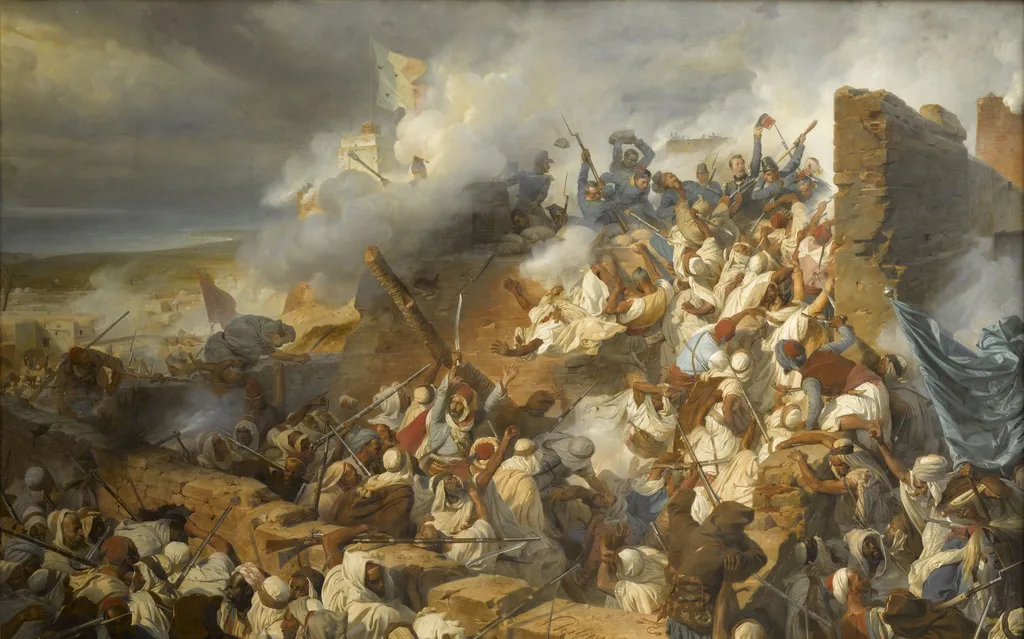
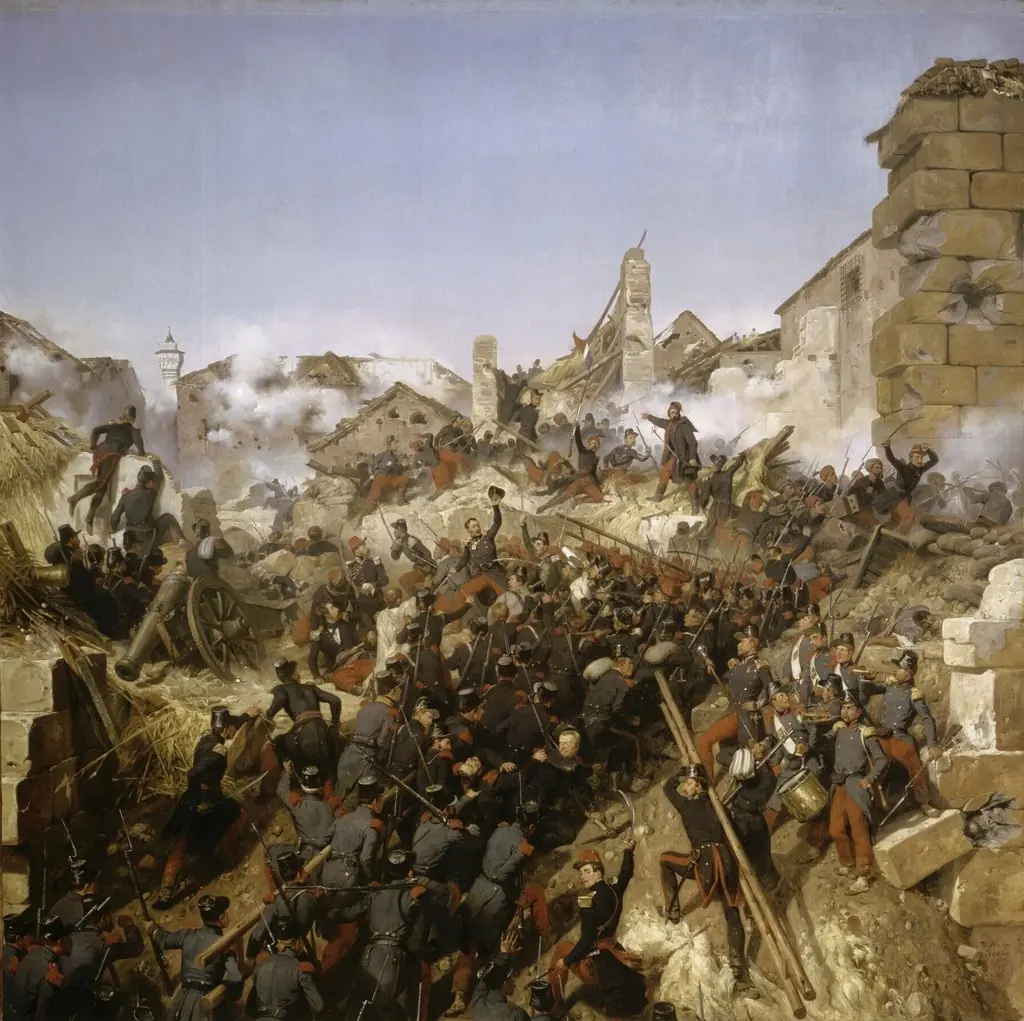
Defense of Mazagran, February 2 to 6, 1840 is an oil painting by Henri Félix Emmanuel Philippoteaux. It dates from 1841 and is held in the collection of the Palace of Versailles.
About this work
This painting shows French soldiers holding off an attack in Algeria in 1840. Henri Félix Emmanuel Philippoteaux put it on canvas in 1841. The fight happened at a place called Mazagran.
Fewer than 100 French fighters faced a much larger force led by Mustapha Ben Tami. Their bold stand became a famous story soon after.
Look up the artist next: Henri Félix Emmanuel Philippoteaux.
Subject & Meaning
The painting depicts the February 1840 Battle of Mazagran, showing French troops defending a fort under attack by Algerian forces led by Mustapha Ben Tami.
The painting depicts the February 1840 Battle of Mazagran, showing French troops defending a fort under attack by Algerian forces led by Mustapha Ben Tami. The composition emphasizes heroic resistance, drawing a visual parallel to the Spartans at Thermopylae to underscore valor against overwhelming odds. Commissioned by the Ministry of War, the work was presented at the 1842 Salon and serves as a visual justification for the French conquest of Algeria, reflecting Romantic-era fascination with martial heroism.
Technique & Style
Created in 1841, *Defense of Mazagran, February 2 to 6, 1840* is executed in oil paint on canvas. The work measures 270 cm in height and 420 cm in width, presenting a large-scale history painting format typical of the era. Stylistically, the piece reflects the fashionable Romanticism of the period, utilizing the medium to dramatize the conflict between a small French force and their opponents. The composition depicts specific narrative elements including cavalry, flags, fortifications, and a sailing ship to convey the intensity of the battle. Commissioned by the Ministry of War and King Louis-Philippe, the painting was designed to justify the French conquest of Algeria through its heroic visual narrative.
History & Provenance
Painted in 1841 by Henri Félix Emmanuel Philippoteaux, the work was commissioned by King Louis-Philippe to justify the French conquest of Algeria for the newly established Museum of the History of France at the Palace of Versailles. Some records attribute the commission specifically to the Ministry of War. The painting was exhibited at the Salon of 1842 in Paris before entering the royal collection. It remains housed today at the Musée de l'Histoire de France within the Palace of Versailles, bearing inventory numbers MV 6885, INV 7197, LP 5144, and GI 7197.
The painting is held in the collection of the Musée de l'Histoire de France at the Palace of Versailles in Versailles, France. Its museum identification includes the inventory numbers MV 6885, INV 7197, LP 5144, and GI 7197 within the Joconde database. The work was originally commissioned by King Louis-Philippe for the newly created history museum at Versailles. It was first exhibited at the Salon of 1842, which took place at the Louvre in Paris.
Context
Commissioned by King Louis-Philippe to legitimize the French conquest of Algeria, this 1841 canvas was intended for the newly created Museum of the History of France at Versailles. Stylistically, the work embodies the Romanticism fashionable during the July Monarchy, drawing heroic parallels between the outnumbered French defenders and the Spartans at Thermopylae.
The painting debuted at the Salon of 1842 held at the Louvre before entering the royal collections. Modern scholarship situates the piece within broader studies of French military imagery and colonial expansion, with historians analyzing its role in picturing war and constructing democratic narratives through violence in mid-19th-century France.
Legacy
The painting has come to symbolize the French military's valor during the colonial expansion, often cited in scholarly works on war art and imperial ideology. It was prominently displayed at the Salon of 1842, reinforcing its public reception as a patriotic narrative. Contemporary analyses link its composition to Romanticism's emphasis on heroism and national identity, while its presence in the Musée de l'Histoire de France underscores its role in legitimizing the conquest of Algeria. The work continues to be referenced in discussions of visual rhetoric in 19th-century French imperial discourse.
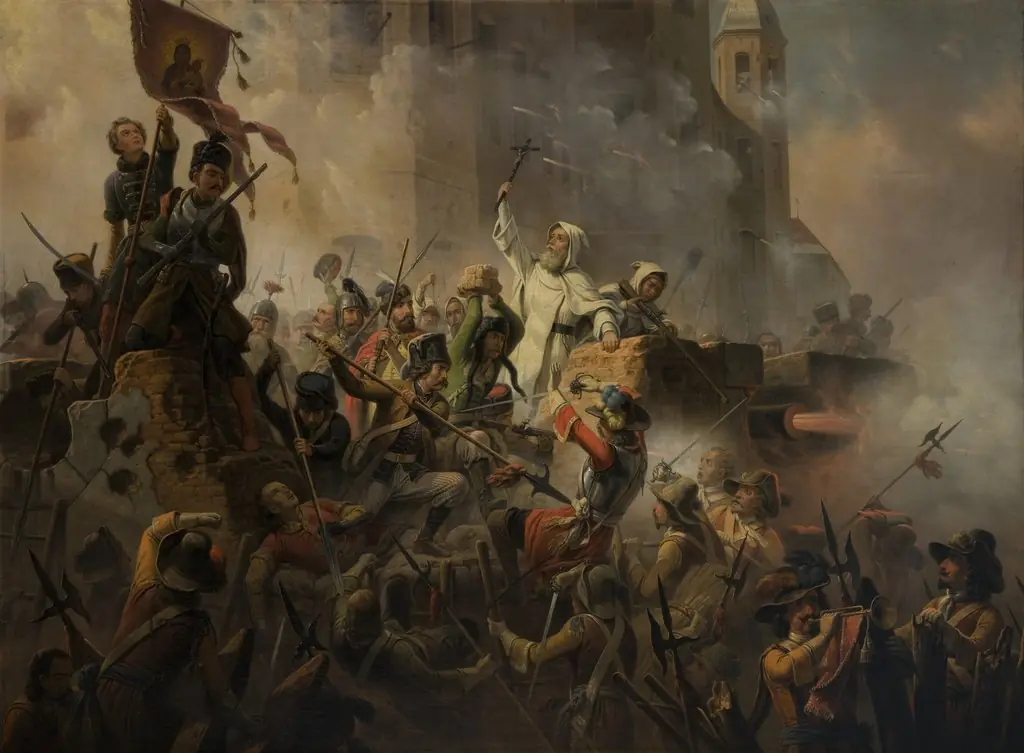
Own this work as a print
Artist & collection
Artist
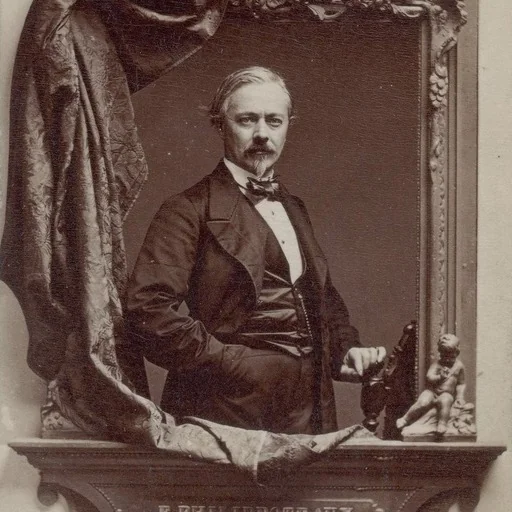
Henri Félix Emmanuel Philippoteaux
Henri Félix Emmanuel Philippoteaux (French pronunciation:; 3 April 1815 – 8 November 1884) was a French artist and illustrator, known primarily as a battle painter.

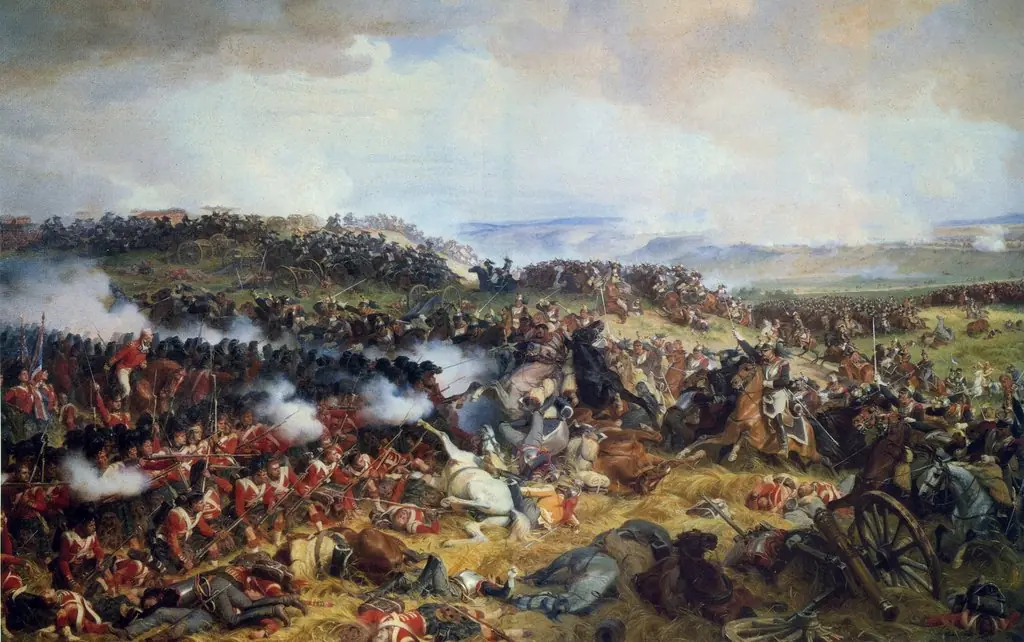 The Battle of Waterloo: The British Squares Receiving the Charge of the French Cuirassiers
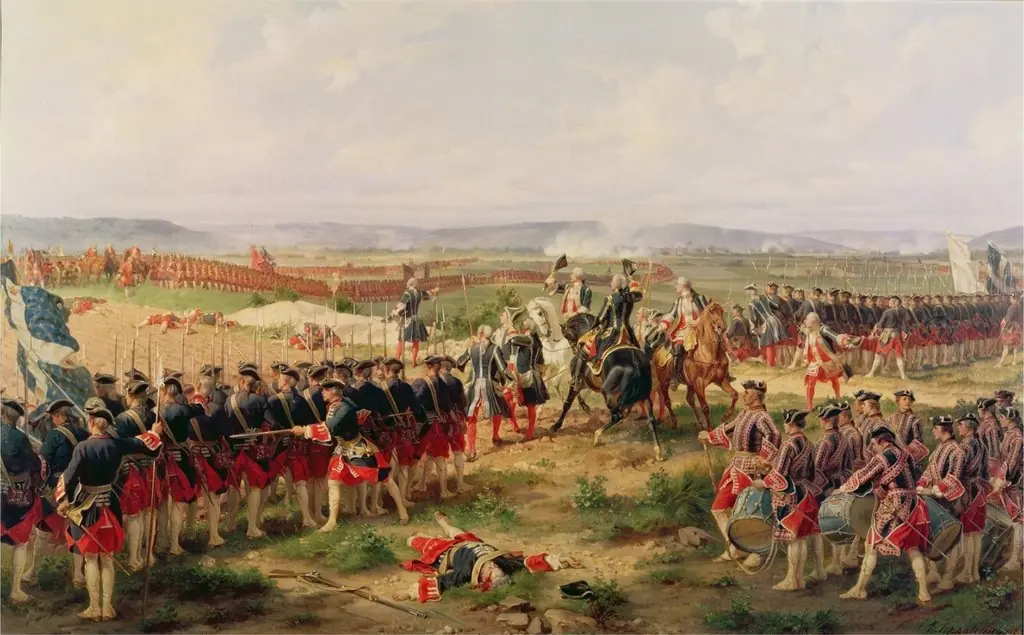 The Battle of Fontenoy, 1745: The French and the Allies Confronting Each Other
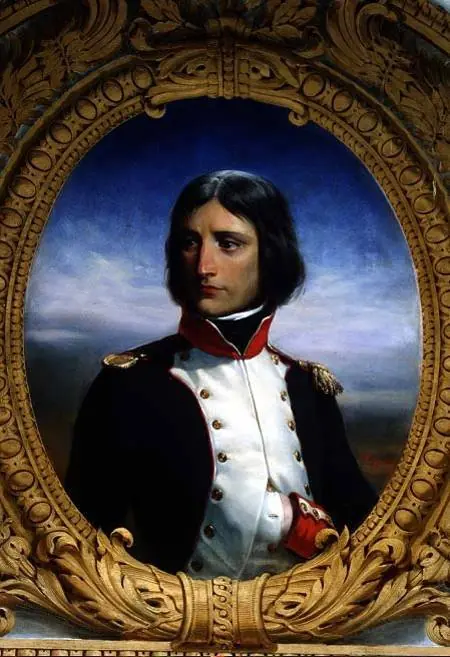 Napoleon Bonaparte
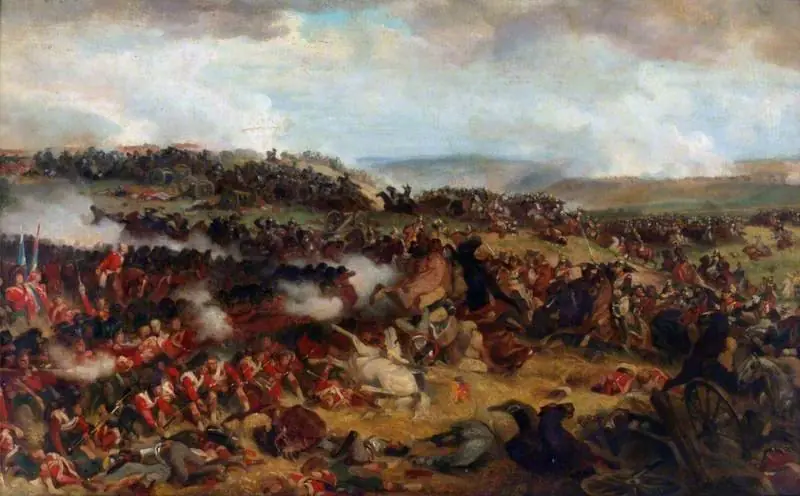 The Battle of Waterloo: The British Squares Receiving the Charge of the French Cuirassiers
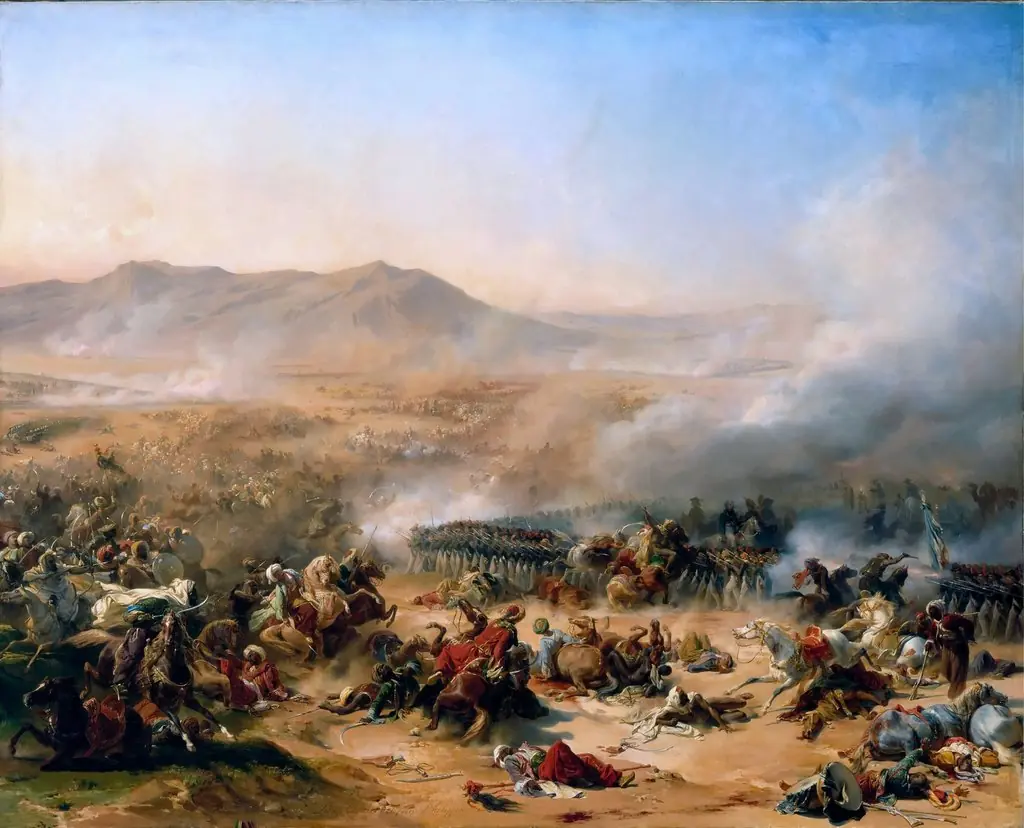 Bataille du Mont Thabor, 16 avril 1799
 The Young Louis XV at Versailles