Artwork
The Battle of Waterloo: The British Squares Receiving the Charge of the French Cuirassiers
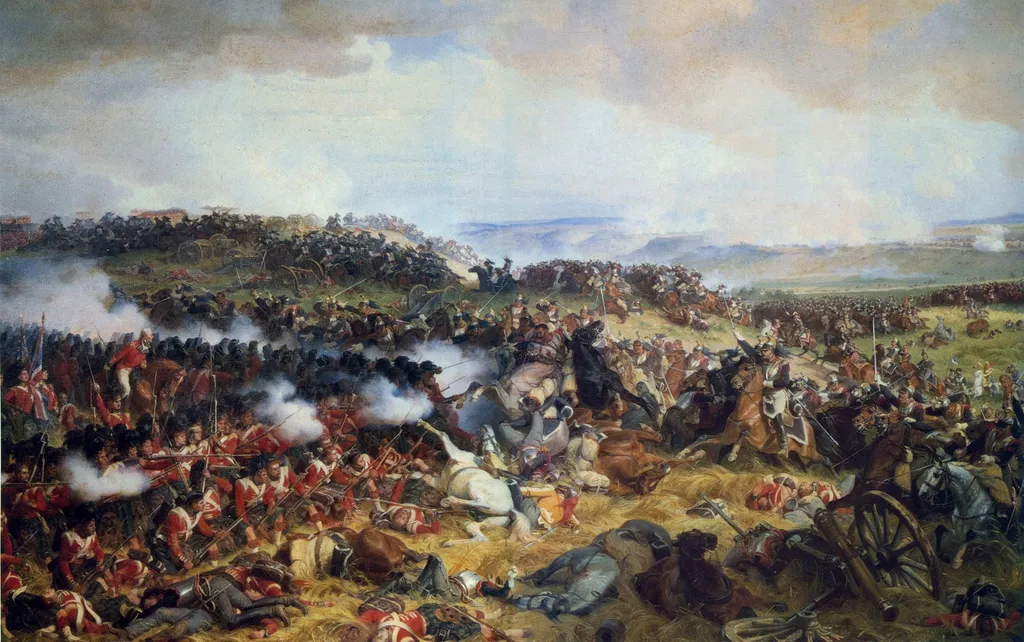
The Battle of Waterloo: The British Squares Receiving the Charge of the French Cuirassiers is an oil painting by the Post-Impressionist artist Henri Félix Emmanuel Philippoteaux. It dates from 1874 and is held in the collection of the Victoria and Albert Museum.
About this work
This painting shows a key moment from a famous battle. The artist used oil paint to capture the action on a large canvas.
It was made in 1874 by French artist Henri Félix Emmanuel Philippoteaux. The scene is dramatic, with soldiers standing firm against a charge.
If you like battle scenes, check out more at the Victoria and Albert Museum.
Subject & Meaning
As a work of history painting, the composition stages a moment of disciplined endurance against overwhelming cavalry assault, a defining image of Waterloo.
The painting depicts a specific episode from the Battle of Waterloo on 18 June 1815, showing squares of red-coated British infantry from Sir Thomas Picton's 5th Division being charged by cavalrymen of the French 5th and 10th Cuirassiers in blue uniforms. The central British unit is a Highland regiment, with its colour party and a mounted officer taking refuge in the middle of the square, while an abandoned cannon lies in the foreground.
As a work of history painting, the composition stages a moment of disciplined endurance against overwhelming cavalry assault, a defining image of Waterloo. The contrast between the static, ordered infantry squares and the dynamic mass of charging cuirassiers embodies the tactical narrative of the battle, in which British infantry formations withstood repeated French cavalry attacks. John Ruskin described it as a "carefully-studied and skilful battle piece," underscoring its intent as a meticulously researched record of a pivotal military engagement.
Technique & Style
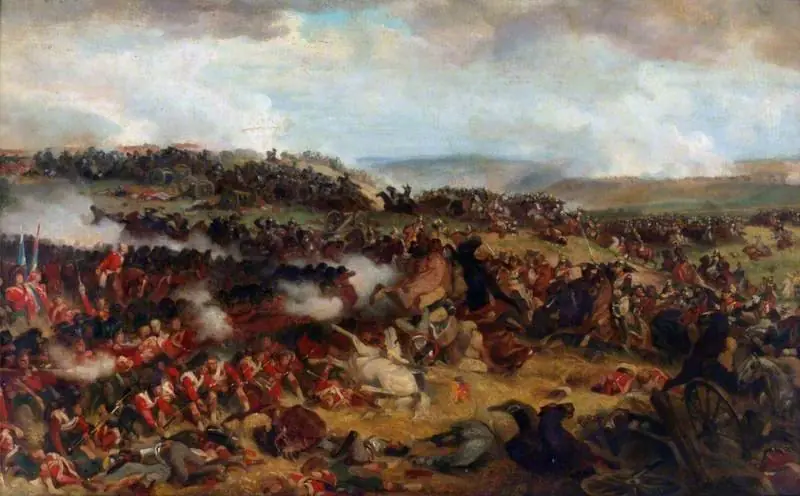
The Battle of Waterloo is executed in oil on canvas, a medium consistent with Philippoteaux's academic history-painting practice. The work measures 99 × 155 cm, giving it a distinctly horizontal format suited to the panoramic cavalry engagement it depicts. The V&A also holds a related preparatory oil sketch on paper laid on canvas, indicating the artist worked out the composition in a related but lighter support before committing to the final canvas.
Stylistically, the painting is characterised as a meticulous academic work, with John Ruskin describing it as a "carefully-studied and skilful battle piece." The composition contrasts the disciplined red-coated British squares on the left with the advancing French cuirassiers in blue on the right, and includes an abandoned cannon in the foreground as a focal anchor.
History & Provenance
The painting was commissioned and completed in 1874 by Henri Félix Emmanuel Philippoteaux, as indicated by its dating and medium of oil on canvas.
Its early exhibition history includes display at the Royal Academy Summer Exhibition in 1875 in London. It was subsequently acquired by Francis Reubell Bryan around 1875. Bryan donated the work to the Victoria and Albert Museum in 1880, where it entered the collection as accession number 84-1880. The museum also holds a related oil-on-paper sketch laid on canvas.
The painting is held by the Victoria and Albert Museum in London, where it is cataloged under accession number 84-1880. It entered the museum's collection in 1880 as a gift from Francis Reubell Bryan, who likely acquired the work around 1875. The institution also retains a related oil sketch on paper laid on canvas.
Following its acquisition, the work was loaned to English Heritage for display at Apsley House in London. Prior to reaching the museum, the painting was exhibited at the Royal Academy Summer Exhibition in 1875 at Burlington House.
Context
Executed in 1874 by French artist Henri Félix Emmanuel Philippoteaux, this work exemplifies the meticulous academic style characteristic of late 19th-century history painting. When exhibited at the Royal Academy Summer Exhibition in 1875, the piece garnered specific critical attention from John Ruskin, who praised it as a "carefully-studied and skilful battle piece."
The painting's acquisition history underscores its immediate recognition within British institutional circles. Purchased around 1875 by Francis Reubell Bryan, the work was donated to the Victoria and Albert Museum in 1880, where it remains a key holding. The museum also preserves an associated oil sketch on paper, indicating the artist's detailed preparatory process.
By depicting the 1815 clash between French cuirassiers and British infantry squares with such precision, Philippoteaux solidified his reputation for martial subjects within the broader context of European academic art.
Overview
Henri Félix Emmanuel Philippoteaux’s 1874 oil on canvas, titled The Battle of Waterloo: The British Squares Receiving the Charge of the French Cuirassiers, measures roughly 99 by 155 centimetres. The work is part of the collection at London’s Victoria and Albert Museum, where it is displayed among other 19th‑century military paintings.
Own this work as a print
Artist & collection
Artist
Henri Félix Emmanuel Philippoteaux
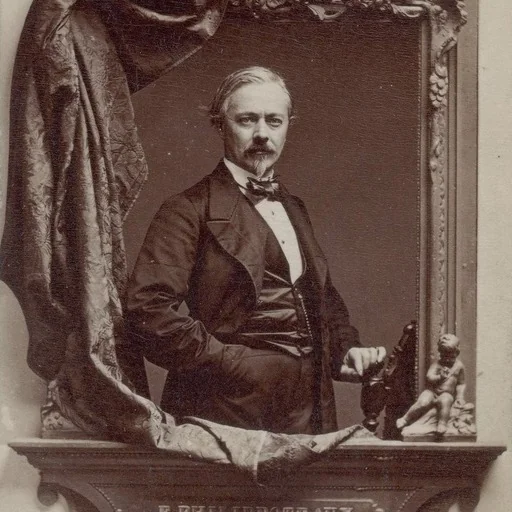
Henri Félix Emmanuel Philippoteaux (French pronunciation:; 3 April 1815 – 8 November 1884) was a French artist and illustrator, known primarily as a battle painter.

 Die Schlacht bei Temesvár
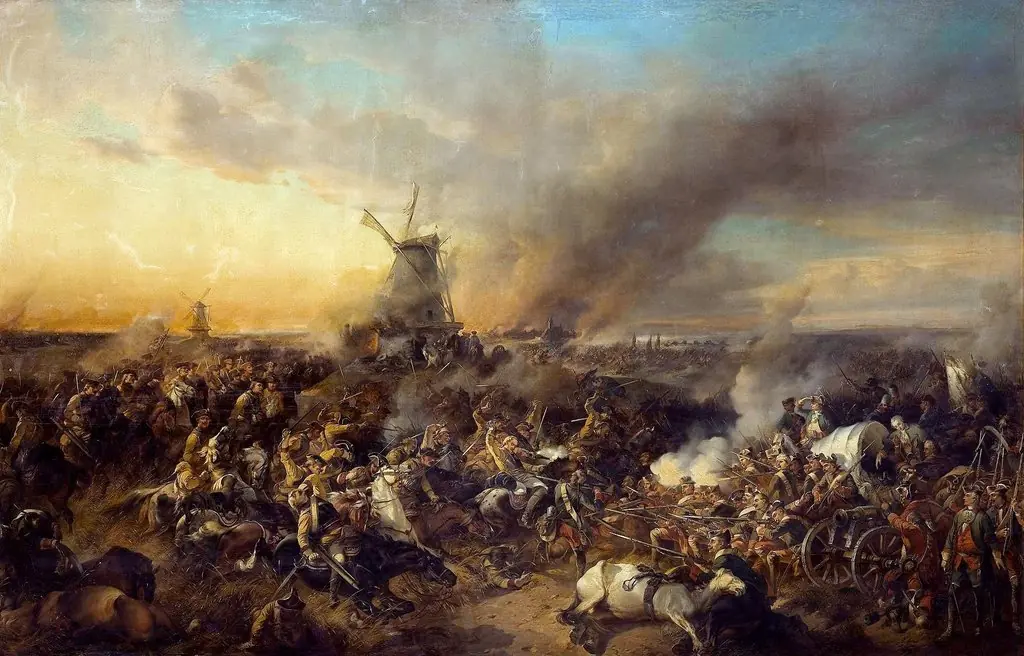 Battle of Zorndorf on 14 August 1758
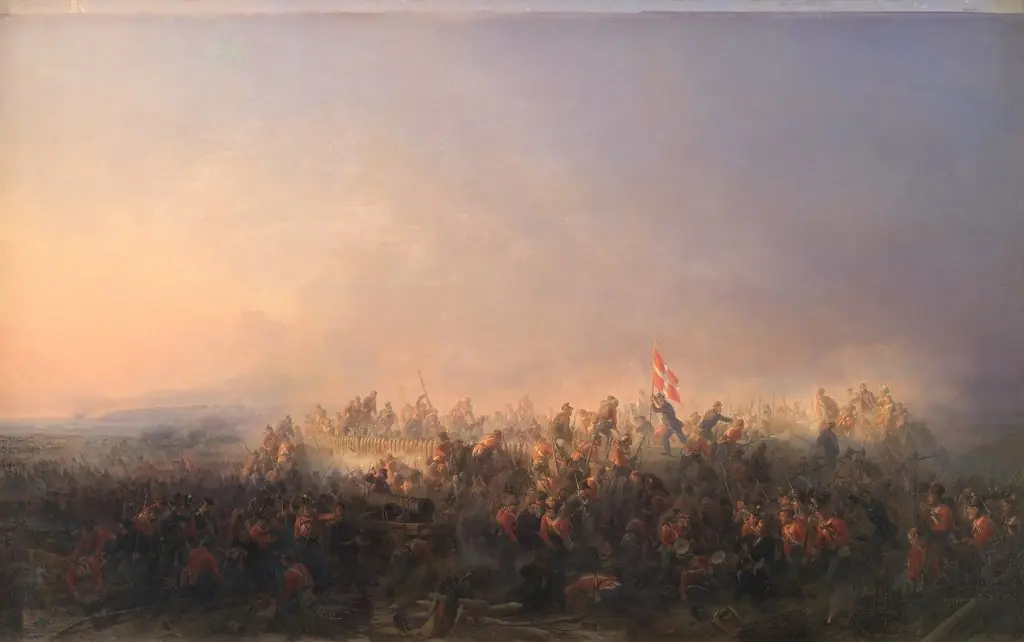 Slaget ved Fredericia den 6. juli 1849
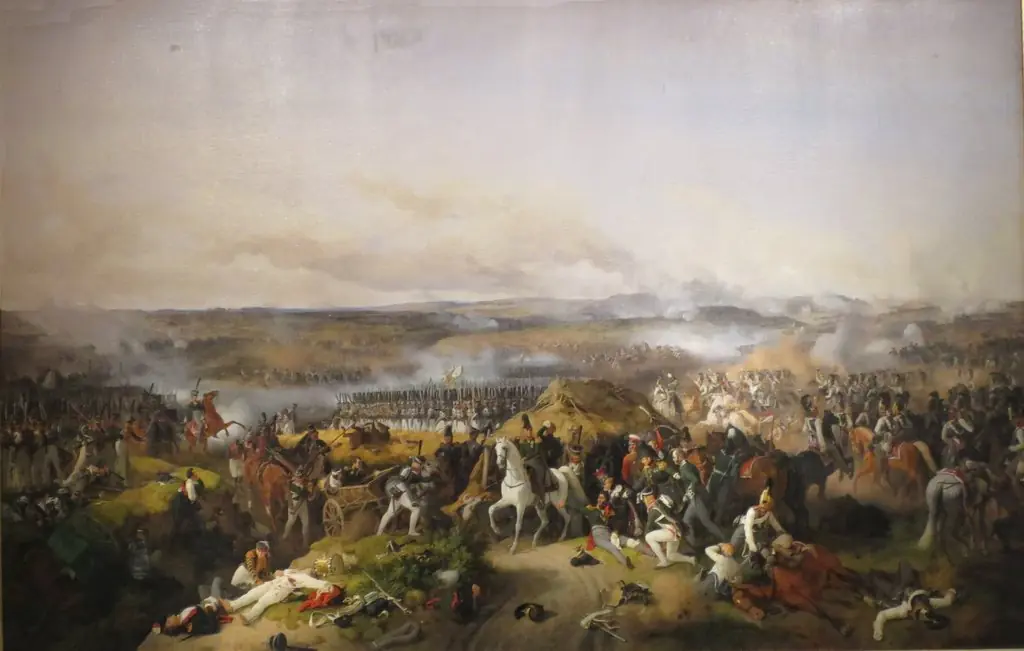 Battle of Borodino on 26 August (7 September) 1812
 1807, Friedland
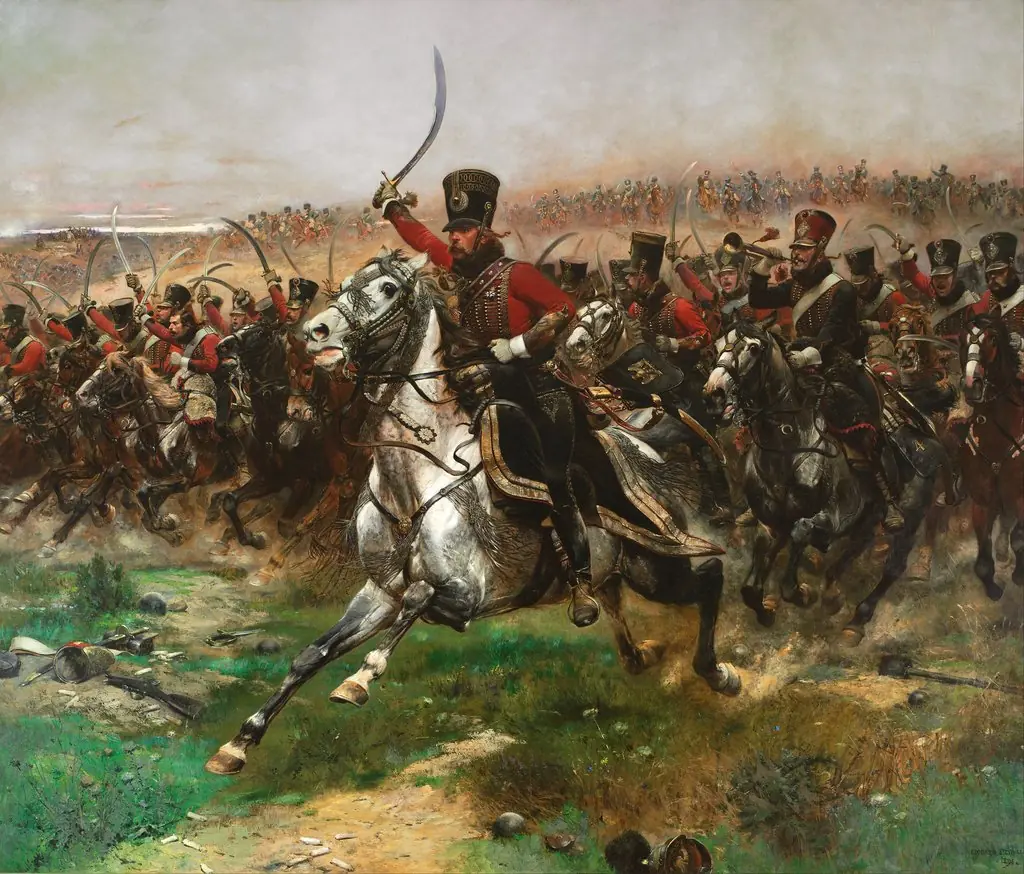 Vive L'Empereur
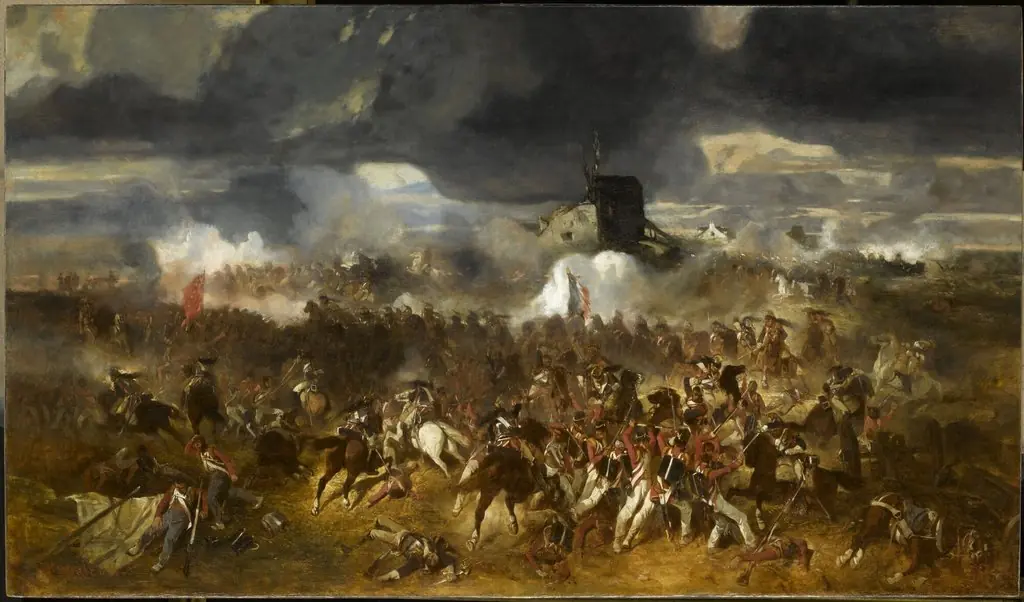 Bataille de Waterloo, 18 juin 1815
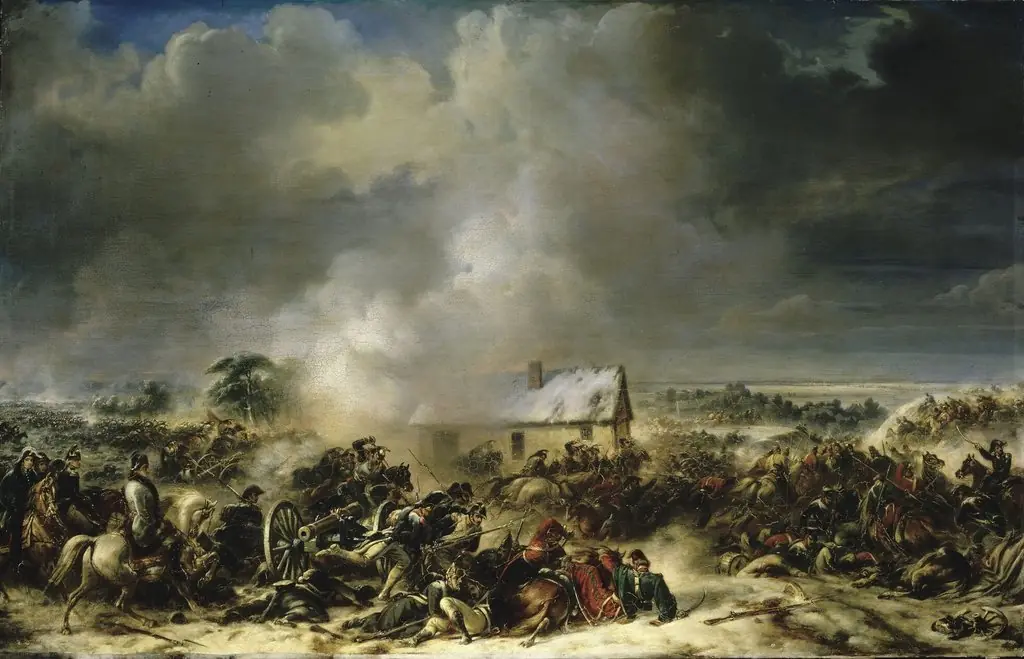 Battle of Hoff, February 6, 1807
 Slaget ved Fredericia den 6. juli 1849
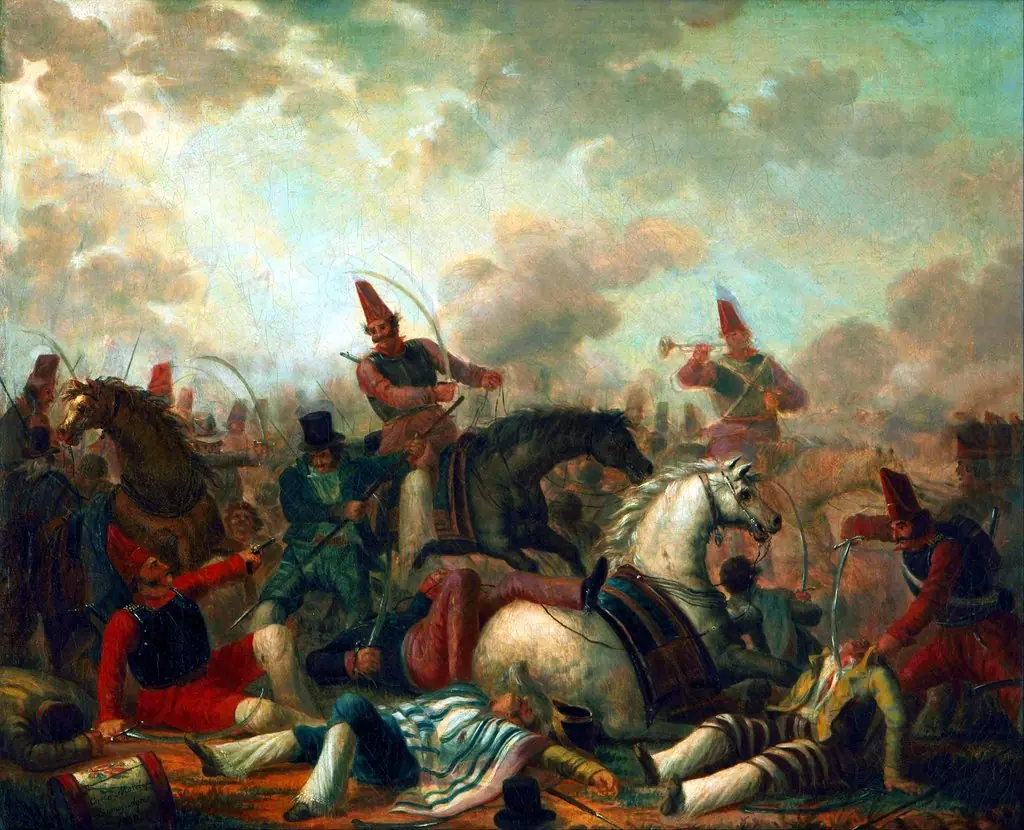 Combate de caballería en la época de Rosas