Artwork
The Battle of Fontenoy, 1745: The French and the Allies Confronting Each Other
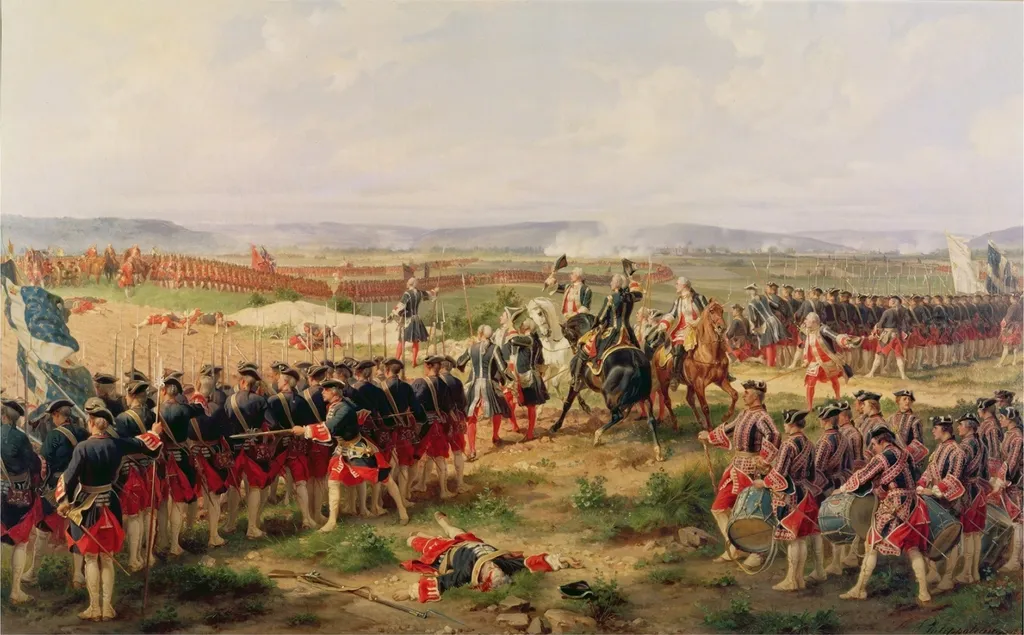
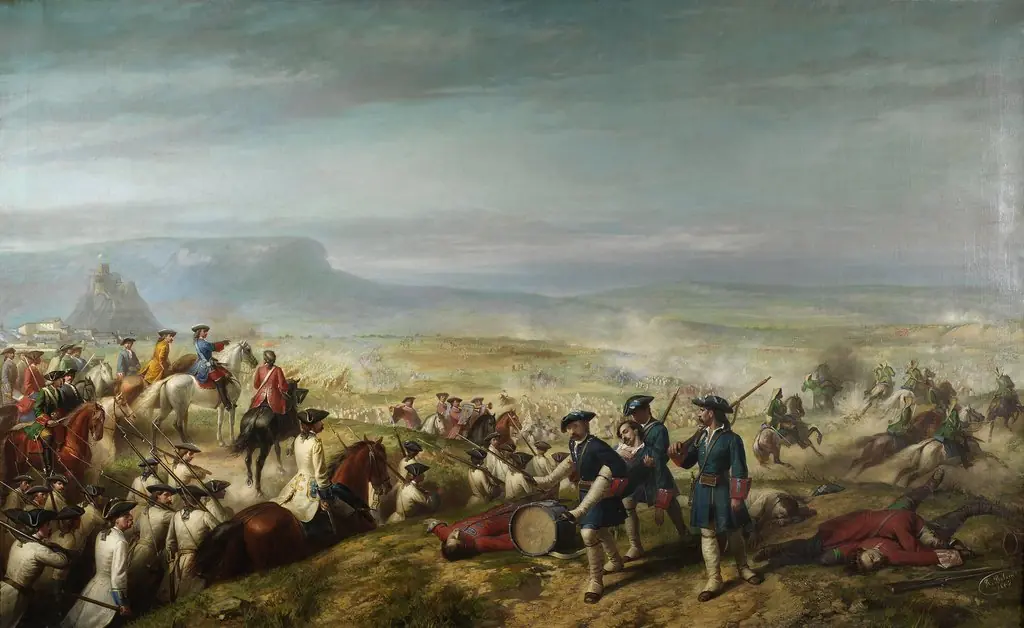
The Battle of Fontenoy, 1745: The French and the Allies Confronting Each Other is an oil painting by the Realist artist Henri Félix Emmanuel Philippoteaux. It dates from 1873 and is held in the collection of the Victoria and Albert Museum.
About this work
Overview
2 cm, the work is held in the Victoria and Albert Museum, London, where it is currently located at the V&A East Storehouse.
The Battle of Fontenoy, 1745: The French and the Allies Confronting Each Other is an oil on canvas painting by Henri Félix Emmanuel Philippoteaux, completed in 1873. Measuring 71.8 by 116.2 cm, the work is held in the Victoria and Albert Museum, London, where it is currently located at the V&A East Storehouse. The painting exemplifies Philippoteaux's specialization in meticulously researched battle scenes and represents a significant example of 19th-century French history painting that revives and reinterprets an 18th-century military subject with archaeological precision rather than contemporary Realist sentiment.
Subject & Meaning
The painting depicts a specific moment during the Battle of Fontenoy on 11 June 1745, a decisive engagement in the War of the Austrian Succession fought between French forces under Marshal Saxe and the Pragmatic Army of British, Hanoverian, Austrian, and Dutch troops. The scene identifies Lord Charles Hay of the First Foot Guards challenging the Gardes Françaises in the midst of battle. In the foreground, two formations of soldiers face each other across a dirt path: on the left, French soldiers in dark blue coats with red skirts and white stockings stand in formation, while to the right, mounted officers on black and white horses raise their hats toward the opposing lines, with rows of red-coated Allied troops stretching toward the horizon. A fallen soldier in French uniform lies face down in the center foreground, his hat and musket beside him, embodying the human cost of the engagement. The composition emphasizes British commanders displaying bravery in the face of eventual defeat, with the panoramic view opening onto the plain characteristic of Philippoteaux's approach to battle painting. The iconography draws upon themes of duty, sacrifice, and national identity, while the elaborate uniforms serve as reminders of the social hierarchies underpinning 18th-century warfare.
Technique & Style
Philippoteaux executed the work in oil on canvas with a smooth, highly finished surface and careful attention to uniform textures and individual faces. The palette relies on saturated reds, deep blues, and earth tones set against a pale, cloudy sky, with light falling evenly across the scene suggesting late afternoon with soft shadows. The composition employs a panoramic format that stretches the military encounter across an open plain with distant hills, creating depth through the recession of troop formations and smoke rising from further engagements. The artist's handling demonstrates particular attention to the accurate depiction of 18th-century military costume and equipment, reflecting his commitment to historical reconstruction. This approach aligns with 17th-century Dutch precedents such as Philips Wouwerman rather than the contemporary Realist interpretation of military subjects, distinguishing Philippoteaux's work from artists who emphasized the suffering of common soldiers. The painting is signed and dated 'F. Philippoteaux 1873' in the lower right corner.
History & Provenance
The painting was created in 1873, during a period when Philippoteaux had already established his reputation through regular Salon exhibitions since 1833 and had received the Légion d'honneur in 1846. The work was given to the Victoria and Albert Museum by F. R. Bryan in 1880, entering the collection under accession number 85-1880. Museum records suggest it may have formed a pair with another work acquired in the same year (84-1880). The relatively brief interval between the painting's creation and its acquisition by the museum indicates contemporary recognition of its quality and historical interest.
Context
Henri Félix Emmanuel Philippoteaux (1815-1884) was born in Paris, where he trained under Léon Coignet (1794-1880). He specialized in history and portrait painting, with battle scenes forming a significant portion of his output, often executed in panorama format with the assistance of his son Paul Dominique Philippoteaux (1846-1876), who became a leading figure in the next generation of panorama painters. The Battle of Fontenoy belongs to a long tradition of history painting that depicts non-recurring events based on historical sources, a genre that reached particular prominence during the Renaissance and remained significant through the 19th century. In this work, Philippoteaux is closely aligned with Ernest Meissonier (1815-1891), who similarly devoted himself to recreating the past with meticulous attention to historical detail. Both artists resisted the Realist tendency to emphasize human suffering in favor of archaeological accuracy and the celebration of military ceremony. The painting's subject, the War of the Austrian Succession, held particular relevance for 19th-century audiences as an episode that shaped the balance of European power and established reputations for military units that would continue into subsequent conflicts.
Legacy
The Battle of Fontenoy, 1745 remains a representative example of Philippoteaux's successful specialization in battle painting and of the broader 19th-century French interest in historical military reconstruction. The work's presence in the Victoria and Albert Museum's collection ensures its continued accessibility for study of 19th-century history painting practices and of the visual culture of historical commemoration. As a faithful photographic reproduction of a public domain work of art, the painting has circulated widely through digital platforms, contributing to ongoing interest in both Philippoteaux's career and the visual representation of 18th-century warfare. The painting exemplifies how 19th-century artists looked back to earlier traditions, particularly 17th-century Dutch battle painting, to create works that satisfied contemporary demand for historically accurate yet dramatically compelling images of national and military history.
Artist & collection
Artist
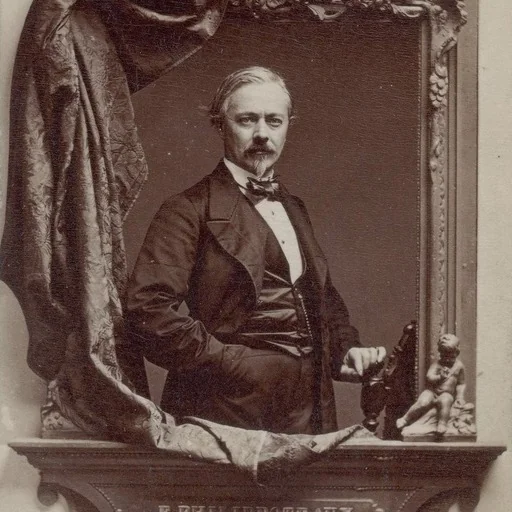
Henri Félix Emmanuel Philippoteaux
Henri Félix Emmanuel Philippoteaux (French pronunciation:; 3 April 1815 – 8 November 1884) was a French artist and illustrator, known primarily as a battle painter.

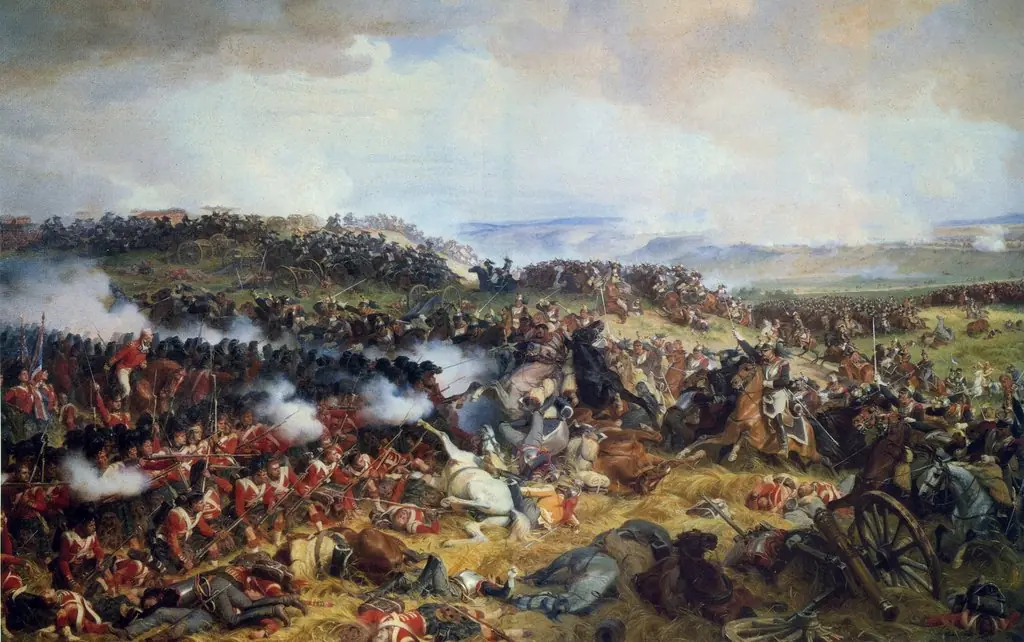 The Battle of Waterloo: The British Squares Receiving the Charge of the French Cuirassiers
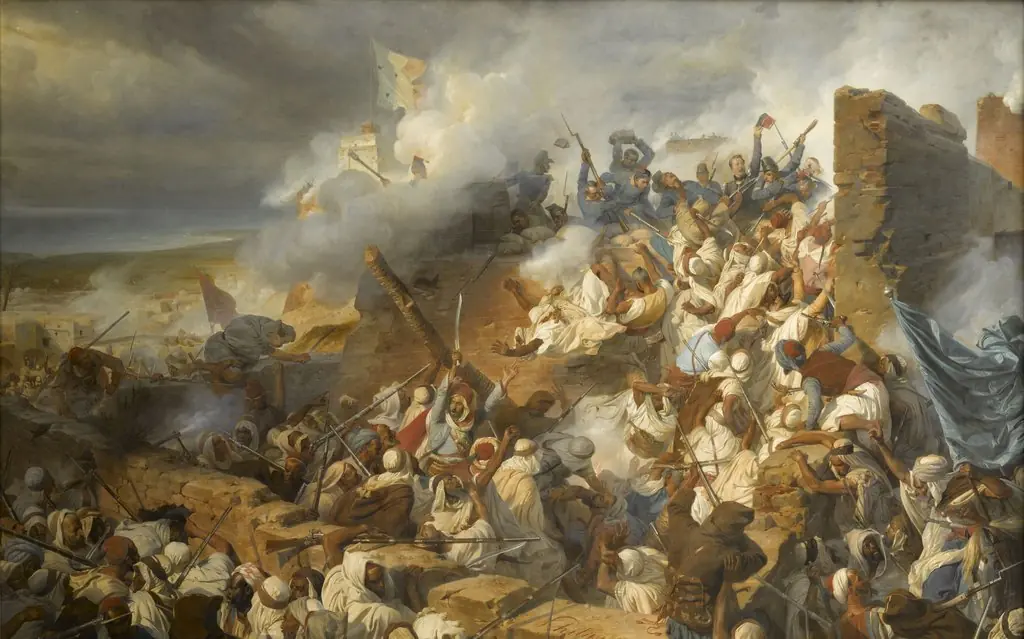 Defense of Mazagran, February 2 to 6, 1840
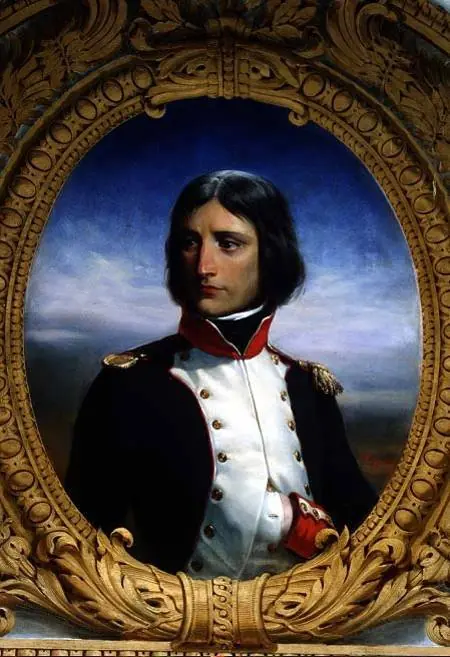 Napoleon Bonaparte
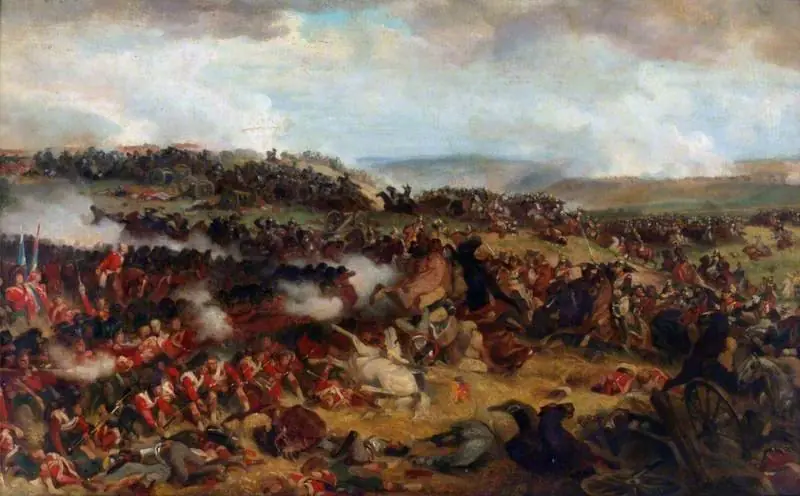 The Battle of Waterloo: The British Squares Receiving the Charge of the French Cuirassiers
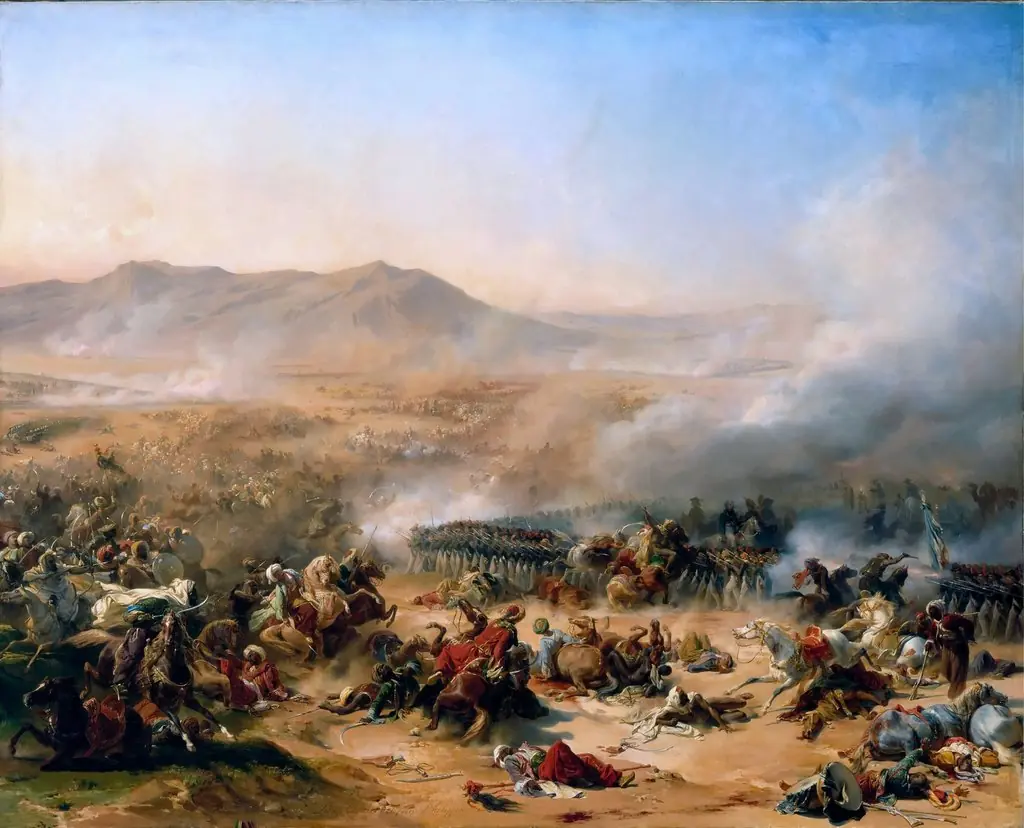 Bataille du Mont Thabor, 16 avril 1799
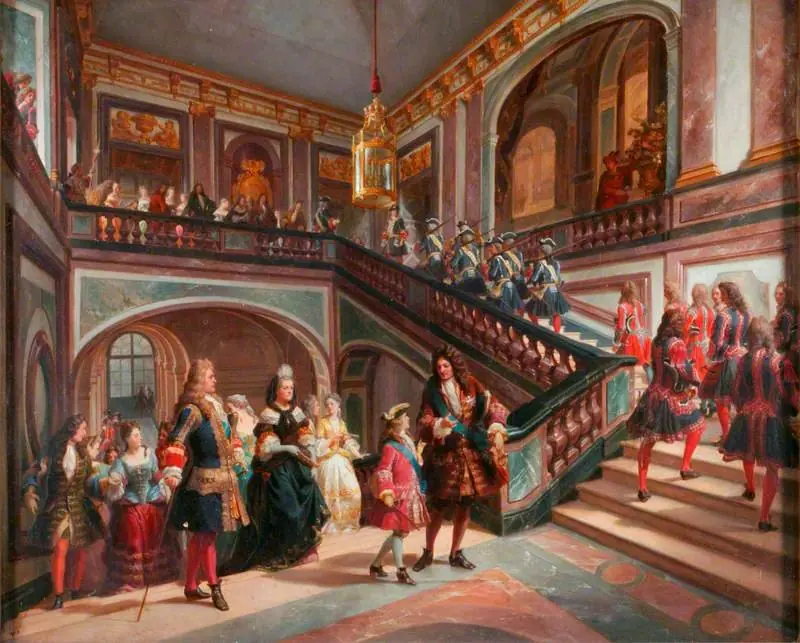 The Young Louis XV at Versailles