Artwork
Portrait of a Baby
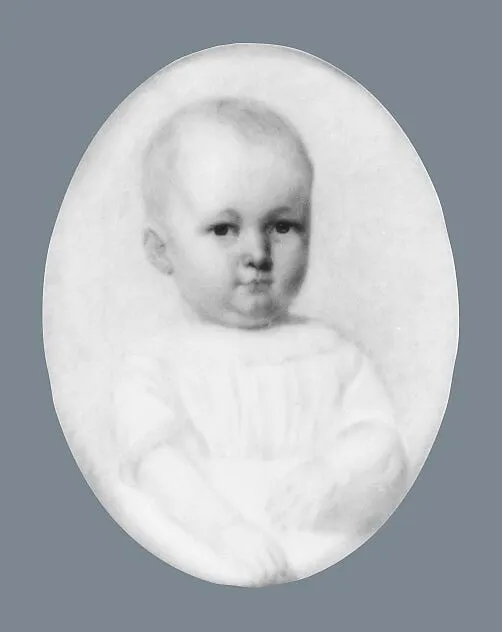
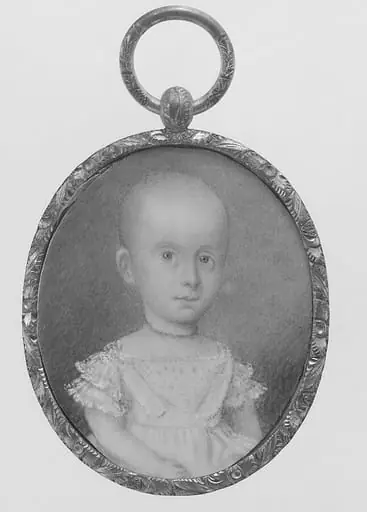
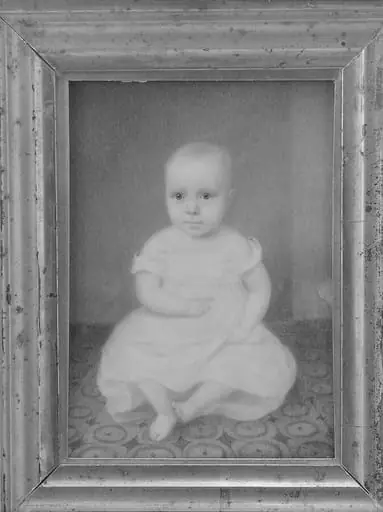
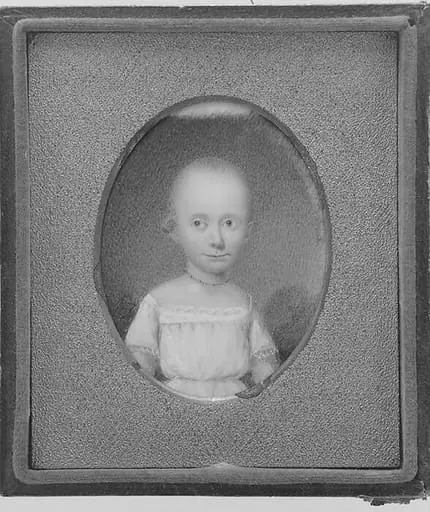
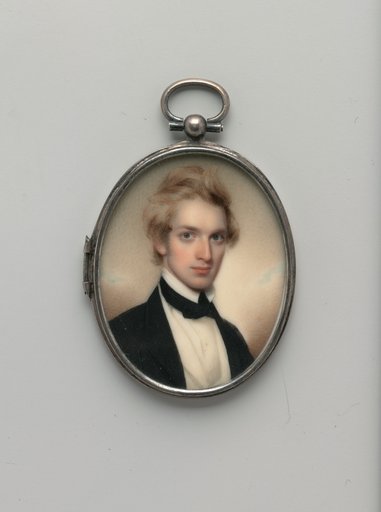
Portrait of a Baby is a watercolor painting by the American Folk Art artist Henry Colton Shumway. It dates from 1833 and is held in the collection of the Metropolitan Museum of Art.
About this work
Technique & Style
The formal handling emphasizes the delicate features of the sitter through the precise application of water-based pigments on the prepared ivory ground.
Created in 1833 by Henry Colton Shumway, the Portrait of a Baby is executed in watercolor applied to an ivory support. This medium combination is characteristic of early American miniature portraiture, a genre in which the artist specialized. The work measures 5.7 centimeters in height and 4.8 centimeters in width, reflecting the intimate scale typical of the form.
As a watercolor on ivory, the piece relies on the translucent qualities of the pigment to interact with the smooth, luminous surface of the ivory, allowing for delicate rendering of the infant subject. The classification within The American Wing underscores its status as a significant example of American portraiture from the antebellum period, where such miniatures served as personal keepsakes. The formal handling emphasizes the delicate features of the sitter through the precise application of water-based pigments on the prepared ivory ground.
History & Provenance
Created in 1833, the watercolor on ivory known as Portrait of a Baby was executed by the artist Henry Colton Shumway. The work measures approximately 5.7 by 4.8 units and depicts an infant subject. While specific details regarding the original commission or the intermediate ownership chain prior to its museum acquisition are not provided in the available records, the piece is currently held in the collection of the Metropolitan Museum of Art.
There, it is classified within the institution's American Wing. The inception date is firmly established as January 1, 1833, marking the beginning of the artwork's history as a documented portrait from the early nineteenth century.
Context
Portrait of a Baby is an 1833 watercolor portrait by Henry Colton Shumway, held in The American Wing at the Metropolitan Museum of Art. It exemplifies early American portraiture and reflects Shumway's focus on domestic subjects. Scholarship notes its technical finesse and its role within Shumway's oeuvre, situating the work amid the evolution of infant portraiture in early 19th‑century America.
Critical reception has highlighted its delicate rendering and its symbolic function in conveying innocence. The painting is catalogued in the Metropolitan Museum's collection and discussed in art historical surveys of American watercolors.
Overview
Henry Colton Shumway's Portrait of a Baby, created in 1833, is a watercolor miniature on ivory. This small-scale work captures an infant, reflecting the American folk art tradition of the era. Shumway, an artist from Connecticut, was recognized for his portraiture, which included depictions of notable public figures.
The intimate format and delicate execution are characteristic of miniature painting from the early 19th century, offering a personal glimpse into the period.
Subject & Meaning
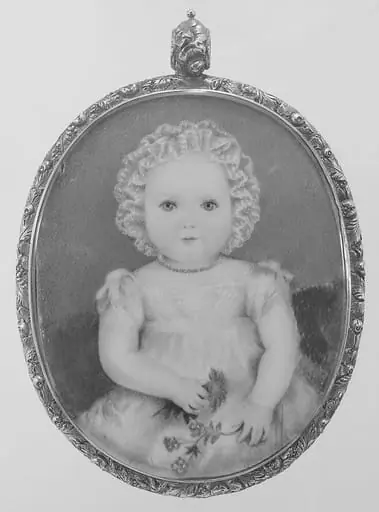
The miniature presents a sleeping infant, dressed in a white gown and resting on a red cushion, with one hand gently tucked under its chin. The artist rendered the baby's face with soft, rosy tones and fine blond hair, conveying a sense of warmth and naturalness. Unlike many formal portraits of the period, this depiction evokes a lifelike presence, suggesting a moment of quiet vulnerability and tender observation.
Artist & collection
Artist
Henry Colton Shumway (4 July 1807 – 6 May 1884) was an American soldier and artist.