Artwork
The Pride of the Village
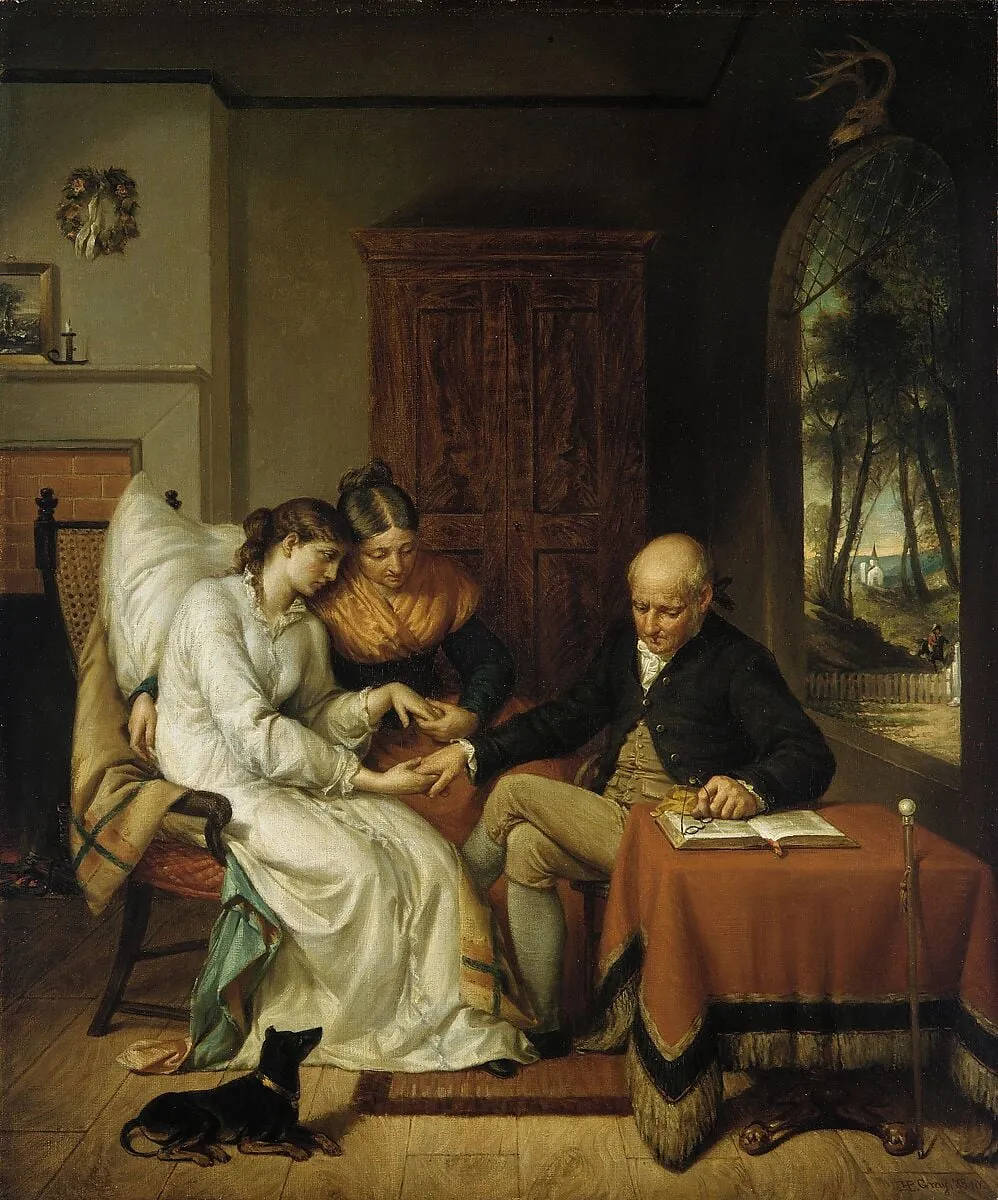
The Pride of the Village is an oil painting by the American Folk Art artist Henry Peters Gray. It dates from 1858 and is held in the collection of the Metropolitan Museum of Art.
About this work
Subject & Meaning
The painting The Pride of the Village, completed in 1858 by Henry Peters Gray, presents a genre scene that includes a man, a woman, and a dog.
The painting The Pride of the Village, completed in 1858 by Henry Peters Gray, presents a genre scene that includes a man, a woman, and a dog. The figures are rendered in oil on canvas and were originally owned by William Church Osborn before entering the collection of the Metropolitan Museum of Art, where the work remains on view in The American Wing. The composition exemplifies genre painting, a category that often depicted everyday domestic scenes, reflecting the social context of mid-nineteenth-century America.
Technique & Style
Executed in 1858, The Pride of the Village is an oil painting on canvas by Henry Peters Gray. The work measures approximately 76.8 by 64.1 centimetres and is classified as a genre scene. The composition features three primary subjects: a man, a woman, and a dog.
The piece utilizes traditional oil paint applied to a woven canvas support, characteristic of mid-nineteenth-century American academic practice. The painting currently resides within the collection of the Metropolitan Museum of Art, specifically housed in the American Wing.
History & Provenance
The Pride of the Village is an 1858 oil on canvas work by Henry Peters Gray. The painting measures 76.8 × 64.1 cm. It was originally in the collection of William Church Osborn before entering the Metropolitan Museum of Art, where it remains on view in The American Wing. The work is classified as a genre scene and depicts a man, a woman, and a dog.
Its provenance thus traces from the artist's studio in 1858 to Osborn's ownership and finally to the museum's permanent collection.
Context
Henry Peters Gray's The Pride of the Village (1858) belongs to the tradition of mid-nineteenth-century American genre painting, which emphasized domestic virtue and everyday life elevated to art. Gray had studied in Europe in the 1840s, and his academic training informs the refined compositional structure and careful figure work evident here. The work's later inclusion in the Metropolitan Museum of Art's collection, through the William Church Osborn bequest, underscores its enduring institutional recognition.
Overview
Henry Peters Gray's The Pride of the Village, painted in 1858, is an oil on canvas genre scene. This work exemplifies a shift in American art towards depicting everyday life rather than historical or mythological narratives. It captures a quiet moment among ordinary individuals, reflecting a growing interest in domestic and local subjects during the mid-19th century.
Artist & collection



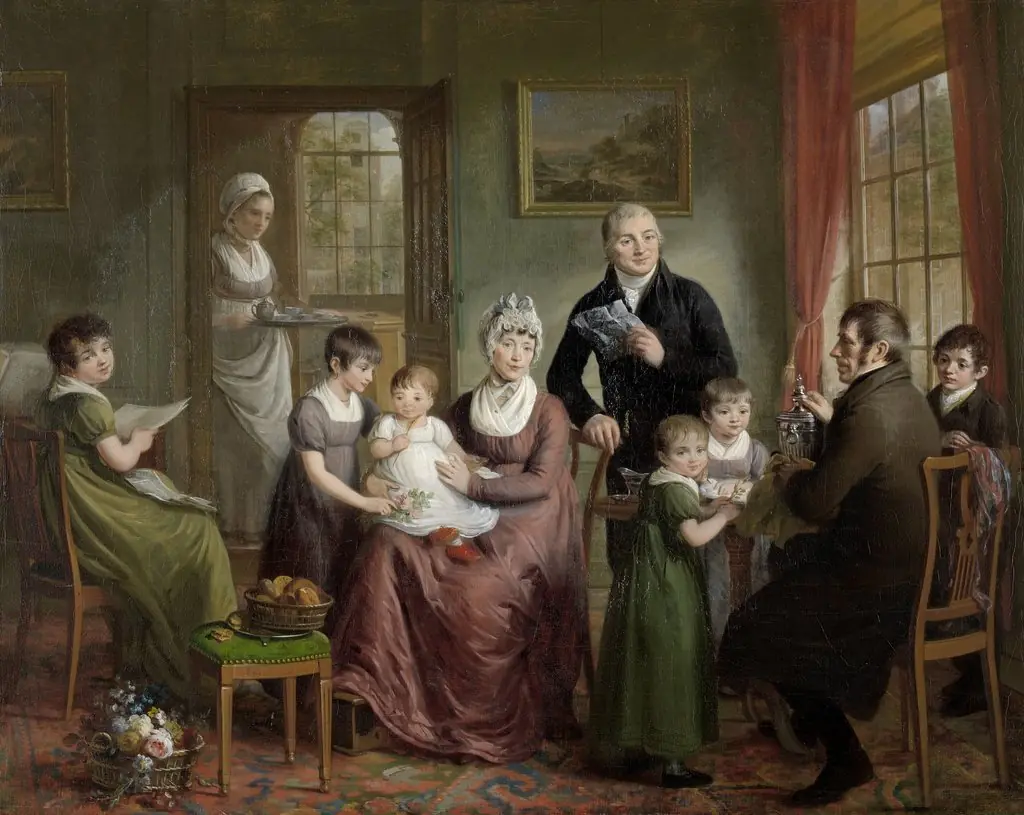 Portrait of the Family of Adrianus Bonebakker with Dirk L. Bennewitz
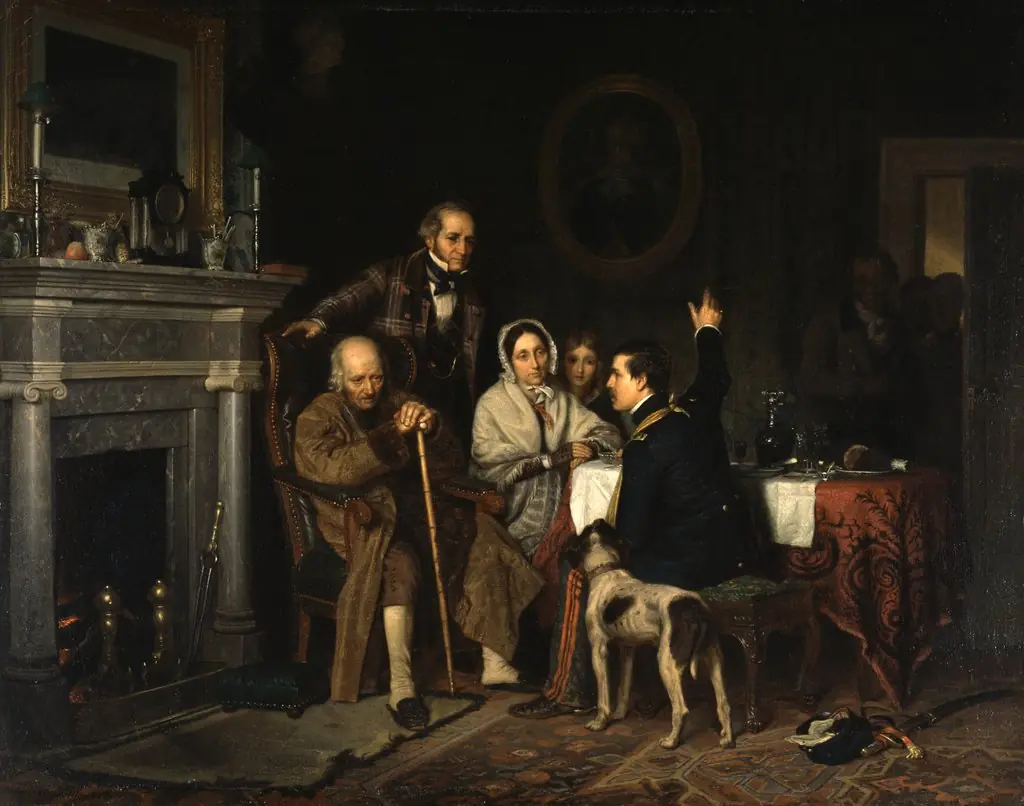 Old '76 and Young '48
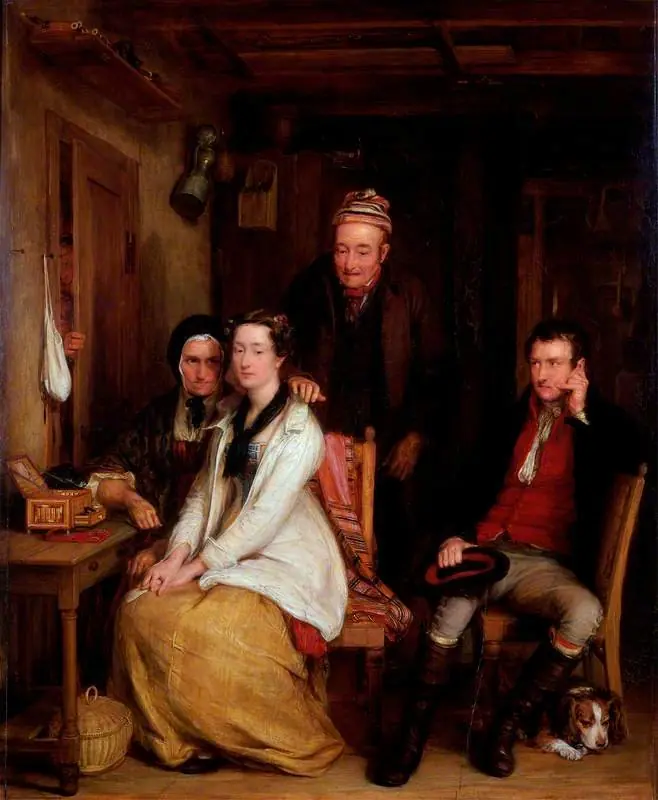 The Refusal
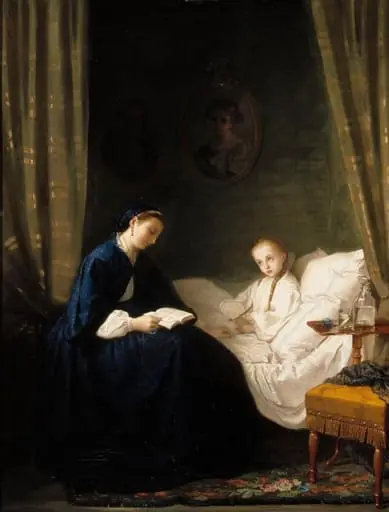 Äiti lukee sairaalle lapselleen
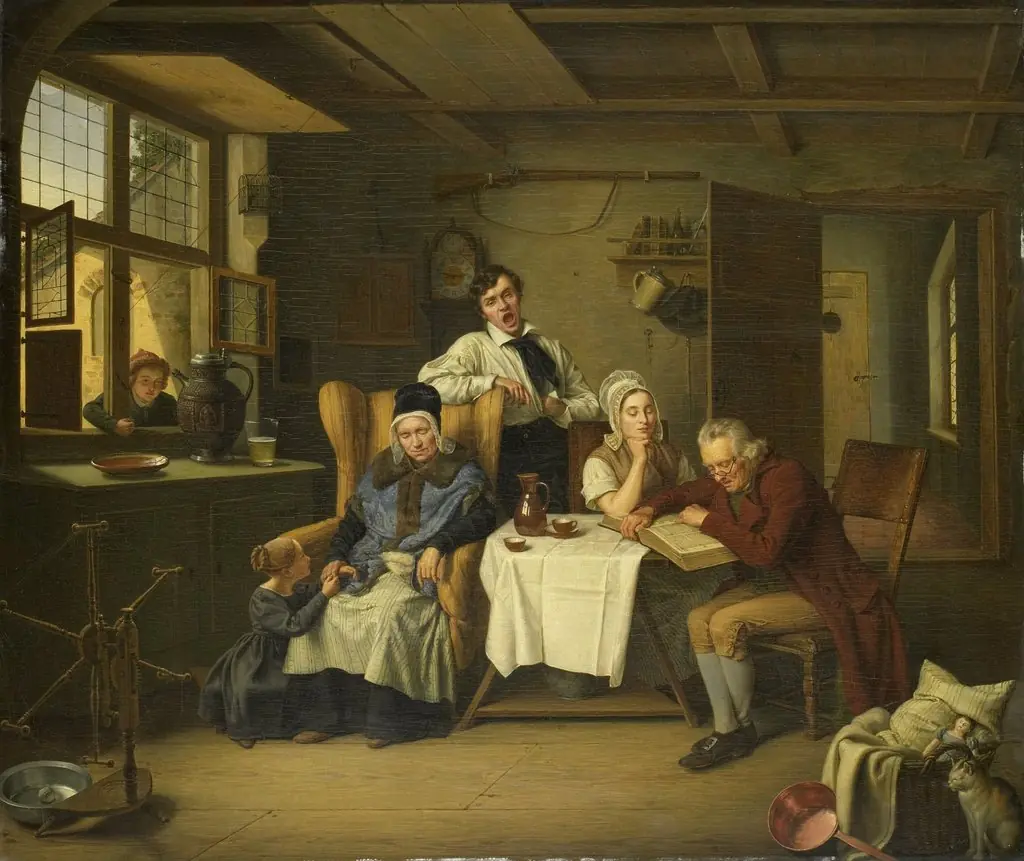 Bible Reading
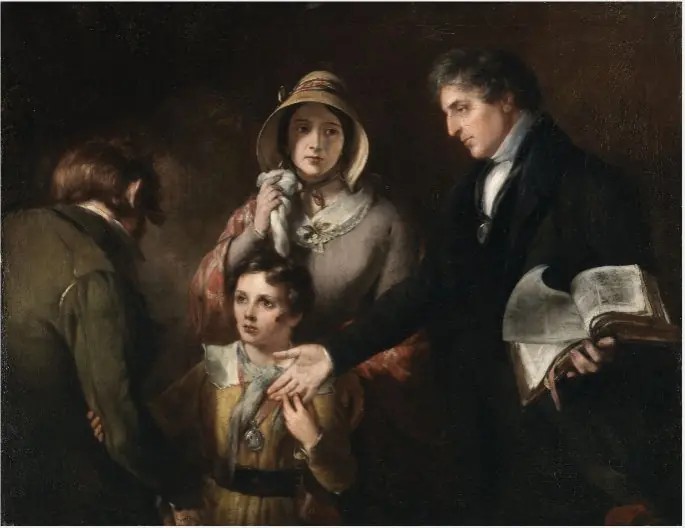 Father Matthew Receiving a Repentant Pledge-Breaker
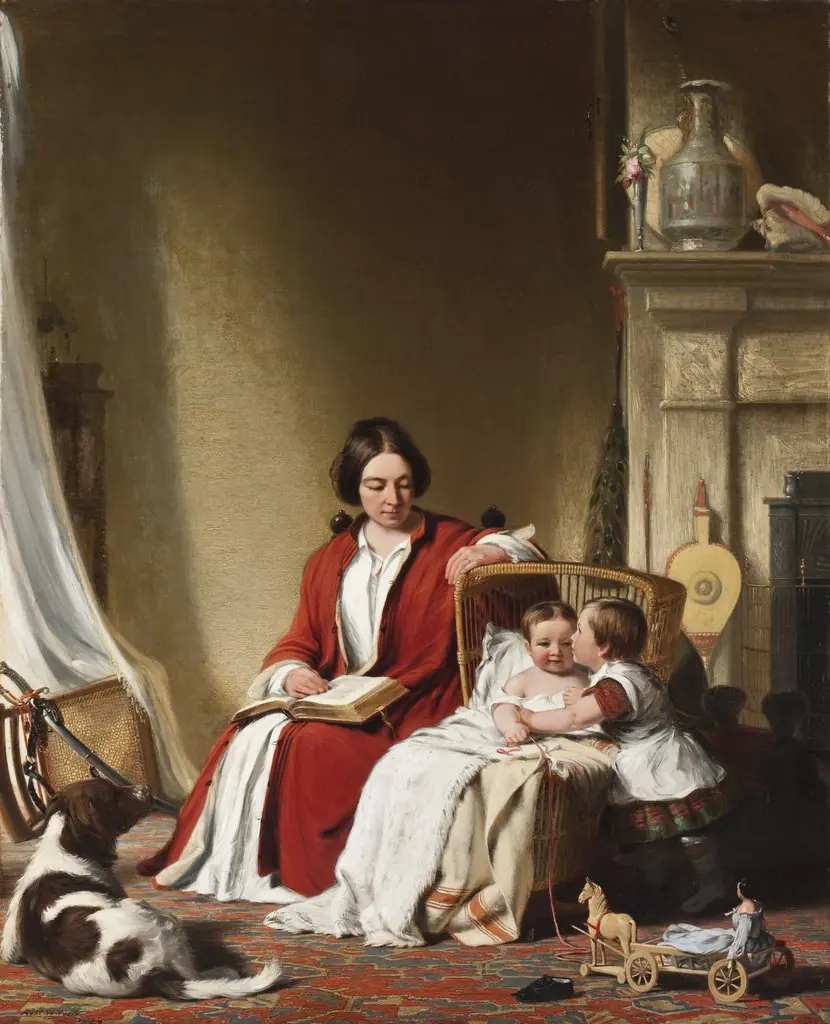 Mrs. Bradford Ripley Alden and her Children
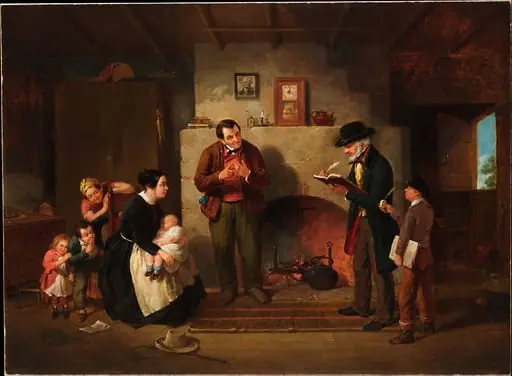 Taking the Census
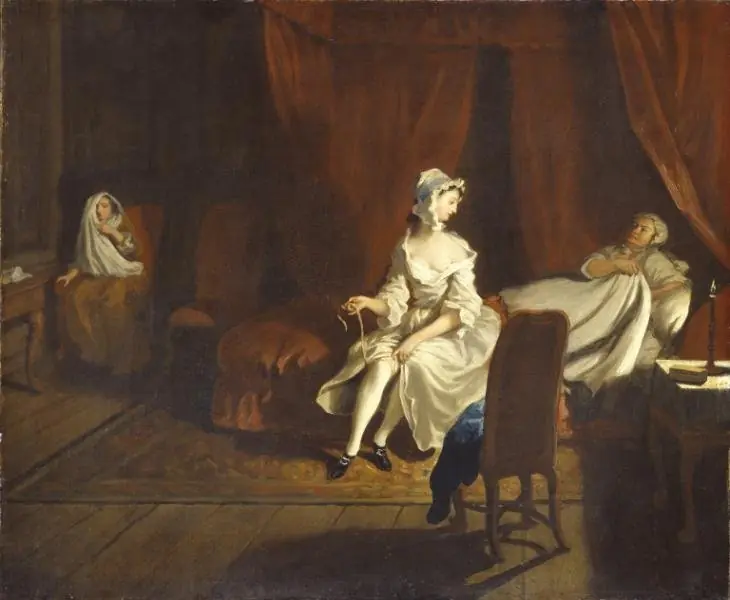 Untitled
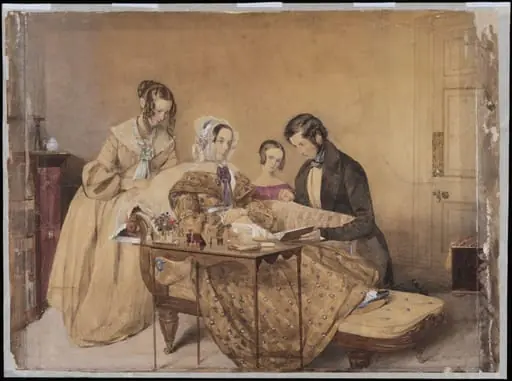 Portrait of the Maurice Family in Lloran House, High Street Marlborough, Wiltshire
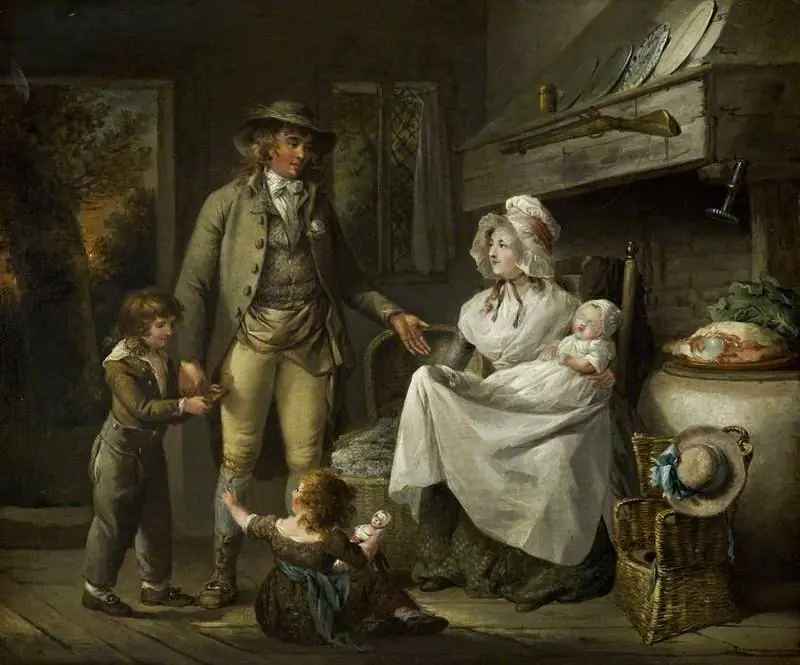 The Comforts of Industry
- Bible Reading