Artwork
The Wages of War
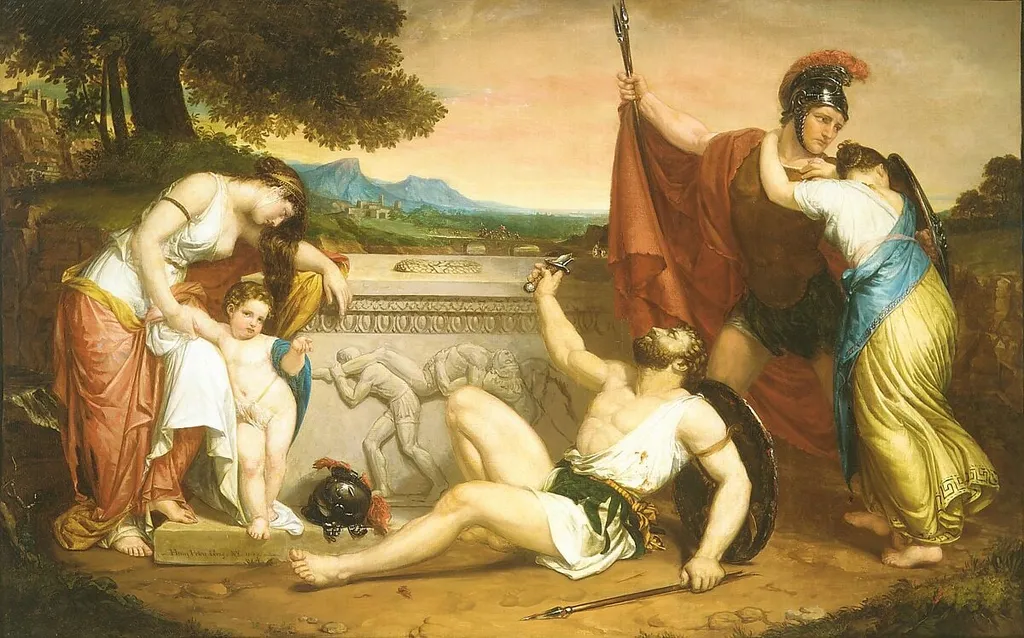
The Wages of War is an oil painting by the American Folk Art artist Henry Peters Gray. It dates from 1848 and is held in the collection of the Metropolitan Museum of Art.
About this work
A woman in a torn red dress kneels before a ruined house, clutching a baby as two soldiers loom over her. Gray painted it in 1848, just after the Mexican-American War. The soldiers look less like heroes than tired, maybe ashamed men, and the baby's hidden face leaves its fate uncertain. The work asks who really pays for war.
Subject & Meaning
The soldier embodies armed combat, while the woman and child suggest civilian suffering and innocence caught in war.
The Wages of War (1848) by Henry Peters Gray, an oil‑on‑canvas history painting in The American Wing, portrays four figures, a soldier, a woman, a man, and a child, whose presence conveys the human dimension of conflict. The soldier embodies armed combat, while the woman and child suggest civilian suffering and innocence caught in war. A standing man may symbolize the broader public or a victim, together forming an allegory of war’s societal cost.
The composition, recorded in both the museum’s catalog and Wikidata, reflects 19th‑century American concerns about the moral implications of battle and its impact on families.
Technique & Style
The Wages of War is an oil‑on‑canvas history painting by Henry Peters Gray, completed in 1848 and housed in the American Wing of the Metropolitan Museum of Art. The work measures roughly 122.6 cm in height by 193.7 cm in width and portrays a child, a man, a soldier and a woman in a composition that combines narrative detail with academic realism. Executed in oil paint on a stretched canvas, the surface exhibits the smooth handling typical of mid‑nineteenth‑century American academic practice, while the palette and lighting emphasize the dramatic tension of the title.
History & Provenance
Henry Peters Gray's 1848 oil painting, The Wages of War, is held in the collection of the Metropolitan Museum of Art. The work is classified within the museum's American Wing. While the specific inventory or accession number is not provided in the available records, the painting is documented as part of the institution's holdings, where it remains on display or in storage.
The artwork depicts a soldier, a woman, a man, and a child. No specific exhibition history, including dates of past shows or loan records, is detailed in the provided sources. The painting's physical dimensions are recorded as 122.6 cm in height and 193.7 cm in width. Its creation is dated to January 1, 1848.
Overview
Henry Peters Gray's 1848 oil on canvas, The Wages of War, presents a somber reflection on the aftermath of conflict. The painting, a notable work within the American Wing, portrays a distressed woman with an infant confronting two soldiers amidst a desolate, war-torn landscape. This work invites viewers to consider the profound and often hidden consequences of military engagement on civilians.
Context
Created in 1848, The Wages of War emerged immediately following the conclusion of the Mexican-American War. This timing is significant, as the conflict, fought from 1846 to 1848, had a profound impact on the American consciousness. Gray's painting can be understood as a contemporary commentary, prompting reflection on the recent military engagement and its broader societal implications, particularly for those directly affected by its violence.
Artist & collection


- Virtue Overcoming Avarice
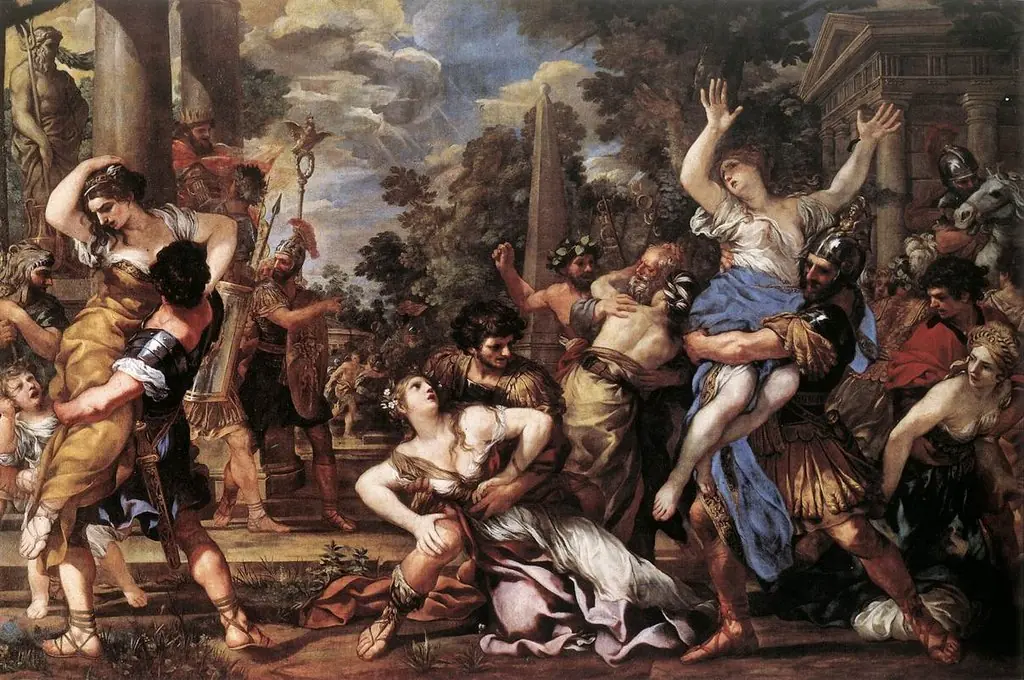 Rape of the Sabine Women
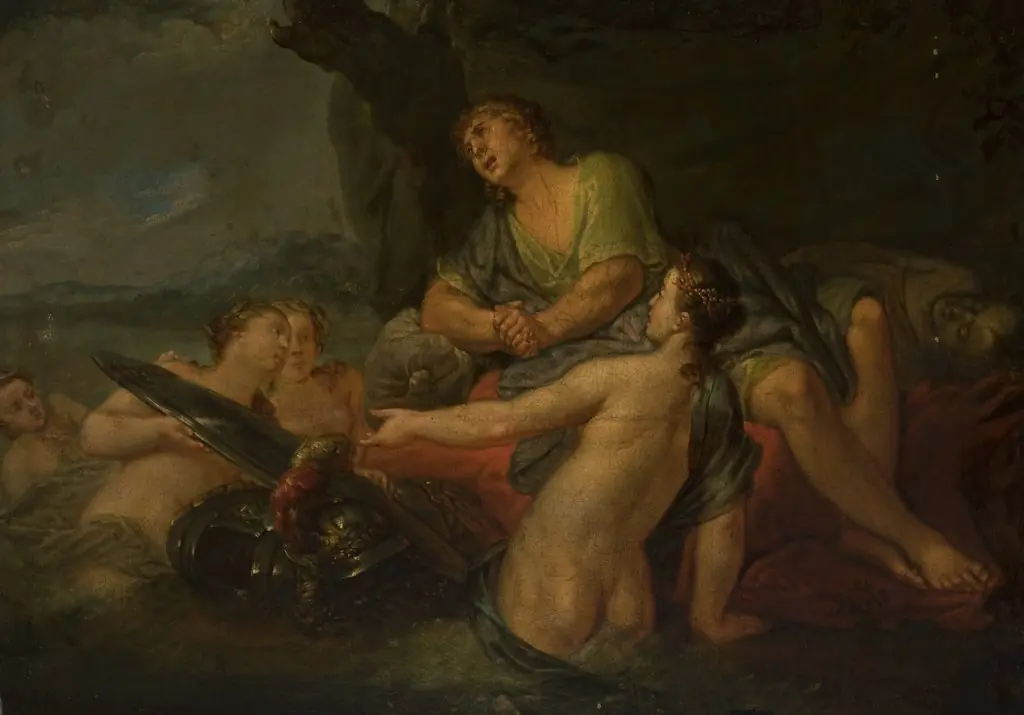 Mythological Scene
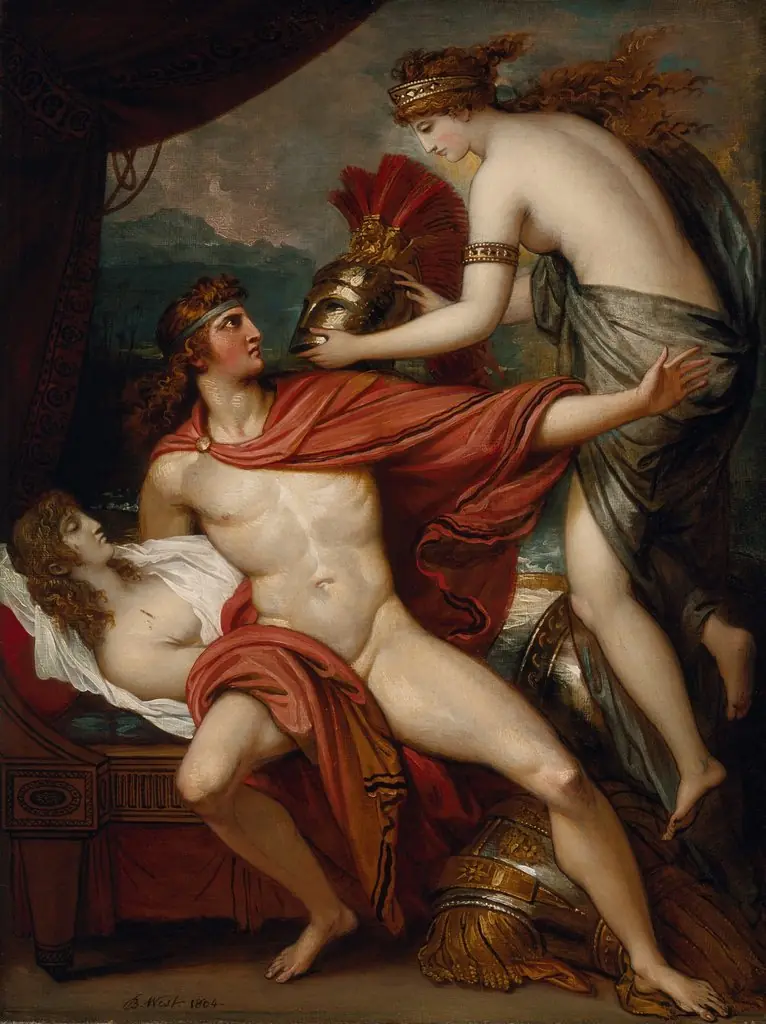 Thetis Bringing the Armor to Achilles
 Scipio Africanus (?)
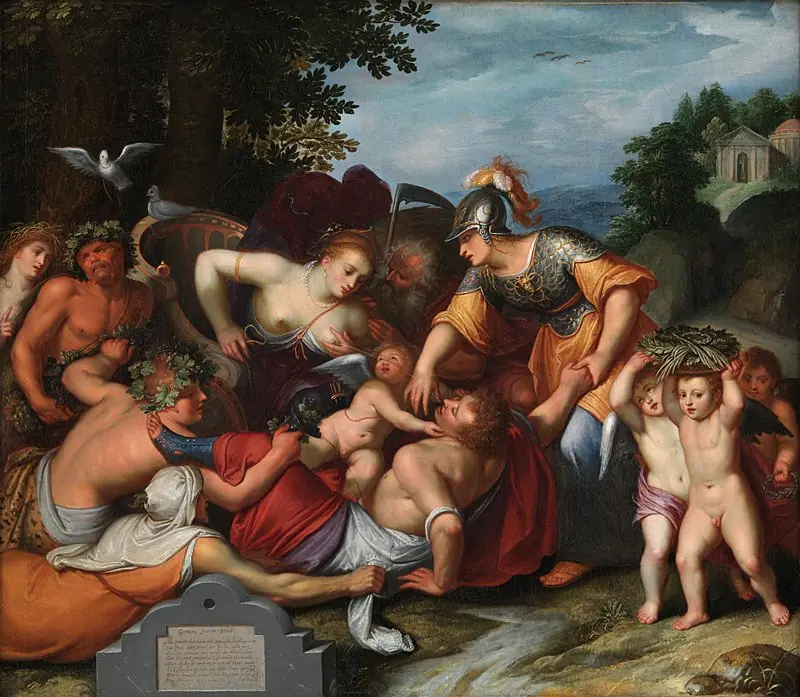 Gemeine Jeuchts Beeldt. Allegori på ungdommens fristelser
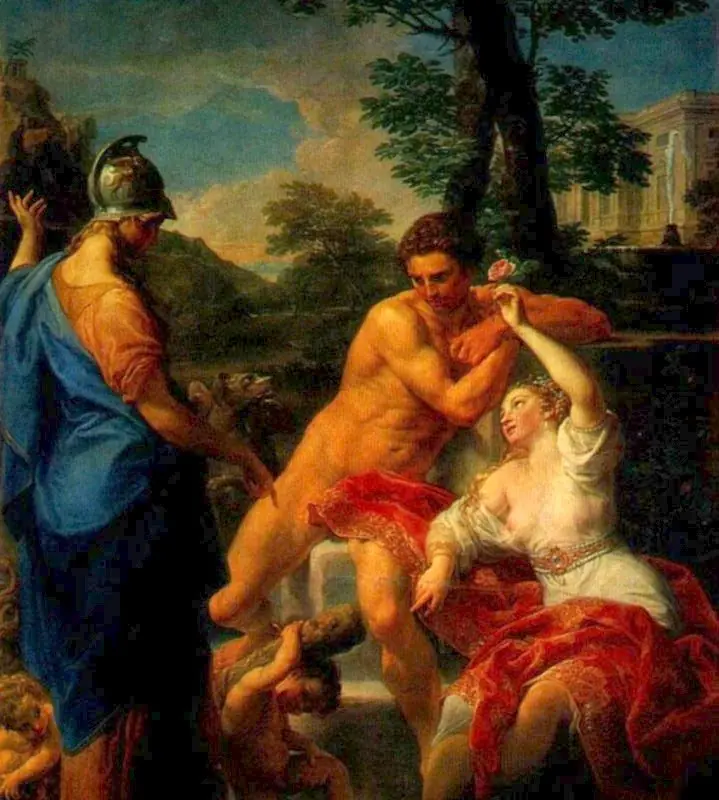 Hercules at the Crossroads
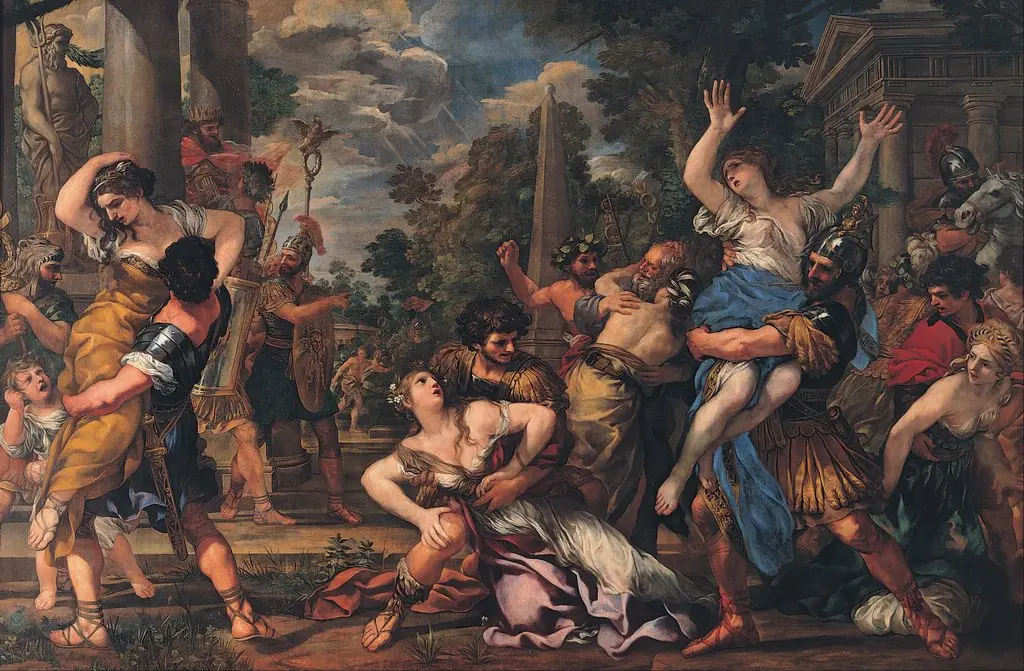 Rape of the Sabines
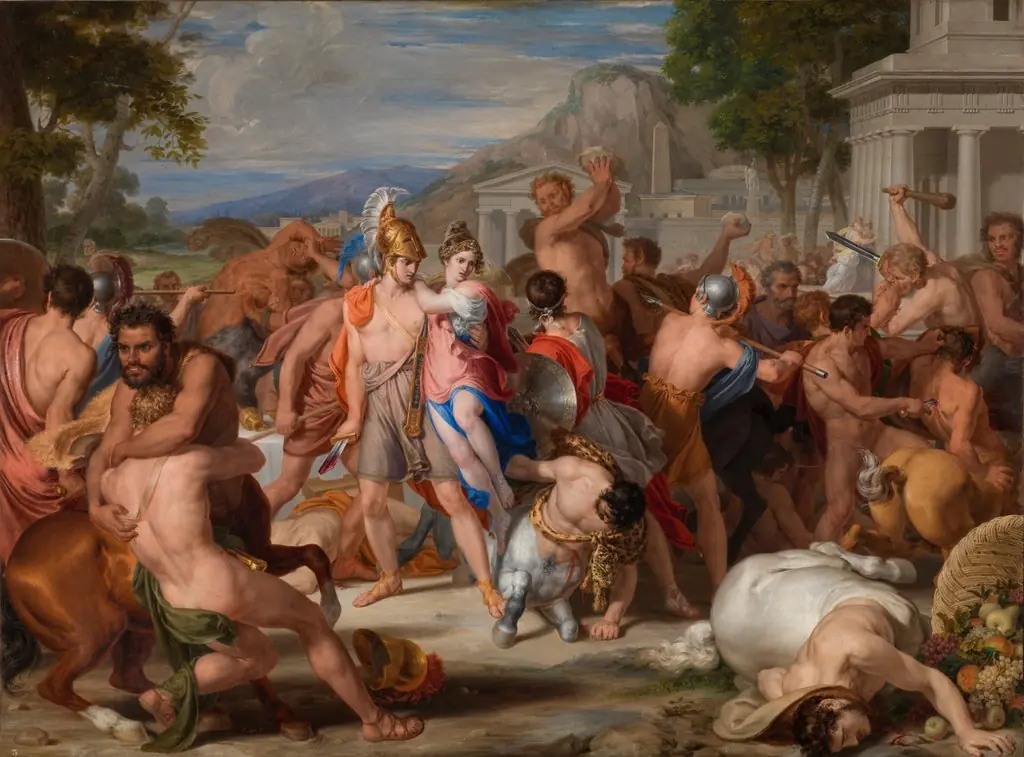 Batalla de lapitas y centauros.
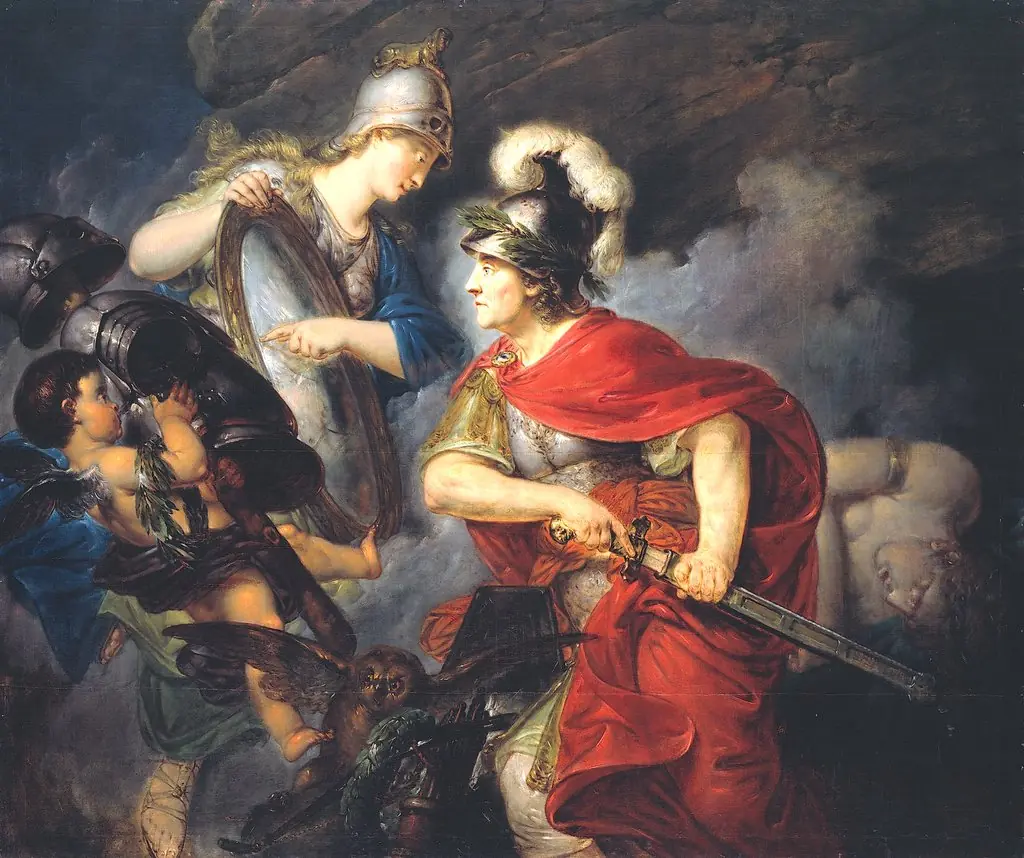 Allegory of Frederick the Great as Perseus
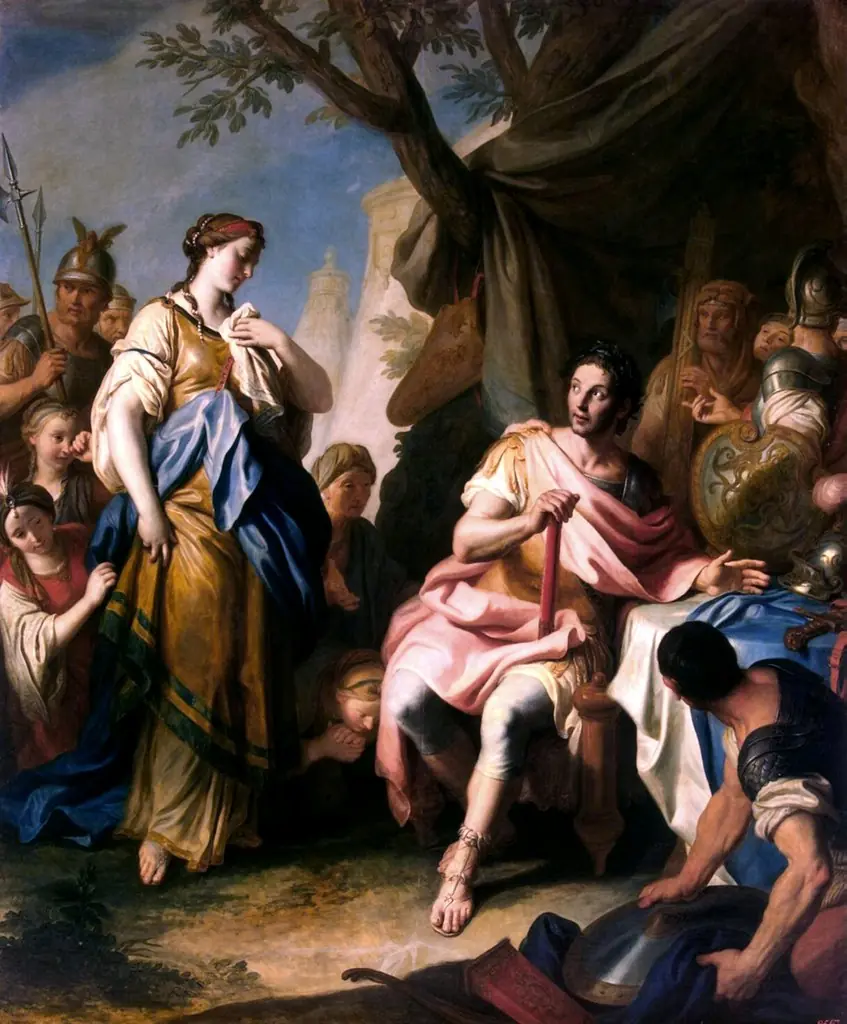 Alexander the Great and Roxana
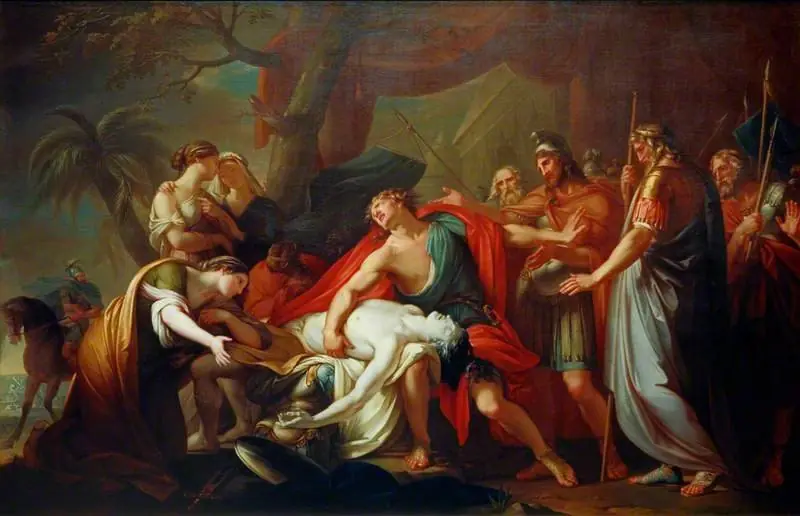 Achilles Lamenting the Death of Patroclus