Artwork
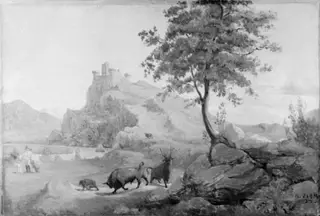
Italiensk landskab
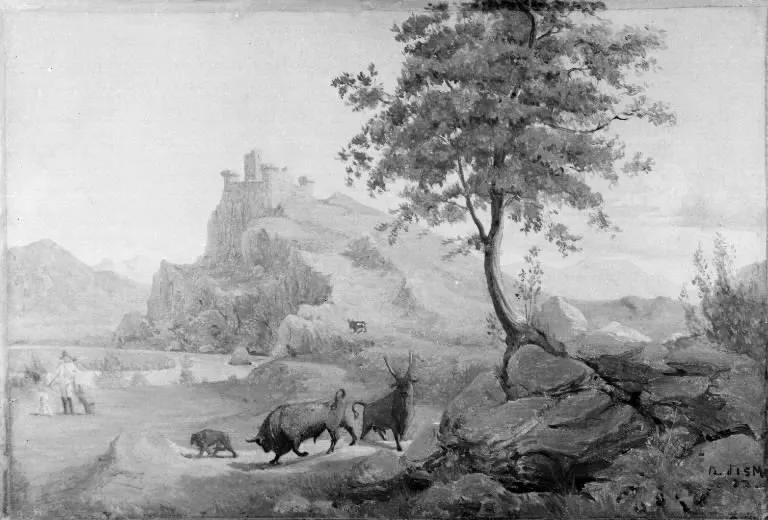
Italiensk landskab is an unspecified painting by the German Romanticist artist Herman Wilhelm Bissen. It dates from 1827 and is held in the collection of the Statens Museum for Kunst.
About this work
Overview
Though not a painter by trade, this landscape reflects his engagement with Romantic ideals through a quiet, contemplative view of the Italian countryside.
Herman Wilhelm Bissen, primarily recognized for his sculptural works in Denmark, produced the oil painting Italiensk landskab in 1827 during a period of artistic exploration. Though not a painter by trade, this landscape reflects his engagement with Romantic ideals through a quiet, contemplative view of the Italian countryside. The piece resides in the collection of Statens Museum for Kunst in Copenhagen.
Subject & Meaning
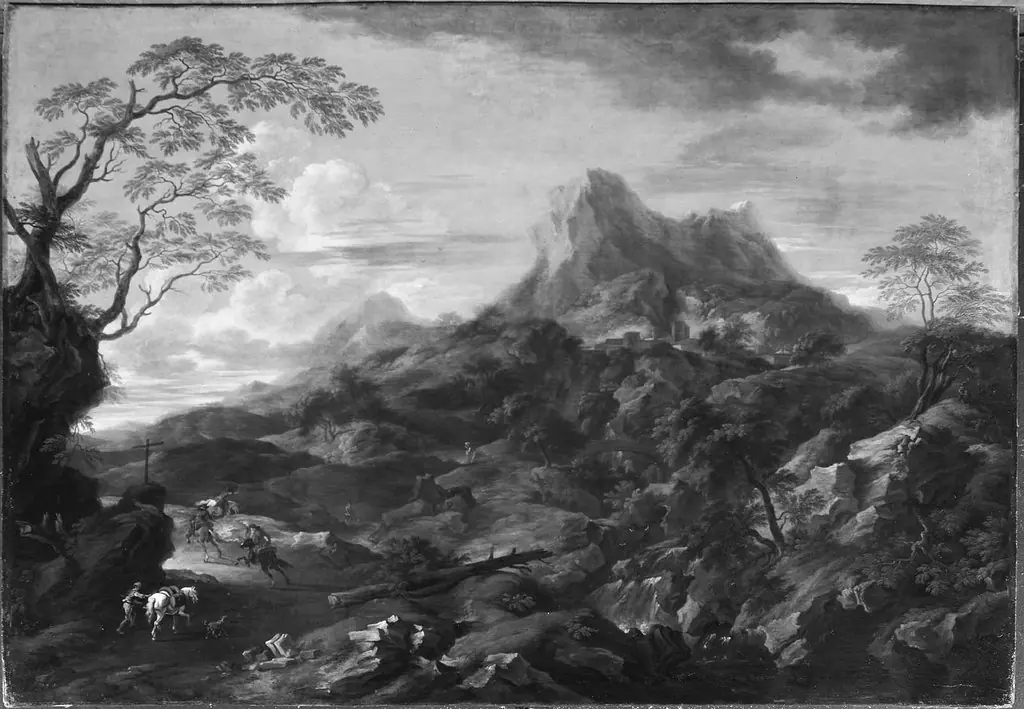
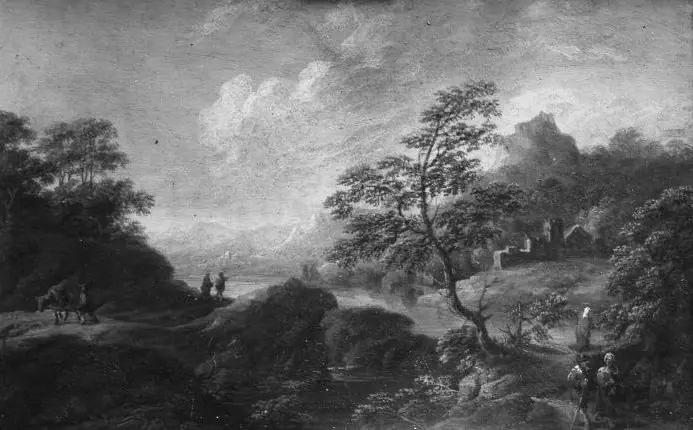
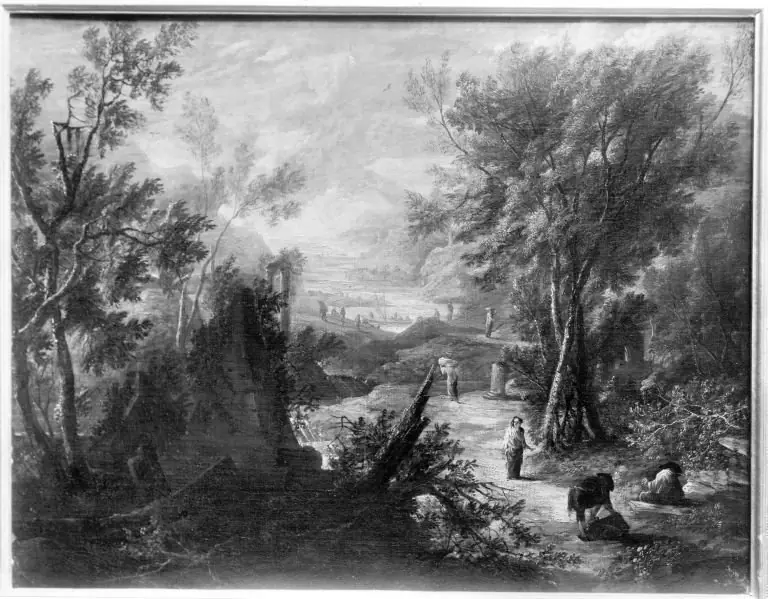
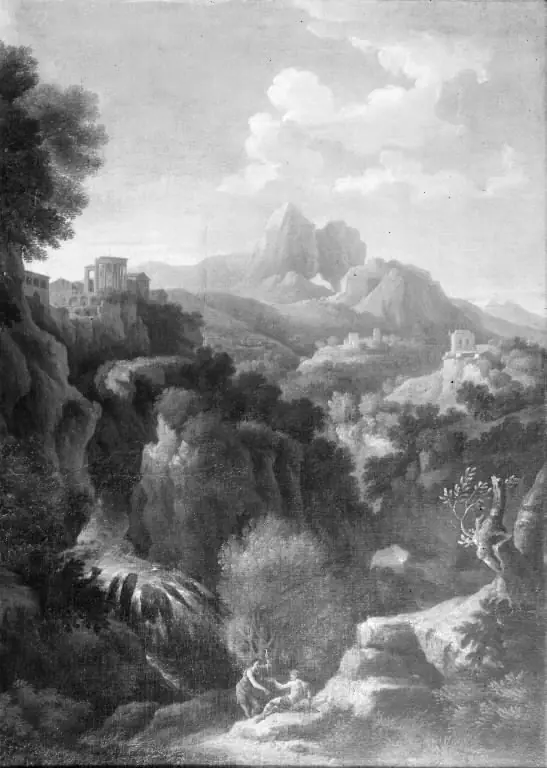
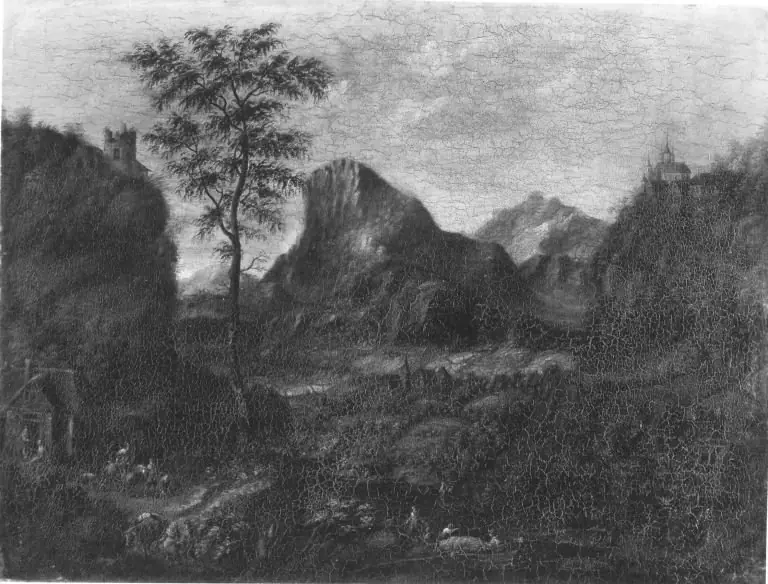
The painting presents a tranquil Italian vista, featuring a solitary tree on the right, a rugged rock formation in the middle distance, and a winding path that guides the eye toward a distant hilltop castle. The composition suggests a journey, both physical and introspective, aligning with Romantic themes of nature’s grandeur and human solitude. The absence of figures amplifies a sense of stillness and timelessness.
Technique & Style
Bissen employed a restrained palette of earth tones, ochres, browns, and muted greens, to evoke atmospheric depth. Subtle gradations of light and shadow model the terrain, creating a sense of spatial recession without dramatic contrast. The brushwork is deliberate but unobtrusive, favoring harmony over detail, reflecting an aesthetic aligned with German Romantic landscape traditions rather than academic precision.
History & Provenance
Created during Bissen’s early career, Italiensk landskab likely emerged from his travels in Italy, a common practice among Northern European artists seeking inspiration. The work entered the collection of Statens Museum for Kunst in the 19th century, where it remains as a rare example of his non-sculptural output. Its preservation underscores its value as a personal artistic document rather than a public commission.
Context
In the 1820s, Danish artists increasingly looked to Germany and Italy for cultural models, particularly within the Romantic movement. Bissen’s landscape reflects this cross-pollination, blending Italian scenery with Northern European sensibilities. While his contemporaries focused on sculpture, this painting reveals a broader artistic curiosity, situating him within a generation seeking emotional resonance through nature.
Legacy
Though Bissen’s reputation rests on monumental public sculptures, Italiensk landskab offers insight into his quieter, personal artistic impulses. It stands as a testament to the fluid boundaries between disciplines in early 19th-century European art. The painting is not widely reproduced, but within Danish art history, it serves as a subtle marker of an artist’s engagement beyond his primary medium.
Artist & collection
Artist
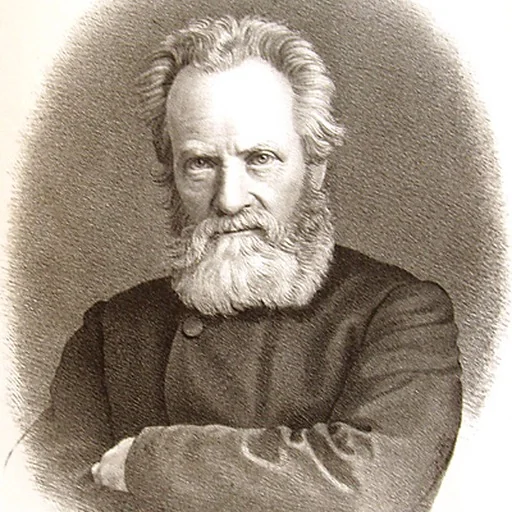
Herman Wilhelm Bissen (13 October 1798 – 10 March 1868) was a Danish sculptor. Bissen created a number of public works, working in plaster, marble and bronze. The National Gallery of Denmark owns a collection of over…