Artwork
Portfolio of Pictures by A. Horsley Hinton
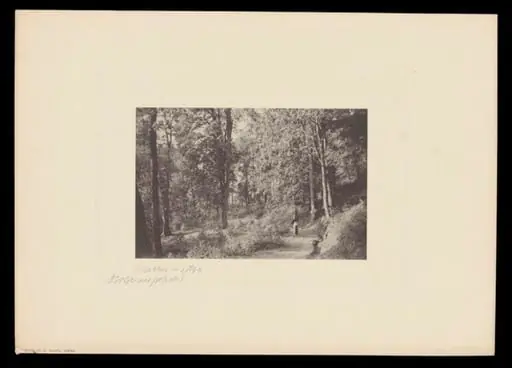
Portfolio of Pictures by A. Horsley Hinton is a photographic photography by Alfred Horsley Hinton. It dates from 1904 and is held in the collection of the Victoria and Albert Museum.
About this work
Overview
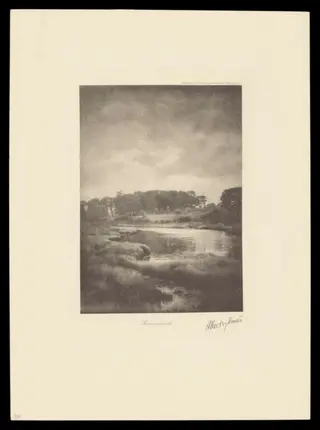
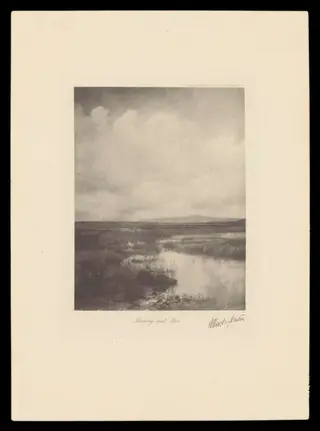
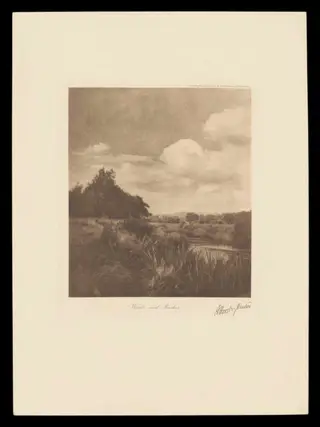
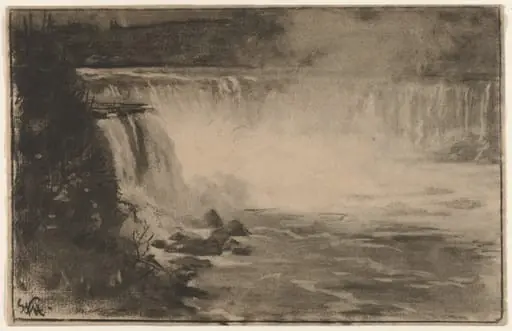
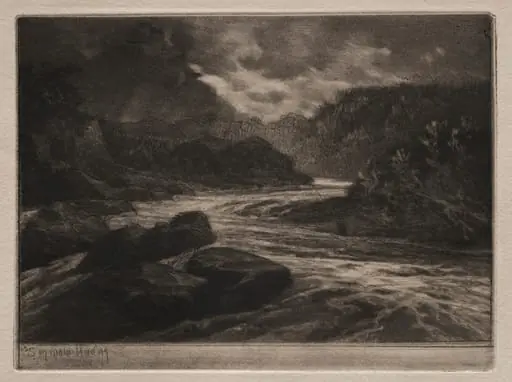
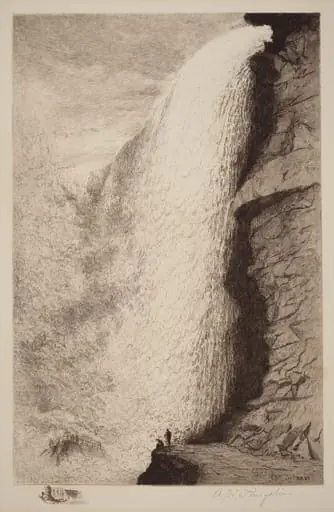
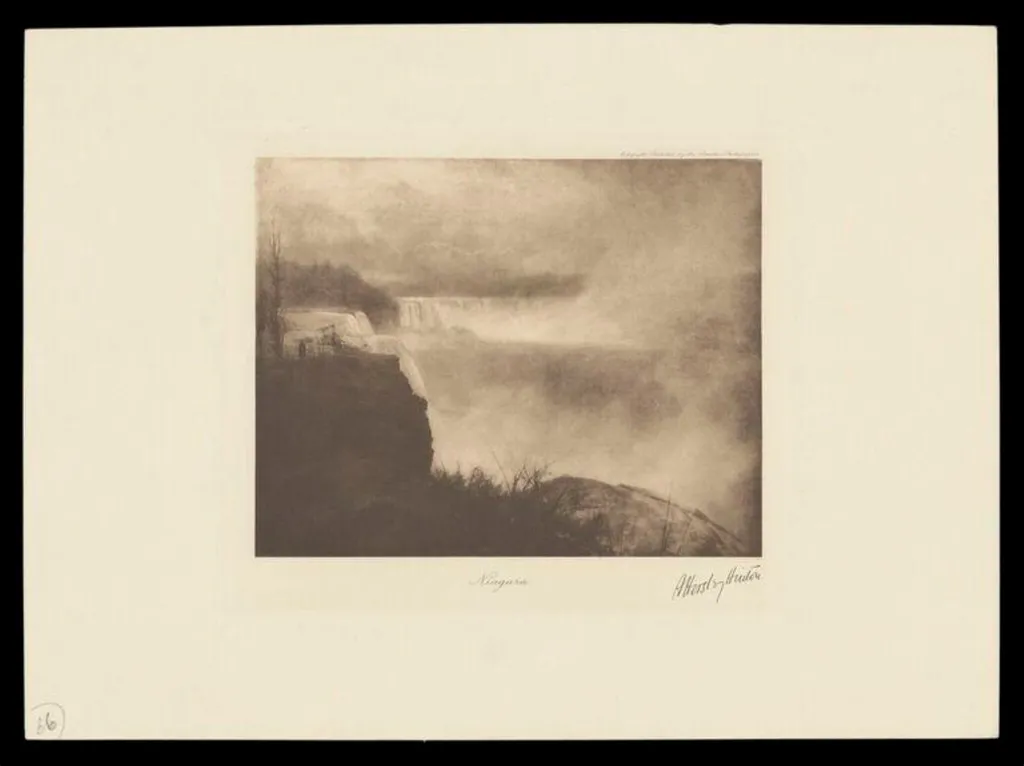
A brown-toned photographic print by Alfred Horsley Hinton presents a waterfall in a natural landscape. The image is mounted and signed by the artist in the lower corner, with the word 'Niagara' inscribed beneath. Though the scene resembles Niagara Falls, it is not a direct record of the actual site, suggesting a constructed or idealized view rather than documentary precision.
Subject & Meaning
The composition centers on a cascading waterfall, its mist softening the distant trees and sky, while a grassy ledge in the foreground holds a small group of grazing sheep. The juxtaposition of wild nature and quiet pastoral life implies a harmonious, almost serene relationship between the untamed and the domesticated, evoking a romanticized vision of the American landscape as both powerful and peaceful.
Technique & Style
The waterfall’s motion is suggested through blurred edges, while the foreground remains sharply defined, drawing attention to the sheep and ledge.
Rendered in a warm monochrome tone, the photograph employs soft focus in the background to enhance the illusion of depth and atmospheric haze. The waterfall’s motion is suggested through blurred edges, while the foreground remains sharply defined, drawing attention to the sheep and ledge. This selective clarity reflects 19th-century photographic conventions favoring aesthetic composition over strict realism.
History & Provenance
The work is part of a series by Alfred Horsley Hinton, a British photographer active in the late 19th century who specialized in landscape imagery. Though he traveled extensively, this image does not appear to be a direct record of Niagara Falls. Instead, it aligns with contemporary practices of reimagining famous sites through staged or composite elements to meet public expectations of grandeur.
Context
During the 1880s and 1890s, photographic portfolios often circulated as souvenirs or educational tools, blending factual claims with artistic interpretation. Hinton’s inclusion of 'Niagara' despite the scene’s likely artificiality reflects a broader cultural trend: audiences sought familiar landmarks rendered in emotionally resonant, picturesque forms, even if they were not geographically accurate.
Legacy
Hinton’s work contributes to a tradition of landscape photography that prioritized mood and composition over topographical fidelity. His images, including this one, remain valuable as cultural artifacts illustrating how 19th-century viewers perceived nature, not as it was, but as they wished it to be, shaped by romantic ideals and the limitations of photographic technology.
Artist & collection
Artist
Alfred Horsley Hinton carried a wooden camera like a second body, he lugged it up British hills, through misty valleys and mill towns, always hunting the perfect soft light over water.