Artwork
Daniel in the Lions' Den
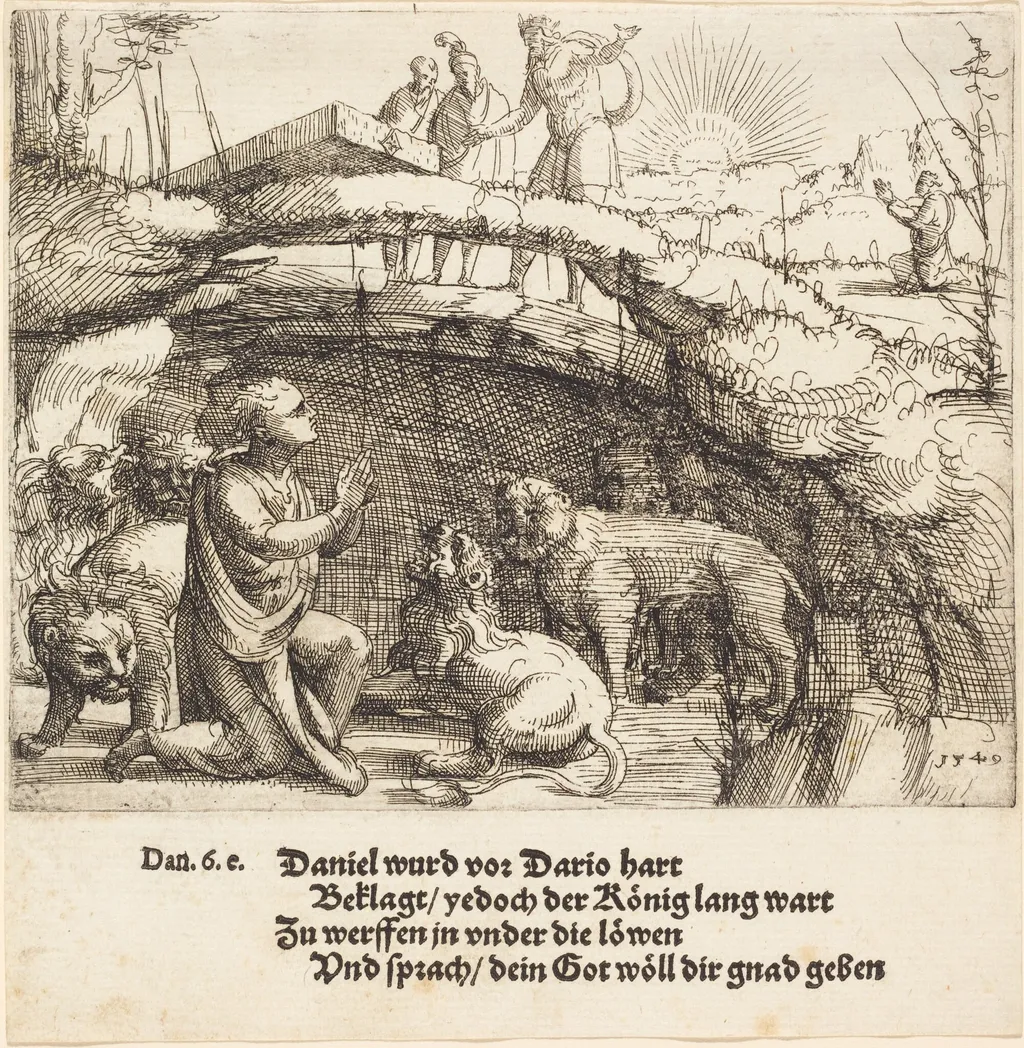
Daniel in the Lions' Den is an ink print by the Renaissance artist Augustin Hirschvogel. It dates from 1549 and is held in the collection of the National Gallery of Art. Created in 1549, this black‑and‑white etching presents the biblical episode of Daniel in the lions’ den.
About this work
Overview
The composition centers on a composed figure seated amid ferocious beasts, while celestial beings hover above, illuminating the scene with a radiant sunburst.
Created in 1549, this black‑and‑white etching presents the biblical episode of Daniel in the lions’ den. The composition centers on a composed figure seated amid ferocious beasts, while celestial beings hover above, illuminating the scene with a radiant sunburst. The surrounding landscape is densely populated with architecture, foliage and numerous tiny figures, adding narrative depth to the chaotic tableau.
Subject & Meaning
The print visualizes the scriptural story in which Daniel, cast into a pit of lions, remains unharmed through divine protection. The calm demeanor of Daniel contrasts with the snarling animals, emphasizing faith and divine intervention. Angelic figures above reinforce the notion of heavenly guardianship, while the bustling background suggests the broader societal impact of the miracle.
Technique & Style
Executed through etching, the artist employed extensive cross‑hatching to render texture and movement, particularly in the fur of the lions and the swirling sky. The dense network of lines creates a sense of depth and turbulence, while the stark monochrome palette heightens the dramatic contrast between the earthly danger and the celestial light.
History & Provenance
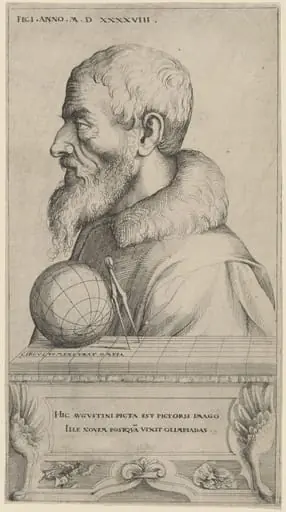
The work is attributed to Augustin Hirschvogel, a German polymath active in the mid‑16th century. Known for a series of small landscape etchings produced between 1545 and 1549, Hirschvogel’s output reflects his involvement with the Danube School, a regional artistic movement centered in Bavaria and Austria.
Context
Hirschvogel’s etching aligns with the Danube School’s emphasis on intricate natural detail and expressive compositions. The inclusion of architectural elements and bustling figures mirrors the school’s interest in integrating human activity within expansive, often turbulent, environments, while the religious subject matter reflects the period’s devotional print market.
Own this work as a print
Artist & collection
Artist
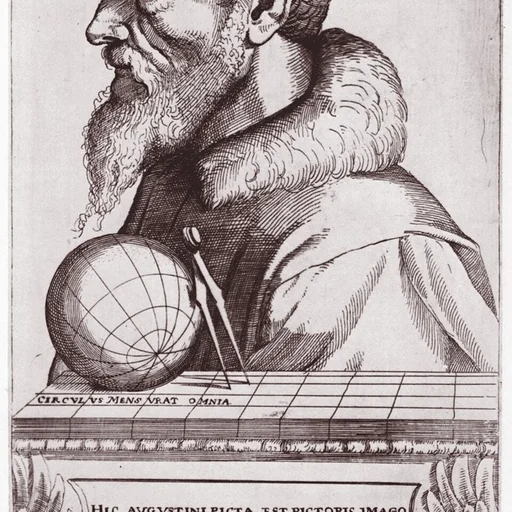
Augustin Hirschvogel (1503 – February 1553) was a German artist, mathematician, and cartographer known primarily for his etchings.