Artwork
Plate 18: Two Butterflies and a Moth with a Damselfly, Two Ants, and Four Other Insects
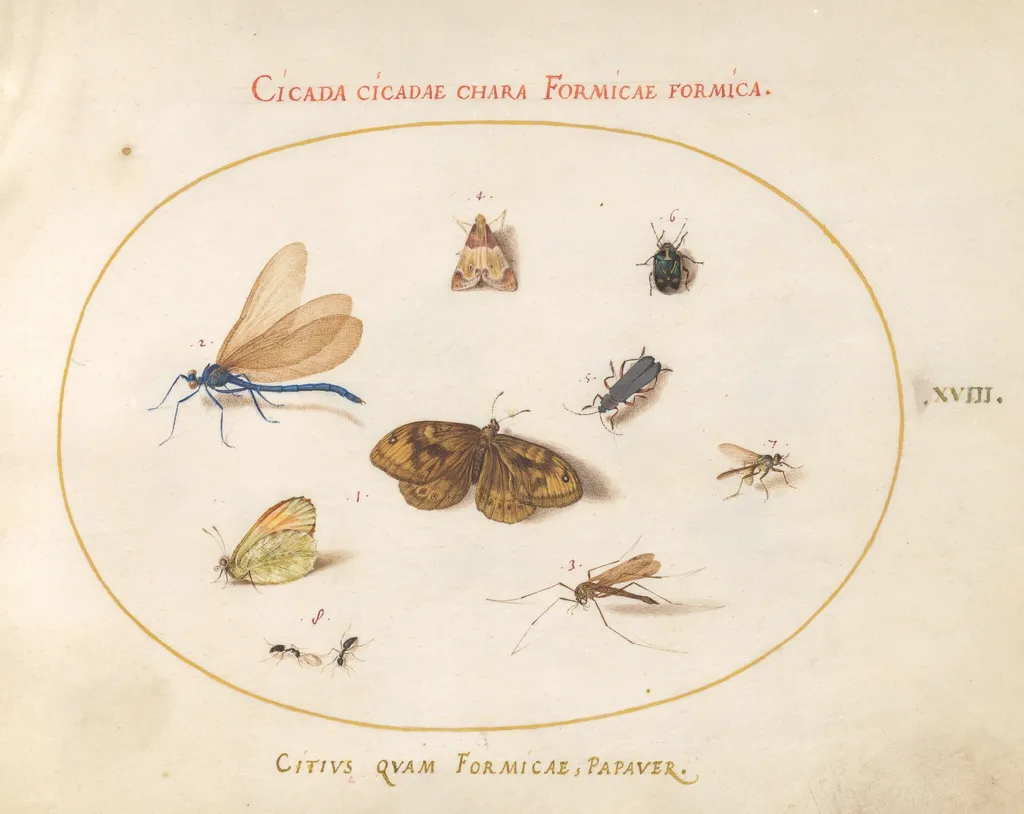
Plate 18: Two Butterflies and a Moth with a Damselfly, Two Ants, and Four Other Insects is a gouache drawing by the Renaissance artist Joris Hoefnagel. It dates from 1594 and is held in the collection of the National Gallery of Art.
- Inscription
- Inscribed:Upper center in red ink: CICADA CICADAE CHARA FORMICAE FORMICA.; insects in image numbered .1., .2., .3., .4., .5., .6., .7., and .8., in red ink; center right in brown ink: .XVIII.; lower center in brown ink: CITIVS QVAM FORMICAE, PAPAVER. Facing page: Upper center in red ink: Formica populus infirmus, qui pr[a]eparat / In messe cibum sibi pro.30.(“The ants, a feeble people, which provide themselves food in the harvest.” Proverbs 30:25) (Latin Vulgate Bible); lower center in red ink: Aestate[m] meminit, brumae formica sequentis: / Colligit idcirco provida messe cibum. A:S. (Stockelius?) (“The ant remembers the winter that follows summer, and therefore providently gathers food at harvest time.”) (trans. Vignau-Wilberg 1994, 69)
About this work
Overview
Plate 18: Two Butterflies and a Moth with a Damselfly, Two Ants, and Four Other Insects is a detailed watercolor and precious metal paint drawing on parchment, created by Joris Hoefnagel around 1594.
Subject & Meaning
The drawing presents a meticulous study of eight insects, showcasing Hoefnagel's fascination with natural history and his ability to balance artistic expression with near-scientific accuracy.
Technique & Style
Hoefnagel employed watercolor and silver and gold paint on parchment, leveraging the reflective qualities of precious metals to capture the subtle play of light on the insects' bodies, particularly their wings.
History & Provenance
As one of the last manuscript illuminators, Hoefnagel's work contributed to the emergence of floral still-life painting in northern Europe, with this piece exemplifying his transitional role between medieval illumination and early modern scientific illustration.
Context
Created in the late 16th century, this work reflects the burgeoning interest in natural history and the precise observation of the natural world, characteristic of the period's scientific and artistic endeavors.
Own this work as a print
Artist & collection

Artist
Joris Hoefnagel or Georg Hoefnagel (1542 – 24 July 1601) was a Flemish painter, printmaker, miniaturist, draftsman and merchant.

 Forum Vulcani: The Hot Springs at Pozzuoli
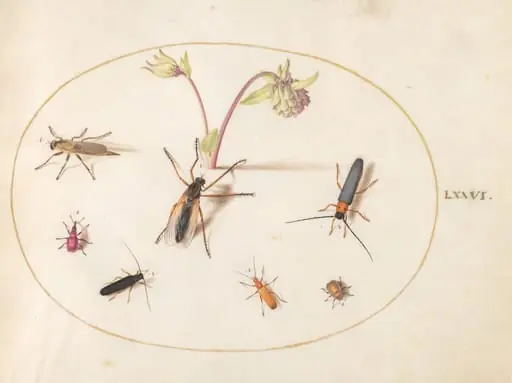 Plate 76: Insects with a Pink and Cream Columbine
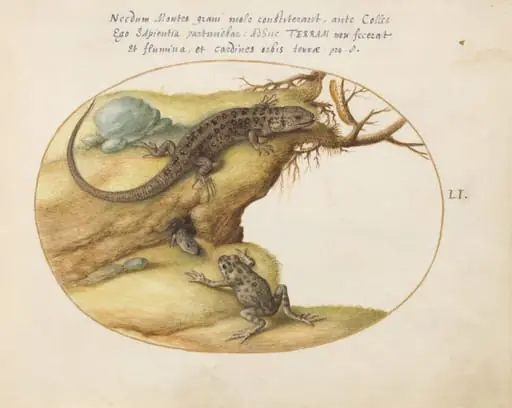 Plate 51: Two Sand Lizards, a Common Parsley Frog(?), and a Caterpillar
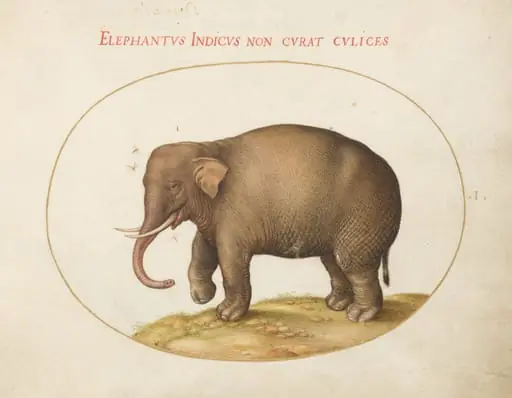 Plate 1: Elephant with Insects
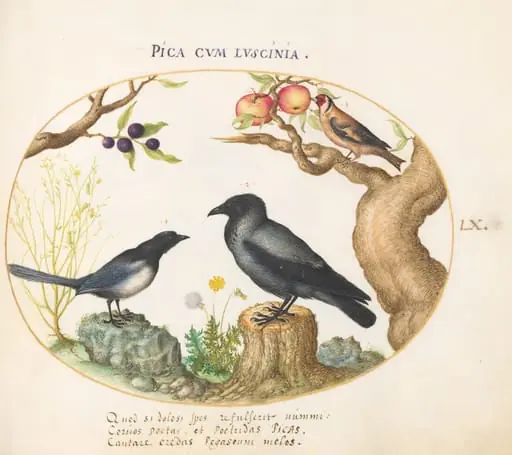 Plate 60: Magpie, Crow, and Goldfinch
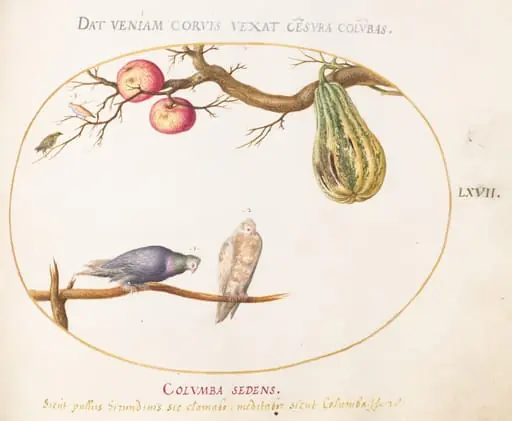 Plate 67: Two Doves beneath a Gourd and Apples
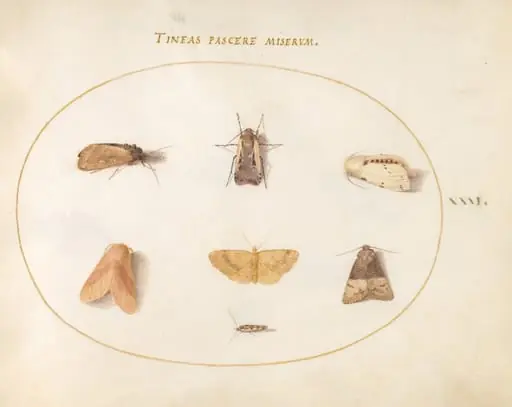 Plate 31: Seven Moths
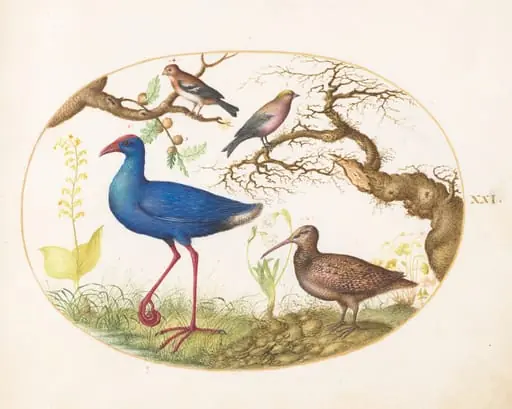 Plate 21: Swamp Hen and Woodcock with a Streaked Rosefinch, a Finch, and Oak Galls
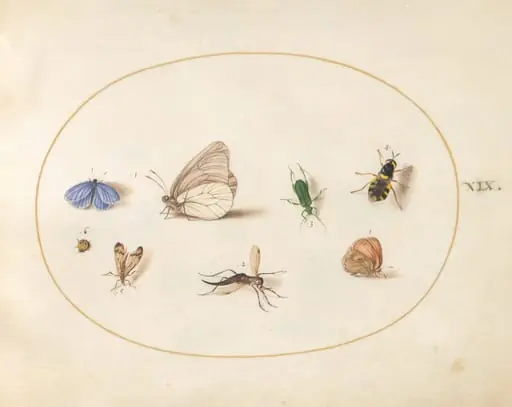
- Plate 19: Two Butterflies with Five Other Insects
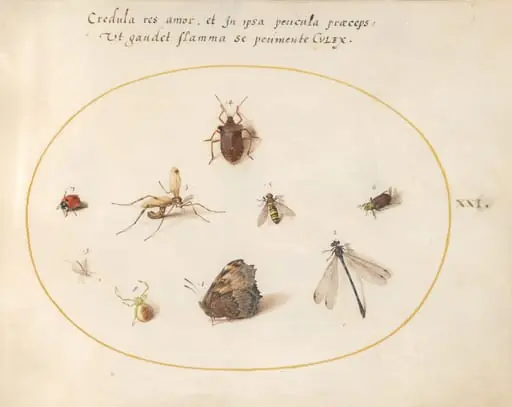 Plate 21: A Butterfly with a Dragonfly, a Ladybug, and Five other Insects
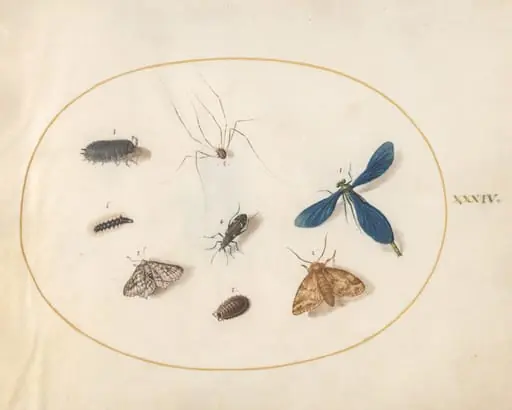 Plate 34: Two Moths with a Spider, a Caterpillar, a Damselfly, and Other Insects
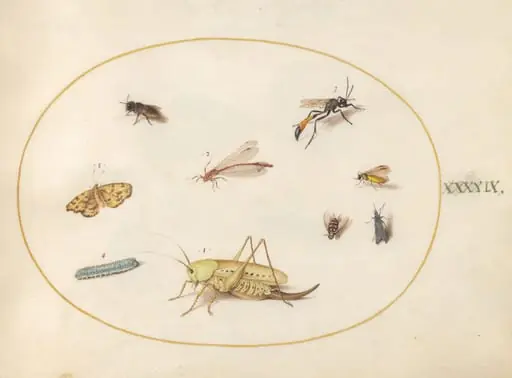 Plate 49: A Grasshopper, a Caterpillar, a Butterfly, a Moth, and Other Insects
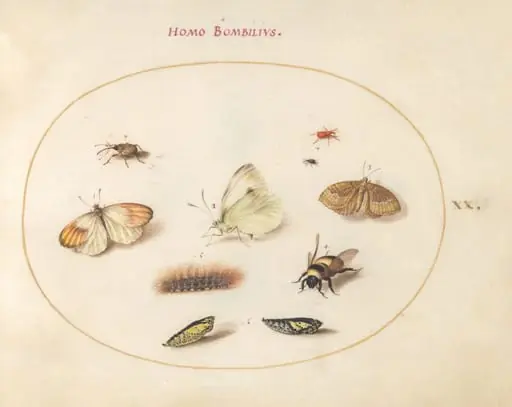 Plate 20: Three Butterflies, a Caterpillar, a Bee, Two Chrysalides, and Three Weevils
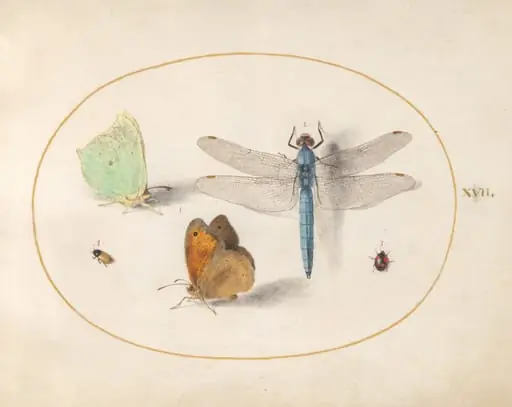 Plate 17: Brimstone and Meadow Brown(?) Butterflies, a Blue Chaser, and Two Small Insects
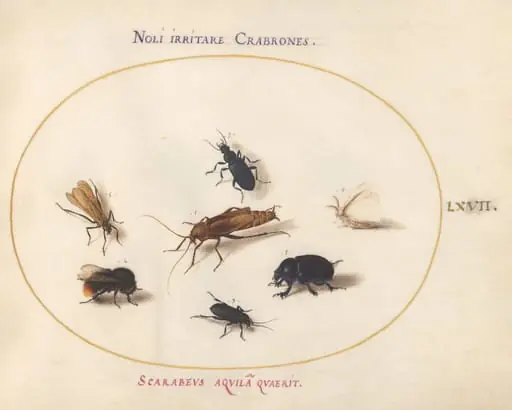 Plate 67: Seven Insects, Including a White Butterfly and a Bee
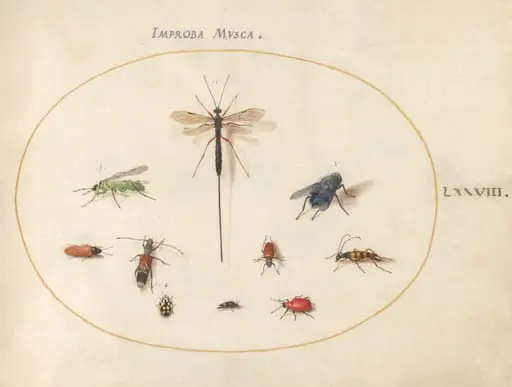 Plate 78: Ten Insects, Including a Blue Fly
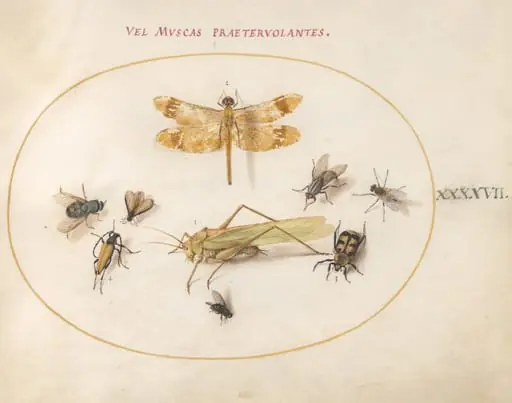 Plate 47: A Dragonfly (Banded Darter?), Grasshopper, Houseflies, a Carrion Beetle, a Flower Longhorn Beetle, and Other Insects
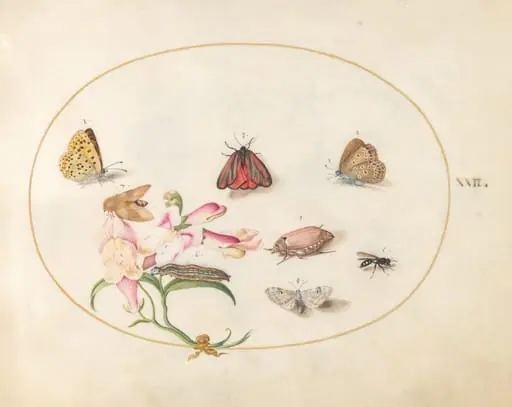 Plate 22: A Cinnabar Moth and a Cockchafer with Butterflies, other Insects, and a Snapdragon
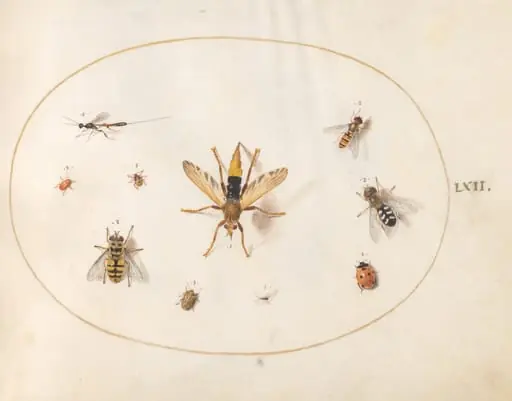 Plate 62: Ten Insects