Artwork
Plate 30: Four Rays
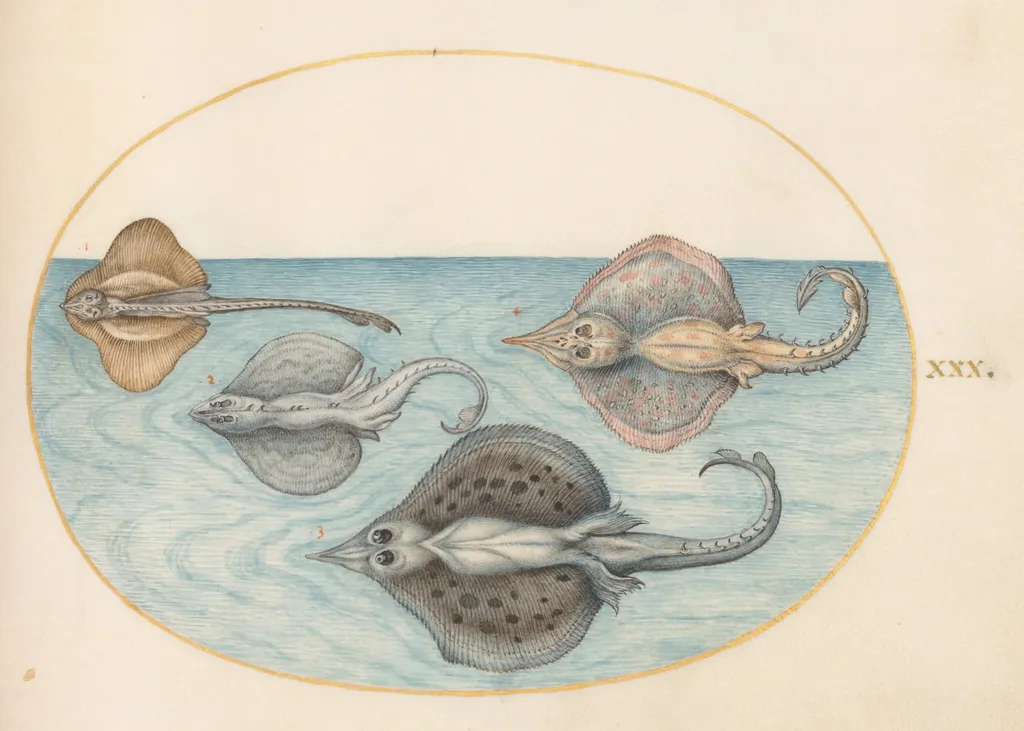
Plate 30: Four Rays is a gouache drawing by the Renaissance artist Joris Hoefnagel. It dates from 1594 and is held in the collection of the National Gallery of Art.
- Inscription
- Inscribed:Fish in image numbered .1., 2., .3., and .4. in red ink; center right in (gold?): XXX. Facing page: upper center in blue ink: Tu dominaris potestati maris: Motum ante[m] / fluctuum tu mitigas .ps.88. (“Thou rules the power of the sea; and appeases the motion of the waves thereof” Psalms 88:10) (Latin Vulgate Bible); lower center in red/violet ink: In MARI via tua, et semita tua in aquis multis: / Et vestigia tua non cognoscentur ps:76. (“Your way is in the sea, and your paths in many waters; and your footsteps shall not be known.” Psalms 76:20) (Latin Vulgate Bible)
About this work
Overview
Created circa 1594, Plate 30: Four Rays is a small-scale work executed in watercolor and gold on parchment. Flemish artist Joris Hoefnagel, active as a painter and manuscript illuminator, rendered a quiet aquatic scene that combines natural observation with decorative elegance.
Subject & Meaning
The composition presents four freshwater rays gliding through a blue‑toned water surface, their bodies rendered in subtle greys and browns. A thin gold circle frames the image, emphasizing the contained, almost scientific study of the creatures within a tranquil setting.
Technique & Style
Hoefnagel employed delicate washes of watercolor to achieve transparent water and nuanced flesh tones, while fine gold pigment outlines the border and accentuates highlights. The precise line work and careful shading reflect the Renaissance emphasis on observation and realism, hallmarks of his miniature illumination practice.
History & Provenance
As one of the later examples of manuscript illumination, the piece illustrates Hoefnagel’s transition from decorative book art to independent natural‑history illustration. It belongs to a series of plates produced for a scientific or ornamental manuscript, underscoring his role in early modern botanical and zoological documentation.
Context
During the late sixteenth century, northern European artists began to explore topographical and floral still‑life subjects. Hoefnagel’s meticulous rendering of the rays anticipates the emergence of standalone floral and fauna painting, bridging the gap between decorative illumination and autonomous genre works.
Own this work as a print
Artist & collection

Artist
Joris Hoefnagel or Georg Hoefnagel (1542 – 24 July 1601) was a Flemish painter, printmaker, miniaturist, draftsman and merchant.

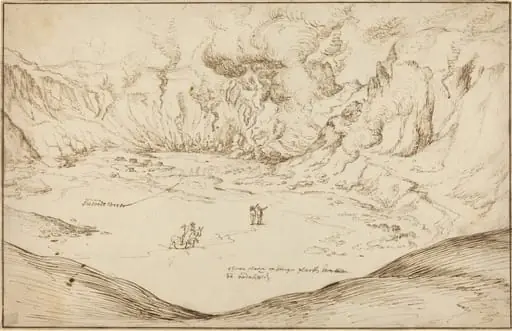 Forum Vulcani: The Hot Springs at Pozzuoli
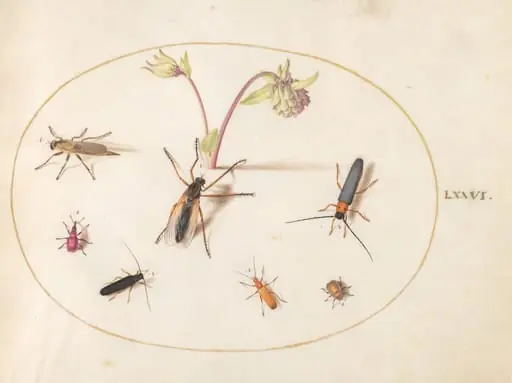 Plate 76: Insects with a Pink and Cream Columbine
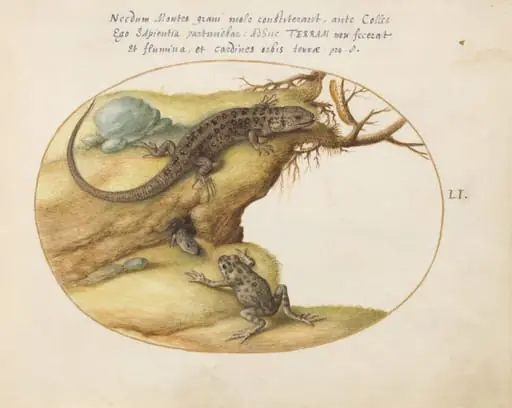 Plate 51: Two Sand Lizards, a Common Parsley Frog(?), and a Caterpillar
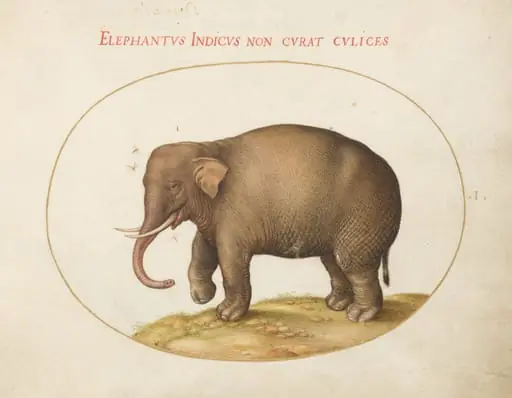 Plate 1: Elephant with Insects
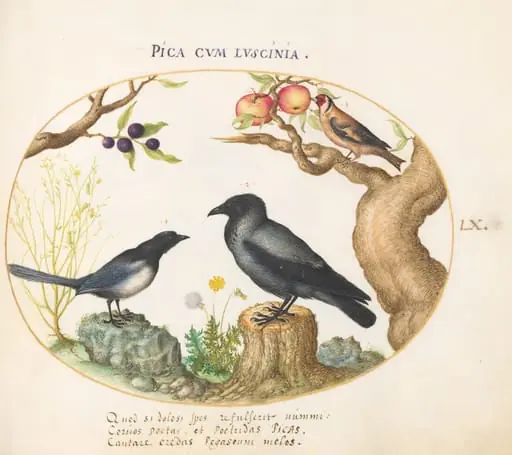 Plate 60: Magpie, Crow, and Goldfinch
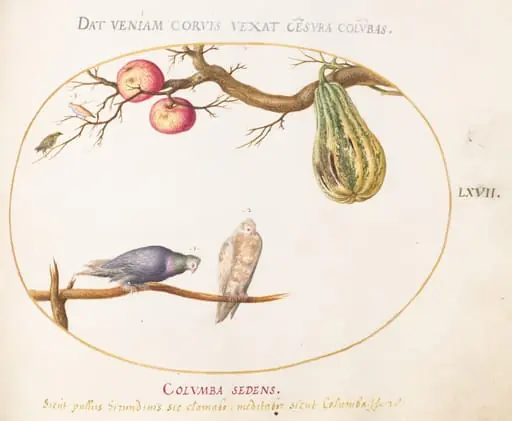 Plate 67: Two Doves beneath a Gourd and Apples
 Plate 31: Seven Moths
 Plate 21: Swamp Hen and Woodcock with a Streaked Rosefinch, a Finch, and Oak Galls
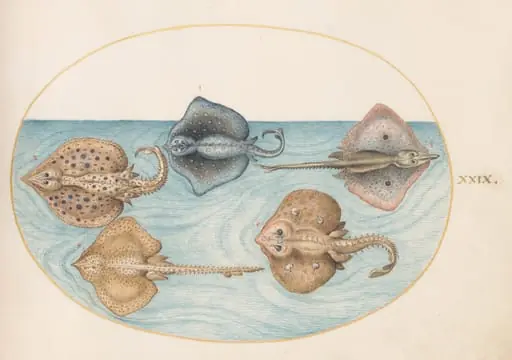
- Plate 29: Homelyn Ray and Four Other Rays or Skates
 Plate 11: Four Fish and Shells
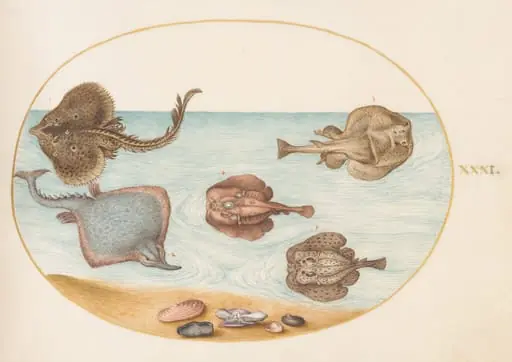 Plate 31: Marbled Electric Ray with Other Skates or Rays, Shells, and a Mollusk in Its Shell
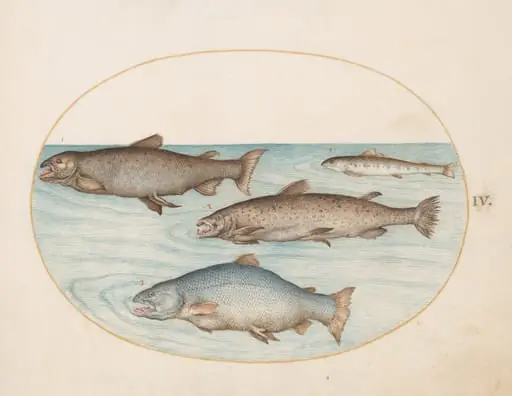 Plate 4: Four Salmon
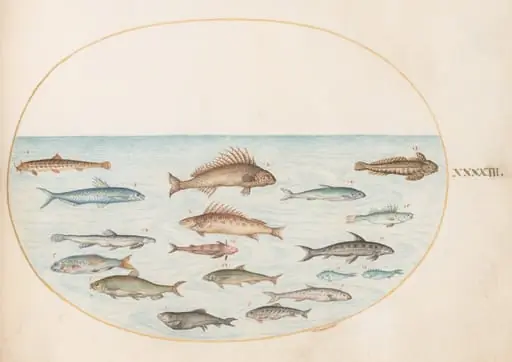 Plate 43: Fifteen Fish
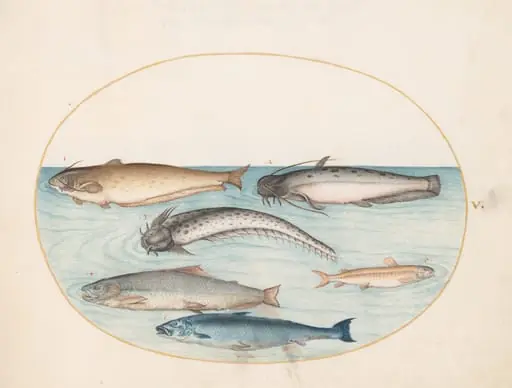 Plate 5: Three Catfish, a Salmon, and Two Other Fish
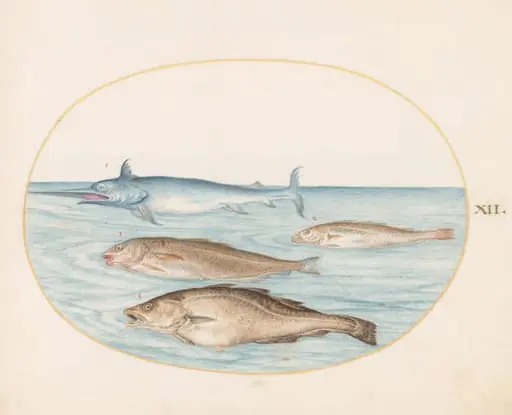 Plate 12: A Swordfish and Three Other Fish