Artwork
Plate 41: Whitefish(?) and Other Fish
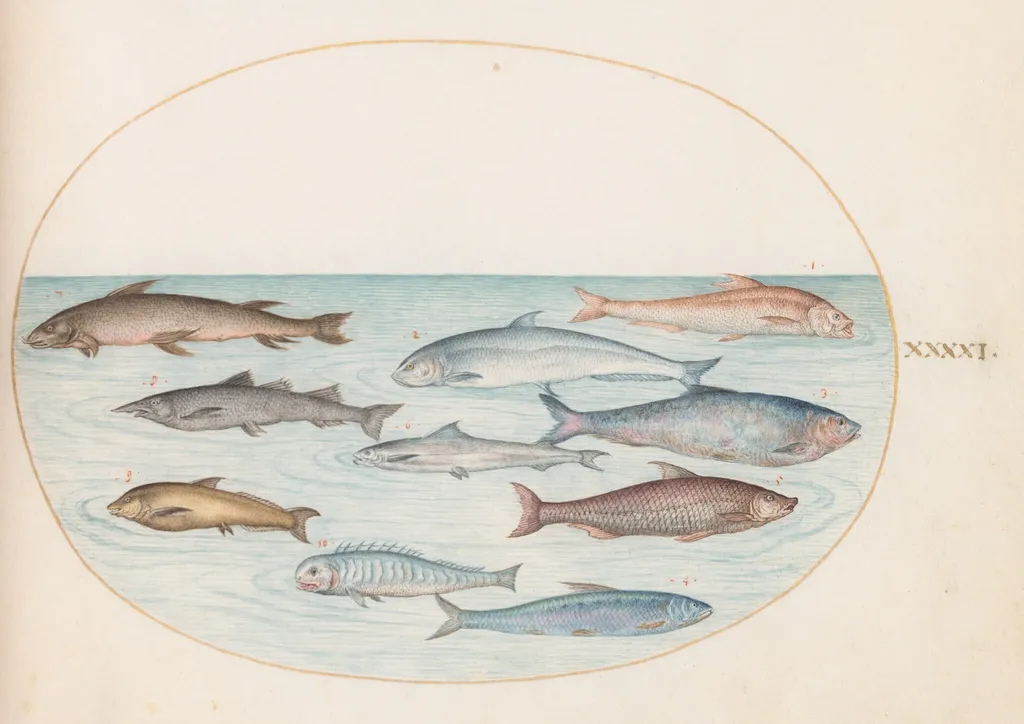
Plate 41: Whitefish(?) and Other Fish is a gouache drawing by the Renaissance artist Joris Hoefnagel. It dates from 1594 and is held in the collection of the National Gallery of Art. Plate 41: Whitefish(?
- Inscription
- Inscribed:Fish in image numbered .1., .2., .3., .4., .5., .6., .7., .8., .9., and .10., in red ink; center right in (gold?): XXXXI. Facing page: upper center in blue/black ink: Hi iaculo pisces, illi capiuntur ab hamis, / Hos cana contento retia fume trabunt.; lower center in black ink: Omnia flumina intrant in mare, et mare non redundat: Ad locum / unde exeunt flumina revertu[n]tur, ut iteru[m] fluant. Ecc[es]1: (“All the rivers run into the sea, yet the sea does not overflow unto the place from whence the rivers came, they return, to flow again” Ecclesiastes 1:7) (Latin Vulgate Bible)
About this work
Overview
Plate 41: Whitefish(?) and Other Fish is a 1594 watercolor and gold paint drawing on parchment by Joris Hoefnagel, a Flemish painter and miniaturist. The work features a circular arrangement of nine diverse fish species within a pale blue water environment, meticulously detailed and labeled with tiny numbers.
Subject & Meaning
The subject centers on a naturalistic depiction of fish, possibly including a whitefish, showcasing Hoefnagel's contribution to early northern European still-life and natural history illustration. The labeled, organized composition suggests a scientific or educational intent alongside its artistic value.
Technique & Style
Hoefnagel employed watercolor for the subtle, precise rendering of fish scales, fins, and the pale blue background. Gold paint was used for a thin framing line, adding a touch of luxury. The technique likely involved glazing to achieve depth and luminosity, characteristic of Hoefnagel's meticulous miniaturist style.
History & Provenance
Created around 1594, during the late 16th century, the piece reflects Hoefnagel's role in transitioning floral and natural subjects into independent still-life genres. Provenance details are not provided in the available information.
Context
This work is situated within the broader context of 16th-century northern European art's growing interest in natural history and the emergence of still-life as a distinct genre. It also touches on the intersection of art and science during the period.
Legacy
While specific legacy details of Plate 41 are not provided, Hoefnagel's overall body of work, including this piece, influenced the development of natural history illustration and the still-life genre in northern Europe.
Own this work as a print
Artist & collection

Artist
Joris Hoefnagel or Georg Hoefnagel (1542 – 24 July 1601) was a Flemish painter, printmaker, miniaturist, draftsman and merchant.

 Forum Vulcani: The Hot Springs at Pozzuoli
 Plate 76: Insects with a Pink and Cream Columbine
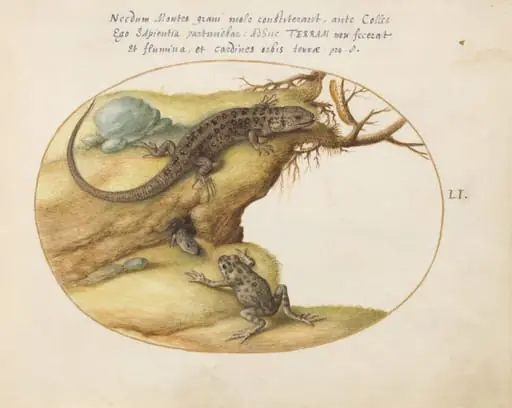 Plate 51: Two Sand Lizards, a Common Parsley Frog(?), and a Caterpillar
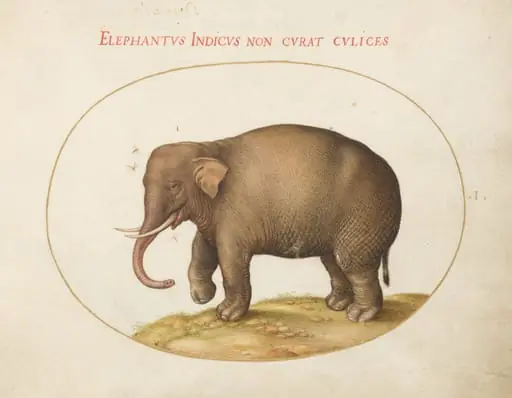 Plate 1: Elephant with Insects
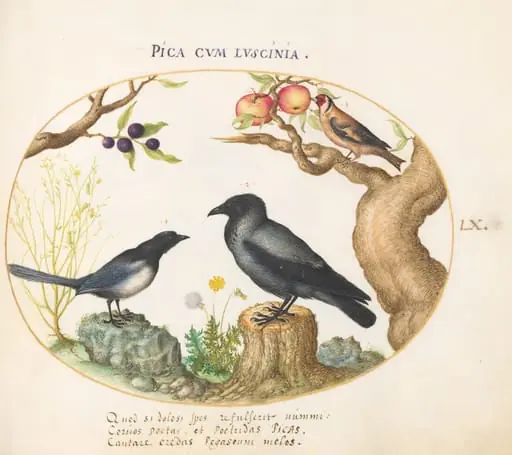 Plate 60: Magpie, Crow, and Goldfinch
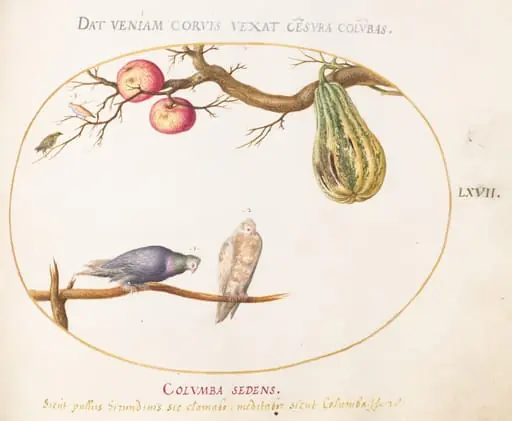 Plate 67: Two Doves beneath a Gourd and Apples
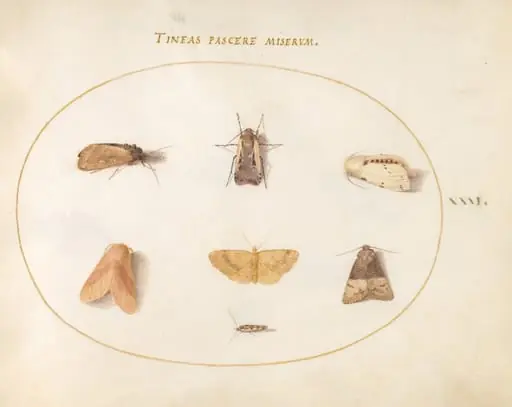 Plate 31: Seven Moths
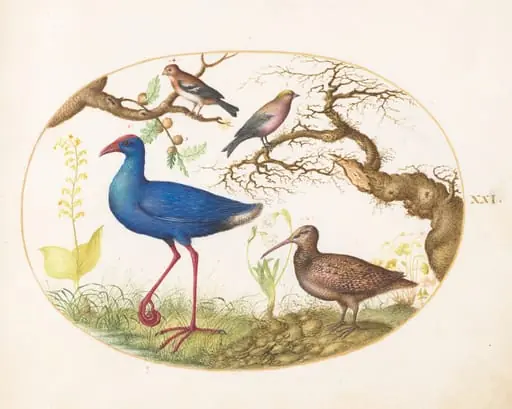 Plate 21: Swamp Hen and Woodcock with a Streaked Rosefinch, a Finch, and Oak Galls
- Plate 27: Blennies, Scorpion Fish, and Other Fish
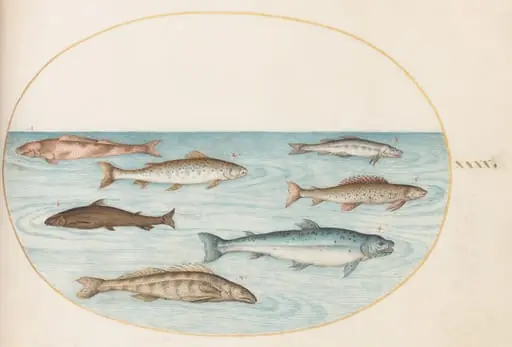 Plate 40: Salmon, Trout, and Freshwater(?) Fish
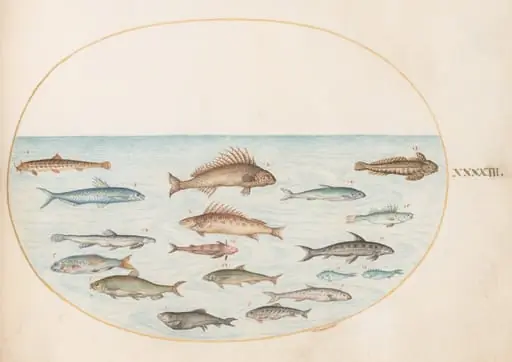 Plate 43: Fifteen Fish
 Plate 42: Nine Fish
 Plate 18: Boarfish, Razorfish, Butterfish, a John Dory, and Other Fish
 Plate 2: Sperm Whale, Sturgeon, Shark, and Other Fish
 Plate 11: Four Fish and Shells
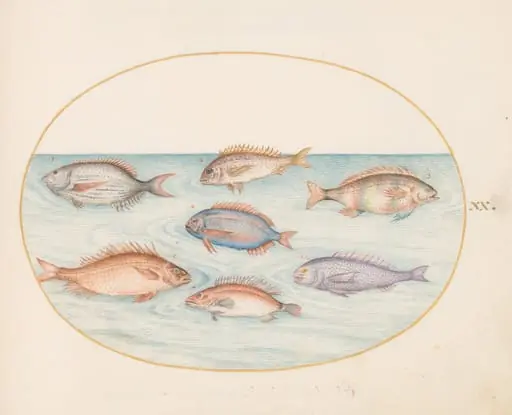 Plate 20: Sea Bream, Dentex, Sargo, and Other Fish
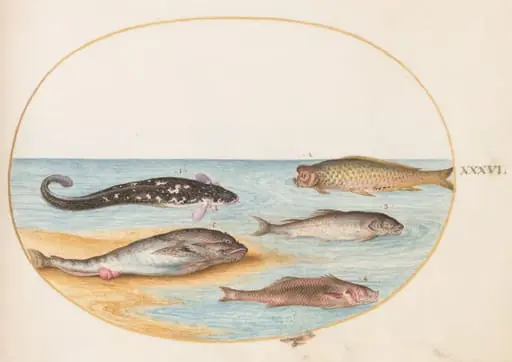 Plate 36: Five Fish, Including Carp(?)
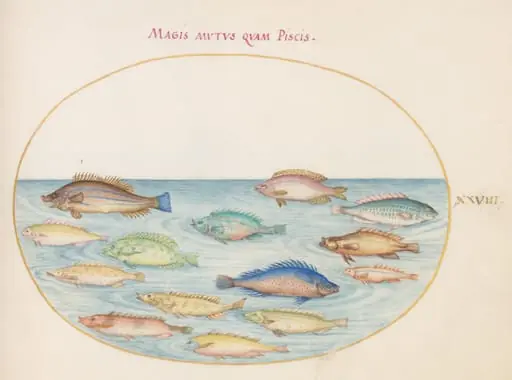 Plate 28: Sea Bream(?) and Other Fish
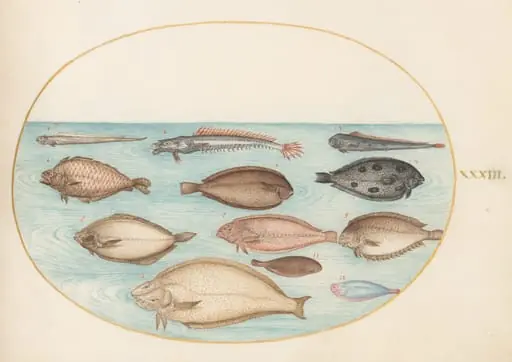 Plate 33: Sole and Other Flatfish with Bandfish(?)
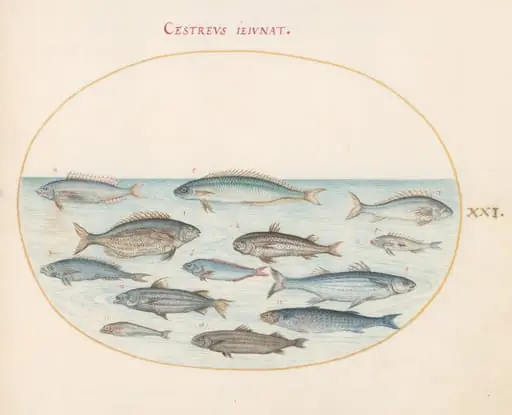 Plate 21: Cod(?) and Other Fish