Artwork
Plate 50: Grasshoppers, a Caterpillar, and a Scale Insect with a Four O'Clock Flower
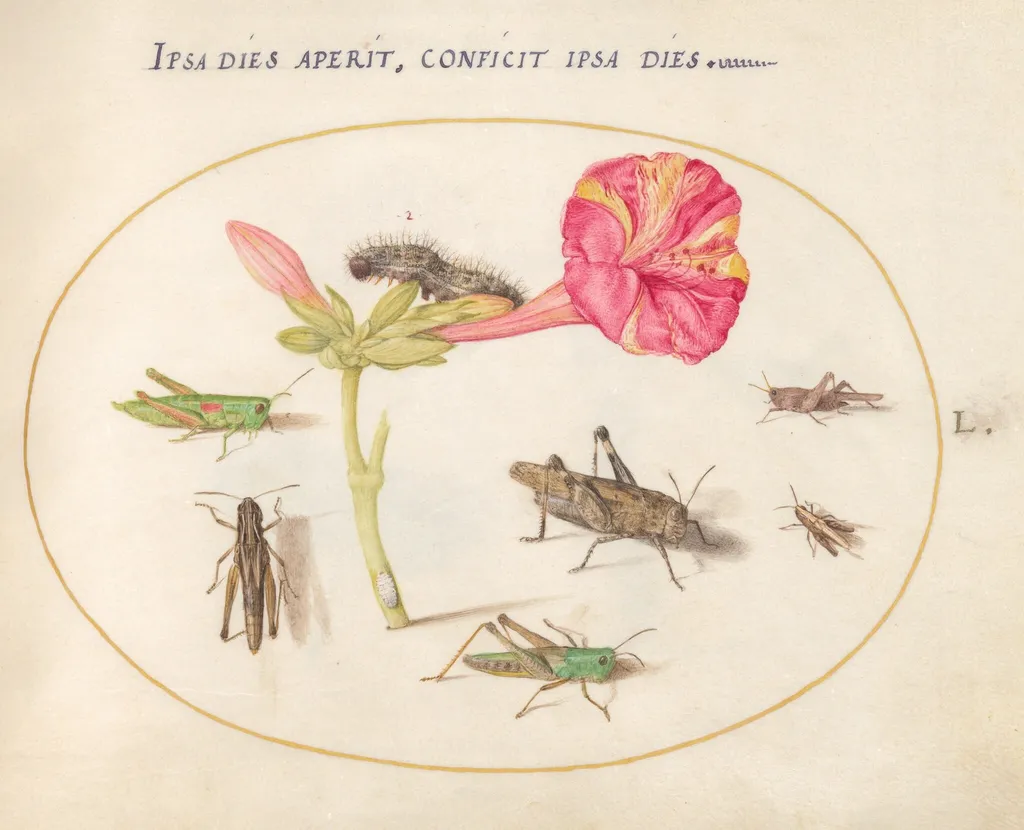
Plate 50: Grasshoppers, a Caterpillar, and a Scale Insect with a Four O'Clock Flower is a gouache drawing by the Renaissance artist Joris Hoefnagel. It dates from 1594 and is held in the collection of the National Gallery of Art.
- Inscription
- Inscribed:Upper center in black ink: IPSA DIES APERIT, CONFICIT IPSA DIES. (“The very day that it opens, it passes away.” “Ausonius”, De rosis nascentibus, 40) (trans. Bass 2019, 237); caterpillar in image numbered .2., in red ink; center right in brown ink: L. Facing page: Upper center in red ink: Dixit et venit locusta, et bruchus, cuius / non erat numerus ps: 104: (“He spoke, and the locust came, and the bruchus, of which there was no number.” Psalms 104:34) (Latin Vulgate Bible)
About this work
Overview
Plate 50: Grasshoppers, a Caterpillar, and a Scale Insect with a Four O'Clock Flower is a watercolor and gold paint drawing on parchment, created by Flemish artist Joris Hoefnagel around 1594.
Subject & Meaning
The work features meticulously rendered studies of a grasshopper, caterpillar, scale insect, and a flowering Four O'Clock plant, reflecting the era's emphasis on naturalistic observation and detailed botanical and entomological study.
Technique & Style
Hoefnagel employed fine brushes to capture intricate details, such as individual hairs and spots on the insects. The addition of gold paint creates a luminous, ornate background, characteristic of manuscript illumination techniques.
History & Provenance
This drawing is part of a commissioned manuscript of animal and plant studies, produced for a wealthy collector. It exemplifies Hoefnagel's role as one of the last prominent manuscript illuminators.
Context
Plate 50 contributes to the transitional period in northern European art, influencing the development of topographical drawing and the emergence of floral still-life painting.
Legacy
Now housed in the National Gallery of Art, Washington, the piece is part of a collection showcasing similar miniature, jewel-like studies characterized by vibrant colors and gold accents.
Own this work as a print
Artist & collection

Artist
Joris Hoefnagel or Georg Hoefnagel (1542 – 24 July 1601) was a Flemish painter, printmaker, miniaturist, draftsman and merchant.

 Forum Vulcani: The Hot Springs at Pozzuoli
 Plate 76: Insects with a Pink and Cream Columbine
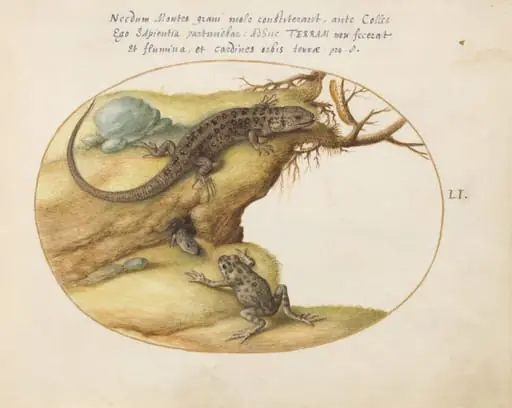 Plate 51: Two Sand Lizards, a Common Parsley Frog(?), and a Caterpillar
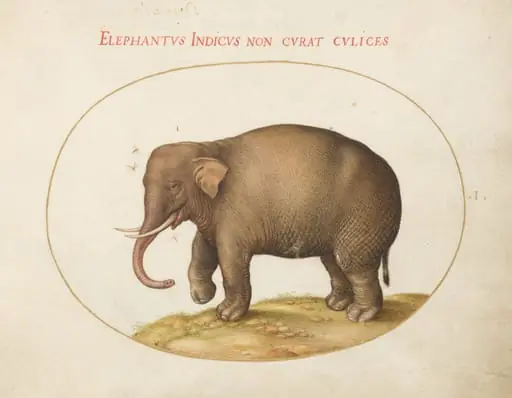 Plate 1: Elephant with Insects
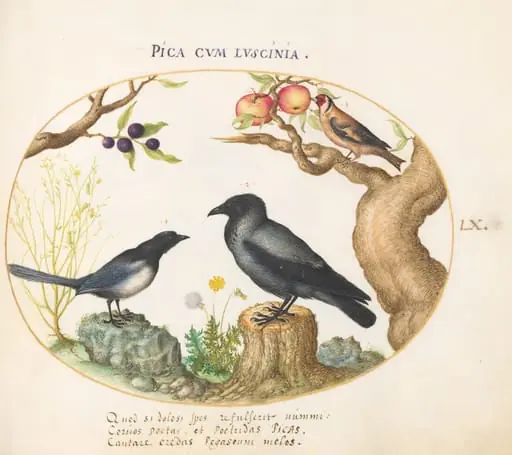 Plate 60: Magpie, Crow, and Goldfinch
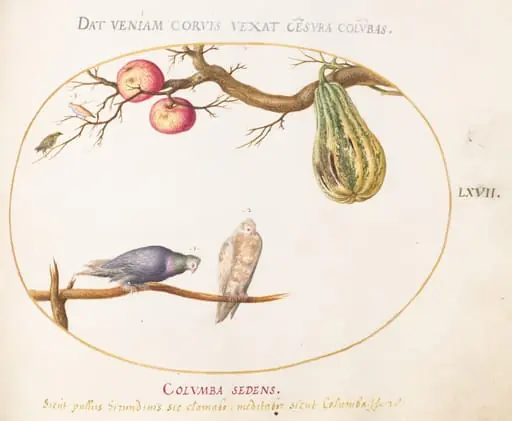 Plate 67: Two Doves beneath a Gourd and Apples
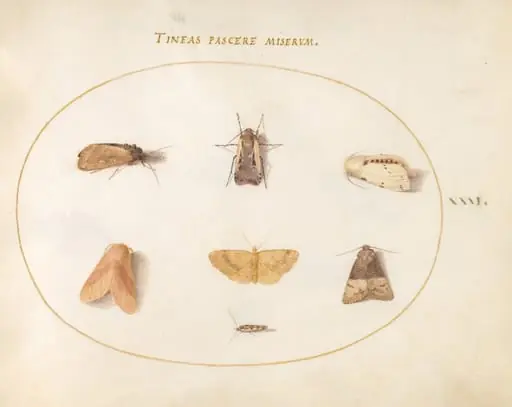 Plate 31: Seven Moths
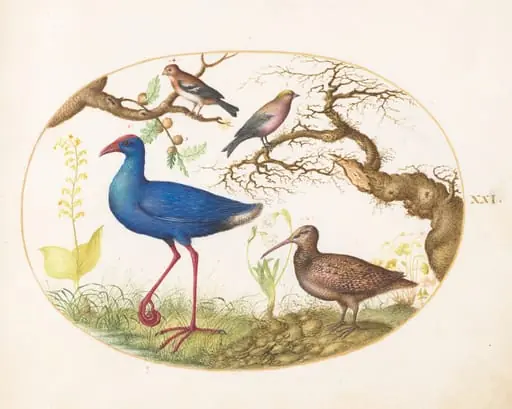 Plate 21: Swamp Hen and Woodcock with a Streaked Rosefinch, a Finch, and Oak Galls
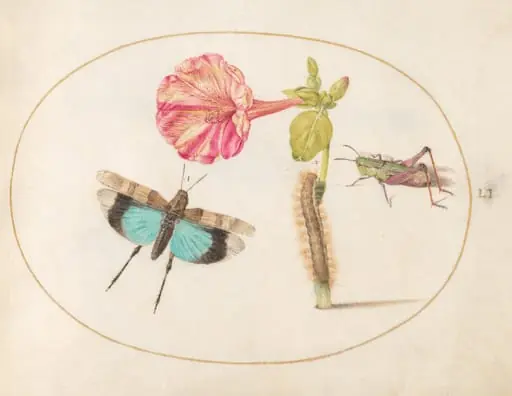
- Plate 51: Grasshoppers and a Caterpillar with a Four O'Clock Flower
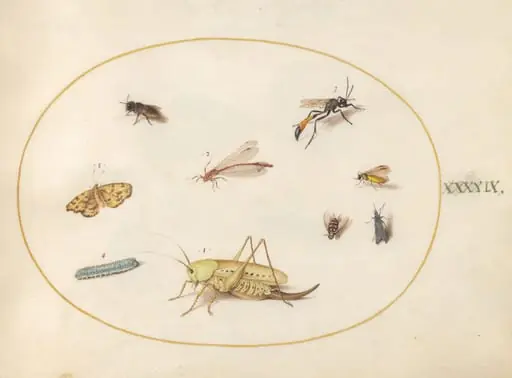 Plate 49: A Grasshopper, a Caterpillar, a Butterfly, a Moth, and Other Insects
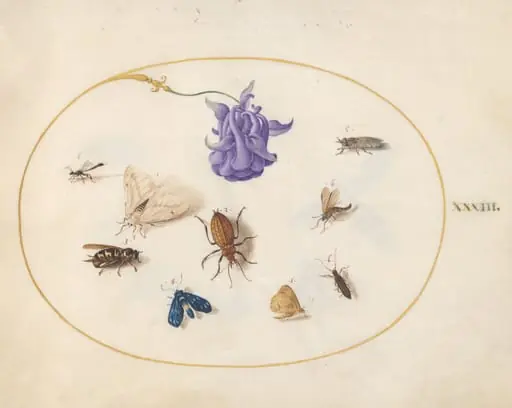 Plate 33: Moth and Butterfly with other Insects and a Columbine Flower
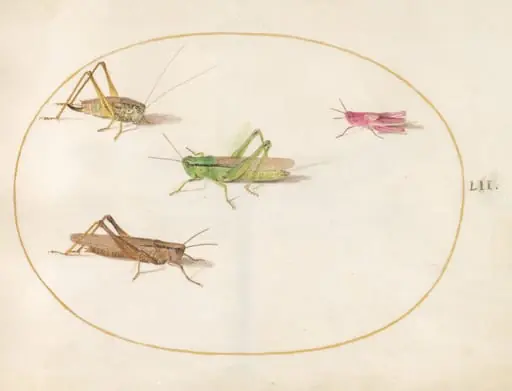 Plate 52: Four Grasshoppers
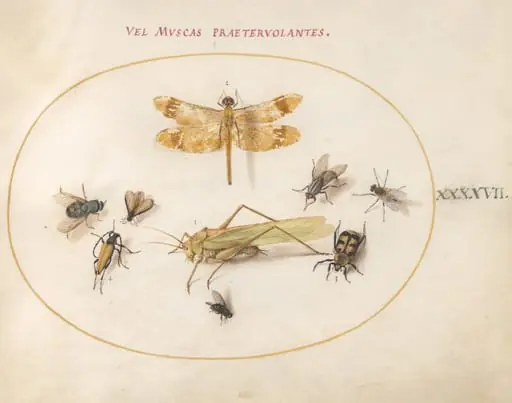 Plate 47: A Dragonfly (Banded Darter?), Grasshopper, Houseflies, a Carrion Beetle, a Flower Longhorn Beetle, and Other Insects
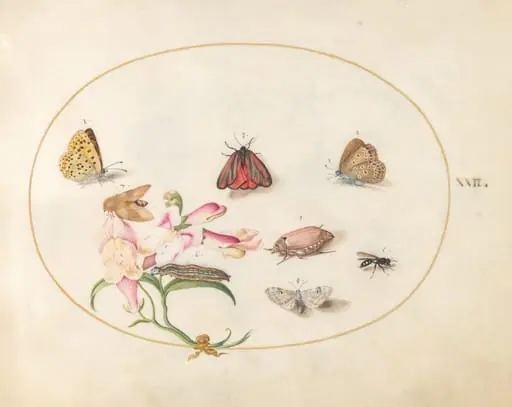 Plate 22: A Cinnabar Moth and a Cockchafer with Butterflies, other Insects, and a Snapdragon
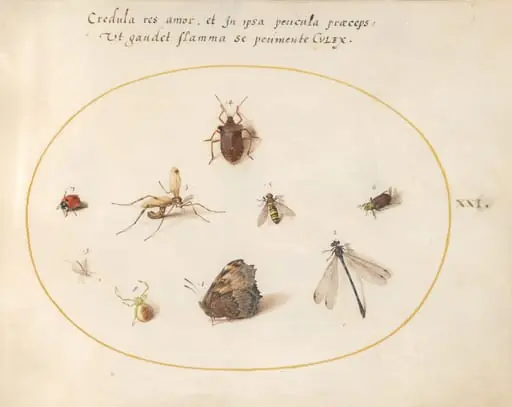 Plate 21: A Butterfly with a Dragonfly, a Ladybug, and Five other Insects
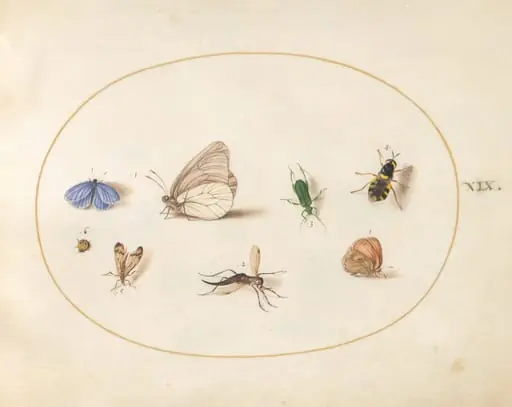 Plate 19: Two Butterflies with Five Other Insects
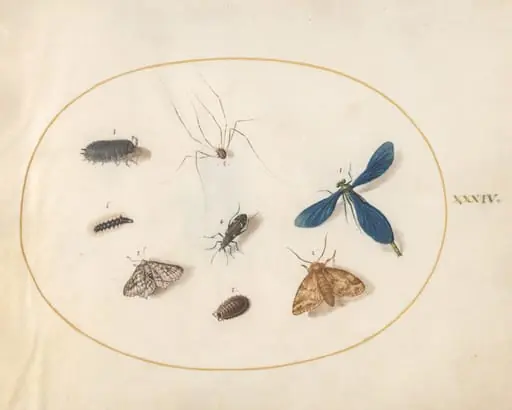 Plate 34: Two Moths with a Spider, a Caterpillar, a Damselfly, and Other Insects
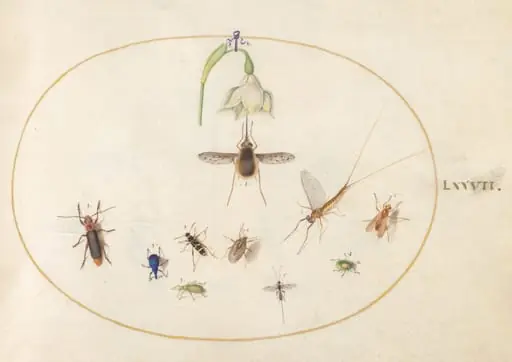 Plate 77: Dotted Bee Fly with a White Flower, a Mayfly, a Blue Weevil, and Other Insects
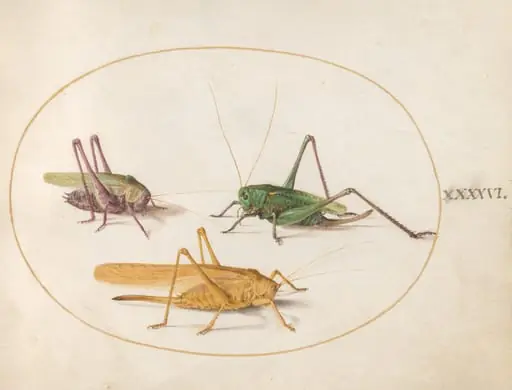 Plate 46: Three Grasshoppers
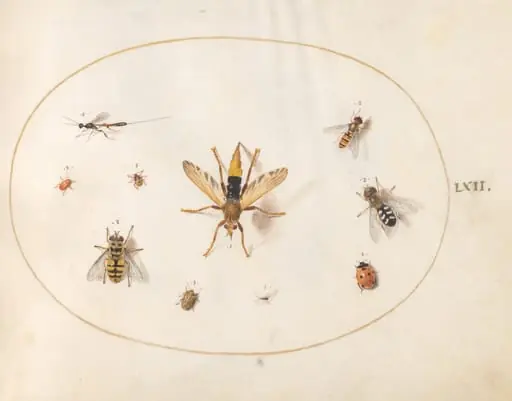 Plate 62: Ten Insects