Artwork
Plate 33: Moth and Butterfly with other Insects and a Columbine Flower
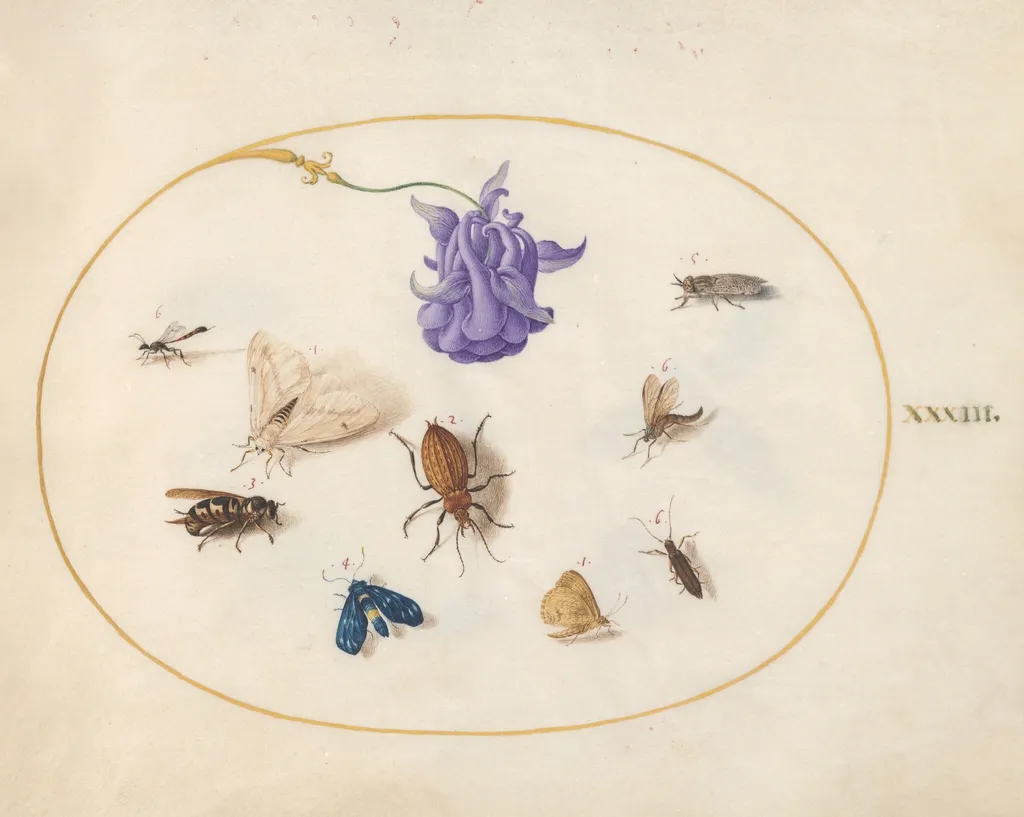
Plate 33: Moth and Butterfly with other Insects and a Columbine Flower is a gouache drawing by the Renaissance artist Joris Hoefnagel. It dates from 1594 and is held in the collection of the National Gallery of Art.
- Inscription
- Inscribed:Insects in image numbered .1., .2., .3., .4., 5., and .6., in red ink; center right in brown ink: XXXIII. Facing page: Upper center in red ink: Homo sicut FLOS egreditur, et conteritur, et fugit / velut umbra, et nu[m]quam in eodem statu permanet. Job 14. (“Who comes forth like a flower and is destroyed and flees as a shadow and never continues in the same state.” Job 14:2) (Latin Vulgate Bible)
About this work
Overview
Created circa 1594, this miniature work by Joris Hoefnagel combines watercolor and gold pigment on a sheet of parchment. Measuring only a few centimeters, it depicts a cluster of insects, moths, butterflies, beetles, arranged around a pink columbine blossom, all set against a luminous gold ground that enhances the delicate coloration of the subjects.
Subject & Meaning
The composition presents a naturalistic study of several species of Lepidoptera and Coleoptera alongside a flowering plant, emphasizing the intricate details of each creature. By rendering each insect with precise anatomical accuracy, Hoefnagel invites close inspection, reflecting the period’s fascination with cataloguing the natural world.
Technique & Style
Hoefnagel employed transparent watercolor washes layered over a gold base, allowing the pigments to glow as if illuminated from within. Fine brushwork captures the minute structures of wings and legs, while subtle glazing creates a stained‑glass effect that gives the insects a luminous quality uncommon in manuscript illumination.
History & Provenance
The drawing originates from the artist’s late‑sixteenth‑century output, a time when Flemish miniaturists were shifting from illuminated manuscripts toward independent still‑life and natural‑history subjects. It later entered the collection of the National Gallery of Art in Washington, where it is displayed as part of the museum’s holdings of early modern scientific illustration.
Context
Hoefnagel’s work sits at the intersection of art and early natural history, mirroring the broader Northern European movement that began to treat flora and fauna as worthy subjects in their own right. His meticulous rendering anticipates the development of botanical and entomological illustration that would flourish in the seventeenth century.
Own this work as a print
Artist & collection

Artist
Joris Hoefnagel or Georg Hoefnagel (1542 – 24 July 1601) was a Flemish painter, printmaker, miniaturist, draftsman and merchant.

 Forum Vulcani: The Hot Springs at Pozzuoli
 Plate 76: Insects with a Pink and Cream Columbine
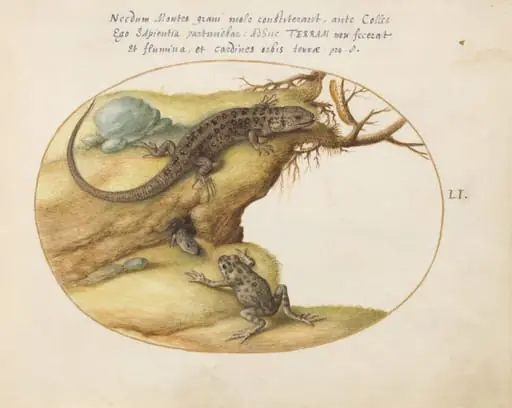 Plate 51: Two Sand Lizards, a Common Parsley Frog(?), and a Caterpillar
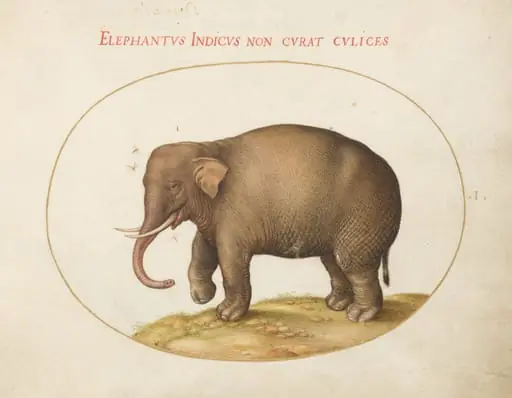 Plate 1: Elephant with Insects
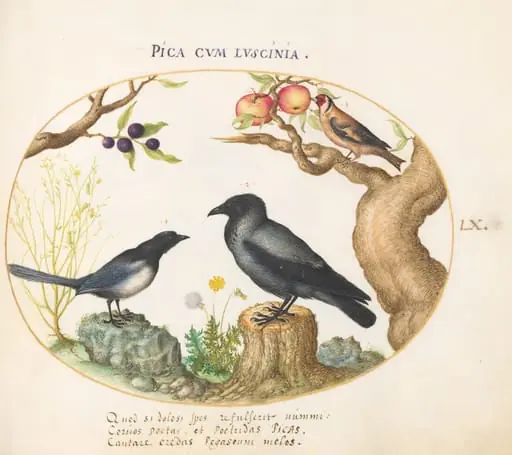 Plate 60: Magpie, Crow, and Goldfinch
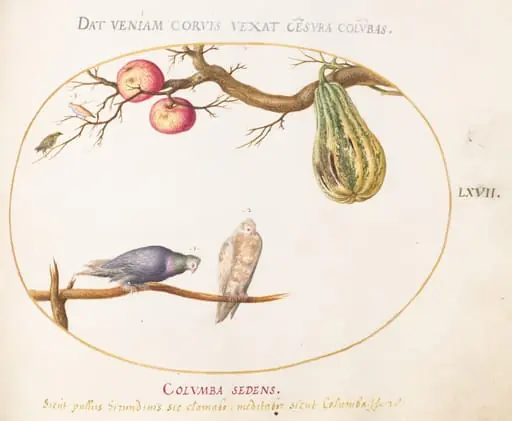 Plate 67: Two Doves beneath a Gourd and Apples
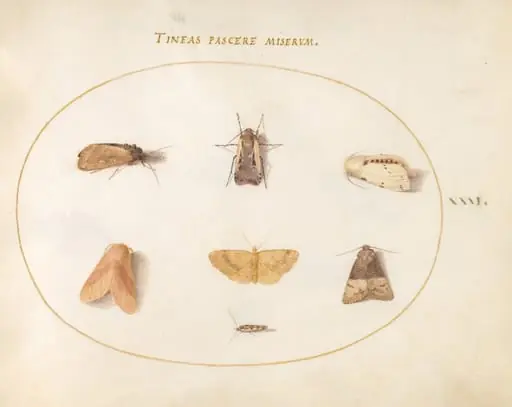 Plate 31: Seven Moths
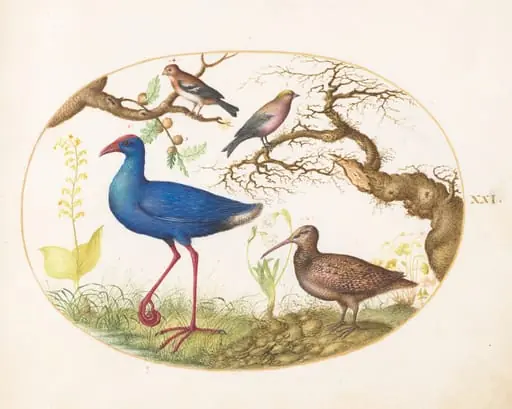 Plate 21: Swamp Hen and Woodcock with a Streaked Rosefinch, a Finch, and Oak Galls
- Plate 34: Two Moths with a Spider, a Caterpillar, a Damselfly, and Other Insects
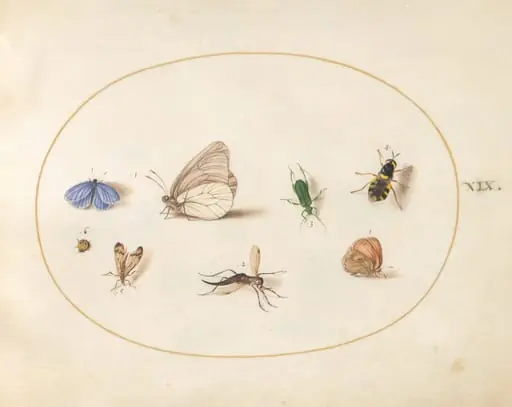 Plate 19: Two Butterflies with Five Other Insects
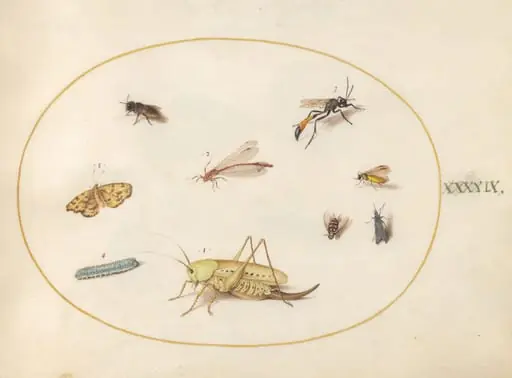 Plate 49: A Grasshopper, a Caterpillar, a Butterfly, a Moth, and Other Insects
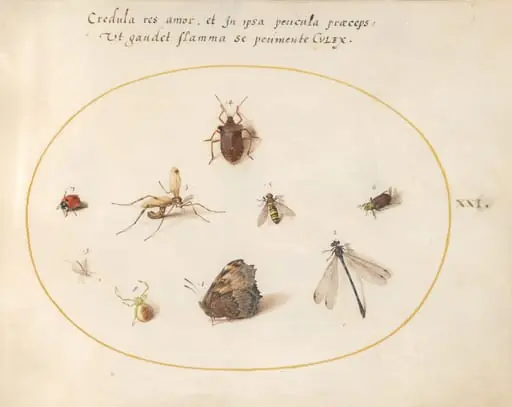 Plate 21: A Butterfly with a Dragonfly, a Ladybug, and Five other Insects
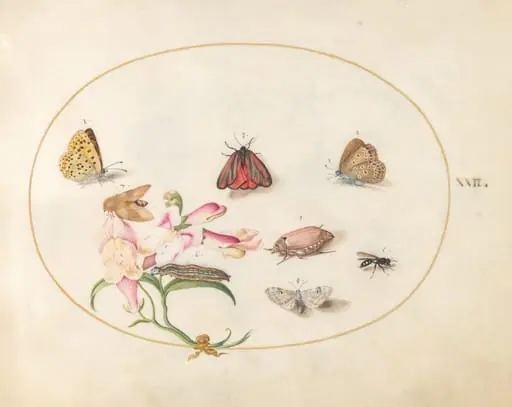 Plate 22: A Cinnabar Moth and a Cockchafer with Butterflies, other Insects, and a Snapdragon
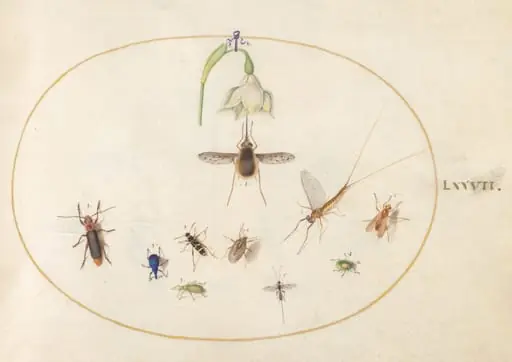 Plate 77: Dotted Bee Fly with a White Flower, a Mayfly, a Blue Weevil, and Other Insects
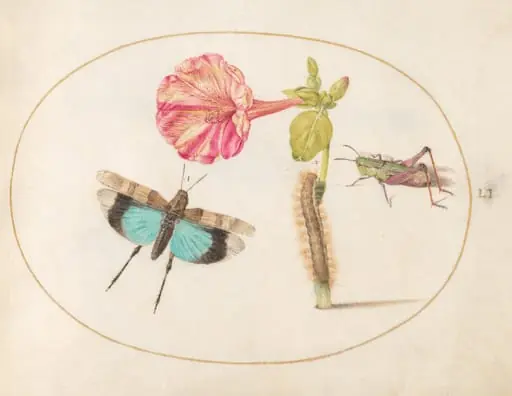 Plate 51: Grasshoppers and a Caterpillar with a Four O'Clock Flower
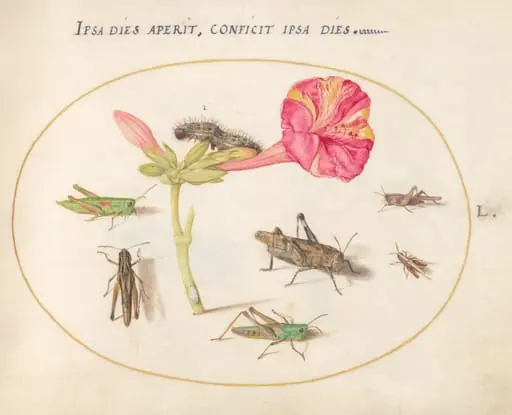 Plate 50: Grasshoppers, a Caterpillar, and a Scale Insect with a Four O'Clock Flower
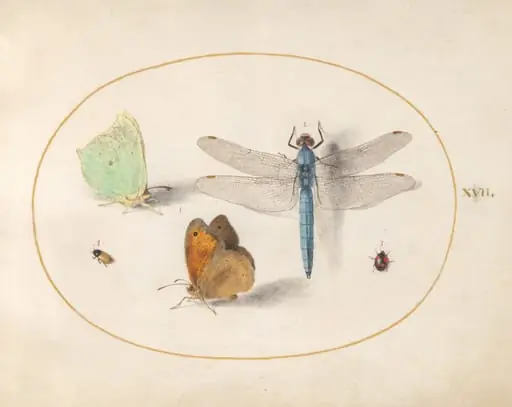 Plate 17: Brimstone and Meadow Brown(?) Butterflies, a Blue Chaser, and Two Small Insects
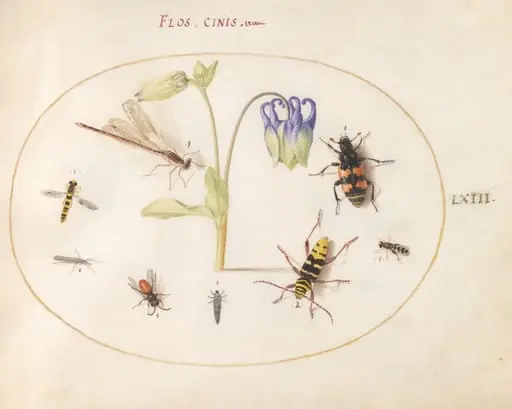 Plate 63: A Dragonfly, a Spotted Longhorn, a Sexton Beetle, and Other Insects with a Blue and White Columbine
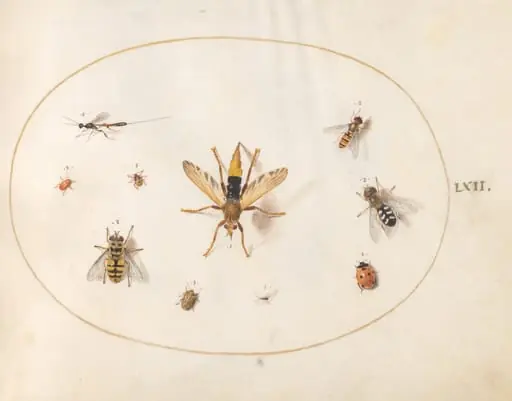 Plate 62: Ten Insects